Disneyland Paris Announces New Parade and Space Mountain’s Return

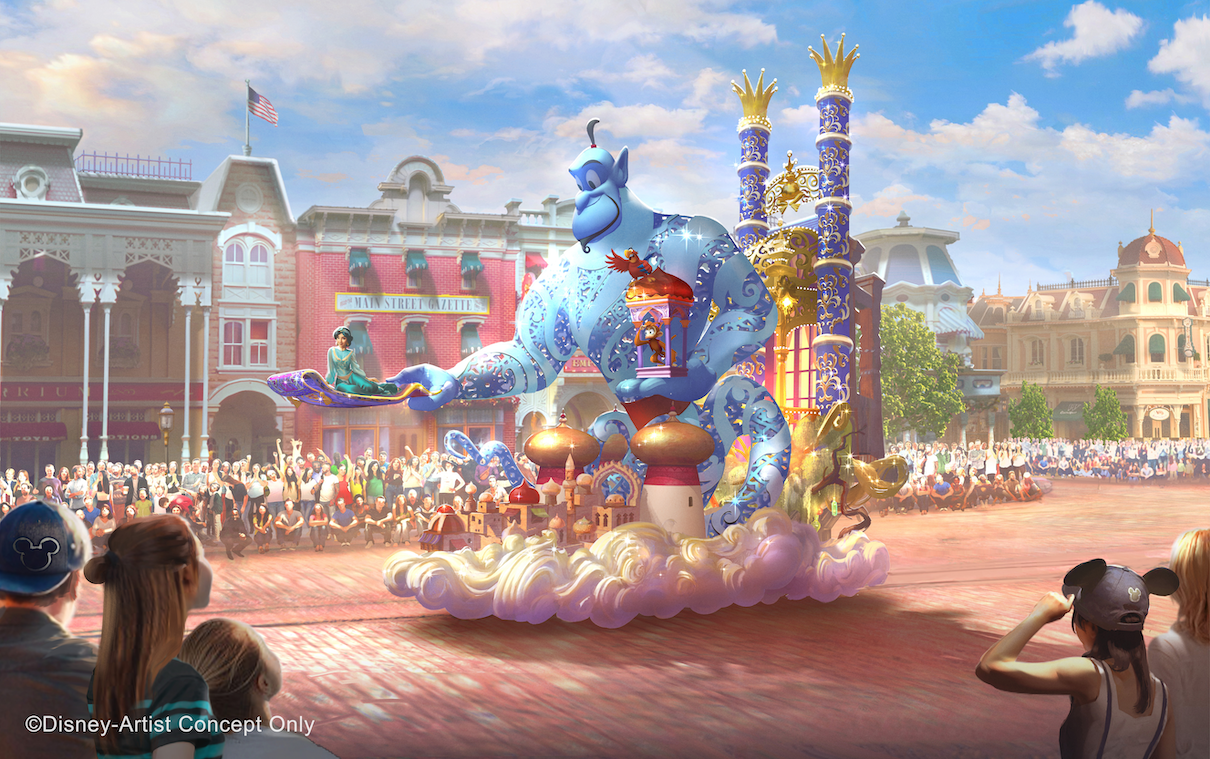
Près de 225 croquis consacrés aux costumes, perruques et maquillages ont été dévoilés - Illustration : Disney-Artist Concept Only

MSC Croisières


On the occasion of D23: The Ultimate Disney Fan Event, held from August 14 to 16, 2026 in Anaheim, California, Disneyland Paris unveiled several innovations that will enrich its offerings in the coming years.

Highlights include a new daytime parade anticipated for 2028, a fresh interpretation of Space Mountain – From Earth to the Moon – and new details about the upcoming immersive zone dedicated to The Lion King at Disney Adventure World.

Disneyland Park will welcome in 2028 a new daytime parade, the first since 2017. Presented as an exclusive creation for Disneyland Paris, it will run daily and become one of the park’s new daytime entertainment highlights.

Led by Mickey Mouse and his friends, the parade will feature several iconic characters from the Disney universe, among them Jasmine, Tiana, Rapunzel, and Miguel from Disney/Pixar’s Coco. New floats will blend design with cutting-edge technology around the theme of magic and dreams.

The project required more than 10,000 hours of technical research and development, as well as nearly 225 sketches dedicated to costumes, wigs, and makeup.


Space Mountain Returns to Its Original Story

Another announcement concerns the Disneyland Park: Space Mountain will receive a new artistic direction inspired by its original incarnation, Space Mountain – From Earth to the Moon.

Opened in 1995, the attraction drew on Jules Verne’s novel and offered a retro-futuristic world paired with an immersive experience.

After ten years under the Star Wars Hyperspace Mountain theme, the ride is therefore set to reclaim the spirit of its initial design. The current version is slated to close at the end of 2027 to allow several months of renovation.

Disneyland Paris stresses that the project will not be a mere reproduction of the 1995 attraction. The work will include technical and maintenance improvements, new sets and props, and a redesigned queue.

The narrative will also be revisited, framed by an idealized vision of humanity’s early voyages to the Moon, rendered in a steampunk style faithful to the Discoveryland universe.

Disneyland Paris further notes that elements of the original scenery will be integrated with new installations, while the technical improvements accumulated over more than 30 years will be retained.

This transformation is part of the “New Magic” program, recently launched by Disneyland Paris to evolve certain historic attractions and refresh the visitor experience.


The Lion King: Scar Joins the Upcoming Attraction

At Disney Adventure World, Disneyland Paris is also continuing the construction of its forthcoming immersive zone dedicated to The Lion King.

The park revealed at D23 new details about the attraction, notably the presence of Scar in the form of an Audio-Animtronics figure.

The character will appear in a new confrontation scene with Simba, directly inspired by the film’s iconic battle. This will mark Scar’s first Audio-Animatronics figure presentation within this attraction.

The future zone will constitute the first immersive world dedicated to The Lion King in a Disney park. Work began in the autumn of 2025, after the foundations were completed, near Adventure Bay and World of Frozen.

The area will span roughly 30,000 square meters and will include the attraction, a shop, a dining space, and meet-and-greet areas for character interactions.


A Transformation That Continues at Disney Adventure World

These announcements are part of a significant evolution phase for Disneyland Paris.

The development of Disney Adventure World continues, notably following the opening of World of Frozen and several new experiences.

The next milestone announced will be the arrival of Wilderness Explorers Sky Swings, a ride inspired by the Disney/Pixar film Up, which is slated to open next year on Adventure Way, opposite Rapunzel’s Tangled Spin.


Amelia Brille Published by Amelia Brille TourMaG.com Editor
See all articles by Amelia Brille

  • picto Linkedin
  • picto email
Add TourMaG to your Google News feed Google News icon  

France: Mountains Draw Tourists in Search of Cooler Weather


La montagne française affiche un taux d’occupation de 65,8 % durant l’été 2026.    DepositPhotos.com/Elenarts

MSC Croisières


According to the National Association of Mountain Resort Mayors (ANMSM), the French mountains recorded an occupancy rate of 65.8% for the summer season of 2026, a rise of 2.5 percentage points compared to summer 2025 and 5 percentage points compared to 2024.

The dynamics pertain especially to the two main months of the season, with 63.3% occupancy in July, up 3.6%, and 72% in August, up 1.1%.

The peak attendance was reached during the week of August 8, with an occupancy rate of 80.7%.


“The mountains are becoming a major tourist destination” according to Serge Papin

Beyond heat episodes, the ANMSM highlights the diversification of the resorts’ offerings, spanning sports, cultural and family activities, as well as hosting major events, such as stages of the Tour de France, festivals or competitions.

Holiday villages show a 3.3-point increase to 68.4%, while real estate agencies reach 50.6%, i.e. +3.5 points. The tourist residences, at 74.1%, and the hotels, at 67.9%, remain more stable.

In terms of mountain ranges, the Pyrenees register the strongest growth, with 69.8% occupancy, i.e. +4%. The Northern Alps reach 64.6%, up 2.3%, and the Southern Alps 66.8%, up 1.2%.

The French clientele accounts for 81.72% of holidaymakers. International visitors account for 18.28%, with the Dutch leading at 26%, ahead of the Belgians at 25%, and the British at 13%.

These figures complement those announced by Serge Papin.

The Minister of Commerce and Tourism was a guest on TF1, on Tuesday, August 25. He stated that France should “have a good season“, at least as good as, or better than, 2025.

The mountains are becoming a major tourist destination“, he asserted, revealing that attendance there rose by 12% in July and 16% in August.

Auvergne-Rhône-Alpes: Mountains and International Partners Back Summer 2026


La montagne et les clientèles étrangères soutiennent l’activité touristique en Auvergne-Rhône-Alpes durant l’été 2026.   DepositPhotos.com/florentmartin

MSC Croisières


The tourist activity in Auvergne-Rhône-Alpes generally held up this summer, with 56 % of professionals who estimate attendance stable or rising compared with 2025.

The regional clientele has notably progressed, representing 39 % of attendance, while foreign markets remain a pillar of activity.

Professionals nevertheless note spending trade-offs, visitors prioritizing accommodation more than activities and dining.


La montagne profite de l’effet fraîcheur

The mountains confirm their attractiveness, with 65 % of station professionals satisfied with the season.

The image of the destination as a “refuge” in the face of heat waves has notably been cited by 56 % of them as a motor for activity.

The nature-based activities remain highly favored: hiking and walking lead the way (56 %), ahead of cycling (37 %) and water-related activities (36 %).

Demand for **more sustainable mobility** is also rising, notably for charging stations (+9 points).


Les clientèles étrangères restent dynamiques

The international clientele accounts for 26 % of attendance and helps sustain activity. Professionals notably observe a rise in Swiss and German clientele, while long-haul markets, including the United States and Canada, are also progressing.

In the face of budget constraints, 65 % of professionals have kept their prices and 16 % have reduced them. Last-minute bookings now represent 30 % of summer activity for accommodations.

For the rentrée, professionals remain cautious but relatively confident: 61 % anticipate attendance stable or rising in September, while 55 % share this view for the Toussaint holidays.

Airbnb: French Prefer English Channel Coasts and Mountains This Summer


Villers-sur-Mer arrive en tête des destinations françaises enregistrant les plus fortes progressions de recherches sur Airbnb cet été.  Depositphotos.com/nupix

MSC Croisières


The French have prioritized nearby destinations this summer.

According to Airbnb, searches were notably concentrated on the coastal towns of the Manche, with five destinations among those showing the strongest increases: Villers-sur-Mer (+45 %), Cherbourg-en-Cotentin (+34 %), Saint-Valery-sur-Somme (+31 %), Le Crotoy (+30 %) and Le Tréport (+25 %).


The Northern Coastline Appeals

The ranking is led by Villers-sur-Mer, ahead of Collioure (+39 %) and Saint-Hilaire-de-Riez (+36 %). Benodet (+35 %) and Cherbourg-en-Cotentin round out the top of the table, while Perros-Guirec (+29 %) and Noirmoutier-en-l’Île (+26 %) also feature among the most searched destinations.

This rise in northern coastal destinations comes during a summer marked by several heatwaves. Airbnb highlights the appeal of these territories for their natural spaces and a climate perceived as milder.


The Mountains Continue to Grow in Popularity

Rural areas account for 64% of bookings made in France on Airbnb. The mountain region is also gaining traction: the volume of searches for Le Bourg-d’Oisans has notably more than doubled. Huez, Les Gets, Chambon-sur-Lac and Samoëns are also among the mountain destinations favored by users.

Another takeaway: the French prefer relatively close destinations, with stays averaging less than 350 km from home. For Clément Eulry, director of Airbnb France, this shift reflects a desire to explore a broader palette of destinations beyond the main tourist hubs.

Italy: 5 Off-the-Beaten-Path Getaways by the Sea, Lakes, and Mountains

Italy is not limited to its star destinations: here are five places to head out to sea, far from the most traveled routes.

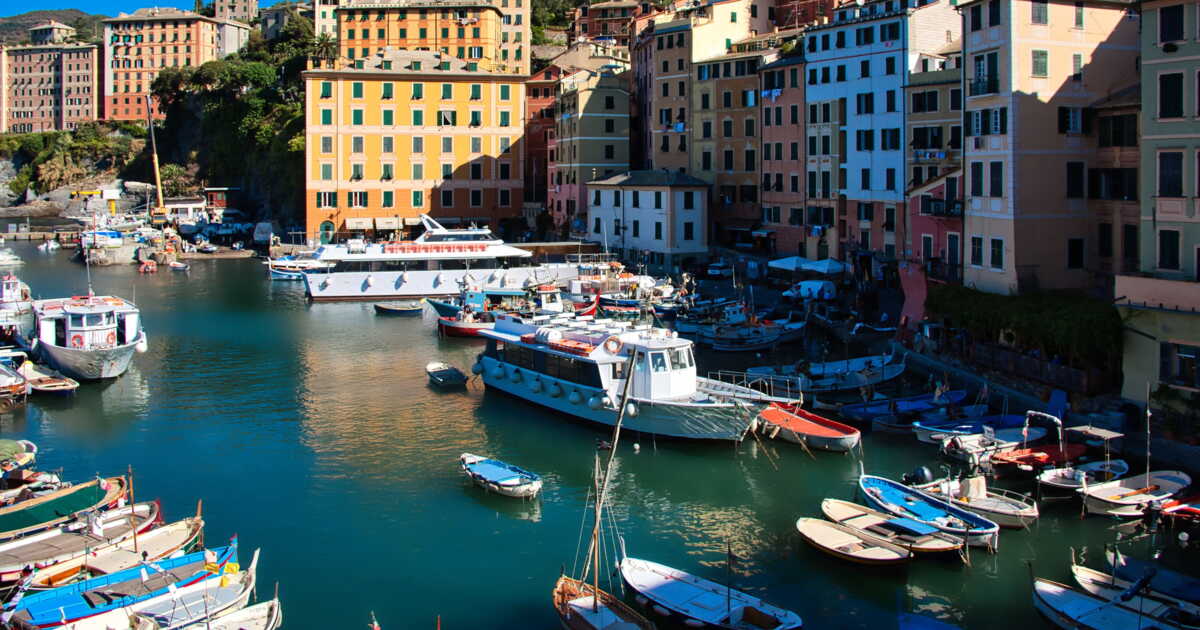
Camogli, serenity a stone’s throw from Portofino

Life with your feet in the water. On the Ligurian coast, at the edge of the Gulf of Paradise, the town of Camogli unfurls its trompe-l’oeil façades, brightly painted, along a pebble beach bathed by the Ligurian Sea. It’s hard to believe that this haven sits fifteen kilometers northwest of the bustling Portofino, the area’s most frequented destination, with jet-set vibes and luxury yachts. Camogli, for its part, preserves a calmer atmosphere, animated by the ballet of its small community of artisanal fishermen.

Herculaneum, the other Pompeii

The site of Pompeii impresses with its enormity, but Herculaneum, a little farther north, also swallowed by the Vesuvian eruption in 79 CE, strikes visitors with its exceptionally well-preserved state. This is evidenced by the monumental fresco in the College of the Augustales (the priests of the Imperial cult), which depicts the duel between Hercules and Acheloüs to win the hand of the beautiful Deianira. A seaside town, it sheltered wealthy patrician houses, many of which, along with refined objects and mosaics, survived the catastrophe.

Orta, the Cinderella of the great lakes

In the shadow of its famous elder siblings, Lake Como and Lake Maggiore, which are grand and cosmopolitan, Lake Orta is small, modest, discreet… yet it possesses breathtaking beauty. This is why it is nicknamed Cenerentola, the Cinderella of the lakes. Just 400 meters from the shore of this Piedmont jewel rises the San Giulio Island (isola San Giulio), a rocky islet crowned with a millennial basilica and a Benedictine abbey. A path, the Via del Silenzio (“the Way of Silence”), winds across the island, lined with signs inviting meditation.

Porto Pino, Sardinia, but on the southern side

Forget the crowds of Costa Smeralda in northern Sardinia. Point your compass instead to the island’s southwest, where, about an hour and a half drive from Cagliari, Porto Pino reveals an astonishing tableau: wind-sculpted, monumental dunes of white sand, pale as powdered sugar, rising up to 20 meters, and drifting into turquoise waters. Here there is no flashy hotel complex, but ancient junipers and unspoiled wild nature. The Sardinian version of the edge of the world.

Abruzzo, a giant in the shadow of the Dolomites

The landscapes, spectacular, evoke those of the Dolomites’ hiking trails… minus the crowds. In the wild Abruzzo region (central Italy), flocks graze peacefully on vast high-altitude plateaus, dominated by the colossal silhouette of Gran Sasso, a massif of the Apennines with sheer limestone faces rising to 2,912 meters. The ultimate frontier of a mountainous and pastoral Italy.

Article published in GEO magazine no. 571, “Hidden Italy, from Marche to Calabria”, September 2026.

➤ Do you love GEO? Then, to miss nothing, discover our subscription plans to receive GEO every month at your home with ease.

100% Chocolate: Tracing Cacao in the Colombian Mountains

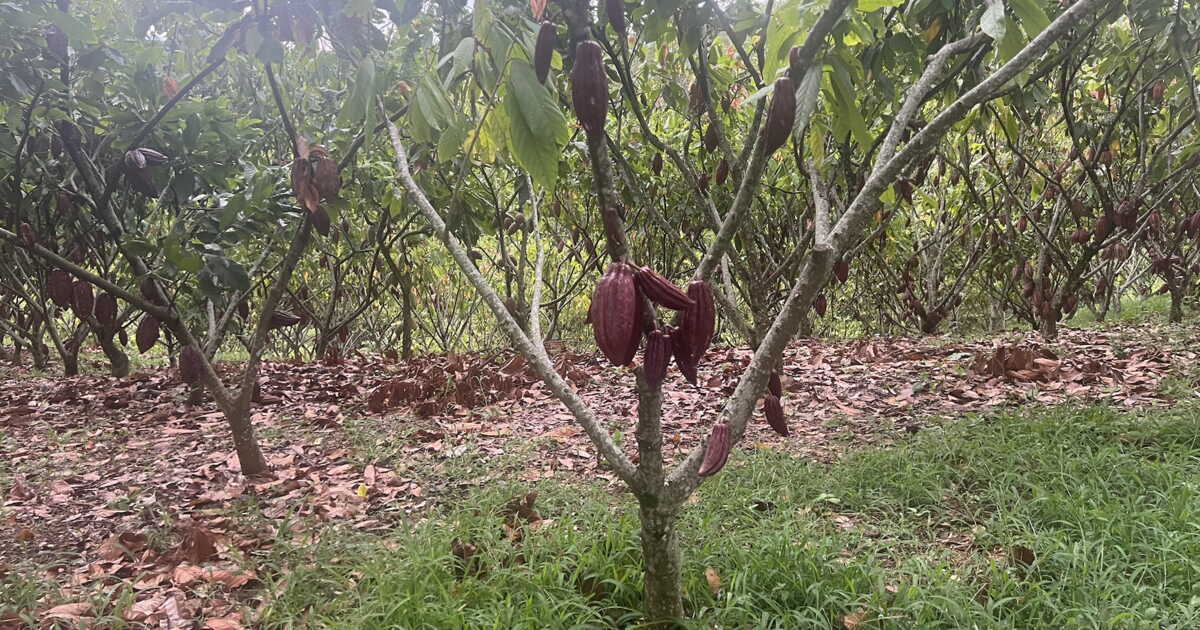
The rough road winds between the green hills of Antioquia, in the northwest of Colombia, before reaching Finca Maracay. The house, built nearly 90 years ago, seems frozen in time. Its rammed-earth walls, a plaster mix of earth, straw and mud, its guadua framework (a giant bamboo nicknamed the ‘natural iron’), and its clay tile roof bear witness to the region’s traditional architecture.

Here, cocoa is everywhere. Pods hang directly from the trunk, displaying yellow, orange, or deep red hues. Inside, dozens of beans are protected by a white, juicy, and sweet pulp called the mucilage. For a layperson, it is hard to imagine that this fruit will give birth to one of the most widely consumed foods in the world.

From the Coast to the Mountains: Albania’s Great Outdoors


L’autre intérêt majeur d’un séjour ou d’un circuit en Albanie, peut-être plus grand encore que les côtes, sont les montagnes. - Photo JFR

Dream Yacht


The coastline attracts the bulk of foreign tourists visiting Albania, a new Mediterranean frontier opened up by European tour operators in under ten years.

To the south, the Albanian Riviera, along the Ionian coast where the mountains literally plunge into the sea, houses the country’s finest sandy beaches. Vlora serves as the gateway to this coastline, with a planned airport, ferry links to Italy, and modern developments.

Radhima, Orikum, the Karaburun Peninsula (and its beaches accessible only by boat), Dhërmi and Himara are other popular resorts.

Farther south, opposite the Greek island of Corfu, near the site of Butrint, Saranda, Ksamil and Manastiri, host family hotels, villas and residences, but the whole area sadly lacks cohesion.

As for Durrës, further north, its coast, marred by anarchic construction and a polluted sea, is crowded in the summer by Albanian communities and neighbors from Kosovo.


Shkodra Lake and its 240 bird species

Lakes also offer their share of attractions. In the north, Shkodra Lake, bordering Montenegro, is an officially protected area that shelters 240 species of birds.

The lake expands or recedes with rainfall. To the south, the saline Butrint Lake, naturally linked to the Ionian Sea, sits at the heart of the eponymous national park, made up of plains, forests, wetlands and mountains.


Magnificent Lake Ohrid, bordering North Macedonia

It also shelters nearly 250 species of birds, as well as reptiles and amphibians, and offshore, the Mediterranean monk seal can be found.

To the southeast, bordering North Macedonia, the magnificent Lake Ohrid, a UNESCO World Heritage site, is a retreat and vantage point, enjoyed around the town of Pogradec.


The Mountains and the Theth Valley

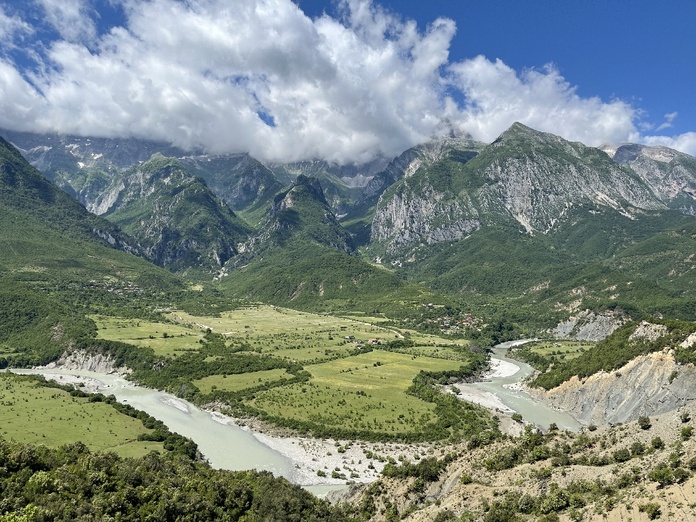
The other major draw of a stay or a tour in Albania, perhaps even greater than the coasts, is the mountains. Woven with rushing rivers, they cover 70% of the country and promise secret itineraries through valleys and villages tucked away. In the north, these are the Dinaric Alps, near Montenegro and Kosovo. They conceal the secluded Theth Valley.

Several ranges then extend toward the Greek border, with the country’s highest point at the border with North Macedonia, Mount Korab (2,751 m).

Many hikers choose Berat as a base camp before venturing to explore the surrounding mountains. The southern reliefs are especially alluring.

In a wild setting of grassy slopes and narrow passes, where one encounters many flocks of sheep watched over by shepherds (there are also wolves and bears), the narrow road between Gjirokastër and Korçë is spectacular, traversing landscapes that are pristine and punctuated by rare villages.


Resurgence of the Bistritza River

It is a pity that ecological practices have not yet become the norm. Whether coastal or mountainous, nature still suffers far too much from the presence of illegal dumps and litter scattered on the ground without a second thought.

One can also explore the Vjosa valley, the only river still regarded as wild because it is not dammed — though a project is underway.

The Bistritza River, for its part, presents a curiosity. One of its sources is a resurgence. After a pleasant approach hike (accessible to all) through high wooded slopes, one encounters this stream of fresh, translucent water bursting from beneath the mountain. The Blue Eye, that is its name, embodies in its own way the country’s natural wealth.