A Daily Frequency: Scheduling and Connectivity in South America


The regular daily operation schedule offers agencies complete flexibility for their clients, with structured times that maximize work and rest periods:
● Flight LA8067 (Paris – São Paulo): Daily departure at 13:00 and arrival at 20:00 on the same day. This daytime timetable facilitates morning connections in Europe and lets passengers work comfortably onboard in daylight or unwind before a late-evening arrival in Brazil.
● Flight LA8068 (São Paulo – Paris): Daily departure at 18:20 and arrival at 10:35 the following day (+1). This red-eye flight maximizes onboard rest and allows a full day upon landing in France.
The strategic advantage of the São Paulo Hub (GRU): The real appeal of this route for tourism professionals lies in the Guarulhos transfer hub. Upon touchdown, passengers gain direct access to LATAM Airlines’ network:
● Domestic network: Smooth connections to dozens of Brazilian airports (including major corporate and tourist centers such as Rio de Janeiro, Salvador de Bahia, and Brasilia).
● Regional network: Direct links to the leading capitals of South America (Santiago, Buenos Aires, Montevideo, and Lima), reinforcing LATAM Airlines as the most efficient operator in the market.
● Flight LA8067 (Paris – São Paulo): Daily departure at 13:00 and arrival at 20:00 on the same day. This daytime timetable facilitates morning connections in Europe and lets passengers work comfortably onboard in daylight or unwind before a late-evening arrival in Brazil.
● Flight LA8068 (São Paulo – Paris): Daily departure at 18:20 and arrival at 10:35 the following day (+1). This red-eye flight maximizes onboard rest and allows a full day upon landing in France.
The strategic advantage of the São Paulo Hub (GRU): The real appeal of this route for tourism professionals lies in the Guarulhos transfer hub. Upon touchdown, passengers gain direct access to LATAM Airlines’ network:
● Domestic network: Smooth connections to dozens of Brazilian airports (including major corporate and tourist centers such as Rio de Janeiro, Salvador de Bahia, and Brasilia).
● Regional network: Direct links to the leading capitals of South America (Santiago, Buenos Aires, Montevideo, and Lima), reinforcing LATAM Airlines as the most efficient operator in the market.
Airport Management: Priority Services and VIP Lounges
LATAM Airlines’ personalized service begins the moment the passenger arrives at the airport, thanks to streamlined processes designed to cut waiting times:
● Ground Priority Path: Passengers traveling in the Premium Business cabin enjoy exclusive check-in counters, access to expedited security lanes (Fast Track), and priority boarding.
● Baggage Handling: Luggage receives preferential treatment with priority labeling, ensuring it is among the first to be delivered on the belt at the destination.
● LATAM Lounge in São Paulo: At Guarulhos, premium clients have access to a corporate space featuring quiet rest zones, private showers, a high-end buffet (hot and cold options), coworking areas with high-speed connectivity, and a carefully curated menu of international beverages.
● Ground Priority Path: Passengers traveling in the Premium Business cabin enjoy exclusive check-in counters, access to expedited security lanes (Fast Track), and priority boarding.
● Baggage Handling: Luggage receives preferential treatment with priority labeling, ensuring it is among the first to be delivered on the belt at the destination.
● LATAM Lounge in São Paulo: At Guarulhos, premium clients have access to a corporate space featuring quiet rest zones, private showers, a high-end buffet (hot and cold options), coworking areas with high-speed connectivity, and a carefully curated menu of international beverages.
Boeing 787-9 Dreamliner Fleet: Technology in the Service of Corporate Wellbeing
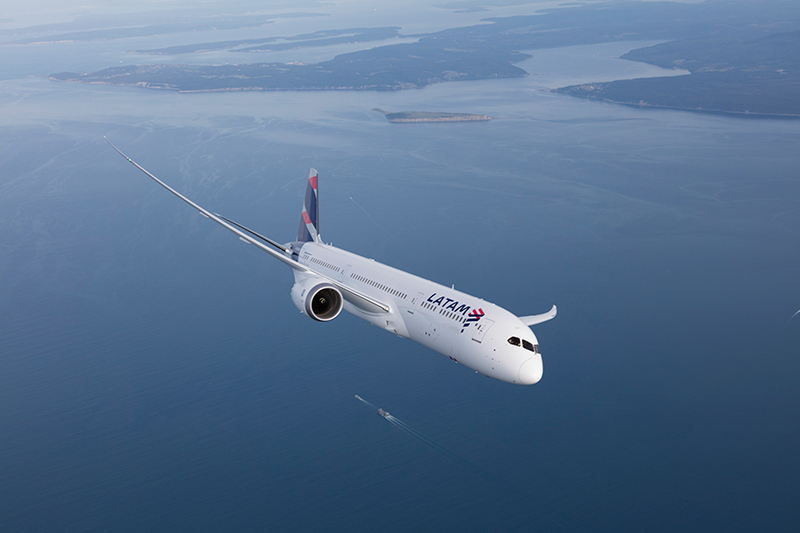
The Paris – São Paulo connection is exclusively operated by the Boeing 787-9 Dreamliner. The design and engineering of this next-generation aircraft aim to reduce physical fatigue and jet lag on long-haul journeys:
● Advanced cabin pressurization: With a composite-material fuselage, the aircraft is pressurized at an altitude lower than conventional models, enabling better passenger oxygenation and a reduction in fatigue and headaches.
● Controlled ambient humidity: An automatic system maintains higher humidity levels in the cabin, preventing dryness of the skin, eyes, and throat during the twelve-hour flight.
● Dynamic LED lighting (Mood Lighting): The cabin lights are programmed to reproduce natural day-night cycles according to the destination time, smoothing the time zone transition and supporting restorative sleep on nocturnal legs.
● Advanced cabin pressurization: With a composite-material fuselage, the aircraft is pressurized at an altitude lower than conventional models, enabling better passenger oxygenation and a reduction in fatigue and headaches.
● Controlled ambient humidity: An automatic system maintains higher humidity levels in the cabin, preventing dryness of the skin, eyes, and throat during the twelve-hour flight.
● Dynamic LED lighting (Mood Lighting): The cabin lights are programmed to reproduce natural day-night cycles according to the destination time, smoothing the time zone transition and supporting restorative sleep on nocturnal legs.
Premium Business Cabin: Privacy, Ergonomics, and Onboard Flexibility
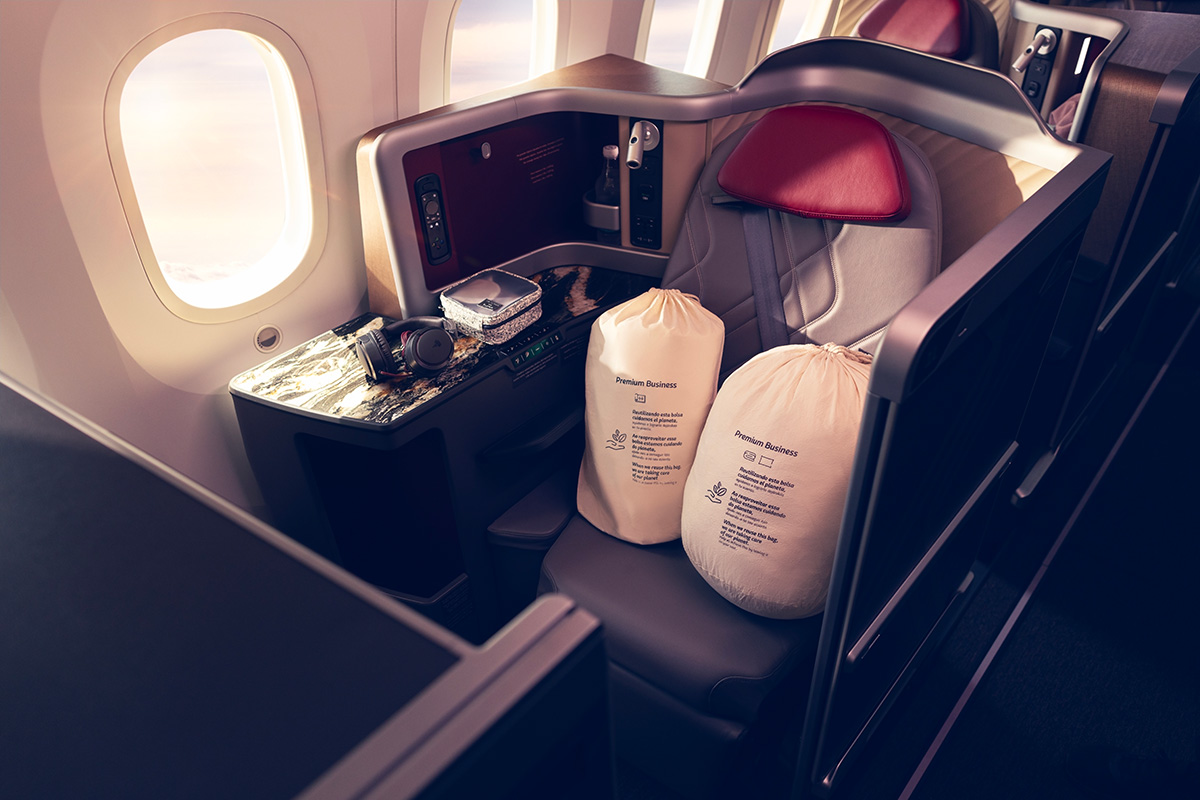
The 30-seat configuration inside LATAM’s Premium Business cabin creates an ideal environment for both productivity and rest:
● Direct aisle access: The cabin layout ensures passenger independence, allowing movement without disturbing others.
● Full Flat seat: Each seat electronically reclines to 180 degrees, transforming into a fully flat bed longer than two meters, complemented by ergonomic cushions and soft bedding.
● Technical equipment: Every seat provides a large personal HD screen, a remote control, universal power outlets, and USB ports for professional devices.
● Flexible “As you wish” service: The crew adapts the service pace to the passenger’s preferences. Guests can individually choose the timing of meals or rest, optimizing either productivity or sleep.
● Direct aisle access: The cabin layout ensures passenger independence, allowing movement without disturbing others.
● Full Flat seat: Each seat electronically reclines to 180 degrees, transforming into a fully flat bed longer than two meters, complemented by ergonomic cushions and soft bedding.
● Technical equipment: Every seat provides a large personal HD screen, a remote control, universal power outlets, and USB ports for professional devices.
● Flexible “As you wish” service: The crew adapts the service pace to the passenger’s preferences. Guests can individually choose the timing of meals or rest, optimizing either productivity or sleep.
Personalized Regional Cuisine and Sustainability
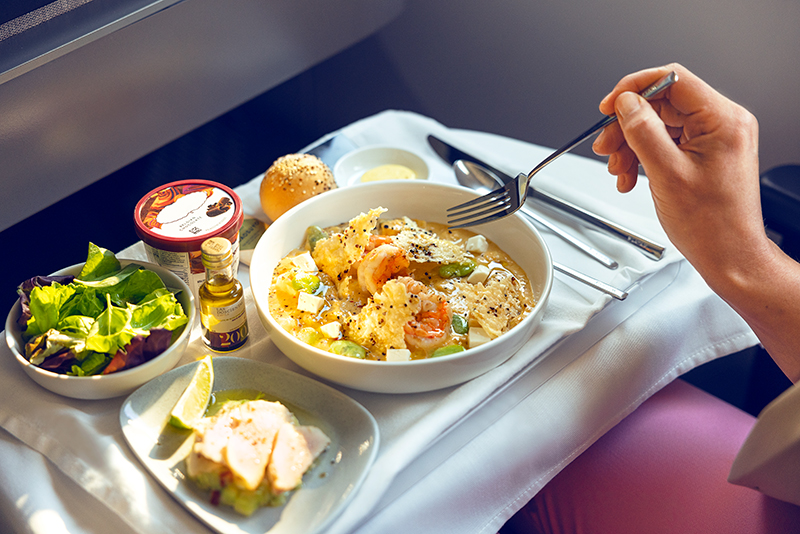
The onboard culinary proposition blends regional South American identity with strict sustainability standards, a key factor for the CSR policies of business clients:
● Chef’s menu and pre-selection: Crafted by international chefs for the Premium Business cabin, it highlights fresh locally sourced ingredients paired with wines selected by sommeliers. For optimal personalization, LATAM Airlines enables passengers to choose their main course on the website or app from 5 days to 26 hours before departure.
● Eco Travel Kits: Provided in the Premium Business cabin to replace disposable plastic kits, these cases are designed by regional artists using recycled, organic materials and durable fabrics, in line with fair-trade criteria.
● Reduction of environmental footprint: LATAM Airlines has eliminated 100% of single-use plastics in the premium cabin, substituting them with reusable, compostable, or recyclable utensils.
For travel agencies in France, recommending LATAM’s daily service on the Paris – São Paulo route ensures premium business and leisure clients a competitive product, time-efficient connections, and high comfort standards across the entire itinerary.
● Chef’s menu and pre-selection: Crafted by international chefs for the Premium Business cabin, it highlights fresh locally sourced ingredients paired with wines selected by sommeliers. For optimal personalization, LATAM Airlines enables passengers to choose their main course on the website or app from 5 days to 26 hours before departure.
● Eco Travel Kits: Provided in the Premium Business cabin to replace disposable plastic kits, these cases are designed by regional artists using recycled, organic materials and durable fabrics, in line with fair-trade criteria.
● Reduction of environmental footprint: LATAM Airlines has eliminated 100% of single-use plastics in the premium cabin, substituting them with reusable, compostable, or recyclable utensils.
For travel agencies in France, recommending LATAM’s daily service on the Paris – São Paulo route ensures premium business and leisure clients a competitive product, time-efficient connections, and high comfort standards across the entire itinerary.