

Fuel Prices: Airlines Face the Moment of Truth [ABO]


Le carburant provoque rarement, à lui seul, la faillite d’une compagnie. Il agit plutôt comme un révélateur et parfois comme le détonateur final - Depositphotos.com, svedoliver

CroisiEurope


In my column published on April 22, “Aviation in the Face of the Great Slowdown,” I was already analyzing the surge in jet fuel following the outbreak, on February 28, 2026, of the conflict in Iran.

This shock now imposes concrete decisions: which routes to keep, at what price, and with which aircraft?

For an industry whose margins remain structurally thin, a sustained rise in fuel can quickly undermine the profitability of a single route, then the network, and in the most fragile cases, even threaten the survival of a company.


An Immediate Shock to Margins That Are Razor-Thin

Fuel, alongside staff, constitutes one of the main expenditure items for an airline.

Its weight varies with the fleet, the business model, and the price of fuel.

But with margins often limited to just a few euros per passenger, a sustained rise can quickly erase the anticipated profit.

Filling the aircraft is no longer enough. A route with a load factor of 95% can easily lose money if it mainly carries passengers who bought low-cost tickets.


Fuel Hedging Only Delays the Hit

Fuel hedges temporarily shield margins. They allow certain carriers to keep their fares while competing players already bear the higher costs.

But they do not eliminate either the risk on uncovered volumes or the risk of renewing contracts at higher prices.

The dollar adds a currency risk: a company whose revenues are collected in a weaker currency can simultaneously face the rise of jet fuel and that of its invoicing currency.

Ryanair illustrates the advantage, but also the limits, of this protection. For its fiscal year from April 2026 to March 2027, the group hedged 80% of its jet fuel needs at around $67 per barrel. In the first quarter, the 20% uncovered cost nearly $150 per barrel, more than double year over year, while the average fare fell by 6%. Despite hedging, the fuel bill rose by 16% and net income fell by 34%.

Qatar Airways illustrates another trade-off. Its chief executive, Hamad Al-Khater, calls the current crisis the most significant in the airline’s history. In an interview with Bloomberg TV reported on September 20, he mentions jet fuel around $182 per barrel, about 90% above its level at the end of February 2026. Qatar is not yet passing this extra cost directly to passengers: it is prioritizing the most profitable routes and temporarily suspending less performing services.

Fuel no longer weighs solely on margins; it also shapes capacity and the network.


Medium-Haul: Reducing Without Undermining the Network

On the medium-haul, airlines have a degree of flexibility. They can cut a frequency, suspend a route during the winter, close a base, or redeploy an aircraft to a more profitable destination.

The first casualties will be the marginal routes: those kept to fill a slot, defend a market position, or deter a competitor from entering, but whose profitability remains insufficient.

Moving from three daily flights to two more-filled rotations reduces overall consumption. But this saving can make the offering less attractive to business travelers and reduce the chances for connections.

The major low-cost carriers, with their low unit costs and their ability to redeploy aircraft, can profit from the withdrawal of weaker players.

Traditional carriers have other advantages: premium customers, cargo and connections. Yet their cost structure and the interdependence of routes complicate capacity reductions.


Will We Need to “Break Up the Schedules”?

During the IFTM 2026 trade show, last week, one of France’s leading aviation experts told me: “To get out of this, we’ll have to break up the schedules.” It may no longer be enough to simply suspend a few underperforming routes.

For the most exposed airlines, it will be necessary to reconsider the very architecture of their network, abandon certain historic positions, and concentrate resources on the routes that can preserve cash flow.

The task is particularly difficult. Routes do not operate independently. Some feed a hub or enable a profitable long-haul connection.

Removing a seemingly loss-making service can therefore weaken other routes that seemed profitable. Modifying a program already marketed also incurs costs: rerouting passengers, refunding tickets, reorganizing crews, losing connections, and tarnishing the airline’s image.


Who Will Trim Capacity First?

A reduction in capacity can improve load factors and support fares. But no airline necessarily wants to be the first to act.

Each may hope that a competitor will drop frequencies or abandon a route before them. They could then maintain their offering, win back some passengers, and benefit from price increases triggered by capacity reductions.

We are witnessing a form of poker game. The carrier that cuts its schedule first risks giving up slots and market share. Those that wait too long may continue to operate flights that drain their cash flow.

Capacity discipline is gaining ground: Lufthansa has already announced short-haul reductions, while Air France-KLM is curbing growth and redeploying aircraft toward the most promising markets. Reducing a network can be decided quickly. Rebuilding it may take years.


The Passenger Will Ultimately Pay

The rise in fuel costs will not be immediately passed on to tickets.

On a highly competitive route, an airline cannot raise fares alone without losing customers. It will probably start by reducing promotions, limiting the cheapest fare classes, and increasing ancillary revenues: baggage, seats, priority boarding, or onboard services.

The reduction in capacity can also help sustain prices: when a service disappears or a competitor pulls out, seats become scarcer. The passenger may then face higher-priced tickets, less choice, and less convenient schedules.


Can Fuel Trigger Bankruptcies?

Fuel rarely causes the bankruptcy of an airline on its own. It acts more as a revealer and sometimes as the final detonator.

The most threatened carriers will be those with insufficient cash reserves, high indebtedness, expensive aircraft leases, an aging fleet, weak fuel hedging, and unprofitable routes.

Independent carriers without a major shareholder, some regional operators, and long-haul models that rely primarily on very low fares appear particularly vulnerable.

Therefore, the first airline to fail will not necessarily be the one that consumes the most fuel, but the one with the least time to react and not enough money to hold on.


The Hour of Decisions

In the short term, airlines must protect their cash, adjust their fares to demand, and shrink capacity that no longer covers costs.

In the medium term, they must continue to refresh fleets and develop partnerships, despite financing and delivery constraints.

The question is no longer whether airlines will raise prices or cut programs. They will probably do both.

The remaining question is who will be willing to move first and who can afford to wait. In air transport, bankruptcies are rarely caused by a single event. But for some carriers, the surge in jet fuel could well be the last drop in the tank.



Eric Didier - DR

A passionate entrepreneur and specialist in air transport, with more than three decades of experience, Eric Didier coordinated the launch of the Oneworld alliance before creating and developing Qatar Airways in France and on several European markets, where he held key leadership positions, ensuring the growth and success of the airline.

An expert in team management and in commercial strategies, alliances and distribution, he has worked with several major airlines, contributing to their international expansion.

He now leads the consulting firm TED Advisory Services.
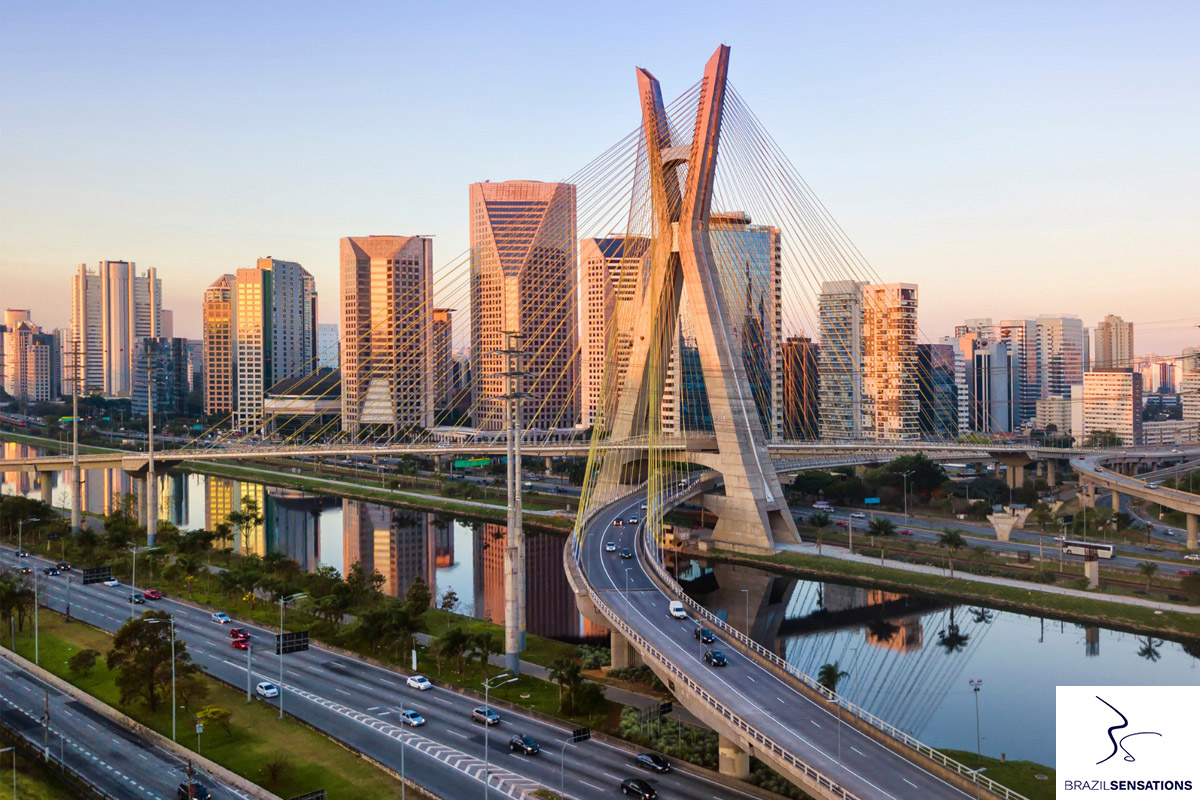
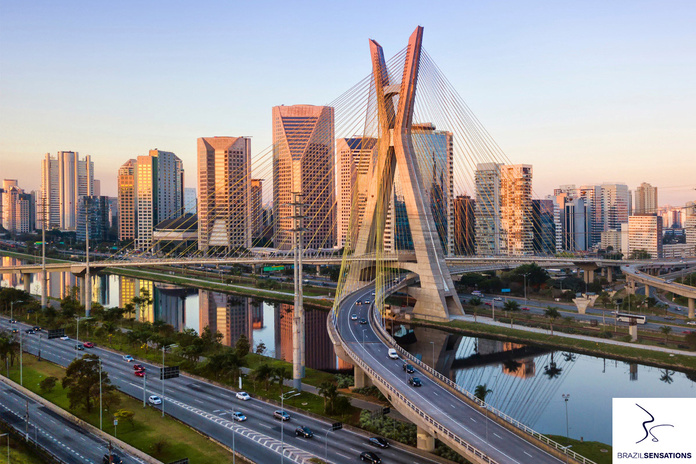
São Paulo: Brazil’s Other Face You Might Not Suspect


© Getty Images by Canva

CroisiEurope


1. Discover São Paulo through its neighborhoods

One of the best ways to understand São Paulo is to explore its neighborhoods and their distinct identities.

The Jardins allure with its shops, galleries, restaurants and upscale addresses. Pinheiros and Vila Madalena offer a more creative atmosphere, between design, independent cafés, galleries and street art. In Liberdade, the Japanese influence is omnipresent: lanterns, shops, markets and restaurants bear witness to the history of Japanese immigration to São Paulo and to how this culture has become part of the paulistano identity.

The Bixiga district, historically marked by Italian immigration, constitutes another fascinating stop. Its cantinas, pizzerias and eateries keep a culinary tradition that has gradually blended with Brazilian habits and ingredients.

A private guided tour can connect these different realms and help understand how the waves of immigration contributed to shaping São Paulo’s identity.


2. Art, architecture, design and street art

São Paulo hosts a thriving art scene where museums, architecture, design and urban art intersect.

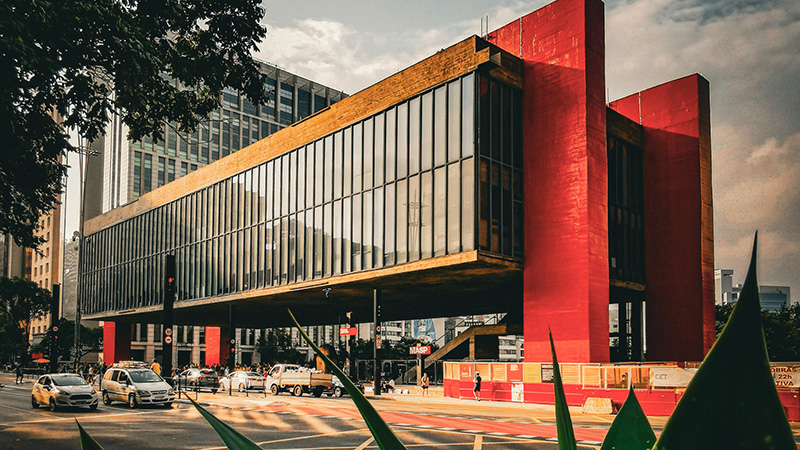
The MASP, designed by Lina Bo Bardi, stands as one of the city’s great architectural symbols. Yet the artistic experience extends beyond museums. Graffiti and street art play a central role in São Paulo’s visual identity, especially in Vila Madalena, where walls and façades become true canvases for expression.

A guided stroll lets you discover the works while understanding their context and place in paulistana culture. The itinerary can also include private galleries, design studios or a foray into modernist architecture.


© Beto Mendes - Pexels


3. A culinary scene that tells Brazil’s story

In São Paulo, gastronomy narrates the history of a city shaped by migrations. A true cultural mosaic, the metropolis gathers influences from Italian, Japanese, Lebanese, Portuguese, Arab communities and many other origins, which have contributed to forging the paulistana identity. This diversity is reflected in both traditional restaurants and contemporary haute cuisine.

The Liberdade neighborhood stands as one of the most emblematic examples of this cultural richness. Marked by a strong Japanese influence since the arrival of the first immigrants in the early 20th century, the district is now known for its lanterns, shops, markets and Japanese restaurants. There you can discover classic Japanese dishes, as well as how this culture has adapted to Brazilian life.

Italian influence is equally present in the city. In historic areas like Bixiga, Italian culinary traditions have deeply shaped paulistana culture. Pizzerias, cantinas, fresh pasta and recipes handed down through generations are part of São Paulo’s gastronomic landscape.

The presence of the Syro-Lebanese community adds another facet to this migration story. São Paulo hosts a sizeable Lebanese- and Syrian-origin community, whose heritage appears in restaurants, pastries and specialty groceries. A gastronomic experience can thus be an opportunity to discover specialties such as hummus, tabbouleh, kibbeh, esfihas or pistachio-filled and filo-based desserts, while exploring the history of this immigration.

The Mercado Municipal de São Paulo, known as Mercadão, provides another privileged gateway to the city’s culinary culture. Its stalls bring together tropical fruits, spices, regional products, cheeses, cured meats and specialties from across Brazil. Accompanied by a local guide, the visit helps to understand the products and eating habits that form the paulistana identity.


© Rogério CassimiroMTur


This cultural diversity also fuels a globally acclaimed haute cuisine scene. At D.O.M., Brazilian chef Alex Atala explores the country’s biodiversity through a chef’s cuisine that highlights Amazonian and Brazilian ingredients such as jambu, tucupi, bacuri, and açai. His work has helped bring Brazilian products and culinary traditions to the international gastronomic stage.

At Banzeiro, Brazilian chef Felipe Schaedler offers an immersion into Amazonian cuisine. His dishes emphasize fish, fruits, spices and regional ingredients, with a contemporary approach that reveals the Amazon in a new light.

In São Paulo, it is therefore possible to travel across Brazil and the world without leaving the city: Italian, Japanese, Syro-Lebanese, French, Brazilian or Amazonian cuisines mingle and reinvent themselves in a single metropolis. It is precisely this diversity that makes Paulistano gastronomy a true cultural experience.


© Rubens Kato-Banzeiro


4. A luxury-oriented hotel offering

São Paulo hosts a richly varied hotel scene, spanning from historic Brazilian institutions to new luxury properties that blend architecture, art, design and gastronomy.

Our favorite: Fasano São Paulo. More than a hotel, Fasano is a true Brazilian brand of upscale hospitality. The Fasano family’s history in Brazil goes back to 1902, when Vittorio Fasano, originally from Milan, opened Brasserie Paulista in São Paulo. More than a century later, this family tradition remains at the heart of the group’s identity.

Located in Jardins, one of São Paulo’s most elegant neighborhoods, Fasano São Paulo combines contemporary architecture with classic references and the house’s Italian legacy. Designed by architects Isay Weinfeld and Márcio Kogan, the hotel has 60 rooms and suites, in a restrained atmosphere where wood, leather, natural stone, Persian carpets and Murano glass pieces echo the family’s history. The Fasano Restaurant, the Baretto and the Spa complete the experience.

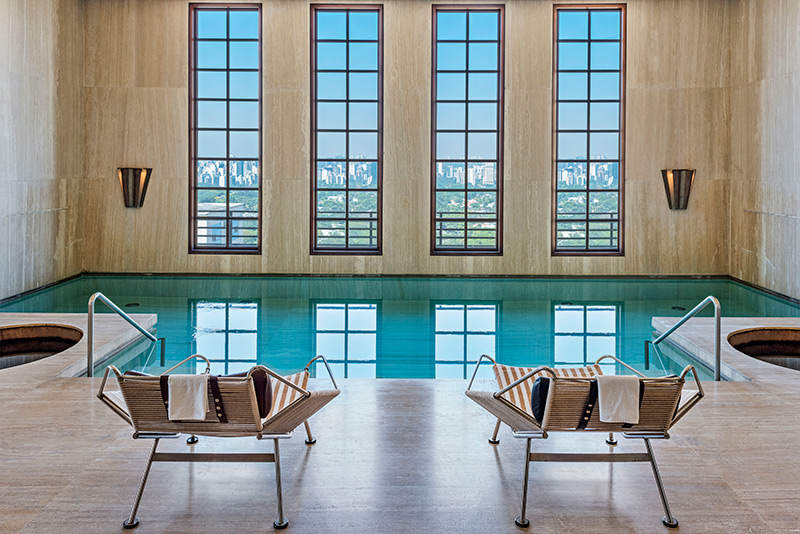
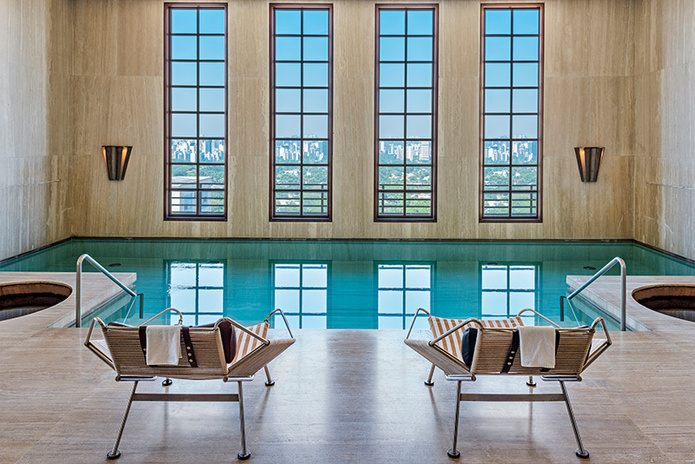
Another iconic address, Hotel Unique stands out for its inverted-arch architecture, conceived by Brazilian architect of Japanese origin, Ruy Ohtake. Opened in 2002, the hotel has become a true architectural landmark of São Paulo. Located in Jardins, near Ibirapuera Park, it offers an experience where architecture, design, gastronomy and contemporary art intersect. Its Skye rooftop, with its iconic pool, provides panoramic views of the city.

Rosewood São Paulo offers a different take on luxury, deeply linked to the city’s history and heritage. Situated near Avenida Paulista, in the Cidade Matarazzo complex, the fusion blends early 20th‑century historic buildings (including the old Matarazzo Maternity) with a new vegetated tower designed by architect Jean Nouvel.

The project thus transforms a heritage ensemble into a contemporary destination that gathers hotel, restaurants, culture, art and wellness. Rosewood São Paulo also embraces an art- and culture-forward approach, with a substantial art collection and a verdant environment that creates a true urban oasis in the heart of the metropolis.

For a more contemporary touch in the Itaim Bibi district, Fasano São Paulo Itaim complements this offering with a more urban atmosphere, close to the main business, leisure and entertainment hubs.

These various addresses allow guests to tailor their stay to their travel profile: classic elegance and Brazilian heritage at Fasano, architecture and design at Unique, or a cultural and contemporary experience at Rosewood.


© Hotel Fasano São Paulo


6. A MICE destination naturally connected


Pair São Paulo with…

São Paulo works particularly well in combination with Rio de Janeiro to pair two complementary faces of Brazil, but also with Paraty, Iguassu, or the Amazon, depending on the traveler’s profile and the length of stay.

For travelers looking to extend the cultural and gastronomic experience, São Paulo can also serve as the starting point for a broader itinerary across different regions of Brazil.


Tips from Brazil Sensations

• A private itinerary focusing on architecture, art and street art with a local specialist.

• Exploration of São Paulo’s multicultural neighborhoods, notably Liberdade and Bixiga, through their history and cuisine.

• A gastronomic experience around the diverse culinary influences of São Paulo, from Italian and Japanese cuisine to Syro-Lebanese traditions and Amazonian flavors.

• Private visit to Mercadão accompanied by a local guide.

• Dinner at a gastronomic venue highlighting Brazilian products and biodiversity.

• An stay at an iconic address such as Fasano São Paulo, our favorite, or at landmark hotels like Hotel Unique and Rosewood São Paulo.

• A program around the São Paulo Grand Prix, with hospitality experiences available depending on availability.

• A tailor-made program combining São Paulo with Rio, Paraty, Iguassu or the Amazon.

São Paulo is therefore not just a transit stop. For travelers who want to discover a more urban, cultural, creative, multicultural and gastronomic Brazil, the city can become a true highlight of the journey.


São Paulo, l’autre visage du Brésil qu’on ne soupçonne pas

Chloé Hathaway

General manager

55 21 32 64 19 02 / 55 21 9 84 94 20 30

[email protected]

https://brazilsensations.com

facebook instagram instagram

>> Brazil Sensations in the DESTIMAG Directory


Women Changing the Face of the Australian Outback


À Winton, trois générations de femmes qui, chacune à leur manière, participent à faire vivre et raconter l’Outback - Photo : Sébastien Cros / WeTravelAustralia

Climats du Monde


I did not come to the Outback to write an article about women.

For three weeks, with my niece Marion behind the camera, our travel diary for TourMaG was meant to tell a territory, its routes, its landscapes and above all those who live there.

Yet, along the kilometers, something began to catch my attention.

At the entrance of a bush hotel, behind the bar of a pub, in an open-air cinema, in the middle of a kangaroo sanctuary, in an art gallery or behind the barriers of a rodeo, they were there.

Not necessarily where the traditional Outback imagination would have placed them, and rarely occupying the spotlight to claim their role. They worked, created, welcomed, transmitted, led.

It took me several steps to understand that this sequence of encounters might tell us something about today’s interior Australia.


In Broken Hill, another story behind the miners’ tale

It’s probably in Broken Hill that the thread began to unfold.

Artist Amanda Johnson belongs to the fourth generation of a family from this mining town on the edge of the desert.

In her studio, her paintings tell of the bush, but also of the women who inhabited it. One of her most revealing works was born from a commission for the centenary of the Country Women’s Association. They initially asked for a painting.

While poring over the association’s archives and a century of local history, Amanda felt that a single painting would not suffice. She ultimately built her narrative across several panels, tracing the achievements of these women by era.

Listening to her, I began to view Broken Hill differently. The city isn’t devoid of masculine legends. Miners went underground, fortunes were made and lost, BHP was born here and the “line of lode” belongs to Australian industrial mythology.

But beside this story existed another reality, perhaps less spectacular but just as fundamental: women raising families, organizing the community, working, caring, bearing isolation, and sustaining lives built around the mine.

Amanda wasn’t trying to rewrite this history. She was complementing it. And this nuance would accompany me for the rest of the journey.


In Winton, intuition becomes evident

A few hundred kilometres further north, Winton would reveal a completely different face to this feminine presence.

This small town in Queensland is associated with some of Australia’s great myths: Waltzing Matilda, the dinosaurs, the origins of Qantas, the vast cattle stations of Western Queensland.

Historically, the world here has been deeply masculine. When I speak with several residents about the impression the town gives today, the same story returns: that of the shearers, the men of the properties, old street fights, a harsh culture shaped by work and isolation.

And yet, the Winton we encountered exuded something else. The town now has as mayor Cathy White, the first woman to hold that role. Lydia Evert, she, oversees the Royal Theatre, one of the last outdoor cinemas still operating in Australia.

In this corrugated-iron venue opened in 1918, handed down in her husband’s family since 1937 and still run by volunteers, locals used to come to dance, attend boxing matches, meet up and sometimes fall in love.

Lydia doesn’t merely preserve the walls: she keeps a place alive where a community continues to gather under the stars.

Elsewhere in Winton, other women lead, undertake, organize events, welcome travelers or take care of wildlife.

In a wildlife refuge in Winton, Marion found herself with a young kangaroo in her arms. This kind of encounter speaks volumes about the Outback: a door opens, someone begins to share their daily life and, a few minutes later, you step into a fragment of their life. These are not staged attractions. They are people who agree to share their world.


Amanda-Lyn Pearson: taking the bush codes and reinventing them

Then we met Amanda-Lyn Pearson. The night before, she had been under the lights of the Dusty Hour: sequins, a top hat, acrobatics and the crack of the stockwhip.

The next morning, with an Akubra on her head and boots on her feet, she guided us through Crackup Corner, the remarkable HQ she built at the edge of Winton with her husband Will.

Amanda-Lyn grew up in remote Australia, often on the road. She wanted to be an artist without really knowing how one could practice this craft from the bush. She learned, traveled, sought skills and performed in different places around the world before the Western Queensland finally asserted itself as an obvious choice: “It felt like home.”

What she does today is hard to classify, and that is precisely what makes it compelling. The Crack Up Sisters borrow from traditional bush arts, the stockwhip, circus, burlesque, acrobatics and clowning to tell Australia in their own way.

She does not reject the old Outback codes. She takes them, plays with them and carries them elsewhere. When we discuss Winton and its evolution, Amanda-Lyn also revisits this masculine story.

The dinosaurs arrived, tourism developed, the town changed. And with it, another energy became more visible. It was at that moment that I stopped thinking my encounters were coincidences.


In small towns, the ones that keep the door open


Guardians, but above all facilitators

One English word kept returning to me during this journey: custodian. “Guardian” would be its most immediate translation, but it remains imperfect.

For these women, they do not stay still protecting an idealized vision of the past. On the contrary. Many of them take what deserves preservation and find a way to pass it on, sometimes reinventing it, for a new generation, for a new generation.

Lydia keeps a cinema that is more than a century old alive rather than a museum piece.

Amanda Johnson brings an otherwise less visible history into painting.

Amanda-Lyn turns bush gestures into contemporary spectacle.

Others protect wildlife, lead a community, host an event or open the door of a pub every morning to travelers from the other end of the country.

To preserve and to evolve, moving together. Perhaps that, at heart, is what touched me most about them.


Another way of telling the Outback to French travelers

For French tourism, this story isn’t merely anecdotal. It speaks to how we might tell the story of the Australian interior.

The Outback will continue to captivate with its red tracks, its cattle stations, its stockmen, its road trains, its centenarian pubs and its rodeos.

It is certainly not about erasing this imagery: it belongs to the country and remains deeply alive. But stopping at that image would today amount to telling only part of the story.

Contemporary travel can also enable meeting the artist who paints the memory of the Broken Hill women, the one who turns the stockwhip into stage language in Winton, the woman who keeps a cinema under the stars, the one who rescues injured kangaroos, or those who work behind one of the country’s great rodeos.

These are precisely the encounters that turn an itinerary into immersion. And they remind us of something our 5,000 kilometers taught us: in the Outback, the territory can never be fully understood from the road. You must stop, push a door and speak to those who live behind it.


The women who changed my view of the Outback


Sur la route, au coucher du soleil : au fil des rencontres, les femmes de l’Outback ont fini par changer ma manière de regarder ce territoire - Photo : Sébastien Cros, WeTravelAustralia

At first, I thought I would find one of the last territories where the masculine imagination of Australia fully survived: miners, stockmen, cattlemen, pilots, cowboys. They were there, and some offered extraordinary encounters.

But that isn’t exactly how I view the Outback today. Behind its most visible myths, I met women who preserve its memory, keep its communities alive, and, without necessarily seeking to proclaim it, are already helping write what it will become.

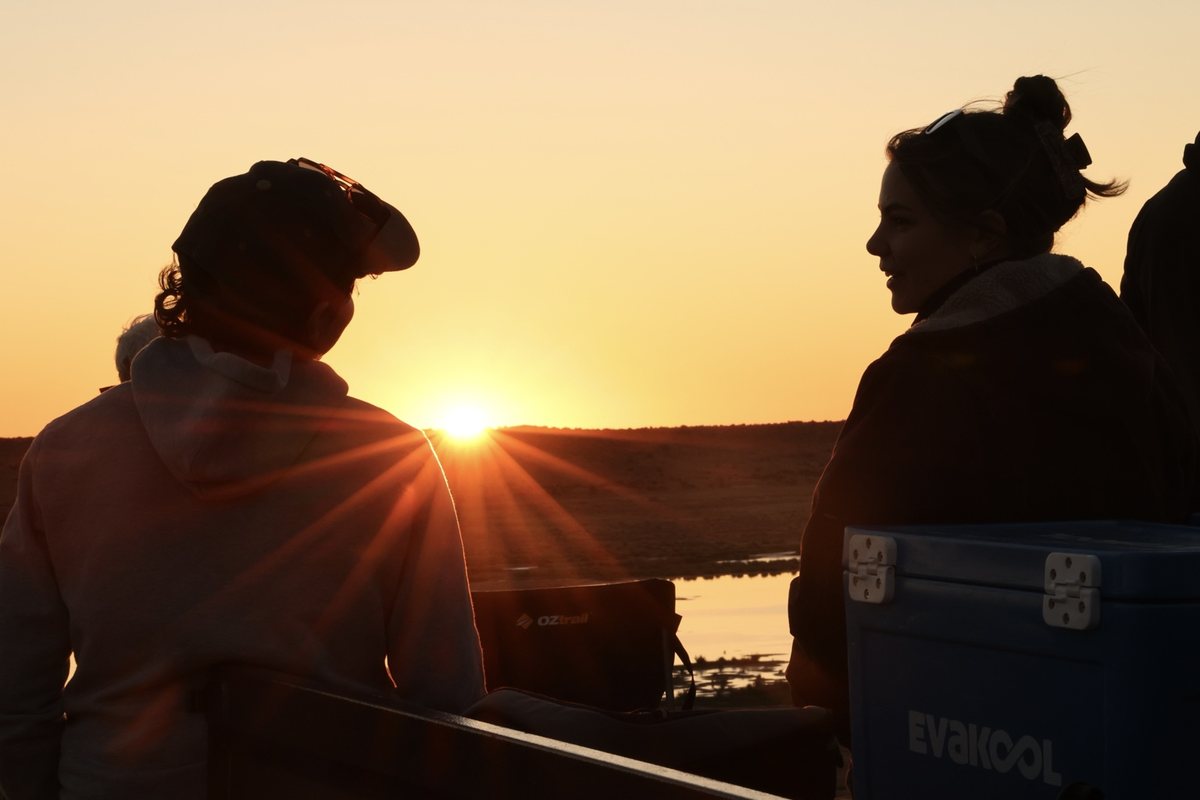
In Big Red, to the west of Birdsville, I photographed Marion at sunset in the middle of a conversation with a young woman from the Birdsville Hotel team.

Two silhouettes against the desert, almost nothing around them, just a conversation as the sun disappeared behind the dunes. I did not yet know that this photograph would probably become the last image of this story.

The road went on. But the women I met along the way had changed the way I looked at the Outback.


Sébastien Cros


Sébastien Cros - Photo : SC

Sébastien Cros is an independent journalist and photographer based in Australia, founder of WeTravelAustralia™.

After twenty-five years in the Australian travel industry, notably as Managing Director of Across Australia (Goway group), he now dedicates his writing to editorial narratives focused on the destination, at the crossroads of storytelling, photography, and on-the-ground perspectives.

Thailand: Problematic Tourists Now Face Expulsion

The Thai government has warned that “problematic” tourists could be expelled from the country, as new rules targeting foreigners convicted of illegal activities came into force on Friday.

“Problematic tourists or foreign workers who violate the law must leave”, wrote on Thursday evening on social media the Tourism Minister Surasak Phancharoenworakul.

New rules governing the expulsion of foreigners who have completed their sentences were published on Friday in the Royal Gazette, the Thai official journal. They cover offenses such as visa overstay, illegal work, fraudulent business operations, the use of forged documents, or offenses punishable by at least five years in prison.

Incivilities that Are Increasingly Exasperating the Authorities

“The Thailand has a policy of welcoming foreigners who wish to travel, work, or do business. However, it has been observed that some foreigners do not act in accordance with the law or the customs of our people”, the text states.

Approved in July by the government of Conservative Prime Minister Anutin Charnvirakul, these measures aim to “preserve Thai cultural values”, according to authorities.

Thailand had already decided in May to reduce visa-free stays for tourists from more than 90 countries from 60 to 30 days, in the announced bid to fight crime after a string of incidents. Altercations with tuk-tuk drivers, wild two-wheeled roadrides, public sexual escapades or illegal exploitation of businesses: incidents involving foreigners have fed local media nearly every week. A Spanish man and a Peruvian woman were expelled in May after being caught engaging in public sexual activity.

Separately, a controversy recently erupted after the French manager of a small wildlife park on the island of Koh Samui refused entry to Israelis, amid death threats and antisemitic statements.

The repeated incivilities have fueled public debate and pushed authorities to harden their tone, even as the Southeast Asian kingdom remains economically heavily dependent on tourism, which accounts for more than 10% of its gross domestic product (GDP).

Thailand expects around 33.5 million foreign tourists in 2026, compared with nearly 33 million last year.

Tourism in the Face of Climate Change: Adapt or Endure? [ABO]


Tourisme : des destinations best sellers seront invivables... - crédit photo : visuel généré à l'aide de l'IA

CroisiEurope


In 2014, to raise awareness about climate change, TF1 attempted a projection exercise during a weather bulletin.

We are August 17, 2050. France is smothered under an oppressive sun, barely veiled.

“Tomorrow morning, temperatures will already be very high, notably in Paris, Perpignan or Nice, with 26 degrees. In the afternoon, we will reach or exceed 40°C: 41 in Strasbourg, 40 in the capital, 42 in Lyon and up to 43 degrees forecast in Nîmes,” announced Evelyne Dhéliat, during a weather bulletin aired after the evening news.

Science fiction? Not at all. Just twelve years earlier, one could see that there was no need to project so far. These temperatures, which used to belong to forecasting, have become reality, even before summer has begun.

As economist Maxime Combes notes, Evelyne Dhéliat made three errors in her forecasts: no, Brittany and the Cotentin will not be spared; no, you won’t have to wait until August to burn on the spot; and no, you shouldn’t wait until 2050 either.

Indeed, by the end of 2026, France is already beating records one after another. It had already reached 37.8 °C at La Couronne in Charente, 37.4 °C in Perpignan and 37.6 °C in Narbonne.

While travel agencies struggle, France burns. And some still prefer to avert their eyes, when they don’t choose to laugh.


Tourism: Best-Selling Destinations Will Become Unlivable…

On his side, Daniel Riolo, a journalist whose humor is increasingly lacking, urged the French to stop “whining“, while asserting “it’s hot, enough already!”

A few hours later, in a classroom in Soustons, in the Landes, the thermometer surged and reached 53 degrees.

We are at the end of May, the students are suffocating, but all it will take is to slip on a T-shirt and open the windows. Seriously? Two very bad pieces of advice in such a situation.

Let us be clear: our industry cannot avoid a reflection on its future, even as crises follow one another, whether for travel agencies or for institutional actors.

To read: Greenhouse gas emissions: tourism must (quickly) act or die?

Because if we do nothing, an entire swath of destinations marketed by distribution, but also countries heavily dependent on tourism, will become unvisitable during the summer period.

“If we do nothing, the South and the Mediterranean basin will be regions comparable to the desert of Africa. In short, this region will no longer be attractive for summer vacations. The sand will be so hot that no one will be able to walk there.

Tourists will not want to stay in their hotel room all day, when there are other places to go out.

If we do nothing, I am not optimistic for this region
“, explained a few years ago Wouter Vanneuville, climate adaptation expert at the European Environment Agency.

The clock is ticking. And even if adaptation in Europe is very costly, doing nothing will cost more, economically and in human terms.


… infrastructures will become obsolete

This episode of historical precocity reminds us that destinations are not the only things that are not adapted: our infrastructures are not in a better position.

Last week, SNCF had no choice but to cancel trains.

The carrier explained that this decision was necessary due to the risk of air conditioning failures, because equipment is too old and not robust enough to withstand extreme temperatures.

At the last EDV conference, Jean Castex, the former prime minister, underscored the urgency of the situation.

“I often say that climate-skeptics would be stunned by the evolution observed in just 15 years if they visited the SNCF.

This impact is now considerable. The consequences are not limited to more pronounced climatic phenomena.


We are particularly witnessing a rise in forest fires. Yet, our lines traverse numerous wooded areas, which can have a very significant impact on rail traffic.

There is also a disruption of wildlife and a sharp increase in trees falling onto the network. In ten years, they have multiplied by fourteen“, confided the CEO of SNCF.

The carrier also keeps a close watch on problems with catenaries, power supply, or the overheating of rails. When it is 37 °C, the temperature of the rail can reach 55 °C. At that level, it can warp.

In 2025 already, the new Nantes station had to be closed due to the heat. It has again made headlines last week.

Air travel will not be spared either.


Tourism is not the climate’s arch-enemy, but it must question itself!

In 2017, the city of Phoenix, United States, turned into a true furnace. The thermometer exceeded 50 degrees.

“The hotter the air, the less dense it is. Therefore, one must reach a higher takeoff speed. The length of the runway can be a determining factor in achieving that speed. In Phoenix, with this heat wave, air density made takeoffs impossible“, explained Clément Mallet, project manager for mobility and adaptation at Carbone 4, in a previous article.

Global warming will also intensify turbulence.

According to a study by researchers at the University of Reading, these phenomena are becoming more frequent due to warmer air. Today, on a Paris–New York flight, passengers experience an average of 10 minutes of turbulence.

By 2050, that will be more like 20 to 30 minutes.

Here are as many examples as there are to show that our industry is not ready to face this phenomenon that we, humanity, have created. And we have not even spoken about rising sea levels or the dwindling of snow in the mountains… nor about the regulatory risk that could be imposed on companies…

Good news, we still have our fate in our own hands.

And contrary to what a recently posted LinkedIn message by a captain suggested, it is clear that taxing French aviation will not change everything. But it is not either by shifting blame onto others or by minimizing one’s own impact on global warming that we will advance the debate.

With such reasoning, we could have allowed people to keep smoking in restaurants, bars or cafes. After all, one cigarette cannot hurt anyone. Likewise, it would be easier to avoid picking up after Fido’s poop or to refrain from throwing a bottle in the trash…

Of course, it is the sum of individual behaviors that is at stake. Only a broad, global awareness will keep our old Earth breathable.

So no, we should not stop traveling, nor flying. But we must all, collectively, adopt a reasoned behavior, so that this industry remains the powerful lever of emancipation and inclusion, whether in 2050 or beyond.