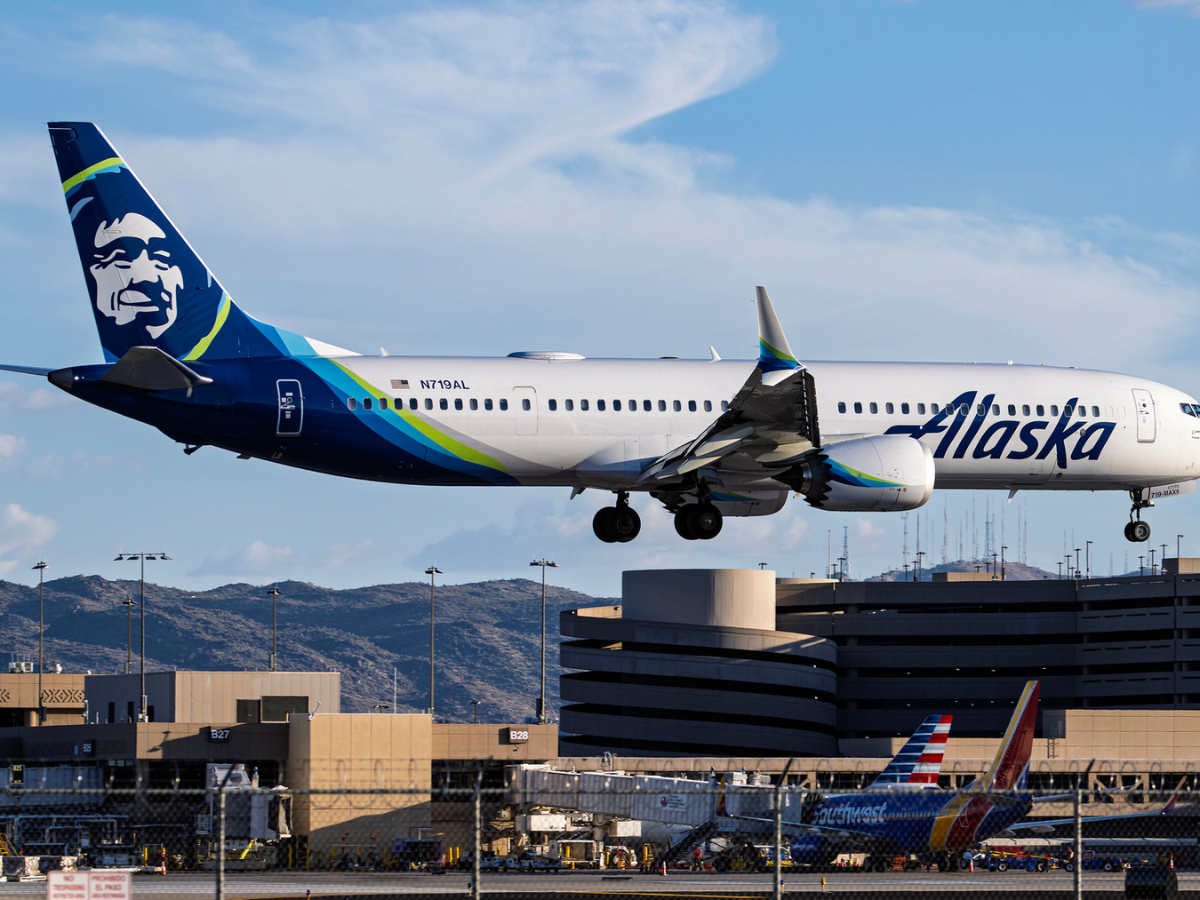

Alaska Airlines and Hawaiian Airlines Unveil Their New Premium Offers


Alaska Airlines et Hawaiian Airlines dévoilent leurs nouvelles expériences premium Aurora et Leihōkū.   DepositPhotos.com/RLGUESSAZ

CroisiEurope


Alaska Airlines et Hawaiian Airlines vont faire évoluer leur offre premium avec deux nouvelles expériences.

Alaska Airlines déploiera Aurora sur ses Boeing 787 et certains Boeing 737-10 MAX.

L’offre comprendra notamment des suites avec fauteuil-lit, un enregistrement dédié et un nouveau salon à Seattle. Sur les Boeing 787-9 modernisés, la part de sièges premium atteindra environ 46 %, contre 38 % actuellement.

Hawaiian Airlines introduira de son côté Leihōkū sur ses 24 Airbus A330. Les appareils bénéficieront d’intérieurs repensés et de 22 suites avec fauteuil-lit. La part de sièges premium passera à environ 40 %, contre 30 % actuellement.


A New Premium Economy Cabin

The new Premium Reserve cabin will be offered on the Boeing 787-9 and 787-10, the Airbus A330s and some Boeing 737-10 MAX. Reservations will open in the summer of 2027, with deployment starting in 2028.

It will notably offer 38 inches of seat pitch, a wider seat, a leg rest and a 16-inch 4K OLED screen.

The airlines also plan to evolve their catering, with menus crafted with local chefs. Alaska Airlines also plans a new lounge complex of nearly 3,800 m² in Seattle by late 2027, while Hawaiian Airlines will open a lounge of around 1,200 m² in Honolulu in early 2028.
Fuel Prices: Airlines Face the Moment of Truth [ABO]


Le carburant provoque rarement, à lui seul, la faillite d’une compagnie. Il agit plutôt comme un révélateur et parfois comme le détonateur final - Depositphotos.com, svedoliver

CroisiEurope


In my column published on April 22, “Aviation in the Face of the Great Slowdown,” I was already analyzing the surge in jet fuel following the outbreak, on February 28, 2026, of the conflict in Iran.

This shock now imposes concrete decisions: which routes to keep, at what price, and with which aircraft?

For an industry whose margins remain structurally thin, a sustained rise in fuel can quickly undermine the profitability of a single route, then the network, and in the most fragile cases, even threaten the survival of a company.


An Immediate Shock to Margins That Are Razor-Thin

Fuel, alongside staff, constitutes one of the main expenditure items for an airline.

Its weight varies with the fleet, the business model, and the price of fuel.

But with margins often limited to just a few euros per passenger, a sustained rise can quickly erase the anticipated profit.

Filling the aircraft is no longer enough. A route with a load factor of 95% can easily lose money if it mainly carries passengers who bought low-cost tickets.


Fuel Hedging Only Delays the Hit

Fuel hedges temporarily shield margins. They allow certain carriers to keep their fares while competing players already bear the higher costs.

But they do not eliminate either the risk on uncovered volumes or the risk of renewing contracts at higher prices.

The dollar adds a currency risk: a company whose revenues are collected in a weaker currency can simultaneously face the rise of jet fuel and that of its invoicing currency.

Ryanair illustrates the advantage, but also the limits, of this protection. For its fiscal year from April 2026 to March 2027, the group hedged 80% of its jet fuel needs at around $67 per barrel. In the first quarter, the 20% uncovered cost nearly $150 per barrel, more than double year over year, while the average fare fell by 6%. Despite hedging, the fuel bill rose by 16% and net income fell by 34%.

Qatar Airways illustrates another trade-off. Its chief executive, Hamad Al-Khater, calls the current crisis the most significant in the airline’s history. In an interview with Bloomberg TV reported on September 20, he mentions jet fuel around $182 per barrel, about 90% above its level at the end of February 2026. Qatar is not yet passing this extra cost directly to passengers: it is prioritizing the most profitable routes and temporarily suspending less performing services.

Fuel no longer weighs solely on margins; it also shapes capacity and the network.


Medium-Haul: Reducing Without Undermining the Network

On the medium-haul, airlines have a degree of flexibility. They can cut a frequency, suspend a route during the winter, close a base, or redeploy an aircraft to a more profitable destination.

The first casualties will be the marginal routes: those kept to fill a slot, defend a market position, or deter a competitor from entering, but whose profitability remains insufficient.

Moving from three daily flights to two more-filled rotations reduces overall consumption. But this saving can make the offering less attractive to business travelers and reduce the chances for connections.

The major low-cost carriers, with their low unit costs and their ability to redeploy aircraft, can profit from the withdrawal of weaker players.

Traditional carriers have other advantages: premium customers, cargo and connections. Yet their cost structure and the interdependence of routes complicate capacity reductions.


Will We Need to “Break Up the Schedules”?

During the IFTM 2026 trade show, last week, one of France’s leading aviation experts told me: “To get out of this, we’ll have to break up the schedules.” It may no longer be enough to simply suspend a few underperforming routes.

For the most exposed airlines, it will be necessary to reconsider the very architecture of their network, abandon certain historic positions, and concentrate resources on the routes that can preserve cash flow.

The task is particularly difficult. Routes do not operate independently. Some feed a hub or enable a profitable long-haul connection.

Removing a seemingly loss-making service can therefore weaken other routes that seemed profitable. Modifying a program already marketed also incurs costs: rerouting passengers, refunding tickets, reorganizing crews, losing connections, and tarnishing the airline’s image.


Who Will Trim Capacity First?

A reduction in capacity can improve load factors and support fares. But no airline necessarily wants to be the first to act.

Each may hope that a competitor will drop frequencies or abandon a route before them. They could then maintain their offering, win back some passengers, and benefit from price increases triggered by capacity reductions.

We are witnessing a form of poker game. The carrier that cuts its schedule first risks giving up slots and market share. Those that wait too long may continue to operate flights that drain their cash flow.

Capacity discipline is gaining ground: Lufthansa has already announced short-haul reductions, while Air France-KLM is curbing growth and redeploying aircraft toward the most promising markets. Reducing a network can be decided quickly. Rebuilding it may take years.


The Passenger Will Ultimately Pay

The rise in fuel costs will not be immediately passed on to tickets.

On a highly competitive route, an airline cannot raise fares alone without losing customers. It will probably start by reducing promotions, limiting the cheapest fare classes, and increasing ancillary revenues: baggage, seats, priority boarding, or onboard services.

The reduction in capacity can also help sustain prices: when a service disappears or a competitor pulls out, seats become scarcer. The passenger may then face higher-priced tickets, less choice, and less convenient schedules.


Can Fuel Trigger Bankruptcies?

Fuel rarely causes the bankruptcy of an airline on its own. It acts more as a revealer and sometimes as the final detonator.

The most threatened carriers will be those with insufficient cash reserves, high indebtedness, expensive aircraft leases, an aging fleet, weak fuel hedging, and unprofitable routes.

Independent carriers without a major shareholder, some regional operators, and long-haul models that rely primarily on very low fares appear particularly vulnerable.

Therefore, the first airline to fail will not necessarily be the one that consumes the most fuel, but the one with the least time to react and not enough money to hold on.


The Hour of Decisions

In the short term, airlines must protect their cash, adjust their fares to demand, and shrink capacity that no longer covers costs.

In the medium term, they must continue to refresh fleets and develop partnerships, despite financing and delivery constraints.

The question is no longer whether airlines will raise prices or cut programs. They will probably do both.

The remaining question is who will be willing to move first and who can afford to wait. In air transport, bankruptcies are rarely caused by a single event. But for some carriers, the surge in jet fuel could well be the last drop in the tank.


Eric Didier - DR

A passionate entrepreneur and specialist in air transport, with more than three decades of experience, Eric Didier coordinated the launch of the Oneworld alliance before creating and developing Qatar Airways in France and on several European markets, where he held key leadership positions, ensuring the growth and success of the airline.

An expert in team management and in commercial strategies, alliances and distribution, he has worked with several major airlines, contributing to their international expansion.

He now leads the consulting firm TED Advisory Services.

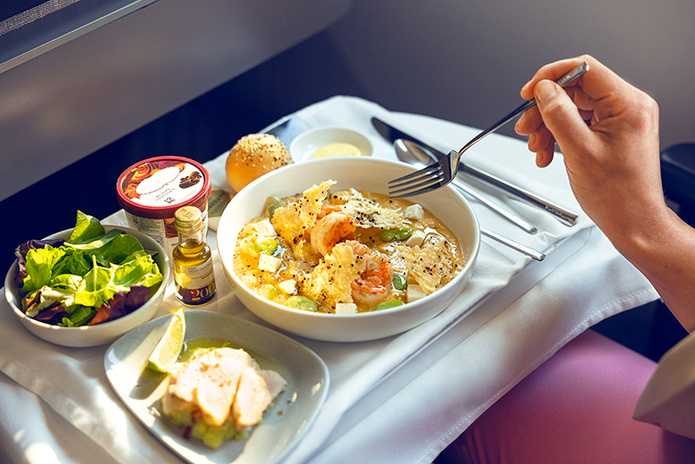
Singapore Airlines Enhances Its In-Flight Dining Experience


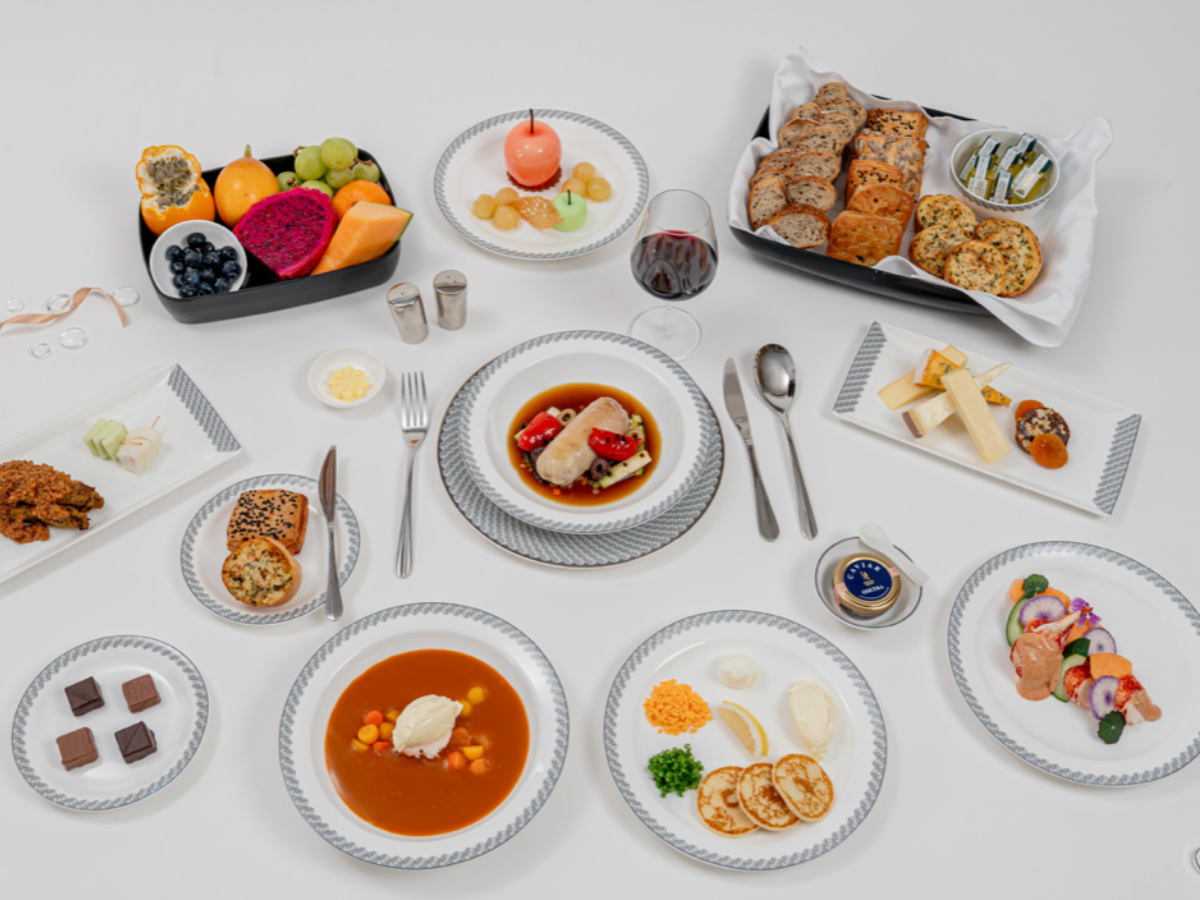
Une sélection des nouveaux plats servis en Suites et First Class à bord de Singapore Airlines - Photo : Singapore Airlines

Aer Lingus


Singapore Airlines déploie progressivement sa nouvelle offre de restauration dans toutes ses classes de voyage.

Baptisée SIA Chefs’ Selection, elle comprend plus de 100 entrées, plats principaux et desserts nouveaux ou revisités, élaborés par les chefs de la compagnie et des chefs invités.

La sélection associe spécialités régionales, classiques revisités et nouvelles créations.

La compagnie indique également privilégier, lorsque cela est possible, des ingrédients frais et de saison provenant de producteurs locaux.


A New Tableware Set for Premium Cabins

In Suites, First Class and Business Class, meals will be served using a brand-new tableware set designed in collaboration with Christofle, incorporating an interpretation of Singapore Airlines’ batik motif.

The beverage offering is also evolving with new selections of wines, champagnes and spirits, as well as a broader range of non-alcoholic drinks.

Some dishes may benefit from a special presentation in Suites and First Class, with drink recommendations offered by the crew.

These enhancements will be rolled out gradually from November 2026.

These changes form part of a broader redesign of the Singapore Airlines travel experience, which will also include a new cabin, an evolution of the entertainment system KrisWorld and high-speed connectivity.

The entire package will be unveiled in Singapore in November 2026.

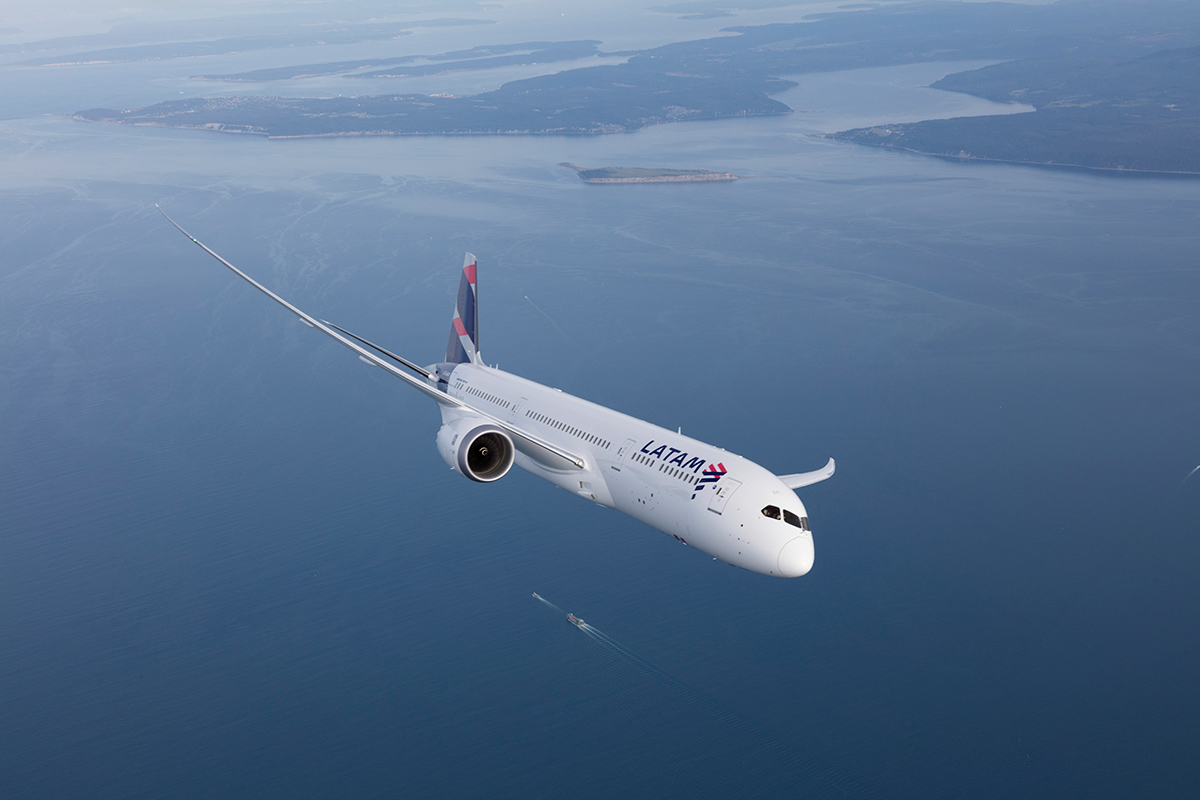
LATAM Airlines Appoints Sebastián Acuto as Head of Operations and Maintenance


LATAM Airlines Group nomme Sebastián Acuto vice-président des opérations et de la maintenance - Photo : Latam Airlines

Climats du Monde


Sebastián Acuto has assumed the role of Chief Operating Officer (COO) of LATAM Airlines Group.

He succeeds Hernán Pasman, who departed on August 31, 2026.

As part of his new responsibilities, he will oversee the Operations, Maintenance, and Fleet divisions, with stated priorities of safety, on-time performance, and the group’s operational efficiency, as well as continuing its technological transformation.


17 ans d’expérience au sein de LATAM

Sebastián Acuto évolue depuis 17 ans au sein de LATAM.

Il occupait depuis 2020 le poste de directeur de la flotte et des projets, où il était chargé de la stratégie et de la planification de la flotte.

Il a notamment participé à la négociation de contrats d’avions et de moteurs durant la procédure de Chapter 11, à l’intégration des Embraer E2 et au développement de nouveaux produits portant notamment sur le confort et la connectivité à bord.

Auparavant, il a dirigé pendant huit ans les activités d’ingénierie et de maintenance du groupe.

Dans ses nouvelles fonctions, le dirigeant entend poursuivre la numérisation des opérations et l’intégration de nouvelles technologies.

LATAM souhaite notamment s’appuyer davantage sur les données, l’intelligence artificielle et l’automatisation afin d’améliorer l’efficacité des opérations et de réduire les erreurs.


Amelia Brille Publié par Amelia Brille Rédactrice TourMaG.com
Voir tous les articles d’Amélia Brille

  • picto Linkedin
  • picto email
Ajoutez TourMaG à votre flux Google Actualités Google Actualités icône  

Singapore Airlines Named Best Airline in the World


Singapore Airlines a été désignée meilleure compagnie aérienne au monde - Depositphotos.com @gnohz

Climats du Monde


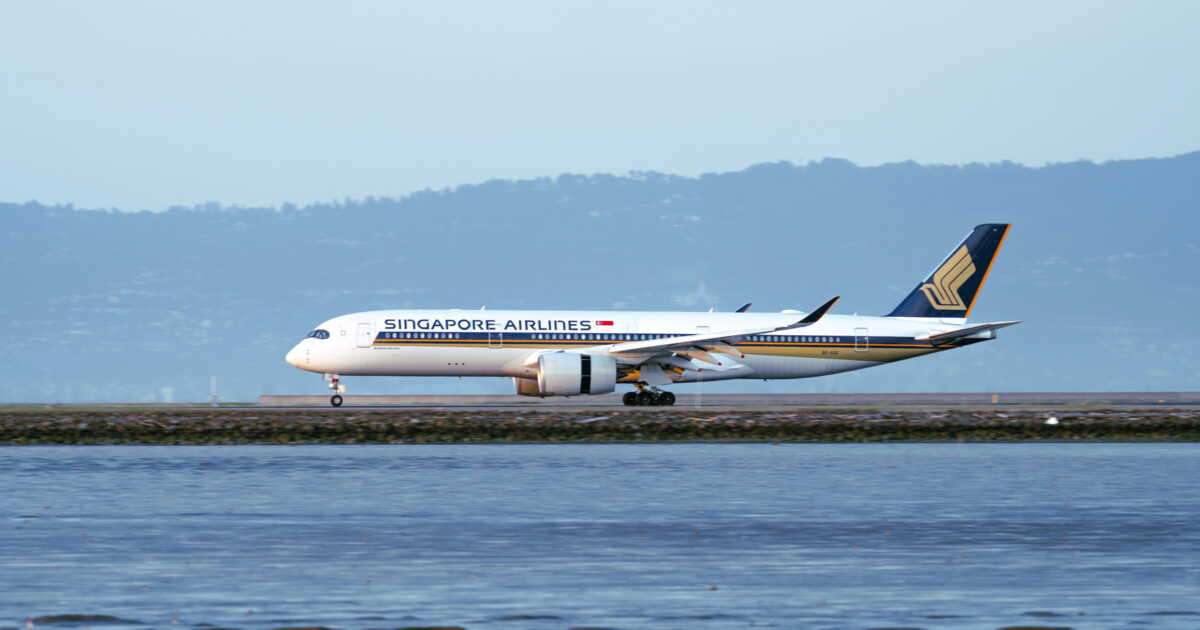
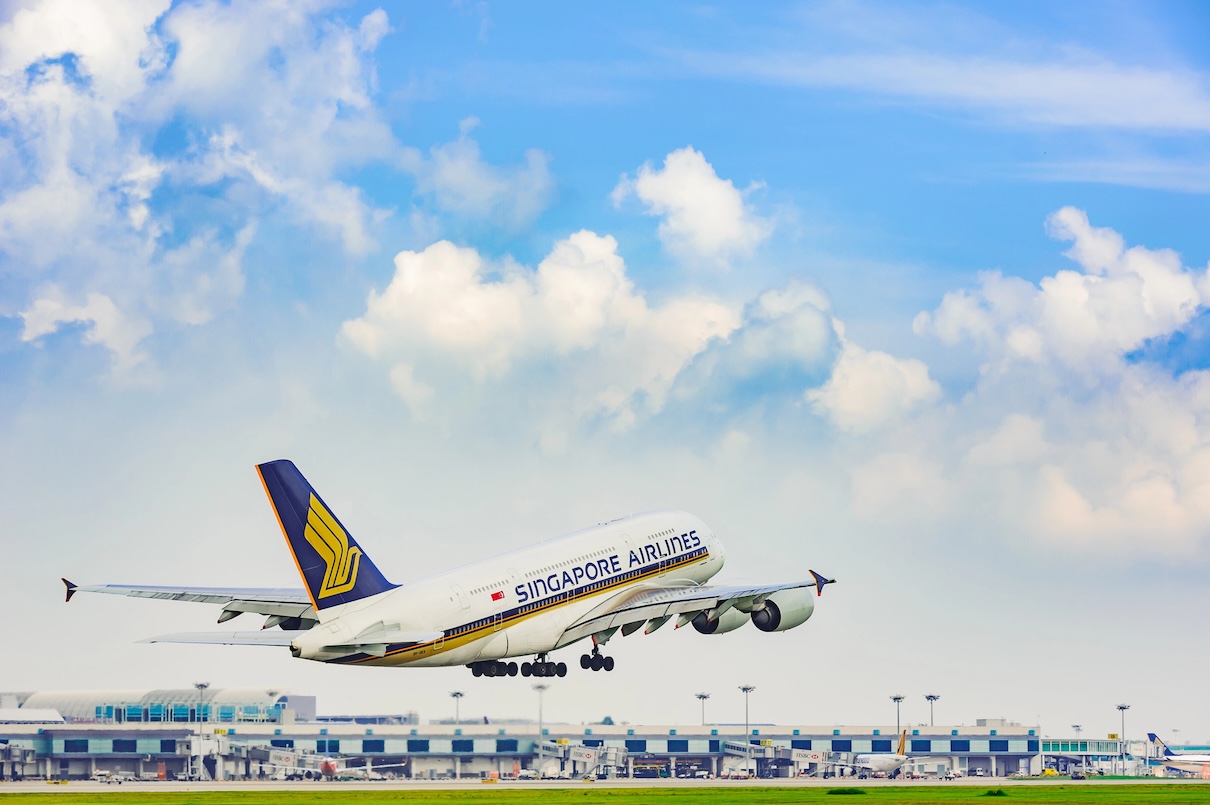
Singapore Airlines has won the title of « best airline in the world » for the sixth time.

The airline surpasses Qatar Airways and Cathay Pacific in the global ranking, based on a survey of more than 24.8 million travelers who evaluated more than 300 airlines between September 2025 and August 2026.

SIA also earned the titles of best airline in Asia, best economy class in the world, and best onboard dining in economy class.

Air France finished 7th among the world’s airlines. The French carrier also won several distinctions, including best first class in the world, best first-class dining, and the best comfort amenities in first class.

It was also named the best airline in Western Europe.


AirAsia Retains Its Title in the Low-Cost Segment

In the low-cost carrier category, AirAsia retained the title of world’s best low-cost airline, ahead of Scoot and Vueling.

AirAsia has held this distinction since 2010. Scoot was named the best long-haul low-cost carrier for the sixth consecutive year, while Vueling earned the title of best European low-cost carrier and finished third worldwide in this category.

Transavia ranks seventh in the global low-cost ranking.

Air Transat won for the eighth time the title of best leisure airline in the world. It beats SunExpress, TUI Airways, Sun PhuQuoc Airways and Condor.


Qatar Airways Honored in Business Class

Qatar Airways, second in the global ranking, was named the world’s best airline in business class, a distinction it receives for the 13th time. It also won the titles of best business class lounge in the world, best airline in the Middle East, and, for the first time, best Wi‑Fi on board in the world.

Among other distinctions, Turkish Airlines was named the best airline in Europe, while ANA All Nippon Airways, 4th in the global ranking, claimed the title of best airport services in the world.


Amelia Brille Publié par Amelia Brille Rédactrice TourMaG.com
Voir tous les articles d’Amélia Brille

  • picto Linkedin
  • picto email
Ajoutez TourMaG à votre flux Google Actualités Google Actualités icône  

Ranking of the World’s Best Airlines for Travel

The latest Skytrax rankings, the international body specializing in air transport ratings, were unveiled in London on Friday, September 18. As every year since 1999, these “Oscars of the aviation industry,” as the organizers describe them in their press release, rest on travelers’ opinions about more than 300 airlines operating worldwide.

The big winner? Singapore Airlines, crowned for the sixth consecutive time as “World’s Best Airline.” It also claimed the titles of “Best Economy Class” and “Best In-Flight Economy Class Catering.” “We are grateful to our customers for their trust and support. We are committed to delivering an exceptional, world-class travel experience, every time they fly with us,” said Chief Executive Goh Choon Phong, trophy in hand.

Turkish Airlines ahead of Air France

Qatar Airways finishes in second place, after having claimed the supreme title nine times in the past. The airline stands out this year with four awards, notably “Best Airline in the Middle East,” “Best Business Class,” and “Best Wi-Fi Onboard,” a category introduced for this edition. Cathay Pacific completes the podium with the honors of “World’s Best Cabin Crew” and “World’s Best First Class Lounge” for The Wing lounge. Ronald Lam, CEO of the Cathay group, already aims higher for next year.

“We have already committed around 150 billion Hong Kong dollars in investments to expand and modernize our fleet, to upgrade our cabins and lounges, and to push digital innovation. All these initiatives will elevate the customer experience and strengthen Hong Kong’s status as a leading international aviation hub,” he announced during the awards ceremony.

Following the top trio come ANA All Nippon Airways (“Best Airport Services in the World”), Turkish Airlines and Emirates (“Best In-Flight Entertainment Options in the World”).

Asia particularly well represented

In seventh place follows Air France, which receives awards for “Best First Class,” “Best First Class Catering,” and “Best In-Flight Comfort” in this category. It is also named “Best Airline in Western Europe.” The next European carrier in the world rankings won’t appear until the fourteenth place, Lufthansa.

Between them lie Hainan Airlines (“Best Airline in China” for the fifteenth consecutive year, “Best Customer Service in China,” and “Best Business Class Product in the World”), Japan Airlines and Korean Air – which did not pick up other awards – EVA Air (the airline most friendly to families, “Best Premium Economy Class in the World” and “Best Premium Economy Cabin Products in the World”), Qantas Airways (“Best Airline in the Australia/Pacific region” and “Best Cabin Crew in the Region”) and STARLUX Airlines, named as the world’s cleanest airline.

Behind Saudi Arabian Airlines, Iberia (Spain) takes the sixteenth spot, followed by Air Canada, Virgin Atlantic (UK), Swiss International Air Lines (Switzerland), and Thai Airways bringing up the rear.

Besides the list of the twenty best airlines, Vueling for the first time grabs the title of “Best Low-Cost Airline in Europe” and LOT Polish Airlines (Poland) earns the designation “Best Airline in Central Europe.”

LATAM Airlines: Personalized Service, Comfort, and Exclusivity on the Paris to São Paulo Route


A Daily Frequency: Scheduling and Connectivity in South America

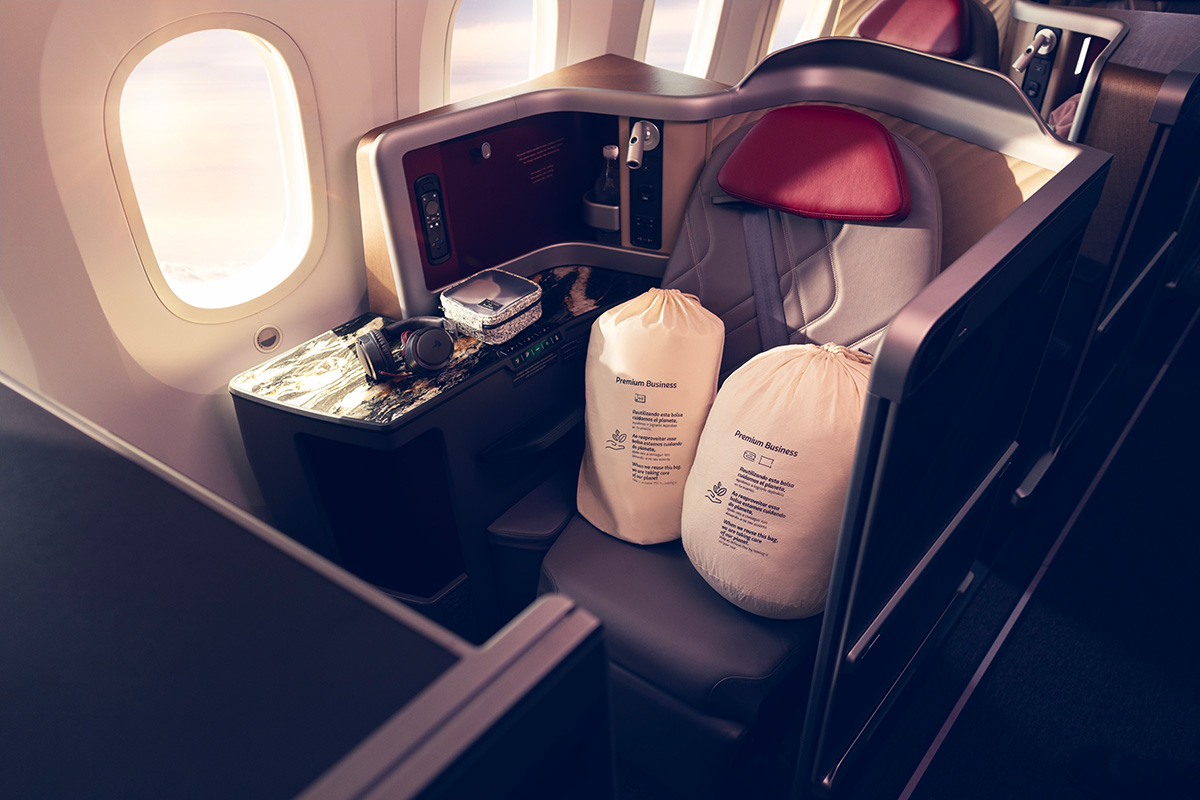
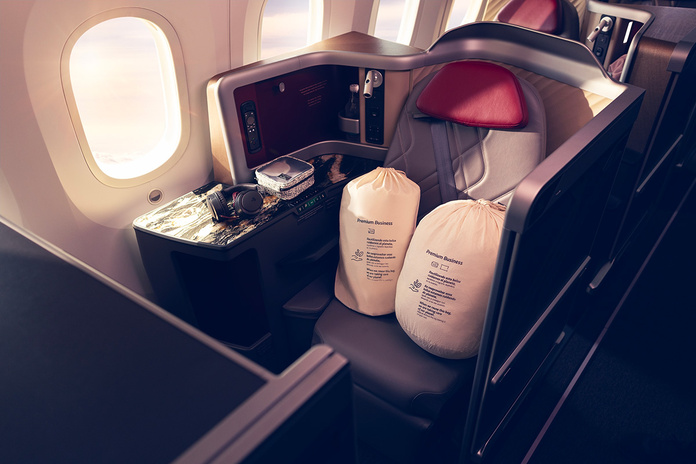
Cabine Premium Business © LATAM Airlines

MSC Croisières


The regular daily operation schedule offers agencies complete flexibility for their clients, with structured times that maximize work and rest periods:

● Flight LA8067 (Paris – São Paulo): Daily departure at 13:00 and arrival at 20:00 on the same day. This daytime timetable facilitates morning connections in Europe and lets passengers work comfortably onboard in daylight or unwind before a late-evening arrival in Brazil.

● Flight LA8068 (São Paulo – Paris): Daily departure at 18:20 and arrival at 10:35 the following day (+1). This red-eye flight maximizes onboard rest and allows a full day upon landing in France.

The strategic advantage of the São Paulo Hub (GRU): The real appeal of this route for tourism professionals lies in the Guarulhos transfer hub. Upon touchdown, passengers gain direct access to LATAM Airlines’ network:

● Domestic network: Smooth connections to dozens of Brazilian airports (including major corporate and tourist centers such as Rio de Janeiro, Salvador de Bahia, and Brasilia).

● Regional network: Direct links to the leading capitals of South America (Santiago, Buenos Aires, Montevideo, and Lima), reinforcing LATAM Airlines as the most efficient operator in the market.


Airport Management: Priority Services and VIP Lounges

LATAM Airlines’ personalized service begins the moment the passenger arrives at the airport, thanks to streamlined processes designed to cut waiting times:

● Ground Priority Path: Passengers traveling in the Premium Business cabin enjoy exclusive check-in counters, access to expedited security lanes (Fast Track), and priority boarding.

● Baggage Handling: Luggage receives preferential treatment with priority labeling, ensuring it is among the first to be delivered on the belt at the destination.

● LATAM Lounge in São Paulo: At Guarulhos, premium clients have access to a corporate space featuring quiet rest zones, private showers, a high-end buffet (hot and cold options), coworking areas with high-speed connectivity, and a carefully curated menu of international beverages.


Boeing 787-9 Dreamliner Fleet: Technology in the Service of Corporate Wellbeing


© LATAM Airlines

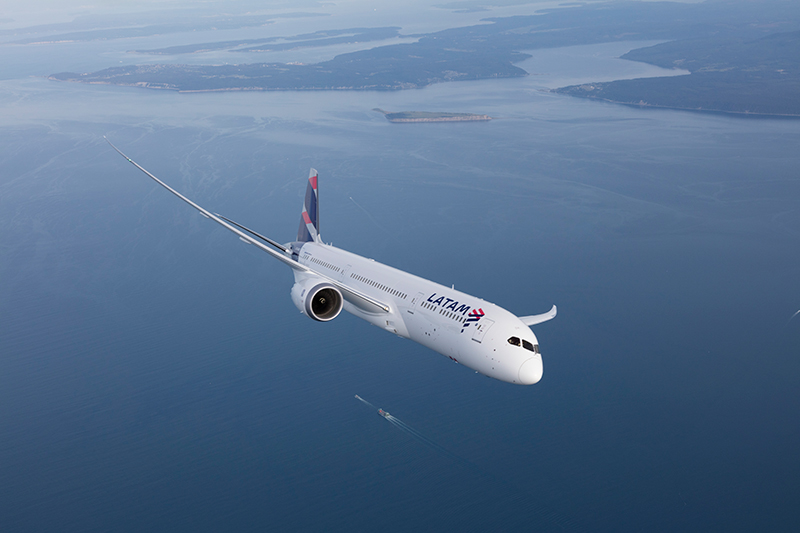
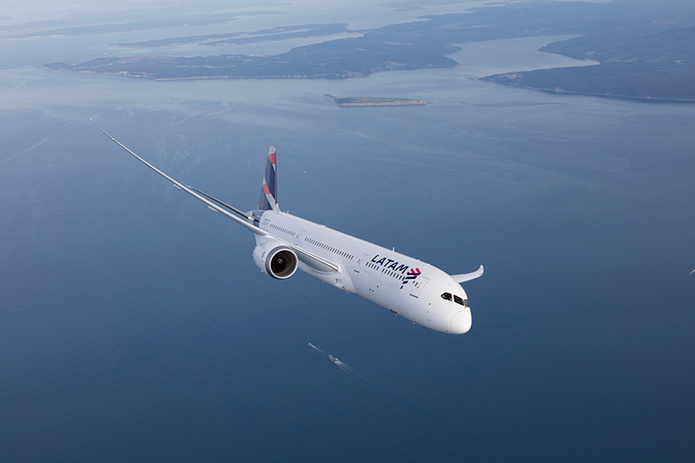
The Paris – São Paulo connection is exclusively operated by the Boeing 787-9 Dreamliner. The design and engineering of this next-generation aircraft aim to reduce physical fatigue and jet lag on long-haul journeys:

● Advanced cabin pressurization: With a composite-material fuselage, the aircraft is pressurized at an altitude lower than conventional models, enabling better passenger oxygenation and a reduction in fatigue and headaches.

● Controlled ambient humidity: An automatic system maintains higher humidity levels in the cabin, preventing dryness of the skin, eyes, and throat during the twelve-hour flight.

● Dynamic LED lighting (Mood Lighting): The cabin lights are programmed to reproduce natural day-night cycles according to the destination time, smoothing the time zone transition and supporting restorative sleep on nocturnal legs.


Premium Business Cabin: Privacy, Ergonomics, and Onboard Flexibility

The 30-seat configuration inside LATAM’s Premium Business cabin creates an ideal environment for both productivity and rest:

● Direct aisle access: The cabin layout ensures passenger independence, allowing movement without disturbing others.

● Full Flat seat: Each seat electronically reclines to 180 degrees, transforming into a fully flat bed longer than two meters, complemented by ergonomic cushions and soft bedding.

● Technical equipment: Every seat provides a large personal HD screen, a remote control, universal power outlets, and USB ports for professional devices.

● Flexible “As you wish” service: The crew adapts the service pace to the passenger’s preferences. Guests can individually choose the timing of meals or rest, optimizing either productivity or sleep.


Personalized Regional Cuisine and Sustainability


© LATAM Airlines

The onboard culinary proposition blends regional South American identity with strict sustainability standards, a key factor for the CSR policies of business clients:

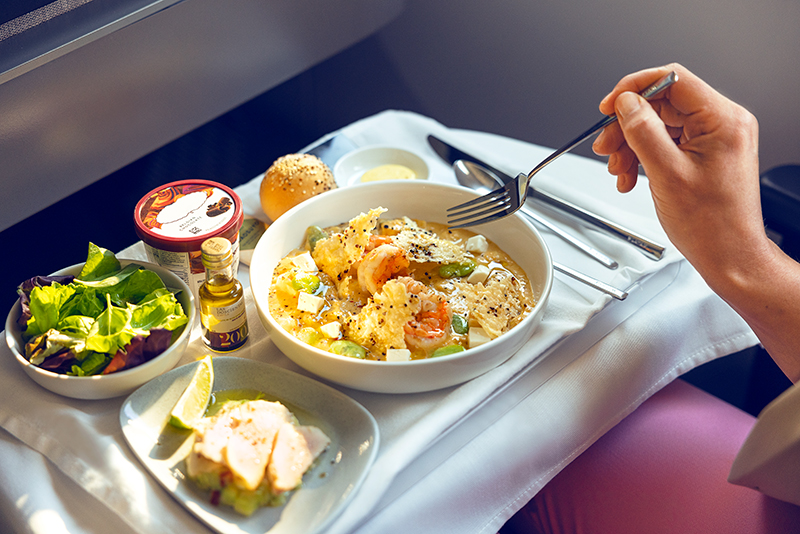
● Chef’s menu and pre-selection: Crafted by international chefs for the Premium Business cabin, it highlights fresh locally sourced ingredients paired with wines selected by sommeliers. For optimal personalization, LATAM Airlines enables passengers to choose their main course on the website or app from 5 days to 26 hours before departure.

● Eco Travel Kits: Provided in the Premium Business cabin to replace disposable plastic kits, these cases are designed by regional artists using recycled, organic materials and durable fabrics, in line with fair-trade criteria.

● Reduction of environmental footprint: LATAM Airlines has eliminated 100% of single-use plastics in the premium cabin, substituting them with reusable, compostable, or recyclable utensils.

For travel agencies in France, recommending LATAM’s daily service on the Paris – São Paulo route ensures premium business and leisure clients a competitive product, time-efficient connections, and high comfort standards across the entire itinerary.


Aviation: Brussels Targets Carbon Quotas, Threatens Prices and European Airlines? [ABO]


ETS : Bruxelles veut étendre les quotas carbone, une menace pour les compagnies européennes ? - Depositphotos.com Auteur symbiot

Hurtigruten


Hard times for the Gulf hubs.

While geopolitical tensions and thus instability persist in the region, affecting air traffic, the appeal of the Gulf’s strongholds— notably the Doha, Dubai, and Abu Dhabi hubs— could further diminish in the years to come.

Indeed, in a proposal for a directive from the European Parliament and the Council, it is learned that the European Commission plans to extend its Emissions Trading System, the ETS, beyond intra-European flights.

Eric Drésin, secretary general of ECTAA (the European association of travel agents and tour operators), told TourMaG that this project is very recent, “we are really at the very beginnings of discussions on these issues. But there could be an increase in costs for the airlines.”

Briefly remind what the ETS are, Emissions Trading Schemes in English, which can be translated as: systems for trading emission rights. A system introduced in 2005 obliging companies to purchase rights to emit CO₂.


Chinese and Americans Spared by Brussels

Regarding air transport, these emission quotas apply only to flights within Europe.

But starting in 2029, Brussels aims to adjust the criteria and include the scheme for flights whose destinations are less than 5,000 kilometers from Frankfurt.

Would then be affected a portion of Africa, of Russia and especially the Middle East with carriers such as Emirates, Qatar, Etihad or even the “little” Riyadh Air. This extension, on the simple principle that the farther you go the more you pay, can be understood. However Brussels is up against the hard law of the strongest which seems to become the law “full stop.” The famous 5,000 kilometers thus completely spare the United States and China, which had suggested that in the event of new “taxes” there would be retaliations.


Carbon quotas: European airlines protest

With this proposed ETS extension, at first glance one might think Brussels is restoring a bit of fairness in the fierce competition between European carriers and those from the Gulf that will now be impacted.

But most major European-based airlines think the opposite. For groups like Air France-KLM, Lufthansa or IAG, this extension would cover hundreds of new routes among those they operate and thus ETS costs would truly explode.

In the columns of the Dutch daily De Volkskrant, the carrier KLM had said that it already pays €172 million for emission rights, i.e., 1.5% of its total costs, and viewed a massive price rise with dismay in the coming years.

By means of a note published last May, Air France-KLM informed Brussels that it opposes “firmly any extension of the EU ETS to all flights departing the European Union to destinations outside Europe.” The group asserts that such a measure would further increase the decarbonization burden already disproportionately borne by European carriers. It adds that it would amplify distortions of competition vis-à-vis non-European carriers and could provoke retaliation measures from third countries.

And this document, produced by Air France-KLM’s top management, goes well beyond a mere protest. It is also a counterproposal to Brussels’ upcoming revision of the European emissions trading system, to which the group says it would contribute more effectively and profitably to the EU’s 2050 climate neutrality goal.

Among the proposed measures, and besides maintaining the current geographic scope of the ETS, Air France-KLM also calls for extending the free carbon quotas granted to carriers using SAF to beyond 2030, a limit set by Brussels.

Known as FEETS (Fuel EU ETS Support), this temporary mechanism allocates free carbon quotas called SAF Allowances to carriers using SAF to reduce their ETS bill.

This transitional measure, designed as an encouragement to adopt SAF, is supposed to end in principle in 2030 but for Air France-KLM, that limit is incompatible with industrial SAF investments that are planned over 15–20 years and with the ramping up of SAF-fuel obligations, which remains for a long time far more expensive than kerosene and will have to be carried in the tanks at 70% by 2050.


Plans to Abandon Routes?

In Air France-KLM’s document, the group also seems ready for significant concessions, notably route abandonments, provided that this SAF Allowances scheme is extended to intermodal practices feeding the group’s hubs at Paris-Charles de Gaulle and Amsterdam-Schiphol.

In other words, if Brussels were to reward airlines with free carbon quotas for transporting passengers by train to their hub, certain routes could simply be dropped.

The group would like to convert air passengers into rail passengers for those connecting to long-haul flights, replacing short- and medium-haul flights that fall under the EU Emissions Trading System.

We are thinking of certain links between French provinces and CDG, or other European cities near Amsterdam such as Brussels.

A little revolution.


United Airlines Upgrades Its App to Manage Disruptions


United Airlines enrichit son application mobile avec une nouvelle fonctionnalité - Depositphotos.com, rss.vladimir@gmail.com

Hurtigruten


United Airlines now allows passengers whose flight has been disrupted and who have been rebooked on a later departure to join a waitlist for up to three earlier flights.

The aim is to offer greater flexibility to travelers facing a change to their schedule, without requiring them to relinquish their confirmed booking.

Practically, the traveler selects up to three earlier flights within the United app. The airline then automatically monitors the availability on these flights.

When a seat becomes available, the passenger receives an SMS informing them and can then choose to take the earlier flight. Until that decision is made, their initial booking remains confirmed.

“This feature illustrates our commitment to making travel smoother and less stressful for our passengers“, explains Jennifer Schwierzke, Vice President of Customer Operations, Strategy & Execution at United.


A rollout ahead of a very busy weekend

The new service comes as Labor Day weekend approaches, traditionally marked by strong air travel activity in the United States.

United expects more than 3.4 million passengers between September 3 and September 8, 2026, about 300,000 more travelers than last year.

The airline also notes that more than 85% of its passengers use its mobile app on travel day, making this tool a central channel to manage the various stages of the journey.

The new feature complements the self-service options already offered by United in case of disruption.

Passengers can notably be automatically rebooked on another flight, receive vouchers for meals or accommodation when eligible, and track their checked baggage from the app.


The app becomes a central tool in the passenger journey

United has also strengthened several features of its app in recent months.

American travelers can notably use Digital ID in Apple Wallet, based on information from their U.S. passport, to facilitate certain steps of the airport journey, notably enrollment in the TSA PreCheck Touchless ID service.

United has further integrated TSA wait-time estimates at its major U.S. hubs into its app. A feature designed to help travelers anticipate their security screening more effectively.

The company also offers new tools to ease connections. The app shows the route to the boarding gate, the estimated walking time, and flight information.

With ConnectionSaver, passengers can also be notified when a departure is likely to be delayed, enabling them to board despite a tight connection.

Finally, United has integrated Apple’s Share Item Location feature. Travelers equipped with an AirTag or other Locate-enabled accessory can share its location with the airline’s customer service to facilitate searches in case of delays or issues with baggage routing.


Amelia Brille Published by Amelia Brille TourMaG.com Editor
See all articles by Amelia Brille
  • picto Linkedin
  • picto email
Add TourMaG to your Google News feed Google Actualités icône

LATAM Airlines: Global Sales Support Excellence for Travel Professionals


© LATAM Airlines

Costa Rica


To accompany its distribution partners, the company relies on a highly specialized structure: the Global Sales Support (Global Sales Support – GSS) team. This tailor-made service is entirely dedicated to assisting travel agencies across all segments (leisure, business, online) as well as companies affiliated with the LATAM Corporate program, thereby ensuring efficient and borderless commercial connectivity.


A Multilingual Infrastructure and International Expertise

One of LATAM Airlines’ Global Sales Support’s major strengths lies in its international dimension and its ability to adapt culturally. The GSS team handles an impressive annual volume of more than 1.5 million requests worldwide. To offer a smooth and personable experience, the service is structured to respond in six key languages: French, Spanish, English, Portuguese, German, and Italian.

For Europe, and especially for the French market, service hours are perfectly aligned with the rhythms of local agencies. French-language support is available Monday through Friday, from 9:00 to 17:00, ensuring optimal responsiveness during business hours. Beyond these time slots or for absolute operational emergencies, the global channels take over to guarantee business continuity on a global scale.


360° Support: The Pillars of LATAM Airlines Support

The GSS service offering has been segmented to address with precision each type of issue encountered by travel agents. It revolves around four major areas of intervention :

1. Operational and Technical Support. This pillar forms the core of daily assistance. GSS advisors accompany agents through complex technical steps such as fare calculation (public or private fares), ticket reissuance procedures, and the association of electronic EMD documents for ancillary services, notably seat selection and baggage. Additionally, this unit handles requests for special services essential for passenger comfort, such as Unaccompanied Minor assistance (UMNR), or the carriage of pets in cabin (PETC) and in the hold (AVIH).

2. NDC Support by LATAM Airlines. In the era of digital transformation, LATAM Airlines positions itself at the technological forefront with its own NDC ecosystem. The GSS support offers specialized assistance for all requests related to issuances and redemptions via this platform. Whether it is voluntary changes or involuntary reissues following itinerary changes, the team also manages specific commercial exceptions (such as proposals to change airports for affected passengers), enabling agencies to navigate this new technological environment with ease.

3. Commercial and After-Sales Support. Profitability and administrative management of travel agencies are also central priorities for LATAM Airlines. The GSS support acts as a facilitator in resolving disputes related to Debit Memos (ADM). It is also responsible for applying commercial flexibility policies (pre-sale waivers) and discounts directly via the Latam Trade portal. Agents can request handling of refunds and the creation of user accounts in the private space.

4. Group Management. For group travel, Series and Charter Flights LATAM Airlines offers robust solutions for groups of at least 10 passengers sharing the same itinerary, whether for corporate or leisure purposes. The GSS offers two negotiation formats: ad-hoc groups, and the “AD HOC Series” for off-schedule requests. For large-scale projects, the Charter service manages the entire operational chain: PNR creation, invoicing, integration of name lists, issuance of the Master Ticket, and transmission of manifests to airport authorities.


© LATAM Airlines


Des canaux de communication optimisés et des engagements de service (SLA) stricts

To minimize waiting times for professionals and ensure maximum efficiency, LATAM Airlines commits to rigorous service standards (SLA) across several fast-response communication channels:

● Phone: Via the dedicated French market line (+33 184080261), the average response time is 3 minutes, allowing you to speak directly with an advisor for case follow-up.

● Online chat: Available directly on the portal www.latamtrade.com, this channel offers real-time interaction with a specialized agent, with an average wait time of only 20 seconds, enabling immediate contact for urgent cases.

● Email: For cases requiring the submission of documents (such as [email protected]), LATAM guarantees an initial response within 8 hours and a final resolution within 48 hours.


© LATAM Airlines


LATAM Airlines : un Support Global des ventes d’Excellence pour les professionnels du voyage
Commercial Contact

Anabelle Araujo – [email protected]

Commercial Help Desk :

[email protected]

Groups Service :

[email protected]

More information on our travel agents platform: www.latamtrade.com