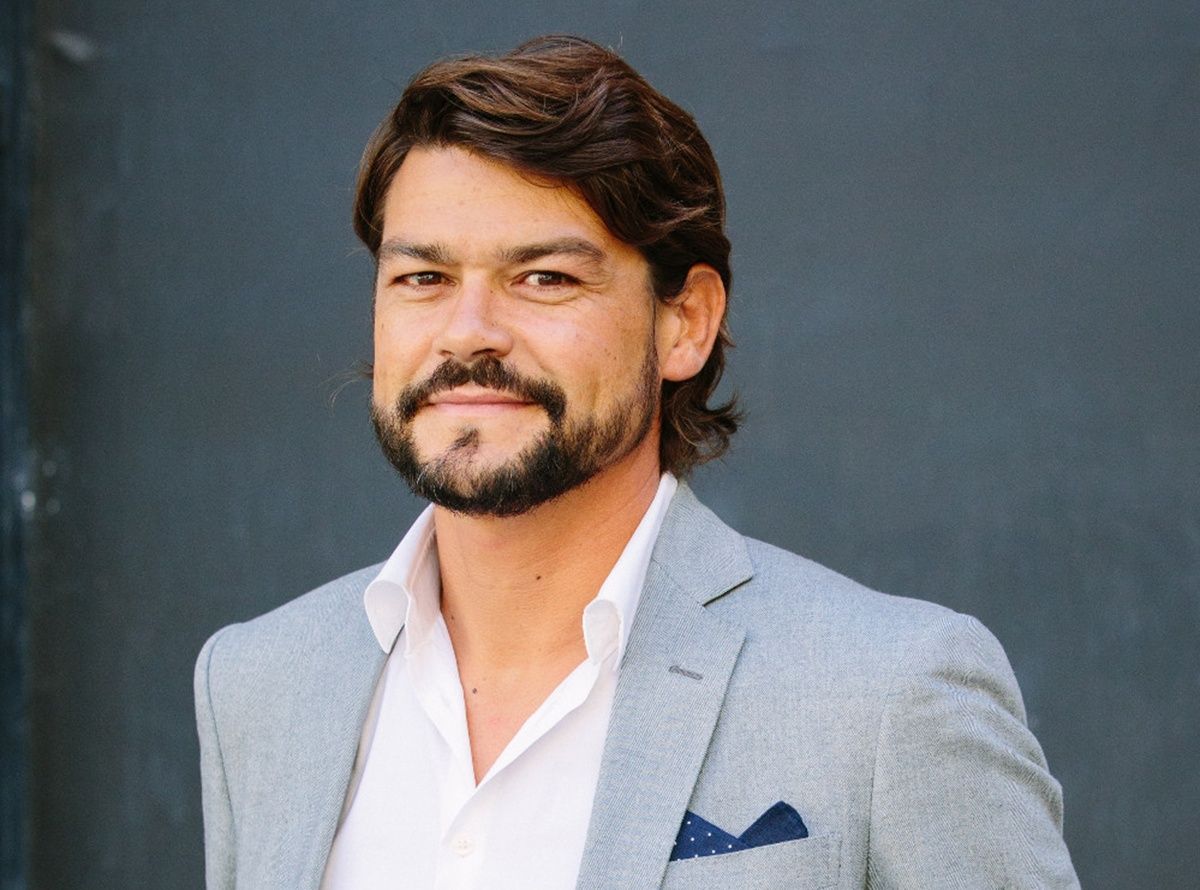


TourMaG – Since January 2026, you have been the development director for Minor Hotels for France, Belgium, Switzerland, Luxembourg and the Netherlands. To begin, could you introduce the Minor International group?
Alexis Boudrand : The group was born in Thailand in 1967, from the vision of an entrepreneur, Bill Heinecke, when he was only 17 years old. Hence its name: Minor. The first hotel opened in 1978.
Initially focused on Thailand, the group subsequently expanded internationally, notably through acquisitions: the Oaks group present in New Zealand and Australia, and the Portuguese Tivoli chain. It also diversified its brands by creating Anantara (these are five-star hotels) in 2001, Elewana in Africa (luxury lodges) in 2008, then Avani (four-star plus) in 2011.
Finally, in 2018, Minor unveiled €2.3 billion for the acquisition of the Spanish NH Hotels group, which then operated more than 380 hotels internationally and mainly in Europe.
Today, the Minor International group totals 560 hotels (80,000 rooms) and is listed only on the Bangkok stock exchange, but it comprises two entities. One groups the hotels in Asia and the Middle East, as well as the retail and restaurant businesses. The other covers the entire portfolio of hotels in Europe and the American continent.
The group counts twelve brands. As part of accelerating its global expansion and diversification strategy, launched since July 2025, Minor Hotels has indeed launched four new brands: The Wolseley Hotels (ultra-luxury), Minor Reserve Collection (exceptional hotels, rich in history and heritage), Colbert Collection (premium, dedicated to the art of living), and, finally, iStay Hotels (mid-range).
By broadening its scope, the group has given itself the means to cover all traveler profiles (from ultra-luxury to mid-range).
Minor Hotels: France, a priority market
TourMaG – Minor Hotels sees France as a priority market for expansion. Why?
Alexis Boudrand : NH had developed a lot in Spain and Portugal. The group is also very present in Germany and the Benelux. It is, however, relatively underrepresented in Great Britain, France and Switzerland.
We want to compensate for this delay. In France, we are quite underrepresented, with only 9 hotels. That’s fewer than in the city of Amsterdam alone, which has 12, and about the same as in Brussels!
TourMaG – Is your objective still to triple the number of hotels in France, as announced some time ago?
Alexis Boudrand : It must be realistic. Our ambition is to double our portfolio there in the next three years.
TourMaG – Is that really a realistic objective given France’s significant financial difficulties and an uncertain political outlook?
Alexis Boudrand : France remains the world’s leading tourist destination. We reasonably hope to attract a substantial clientele, notably from Spain, Germany, the Benelux, Italy, the UK, or the Americas, which are among Minor’s most important source markets.
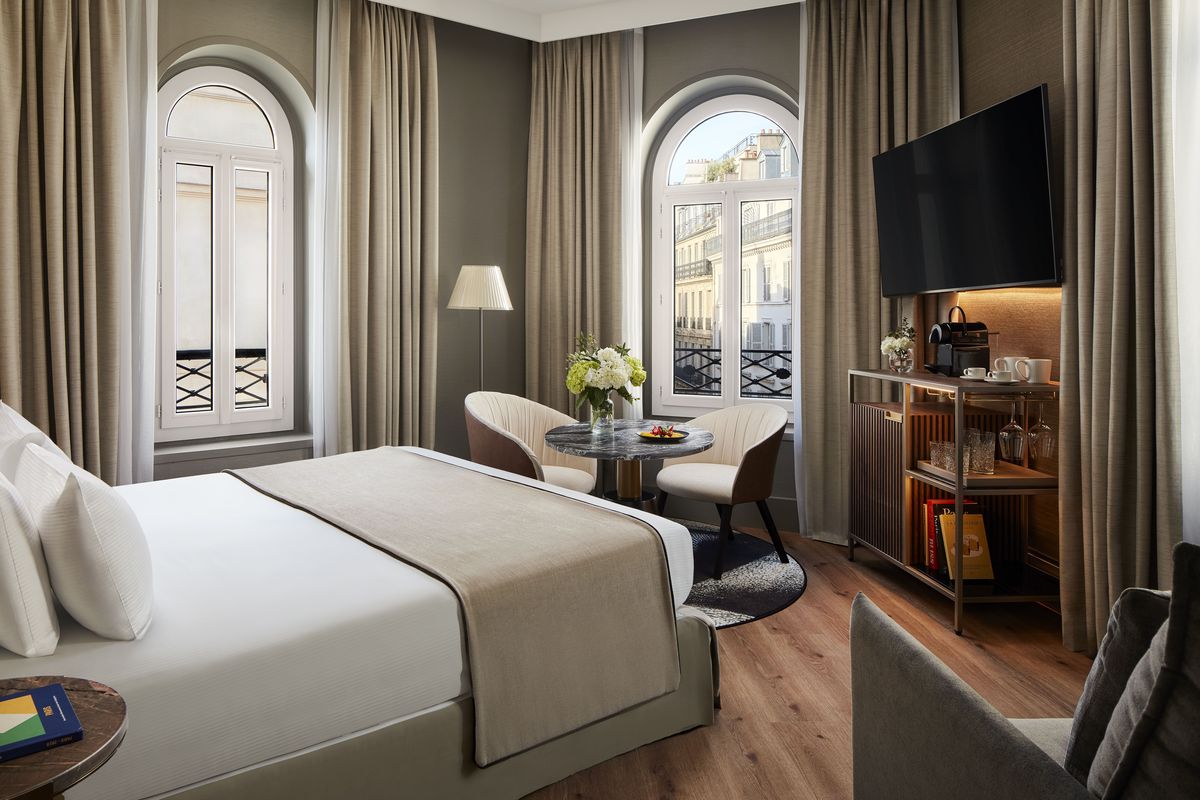
We need more hotels in Paris, where we currently have only three under the NH Hotels and NH Collection brands. We are also looking at the French Riviera, wine regions, and the Alps.
Of course, we would like a second hotel in Lyon, in the city center, because today we are only present at the Saint-Exupéry airport. We would also want a second one in Toulouse. We would also like to establish ourselves in other well-served regional metropolises—like Bordeaux or Strasbourg—and also in the Champagne region.
Heading toward franchise hotels
TourMaG – How do you plan to proceed? Are you targeting the takeovers of independent hotels? Conversions? Will you pursue franchising and management contracts?
Alexis Boudrand : Since acquiring the Spanish NH Hotels group in 2018, the portfolio has comprised about 22% owned (Minor owns these hotels); around 60% leased; the remainder is managed or franchised.
When Gonzalo Aguilar took the role of CEO of Minor Hotels Europe & Americas in January 2025, he set a course toward rebalancing these proportions, aiming for half of the hotels to be owned or under lease, and the other half under asset-light models (franchise or HMA) within three years, which is the direction we are heading.
TourMaG – How do you plan to translate this strategy in France?
Alexis Boudrand : In the Benelux, where we already have 49 hotels, we will no longer sign leases: development will be through franchising. In France, where we are less established, including in essential Paris locations, we will be able to sign leases, as that would be an additional asset for us to grow.
We also want to demonstrate our capabilities as a hotel operator or franchisor by delivering results (optimizing sales and distribution of these independent hotels), with a proprietor-oriented approach.
We are also owners, so we understand the owners’ issues. Anything that does not deliver return on investment has no place. We therefore carry a dual role, both owner and operator or franchisor for other owners. We act in partnership. We must be agile, offering flexibility.
“On the Lookout for Opportunities”
TourMaG – concretely, what kind of hotels are you seeking?
Alexis Boudrand : We are seeking independent hotels ready to back a group like Minor, with its commercial ecosystem and loyalty program, etc. Of course, hotels willing to switch brands are also welcome.
TourMaG – Will you focus more specifically on certain ranges of hotels in France?
Alexis Boudrand : It will depend on the opportunities that arise. The 12 brands of the Minor group allow us to cover the entire spectrum: if Oaks is reserved for aparthotels, we have iStay Hotels (mid-range) which suits less standardized hotels and thus easy to convert. We also have NH Hotels* for four-star properties.
Above that, we have four premium brands – Avani, nhow, NH Collection and Colbert Collection, created in 2026.
Added to that are our five luxury brands: Anantara, The Wolseley Hotels, Tivoli, Elewana Collection – exclusive eco-lodges developed in Kenya and Tanzania -; Minor Reserve Collection, our white-label luxury brand launched this year, targets hotels that wish to preserve a strong identity, such as the two — one in Slovenia, another in Croatia — taken on management contracts this year.
Concretely, we will develop across all three segments, and, I repeat, we will be quite opportunistic.
“Snow will become a luxury product”
TourMaG – Do you already have concrete leads in France?
Alexis Boudrand : I have been contacted by hotels on the Côte d’Azur, and in the mountains as well. I have looked at existing hotels but also at exceptional sites to transform in Provence, in Alsace, in the Alps, on the Atlantic coast… But nothing has been concretized yet.
In the Alps, upgrading to higher-end offerings is real, particularly in the Trois Vallées. Snow will indeed become a luxury product reserved for high-altitude resorts, unless they can be easily reached via ski lifts from mid-mountain resorts.
However, throughout the Alps, the tourist season is expanding: people are coming more and more in the summer now! This explains why all the major international brands are present there today. But remember that France has once again become, this year, the leading destination for winter sports (in terms of skier days sold).
TourMaG – Investing in the high end, is that wise given the current purchasing power challenges of the French?
Alexis Boudrand : That is precisely why we do not want to bet everything on luxury!
And as you know, the French are more likely to vacation in France!
In the future, everything will be based on experiences. Therefore, we will need to offer the right products to meet the needs of a diverse clientele, which will also include Americans coming to ski, attend concerts, etc., in France because it costs them less than at home.


 Published by Christophe Hardin