
Characterful Hospitality: How to Turn Uniqueness into a Performance Driver [ABO]


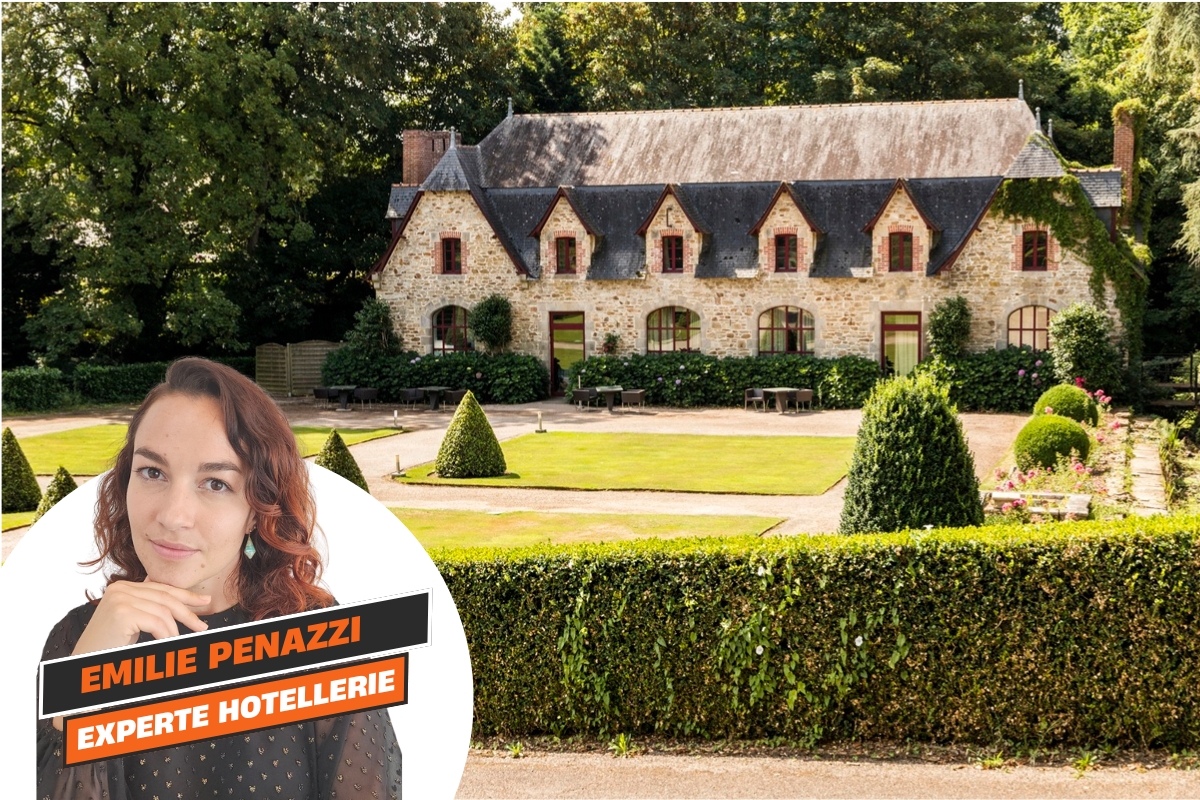
L'hôtellerie de caractère gagne en performance le jour où elle transforme sa singularité subie en singularité assumée. Ici, l'établissement Relais & Châteaux de La Bretesche à Missillac, France - DepositPhotos.com, jqnoc

Costa Rica


In characterful establishments, from French castles to island lodges, including golf resorts and wine estates, it is not uncommon to hear the owner of a distinctive place speak of its particularities as much as an advantage as a challenge: a limited number of rooms to optimize, spaces that resemble one another little, and a heritage architectural fabric that complicates day-to-day operations.

These particularities, however, form the foundation of solid performance, capable of being structured around three levers that strengthen each other.


Pricing the Difference, Measuring Beyond the Room

The first lever touches the revenue strategy, and it rests on a widely documented conviction: in a competitive market, product differentiation yields more durable revenues than chasing the bottom prices.

The rarity and heterogeneity of the rooms become the arguments, since a restricted inventory, made up of spaces that stand out for their history, view, and size, allows a pricing grid where each room represents a product in its own right.

The value-creation phase is essential because the sector is gradually moving away from RevPAR, which centers on the room alone, in favor of indicators that incorporate the value created per guest and actual profitability, from TRevPAR to GOPPAR.

A characterful property, whose dining, experiences, and ancillary services often carry as much weight as the nightly rate, benefits from thinking this way, and its pricing grid is built as an overall strategy.

Consequently, hoteliers might place less emphasis on price based on sleep quality and more on the guest journey.


The service and the human, the most difficult advantage to copy

The second lever is the one that large brands find the hardest to replicate.

A small establishment potentially benefits from a higher personnel-to-guest ratio and a relational proximity that enables a level of attentiveness that mass scale dilutes.

Harvard Business School has formalized this mechanism under the name of the “service-profit chain”, where employee satisfaction fuels client satisfaction, which in turn underpins financial performance.

This effect of internal climate always translates into the client’s lived experience. The advantage of human intervention therefore bears fruit once organized, when training, the quality of procedures, and the smoothness of internal communication turn hospitality intentions into measurable loyalty.

In this era of AI, the quality of human service remains a condition for the value of hospitality, and we now have the tools to devote the necessary time to it.


The narrative, turning heritage into experience

The third lever extends the first two by giving them meaning.

The experience economy, theorized by Pine and Gilmore, established that travelers seek memorable moments and judge offerings by the level of authenticity they perceive.

For a characterful property, heritage and territory constitute an asset ready to become a story, because the history of a building, its regional anchoring, and local know-how form what luxury hospitality calls the soul of a house, a differentiating source that underpins loyalty as well as recognition.

The narrative proves its value when it leaves the brochure to take shape in lived experience, from a staged arrival to partnerships with regional artisans, and it fully aligns with the principles of regenerative tourism.



Tourism: After a Difficult May, Operators Turn to the Government for Support [ABO]


Laurent Abitbol : "Nous sommes plongés dans une crise psychologique" - Depositphotos @yellow_man

CroisiEurope


The months come and go, closely resembling one another for the tourism sector, or nearly so.

After turning red in March, the situation hardly improved in April and seems to continue its downward slide in May. Indicators are not favorable for a large portion of the industry, and even players who seemed to be navigating fairly well are starting to struggle.

It must be said that the month just ending was not particularly favorable for travel agencies.

There were many long weekends this year and, to be honest, there weren’t many bookings in travel agencies.

After that, it should be noted that we now work on a 12-month basis rather than four months. July and August no longer really count as peak season in distribution.

The worry is there, always, but as long as the financial year isn’t over, no one can draw conclusions. We risk a strong rebound in June, because travel remains an imperative for the French,
” explains, optimistically, Richard Vainopoulos.

In terms of departures, Tourcom will post a slight -2% compared to May 2025. It’s a not-too-bad outcome.

And while the network head concedes that there wasn’t much of a crowd in the agencies and that the training helped keep the staff busy, the profession appears, at least in part, to gaze with concern at a backorder that isn’t taking off and jeopardizes, or even erases outright, the head start gained at the beginning of the year.


Laurent Abitbol: “We are in the midst of a psychological crisis”

On Laurent Abitbol’s side, the slowdown in activity intensified again in May.

The situation is even worse in May than in April. We are seeing a sales trend around -25%.

Unfortunately, there is no improvement. I am not worried because we are resilient, but it must not last too long.

We are in a real psychological crisis.


This war and its impacts don’t encourage consumption, due to the news and the rise in fuel prices. So imagine travel, it’s double trouble… people don’t want to leave,
explains the head of the Marietton group.

Last week, the businessman explained observing a 24% drop in orders between March and May. A drop that nearly erases all the gains recorded by Selectour agencies since the start of the year.

And the situation does not seem much better elsewhere. Because when the leader of French distribution grimaces, usually the industry isn’t in a better position, with one exception…

The month of May is always complicated, it looks to be worse than 2025.

After that, we have a cushion compared to the rest of France, because our companies are often on the border with Germany or Luxembourg. The impact is therefore smaller.


We have clients who work in these countries, with higher salaries. Moreover, we also work with tour operators such as Luxair, which decided not to implement a fuel surcharge, but also with German and Belgian players.


To tell you the truth, Fensch Voyages has been at -6% since March. It’s a bit the trend in the Grand Est, we are far from the figures of our peers,


“I think the summer is dead unfortunately”

A little further north, Abou Fall, owner of three franchised TUI agencies, also slightly stands out from the market.

It’s not catastrophic, but the momentum isn’t great either.

I still have one agency growing and two others in the red. There is, of course, a bit of worry, because the decline has been steady since March at my points of sale in negative territory.

At the end of February, we were +12% ahead for my group and, to date, we have moved into the negative,
he tempers, having previously served as France sales director for the TUI network of franchised agencies before opening his own agencies.

And here closes the rather optimistic parenthetical of this article. For the other messages sent and calls made have yielded responses that contrast with these last two testimonies.

“One boss explains that the figures of the next EDV barometer should be very poorly oriented compared with April, already unfavourable. Another major executive tells us that his numbers are very bad, while a third estimates that this crisis is even worse than the Covid one.”

The anxiety is palpable, without giving in to panic.

There is growing concern within the profession.

For us, we had quickly taken precautions, so we are limiting the damage. But, like everyone, we would like this not to last too long.

Personally, and I hope to be mistaken, I think the summer is dead unfortunately. Unless there is a rapid improvement in the situation, but at this moment there are too many threats weighing on consumers,
” estimates Grégory Monna, director of travel activities at Chauchard Évasion – Voyages Triangle.

This assessment is shared by other leaders, with a few nuances, except for Laurent Abitbol.


“Beaucoup d’acteurs sont en difficulté” et “l’activité partielle est refusée”… par l’État

Enfin, with one caveat, the Lyonnais believes that unblocking the Hormuz Strait might unlock everything.

Leisure is in crisis, fortunately groups and business travel are holding up. As long as the strait remains closed and the war continues, it will be difficult to restart the engine.

We must wait for this to pass. We keep the back straight, it’s a long process.


We keep the teams occupied with training and other initiatives. For the moment, I am not overly worried about the profession. However, this could hurt the industry if it lasts over time.

And to restart activity, I oppose price cuts. Do not slash prices, nor advertise with such promotions, because that sends a bad message to customers. Then, we simply cannot sell at a loss,
” argues the chair of the board of Selectour.

The solution lies in Donald Trump’s hands.

And while the American president seems to no longer know how to disentangle himself from this conflict, the Soccer World Cup is approaching rapidly. There is no doubt that a war between two participants in this very World Cup would be poorly viewed by the world press and could spoil the festivities.

Will this timing be favorable to a lasting peace between the United States and Iran? The days to come will tell us.

In the meantime, as sales begin to recover, professionals knock on the State’s door, which does not seem more concerned about the situation of travel agents.

From what I hear in the sector, many players are in difficulty and some are extremely worried.

And we are among them, because with such a May, we will not be able to cover the salaries of our employees. We are in a deep anxiety crisis, fueled by media coverage. There was the conflict in the Middle East, then the spike in oil prices, the fear of a kerosene shortage, the hantavirus on the cruise ship… and now, we are facing a heatwave.

Regarding partial unemployment, which is becoming a major topic of discussion, requests are refused within the industry, with only a few rare exceptions“, laments a business owner who preferred to remain anonymous.