

Brazil, Spain, Rail Travel: This Week in Tourism News [ABO]


La revue de presse internationale de la semaine - Depositphotos.com Auteur serezniy

Hurtigruten


Au sommaire de la revue de presse de la semaine du 24 août 2026 :


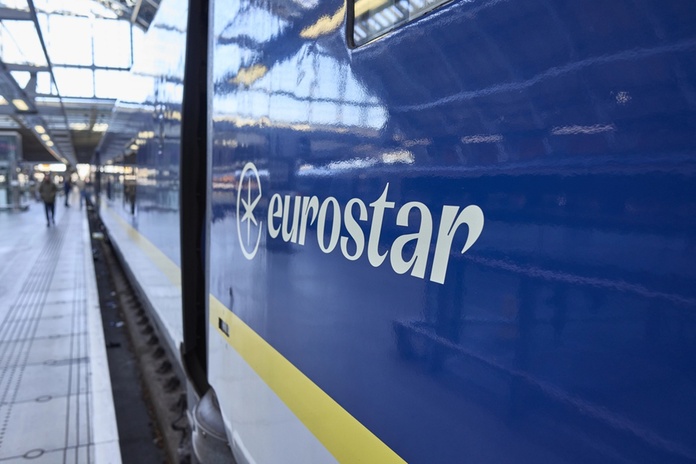
Eurostar bientôt concurrencé sur le tunnel sous la Manche

Brésil : le voyage d’affaires accélère

Thaïlande, Australie, Japon : les choix de voyage varient selon les générations

European Sleeper met le cap sur la Scandinavie

EF World Journeys courtise enfin les agences de voyages

Israël : le tourisme international reprend de la hauteur

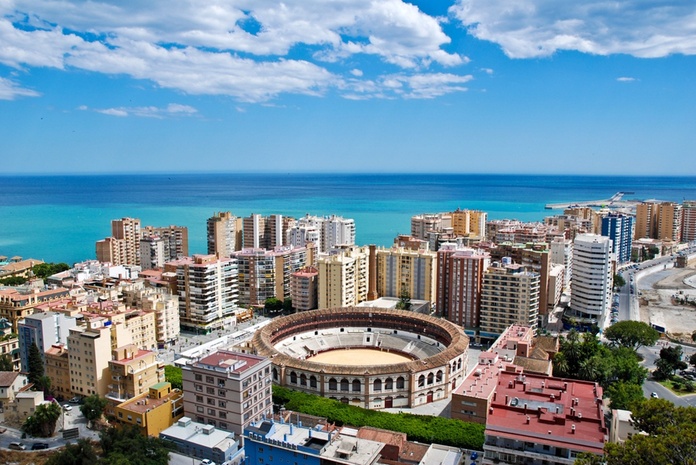
En Espagne, le « flex living » séduit aussi les plus de 50 ans

Voyages d’affaires et réunions : la frontière s’efface

Insolite ! À Los Angeles, bientôt des taxis pour éviter… les bouchons


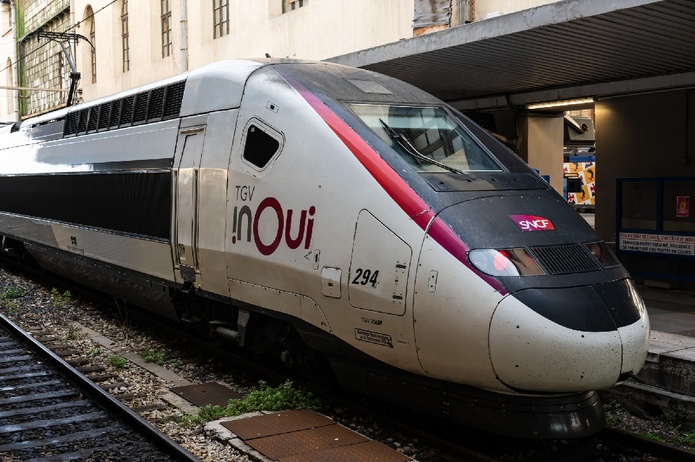
Eurostar soon facing competition on the Channel Tunnel
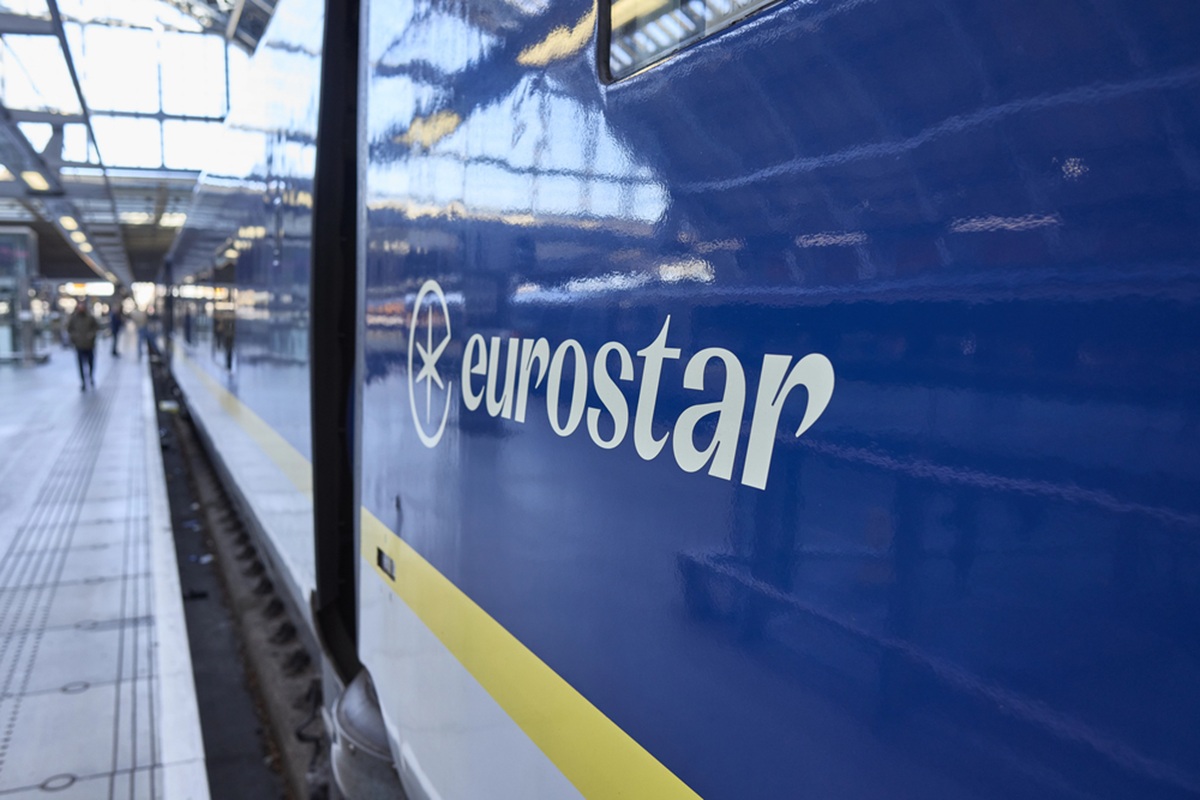

D’ici 2030, la concurrence devrait se développer sur la liaison ferroviaire entre Londres et l’Europe pour atteindre jusqu’à 55 allers-retours quotidiens. @depositphotos/jonkempner

La liaison ferroviaire entre Londres et l’Europe pourrait fortement se développer d’ici 2030, avec jusqu’à 55 allers-retours quotidiens, soit environ un train toutes les 15 minutes.

Eurostar devrait faire face à l’arrivée de Virgin Trains et de Trenitalia, qui prévoient respectivement leurs premiers services en 2030 et 2029.

Un troisième acteur, Gemini Trains, ambitionne également de se lancer. Cette concurrence pourrait accroître l’offre et faire baisser les tarifs, mais plusieurs obstacles restent à lever, notamment les autorisations réglementaires et la capacité des gares et infrastructures.

Plus à lire sur politico.eu


Brésil : le voyage d’affaires accélère


Le Brésil connaît un fort développement du voyage d’affaires. @depositphotos/iveklitch.gmail.com

Le Brésil s’impose comme l’un des marchés les plus dynamiques du voyage d’affaires.

Selon la GBTA, les dépenses corporate devraient atteindre 35,8 milliards de dollars en 2026, soit une croissance de 13,8 %, la plus forte parmi les 15 principaux marchés mondiaux.

Une dynamique qui accompagne celle du tourisme international : les recettes des visiteurs étrangers ont progressé de 12,1 % au premier semestre, à 5,6 milliards de dollars.

Plus à lire sur abouttravel.ch


Thailand, Australia, Japan: travel choices vary by generation


Les attentes des jeunes voyageurs diffèrent d’une génération à l’autre. @depositphotos/luckybusiness

Une étude basée sur plus de 4 700 réservations met en évidence des différences entre Gen Z et Millennials. La Thaïlande arrive en tête chez les plus jeunes, devant l’Australie, l’Indonésie et le Vietnam, tandis que les Millennials privilégient l’Australie, la Thaïlande et le Japon.

Budget, réseaux sociaux, recherche de destinations moins fréquentées et dispositifs comme le visa vacances-travail expliquent en partie ces écarts.

Plus d’informations sur le site euronews.com


EF World Journeys finally courting travel agencies


Israel: international tourism rebounds


En Israël, les hôtels ont enregistré 395 000 nuitées de touristes en juillet 2026, soit une hausse spectaculaire de 139 % sur un an.@depositphoto/VeronikaGorBO

Le tourisme international en Israël semble retrouver des couleurs : les hôtels ont enregistré 395 000 nuitées de touristes en juillet 2026, soit une hausse spectaculaire de 139 % sur un an.

Sur les sept premiers mois de l’année, le nombre de nuitées atteint 1,7 million, contre 1,5 million en 2025.

La reprise semble également s’accélérer, avec une moyenne mensuelle de 247 000 nuitées sur les trois derniers mois, contre 181 000 auparavant.

A lire sur traveldailynews.com


In Spain, the “flex living” also appeals to those over 50
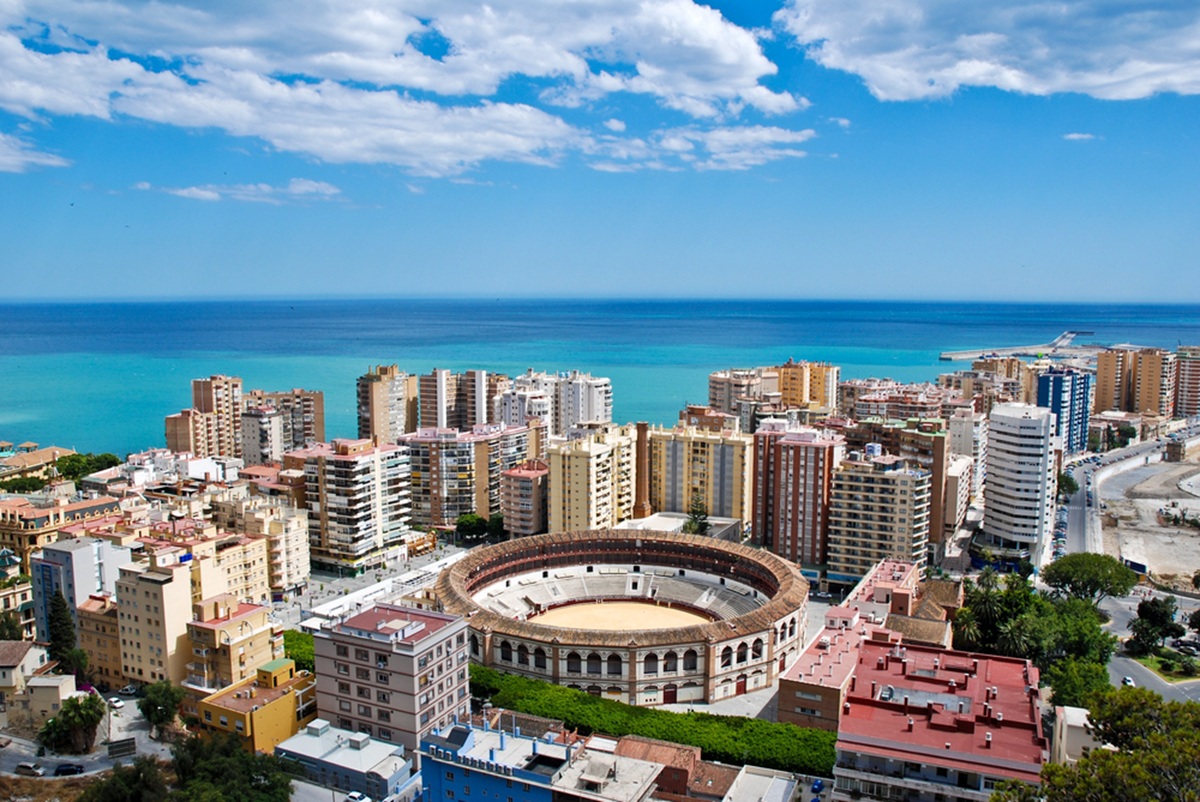

En Espagne, les plus de 50 ans, séduits par les logements flexibles.@depositphotos/marimar8989

Le logement flexible change de cible en Espagne : longtemps associé aux étudiants et jeunes actifs, il attire désormais aussi les plus de 50 ans, séduits par l’autonomie, les services et les espaces partagés.

Selon Cando Living, le parc espagnol devrait doubler d’ici 2028, passant de 19 000 à près de 39 000 logements. Madrid concentre une grande partie des nouveaux projets, tandis que le secteur attire de plus en plus d’investisseurs.

Un article du site hosteltur.com


Business travel and meetings: the boundary is blurring


La frontière entre voyages d’affaires et réunions s’estompe. @depositphotos/kasto

Les voyages d’affaires et les réunions d’entreprise pourraient bientôt se gérer sur une même plateforme. Avec l’acquisition de TROOP, spécialiste de la planification de réunions, Spotnana veut réunir déplacements individuels, événements, réservations et dépenses.

Une tendance qui se confirme : plus de 60 % des responsables voyages et achats supervisent désormais à la fois les voyages et les réunions, contre 50 % en 2025. De quoi donner aux travel managers un terrain de jeu encore plus vaste !

Plus à lire skift.com


Insolite ! À Los Angeles, bientôt des taxis pour éviter… les bouchons


Les Américains feront-ils mieux que les Français ? Parviendront-ils à transporter les visiteurs en taxis volants pendant les JO de 2028 ? @depositphotos/rikitikitao@gmail.com

Pour les JO de 2028, Los Angeles pourrait proposer une solution très californienne aux embouteillages : prendre les airs !

Un premier « vertiport » accueillera des taxis volants électriques d’Archer Aviation, capables de transporter quatre passagers.

Le trajet entre Burbank et le SoFi Stadium passerait ainsi d’environ une heure en voiture à 14 minutes dans les airs.

Une idée qui rappelle les JO de Paris 2024 : la France avait elle aussi prévu des taxis volants, mais le projet s’était finalement soldé par un échec et 2,9 millions d’euros de dépenses publiques. À Los Angeles, les taxis volants auront donc une petite revanche à prendre !

Une info à lire sur euronews.com
Omio Group Announces Plan to Acquire Rail Europe


Omio Group annonce le projet d'acquisition de Rail Europe, image by OMIO

CroisiEurope


The Omio Group, a multimodal booking group, is launching a sector-wide consolidation phase by absorbing the Rail Europe platform on July 16, 2026.

Thanks to this merger, the newly formed group plans to sell 22 million train tickets per year and to collaborate with a network of more than 28,000 transport operators worldwide.

This transaction comes in a railway distribution market that is undergoing a restructuring, driven by European state investments in low-carbon transport infrastructure and the shift toward mobility alternatives to road and air travel.


Transaction details and operational organization

The integration of Rail Europe’s historic platform will allow the Omio Group to broaden its current offering, which already includes its consumer-facing B2C platform, its distribution service for professionals (B2B), as well as the Rome2Rio journey planner.

Rail Europe will retain its current brand identity with travelers and partners while migrating to Omio’s technological backbone and multimodal inventory. This technological transfer provides the acquirer with direct access to a network of travel agencies operating in more than 70 countries.

The operation will also lead to a reorganization of the company’s structures. The consolidated workforce is expected to reach approximately 680 employees worldwide, combining Omio’s teams with Rail Europe’s 205 staff.

However, the closing of the agreement remains subject to the regulatory information and consultation process with the bodies representing the staff, which must issue an advisory opinion on the project before any final signing.

SNCF Set to Enter Italy’s High-Speed Rail Market


L'AGCM vient de s'exprimer en faveur de la libre concurrence sur le marché italien de la grande vitesse - Depositphotos.com, @Hans_Chr

IFTM prenez RDV avec TourMaG


The Italian Competition Authority and Market Authority (AGCM) has issued a ruling favorable to opening up the high-speed market to competition in Italy.

A step welcomed by SNCF Voyages Italia, a subsidiary of SNCF Voyageurs.

The Authority validated the commitments made by the infrastructure manager Rete Ferroviaria Italiana to ensure fair access terms for new operators.

For SNCF Voyages Italia, this decision constitutes an important first step. But it must now be followed by concrete measures, including the immediate allocation of a portion of the requested rail slots.

Without this access to capacity to run trains, the launch of the project will not be possible.


Un projet d’investissement prévu pour 2027

The company plans to launch its new high-speed offering in September 2027.

The project relies on the introduction of 15 next-generation trains, with the goal of carrying more than 10 million passengers per year in Italy.

The offering aims to provide more capacity, “optimal comfort, competitive fares and an environmentally friendly travel experience,” says SNCF Voyages Italia in a press release.

The industrial plan foresees 13 daily round-trips : 9 between Turin and Naples, and 4 between Turin and Venice.

For the company, this level of activity is essential to make the investments viable. Without these minimum conditions, the project could not be fully implemented.


Un projet aux retombées économiques significatives, mais encore conditionné

According to a study conducted with Università Bocconi and its GREEN research center, the project could generate more than €480 million in economic spillovers per year.

These benefits would include a contribution to growth, new tax revenues, the creation of more than 4,000 direct and indirect jobs, time savings for travelers, and an average easing of prices due to intensified competition.

Despite the decision of the Competition Authority, SNCF Voyages Italia nevertheless believes that several conditions remain essential to bring its market entry to fruition.

The company is asking in particular for sufficient access to additional rail slots, the possibility to operate maintenance facilities in Italy, and obtaining the necessary certifications for its trains. Without these guarantees, the launch of the new offering could not be realized within the planned timelines.

SNCF Voyages Italia urges all sector stakeholders to collaborate to enable a successful entry into the Italian market, in compliance with European regulations.


Amelia Brille Published by Amelia Brille TourMaG.com Editor
See all articles by Amelia Brille

  • picto Linkedin
  • picto email
Add TourMaG to your Google News feed Google Actualités icône  

Behind the Scenes of the Southeast TGV Axis: The Backbone of France’s Rail Network


Dans les coulisses de l’axe TGV Sud-Est, colonne vertébrale du rail français - Photo CE

IFTM prenez RDV avec TourMaG


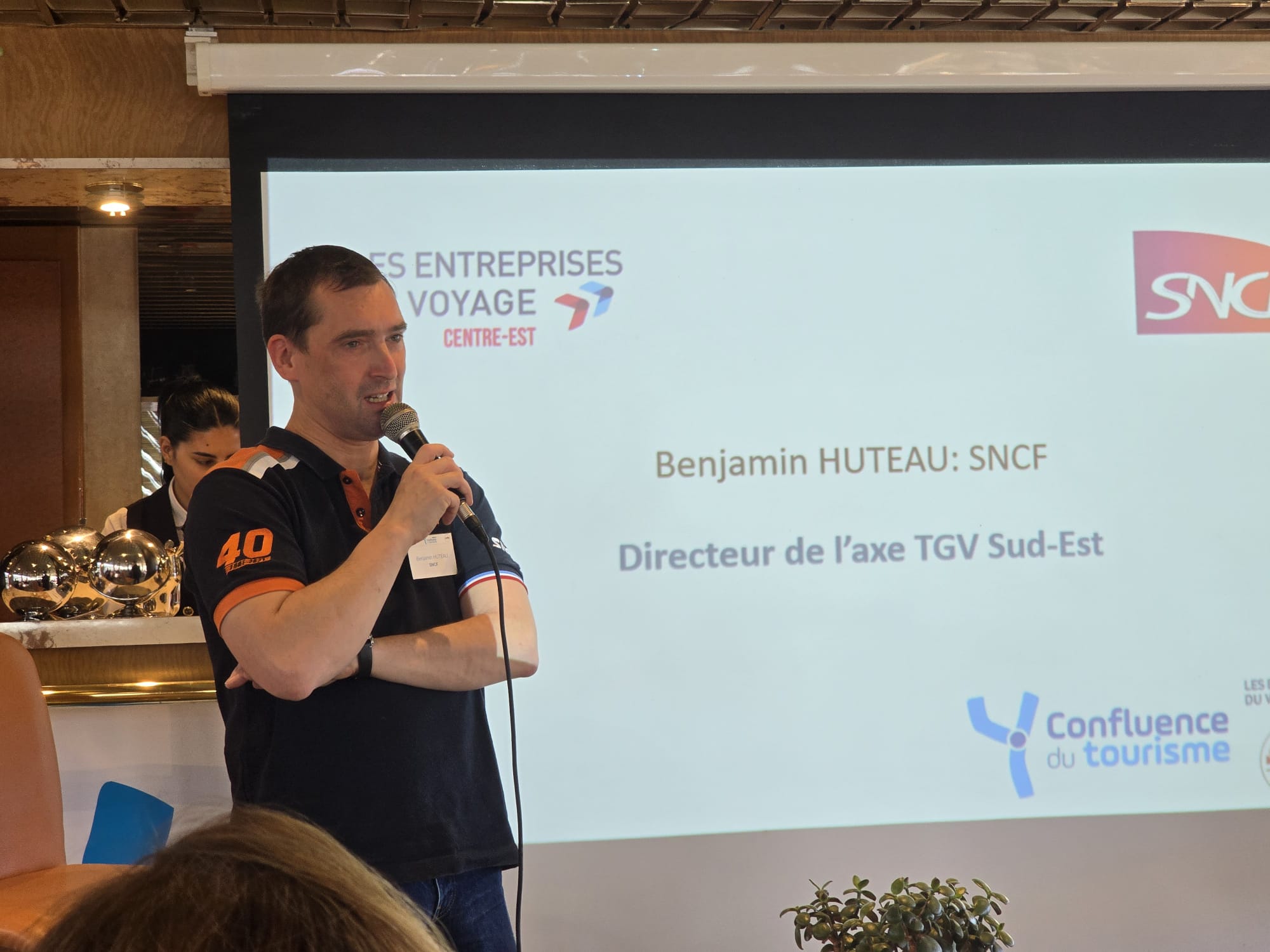
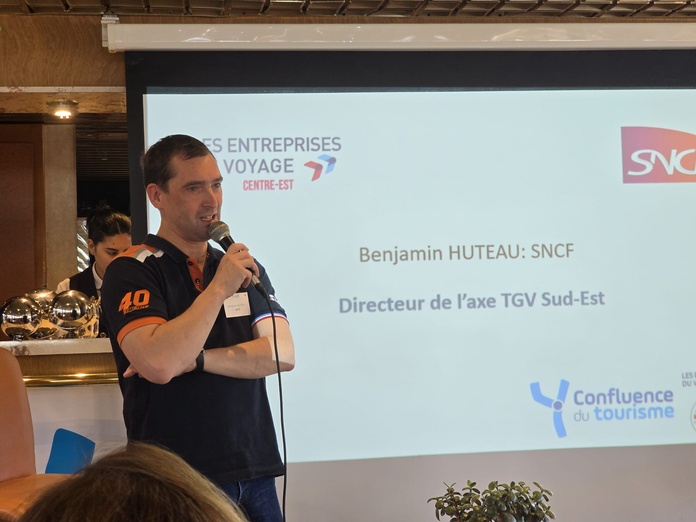
It is the backbone of French rail transport. The TGV Sud-Est axis is the main railway corridor in France connecting Paris to Lyon and then toward the Mediterranean, spanning eastern France and the Alps.

« If you draw a line from Paris-Mulhouse to Paris-Barcelone, you already cover a good portion of the country », summarizes Benjamin Huteau, director of this strategic axis.

Each day, 120,000 travelers ride on 130 TGVs. Behind these figures: a workforce of 5,000 people and an annual turnover of 2.5 billion euros.

« This is the densest axis in Europe in terms of rail traffic. The backbone of the high-speed line that physically lies between Paris and Lyon, indeed, by far the busiest line in Europe because Paris-Marseille and Brussels-Montpellier also pass through it. »


Tolls account for about 40% of a ticket’s price

The general public often doesn’t realize it, but a significant portion of the price of a TGV ticket does not go directly to the operator and is used to finance the use of infrastructure: stations and the rail network.

Managed by SNCF Gares & Connexions and SNCF Réseau, these entities market, on the one hand, calling at stations and, on the other, slots—i.e., time windows for circulation on the rail network—allowing various carriers to run trains from one point to another.

« The track charges paid by TGV activity in France are among the highest in Europe. These fees largely — and often beyond — cover the maintenance costs of the high-speed lines. In France, they contribute significantly not only to the maintenance of the high-speed network but also to that of the entire rail network, including conventional lines » explains Benjamin Huteau.

These charges represent around 40% of a ticket’s price, with notable variations depending on the line. « On the busiest axes like Paris – Lyon, this share can reach nearly 50%. Conversely, on other lines where the cost per kilometer differs, this share can be lower, around 30%, such as on Paris – Mulhouse or Paris – Dijon. »

What is less known is that these tariffs are also set according to a yield-management logic: « On Paris – Lyon, this economic logic dominates: more than 80% of the toll relates to this dynamic pricing. It’s hard to be profitable on Paris – Lyon; tolls have risen by more than 30% since 2020. »


SNCF Réseau asks to pre-book track slots three years in advance


Sur certains tronçons, un train circule toutes les quatre minutes, bientôt toutes les trois minutes d’ici 2030 grâce aux évolutions de signalisation. - Depositphotos.com

In a context of high tolls, profitability hinges on two essential levers: maximizing load factor and keeping trains running as much as possible.

This requires aligning supply as closely as possible with fluctuating demand, depending on the schedules, days of the week, vacation periods, and holidays.

And it is all the more complex because SNCF Réseau asks to pre-book track slots three years in advance. « There is still a bit of crystal ball involved. We do not pre-book everything. We pre-book the base of our offer and then there are several milestones two years ahead, one year ahead… down to six weeks before. »

« This management allows volumes transported to vary considerably, depending on the day, ranging from about 80,000 to 140,000 travelers. »


Lyon-Part-Dieu, the Côte-d’Azur, Bourg-Saint-Maurice in winter… some near-saturation zones

Some zones are close to saturation. At the end-of-line stretches toward the alpine stations, such as Bourg-Saint-Maurice during winter and school holidays, or toward the Côte d’Azur, where coexistence with the TER limits capacity, are already heavily saturated.

Similarly for Lyon – Part-Dieu, which has the peculiarity of being a through station with passenger flows close to origin stations.

Unlike an origin station, where trains dwell long enough to allow progressive boarding of several hundred passengers, stops at Part-Dieu are extremely short, often limited to a few minutes.

In this shortened time window, it is necessary to both let many passengers alight and board as many again, under very tight conditions.

« For example, just one traveler with a stroller: out of courtesy we let them pass, but the time to settle in can block boarding. And then everything jams. In these cases, we try to propose boarding last to ease the flow, » cites Benjamin Huteau as an example.


A train runs every four minutes and soon every three minutes

On some sections, a train runs every four minutes, and by 2030, nearly every three minutes thanks to signalling improvements.

Even the slightest delay can quickly snowball into a knock-on effect on the punctuality of all following trains. «There isn’t a day without disruptions. The problem with rail is that we are rather sensitive to external disturbances,» admits the director.

Among the most frequent disruptions: sick passengers on board, abandoned baggage, or conflicts between travelers. They occur regularly but typically cause only limited delays.

Other events, more serious and less frequent, such as people being on the tracks, cause much longer interruptions. Add to this climate-related risks, or network or signaling failures.

In these situations, the teams’ role is to reorganize the transport plan to limit the spread of delays.

The main objective is to avoid cascading effects. To achieve this, it is often necessary to adapt the operating plan in real time.

Without adjustment, a morning delay risks lingering all day, especially if the same trains are used for several circulations. Teams revise allocations, reorganize rotations, and adjust operations.

This responsiveness also implies revisiting maintenance planning, itself highly optimized to maximize the availability of the rolling stock. The whole system is highly intertwined, requiring coordination to avoid further malfunctions.


The arrival of new TGV rolling stock on the South-East axis, with optimized maintenance


Céline Eymery Published by Céline Eymery Editor-in-Chief – TourMaG.com
See all articles by Céline Eymery

  • picto Facebook
  • picto Twitter
  • picto Linkedin
  • picto email
Add TourMaG to your Google News feed Google Actualités icône


Read 8,432 times

Tags :
sncf

Rate

New comment:


All rude, insulting, or defamatory comments will be immediately removed by the moderator.

Report abuse

In the same section :

<
>

Wednesday 8 July 2026 – 18:42 FlixBus integrates Paris-Beauvais Airport shuttles on its platform

Friday 3 July 2026 – 09:35 Train: SNCF Connect opens reservations to Germany and Switzerland

Rail Europe Strengthens UK Offering with the BritRail Pass


Rail Europe renforce son offre pour la Grande-Bretagne avec le BritRail Pass - Depositphotos.com @gjp1991

IFTM prenez RDV avec TourMaG


Rail Europe a intégré le BritRail Pass à son écosystème mondial de distribution B2B, consolidant ainsi son offre stratégique pour la Grande-Bretagne destinée aux agences de voyages, plateformes OTA et tour-opérateurs à l’international.

The BritRail Pass, reserved for travelers residing outside the United Kingdom, offers flexible access to the National Rail network, including connections to major airports via the Heathrow Express, Gatwick Express and Stansted Express, as well as sleeper services such as the Caledonian Sleeper and the Night Riviera (berth reservations required).

For travel professionals, this product meets three priorities: operational simplicity, pricing flexibility, and the ability to build structured itineraries across Great Britain.

The portfolio includes national and regional passes, enabling advisers to design journeys focused on specific areas such as England, Scotland or the Southwest and South Wales, depending on the itinerary and the clients’ travel plans.


Des avantages supplémentaires pour le voyageur

The different passes available are :

BritRail Pass

BritRail England Pass


BritRail South West & South Wales Pass

BritRail Spirit of Scotland Pass (standard class only)

BritRail London Plus Pass


Most passes can be purchased in First or Second Class, with options for consecutive or flexible validity, as well as discounts for youths, seniors and children. Additional perks, such as 2-for-1 offers on certain attractions, are also available.


A strengthened B2B strategy driven by international demand

Rail Europe distributes a digital version of the pass, the M-Pass, via its B2B platforms, allowing agencies to manage both the booking and the activation days of travel thanks to a QR code. This mobile-first solution reduces operational complexity while preserving total flexibility for the final traveler.

With a growing international demand for Great Britain and a strong interest in destinations beyond London, Rail Europe believes that the BritRail Pass represents an important lever to develop international distribution and encourage rail itineraries across the entire British territory.

According to Björn Bender, CEO of Rail Europe, “The BritRail Pass strengthens our role as experts in European rail passes.

It complements our existing portfolio and enables our global business partners to build more flexible and higher-value itineraries in Great Britain, particularly in long-haul markets where regional exploration is becoming increasingly important.


Amelia Brille Publié par Amelia Brille Rédactrice TourMaG.com
Voir tous les articles d’Amélia Brille

  • picto Linkedin
  • picto email
Ajoutez TourMaG à votre flux Google Actualités Google Actualités icône  

BlaBlaCar Integrates Trenitalia, Expands Rail Offering in France


BlaBlaCar intègre Trenitalia sur sa plateforme pour élargir son offre de trains en France - Photo : Blablacar

IFTM prenez RDV avec TourMaG


BlaBlaCar continues to expand its multimodal offering in France.

The platform announced, on May 6, 2026, the integration of Trenitalia trains into its app and website, enabling users to compare and book journeys by train, bus, or carpool from a single interface.

This announcement follows BlaBlaCar’s ongoing opening to rail travel, which began with the SNCF in France, then with the Spanish operators Renfe and Iryo. The addition of Trenitalia thus completes a service that aims to be increasingly European.

Present in France since 2021, Trenitalia operates high-speed connections on the Paris-Lyon, Paris-Marseille, and Paris-Milan routes. The operator claims nearly 5 million travelers carried and a satisfaction rate of 97%.

Its network serves several major stations, including Lyon Part-Dieu, Avignon TGV or Marseille Saint-Charles, as well as destinations in Italy such as Turin and Milan.

With this integration, BlaBlaCar members can now purchase Trenitalia tickets directly, on par with the other transport options already available on the platform.


A Centralized User Experience

One of the key aims of this collaboration is to streamline the purchasing journey. Users can compare the various options — train, bus, or carpool — without leaving the BlaBlaCar environment, and complete their booking without being redirected to third-party sites.

This centralized approach also extends to new conversational usages. The Trenitalia offering is accessible via the BlaBlaCar app integrated with ChatGPT, enabling travel searches in natural language.

For Erwin Coffy, BlaBlaCar’s commercial director, this development marks “a decisive step” in the group’s strategy, with the ambition to become a reference platform for long-distance journeys, by focusing on transparency of offers and price comparisons.

On his side, Marco Caposciutti, president of Trenitalia France, emphasizes that this partnership aims to increase the visibility of rail travel and to reach new customers, especially those seeking simple and centralized solutions.


The Train, a Growth Driver for BlaBlaCar

Beyond expanding the offering, rail travel appears as a growth lever for BlaBlaCar. According to the company, one in four bookings is made by a new user, while 70% of train customers were already using its carpool or bus services.


Amelia Brille Published by Amelia Brille TourMaG.com Editor
See all articles by Amelia Brille

  • picto Linkedin
  • picto email
Add TourMaG to your Google News feed Google News icon  

Rail Transport: ECTAA Backs EU Rail Package, Warns of Concentration Risks


Transport ferroviaire : ECTAA soutient le paquet européen mais alerte sur les risques de concentration - Depositphotos.com Auteur WDSuncrest

IFTM prenez RDV avec TourMaG


ECTAA welcomes the new “passenger package” presented by the European Commission, which includes proposals on rail ticketing, multimodal digital mobility services (MDMS), and the revision of rail passenger rights.

In a press release, the organization contends that these measures could improve consumers’ access to European rail services under conditions that are “fair, reasonable, and non-discriminatory” (FRAND). According to ECTAA, better access to railway content would strengthen “transparency, consumer choice, and innovation in rail distribution.”

The association also notes several cautionary points. It argues that the FRAND principles should not be confined to the rail sector alone but should also apply to air transport and other mobility sectors.

ECTAA cites in this regard the antitrust case involving Ryanair in Italy as an example of practices deemed unfavorable to independent distributors.


Ensuring Fair Access to Railway Content

« Ensuring fair access to railway content is an important and welcome step for both consumers and independent travel distributors », said Eric Drésin. The Secretary General of ECTAA nevertheless believes that « the same market dysfunctions exist in air transport and should be addressed coherently ».

ECTAA also expresses caution about opening the sales platforms of historical rail operators to competing services. While this measure could promote competition among rail companies, the organization fears that it may also reinforce the clout of large operators in distribution.

« We fear that some of the proposed measures could inadvertently create “super-competitors” », added Eric Drésin, pointing to a risk for independent distributors and the diversity of the market.

Rail Europe Expands East with Leo Express Integration


Rail Europe elargit son reseau avec Leo Express, Prague, photo by Rail Europe

Dream Yacht


Rail Europe expands its offering by integrating the Leo Express company.

Founded in 2010, it relies on a Central European network that spans four countries (the Czech Republic, Poland, Slovakia and Germany).

It now enables Rail Europe users to plan cross-border itineraries in just a few clicks. Major tourist destinations such as Prague, Krakow, Warsaw, Ostrava, and Olomouc become directly interconnected and accessible on a single interface.

For Björn Bender, CEO of Rail Europe, this alliance is a direct response to the historical complexities of European rail. “ European rail transport remains too fragmented and too complex to use beyond borders. Our mission at Rail Europe is to make it simpler,” he says. The executive also highlights the crucial opportunity represented by this timetable, as demand for summer travel is accelerating.


Immediate integration across all distribution channels

Operationally, this new offering is already fully functional and targets the entire travel ecosystem. Individual customers (B2C) can book directly via Rail Europe’s website or its next-generation mobile app.

On the professional side (B2B), agencies and tour operators gain immediate access to these inventories through the dedicated agent.raileurope.com platform.

To read: The TGV M will welcome its first travelers in early September 2026