Italy: Private Beach Wars Rage On as the Mafia Gets Involved

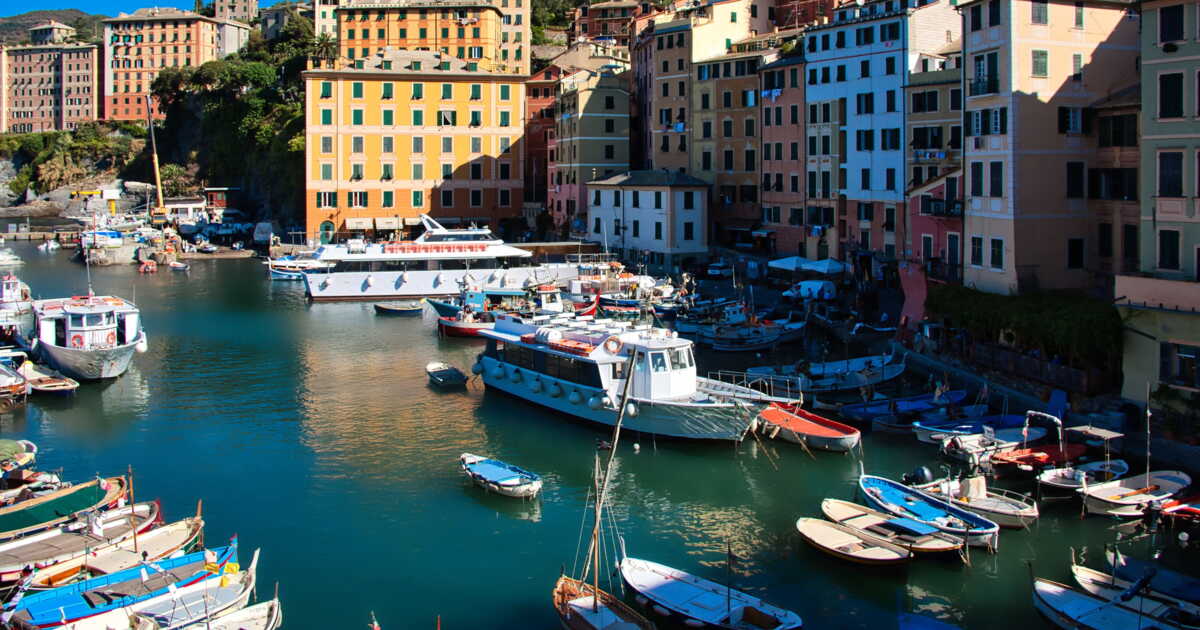
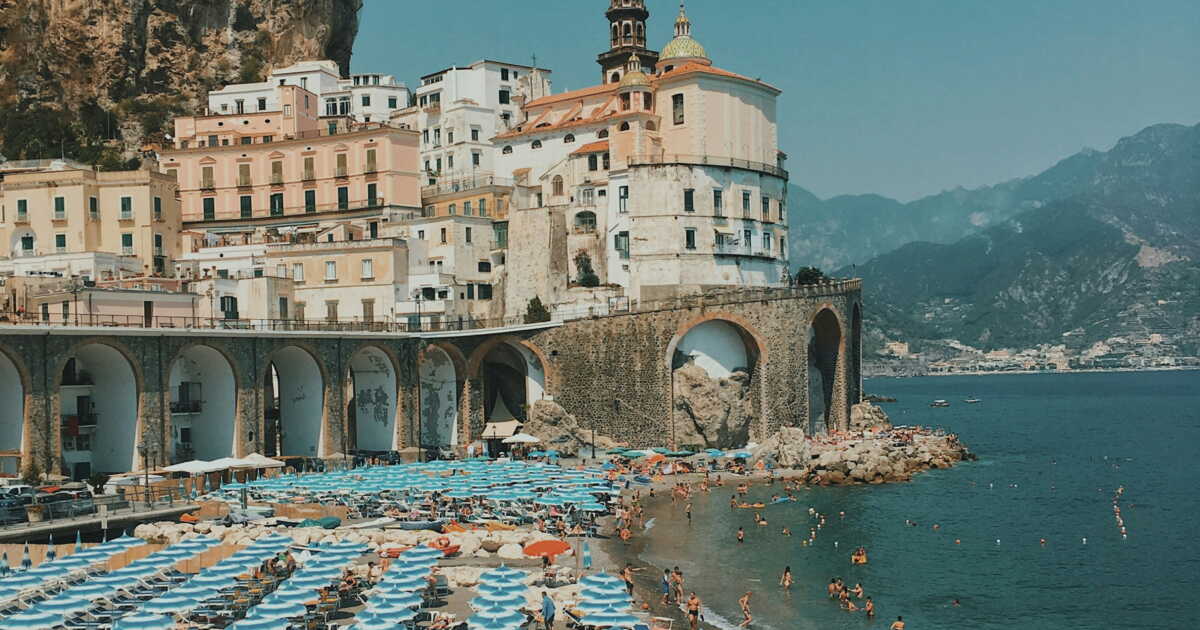
Along nearly 8,000 kilometers of the Italian coast, parasols and sunbeds line up with near-military precision. Every fifty meters, the establishments change, and the shades of the beach furniture do as well. These “bathhouses” or “lidos”, more formally known as seaside concessions, embody an entire lifestyle: sand raked at dawn, cocktails served to music—often Italo disco—and spots rented at astronomical prices depending on how close to the water the client wishes to be.

But this meticulously crafted postcard hides a harsher reality, that of a country where nearly half of the coastline is governed by private interests, relegating the “public beaches” (spiagge libere in Italian) to less attractive corners of the boot, often without restrooms or supervision.

Sea Free: Facing the Headwinds

To combat this massive privatization, a citizen movement has emerged in recent years under the banner Mare Libero (literally, “Sea Free”). Danilo Ruggiero, head of the campaign, tells The Guardian, on Sunday, July 19, of a profound transformation of the country’s beaches, turned into “small seaside resorts” with pools, parking lots, and even clothing shops and gyms inside the complexes. He himself lives in Ostia, near Rome, where 80% of the coastline belongs to what he affectionately calls “the United States of the Lidos”.

All around these private zones, walls, fences, or hedges have been erected to guarantee privacy for those who pull out the wallet, blocking the view of the sea for residents and tourists who want to enjoy the landscape for kilometers.

Only 5% of public beaches in Naples

In the northern part of the Gulf of Naples, the young mayor of Bacoli, Josi Gerardo Della Ragione, 39, has gained national notoriety by fighting tooth and nail against the “profiteurs” of the beaches. “Until recently, our beaches were crowded with illegal huts, barbed wire, gates, and intercoms”, the mayor told the British paper. It then took ringing an intercom to be known by the site manager to be allowed onto the warm sand. In Campania, private concessions account for 70%. They rise to 95% in Naples itself.

The mayor did not hesitate to send in bulldozers to demolish warehouses illegally built on public land. “It is evident that the public domain seized by force and intimidation will be defended by force and intimidation. Once, we even came across an official armed with a chainsaw, heading toward municipal workers”, recounts Josi Gerardo Della Ragione.

The Mafia’s Shadow and the Lure of Profit

The struggle is not only a tourism issue. The local mafia is involved as well. For a long time, the Camorra thrived on the lucrative yet opaque management of these seaside establishments. Several properties in Bacoli were confiscated from mafia clans, such as the Pariante family, to be returned to the public, like Villa Ferretti, which has overlooked the Gulf of Pozzuoli since the 19th century.

Not far away, Miseno beach remains entirely occupied by complexes belonging to the army, the navy, or the customs service, representing nearly 100,000 square meters reserved for exclusive use. “The sum of individual interests is always less than the common good”, laments Josi Gerardo Della Ragione.

Since 2006, Brussels has required that coastal concessions in the European Union be allocated through transparent tenders, but successive Italian governments have extended the deadline and repeatedly postponed it. For concession defenders, such as Antonio Capacchione, president of the seaside operators’ union, these establishments provide safety for their clients because lifeguards are mandatory, something not always guaranteed in Italy. For Mare Libero militants, this argument, minimal compared to the scale of profits, cannot stand on its own.

Italy Vacation: Must-Know Rules Before Dining Out

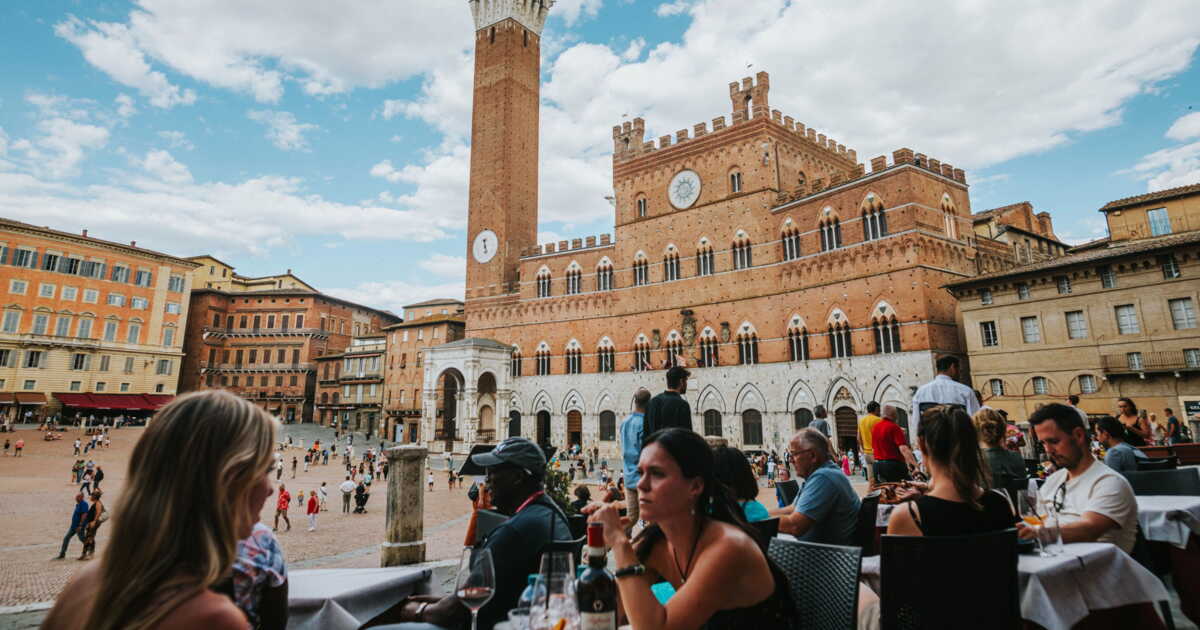
Dining at a restaurant in Italy is a serious business. Cutting your spaghetti, ordering a cappuccino at 2 p.m., asking for a carafe of water—these are French reflexes that risk betraying you to the Italians. Some rules may seem strict to foreign visitors, but they remind us that sampling an Italian specialty means also immersing yourself in a culture, adopting its codes, and accepting to disrupt your habits.

Coffee, a Whole Story

Do you dream of a delicious espresso? In Italy, a coffee is inherently an espresso. So there is no need to specify it, unless you want a ristretto. As for the moment you order your coffee, it also matters. No Italian waiter will agree to bring it to you before your meal is completely finished, as well as your glass of wine. The ultimate mistake is ordering a cappuccino after a meal. Don’t even think about it. Italians drink their cappuccino (which contains milk and sugar) in the morning, as breakfast. After 11 o’clock, cappuccino time has passed!

Shaking Up the Order of Courses

For a beginner, reading a menu in Italy can be unsettling. A traditional meal is composed of 4 courses: antipasti (starters), primi piatti (first courses), secondi piatti (second courses), dolci/frutta (desserts or fruit).

And that plate of pasta or that risotto you crave so much is part of the “primi piatti.” Of course, restaurateurs will accept (perhaps with a sigh) serving you only spaghetti alle vongole, even if you forget to order a meat or fish dish that would normally come next.

Asking for a Carafe of Water

There is nothing stopping you from asking, but it is very unlikely you’ll get your way. Even when ordering still water (Acqua naturale) rather than sparkling (Acqua frizzante), a bottle of mineral water typically appears on your table. A tip? Don’t bother fighting it.

Adding Parmesan to Seafood Pasta

Imagine you’re in Venice and order Spaghettoni al nero di seppia at the Do Farai (Calle del Cappeller, Dorsoduro 3278). When the plate arrives, you’ll have to resist the urge to ask for parmesan at all costs. In Italy, mare and monti do not mix. This applies to parmesan on pasta, as well as to the secondo piatto, which would then be… only fish.

Cutting the Spaghetti

Here is a rule you must never break, or you might see the carabinieri appear behind you. We’re hardly exaggerating! The shape of the pasta is its very essence, and cutting it deprives it of its identity. And don’t even think about using a spoon to make life easier. Again, this is a gesture considered particularly ineloquent.

Good to know. For the same reason, spaghetti should never be broken before cooking.

Hiking: 5 Must-See Itineraries to Discover Italy on Foot

They say all roads lead to Rome, and for these five, that’s precisely true. At a moment when hiking is gaining popularity — nearly 30 million French people report having practiced it in the last 12 months, making it the most widespread physical activity — here are five itineraries rich in history and culture, to walk in order to discover Italy differently. From nature trails to villages, the “Antichi cammini d’Italia” (Ancient Paths of Italy) unfold several hundred kilometers across the country, and even beyond to the heart of Europe. All converge on Latium and Rome, and all share the common aim of revealing a preserved Italy.

1/ The Via Francigena, one of the oldest medieval pilgrimage routes

A thousand kilometers through some of the most beautiful landscapes in Italy: a dream come true! The Via Francigena is one of Europe’s most attractive cultural routes. While it links Canterbury to Rome, it is its Italian section that enchants walkers from all over the world the most. From the Grand-St-Bernard Pass to the Eternal City, the Italian stretch, about 1,000 kilometers long in 45 stages, reaches its experiential heart in Latium, through the Tuscia of Viterbo. In Bolsena, on the shores of the eponymous lake, the Eucharistic miracle of 1263 inspired the feast of Corpus Domini; Montefiascone houses the Rocca dei Papi, the papal fortress; Viterbo, an ancient papal city, preserves one of the largest medieval districts in Italy; Sutri offers its Roman amphitheater entirely carved in tuff. At the end of the path, La Storta, the final stop before Saint Peter.

Basilica di Santa Margherita a Montefiascone

2/ The Saint Francis Way: between forests, villages and sanctuaries

This route, both athletic and spiritually infused, connects the most emblematic places of Saint Francis of Assisi’s life. It consists of two branches that converge on Assisi: the North Way, about 190 kilometers from La Verna where Francis received the stigmata in 1224, and the South Way, about 300 kilometers in 13 stages, which traverses Latium entirely from Rome to Assisi. In the heart of Latium, in the Valle Santa of Rieti, four Franciscan sanctuaries concentrate the memory of decisive moments in the Saint’s life: Greccio, where in 1223 Francis made the first crib in history; Fonte Colombo, where the Rule of the Order was dictated; La Foresta, the site of the grape miracle; and Poggio Bustone, where he received the revelation of the forgiveness of sins. Upon arrival in Assisi, pilgrims receive the Testimonium.

3/ The Benedictine Way: on foot, by horse or by bike through the villages of Umbria and Latium

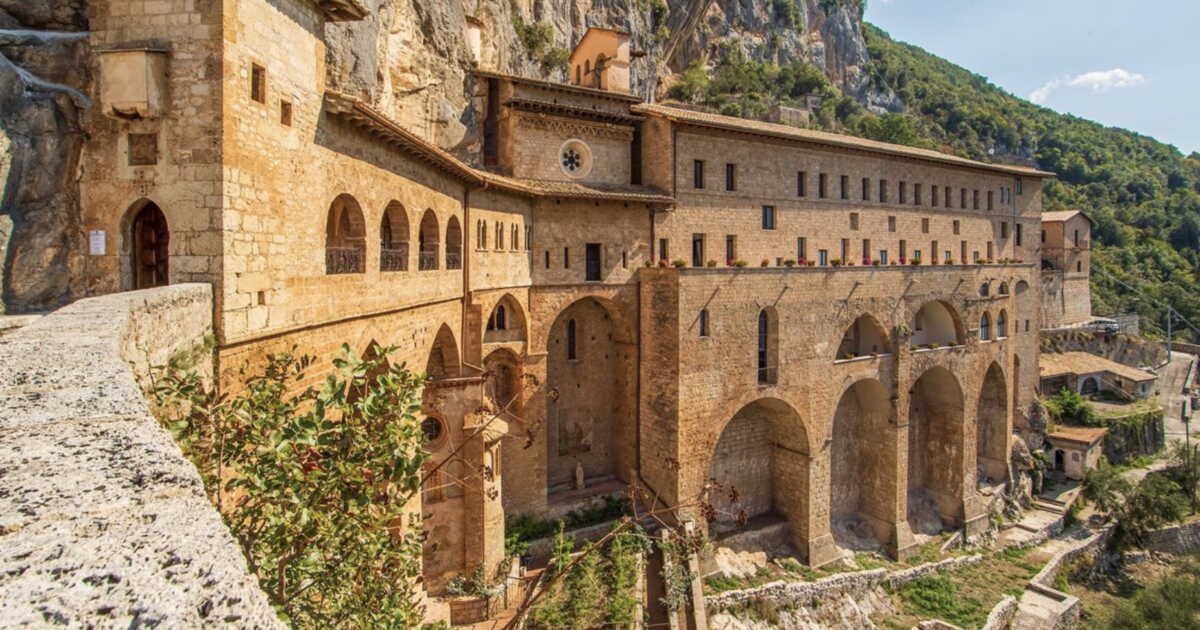
From Norcia in Umbria to Montecassino in Latium, this route exudes a singular spiritual and cultural depth. The itinerary runs about 300 kilometers in 16 stages — and it is in Latium that the longest stretch unfolds, across the Aniene Valley and the central valleys of the Apennines. In Subiaco, the Sacro Speco houses the cave where Saint Benedict lived as a hermit for more than thirty years, while the Abbey of Santa Scolastica hosted in 1465 the first active printing press in Italy. From there the path continues via Trevi nel Lazio, Casamari with its Cistercian abbey, Arpino (birthplace of Cicero), Roccasecca (linked to Thomas Aquinas) and the Melfa Gorges, before culminating at Montecassino, where around 529 Benedict founded the abbey that remains the heart of the Order. Patron of Europe since 1964.

Ponte di San Francesco,Subiaco

4/ The Romea Strata: on the traces of pilgrims from Central and Eastern Europe

The complete route follows the tracks of medieval pilgrims for over 4,700 kilometers across seven countries, from the Baltic and Central-Eastern Europe to Rome. Recognized as a Council of Europe Cultural Route on June 17, 2025, the Romea Strata comprises 245 stages and more than fifty UNESCO sites along its journey. Its Italian section spans about 1,000 kilometers in 47 stages and touches, in Latium, Bolsena, Montefiascone, Viterbo and San Martino al Cimino before reaching Rome as the culmination of the voyage. Since 2024, thanks to mapping work by a network of volunteers, the final stretch no longer joins the Via Francigena: the Romea Strata now has an autonomous entry into Rome, which defines its identity.

5/ The Via Romea Germanica: from Germany to Saint Peter in Rome, following the path of a 13th-century abbot

The Via Romea Germanica retraces the route of Abbot Albert of Stade, who walked in the 13th century from Lower Saxony to Rome. The Italian section measures about 1,050 kilometers from the Brenner Pass to Rome and joins, in Latium, the Via Francigena at Montefiascone. From that point, the two paths merge and together cross the Tuscia of Viterbo: Bolsena, Viterbo — where every September 3 the Macchina di Santa Rosa takes place, recognized by UNESCO as intangible cultural heritage of humanity —, Vetralla, Sutri and the Veio Regional Park, up to La Storta. A northern variant in Latium also passes through Civita di Bagnoregio, the famous “dying city” perched on a tufaceous spur in the heart of the Tuscia.

Along the Antichi Cammini d’Italia, each stage offers a plunge into an Italy still preserved, where history, nature and contemplation blend harmoniously. At the end of these long marches, in Rome and in Latium, it is the living heart of the country that speaks.

Mausoleo di Romolo, Roma

To learn more

Projet financé par l’Union européenne – Next Generation EU « Antichi cammini d’Italia »,
PNRR – Mission M1C3 Investissement 4.3 Intervention 274 – maître d’ouvrage MINISTÈRE DU TOURISME ITALIEN, Agence d’exécution ENIT SpA

Sponsored article by ENIT S.p.A.