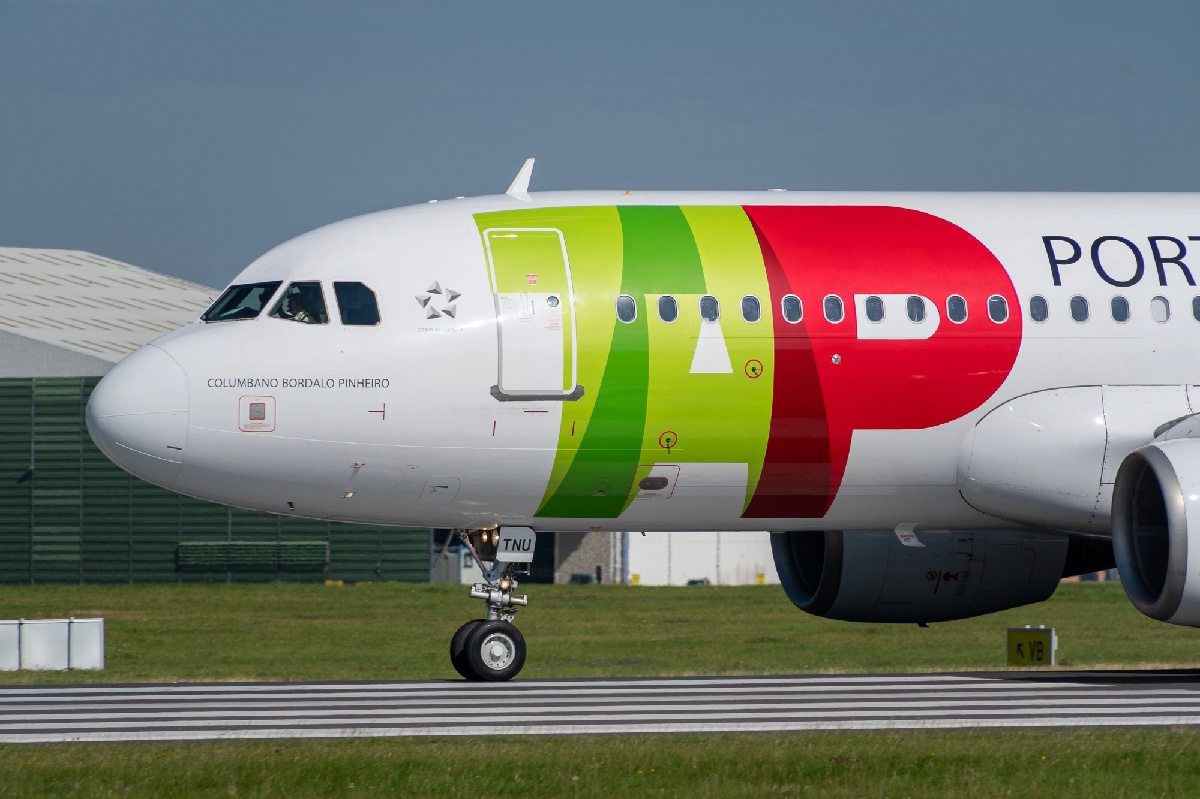

The outcome was determined today for the minority stake in TAP Air Portugal. The government ultimately turned to the German group Lufthansa.
This entity was chosen to acquire 44.9% of the capital of the Portuguese national carrier, sidelining the Air France – KLM offer.
The Portuguese government is expected to receive 1.2 billion euros thanks to the sale of a stake in TAP Air Portugal, with a total valuation estimated at 2.55 billion euros.
The Portuguese state retains 50.1% of the capital
« After reviewing the proposals, the government chose Lufthansa’s bid, whose financial offer is 16% higher than the rival bid and carries a lower degree of uncertainty », said the prime minister at the end of the cabinet meeting on Wednesday, as cited by the Portuguese press.
The Portuguese state holds 50.1% of the capital, the remaining 5% will be reserved for employees.
TAP Air Portugal carried 16.7 million passengers in 2025.
The reaction of Ben Smith, CEO of Air France-KLM
Following the Portuguese government’s decision to keep Lufthansa in the partial privatization of TAP Air Portugal, Ben Smith, CEO of Air France-KLM, took care to commend the work of the group’s teams and to express his regrets.
« I would like to congratulate our teams for the remarkable work they have accomplished over the past months and years. I know this is not the outcome we hoped for collectively», he stated.
Air France-KLM had presented an offer that its leader described as a « strong and comprehensive », respectful « of TAP’s brand and heritage », with ambitions for the future development of the Portuguese carrier.
Despite this decision, Ben Smith asserts that « this does not change our strategy ». The group plans in particular to pursue its SAS – Scandinavian Airlines integration project, « subject to regulatory approvals ».
The executive finally extended his best wishes to the TAP Air Portugal teams: « We would have loved to welcome you into our family, but we will gladly welcome you aboard our airlines as friendly competitors. » He closed his message with these words in Portuguese: « Obrigado e votos de muito sucesso ! »
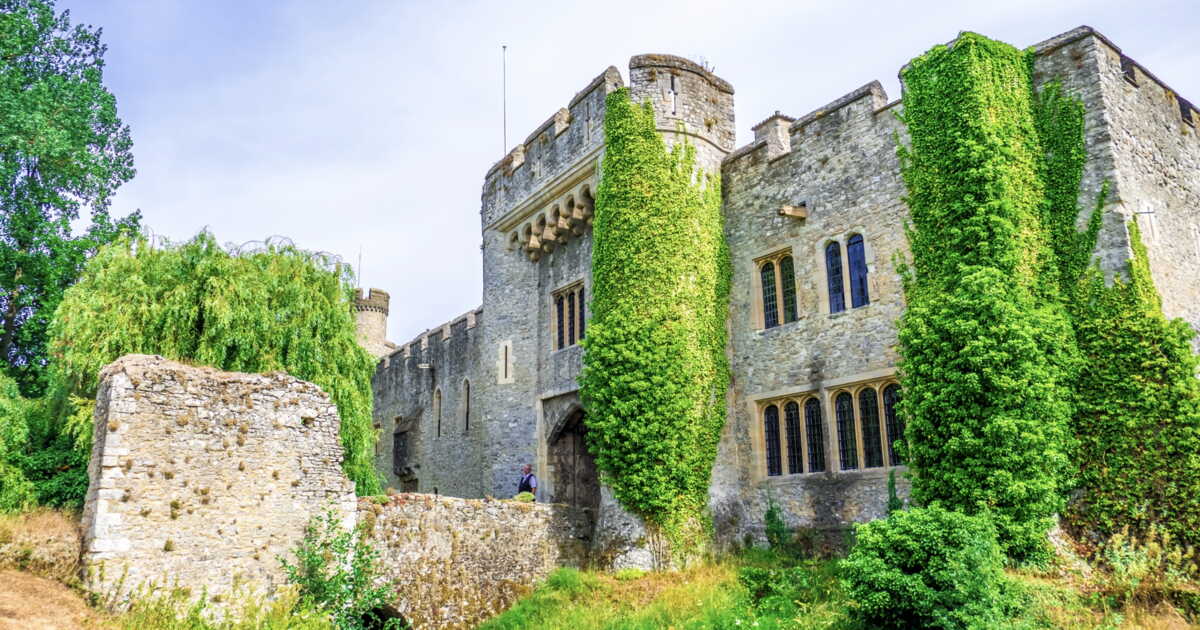
Want to buy a little piece of history? A medieval castle where King Henry VIII is said to have stayed with Anne Boleyn is up for sale in England for 5 million pounds, just under 6 million euros. Behind its moats and stone towers, Allington Castle has endured centuries of upheaval, from royal intrigues, rebellion, and abandonment. But what lies behind this Kentish historic residence, which has also served as a setting for cinema and television? Its story holds a few surprises.
Moats, Great Hall and the Ancient Tiltyard
The Knight Frank real estate agency is offering Allington Castle for sale at 5 million pounds, roughly 5.9 million euros. Set on a 17-hectare estate near the River Medway in Maidstone, the castle stands out for its towers, moats and inner courtyards. The property includes 30 bedrooms, a grand reception hall, cellars, an indoor pool, a tennis court, a greenhouse, and independent staff accommodations.
The grounds blend manicured gardens with wilder spaces. Ornament fountains and neatly kept parterres sit beside meadows where wild plants thrive and pollinator insects flourish. The estate also includes a historic dovecote, regarded as one of the oldest in England, as well as kestrels that nest in the towers. An orchard and a vegetable garden could also regain a productive function, with apple trees, pear trees, plum trees and hazelnuts.
Some features recall more directly the site’s past. The castle notably preserves a tiltyard, the space used for jousting, as well as an ancient bear-baiting arena. These facilities attest to the entertainments practiced on aristocratic estates, although their current presence does not alone allow dating their use precisely.
Listed as a Grade I historic monument in England, Allington Castle can host weddings and events for up to 150 people. It has also served as a backdrop for several audiovisual productions, including the historical comedy series Horrible Histories and the series The Avengers (in French “Chapeau melon et bottes de cuir”). But its interest goes far beyond its architecture and current uses. The estate is in fact closely tied to several figures in English history, notably King Henry VIII.
Henry VIII, Anne Boleyn and a Turbulent History
The castle is mentioned in the Domesday Book, an inventory of the lands and resources of the Kingdom of England carried out in 1086 at the request of William the Conqueror. Its architectural history is complex, the site having undergone several development phases before becoming the fortified residence of which some elements are still visible today.
In the early 16th century, Allington belonged to the Wyatt family. Sir Henry Wyatt undertakes work to transform the castle into a more comfortable residence. His son, Thomas Wyatt, born in 1503, becomes one of the prominent poets of the English Renaissance. He frequents the court of Henry VIII and is associated with Anne Boleyn, whose political ascent and marriage to the king shake the monarchy.
Henry VIII would himself have stayed at Allington Castle. According to Oli Streeter, a partner in the Southeast Rural Properties division of Knight Frank, the sovereign is said to have occupied the “royal chamber” during his visits. The castle is also linked to meals in which the king and Anne Boleyn are said to have participated.
The castle’s fate shifts in the 16th century. In 1554, Thomas Wyatt the Younger leads a rebellion against Mary Tudor, daughter of Henry VIII, notably to oppose her marriage to the Spanish prince Philip. After the uprising fails, the estate is confiscated. The castle gradually loses its status as a prestigious residence and falls into ruin.
It was not until 1905 that a new owner, art historian and explorer Sir Martin Conway, undertook its restoration with architect William Douglas Caröe. The work continued until 1929 and made the building habitable again. More recently, the castle was acquired by Sir Robert Worcester, a survey expert who died in 2025. Its sale now opens a new chapter for this dwelling, a witness to England’s transformations since the Middle Ages.
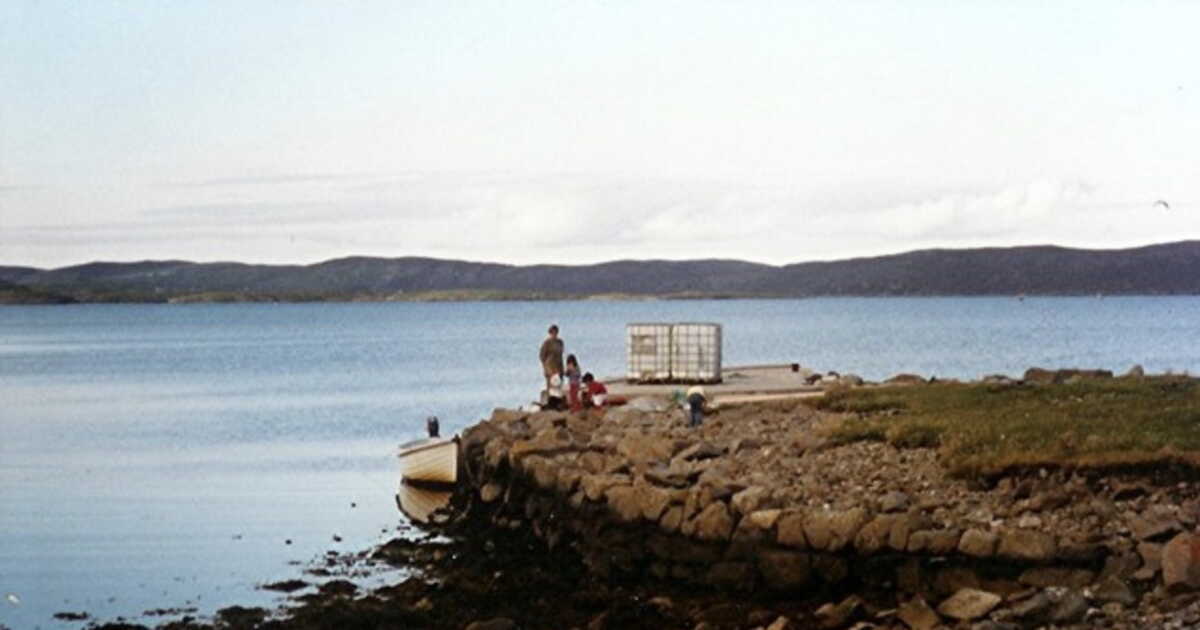
What if your next address was an entire island, accessible only by boat? Off the coast of the Shetland, Hildasay is offered for sale at 350,000 pounds sterling, or about 400,000 euros. This isolated tract of land spanning around one hundred hectares houses a quay, two freshwater lochs, and an old rudimentary dwelling. But behind these wild landscapes lies also a surprising history, marked by granite quarries and a small community once settled on the island.
A Wild Island Accessible Only by Sea
Located off the west coast of the Shetland Islands, Hildasay covers roughly 108 hectares. The island is not connected to any road, and access is available only by boat from the mainland or neighboring islands. It does, however, have its own quay, which serves as the main entry point to its shores.
The terrain remains relatively gentle. The highest point reaches about 32 metres, while the area hosts two freshwater lochs. A small traditional shelter, known in Scotland as a “bothy,” also provides a place to take cover on site. Simple and with little comfort, it mainly offers a privileged vantage point over the surrounding maritime landscapes.
The island also serves as a refuge for numerous bird species as well as a varied marine and coastal fauna, such as otters, eiders, guillemots, cormorants and Arctic terns.
For Kelvin Anderson, the real estate agency marketing the property, this is “an extraordinary opportunity to acquire Hildasay, a private island that is both beautiful and historic, located off the west coast of the Shetland”. The agency’s spokesperson, quoted in the listing, also describes the place as “a truly unique asset offering privacy and heritage in one of Britain’s most remarkable island landscapes”.
But behind this wild landscape and the sense of isolation lies a history far more dynamic, sharply contrasting with its current state.
Granite Exported to Australia and the Chris Lewis Adventure
By the end of the 19th century, the island was far from deserted. In 1891, around 30 people lived there and drew their incomes mainly from two activities: granite extraction and herring processing. The local stone, recognizable for its red and green hues, was exploited on a substantial scale.
A rail line specially laid allowed the blocks to be hauled to the port before shipment. According to the real estate agency, the granite quarried on Hildasay is said to have been sent as far as Australia. Even today, the remnants of this industrial activity are visible through abandoned blocks and the traces of the old railway.
This history, however, is not the only recent episode to have drawn attention to Hildasay. In 2020, during the Covid-19 pandemic, the British adventurer Chris Lewis visited the island. Aged 39 at the time, he was roaming the coasts of the United Kingdom and sleeping in a tent in the Shetlands when the lockdown was imposed on March 23.
With his dog Jet, he obtained a special permit to settle in the island’s lone house during the restrictions. His experience on the island later gave rise to a book, “Finding Hildasay”, devoted to his journey around the British coastline.
More than a century after the era when around thirty inhabitants worked there, Hildasay no longer hosts a permanent community. It is now offered as a rare private property, with its landscapes, its industrial ruins and its maritime access. All for 400,000 euros, a price that would allow its future owner to become master of an entire Shetland island, the price of an apartment in Paris.
Bahia Principe Hotels & Resorts unveils a new edition of its Happiness Sale, one of its flagship promotional campaigns of the year.
Available until September 18, 2026 through travel agencies, OTAs, tour operators, and other distribution channels, the promotion aims to encourage travelers to plan ahead for their 2027 vacations.
Bookings placed during the promotional period can cover stays through October 31, 2027.
Depending on the properties and dates chosen, guests can enjoy discounts, a free stay for the first child, and free cancellation terms.
The benefits offered do vary by hotel and travel period.
Escape and Explore for Different Traveler Profiles
With this campaign, Bahia Principe also highlights its two hotel concepts: Bahia Principe Escape and Bahia Principe Explore.
The Escape range includes Adults Only properties, with an offering that focuses particularly on wellness, dining, and entertainment.
On the other hand, Explore targets more toward families and groups, with resorts designed around shared experiences. The group also emphasizes the development of spaces and experiences for families traveling with children.
This segmentation allows Bahia Principe to offer different stay configurations based on traveler profiles and expectations.
Travel Agents Benefit from Triple Points
The Happiness Sale also comes with a dedicated framework for travel professionals.
Members of Bahia Principe Rewards ProAgents, the loyalty program for travel agents, will receive triple points for all bookings made during the campaign period.
Professionals who are not yet enrolled in the program, meanwhile, will receive a 1,000-point welcome upon joining. The accrued points can then be redeemed for various benefits, including stays, spa treatments, dinners, or themed evenings.
For Bahia Principe, the goal is to support sales for the 2027 season while reinforcing the incentive to book through distribution professionals.
Published by Amelia Brille TourMaG.com Editor See all articles by Amelia Brille
Off the coast of Rio de Janeiro, a private island encircled by turquoise waters is currently seeking a new owner. Behind this spectacular sale lies the story of a place shaped by a controversial figure in aesthetic medicine, frequented by celebrities and marked by an architecture that evokes the world of espionage cinema. Named Pitanguy Island, this property of nearly 30 hectares ranks among the most expensive private islands on the market today.
An island shaped by Brazil’s pioneer of cosmetic surgery
Named Pitanguy Island, this island off the coast of Rio de Janeiro derives its name from Dr. Ivo Pitanguy, one of the world’s best-known Brazilian plastic surgeons. Considered a pioneer of the Brazilian Butt Lift (BBL), he dedicated part of his life to turning this island territory into a private haven. The doctor, who died in 2016 at the age of 93, used the island as a residence reserved for his family, close friends, and a select group of invited guests. Since his passing, his family is said to have continued maintaining the property, which has now been put up for sale for $100 million, or about €86 million.
According to Beauchamp Estates, several international figures have stayed on the island over the years. Among them are actors Tom Cruise and Katie Holmes, singer Frank Sinatra, and former U.S. President Jimmy Carter. Beyond its celebrity history, Pitanguy Island stands out for the layouts crafted by its former owner. He built six modernist-style bungalows and nine suites, while preserving significant natural spaces.
The estate today features a swimming pool, three private beaches, a forest traversed by trails, natural freshwater springs, and a natural aquarium. Sports enthusiasts can also enjoy a tennis court, while several golf-cart-type vehicles allow for easy circulation around the island. Access to the estate is facilitated by a marina capable of accommodating large vessels, a heliport, and a private 400-meter airstrip. It can be reached by boat, helicopter, or airplane.
View this post on Instagram
A tropical landscape with James Bond vibes
The island’s distinctive character also lies in its architecture. The buildings showcase white façades, rounded walls, and large glass expanses opening onto the ocean and the tropical gardens. A modernist style that echoes some iconic Brazilian structures of the 20th century. According to Beauchamp Estates, the whole ensemble is also said to have been partly inspired by Francisco Scaramanga’s lair in the James Bond film The Man with the Golden Gun, released in 1974 with Roger Moore in the role of the British secret agent.
Yet the island could still evolve. The future owner might consider new constructions, subject to obtaining the necessary authorizations from the local municipality and the Brazilian Navy. A plan envisions adding a residence of about 2,790 square meters in the eastern part of the island. According to Beauchamp Estates, this expansion could lift the property’s value to as much as $135 million, about €116 million. Other transformations could also be possible, such as renovating or reconstructing the existing buildings, and modernizing the heliport, the airstrip, and the marina.
Pitanguy Island, an ultra-private refuge
Gary Hersham, founding and managing director of Beauchamp Estates, describes the island as “an exceptional property” that “also offers extraordinary potential”. He adds that “the island could remain an exceptional private retreat for a discerning multimillionaire or billionaire, or be transformed, subject to urban planning permissions, into an ultra-exclusive hotel complex of the Necker Island type, with world-class five-star facilities”.
Kay Louise Smith, a specialist broker at Beauchamp Estates, believes that “Pitanguy Island is one of the most exclusive private islands in the world, offering a James Bond-inspired hideout with remarkable modernist-style bungalows and suites, exceptional amenities, and a prestigious celebrity history”.
With its private beaches, extraordinary facilities, and James Bond-style architecture, Pitanguy Island demonstrates how far the transformation of an island territory can go into a private retreat. Beyond its spectacular setting, this island, one of the most expensive in the world, also testifies to the enduring appeal that these exceptional places hold for the wealthiest, who seek properties that become increasingly rare and exclusive.
As the summer season approaches, easyJet holidays launches a new edition of its “Big Orange Sale,” accompanied by a strong commitment: not to pass on the rising fuel costs to the prices of flights and holidays.
An initiative that takes place within a tense economic context and aims to support travelers’ purchasing power.
The tour operator of the easyJet group announces that it will maintain its prices across all flights and packages, whether for bookings already made or new sales, for departures scheduled until March 21, 2027.
All-inclusive stays and summer 2026 flights will thus be safeguarded without any fuel-related price increases.
According to Kevin Keogh, Europe Director of easyJet holidays, this measure aims to provide clients with better visibility into their vacation budget, while taking advantage of ongoing promotional offers.
Promotions et séjours à prix compétitifs
As part of this promotional campaign, discounts of up to €400 are offered on thousands of stays, via the code ORANGEPROMO.
The offer covers more than 90 destinations, mainly in Europe and around the Mediterranean.
easyJet holidays highlights a selection of destinations favored by the French for summer 2026, including:
– Agadir (Morocco)
– Mallorca (Spain)
– Tenerife (Spain)
– Sardinia (Italy)
– Brač (Croatia)
These destinations are offered through stays in clubs or 4- and 5-star hotels, tailored especially for families.
The tour operator also emphasizes the accessibility of family vacations, with free spots for children available for summer 2026. Partner properties provide dedicated facilities such as pools, kids’ clubs and activities.
Balnéaire et city breaks au programme
In addition to seaside getaways, easyJet holidays is also developing a range of short urban breaks, notably to London, Budapest and Madrid.
The aim is to respond to a diverse demand, spanning family vacations to escapes with friends or solo trips.
All packages include flights, accommodation, a 23 kg checked baggage allowance and transfers for seaside stays.
The tour operator also highlights flexible booking conditions, with the option to modify and a best price guarantee.
Published by Amelia Brille TourMaG.com Editor View all articles by Amelia Brille

What if owning an entire town cost less than buying a house or an apartment in some of the major metropolises? In Queensland, Australia, a remote settlement is seeking a fresh start and waiting for its future owner. Behind this unusual listing lies a village that is almost deserted yet equipped with surprisingly complete infrastructure. An unconventional opportunity that could also allow its buyer to instantly boost the number of residents.
An Entire Town for 400,000 Australian Dollars
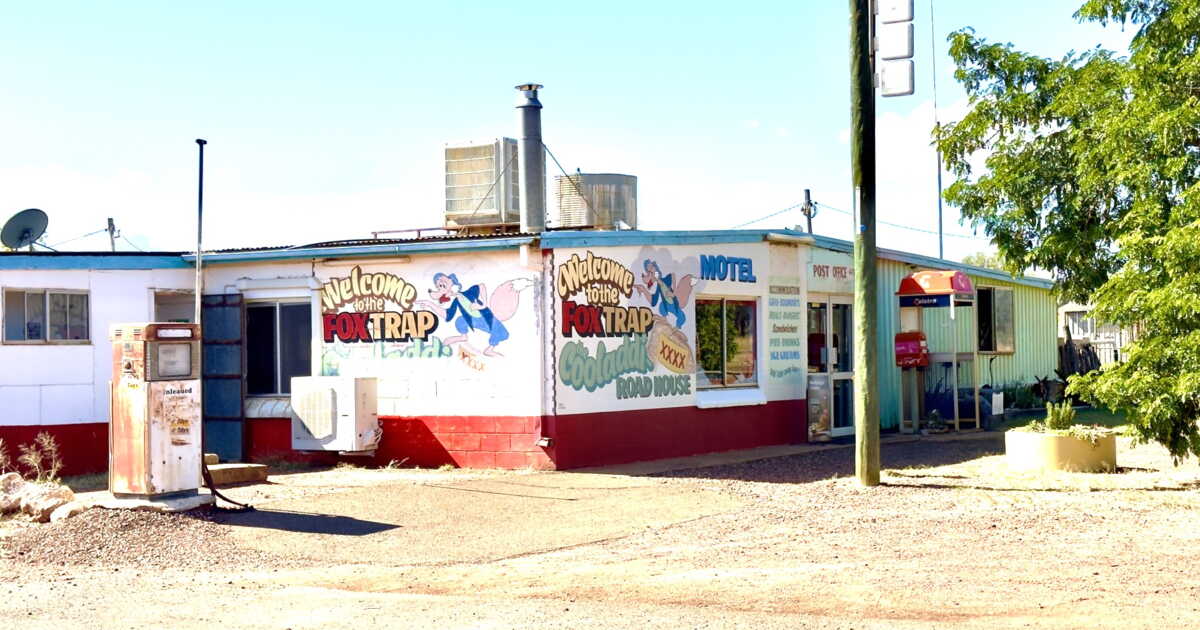
Tucked away in Queensland’s Outback, more than 800 kilometers west of Brisbane, the small community of Cooladdi is officially up for sale. The price is set at 400,000 Australian dollars, roughly equivalent to 240,000 euros. A sum that includes far more than land: the purchaser would also take over a four-bedroom roadhouse, a motel, a grocery store, a pub, and a four-star restaurant.
Cooladdi holds a rare distinction: with only two residents, it is considered Australia’s smallest town. The two current residents, Carol Yarrow and Jo Cornel, had bought the Foxtrap Roadhouse in 2023 with the aim of reviving the community for three years. As their project nears its end, Carol Yarrow now plans to retire while Jo Cornel wishes to relocate.
The number of inhabitants could, however, shift very quickly depending on who buys the town. Becky Jeisman, a Charleville Real Estate agent handling the sale, explains that “there are currently only two people living in Cooladdi. The population is calculated based on the number of people who own the Foxtrap”. She adds: “It’s the whole town, and if a group of four people buys it, then the population will double”.
A Prosperous Past and an Unconventional Lifestyle
Purchasing Cooladdi isn’t merely about acquiring several buildings. The future owners would also bear responsibility for a large part of the village’s essential services. They would serve as the postman, pub manager, shopkeeper, motel receptionist, and cook. Carol Yarrow sums up this versatility to The Guardian: “Restoration and the pub probably form the core of the work; we also handle mail delivery as part of the postal service”.
Despite this load, she looks back on the experience with fond memories. “I’ve always found that the best thing about it is the local community… the residents who live within roughly 70 kilometers and pass by the property”, she told the British outlet. This small town wasn’t always nearly deserted, though. At its peak, Cooladdi counted 270 residents. The town boasted a school, a butcher shop, a police station, and flourished thanks to the railway. But when the railway line was extended to Quilpie in 1917, its decline began.
“The lifestyle is relaxed”
The closure of passenger train services in 1967, combined with the decline of sheep farming, accelerated residents’ departures and the gradual disappearance of shops and public services. Today, despite this turbulent history, Cooladdi continues to welcome travelers thanks to its location on a busy Outback road that links several towns, notably Charleville, about an hour’s drive away and home to around 3,000 inhabitants.
Former residents remain attached to the place as well. Carol Yarrow tells The Guardian that “since the residents left—many settled in Charleville and the surrounding area—people who grew up here come back to visit the places they once knew”. And she concludes: “We see many travellers and wonderful locals passing through. It’s an exceptional community. The lifestyle is relaxed. All around us, there are only mulga trees.”