
Croatia Reaches Over 5 Million Tourist Arrivals in August


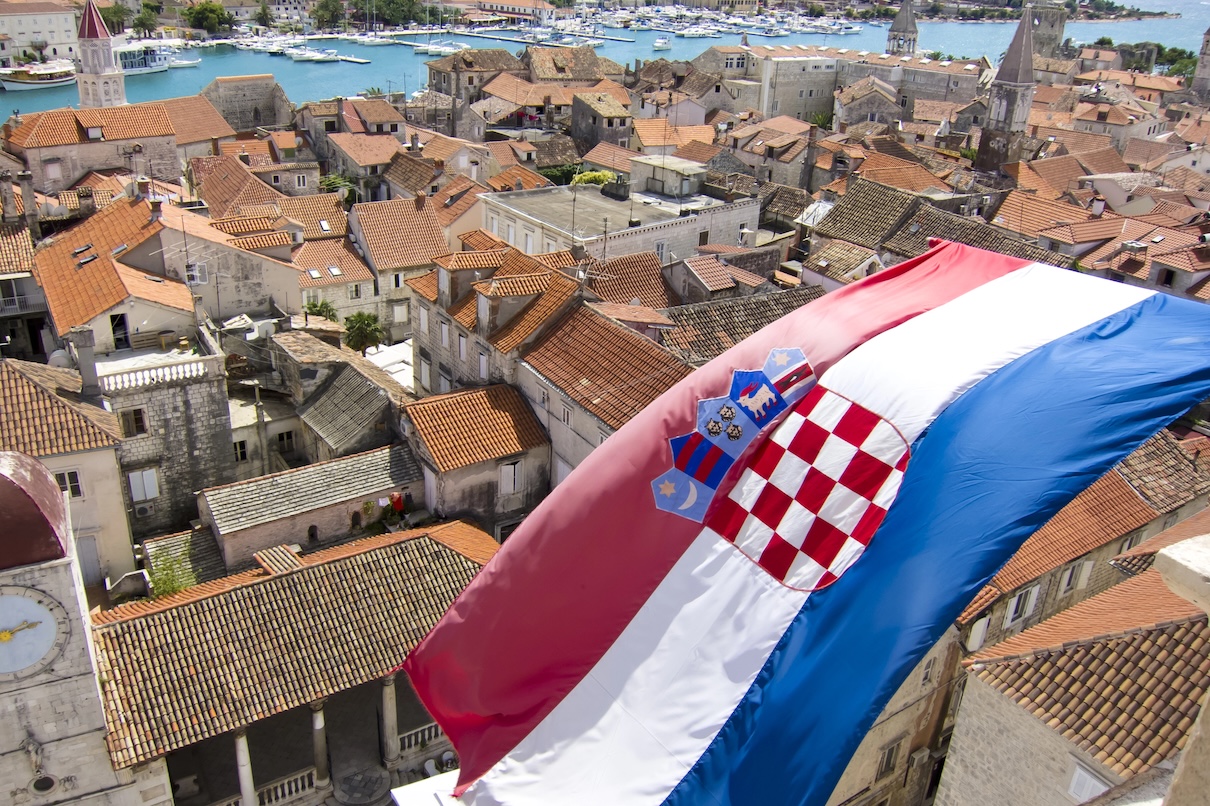
La Croatie a franchi pour la première fois le seuil des 5 millions d’arrivées touristiques sur un seul mois  - Depositphotos.com @tommasolizzul

Aer Lingus


According to data from the national tourism information system eVisitor, Croatia recorded more than 5 million arrivals and 31.4 million overnight stays in August, up 2% and 0.5% respectively compared with the same month in 2025.

This marks an unprecedented level for the country, which for the first time exceeds the 5 million arrivals mark in a single month. In the first eight months of the year, several regions concentrated the majority of visitation, with Istria, Central Dalmatia, and the Kvarner region leading in overnight stays.

Between January and August 2026, Istria recorded 25.4 million overnight stays, ahead of the Split-Dalmatia region with more than 17 million, and the Kvarner with 15.2 million.

In terms of destinations, Rovinj, Dubrovnik, Poreč, Split, Umag, and Medulin are among the most frequented. According to Tonči Glavina, the Croatian Minister of Tourism and Sports, the evolution of the figures notably reflects changes in travel habits, with shorter stays and a greater focus on budgets. The gap between the growth in arrivals (+2%) and overnight stays (+0.5%) in August points in this direction.

The ministry now aims to concentrate its efforts on the shoulder season and the winter period, while a substantial portion of the tourist year remains to come.


The French market slightly down

Since the start of 2026, Croatia has welcomed more than 400,000 French tourists, representing nearly 1.5 million overnight stays. However, French tourism has shown a slight decline compared with the same period in 2025.

The Croatian National Tourism Board puts this trend into perspective with the broader slowdown in French departures to European destinations.

Some segments still show growth. This is notably the case for nautical tourism, which totals more than 10,000 French arrivals and close to 75,000 overnight stays between January and August 2026. Over the year, arrivals are up 11% and overnight stays up 12%.

Another trend highlighted by the Croatian National Tourism Office is a diversification of destinations chosen by French travelers. Less-visited areas so far, such as Varaždin, Međimurje and Osijek-Baranja, are gaining visibility.

“These new ways of discovering Croatia fully align with the evolution we want to support,” notes Slađana Mićić, director of the Croatian National Tourism Office in France.


Amelia Brille Published by Amelia Brille TourMaG.com Writer
See all articles by Amelia Brille

  • picto Linkedin
  • picto email
Add TourMaG to your Google News feed Google Actualités icône  

Audiophones: Vox Group Reaches Milestone with Simultaneous Translation


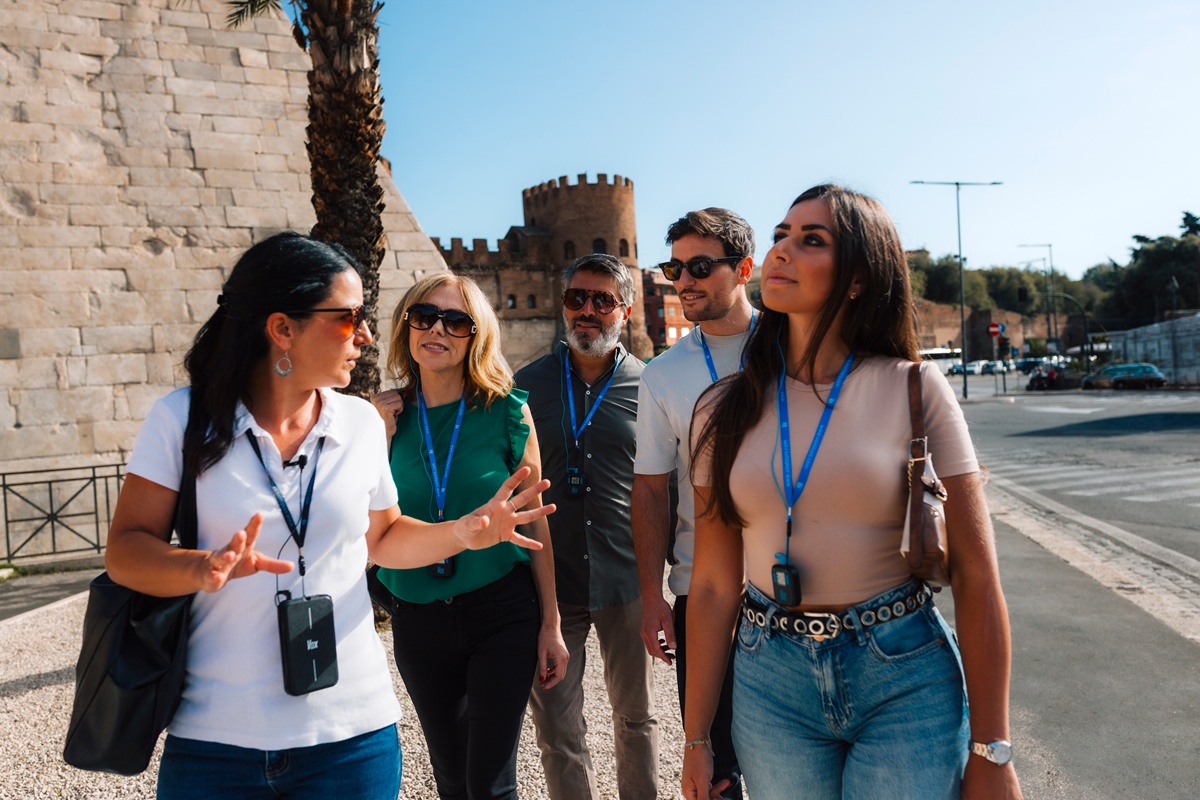
Avec Vox Aura, le guide touristique peut proposer une solution de traduction simultanée en 4 langues, lors d'une même visite, à partir d'un seul récepteur - Photo : Vox Group

CroisiEurope


TourMaG – Could you quickly introduce Vox Group?

Daniele Marchesiello: Vox Group was founded 25 years ago in Italy.

We have been offering technological solutions for guided tours, including headsets, audioguides, and a sightseeing app for individuals.

We work mainly with tour operators, cruise lines, OTAs, coach operators, museums, receptive agencies, and we are present in more than 150 countries across the globe.

TourMaG – Could you name a few of your clients?

Daniele Marchesiello :
We collaborate with Salaün Holidays, Verdié Voyages, Solotour, Richou, but also cruise operators like Intercruises, BLB Cruises, CroisiEurope, Tauck, Trafalgar in the UK, or Riviera Travel in Switzerland.

There are also Get Your Guide, Viator, the Château de Chenonceau, or in Marseille the Cosquer Cave, the MUCEM and the Tourist Office. In Aix-en-Provence, we have clients such as the Granet Museum, the Hôtel de Caumont, etc.

TourMaG – How does Vox Group differentiate itself from the competition?

Daniele Marchesiello :
We have two main competitors, Quiet Vox, founded in 2004, three years after us, and Whisper. We regularly find ourselves competing among the three, broadly speaking.

Our seniority and expertise give us a decisive edge. We offer flexibility and global know-how that make the difference.

We distinguish ourselves already by our presence and offices around the world, which helps reassure our partners. If they come to Egypt and have an issue, they know they can call the local office to find solutions.

The other major difference is that our competitors are specialized in certain tourism segments. By contrast, we chose to position ourselves across all segments.

And then, we never stop investing, whether it’s designing new products, improving current ones, or renewing the headset fleet.

Finally, our group stands out by its size. We employ more than 300 employees, including office staff (sales, marketing, etc.) and the various teams that prepare devices, manage reservations, ship them, etc.


TourMaG – In this July month, you’re innovating again with Vox Aura. Could you explain the concept?

Daniele Marchesiello: During a guided tour, Vox Aura will enable the guide to offer the group a simultaneous translation of the explanations into four languages – the guide’s language and three others – using a single receiver.

This product should notably appeal to DMCs, cruise lines and OTAs because they can open visit slots in multiple languages.

The tool allows choosing from more than 200 languages available. The guide accesses the settings via an app.

TourMaG – Is this simultaneous translation based on AI?

Daniele Marchesiello :
Yes, we opted to use a global AI that, fed daily, becomes smarter, and can be enriched with input from everyone. However, the server — which controls the AI and reassures the guide that all comments will not be recorded — and the hardware portion were implemented by Vox Group.

TourMaG – How did the idea for Vox Aura come to you?

Daniele Marchesiello :
During the Covid period, Vox chose to invest in technology and growth.

An application was developed for contactless tours, with the addition of translation, but it turned out that not everyone in a group would necessarily use their own phone, so this feature was later transferred to audioguides.

We then developed Vox Aura, which offers the same functionalities as the app but on receivers provided by the guide.


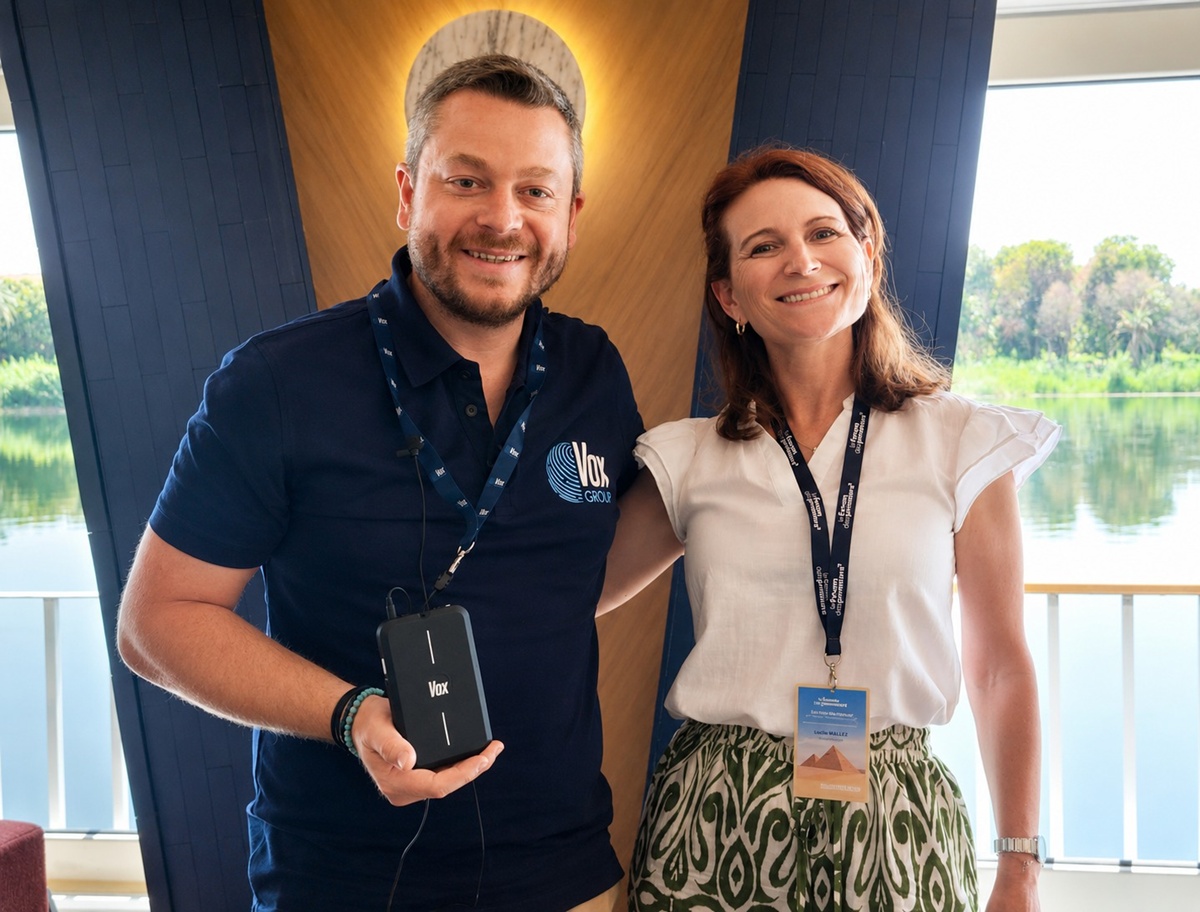
Daniele Marchesiello, directeur général France de Vox Group et Lydia Vallet, directrice commerciale, présentent Vox Aura lors du Forum des Pionniers 2026 en Egypte - Photo : AB

TourMaG – How do guides react when you present Vox Aura? Aren’t they worried about their jobs when they see a tool that can translate in four languages simultaneously?

Daniele Marchesiello: On the contrary. Guides work for tour operators, but they also run their own tours. And now they will have the possibility to assemble groups speaking two languages. It’s also a comfort gain. They no longer have to alternate explanations in two languages during a single visit. It saves time.

TourMaG – The commercialization of Vox Aura will start in August 2026. How did the testing phase go?

Daniele Marchesiello: We officially unveiled the solution at WTM 2025 in London, last November. Since December, we’ve received numerous trial requests, which allowed us to improve the software aspect. Indeed Vox Aura is Internet-connected and updates automatically.

TourMaG – Do clients need an internet connection during their visit to benefit from the simultaneous translation?

Daniele Marchesiello: Not necessarily; it’s enough that the guide’s device is connected. The link between Vox Aura and the receivers is wireless.

We conducted numerous real-life tests with our clients, including cruise lines, OTAs, tour operators, receptive partners, museums, etc.

Among the Vox Aura options is the ability to add information before the visit or the conference. For example, during a tour focused on the churches of Paris, the guide can specify the route or the vocabulary that might be used on the topic. The solution will pre-fetch all terms specific to a church visit, which can be used from a architectural or highly technical perspective.

Another interesting feature: it is possible to require translation of certain words or proper names, or to exclude translation of others. For instance, in Brussels, the Grand-Place isn’t translated as “Piazza Grande” or “Great Place.”

TourMaG – Does this simultaneous translation tool exist elsewhere, with competitors?

Daniele Marchesiello :
While translation apps are multiplying for the general public, the travel industry demands a much higher degree of rigor. In this domain, Vox Group is today recognized as the only player offering a global, fully integrated ecosystem for guiding.


Anaïs Borios Published by Anaïs Borios Journalist – TourMaG.com
See all articles by Anaïs Borios

  • picto Facebook
  • picto Linkedin
  • picto email
Add TourMaG to your Google News feed Google Actualités icône
Eurostar Reaches 20 Million Passengers and Plans Up to 50 New Trains


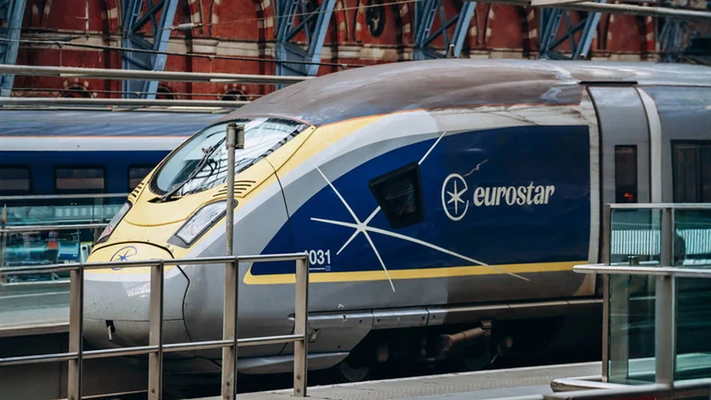
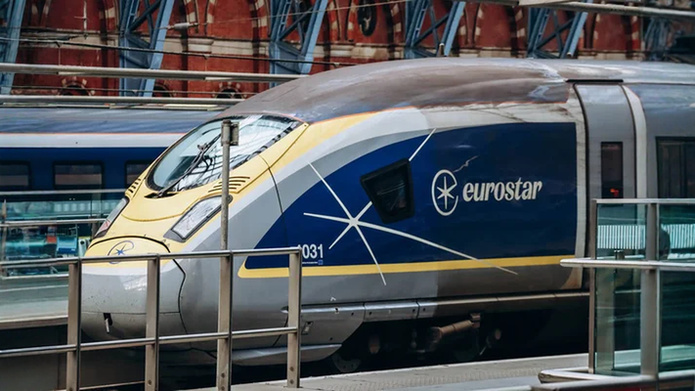
Eurostar mise sur le nouveau train Celestia, Depsositphotos.com, Photo by Andrei Antipov

IFTM prenez RDV avec TourMaG


In 2025, Eurostar carried 20 million passengers, marking a solid 3% growth (+500,000 travelers) in a single year.

On the ground, growth is particularly remarkable from the Paris hub: +6.7% for Paris–Amsterdam, +5% for Paris–London, and +3.7% for Paris–Brussels.

To translate this success into sustained demand and absorb this rising volume, Eurostar’s leadership is activating a major lever: an ambitious investment program of 2 billion euros for the acquisition of a new fleet of trains named “Celestia” (capable of up to 50 sets).


Celestia Fleet: Eurostar’s Big Move

A very concrete milestone has just been reached with the payment of an initial 90 million euros to the manufacturer Alstom.

The objective of this new fleet is twofold: on one hand, dramatically increase capacity on existing lines; on the other hand, pursue new strategic markets and open highly anticipated direct international links: London-Frankfurt, London-Geneva or Amsterdam/Brussels-Geneva.


Goal: 100% Renewable Energy by 2030

To deliver a complete customer experience, the company tends its infrastructures, such as the new cross-Channel terminal in Amsterdam, where more than €20 million has been invested to triple capacity.

But Eurostar pushes the sustainability agenda even further by integrating circular economy principles directly into its product (composting of food waste, redistribution of unsold items). For Gwendoline Cazenave, Eurostar’s Chief Executive, the trajectory is clear: the company builds the future of sustainable mobility in Europe with the ultimate aim of powering 100% of its trains with renewable electricity by 2030.

On the business side, the results validate the approach. With revenue above €2 billion (+1.7%) and EBITDA of €337 million, Eurostar demonstrates its financial strength, confirmed by progressive deleveraging (gross debt reduced to €520 million in April 2026).