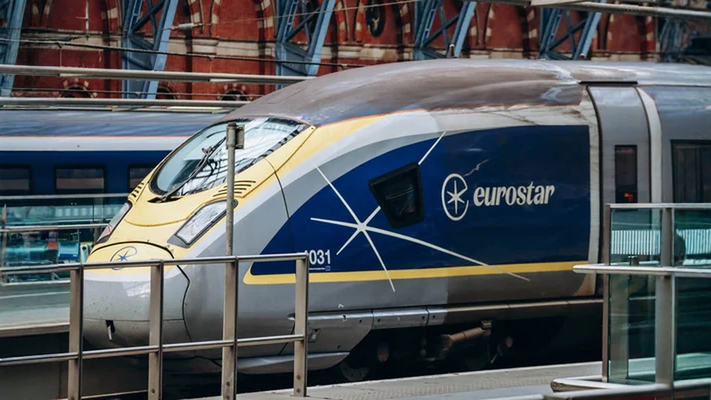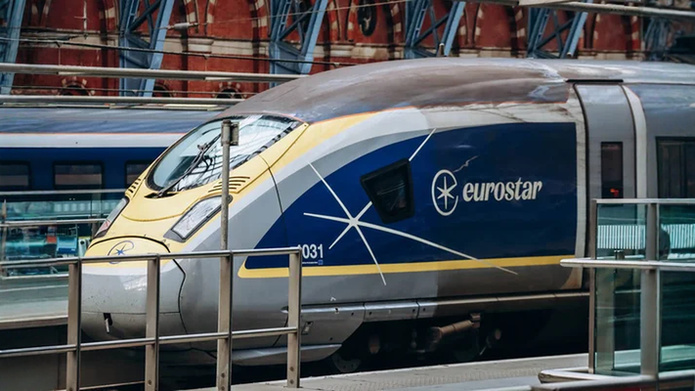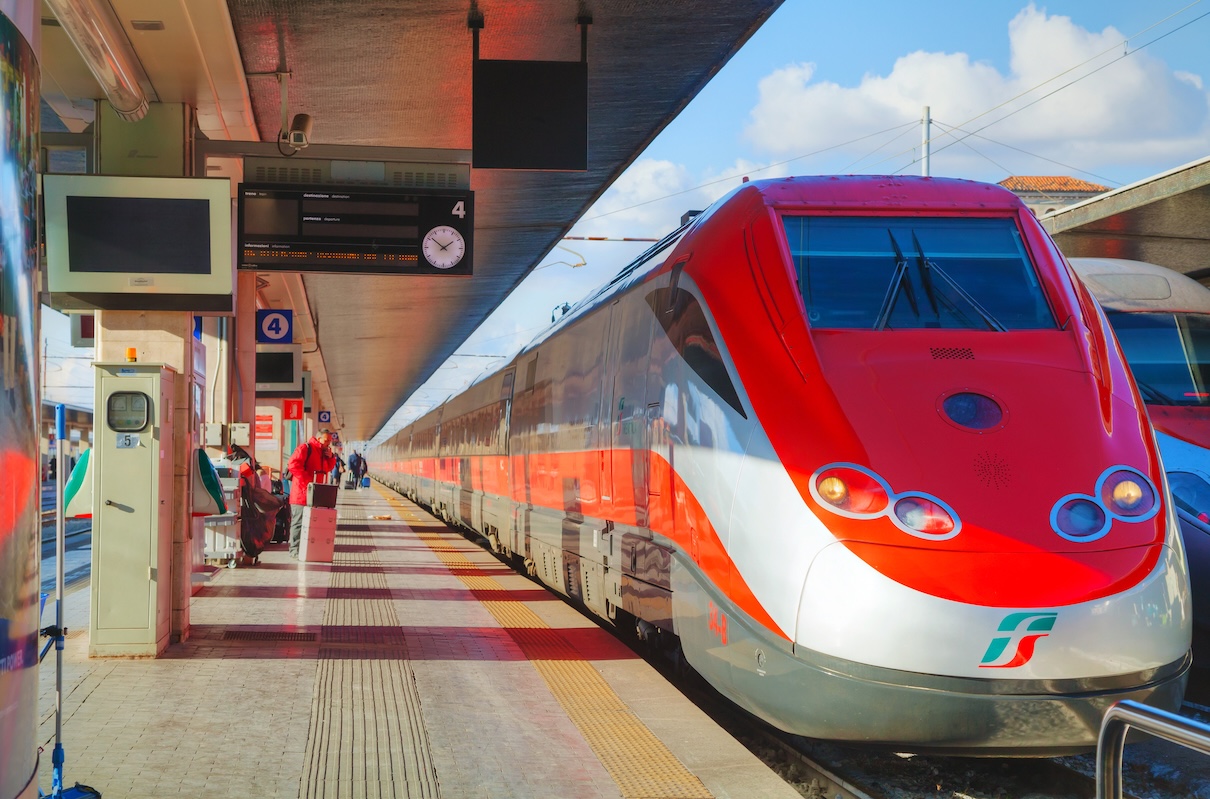


After 32 years of Eurostar’s monopoly, the rail link between Paris and London is about to enter a new era.
With orders for 19 trains and a launch now targeted for 2029, Trenitalia is preparing its entry onto one of the last major international rail corridors still largely dominated by a single operator.
For Clément Hugon, cofounder and co-CEO of Kombo, this announcement constitutes “a huge announcement” for the sector. “This is the unlocking of the last international axis that was completely monopolistic“, he notes.
While this link is particularly strategic, it also presents significant constraints. Crossing the Channel Tunnel requires in particular specific trains and numerous authorizations, in addition to procedures related to crossing the border.
“It’s the most complex because it requires more authorizations, specific trains, there is customs. It’s a somewhat peculiar protocol“, explains Clément Hugon.
A complex market, but also particularly attractive. Today, around 11 million passengers use the Paris-London rail axis each year. According to Kombo’s cofounder, the capacity of the Channel Tunnel is nonetheless far from being reached: around 400 trains would run there daily, against a maximum capacity estimated at 1,000 trains.
The arrival of new operators could therefore significantly increase the number of travelers transported.
With orders for 19 trains and a launch now targeted for 2029, Trenitalia is preparing its entry onto one of the last major international rail corridors still largely dominated by a single operator.
For Clément Hugon, cofounder and co-CEO of Kombo, this announcement constitutes “a huge announcement” for the sector. “This is the unlocking of the last international axis that was completely monopolistic“, he notes.
While this link is particularly strategic, it also presents significant constraints. Crossing the Channel Tunnel requires in particular specific trains and numerous authorizations, in addition to procedures related to crossing the border.
“It’s the most complex because it requires more authorizations, specific trains, there is customs. It’s a somewhat peculiar protocol“, explains Clément Hugon.
A complex market, but also particularly attractive. Today, around 11 million passengers use the Paris-London rail axis each year. According to Kombo’s cofounder, the capacity of the Channel Tunnel is nonetheless far from being reached: around 400 trains would run there daily, against a maximum capacity estimated at 1,000 trains.
The arrival of new operators could therefore significantly increase the number of travelers transported.
A Price Drop Expected
For travelers, one of the main effects of this opening to competition could be price-related. According to Clément Hugon, the prices currently charged on Paris-London remain high, notably due to the monopolistic situation.
“The monopoly has allowed Eurostar to impose very high fares, sometimes even higher than by air“, he notes.
At Kombo, the expectation is therefore for a significant drop in prices. “Clearly, in our view, ticket prices will fall a lot. We estimate the price drop at around 30%“, the cofounder states.
This estimate is notably based on observations from other markets opened to competition. Clément Hugon cites the example of Paris-Marseille, where Trenitalia recently entered the market against SNCF.
“Trenitalia arrived with an offer broadly less than 30% compared to SNCF, and SNCF adjusted fairly quickly“, he explains. He adds that a similar logic could take hold on Paris-London.
“The monopoly has allowed Eurostar to impose very high fares, sometimes even higher than by air“, he notes.
At Kombo, the expectation is therefore for a significant drop in prices. “Clearly, in our view, ticket prices will fall a lot. We estimate the price drop at around 30%“, the cofounder states.
This estimate is notably based on observations from other markets opened to competition. Clément Hugon cites the example of Paris-Marseille, where Trenitalia recently entered the market against SNCF.
“Trenitalia arrived with an offer broadly less than 30% compared to SNCF, and SNCF adjusted fairly quickly“, he explains. He adds that a similar logic could take hold on Paris-London.
Eurostar Will Have to Adapt Its Strategy
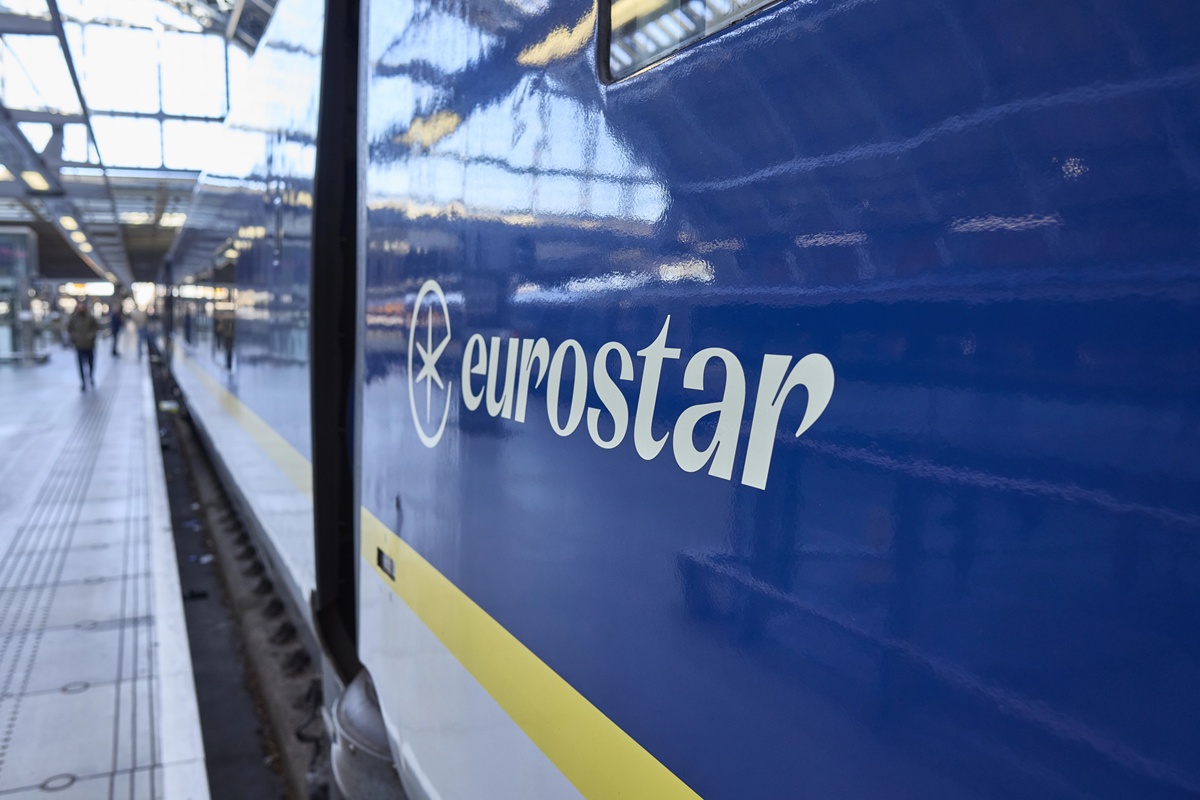
The incumbent operator does not wait for its competitor to arrive without reacting. Eurostar has already ordered 50 new trains from Alstom, an investment that should allow it to increase and renew its capacity. For Clément Hugon, pricing strategy should also be a central element of Eurostar’s response.
The difference with Trenitalia’s entry on other markets lies, however, in the scale of the planned offering. “It’s not just a few Trenitalia trains, it’s a real offering that will clearly compete with Eurostar in volume“, he stresses.
Prices won’t be the only battleground. Frequencies, schedules, comfort and services could also become decisive arguments to attract and retain travelers.
The difference with Trenitalia’s entry on other markets lies, however, in the scale of the planned offering. “It’s not just a few Trenitalia trains, it’s a real offering that will clearly compete with Eurostar in volume“, he stresses.
Prices won’t be the only battleground. Frequencies, schedules, comfort and services could also become decisive arguments to attract and retain travelers.
Brussels and Amsterdam in Sight
The opening of the cross-Channel market could extend beyond the Paris-London axis. Among the next connections likely to attract competition, Clément Hugon mainly cites Brussels and Amsterdam.
“There are direct Amsterdam-London services and they are almost always full. There is strong demand because these are two major European capitals“, he notes.
For Kombo’s cofounder, the Brussels-London and Amsterdam-London routes thus appear as the most obvious markets to host more competition in the long term.
“There are direct Amsterdam-London services and they are almost always full. There is strong demand because these are two major European capitals“, he notes.
For Kombo’s cofounder, the Brussels-London and Amsterdam-London routes thus appear as the most obvious markets to host more competition in the long term.
Competition Favorable to Kombo
For Kombo, the arrival of new operators also represents an opportunity. The platform, founded in 2016 by Clément Hugon and Matthieu Marquenet, now draws about one million travelers using its services to move around in France and across Europe.
“When there is competition, there is a need for comparison. And Kombo’s raison d’être is to compare and combine the different companies“, Hugon explains. The increase in traveler numbers is another favorable factor. If competition lowers prices and broadens the offering, it could help attract some air travelers to trains.
According to Kombo, the challenge goes beyond merely reshuffling market shares between Eurostar and Trenitalia. “We expect a doubling of traveler volume on this axis“, estimates Clément Hugon.
It now remains to wait until 2029 to concretely measure the effects of this opening. In the meantime, both Eurostar and Trenitalia will need to specify their respective offers. The Italian operator has another argument in its Executive class, which, according to Kombo, is particularly suited to the business clientele heavily present on Paris-London. This adds a new arena of competition to a market that is bound to transform.
“When there is competition, there is a need for comparison. And Kombo’s raison d’être is to compare and combine the different companies“, Hugon explains. The increase in traveler numbers is another favorable factor. If competition lowers prices and broadens the offering, it could help attract some air travelers to trains.
According to Kombo, the challenge goes beyond merely reshuffling market shares between Eurostar and Trenitalia. “We expect a doubling of traveler volume on this axis“, estimates Clément Hugon.
It now remains to wait until 2029 to concretely measure the effects of this opening. In the meantime, both Eurostar and Trenitalia will need to specify their respective offers. The Italian operator has another argument in its Executive class, which, according to Kombo, is particularly suited to the business clientele heavily present on Paris-London. This adds a new arena of competition to a market that is bound to transform.


 Published by Amelia Brille






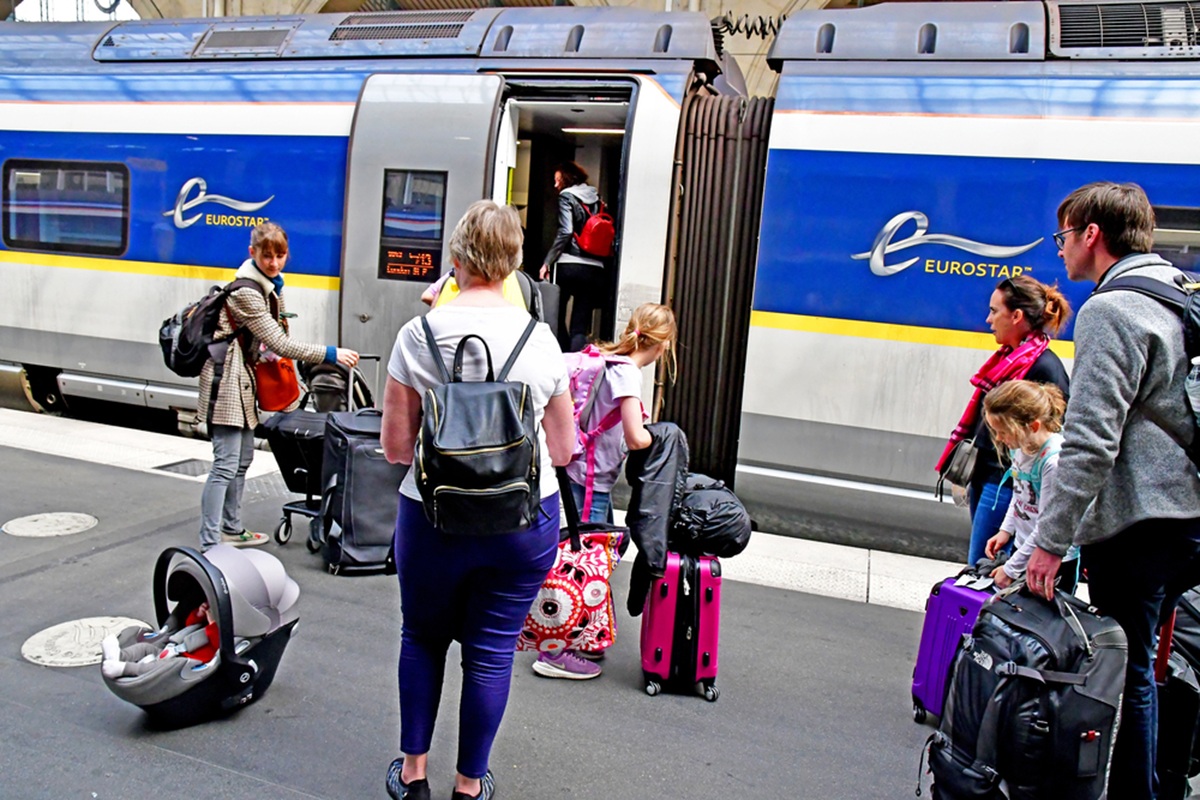
 In response to the intensification of heat waves across Europe, Eurostar has revised the specifications for its upcoming two-level train fleet, dubbed “Celestia.”