

Wildfires: €30 Million in Loans and €2 Million to Boost Tourism in Landes-Gironde


Incendies : 30 M€ de prêts et 2 M€ pour relancer le tourisme dans les Landes-Gironde - Capture écran

MSC Croisières


Following the wildfires that have severely affected Landes and Gironde, the government and tourism players are mobilizing to restore the attractiveness of the territories and support the professionals affected.

While visiting Nouvelle-Aquitaine, Serge Papin, the Minister Delegate for Tourism, announced several measures aimed at assisting reconstruction and, above all, reviving tourism in the areas hit by the fires.

Among the main measures announced is the creation of a guarantee fund capable of mobilizing up to 30 million euros in loans to support the affected economic actors.

The government also plans a communication plan named “Destination Landes-Gironde,” endowed with 2 million euros. This campaign should help bring back both French and international visitors and support tourist attendance in the two departments.

A dedicated fund is also set to assist the actors impacted in the Bordeaux metropolitan area.


“The resilience of Landes and Gironde is an absolute priority”

Adam Oubuih, directeur général d’Atout France a souligné dans un post LinkedIn : « The resilience of Landes and Gironde is an absolute priority ».

Present alongside Serge Papin and the local actors, Adam Oubouih met with professionals and representatives of the mobilized territories.

From the first days of the fires, the agency indicates having mobilized its international network to disseminate reliable and reassuring information to travelers, the media and professionals.

This communication has been carried out notably in connection with embassies and local partners, with the goal: to prevent images of the fires from leading to a distorted perception of the situation across the entire destination.

« Under the impetus of the Nouvelle-Aquitaine Region, the Regional Tourism Committee of Nouvelle-Aquitaine, and all the actors of the territory, an exceptional mobilization has been launched. Atout France today supports and amplifies it, notably by steering the international rollout of the ‘Destination Landes-Gironde’ campaign, in close cooperation with the Region and the Regional Tourism Committee » adds the communiqué.
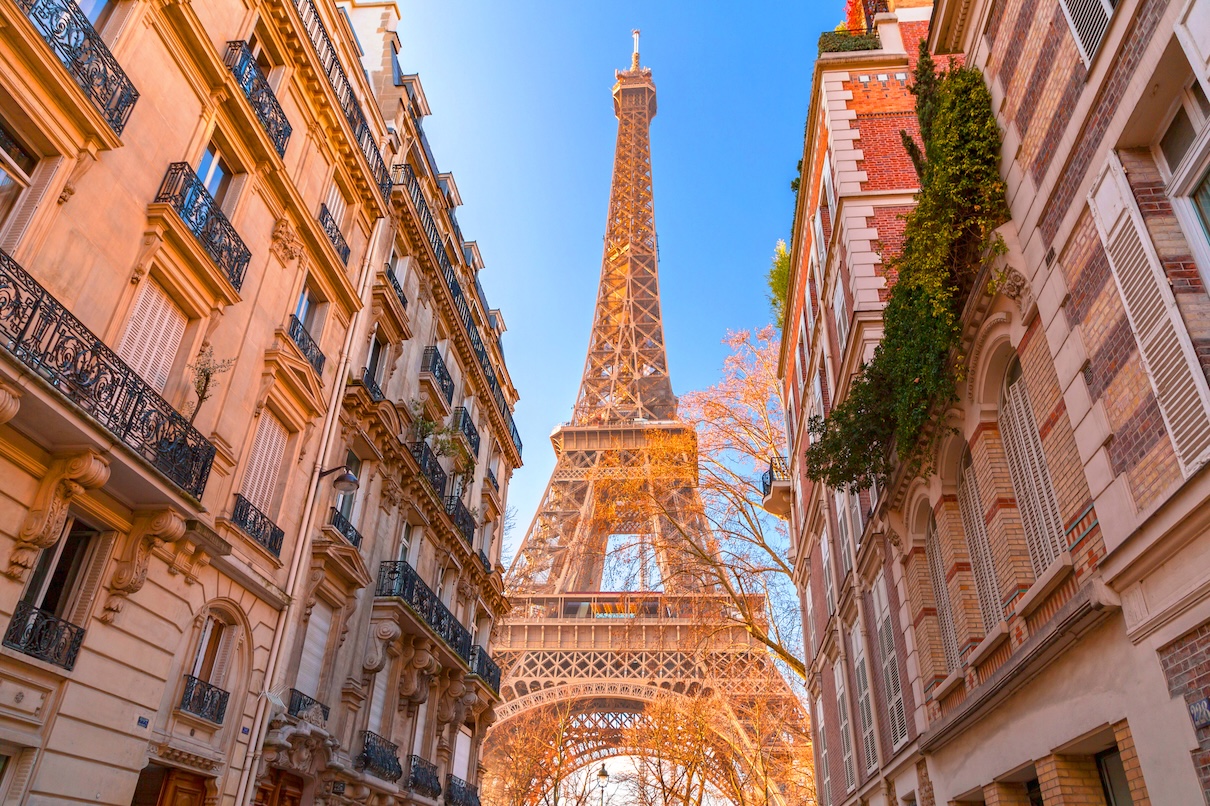
Paris Welcomed About 3.8 Million Tourists in June 2026


La capitale a accueilli environ 3,8 millions de touristes en juin 2026 - Depositphotos.com @EnginKorkmaz

Costa Rica


The Paris tourism traffic shows a slight uptick in June 2026.


According to the Paris tourist office barometer – Paris je t’aime, the destination welcomed around 3.8 million visitors during the month.

Air arrivals rose by 2.4% compared with June 2025. This growth, however, masks significant differences depending on markets. The Spanish (+34.1%) and Portuguese (+19.5%) markets show the strongest gains, followed by the Polish and Mexican markets (+15.7%).

Conversely, the United Kingdom recorded a decline of 19.1%, ahead of Brazil (-11.7%), India (-11.2%) and Germany (-5.4%).

The French clientele also shows a marked rise. According to Orange Flux Vision Tourisme data, the number of overnight stays by French tourists in Greater Paris increased by 19.3% year over year.

Overall, overnight tourist presence rises by 3% for the entire month of June. Hotel occupancy remains, however, almost stable (+0.1%). This trend should be viewed in the context of a less favorable comparison base, notably due to the absence of the Bourget Air Show in 2026.

Also read: Tourism: Serge Papin expresses confidence for the summer season


A More Contrasting Start to July

The early days of July show a less uniform trend.


Between July 1 and 12, hotel occupancy remains slightly higher than last year (+0.4%), while overnight tourism presence falls by 3.2%.

This decline occurs despite several events likely to support attendance, including The Weeknd concerts at the Stade de France, Bad Bunny at the Plenitude Arena, and the launch of the Esports World Cup at Paris Expo Porte de Versailles.


The Paris Heatwave

Weather also weighed on tourist behavior. During the heatwave episode from June 20 to 28, overnight tourist presence rose by 1.4% compared with 2025, roughly matching the trend observed for the reference period spanning from the start of June to mid-July (+1.3%).

The heat spell from July 7 to 13 was, however, accompanied by a more pronounced decline of 7.2%. The data thus suggest a greater impact of the heat on trip duration, movements, and last-minute bookings.

The heatwave also seems to have accelerated Parisians’ departures, with resident presence lower than that observed for the rest of June. These results should, however, be interpreted with caution, as the last weekend of June was also marked by the cancellations of Solidays and the Pride March.

In this context, the opening of new swimming spaces appears as an adaptation to the intense heat. In 2025, swims in the Seine attracted 100,000 people, including 13% international tourists.

In 2026, swimming in the Canal Saint-Martin generated more than 1,300 online media articles, largely positive or balanced.


Cautiously Positive Prospects for the Coming Months

The outlook for the next three months remains broadly favorable. Air bookings for August, September and October are up by 2.9%, representing around 3.2 million anticipated tourist arrivals.

The month of August is expected to remain relatively stable (+0.7%). The projected hotel occupancy rate is currently forecast to rise by 1.6%, supported in particular by the Esports World Cup, the CIGRE conference, and last-minute bookings.

September appears more mixed. Air arrivals are expected to increase by 2.1%, but the projected hotel occupancy rate remains 1.6 percentage points lower than in 2025.

The return to routine could nonetheless be boosted by a dense events calendar, including concerts by PLK, Jay-Z and Céline Dion, as well as the IPEM and Batimat trade shows.

October appears, at this stage, as the most dynamic month. Air arrivals are expected to rise by 5.8%, driven notably by the American, Chinese, Canadian, Mexican and Indian markets. Several professional engagements are also expected to support attendance, including SIAL and the French Radiology Days at the Palais des Congrès.


Amelia Brille Published by Amelia Brille TourMaG.com Editor
View all articles by Amelia Brille

  • picto Linkedin
  • picto email
Add TourMaG to your Google News feed Google Actualités icône  

To Avoid Dobby’s Grave, a €500 Million Submarine Cable Was Moved

Harry Potter fans had the last word! A 200-kilometer electrical cable is to connect the United Kingdom to Ireland, but its planned route sparked a mobilization that was anything but expected. The issue was its passage planned near Freshwater West, a Welsh beach made famous among fans of the wizard. The project risked crossing the site associated with the tomb of Dobby, the house-elf killed in “Harry Potter and the Deathly Hallows”. Facing hundreds of reactions, the project leaders ultimately altered their itinerary.

A fictional tomb turned into a pilgrimage site

At Freshwater West, in Pembrokeshire, the memory of Dobby regularly draws fans of the Harry Potter saga. It is on this beach that the scenes of the death and burial of this beloved character were filmed for the movie “Harry Potter and the Deathly Hallows”. Since then, visitors come to lay pebbles on which they inscribe “Here Lies Dobby”, transforming the place into an improvised memorial. The phenomenon, however, is not encouraged by the National Trust, owner of the site. The organization thus asks visitors not to leave stones on the beach, considered an ecologically sensitive area.

It was in this setting that a large energy project was initially supposed to lay its cable. Named Greenlink, the interconnector is meant to enable the exchange of electricity between the British grid and Ireland. With a cost of 430 million pounds sterling, about 500 million euros, it would connect the British national grid to County Wexford, Ireland, over a distance of roughly 200 kilometers.

The problem became public when Simon Ludlam, the project manager, showed the BBC the spot where the cable would join the underground at Freshwater West. After the broadcast of the report, the company received hundreds of calls. “We did the filming, we finished, I went back to London, and then they aired it a few weeks later. And we received hundreds of calls, literally, hundreds of calls”, Ludlam recounted in the podcast Energy Revolution.

Archaeologists preferred Bronze Age remains

At first, the site supervisor did not understand the reason for this outcry. He then discovered that the calls concerned the character created by J.K. Rowling. A colleague explained to him: “Apparently, we are going to pass directly over Dobby’s tomb.” Simon Ludlam admits to having been puzzled: “Dobby, who is Dobby? I don’t know Dobby.” Before adding: “He’s a fictional character in a fictional book, everything is fictional, what are you talking about?”. But the scale of the reactions eventually convinced the project leaders to rethink their plan. “No, this is very, very serious”, a colleague reportedly told him.

The company therefore asked its planning teams to study another route to spare the place associated with Dobby. “Many people were very happy about that, and the project is moving forward now and Dobby is happy”, explained Simon Ludlam. The new route, however, does not mean the cable will avoid all trace of the past. Quite the opposite: according to the project manager, it will now pass near real Bronze Age archaeological remains. These include, notably, urns linked to human funeral practices.

“Nous sommes finalement passés assez près de véritables vestiges de l’âge du bronze, mais nous avons évité la tombe de Dobby”, a confirmé Simon Ludlam. Le paradoxe n’a pas échappé au responsable du projet : un chantier d’infrastructure de plusieurs centaines de millions de livres a été réorienté pour préserver un lieu associé à un personnage qui n’a jamais existé, tandis que son nouveau parcours se rapproche de sépultures humaines bien réelles…

Eurostar Reaches 20 Million Passengers and Plans Up to 50 New Trains


Eurostar mise sur le nouveau train Celestia, Depsositphotos.com, Photo by Andrei Antipov

IFTM prenez RDV avec TourMaG


In 2025, Eurostar carried 20 million passengers, marking a solid 3% growth (+500,000 travelers) in a single year.

On the ground, growth is particularly remarkable from the Paris hub: +6.7% for Paris–Amsterdam, +5% for Paris–London, and +3.7% for Paris–Brussels.

To translate this success into sustained demand and absorb this rising volume, Eurostar’s leadership is activating a major lever: an ambitious investment program of 2 billion euros for the acquisition of a new fleet of trains named “Celestia” (capable of up to 50 sets).


Celestia Fleet: Eurostar’s Big Move

A very concrete milestone has just been reached with the payment of an initial 90 million euros to the manufacturer Alstom.

The objective of this new fleet is twofold: on one hand, dramatically increase capacity on existing lines; on the other hand, pursue new strategic markets and open highly anticipated direct international links: London-Frankfurt, London-Geneva or Amsterdam/Brussels-Geneva.


Goal: 100% Renewable Energy by 2030

To deliver a complete customer experience, the company tends its infrastructures, such as the new cross-Channel terminal in Amsterdam, where more than €20 million has been invested to triple capacity.

But Eurostar pushes the sustainability agenda even further by integrating circular economy principles directly into its product (composting of food waste, redistribution of unsold items). For Gwendoline Cazenave, Eurostar’s Chief Executive, the trajectory is clear: the company builds the future of sustainable mobility in Europe with the ultimate aim of powering 100% of its trains with renewable electricity by 2030.

On the business side, the results validate the approach. With revenue above €2 billion (+1.7%) and EBITDA of €337 million, Eurostar demonstrates its financial strength, confirmed by progressive deleveraging (gross debt reduced to €520 million in April 2026).