Towards a Tourist Tax in Thailand?


Vers une taxe touristique en Thaïlande ? - Depositphotos.com ViktoriiaDyachenko

Hurtigruten


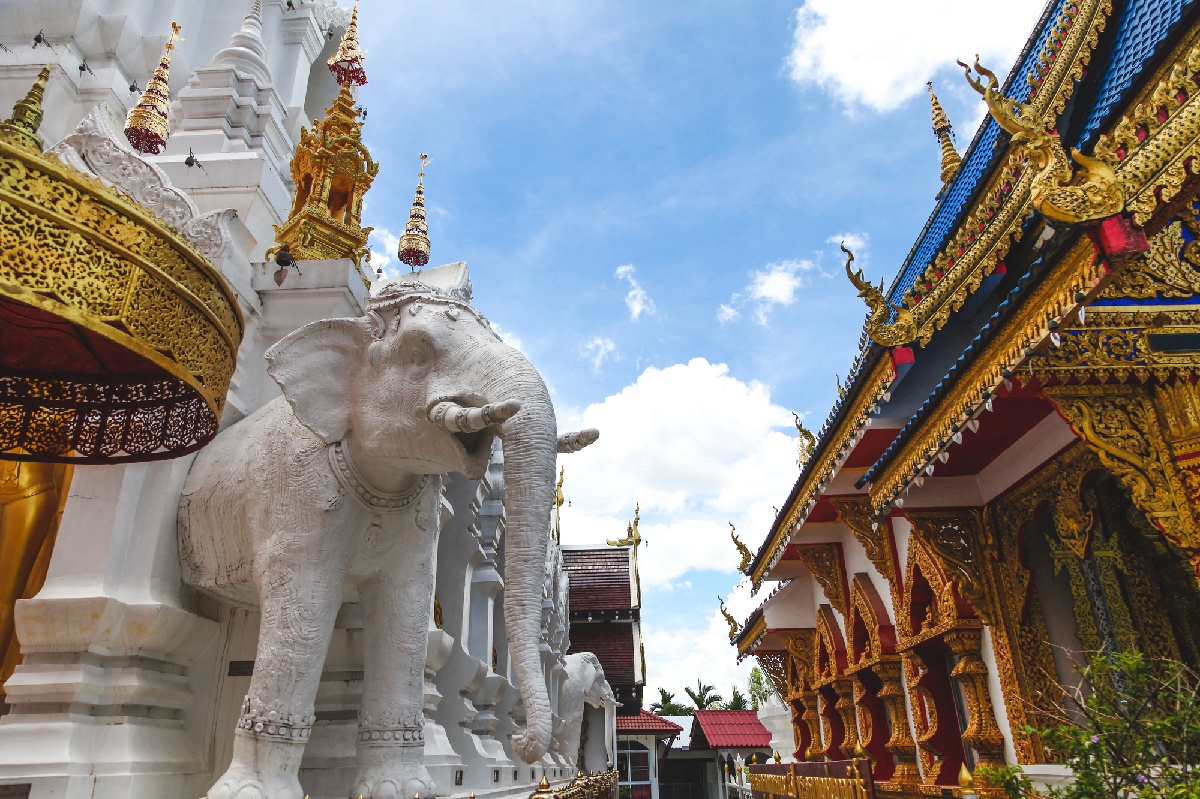
The tourism tax proposal, discussed for several years, takes a new step forward in Thailand. The National Tourism Policy Committee (NTPC) convened on August 14, 2026 to examine the principles of the scheme and the draft regulation, ahead of its public consultation, according to the Thai Ministry of Tourism and Sports.

In a statement published on August 17, the Thai government specifies that the proposed amount is now set at 450 baht per person (about 12 euros), regardless of arrival mode: by air, land, or sea (Thailand.go.th).

The implementation of the tax would be phased in. For travelers arriving by plane, it would begin 180 days after the text is published in the Royal Gazette. Land and sea arrivals would be affected roughly 360 days after the launch of the first phase, according to the Thai government.

This timeline aims, in particular, to avoid difficulties at the most frequented border crossings, especially at the border with Malaysia.


Thailand: the tourist tax could be introduced early 2027 for air travel

Several payment options are currently being considered: integration into the airline ticket, online payment, mobile app, or self-service kiosks.

The Thailand Digital Arrival Card (TDAC) could also be linked to the system. VisaNews notes, however, that the modalities of this potential integration remain to be defined: the TDAC is currently a free formality, and its possible connection to the payment system does not necessarily mean it would itself become payable.

At this stage, travelers do not yet have to pay the 450 baht to enter Thailand. The project must still pass several steps before its final adoption.

According to VisaNews, the start of 2027 is now the horizon envisaged for the first charges levied on travelers arriving by plane, but no firm effective date has yet been set.
Strange Tourist Tradition Threatens the Giant’s Causeway in Northern Ireland

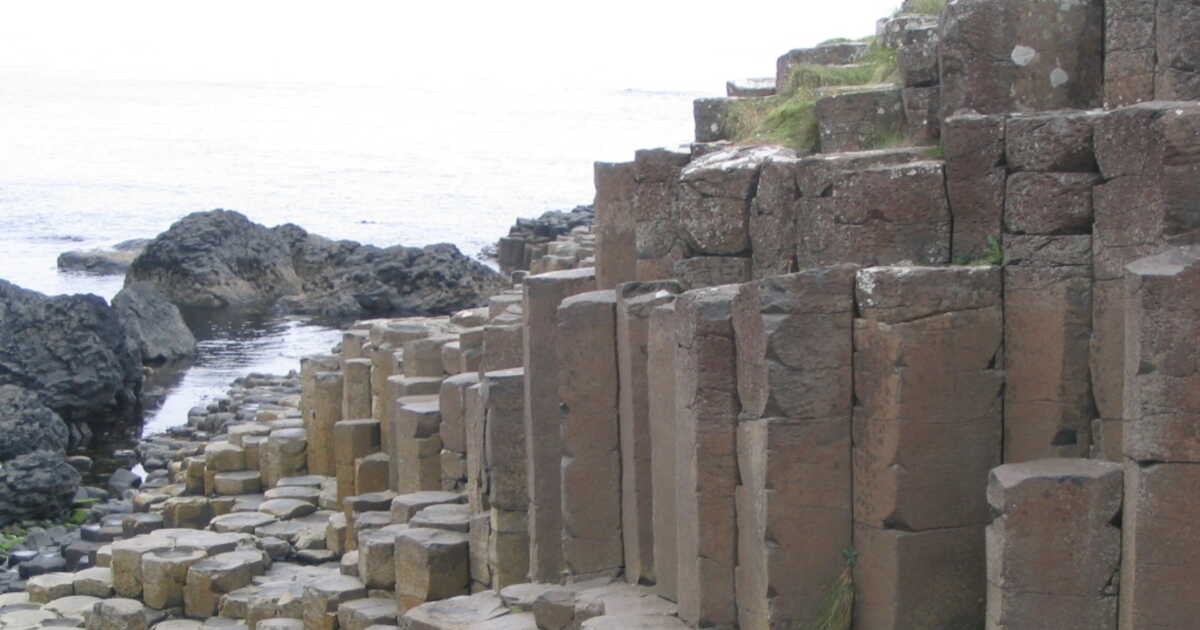
At first glance, they might look like simple lucky charms left behind by passing travelers. Yet the thousands of coins pressed into the rocks of the Giant’s Causeway, in Northern Ireland, forced conservationists to launch a particularly delicate cleaning operation. More than 20 kg of coins have already been removed from this UNESCO World Heritage site. And despite several months of intervention, thousands of coins remain trapped within the rocks.

A meticulous operation at the heart of an exceptional volcanic site

Located in County Antrim, in Northern Ireland, the Giant’s Causeway is one of the United Kingdom’s most famous geological landscapes. The site contains more than 40,000 basalt columns, formed about 60 million years ago during a volcanic activity. Molten rock flowed into the fissures of the Earth’s crust before cooling, contracting and fracturing, giving birth to these columns with their characteristic geometric shapes. The site is registered as a UNESCO World Heritage site.

It is in the interstices of these formations that visitors gradually began to wedge coins. The gesture seems to carry symbolic significance, with some tourists considering the money as a good luck charm or a sign of love. But the coins remain exposed to sea spray and humidity, and their prolonged presence in the fissures can become problematic for the rocks…

The National Trust therefore undertook their removal in May 2025, after an alert from the Geological Survey of Northern Ireland. Early observations had highlighted effects that were both physical and chemical on the basalt. The intervention required the expertise of a stone mason, Nathan Morrow. The teams could not simply pull the coins out for fear of damaging the columns. Pliers were used for those near the surface, while a jointing tool allowed access to coins wedged deeper in the cracks.

The difficulty varied greatly from one place to another. Some coins came out quickly, while the most deeply lodged ones could require more than 20 minutes of work each. In total, the operation involved around 200 hours of work. “Approximately 200 hours of work were devoted to the project”, said Cliff Henry, the National Trust’s nature engagement lead, to Need To Know.

Salt accelerates corrosion of coins stuck in cracks

But the problem is not limited to the number of coins scattered on the site. Their composition and the conditions to which they are exposed can also worsen their impact on the rock. British copper coins minted since 1992 notably have a steel core coated with copper. The 5, 10, and 20 pence coins are, meanwhile, made of steel coated with nickel. Yet these metals do not react to the environment in the same way. With humidity and especially the salt brought by sea spray, corrosion accelerates. The different metal layers can separate and expand inside the cracks, exerting pressure on the basalt.

This degradation also makes the coins difficult to identify after a few years. “The coins corrode so quickly in the salty and humid conditions of the Causeway that it becomes impossible to determine what currency they were, not to mention their date, after only a few years”, explained Cliff Henry.

The majority of recovered coins unsurprisingly came from the United Kingdom and the euro area, visitors tending to use the currency they have in their pockets. Only a portion could still serve as money, the others being too deformed or corroded.

Despite these hours of effort, the cleaning did not manage to remove everything. Several thousand coins would thus remain wedged in the cracks. Some are now too deeply buried to reach. Others are so rusted that moving them could further damage the rocks.

Cliff Henry, for his part, compares their accumulation to a carnival ride in which new coins gradually push the older ones inward. “As in a Penny Falls game in an arcade, the coins have been pushed further into the joints by the new coins hammered in at the front”, he explained.

The phenomenon could therefore continue to pose problems even after the end of the main operation, completed in June 2026. New coins have already been found after the cleaning, including 42 removed by Cliff Henry last month. The National Trust now plans to monitor the formations regularly and remove new deposits.

Informational panels have also been installed to ask visitors not to push coins into the rocks. The National Trust also plans to turn a portion of the recovered coins into objects for display to concretely demonstrate the consequences of this practice.

Tourist Activities: New York, Rome, Marrakech — What the French Are Booking

Les Entreprises du Voyage (EDV) et Civitatis dévoilent la troisième édition de leur Index des activités touristiques - Depositphotos.com, IgorVetushko

Costa Rica


The market for activities, guided tours, and excursions continues to rise within the travel experience.

According to data from the third Index of Activities published by the Entreprises du Voyage (EDV) and Civitatis, French travelers are giving an increasing place to on-site experiences, to the point that they now influence their destination choice.

The study, based on reservations made between January 1 and June 15, 2026, mainly highlights a marked difference between purchases made directly by travelers (B2C) and those made through travel agencies (B2B).

In direct bookings, consumers favor immediacy: bookings are made with a median of only six days before the activity and more than half of purchases (53%) are made less than a week before the service.

Conversely, travel agencies anticipate their clients’ needs well in advance. Reservations are made with a median of 66 days before the activity, while 60% of purchases occur between one and six months before departure.

For Valérie Boned, president of Entreprises du Voyage, this analysis provides a real decision-support tool for professionals. “This third edition demonstrates how data is an indispensable growth lever for our members,” she notes.


The activities strengthen the role of agencies

For Georges Sans, head of France development at Civitatis, this evolution also reflects the positioning of travel agencies.

He believes that activities and transfers no longer represent merely add-on sales, but become differentiating elements enabling agencies to accompany clients throughout their journey and to reinforce their loyalty.

The Index also shows that guided tours remain the flagship product for travel agencies. They account for nearly 39% of sales realized via the B2B channel.

On destinations, Paris remains the top French destination.

Internationally, trends vary by distribution channel. Individual travelers favor New York, while travel agencies sell more Rome.

Airport transfers are also among the most sought-after services. In direct bookings, New York tops the requests, while agencies primarily market them in Marrakech, ahead of Seville and Rome, in a strategy of building complete stays.


Tunisia records the strongest growth

The Index also identifies international destinations with the largest increases in reservations compared to the first half of 2025.

Tunisia shows the most spectacular progression with a growth of 289%. It edges out Canada (+145%), Egypt (+106%), and the Dominican Republic (+37%).

Finally, the study confirms France’s attractiveness to international visitors. Paris remains the most visited French city, followed by Lyon and Nice.

According to a study published in May 2026 by Arival in partnership with Civitatis, more than one European traveler in two now considers that the experiences offered on-site play a very important, even decisive, role in choosing their destination.

This trend reinforces the growing weight of tourist activities in shaping travel-agency offers.


Amelia Brille Published by Amelia Brille TourMaG.com Editor
See all articles by Amelia Brille

  • picto Linkedin
  • picto email
Add TourMaG to your Google News feed Google Actualités icône  

What If the Annoying Tourist Is You? Habits That Annoy Everyone on Vacation

Vacations are supposed to be synonymous with relaxation. “Supposed”, because it takes so little to dull a jovial and invigorating mood. A disruptive neighbor on a sun lounger, a passenger on an airplane or a cruise ship, or an inattentive tourist in a guided tour group. A new Booking.com survey reveals that 84% of travelers say they are annoyed by the behavior of other vacationers, and sometimes even before they reach their destination.

At the airport, stubborn bad habits can try the patience of more than one traveler. Forgetting to prepare their passport or boarding pass, arriving with luggage that is too heavy or too bulky, and slowing down the queues are all small things that irritate.

Barefoot Passengers or Phone Addicts

Although 89% of travelers believe that behavior aboard an airplane should be “like in any other form of public transportation”, one in ten admits to removing their shoes and traveling barefoot during the flight. Some film their neighbors deliberately or unintentionally for social media when they are not attempting a manicure at 10,000 meters above ground. Such freedoms are called out by the respondents. Etiquette rules do not reappear on land, where other frictions arise.

Music, Screams, and Swimsuits at the Restaurant…

Another survey conducted by Tiger, a travel insurance specialist, and reported by the DailyMail, finds that 84% of holidaymakers are bothered by others once they arrive at their destination. Those who make crude remarks in the presence of children, especially by the pool or during a family activity, those who make noise or play music at full volume, those who smoke or vape near others, such as on the beach, those who jostle for sun loungers or umbrellas, or those who stroll around in swimsuits or bare-chested in town or in shops are the ones most singled out.

Even though it may seem minor, listening to or playing music at excessively loud volumes can incur hefty fines in certain destinations, such as Portugal. Far from the crowds spread across the warm sand, visitors also encounter some conflicts with their peers. There, it is mainly noisy, intoxicated individuals or those who stroll with large umbrellas, for example in the narrow streets of Venice, who annoy people the most.

Air France Launches Paris Stopover to Transform Layovers into Tourist Stays


Air France et Extime Travel lancent officiellement « Paris Stopover » - Depositphotos.com @alexeynovikov

Costa Rica


Air France et Extime Travel viennent de lancer « Paris Stopover », une nouvelle offre destinée à transformer les longues correspondances à Paris-Charles-de-Gaulle en véritables séjours touristiques.

Le service, conçu et opéré par Extime Travel, la marque commerciale du Groupe ADP dédiée aux expériences touristiques, permet aux clients d’Air France de prolonger leur escale dans la capitale, à l’aller comme au retour, et de réserver un package comprenant hébergement, transferts et activités.

Le dispositif s’adresse aux passagers ayant réservé un billet Air France incluant une correspondance d’au moins 27 heures à Paris-Charles-de-Gaulle.

Ils peuvent choisir de prolonger leur escale pour une durée comprise entre une et quatre nuits, puis sélectionner leur expérience auprès d’Extime Travel.

L’offre est disponible quelle que soit la cabine de voyage, de l’Economy à La Première, en passant par les classes Premium et Business.

Les prestations peuvent être réservées jusqu’à 48 heures avant le départ, sous réserve de disponibilité.


Une offre clé en main pour les passagers en correspondance

« Paris Stopover » a été conçu pour proposer une prise en charge complète du séjour.

Chaque formule comprend des transferts, une ou plusieurs nuits dans des hôtels quatre ou cinq étoiles ainsi qu’un choix d’activités, à adapter en fonction de la durée de l’escale et des envies du voyageur.

Deux expériences sont proposées au lancement. « Paris Incontournables » permet de découvrir les principaux sites touristiques de la capitale, de la tour Eiffel au Louvre. Une seconde offre est consacrée à Disneyland Paris.

Extime Travel prévoit d’enrichir progressivement le catalogue avec de nouvelles expériences premium ainsi que des excursions culturelles, gastronomiques et festives.

Le groupe souhaite également développer des offres permettant de découvrir les territoires situés autour de l’aéroport Paris-Charles-de-Gaulle.


Un potentiel important auprès des voyageurs internationaux

L’enjeu est significatif pour Air France. La compagnie indique que 50% de ses clients arrivant à Paris-Charles-de-Gaulle sont en correspondance vers une autre destination.

La demande semble également présente chez les voyageurs concernés. Selon une étude de la Chaire Pégase publiée en avril 2026, 81% des passagers en correspondance à Paris se déclarent plutôt ou très intéressés par la possibilité de quitter l’aéroport pendant leur escale afin de découvrir Paris ou des attractions situées à proximité de Paris-Charles-de-Gaulle.

L’intérêt est encore plus marqué chez certaines clientèles internationales, notamment brésilienne, avec 92,3% de voyageurs intéressés, et indienne, avec 90%. Ces deux marchés bénéficient, par ailleurs, depuis avril 2026 d’une exemption de visa de transit aéroportuaire en France, un élément susceptible de faciliter ce type de séjour.


Une nouvelle étape pour le hub de Paris-CDG

Le lancement de « Paris Stopover » s’inscrit dans le cadre de « Connect France », le partenariat stratégique signé en juin 2025 entre Air France-KLM et le Groupe ADP pour renforcer l’attractivité et la performance du hub de Paris-Charles-de-Gaulle.

L’offre doit contribuer à faire de Paris une étape à part entière dans le parcours des voyageurs en correspondance, alors que les grands hubs internationaux cherchent de plus en plus à transformer leurs passagers en visiteurs temporaires.

Air France et le Groupe ADP présentent ainsi « Paris Stopover » comme une nouvelle manière de valoriser le trafic de correspondance et de renforcer le rayonnement de la destination France. Les deux partenaires indiquent que Paris-Charles-de-Gaulle devient, avec ce dispositif, le premier grand hub européen à proposer une expérience touristique de ce type entre deux vols.


Amelia Brille Publié par Amelia Brille Rédactrice TourMaG.com
Voir tous les articles d’Amélia Brille

  • picto Linkedin
  • picto email
Ajoutez TourMaG à votre flux Google Actualités Google Actualités icône  

Marquenterre Park Plans to Forecast Tourist Flows


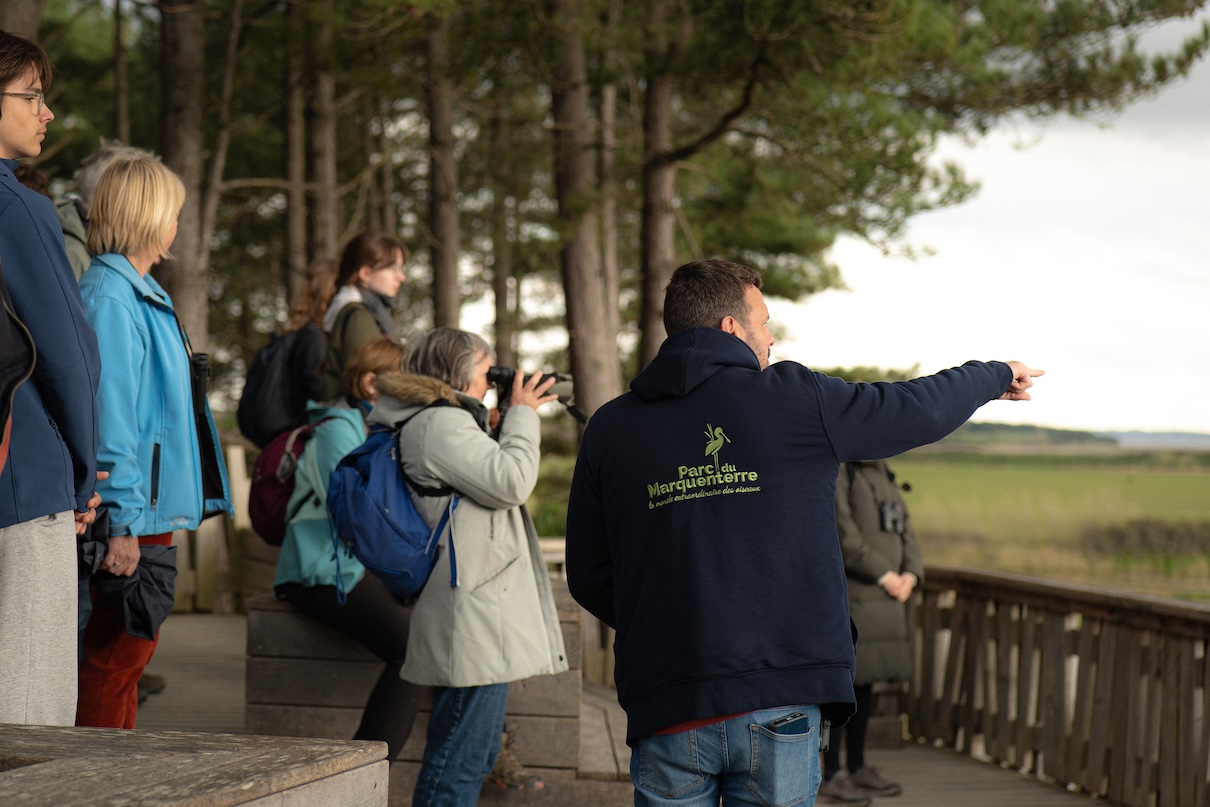
Le Parc du Marquenterre expérimente l’intelligence artificielle pour anticiper les flux touristiques - Photo : Parc du Marquenterre

CroisiEurope


The Marquenterre Park, in the Somme Bay, is testing an artificial intelligence tool capable of forecasting its attendance up to six months in advance.

The objective is to better anticipate peak crowds and optimize the site’s organization, while preserving this protected natural space.


With nearly 160,000 visitors welcomed each year, the Marquenterre Park is among the most visited natural sites in Hauts-de-France.

This appeal is nonetheless accompanied by peaks in attendance concentrated on certain days and time slots.

In this protected natural area, where the welcome is limited to 300 visitors per hour, these periods of high traffic can strain the conditions of reception, the teams and the various visitor services offered.

Until now, managing these peaks relied mainly on the observation and experience of the on-site teams.


Parc du Marquenterre: AI provides forecasts up to six months in advance

Developed as part of an experiment supported by the Destination France plan, the model is able to forecast attendance levels up to six months ahead, with forecasts broken down by hourly intervals.

To establish these projections, the tool crosses several types of data likely to influence tourist behavior: French and Belgian school holidays, public holidays, weather conditions, events held in the area or even snowfall in the mountain ranges, which can influence destination choices.


These data are then gathered into a dashboard for the park teams. This “pilot cockpit” allows visualizing expected crowd levels and their evolution over time.

The artificial intelligence does not directly make operational decisions. It provides teams with a forward-looking view of attendance to help them adjust their organization.

To read : Weekend of disconnect in the Bay of Somme

This can help better organize human resources, prepare the dining services and mobilize more resources during peaks of attendance.

For as long as the Marquenterre Park has sought to find the right balance between tourist attractiveness and the preservation of its natural heritage, with this experiment we are taking a new step.

AI becomes a tool for the territory, able to help managers better understand visitor flows and anticipate their needs
“, explains Emmanuel Maquet, president of the Destination Baie de Somme management.

The Marquenterre Park currently serves as the testing ground for this system. But the stated ambition goes beyond the site’s boundaries.

The project is among the 13 initiatives selected from 75 applications under the Destination France plan.

In the long term, the model could be enriched with new data to better understand visitors’ movements at the scale of the Bay of Somme.


Amelia Brille Published by Amelia Brille TourMaG.com Editor
View all articles by Amelia Brille

  • picto Linkedin
  • picto email
Add TourMaG to your Google News feed Google Actualités icône  

Bed Bugs: Launch of a New Label for Tourist Accommodations

A risk management and bed bug infestation label for tourist accommodations was launched on Wednesday by Bureau Veritas in partnership with two associations specializing in bed bug detection and treatment.

“To value the committed establishments and provide visitors with a reassurance badge, Bureau Veritas Certification is rolling out from this July the Bed Bugs Project certification,” whose association Prosane, the association of health protection and environmental protection professionals, and the Syndicate of Experts in Canine Bed Bug Detection (SEDCPL) “are the reference technical partners”, according to a press release.

Bed bug infestations more numerous in summer

Designed for hotels, holiday clubs, tourist residences and campsites, obtaining this annual certification rests on an audit that notably covers the designation of internal referents, the recording of suspicions and detections, the handling of customer complaints, or the execution of an annual diagnostic. 

During July to September, tourist establishments account for 60% of interventions recorded by professionals in bed bug detection and treatment, whereas the rest of the year only one in five interventions concerns tourist establishments, according to the press release.

A preventive diagnosis to safeguard the reputations of some hoteliers

“With a view to preserving the quality of the customer experience and their reputation, hoteliers are now turning more readily, more regularly, and proactively to diagnostic and treatment professionals,” and “they represent 44% of the activity of professionals in the tourism sector”, it is stressed. Seasonal furnished rentals now account for 29% of the sector’s treatment files, while tourist residences and aparthotels concentrate 15% of the requests.

Not Afraid at All! A New Inventory of Tourist Fears [ABO]


Il existe des peurs liées intrinsèquement au voyage : grèves, retards, annulations, catastrophes climatiques - DepositPhotos.com, nicoletaionescu

CroisiEurope


Departing inevitably creates a change, hence cognitive dissonance all the more serious when the journey takes place in a foreign, distant, little-known country.

Who doesn’t feel a twinge of apprehension when packing their backpack before boarding the plane for a “terra incognita”?

Even the most experienced backpackers admit this small pang on the way to the airport…

And then, and above all, let us not forget that there exists a category of individuals totally averse to the idea of traveling. These people suffer from hodophobia. Such are anxiety disorders totally irrational but impossible to control, which manifest through a variety of symptoms such as palpitations, headaches, dizziness, breathing troubles…

Generated most often by a complicated personal history involving exile and separation (divorces), this pathology is all the more difficult to treat as it is rarely identified as such or confused with fear of flying, which indeed affects more people.


The contradictions of a traveler in search of safety

Another finding: although an immense majority of travelers consider safety as a priority (89%), 1 in 3 admits not taking out specific insurance!  

A paradox difficult to explain since about a third of travelers surveyed by Safertourism have already faced health issues related to the following situations:

– either, an extreme heatwave (39%)

– or, a illness requiring medical intervention (32%)

– or fatigue resulting from exceeding their physical limits (22%).

This paradoxical laxity can also be attributed to the exaggerated optimism of many travelers who consider health problems to concern “others” and rely on their lucky star.

But it is also linked to economic issues. Insurance is perceived as expensive and sometimes unnecessary. Many people indeed imagine they are already insured by their bank, their home insurance, etc.


Food, allergies, insects and other ordinary fears

Another finding of interest: legions of fears that are not new and have always been part of traditional apprehensions whenever one travels.

Thus, while dining is one of the most appealing aspects of travel, an increasing number of people fear issues related to a diet that is too exotic for their stomachs. They are at least 39% in this case. And this, despite precautions many of them do not hesitate to take.

The risks related to drinking water are also increasingly mentioned and not only in distant countries. In Europe, people are beginning to worry about it too. Rightly so.

Just as concerns grow about the quality of swimming waters, whether fresh or salty. And then there is the air we breathe, especially in large Asian metropolises like Bangkok or New Delhi.

Likewise, the endless list of allergies! Rarely mentioned a decade ago, these have become an invisible foe that can force some people to cut their travels short.

Finally, insect bites, particularly mosquitoes, are so well publicized that they’ve climbed the charts of major fears and now come with comprehensive medical kits and vaccines. Big enough to spoil a stay, they are becoming tougher and are not likely to disappear.


Watch out for falls!

There is also a longstanding fear shared by vacationers in general, but especially by older people: the fear of falls and other slips that can sometimes prevent continuing a trip.

These risks account for more than a third of bodily incidents.

Not to mention the car accidents whose shadow remains ever-present in travelers’ minds.


Fears linked to a shifting geopolitics


And the female travelers: “She Travel Safe”, a campaign for them

A distinct category, though overrepresented among travelers, women more and more often speak of their fears of traveling solo in certain countries with a dubious reputation but also in Western countries plagued by all sorts of acts of delinquency.

Estimated to represent half of female globetrotters, these women benefit from the campaign “The she travel safe” launched by the Safertourism foundation to encourage them to take precautions.

Moreover, they are already more numerous than men in taking out insurance. Just in case!

In the meantime:

– 64% say they avoid returning home alone in the evening ;

– 56% avoid places they have been advised against ;

– 48% do not go out at night ;

– 27% admit they do not take taxis or rideshares driven by male drivers.

That shows the globetrotter is still far from combining travel with serenity. Hence their preference for guided getaways and group trips with “girlfriends”!


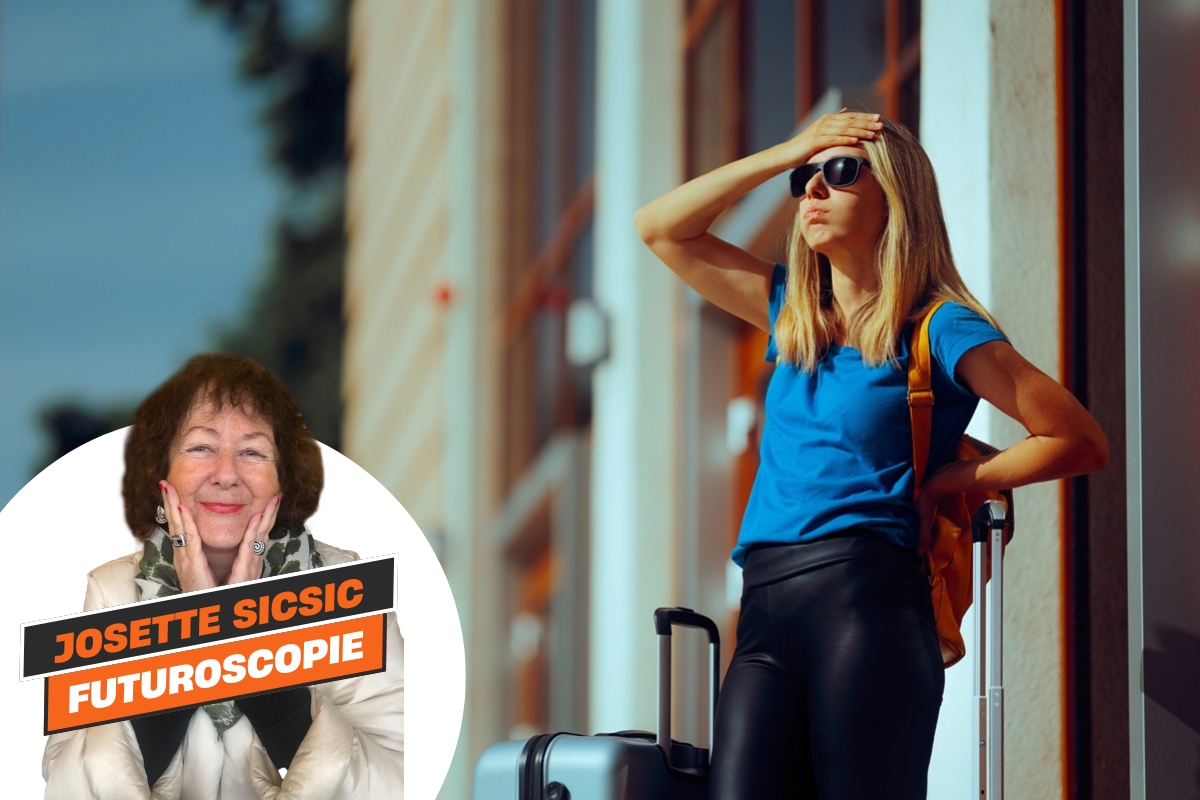
Josette Sicsic - DR

Journalist, consultant, speaker, Josette Sicsic has been observing the world’s changes for over 25 years in order to analyze their consequences for the tourism sector. 

After having developed for more than 20 years the magazine Touriscopie, she remains at the forefront of current events where she decodes the present to forecast the future. On the site www.tourmag.com, in the Futuroscopie section, she publishes prospecting and analytical articles several times a week. 

Contact: 06 14 47 99 04

Mail: [email protected]