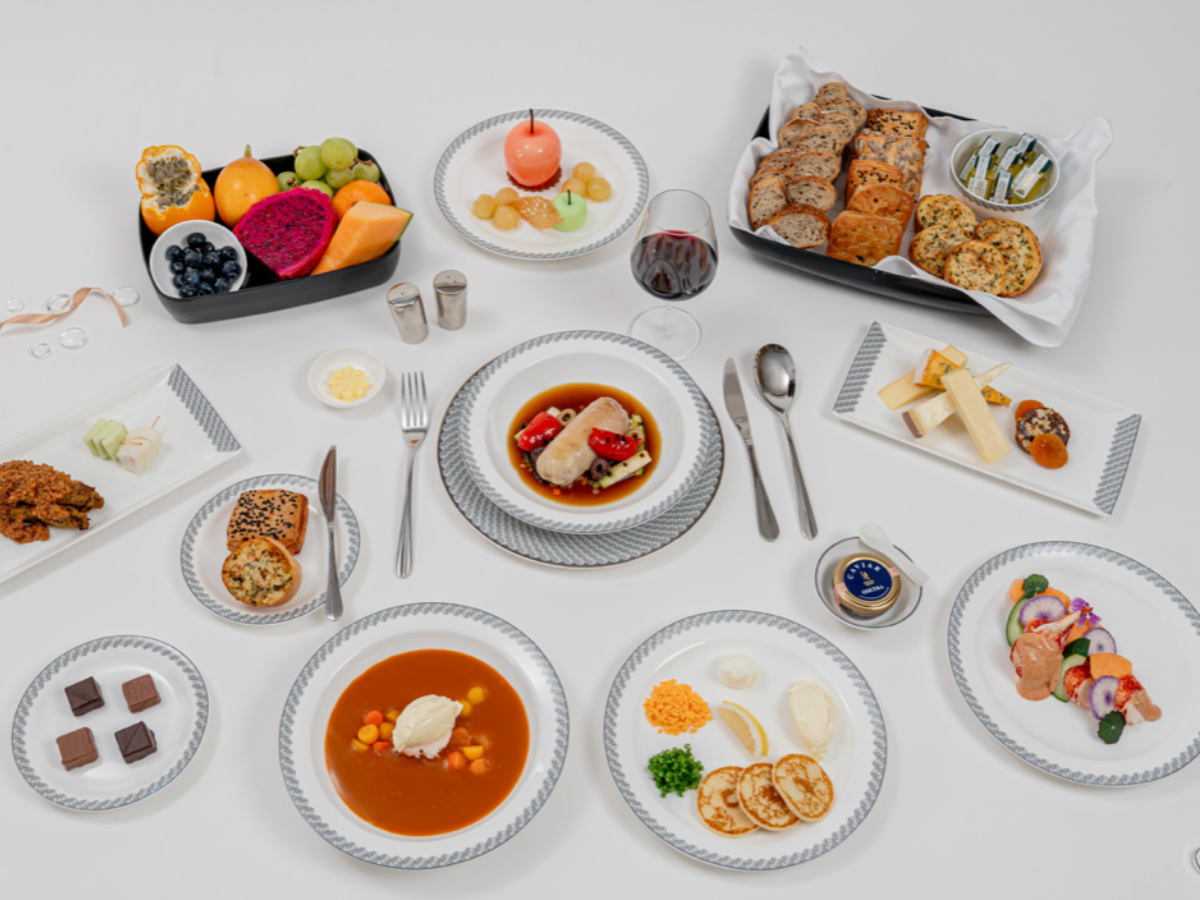

Singapore Airlines Enhances Its In-Flight Dining Experience


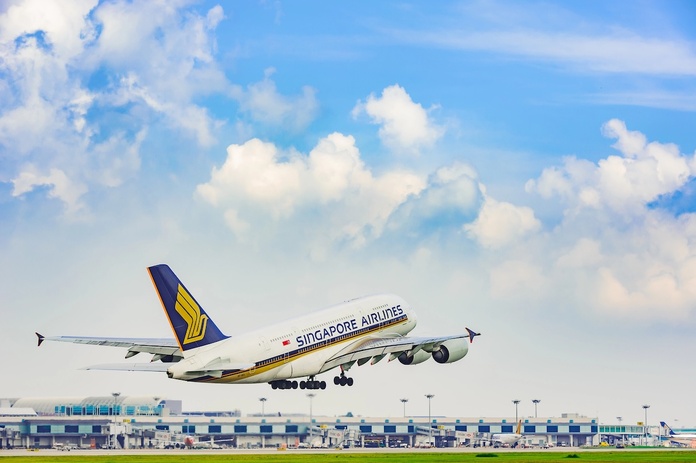
Une sélection des nouveaux plats servis en Suites et First Class à bord de Singapore Airlines - Photo : Singapore Airlines

Aer Lingus


Singapore Airlines déploie progressivement sa nouvelle offre de restauration dans toutes ses classes de voyage.

Baptisée SIA Chefs’ Selection, elle comprend plus de 100 entrées, plats principaux et desserts nouveaux ou revisités, élaborés par les chefs de la compagnie et des chefs invités.

La sélection associe spécialités régionales, classiques revisités et nouvelles créations.

La compagnie indique également privilégier, lorsque cela est possible, des ingrédients frais et de saison provenant de producteurs locaux.


A New Tableware Set for Premium Cabins

In Suites, First Class and Business Class, meals will be served using a brand-new tableware set designed in collaboration with Christofle, incorporating an interpretation of Singapore Airlines’ batik motif.

The beverage offering is also evolving with new selections of wines, champagnes and spirits, as well as a broader range of non-alcoholic drinks.

Some dishes may benefit from a special presentation in Suites and First Class, with drink recommendations offered by the crew.

These enhancements will be rolled out gradually from November 2026.

These changes form part of a broader redesign of the Singapore Airlines travel experience, which will also include a new cabin, an evolution of the entertainment system KrisWorld and high-speed connectivity.

The entire package will be unveiled in Singapore in November 2026.
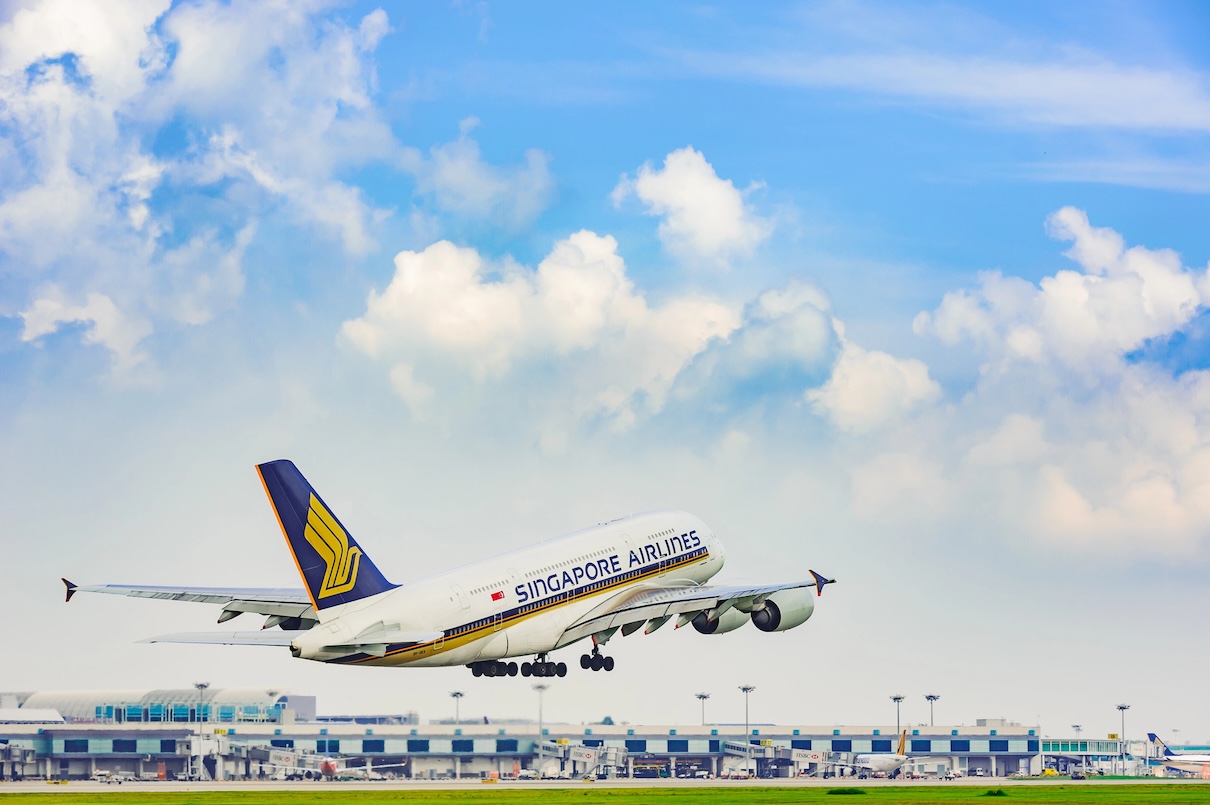
Singapore Airlines Named Best Airline in the World


Singapore Airlines a été désignée meilleure compagnie aérienne au monde - Depositphotos.com @gnohz

Climats du Monde


Singapore Airlines has won the title of « best airline in the world » for the sixth time.

The airline surpasses Qatar Airways and Cathay Pacific in the global ranking, based on a survey of more than 24.8 million travelers who evaluated more than 300 airlines between September 2025 and August 2026.

SIA also earned the titles of best airline in Asia, best economy class in the world, and best onboard dining in economy class.

Air France finished 7th among the world’s airlines. The French carrier also won several distinctions, including best first class in the world, best first-class dining, and the best comfort amenities in first class.

It was also named the best airline in Western Europe.


AirAsia Retains Its Title in the Low-Cost Segment

In the low-cost carrier category, AirAsia retained the title of world’s best low-cost airline, ahead of Scoot and Vueling.

AirAsia has held this distinction since 2010. Scoot was named the best long-haul low-cost carrier for the sixth consecutive year, while Vueling earned the title of best European low-cost carrier and finished third worldwide in this category.

Transavia ranks seventh in the global low-cost ranking.

Air Transat won for the eighth time the title of best leisure airline in the world. It beats SunExpress, TUI Airways, Sun PhuQuoc Airways and Condor.


Qatar Airways Honored in Business Class

Qatar Airways, second in the global ranking, was named the world’s best airline in business class, a distinction it receives for the 13th time. It also won the titles of best business class lounge in the world, best airline in the Middle East, and, for the first time, best Wi‑Fi on board in the world.

Among other distinctions, Turkish Airlines was named the best airline in Europe, while ANA All Nippon Airways, 4th in the global ranking, claimed the title of best airport services in the world.


Amelia Brille Publié par Amelia Brille Rédactrice TourMaG.com
Voir tous les articles d’Amélia Brille

  • picto Linkedin
  • picto email
Ajoutez TourMaG à votre flux Google Actualités Google Actualités icône  

IHG: The Hari Joins Vignette Collection in London, Hong Kong, and Singapore


The Hari rejoint Vignette Collection à Londres, Hong Kong et Singapour - DepositPhotos.com, mariakray

MSC Croisières


IHG Hotels & Resorts et le groupe hôtelier Harilela ont signé un accord portant sur trois établissements : The Hari à Londres, Hong Kong et Singapour.

Cette opération marque l’arrivée de Vignette Collection à Singapour et renforce la présence de la marque à Londres et Hong Kong.

L’accord prévoit l’intégration de The Hari London, qui compte 85 chambres, et de The Hari Hong Kong, doté de 210 chambres, au sein de Vignette Collection.

À Singapour, le Holiday Inn Singapore Orchard City Centre, avec ses 324 chambres, sera transformé en The Hari Singapore, Vignette Collection en 2027.


Vignette Collection poursuit son développement

Avec ces trois nouveaux établissements, Vignette Collection compte désormais plus de 80 hôtels ouverts ou en développement dans le monde.

La marque, positionnée sur le segment Luxury & Lifestyle, rassemble des établissements indépendants conservant leur identité tout en bénéficiant de la plateforme IHG.

À Singapour, le futur établissement sera situé sur Orchard Road, au cœur de la capitale. L’hôtel, ouvert depuis 1985, fait actuellement l’objet d’une transformation supervisée par la designer britannique Tara Bernerd, également à l’origine du design du The Hari London et du The Hari Hong Kong.

Le groupe Harilela et IHG collaborent depuis plus de 50 ans. Leur partenariat porte désormais sur six hôtels dans cinq destinations, avec notamment le Holiday Inn Golden Mile à Hong Kong, le Holiday Inn Express Changzhou Center et le Holiday Inn Bangkok Silom.

In Singapore, Trading Screen Time for a Book Can Earn You Money

Whether it’s replying to messages or checking emails, watching a series or a movie, or shopping online, screens now hold a central place in our daily lives. A new way of living that sometimes pushes us to neglect activities that were once essential, such as outdoor activities, social interactions, or books and reading. To address this phenomenon and encourage its citizens to detach from their phones, computers, or televisions, Singapore has designed a program that pays them for reading a book.

Money, an Incentive for Reading

Since the start of September 2026, the Singaporean government has launched a program aimed at paying its citizens who dedicate at least fifteen minutes per day to reading a book. The objective? To counter doomscrolling, the practice of endlessly scrolling through posts on social networks, sometimes for hours on end. The scheme also aims to protect young people from the anxiety-inducing content they can be exposed to on the Internet.

Singapore also hopes that this program will improve its citizens’ concentration, critical thinking, and imagination. The principle is simple: readers can accumulate points, later converted into cents. As The Guardian explains, 50 daily reading sessions on a government site are needed to earn 1 Singapore dollar. A session of 15 minutes or more indeed yields 20 virtual coins, while you must accumulate 1,000 to obtain one dollar. Only one reading session is allowed per day.

A program that thus requires a certain degree of diligence if one truly hopes to pad their wallet. “We live in a world of extraordinary abundance of content, information and stimuli. At any moment, we can scroll through hundreds of titles, watch a video, or get a summary. We know that habits are built through small, regular actions. That is why we start with a simple objective: read 15 minutes a day. On the bus, before bed, or during lunch”, stated Melissa Tam, the director of the National Library Board in the columns of the Straits Times.

Singapore Is Not New to Financial Incentives

The program, carried out by the National Library Board (NLB), an agency that administers Singapore’s public libraries and falls under the Ministry of Digital and Information Development, aims to reach 150,000 users by September 2027.

Despite the government’s concerns about reading, fifteen-year-old Singaporean students recently topped the global reading rankings as part of the 2025 Programme for International Student Assessment (PISA), ahead of China and Taiwan.

As surprising as it may seem, Singapore is not new to using financial incentives to influence the behavior of its citizens. Indeed, the city-state had already employed this method to encourage Singaporeans to walk and meet their daily step goals in exchange for supermarket vouchers.