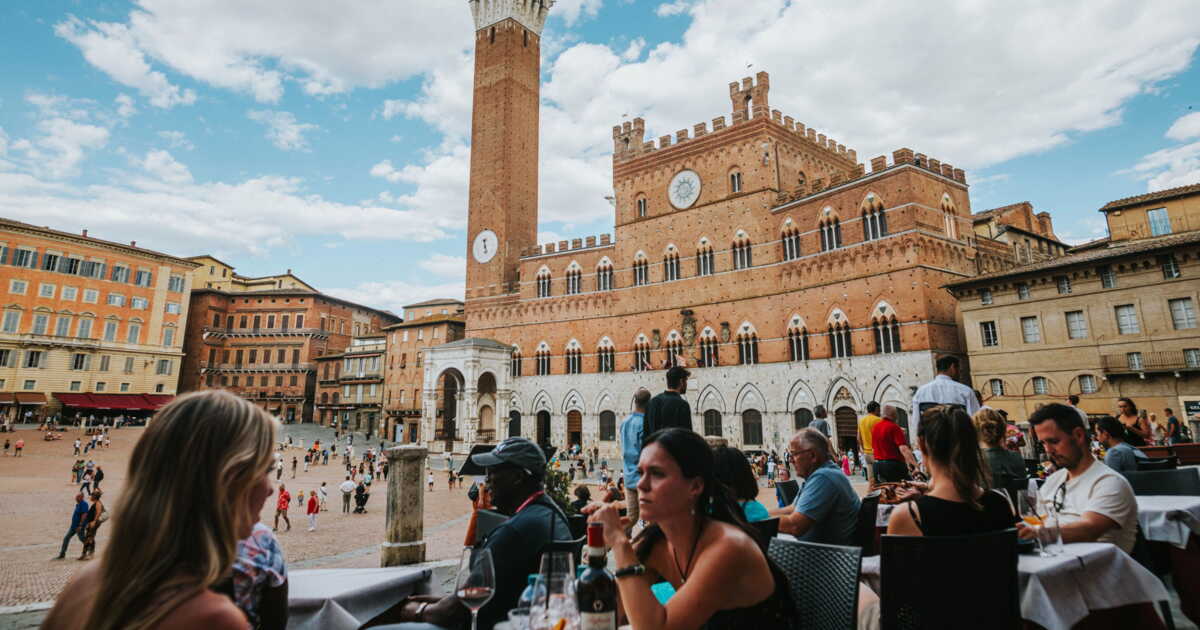
Italy Vacation: Must-Know Rules Before Dining Out

Dining at a restaurant in Italy is a serious business. Cutting your spaghetti, ordering a cappuccino at 2 p.m., asking for a carafe of water—these are French reflexes that risk betraying you to the Italians. Some rules may seem strict to foreign visitors, but they remind us that sampling an Italian specialty means also immersing yourself in a culture, adopting its codes, and accepting to disrupt your habits.

Coffee, a Whole Story

Do you dream of a delicious espresso? In Italy, a coffee is inherently an espresso. So there is no need to specify it, unless you want a ristretto. As for the moment you order your coffee, it also matters. No Italian waiter will agree to bring it to you before your meal is completely finished, as well as your glass of wine. The ultimate mistake is ordering a cappuccino after a meal. Don’t even think about it. Italians drink their cappuccino (which contains milk and sugar) in the morning, as breakfast. After 11 o’clock, cappuccino time has passed!

Shaking Up the Order of Courses

For a beginner, reading a menu in Italy can be unsettling. A traditional meal is composed of 4 courses: antipasti (starters), primi piatti (first courses), secondi piatti (second courses), dolci/frutta (desserts or fruit).

And that plate of pasta or that risotto you crave so much is part of the “primi piatti.” Of course, restaurateurs will accept (perhaps with a sigh) serving you only spaghetti alle vongole, even if you forget to order a meat or fish dish that would normally come next.

Asking for a Carafe of Water

There is nothing stopping you from asking, but it is very unlikely you’ll get your way. Even when ordering still water (Acqua naturale) rather than sparkling (Acqua frizzante), a bottle of mineral water typically appears on your table. A tip? Don’t bother fighting it.

Adding Parmesan to Seafood Pasta

Imagine you’re in Venice and order Spaghettoni al nero di seppia at the Do Farai (Calle del Cappeller, Dorsoduro 3278). When the plate arrives, you’ll have to resist the urge to ask for parmesan at all costs. In Italy, mare and monti do not mix. This applies to parmesan on pasta, as well as to the secondo piatto, which would then be… only fish.

Cutting the Spaghetti

Here is a rule you must never break, or you might see the carabinieri appear behind you. We’re hardly exaggerating! The shape of the pasta is its very essence, and cutting it deprives it of its identity. And don’t even think about using a spoon to make life easier. Again, this is a gesture considered particularly ineloquent.

Good to know. For the same reason, spaghetti should never be broken before cooking.
The World’s Best Dining Cities for 2026, According to Time Out

When we travel, we love to discover new cultures, traditions, and landscapes. Yet gastronomy also holds a central place in the experience, since it allows us to explore new flavors, spices, and combinations of foods that can sometimes be surprising, reflecting a country’s identity and history. That is why each year Time Out publishes a ranking of the best gastronomic cities for food lovers eager to spark their palates on their next getaway.

This ranking is based on a survey conducted with more than 24,000 residents across 150 cities worldwide, covering the overall quality of the local culinary scene, the cost of restaurant meals, and residents’ favorite addresses. According to Virginia Gil, Time Out’s editor-in-chief in the United States, “the cities on the list are not only today’s gourmet destinations; they are places that have drawn travelers seeking good meals for decades.”

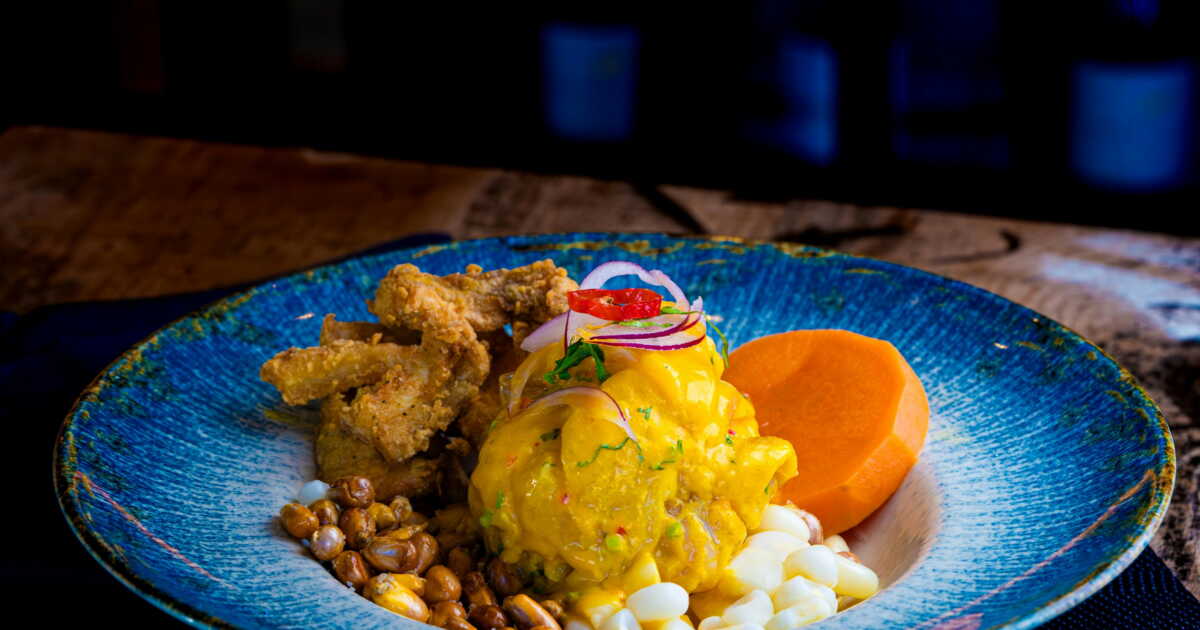
The thousands of responses gathered were then cross-checked with the assessment of Time Out’s culinary experts panel. It is Lima, Peru, that has been crowned the best gastronomic city in 2026 with 70% of the votes. Regarded as the culinary capital of Latin America, this coastal metropolis is particularly renowned for seafood specialties such as ceviche and the cause Limeña, a refined layered cold potato dish.

Only One French City Made the List, And It’s Not Paris

In second place, Bangkok returns for the second year running, whose major culinary asset is its famous street food, illustrating how fully local flavors can express themselves. The Thai city is followed closely by Mexico City, whose culinary scene is a true gastronomic melting pot, where Mexican, Asian, and French influences mingle across many neighborhoods. You’ll also find Michelin-starred restaurants as well as local street markets there.

The ranking continues with, in fourth place, London, regarded as one of the most diverse culinary cities in the world, Barcelona, whose gastronomy bears the strong influence of its Mediterranean heritage, and Ho Chi Minh City, where haute cuisine makes its mark. Australia then appears in seventh position with Melbourne, whose cafés have been named among the city’s highlights. Beij ing, Athens and Lisbon complete the top 10 of this list.

The sole French city on the list is Marseille, occupying the 18th spot. It is acknowledged for a culinary scene already worldwide-renowned and more diverse than ever. Pioneering establishments such as Café des Épices and La Mercerie are particularly cited. Just ahead of it, one finds Cape Town, Osaka, Bangalore, Naples, New York, Hong Kong and Buenos Aires. The final two rungs of the ranking go to Copenhagen and Medellín. The destinations where cuisine is celebrated are thus numerous across the globe.