
Edgar Morin: Toward an Increasingly Complex Leisure Time [ABO]


Edgar Morin : vers un temps libre de plus en plus complexe - Depositphotos.com  Auteur ALLVISIONN

CroisiEurope


In a life busy with repetitive tasks, increasingly urgent, constraining and most often bureaucratic, Edgar Morin is the author of that famous line: “When there is a vacancy of values, there is value in vacations.”

A finding that has never deserved less resonance than in our chaotic era, where peace is menaced by the madness of a few, by robots and machines that deprive humanity of the respite necessary for its survival.

The time available for leisure, which gradually became a component of the social order since the summer of 1936, has indeed become the one we place at the top of our priorities.

As a bearer of physical and mental rest, it makes it possible to break with routine, with obligations and especially with our everyday geography. It most importantly enables the regeneration of the strength of workers outside mandated time.


The Duration of Time Expands

Having become an indispensable pause, free time now tends to lengthen as our societies evolve. After 1936 and the 15 days of paid holidays finally granted to workers, the third week appeared in 1956, and the fourth week was granted in 1969, within the social gains package of May ’68.


Finally, in 1982, the fifth week codified a progression reflecting the shared aspiration for an improved quality of life and a possibility to fragment annual vacation times into multiple trips, allowing the tourism machinery to operate across several periods of the year. And for individuals to diversify their leisure consumption. And provided they have the means, their expenditure on tourist travel.

According to Jean Viard in his work: “The Triumph of a Utopia”, work now occupies only 10 to 12% of our lives compared with 40% in 1936!*


From Collective Rhythms to Individual Rhythms

Another major shift is the RTTs, which disrupted working times and fractured collective rhythms.

Fracturing in favor of personal time, sometimes endured but most often chosen, the reduction of working time has made free time more flexible and malleable, generating not only a sense of freedom but also the freedom to schedule leisure activities at times different from those of the majority.

A privilege that is increasingly sought after.


From Telework to Holidays Every Day

What more can be said about this other source of fragmentation that has become prominent since teleworking has entered our routines? Contributing to the elasticity of constrained time, telework blends free time with work.

We work and entertain ourselves at the same time from the edge of a swimming pool on the far side of the world! So much so that an American journalist described our era as the era of “holiday-everyday”—holidays every day…

And, finally, since AI is doing the work for us, aren’t we on the verge of a new mutation of working time and, consequently, of leisure time? If analysts are to be believed, we will no longer work as before and, more importantly, employment will necessarily fall!


A Caution About the Contradictions of the Leisure Industry


Read also: an interview excerpt from Marianne magazine with Jean Viard, about Edgar Morin known as the father of “complex thought.”

Jean Viard:Behind complex thought lies the idea that the West has progressed by separating knowledge. The scientific nature of things has been defined as: mathematics to mathematicians, physics to physicists, etc.

Yet, in his view, the moment has come to bring knowledge together. Deep down, that is, if you wish, the heart of complex thought: we have separated knowledge, but now, to understand the world, we must unify them. We need to reintegrate humanism and values everywhere.”


Josette Sicsic - DR

Journalist, consultant, lecturer, Josette Sicsic has been observing the mutations of the world for more than 25 years to analyze their implications for the tourism sector.

Having developed the Touriscopie journal for over two decades, she remains at the forefront of current events where she decodes the present to anticipate the future. On the site www.tourmag.com, in the Futuroscopie section, she publishes several times a week forward-looking and analytical articles.

Contact: 06 14 47 99 04

Email: [email protected]

The World’s Best Dining Cities for 2026, According to Time Out

When we travel, we love to discover new cultures, traditions, and landscapes. Yet gastronomy also holds a central place in the experience, since it allows us to explore new flavors, spices, and combinations of foods that can sometimes be surprising, reflecting a country’s identity and history. That is why each year Time Out publishes a ranking of the best gastronomic cities for food lovers eager to spark their palates on their next getaway.

This ranking is based on a survey conducted with more than 24,000 residents across 150 cities worldwide, covering the overall quality of the local culinary scene, the cost of restaurant meals, and residents’ favorite addresses. According to Virginia Gil, Time Out’s editor-in-chief in the United States, “the cities on the list are not only today’s gourmet destinations; they are places that have drawn travelers seeking good meals for decades.”

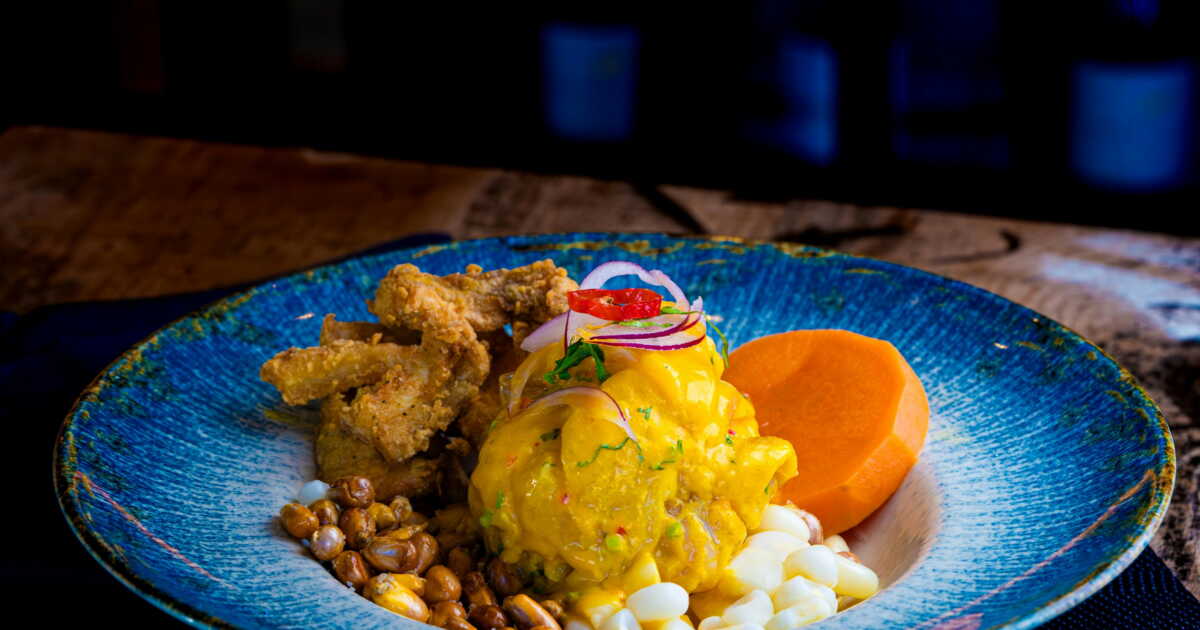
The thousands of responses gathered were then cross-checked with the assessment of Time Out’s culinary experts panel. It is Lima, Peru, that has been crowned the best gastronomic city in 2026 with 70% of the votes. Regarded as the culinary capital of Latin America, this coastal metropolis is particularly renowned for seafood specialties such as ceviche and the cause Limeña, a refined layered cold potato dish.

Only One French City Made the List, And It’s Not Paris

In second place, Bangkok returns for the second year running, whose major culinary asset is its famous street food, illustrating how fully local flavors can express themselves. The Thai city is followed closely by Mexico City, whose culinary scene is a true gastronomic melting pot, where Mexican, Asian, and French influences mingle across many neighborhoods. You’ll also find Michelin-starred restaurants as well as local street markets there.

The ranking continues with, in fourth place, London, regarded as one of the most diverse culinary cities in the world, Barcelona, whose gastronomy bears the strong influence of its Mediterranean heritage, and Ho Chi Minh City, where haute cuisine makes its mark. Australia then appears in seventh position with Melbourne, whose cafés have been named among the city’s highlights. Beij ing, Athens and Lisbon complete the top 10 of this list.

The sole French city on the list is Marseille, occupying the 18th spot. It is acknowledged for a culinary scene already worldwide-renowned and more diverse than ever. Pioneering establishments such as Café des Épices and La Mercerie are particularly cited. Just ahead of it, one finds Cape Town, Osaka, Bangalore, Naples, New York, Hong Kong and Buenos Aires. The final two rungs of the ranking go to Copenhagen and Medellín. The destinations where cuisine is celebrated are thus numerous across the globe.