Train and Flight on a Tight Schedule: Should the Airline Reimburse Fees? [ABO]


Train + Avion : vol avancé, la compagnie doit-elle rembourser les frais ? - Depositphotos.com tanja.kitura@gmail.com

Hurtigruten


A couple approached the Mediation after incurring additional expenses following a schedule change to their trip, which combined a train journey with a flight to South Korea.

The travelers had booked a single ticket that included a train ride to Paris-Charles de Gaulle Airport, followed by a flight to Seoul. After a schedule change, the flight was moved up by more than an hour, reducing the layover to just 1 hour and 50 minutes.

Feeling this interval insufficient to comfortably complete the connection, they chose not to use the planned train and instead left the day before. This decision incurred train, hotel, meals and transportation costs, totaling more than €500.


What the texts say:

On the legal front, the Mediation recalls that European Regulation No. 261/2004 does not apply to multimodal tickets combining a train and a plane within a single contract. The file is therefore assessed under the general contract law framework.

Under Article 1217 of the Civil Code, a traveler can seek redress when the contract is not performed as agreed.

Yet, in this case, the layover was only 1 hour 50 minutes, while Paris airport guidelines require a minimum 2 hours 30 minutes between a train and a flight.

The Mediation also notes that the airline ultimately accommodated the passengers on the Seoul-bound flight even though they had not taken the intended train segment, which amounts to acknowledging that they had to organise themselves at their own initiative.


What the Tourism and Travel Mediation recommends:

Under these circumstances, the Mediation concludes that the costs incurred to reach Paris the day before may be reimbursed on the basis of contractual liability, provided that the travelers furnish the supporting documents.

It therefore recommends covering the duly justified expenses.


Find all practical cases of the Tourism and Travel Mediation by clicking HERE.

Baggage Delay: Which Fees Must the Airline Reimburse?


Refus d'embarquement : surbooking, retard à la porte... qui doit prouver quoi ? - DepositPhotos.com  Auteur encrier

IFTM prenez RDV avec TourMaG


A traveler approached the Mediation following an incident on a flight operated by a French airline. He sought reimbursement of expenses incurred due to the late delivery of his baggage as well as their partial damage.

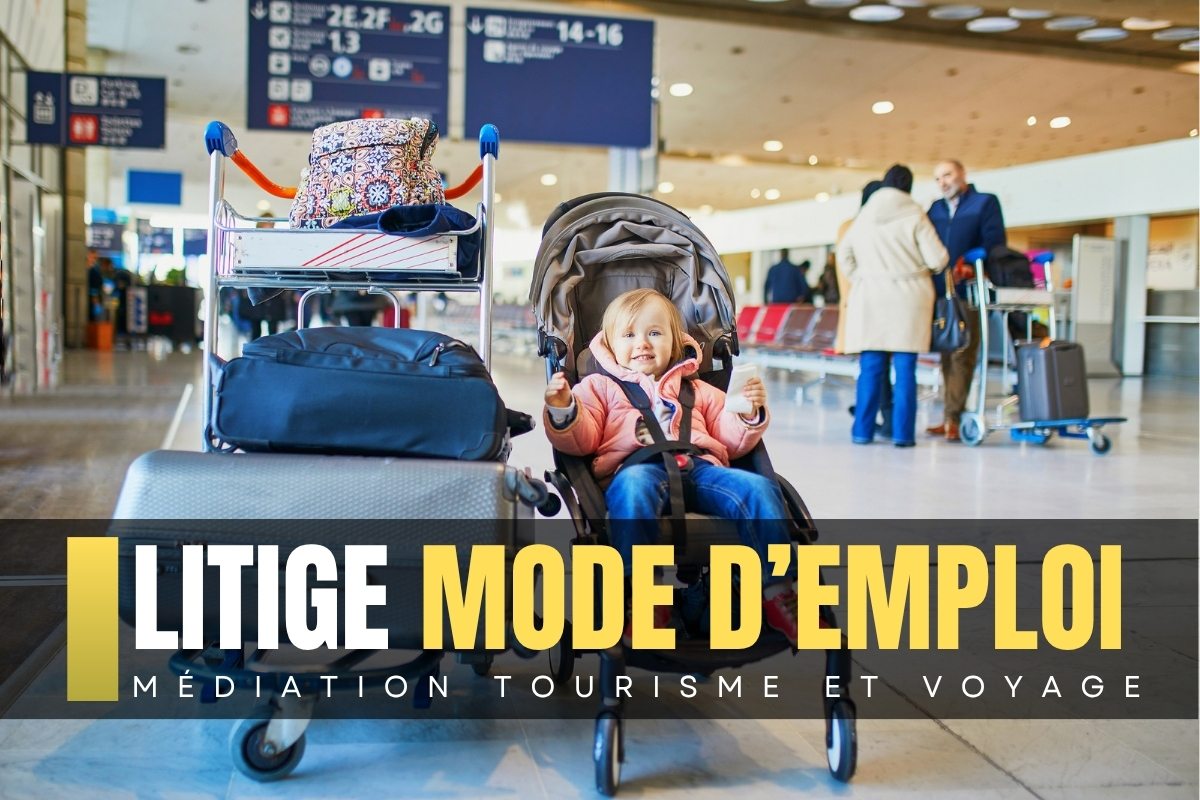
The case concerns a trip taken by a family of four with four checked suitcases, a stroller and an infant car seat. Upon arrival, no luggage was returned.

The suitcases were handed back the next day, while the stroller and the infant seat were not returned until forty-eight hours later. One of the suitcases was also reported as damaged.

While awaiting the return, the passengers had to purchase various essential items (child transport equipment, stroller, clothing, hygiene and feeding products), for a total of 1,233.57 euros. The airline acknowledged the delay and the late delivery, but contested covering the entire amount of expenses.


Ce que disent les textes :

To form its opinion, the Mediation relied on Article 17 of the Montreal Convention of May 28, 1999, which provides that the air carrier is liable for damages resulting from loss, delay or damage to checked baggage while in its custody.

In the event of a delivery delay, the airline must therefore reimburse the passengers’ reasonable and necessary expenses.

By contrast, transport rules and case law acknowledge that only strictly necessary costs may be reimbursed; some purchases fall under personal choices or goods not essential to the waiting situation.


Ce que préconise la Médiation Tourisme et Voyage :

The Mediation also recalls that the airline’s general conditions advise against placing certain essential items in checked luggage, notably medications or items required for daily use. In this case, the costs related to infant hygiene and feeding products were therefore not retained.

However, purchases made necessary by the prolonged absence of the stroller and the infant seat, as well as clothing bought while awaiting the baggage, were considered reimbursable as first-necessity expenses.

Regarding the purportedly damaged suitcase, the claim was rejected due to a lack of sufficiently probative elements allowing to establish the extent of the damage and assess the amount, in accordance with Article 9 of the Civil Procedure Code which requires each party to prove their assertions.

In the end, the Mediation recommended a partial reimbursement of the incurred expenses, up to 1,112.12 euros, to settle the dispute amicably.


Find all the practical cases of the Tourism and Travel Mediation by clicking HERE.

Emerging Travel Group (RateHawk, Roundtrip) Expands Its Airline Offering With Travelport


De nouvelles fonctionnalités pour simplifier la gestion post-réservation - Depositphotos.com, Rawpixel

CroisiEurope


Emerging Travel Group, the parent company of RateHawk, ZenHotels and Roundtrip, announces the strengthening of its partnership with Travelport.

The company is expanding the integration of Travelport’s aviation content, with the aim of simplifying reservation management and post-booking operations for travel professionals.

This development is expected to enable agents and travel managers to carry out certain air-ticket related tasks more easily, such as issuing, canceling, or voluntary refunds.

The announcement comes as the peak summer season approaches, a period when booking volumes and modification requests are especially high.

Emerging Travel Group began integrating Travelport’s offering in 2025.

Airline tickets from the platform were initially added to RateHawk, a multi-product booking platform for travel professionals, and to Roundtrip, its business travel solution.


Travelport bets on integrated workflows

Users of these two platforms can also access Travelport’s GDS rates and content, as well as the NDC content from certain airlines.

The announced extension is designed to further facilitate dossier management once a booking is made, directly from the environments used by professionals.

Direct access to the various offers from airlines is essential for travel professionals, as it allows them to manage their clients’ itineraries and make changes without having to contact third-party providers“, explains Fredrik Bonnalt, head of the non-accommodation offering at Emerging Travel Group.

According to him, this integration also helps speed up the booking process and improve customer service.

For his part, Jason Toothman, Travelport’s Chief Commercial Officer, underlines the growing demand for integrated management of air content within a single workflow.

He highlights TripServices, Travelport’s platform dedicated to the creation and management of travel products, which should enable professionals to access, book and manage content more quickly.


Emerging Travel Group aims for IATA accreditation

The partnership also aligns with Travelport’s artificial intelligence strategy. The group recently announced a collaboration with Cognizant and Anthropic, some features of which will rely on TripServices to further integrate AI into travel professionals’ workflows.

In parallel with its collaboration with Travelport, Emerging Travel Group continues its development in the airline distribution market.

The group is particularly aiming to obtain IATA accreditation for several of its legal entities worldwide. The first accreditation has already been obtained in Germany.


Amelia Brille Published by Amelia Brille TourMaG.com Editor
See all articles by Amelia Brille

  • picto Linkedin
  • picto email
Add TourMaG to your Google News feed Google Actualités icône