Carry-On Luggage, Delays, Refunds: What Could Potentially Change for Air Travelers

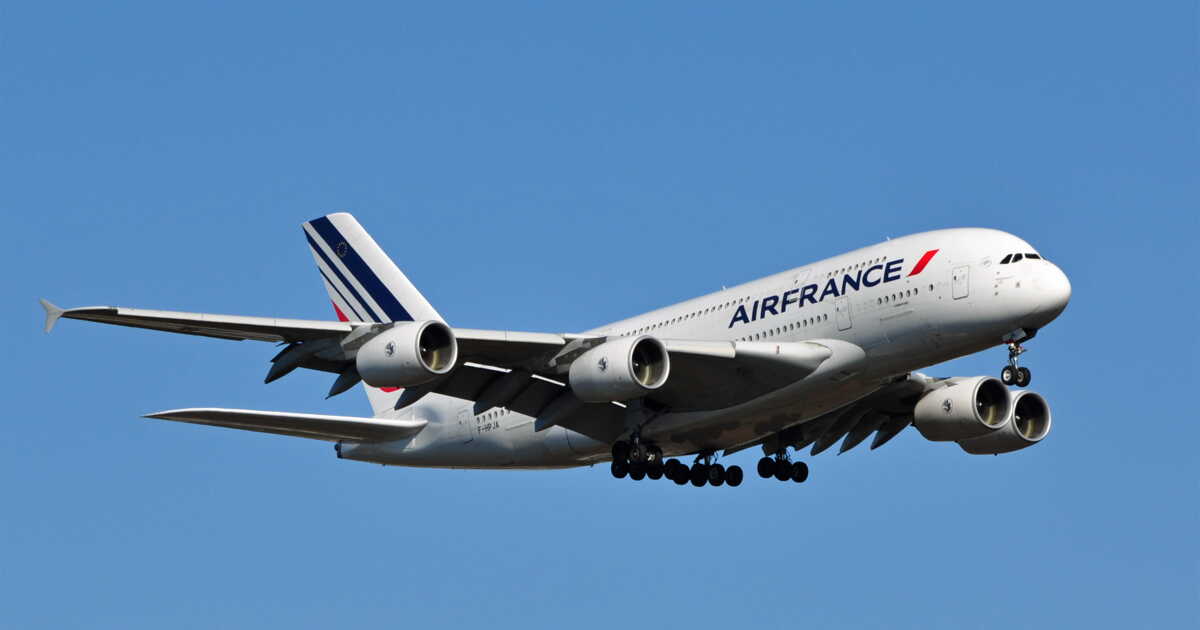
“Only 38% of eligible passengers currently exercise their rights.” That is what the association Que Choisir Ensemble, which defends consumers and users, asserts. But traveling by air in Europe could soon take place under new rules. After more than thirteen years of discussions, the European Union is preparing to amend Regulation (EC) No 261/2004, the reference text governing passenger rights in cases of delay, cancellation, or denied boarding since 2004. On Monday, June 15, 2026, negotiators from the European Parliament and the Council reached a provisional agreement on this long-awaited revision.

A compromise presented by Brussels as a major advance, although several consumer-advocacy groups strongly nuance this enthusiasm. The President of the European Parliament, Roberta Metsola, welcomed an agreement she deemed balanced: “The Parliament has always been the staunchest defender of air passengers’ rights. This agreement will strengthen air passenger rights across Europe. It will bring more transparency and predictability for both consumers and airlines, without imposing unnecessary administrative burdens on our industry. Parliament fought hard to make travel fairer and procedures clearer, and this is what we have managed to achieve.”

A Framework for Travelers Long Threatened

Since 2005, and except in exceptional circumstances, airlines operating in Europe have been required to compensate passengers in the event of cancellations or delays exceeding three hours. This regime is regularly challenged by the European aviation sector, which argues that the regulation costs them about €8 billion per year. For many passenger advocates, the principal merit of the new compromise is thus primarily to prevent a weakening of existing protections. The APRA, the Association of Passenger Rights Advocates, established in 2017 to defend travelers’ interests, shares a similar sentiment.

“Europe came perilously close to the harshest rollback in the history of European consumer rights. The Parliament deserves praise for stopping that,” stated Tomasz Pawliszyn, president of APRA, in a press release. He added, “We are relieved that the European Parliament stood firm. Given how these negotiations unfolded, especially in recent weeks, preserving the status quo became the best possible outcome.”

What Should Change for Travelers in Practical Terms?

Among the most visible changes is the handling of cabin baggage. Airlines will now have to display at the start of the booking process a fare that includes a carry-on bag. The initial price shown can no longer correspond solely to a ticket that allows only a bag to be placed under the seat. Travelers will also retain the right to a free personal item, namely a handbag, a laptop bag, or a small backpack, provided it adheres to the maximum dimensions of 40 × 30 × 15 cm. Moreover, in the event of a prolonged wait on the tarmac, passengers will receive stronger guarantees. After two hours with doors closed on the aircraft, they must be able to disembark. While waiting, the airline must provide water, access to toilets, and a comfortable temperature.

Indemnities Unchanged Despite Inflation and a Major Cut in Claim Deadlines

The amounts of financial compensation remain the same: €250 for flights up to 1,500 km, €400 for routes between 1,500 and 3,500 km, and €600 for distances beyond 3,500 km. Airlines, however, may reduce compensation by half on long-haul journeys if a rapid re-routing is offered or if the final delay does not exceed four hours. These sums have not been adjusted for inflation, a point criticized by the associations. Nevertheless, carriers will be exempt from compensation when the disruption results from extraordinary circumstances such as natural disasters, war, extreme weather, air-traffic-control strikes, or dangerous passenger behavior.

The reform’s main sticking point concerns the claim deadline. Passengers will have only nine months after their flight to file a compensation claim directly with the airline, whereas under French law, the period could extend up to five years. Airlines will, however, be required to send within four days, electronically, clear explanations of the procedure to follow after a cancellation or delay.

Better Protection for Families and Vulnerable People

The text also strengthens the rights of families and vulnerable travelers. Airlines must ensure that anyone accompanying a child under 14 can sit next to them at no extra charge. This rule also applies to passengers with reduced mobility, to people with disabilities, and to pregnant women. Passengers with reduced mobility will also have a right to compensation if an airport malfunction prevents them from reaching their boarding gate in time. The compromise is not yet finally adopted; the European Parliament and the Council must separately approve the text within six weeks following a legal review. A plenary vote is already scheduled for July.

The APRA nevertheless notes that the work is far from finished… “This result shows that passenger rights are among the most valuable consumer protections in Europe. The strength of public and political reaction to the proposed changes shows that Europeans are not willing to see these rights weakened, and certainly not in the name of convenience or cost reductions for airlines in the event of flight disruptions,” the association stated in its press release. “This message should guide future discussions on passenger rights policy. Yet the structural difficulties facing travelers have not vanished. If policymakers preserve the current framework after thirteen years of negotiations, we would have hoped for more significant improvements for passengers. These issues will need to be addressed.” Thus, while the reform brings several useful clarifications for travelers, it does not revolutionize a system many had hoped would be strengthened further…
Tourism 2026: Decoding Travelers’ New Consumption Habits


Le Mastercard Economics Institute a publié son rapport annuel « Travel Trends Report 2026 », Despositsphotos.com, Photo by olegda88

Dream Yacht


Following the strong rebound after the pandemic, the sector has entered a maturity phase.

For its 2026 edition, Mastercard’s annual report (based on macroeconomic analysis of real, aggregated and anonymized transaction data) paints a portrait of a global traveler who is resilient yet highly selective.

In the face of persistent inflation and rising fuel costs that drive higher hotel and airline prices, travelers do not give up on traveling. Instead, they weigh options, compare, and optimize their choices.

Our data confirm that the travel economy remains resilient. Behaviors are shifting toward a more thoughtful approach, with Europeans placing greater emphasis on value for money, financial affordability, and authentic experiences“, analyzes Natalia Lechmanova, Chief Economist for Europe at the Mastercard Economics Institute.

Read: AirPlus, Kresus and Mastercard tackle corporate indirect spend


Europe remains the queen of the game (with Paris leading the spotlight)

In this global tourism competition, the Old Continent shines brilliantly. Europe maintains its status as the preferred destination for cultural and gastronomic tourism, occupying six of the ten top spots among the world’s most visited destinations.

Despite disruptions in energy supply chains and airspace disturbances forcing carriers to adjust certain routes, optimism prevails for the summer season.

Projections for air capacities from June to September indicate sustained growth compared with the previous year.

In this context, Paris is expected to register the strongest global growth.

Behind the French capital, Amsterdam and Brussels show similar momentum, while Barcelona, Madrid and Frankfurt also benefit from a notable rise in international arrivals.


Spending disparities: each nationality has its priorities

One of the report’s insights concerns analyzing tourist behavior once on the ground. In France, expenditures vary considerably based on visitors’ origins.

Swiss travelers favor retail, notably high-end shopping, making Paris their preferred destination. The British and the Dutch, meanwhile, clearly dedicate their budgets to gastronomy, emphasizing dining and haute cuisine.

The Germans adopt a more pragmatic approach, allocate a significant portion of their spending to everyday grocery purchases.

In Spain, the situation is radically different: nightlife occupies a prominent place. Consequently, British tourists spend on average 32% more than other nationalities in clubs and nightlife venues.


The eco-responsible boom: train travel (luxury) on the right rails

The second major trend highlighted in the 2026 edition is the dramatic rise in travel spending related to rail journeys between 2022 and 2025.

Supported by Europe’s strategy for sustainable mobility, which aims to double high-speed rail traffic by 2030, rail travel is no longer just a zero-emission transport option: it is becoming a true immersive experience.

Some nationalities stand out in this dynamic. Spanish travelers now allocate 2.7% of their travel budget to rail (versus 1.8% in 2022), followed closely by the Dutch (2.2%), as well as Belgians and the British (2.1%).

Beyond the conventional network, it is the luxury rail travel segment that is experiencing exceptional growth. Today it accounts for nearly 20% of global rail tourism expenditures. This premium market, particularly buoyant, especially appeals to Italian travelers, who alone dedicate half (50%) of their rail budget to these exceptional rail cruises.

Australia Launches New Strategy Targeting French Travelers


L'ATE26 a réuni acheteurs internationaux et fournisseurs australiens autour de 55 000 rendez-vous d'affaires - Photo : Tourism Australia

Dream Yacht


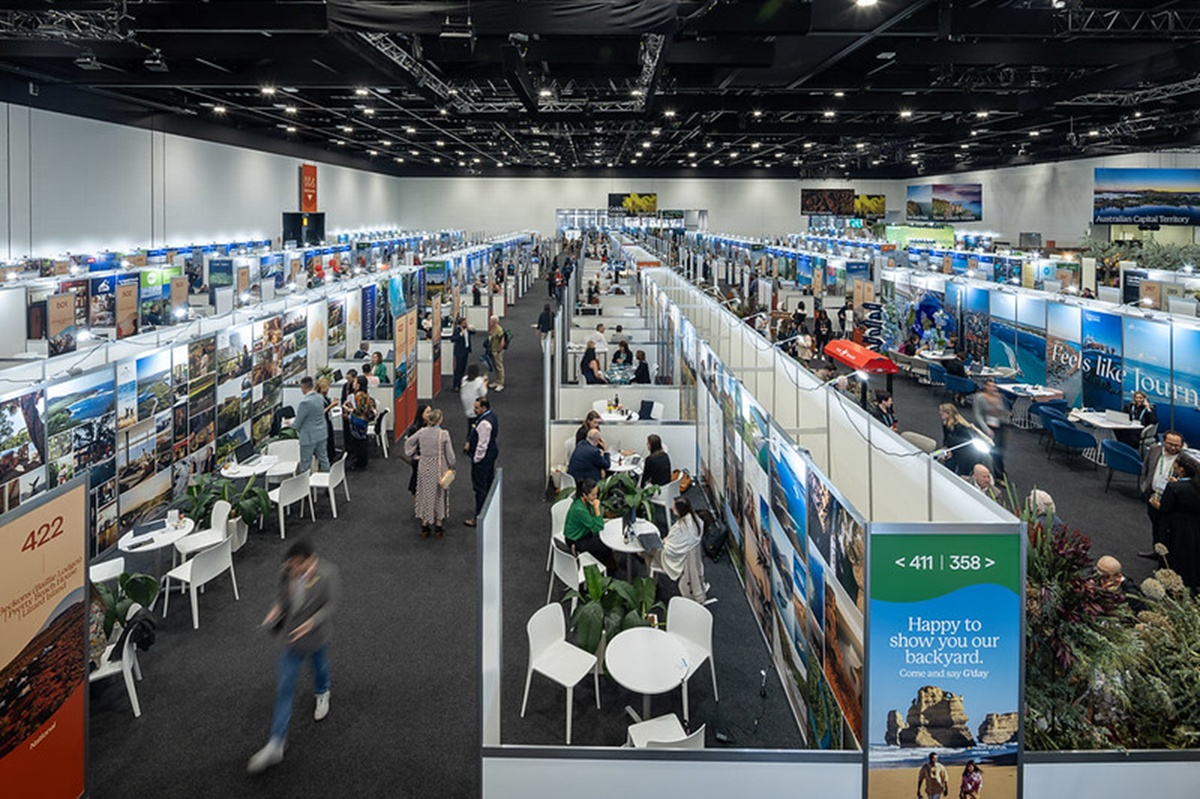
Adelaide, May 2026. On Kaurna land of Tarntanya, in South Australia, the Australian Tourism Exchange (ATE), the largest professional tourism trade show in Australia, is hosting its 46th edition, bigger than ever.

For four days, the industry’s must-attend gathering brought together international buyers and Australian suppliers around 55 000 business appointments.

The context could have weighed on it. Since February 28, 2026 and the halt to long-haul bookings linked to the Middle East conflict, the industry had expected a cautious, perhaps dull edition.

But the opposite occurred. In the natural light of the Convention Centre, eyes and exchanges carried a rare energy. Several regulars describe it as one of the best editions since pre-Covid, in terms of conversations and the level of buyers present.

A form of resilience, very Australian, which gave ATE26 its distinctive atmosphere.

For France, a historic and strategic market, the show marks an important milestone. In a private room at the Convention Centre, Robin Mack, the new Managing Director of Tourism Australia, granted TourMaG a quarter of an hour.

What he says about the French market and the organisation’s new strategic direction deserves the attention of travel professionals.


Robin Mack: “A high-contribution traveler does not mean a luxury traveler”

Dès les premières minutes de l’entretien, Robin Mack clarifie un point important. Avec Tourism 2035, la nouvelle feuille de route stratégique présentée à Adelaide, Tourism Australia ne cible pas uniquement les voyageurs de luxe.

L’objectif est plus large : attirer des voyageurs qui restent longtemps, dépensent davantage sur place et visitent plusieurs régions du pays. “We can host a leisure traveler who travels widely across the country“, précise Robin Mack.

Et l’une des raisons pour lesquelles nous aimons nos visiteurs français, c’est qu’ils restent plus longtemps et sortent des grands circuits habituels.”

L’ambition, chiffrée, est claire : faire passer la dépense touristique totale de 33 milliards de dollars australiens en 2025 à une fourchette comprise entre 61 et 69 milliards à l’horizon 2035.

Pour y parvenir, Tourism Australia mise sur quatre priorités immédiates affichées dès l’ouverture du salon : gagner sur le marketing à destination des humains comme des intelligences artificielles, valoriser l’étendue de l’offre australienne, capitaliser sur les grands événements à venir, et définir un positionnement luxe distinctif.

La conjoncture conforte l’ambition : selon le Bureau australien des statistiques, l’Australie a accueilli 9,1 millions de visiteurs internationaux sur les douze derniers mois (+10%), avec un secteur loisir désormais revenu à ses niveaux d’avant 2020.

Mais le défi reste d’accélérer la conversion. “L’Australie est souvent sur la liste du ‘un jour j’irai’“, reconnaît Robin Mack. “Pour moi, il s’agit d’amener les voyageurs à se dire : ‘j’ai besoin d’y aller maintenant, pas plus tard’.


AU$8,300 per trip: France, the premium market par excellence

Robin Mack : "L'une des raisons pour lesquelles nous aimons nos visiteurs français, c'est qu'ils restent plus longtemps et sortent des grands circuits habituels" - Photo : Sébastien Cros

Cette ambition globale trouve sa traduction la plus aboutie sur le marché français.

Selon Lucie Bottero, Country Manager Tourism Australia France, les chiffres avaient renoué dès décembre dernier avec les niveaux de 2019. Sur les douze derniers mois (février 2025 à février 2026), 150 000 Français sont arrivés sur le sol australien.

Surtout, la France est désormais le premier marché mondial en valeur de dépense, avec une moyenne de 8 300 dollars australiens (environ 5 000 euros) par personne et par voyage.

Près d’un voyageur français sur deux y reste trois semaines, bien au‑dessus de la moyenne internationale.

Le profil français incarne, presque à lui seul, le voyageur à forte contribution défini par Robin Mack.

2026 acte donc un repositionnement. “Le segment qu’on va pousser sur l’année prochaine, c’est le voyageur jeune à forte contribution, celui qu’on appelle le Young High Yield Traveler“, confirme Lucie Bottero.

Fini les budgets dédiés au programme Vacances-Travail, qui s’autoalimente désormais (46 000 jeunes Français accueillis en 2025). Place aux campagnes de conversion avec les compagnies aériennes, aux partenariats avec les comparateurs de voyage comme Kayak et Skyscanner, et à un axe événementiel fort autour du rugby.

Le 1er octobre prochain marquera, en effet, le coup d’envoi des célébrations de l’année précédant la Coupe du monde de rugby 2027, occasion attendue d’événements et de campagnes en France.

Sur le terrain, la France et la Côte ouest australienne tissent un lien renforcé. “On voit que beaucoup de Français vont dans l’Ouest, parce que c’est 16 heures depuis la France porte à porte. Le vol direct Paris-Perth, c’est un véritable tournant“, souligne Lucie Bottero.

Si cette liaison directe opérée en Boeing 787-9 est actuellement suspendue jusqu’à fin octobre 2026 pour adaptation de son trajet aérien (la connexion avec Paris étant assurée via Singapour), elle reste un levier stratégique majeur pour le marché français dans la perspective 2027.


For French tour operators, the message is threefold

Le voyageur premium au sens large s’impose désormais comme cœur de cible des plans de Tourism Australia, bien au-delà de l’ultra-luxe.

Les leviers de visibilité s’élargissent autour du rugby, des expériences signature de l’Australie (Signature Experiences of Australia) et du programme de formation Aussie Specialist, piloté en France par Adil Hmami, formateur officiel Aussie Specialist, qui sillonne le territoire pour former les agences.

Le meilleur conseil que je puisse donner aux agents pour préparer leur saison 2027, c’est de compléter les modules sur le programme Aussie Specialist“, recommande Lucie Bottero.

Reste un signal de vigilance à intégrer dans les arbitrages commerciaux : les réservations à venir pour le Royaume-Uni et l’Europe affichent un recul de 14% sur la période mai-octobre 2026, à contre-courant de la croissance asiatique (+8%).

Rendez-vous est pris pour ATE27 du 16 au 20 mai 2027 au Centre international des congrès de Sydney, avec Destination Nouvelle-Galles du Sud comme État hôte, en pleine effervescence autour de la Coupe du monde de rugby.

D’ici là, la stratégie défendue à Adelaide aura été testée par les chiffres, autour de deux convictions. La première, durable, porte un nom : Green is Our Gold. La seconde, opérationnelle, passera par les voix des tour-opérateurs français qui font vivre l’Australie auprès de leurs clients.

Deux objectifs qui éclairent, chacun à leur manière, la nouvelle ambition australienne sur le marché français.


Sébastien Cros


Sébastien Cros - Photo : SC

Sébastien Cros est journaliste indépendant et photographe basé en Australie, fondateur de WeTravelAustralia™.

Après vingt-cinq ans dans l’industrie touristique australienne, notamment comme Managing Director d’Across Australia (groupe Goway), il consacre désormais son écriture à des récits éditoriaux dédiés à la destination, à la croisée du storytelling, de la photographie et du regard de terrain.