
Loire Valley Castles: Seven Enchanting Places to Celebrate Christmas


Forteresse Royale de Chinon. Photo : adttouraine-coutand

Attitude Hotels


“Noël au Pays des Châteaux” réunira cette année les châteaux d’Amboise, d’Azay-le-Rideau, de Chenonceau, de Chinon, de Langeais, de Loches et de Villandry.

Pour cette édition anniversaire, chaque site proposera une mise en scène spécifique, avec notamment des décors végétaux, des illuminations, des installations musicales ou encore des évocations de contes et de traditions de Noël.


Sept châteaux, sept ambiances de Noël

At Villandry, the theme “Christmas, nature invites itself to the castle” will highlight botanical decorations and Christmas traditions.

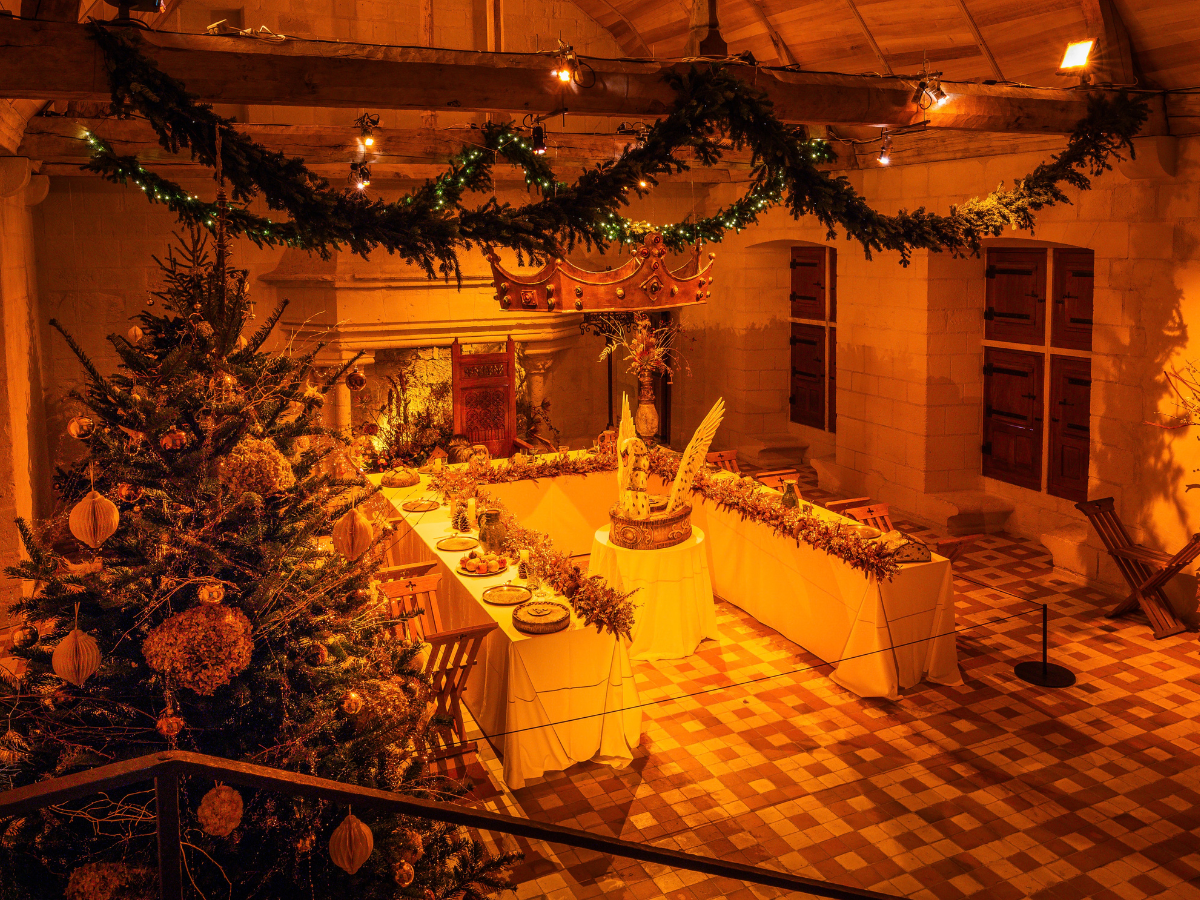
Azay-le-Rideau proposera “Christmas at the Table of the Castles”, around the arts of the table and gastronomy.


At Chenonceau, “Christmas Without Borders” s’intéressera aux traditions de Noël dans différents pays.

Chinon misera sur “Christmas in the Land of the Fairies“, Amboise sur “Royal Christmas with Animals“, Langeais sur “Musical and Fairy-tale Christmas” et Loches sur “Beauty and the Beast“.

Plusieurs sites proposeront également des nocturnes, les 5, 11, 12, 19, 23, 26 et 29 décembre, selon les châteaux.

To read: Cher: itinerary from Chenonceau to Mennetou-sur-Cher

Pour marquer les 10 ans de l’événement, un “Pass Noël au Pays des Châteaux” permettra par ailleurs de bénéficier de tarifs avantageux à partir de trois entrées.

Le pass sera valable pendant toute la durée de l’événement.
Strasbourg Christmas Market: Why This Year’s Festivities Will Be Cut Short

Admired by millions of visitors each year, Strasbourg’s Christmas market tree was installed on Monday morning, despite the risk of spillovers tied to social protests.

Hanging from a crane, the imposing 30-meter-tall evergreen slowly rose under the gaze of passers-by, finally standing as it does every year on Place Kléber, the usual epicenter of demonstrations in Strasbourg, where 15,000 protesters had gathered on October 17.

The Christmas Market Will Not Be Extended Through December 27 After All

“We will protect it and we will stay vigilant there”, said Mathieu Cahn, the first deputy to the mayor of Strasbourg. “The grand tree in Strasbourg is above all a symbol of joy and happiness. I don’t really see why it would be a target”, he added.

The installation of the tree, initially planned for Friday, had been postponed to Monday for “technical reasons” and “the mobilization of staff and resources”, according to the city hall.

This postponement coincided with the staging of a new demonstration, which drew 6,600 people on Saturday according to authorities. Held on the edge of the city center, it proceeded largely in calm fashion. On October 17, shop windows were broken and stores looted near Place Kléber.

The trauma of these acts of violence remains vivid. “I hope they won’t set the tree on fire”, said Anne, a retiree who came to admire the installation. She added “to fear the worst”, due to the new calls to protest on October 31.

Because of the demonstrations, and the substantial police presence they require, the City of Strasbourg also announced on Monday that it would drop its plan to extend the Christmas Market until December 27.

“We would have liked to go a bit further, but with the ongoing social movements it was not possible”, explained Mathieu Cahn, citing the “recovery time” necessary for the forces. The market will proceed, as every year, from November 27 to December 24.

As in previous years since the 2018 attack that claimed five lives, Strasbourg’s Christmas Market, which welcomed 3.05 million visitors last year, requires a significant police presence. In 2025, about a thousand officers were patrolling the streets of Strasbourg daily.

Christmas Markets 2026: The World’s Top 10 Destinations

Lights, regional specialties and wooden chalets make Christmas markets essential winter gatherings. But do some destinations truly stand out for a festive getaway? A study conducted by Christmas Tree World compared 28 markets worldwide across eight criteria, including their online popularity, the number of stalls and December hotel prices. While Germany takes the top spot, France, the United Kingdom and the United States also feature among the most popular destinations.

From Nuremberg to Strasbourg, European Christmas markets dominate the rankings

It is in Nuremberg, Germany, that the top Christmas market on this list is located. The Christkindlesmarkt earns a score of 8.2 out of 10, after nearly four centuries of existence. Its around 180 stalls uphold an artisanal tradition, offering Christmas decorations, candles, toys and regional specialties. Among the must-sees are Lebkuchen, the city’s iconic gingerbread, and Zwetschgenmännle, small decorative figurines made from dried plums. The market is scheduled from November 27 to December 24, 2026.

The Striezelmarkt in Dresden (also in Germany), third with 7.5 out of 10, boasts an even longer history, dating back to 1434. Its roughly 240 stalls highlight Stollen, a traditional fruitcake dusted with icing sugar closely tied to the city. Visitors can also discover artisanal objects and traditional decorations. The 2026 edition is planned from November 25 to December 24.

The United Kingdom places three markets in the top 10. Manchester ranks second with 7.64 out of 10. Its main strength is the scale of festivities spread across several areas of the city center. In 2025, the municipality counted 274 stalls across ten sites, with gastronomic chalets, gift sellers and a 50-meter Ferris wheel. The market, organized since 1998, is slated to run from November 6 to December 22, 2026.

In Edinburgh, tied for fifth with Chicago, the festivities take over the East Princes Street Gardens, at the foot of the castle and the monuments of the Scottish capital. Visitors will find food stalls, gifts and seasonal attractions. The event is scheduled from November 14, 2026 to January 3, 2027.

Birmingham sits in eighth place. Its Frankfurt Christmas Market is described as the largest authentic German Christmas market outside Germany and Austria. German specialties, hot beverages, artisanal goods and concerts contribute to its atmosphere. It is planned from November 5 to December 24.

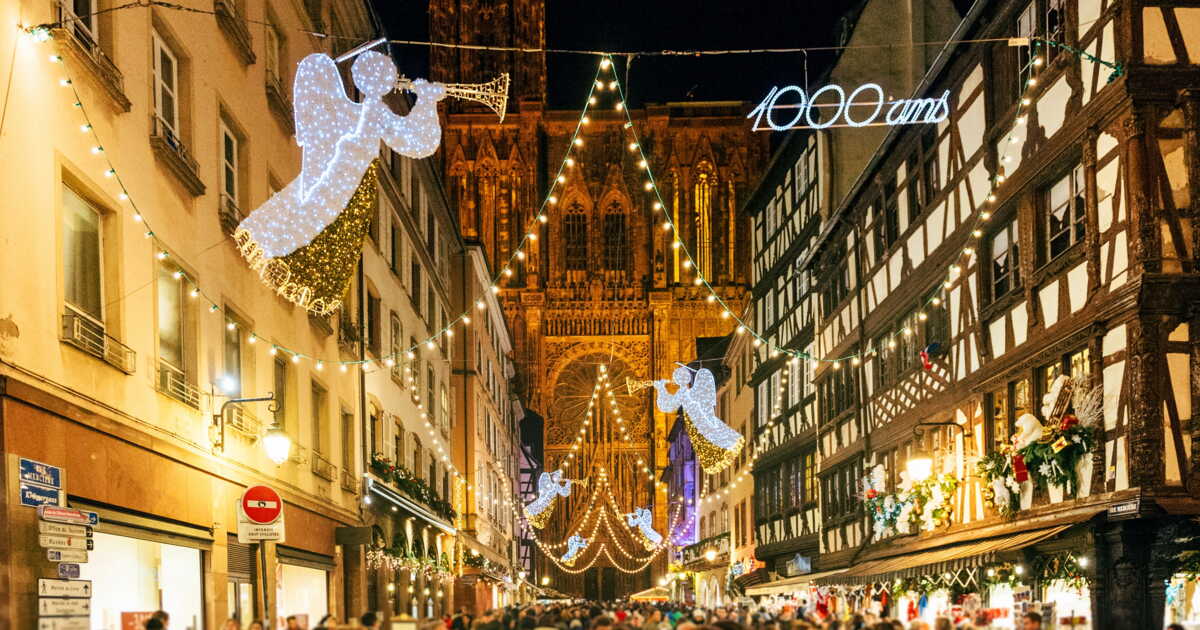
France is represented by Strasbourg, seventh with a score of 6.81 out of 10. Created in 1570, the Christkindelsmärik is one of Europe’s historic Christmas markets. The city spreads its stalls across several central squares, featuring Alsatian specialties, bredele cookies, mulled wine and artisanal decorations. At Place Kléber, the grand Christmas tree is one of the symbols of Strasbourg’s festivities. The launch of the 2026 edition is announced for November 27.

Finally, Vienna, Austria, ranks ninth. Its Vienna Christmas World combines a traditional market, an ice rink and attractions within a monumental setting. The festivities are planned from November 13 to December 24.

From New York to Chicago, American markets bet on spectacle

In the United States, Bryant Park’s Winter Village in New York ranks fourth with 7.41 out of 10. More than 180 vendors offer handmade goods, gifts and festive treats amid the winter installations. The site is also notable for its outdoor skating rink, letting visitors enjoy the Christmas atmosphere in the heart of Manhattan. The edition is set to begin on October 28, 2026. The winter season will extend beyond the holidays, with activities announced through February 28, 2027.

Also in New York, the Union Square Holiday Market takes tenth place. Here, the focus is on creations by local artists and artisans. Jewelry, decorative objects and gift ideas make up the offerings of the stalls set in the city center. The market is scheduled from November 12 to December 24, 2026.

In Chicago, the Christkindlmarket ties for fifth place with Edinburgh. For its 30th edition, it will operate across three sites, at Daley Plaza, Wrigleyville and Aurora. Its identity rests on German traditions, with culinary specialties, handmade toys and Christmas decorations. The markets in Chicago and Aurora are announced from November 20 to December 24, while the Wrigleyville market is to stay open until December 31.

To establish its ranking, Christmas Tree World studied 28 markets, taking into account eight factors, including Google searches, Instagram posts, TikTok videos, the age of events, the number of stalls, entrance fees and proximity to public transport. Each criterion was converted into a score, then integrated into a global score out of 10. This ranking thus measures several aspects of popularity and accessibility of the markets, without constituting a definitive judgment on their touristic quality.

Christmas Travel: Should You Book SNCF Train Tickets This Wednesday to Save Money?

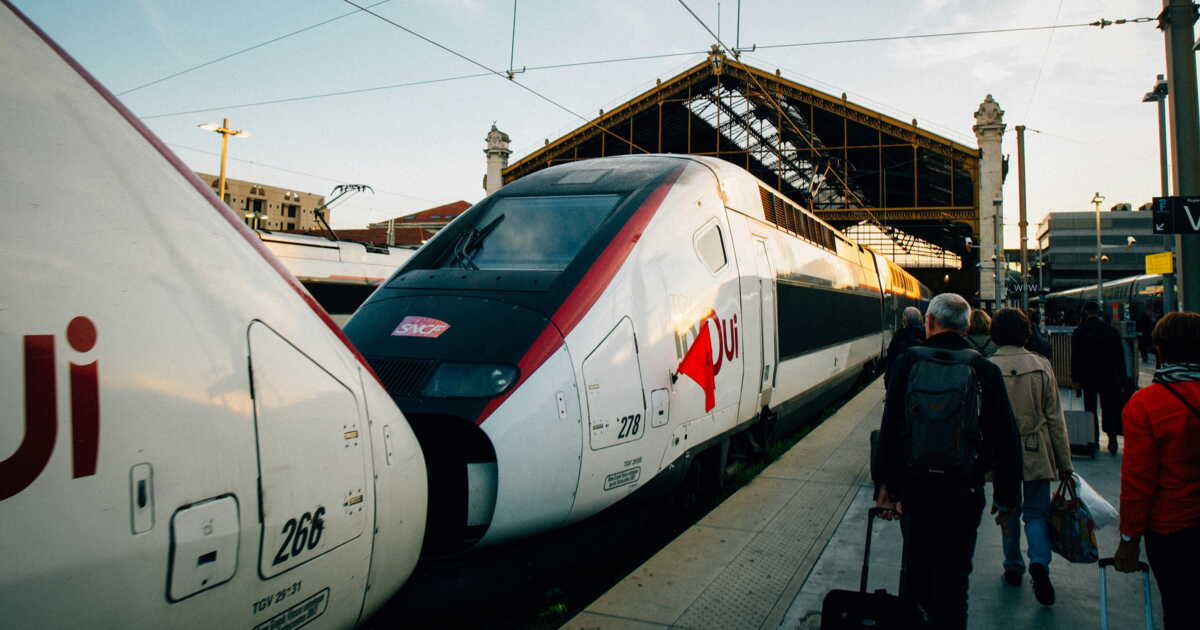
The countdown is officially underway. On Wednesday, September 30, 2026, SNCF opens its ticketing for the Christmas and New Year period. With advertisements and reminders on its app, the French company is urging travelers to book their tickets as soon as possible to secure the best prices. But is that really the best approach?

According to a study from the reservation platform Trainline, relay by RMC, travelers could save up to 30% on a train ticket by booking as soon as the booking opens. Especially since this period is extremely busy in transport, most French people travel to spend the holidays with family. Trains fill up quickly and the prices of remaining tickets tend to rise.

Which dates are the most popular for train travel in December 2026?

According to data from another journey-booking platform, Kombo, December 18, 19, 24, 25 and 26 will be the most sought-after travel dates this year. They correspond to the Friday and Saturday of the school holidays and the days surrounding Christmas, which falls on a Friday this year. Sundays December 20 and 27 and the period from December 30 to January 3 will also be highly sought after.

By booking early, you will therefore have more choice regarding the type of train you will take, the number of connections, or your seat in the carriages. In addition to avoiding price spikes as the holidays approach, you will also gain in comfort. If you wait too long, you risk ending up with pricier tickets on less comfortable trains, or even not being able to sit next to your loved ones.

Several tips to avoid paying more for your ticket than your neighbor

If you want to plan even further ahead, know that the European companies operating in France do not start selling tickets on the same date as SNCF. The Italian company Trenitalia, which offers trips toward the southeast from Paris, including to Lyon, has already released its tickets. The company Eurostar, which goes to London, Belgium, the Netherlands and some German cities as well. The German, Swiss and Spanish companies, they should open reservations in mid-October.

To pay less, don’t hesitate to compare prices across the different companies on dedicated platforms, to place options – valid for one week on InOui trains – so that the price does not change while you refine your departure plans, and to book rather quickly. If your train is sold out, you can still join a waiting list via SNCF or platforms like traincomplet.fr which, for a fee, try to find a last-minute seat on these apparently full trains.

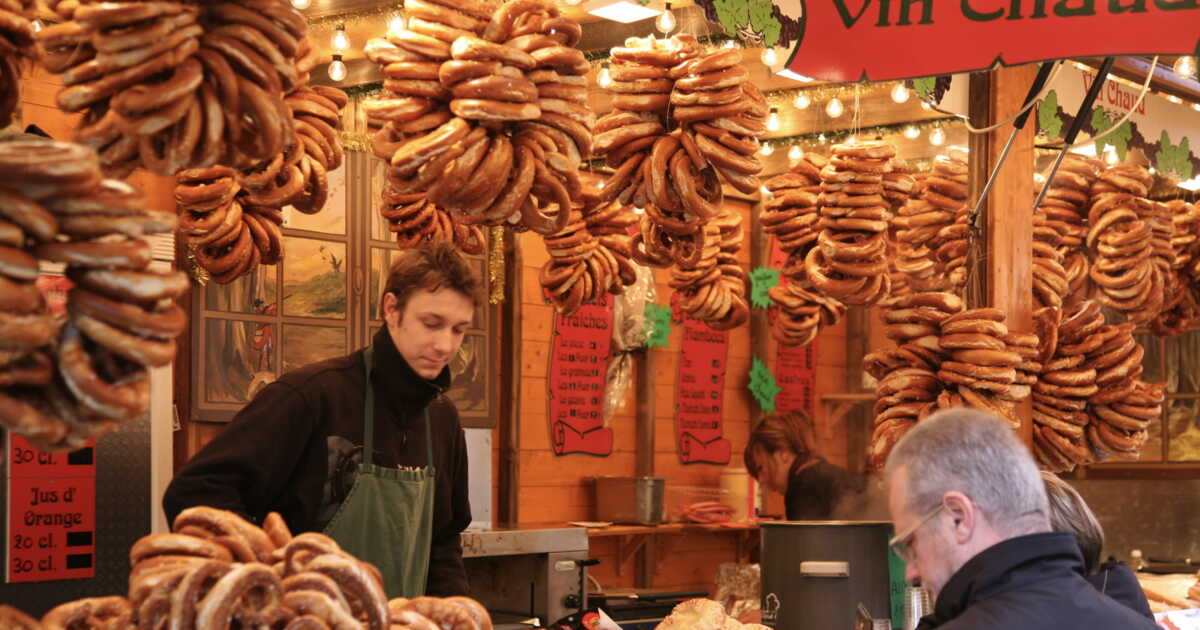
A Christmas Pretzel Flavor


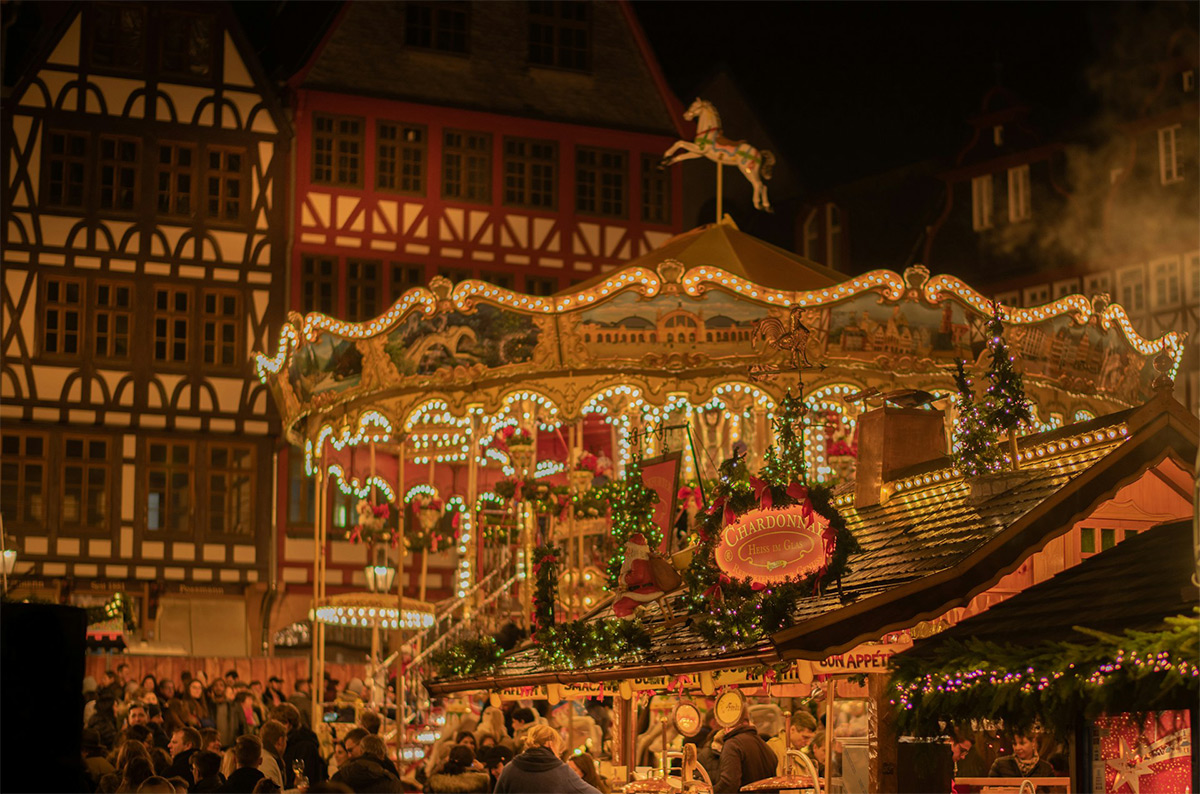
Marché de Noël de Francfort © Unsplash - cmophoto.net

Climats du Monde


The naysayers will claim that the magic of Christmas has vanished, and that this event, which is normally eagerly anticipated, is today nothing more than a soulless commercial celebration, a tradition that fades year after year.

Let them speak, because now you know: in Germany the magic still works, through a thriving culture that continues to grow.

But what makes it so unique?


But where does it come from, actually?

The festive culture is not a novelty for Germans: they are believed to have organized the first Christmas market in Dresden, and they are also credited with the advent calendar concept. This period is deeply rooted in the culture, which has evolved over the centuries to culminate in the model we know today.

A collection of traditions forms the Christmas heritage, which the population reverently honors each year: December 5 is generally the Krampusnacht, a folkloric practice in which the Krampus (the German counterpart of the French Père Fouettard) roams the streets to “punish” naughty children with candy. You will often see young adults in costume parading through the streets, pretending to frighten the crowd. December 6 features Saint Nicholas on Nikolaustag, where, unlike the previous evening, the idea is to place treats or small gifts in the shoes of young children. One can also mention the Heiligabend Eve, the game of Weinachtsgurke, a treasure hunt around Christmas decorations, or the Krippenspiel, plays in which children reenact the birth of Jesus. In short, several practices that originate from local religious and spiritual beliefs, during which current residents gather and attend street processions.


Christmas markets that stand out from the rest

Today, the concept is an indispensable highlight of the festive season, and it represents a unique draw for certain cities. This is precisely an interesting phenomenon to observe in Germany. Indeed, the local Christkindlmarkt or Weinachtsmarkt are not simply gatherings of stalls selling local specialties or hosting occasional musical events: they are true hubs of culture and authenticity with substantial scale, where visitors come for a deep immersion into local life.

The most notable example is the Nuremberg Christmas Market (Christkindlesmarkt), which attracts millions of visitors each year. A wide array of German specialties awaits, from foods to drinks, along with stalls highlighting local craftsmanship, such as those selling children’s toys or handmade decorative objects. Carriage rides add to the on-site entertainment, alongside attractions like merry-go-rounds and opportunities to join in singing carols, among other activities.


A traditional model, but not rigid

Germany also benefits from a rich variety of Christmas markets spread across its cities, some of which offer innovative approaches to the concept. Consider the alternative Christmas markets of Cologne: more than seven official markets and around twenty local ones line the city, earning the Rhineland capital a top ranking among the world’s Christmas markets by Times.

We can take Sonnenschein Etage as an example, a Christmas market… located on a roof terrace.

Or the Blackfoot Beach market, a stunning artificial winter kingdom offering visitors a multitude of activities ranging from winter sports to Christmas gift-making workshops. Not to forget Altermarkt, which places a premium on artisans masters from all horizons, or the Cathedral Market, set under its magnificent spires towering 157 meters above.

In short, there is no shortage of options.


Other facets of Christmas

Obviously, fully enjoying German Christmas does not stop at visiting markets. A wide range of workshops presenting artisanal production techniques is available across the country. In Saxony and Thuringia, for instance, sculpting workshops are offered by local artisans, helping to better understand how nutcracker figurines, the famous Christmas pyramids, and even a collection of children’s toys found at the markets are designed. It is also possible to learn how to create and decorate Adventskranz, the classic Christmas wreath. Numerous concerts are held in various churches to celebrate holy days with hymnody. In Munich, the Tollwood winter festival is worth the excursion, bringing together an interesting mix of cultural activities, concerts, and stalls showcasing diverse cultures.

Christmas is also the season to fill one’s belly, and among the various year-end festivals, some specifically focus on chocolate—an ideal opportunity to enjoy it in all its forms. The ChocolART Festival in Thuringia, not far from Stuttgart, is probably the best example. More broadly, restaurants offer throughout the holidays menus featuring the period’s typical culinary specialties. This is the chance to taste roast goose, potato salad with sausages, Bratwurst, roasted chestnuts, gingerbread, candied almonds, or Stollen, a Dresdner specialty. In fact, Dresden hosts Stollen festivals where pastry chefs compete to bake the best cake or join forces to prepare a giant version.

Finally, December snow provides the perfect opportunity to try winter sports. And even if skiing, tobogganing, or snowboarding does not tempt you, you can head to the bobsleigh tracks in Dresden or Königssee or ice-skate at the Nymphenburg Palace. If your aim is to escape the cold, Baden-Baden’s thermal springs offer a comforting retreat.

Convinced yet? Then give us a call, we promise you’ll get to sample a Glühwein 😉


Takanakuy: Peruvian Christmas Day Bare-Handed Fight Ritual

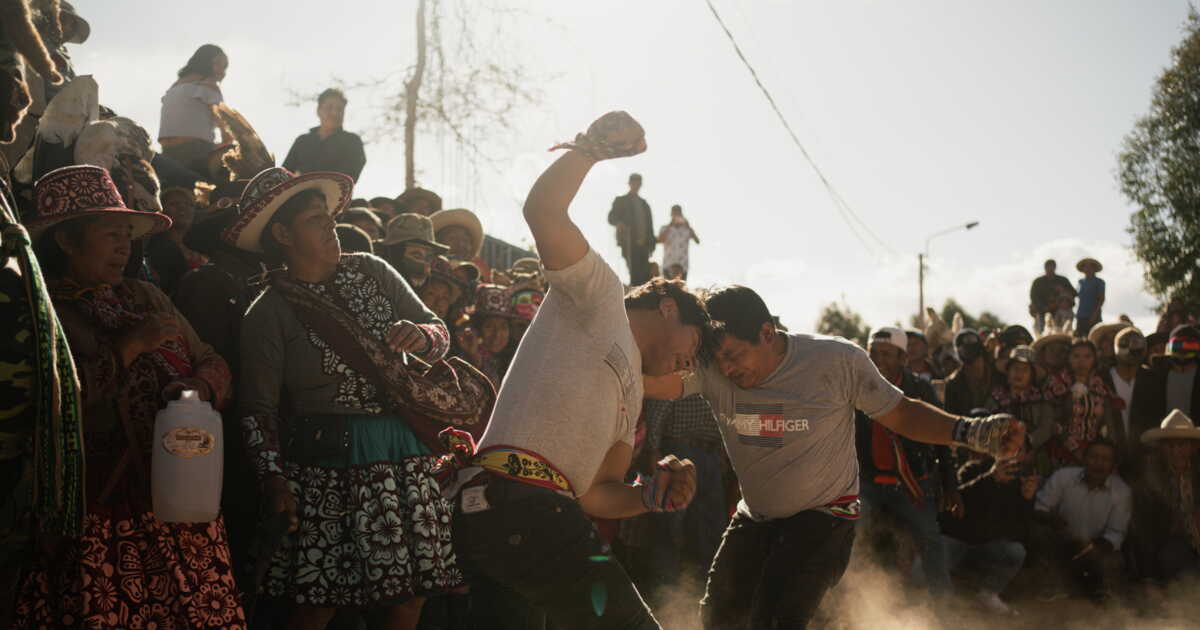
While in most French households the mood is one of family merriment with presents under the tree and roasts in the oven, the residents of the small town of Santo Tomás celebrate the birth of Christ in their own way. It is in the Chumbivilcas region, tucked away in the Peruvian Andes, that between five and six thousand people gather in the arena usually used for bullfights to watch the bouts. The clashes run from 10 a.m. to 6 p.m., non-stop. A French expert on the subject, photojournalist and filmmaker Simon Ruiz, told Geo how the idea of making a film about this tradition came to him: “While I was scrolling Tik Tok, I came across a video of women fighting bare-handed in the middle of a large crowd.”

Speaking with his fixer on the ground, he quickly understood that this is a living tradition. He then decides to fly in to arrive on Christmas Day, equipped with his trusty camera. “For more than ten years I have been interested in Indigenous communities,” he explains, “I have come to realize the complexity of their situation: they are not simply communities living deep in the forest, subsisting on the river and the mountains. There are many deeper and more modern issues at stake.”

A ritual of uncertain origins

Simon Ruiz thus approaches the subject with the greatest respect and becomes interested in everything that surrounds the blows inside the arena. The Takanakuy is indeed part of a broader festival called Wayliya. In the days leading up to the fights, the festivities are organized with detailed disguises featuring traditional garments, but also masks and the stuffed remains of animals—antlers and condors—used as impressive headgear. Alcohol flows freely during these days of preparation for the Takanakuy, but this is no reason to forget the purpose of the celebration: Jesus and the Virgin Mary.

Hours of prayer are numerous and solemn. On the morning of December 25, the time is for hymns of praise to Jesus. Traditional Christianity takes precedence over times of dance and song, before 10 a.m., the time of the rendezvous inside the arena. The fighters’ aim is not to “win” a fight, even though there is always a dominant and a dominated one. All blows are allowed until one of the two opponents falls to the ground, at which point the hostilities are immediately halted by the referee, as Simon Ruiz relates.

In 2025, he chose to lay down his camera when invited to take part in a fight. He found himself facing one of the men he had known over the years while he came to film and photograph Takanakuy for the French press. To prepare and document his approach, he stayed for a month and a half in Santo Tomás and interviewed many people, including the village intellectual Víctor Laime Mantilla. The village representative defines it as “a pre-Hispanic tradition whose history has been passed down orally from generation to generation.” These testimonies take on various shapes and forms, and today it is difficult to determine with certainty where Takanakuy truly comes from.

The main theory, according to Víctor Laime Mantilla, goes as follows: this historical ritual may have begun in the time of the Inca emperors as a chance to display one’s courage in combat outside of actual battles. For Simon Ruiz, who has heard other voices from other Chumbivilcanos, there is also the possibility that this tradition originated in an even darker context: “After the arrival of the colonizers, perhaps some slave traders forced men to fight to choose the strongest…a bit like cockfights.” One must imagine that each story holds a grain of truth.

Modernity versus tradition

Whatever the origin of this tradition, one thing is certain: today it is deeply embedded in the Peruvian landscape. To the point of continuing to evolve with contemporary mores. Initially strictly reserved for men, the fights now see women stepping into the arena. According to Simon Ruiz, nearly one in two bouts today is fought by women.

The competitors have earned the right to fight among themselves, on equal footing with men, for reasons that the photojournalist finds surprisingly feminist: “Young women went to study in big cities, where equality is talked about a lot, and then returned with progressive demands.”

Not everyone’s cup of tea, but they have been present for several years now, albeit in a somewhat less official manner than the men. For Víctor Laime Mantilla, this is part of the nature of any tradition: it must adapt to survive. That doesn’t mean everything is rebuilt from scratch. Among the disguises you still find the majeños, the negros, the qara capas, the langostas, and the qarawatannas, variants of minors, crustaceans and slaves who dance all in praise of the Virgin Mary and Jesus in the streets and in the arena on December 25.

In Santo Tomás, Takanakuy is not simply a sequence of spectacular bouts. It reflects a society that negotiates its legacies, tensions, and transformations.