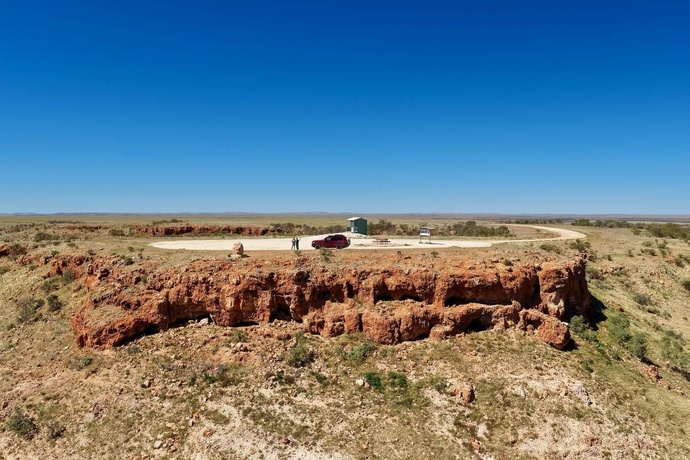

For twenty-four days, we drove between Adelaide, Broken Hill, Tibooburra, Thargomindah, Quilpie, Longreach, Winton, Mount Isa, Boulia, Bedourie, Birdsville, Betoota, then the long descent southward.
More than 5,000 kilometers with Marion, my 23-year-old niece and the expedition’s operations chief, to tell live about an Australia that the French market still astonishingly knows little about.
The live coverage has now ended. We returned with dust in our luggage, thousands of photographs, dozens of hours of footage and testimony, but above all with a conviction: the Queensland Outback is not a tourist product to be invented. It already exists.
Access is there, experiences as well, accommodations are improving, events pace the season and, above all, the men and women who give soul to these territories remain incredibly accessible.
What strikes most on the road is the rarity of European travelers. During our crossing, we met Australians in caravans, families, retirees traveling their own country, a few foreign backpackers on Working Holiday Visa.
But practically no Europeans traveling this Outback as a touring itinerary, and almost no French. For the French trade, this vacuum perhaps constitutes the opportunity.
More than 5,000 kilometers with Marion, my 23-year-old niece and the expedition’s operations chief, to tell live about an Australia that the French market still astonishingly knows little about.
The live coverage has now ended. We returned with dust in our luggage, thousands of photographs, dozens of hours of footage and testimony, but above all with a conviction: the Queensland Outback is not a tourist product to be invented. It already exists.
Access is there, experiences as well, accommodations are improving, events pace the season and, above all, the men and women who give soul to these territories remain incredibly accessible.
What strikes most on the road is the rarity of European travelers. During our crossing, we met Australians in caravans, families, retirees traveling their own country, a few foreign backpackers on Working Holiday Visa.
But practically no Europeans traveling this Outback as a touring itinerary, and almost no French. For the French trade, this vacuum perhaps constitutes the opportunity.
Another Australia for those who already think they know it
The first instinct would be to reserve Queensland’s Outback for seasoned travelers. That would be a mistake.
Its natural market is obviously that of repeaters, those clients who already know Sydney, Melbourne, the Great Barrier Reef or the Red Centre and who now ask what else they could discover in Australia.
But the potential is broader. Couples accustomed to self-drives, travelers drawn to wide open spaces, photography lovers, heritage or train enthusiasts, families with teenagers, premium clients who prioritize experience over ticking off sites — the profiles likely to love the Outback are numerous.
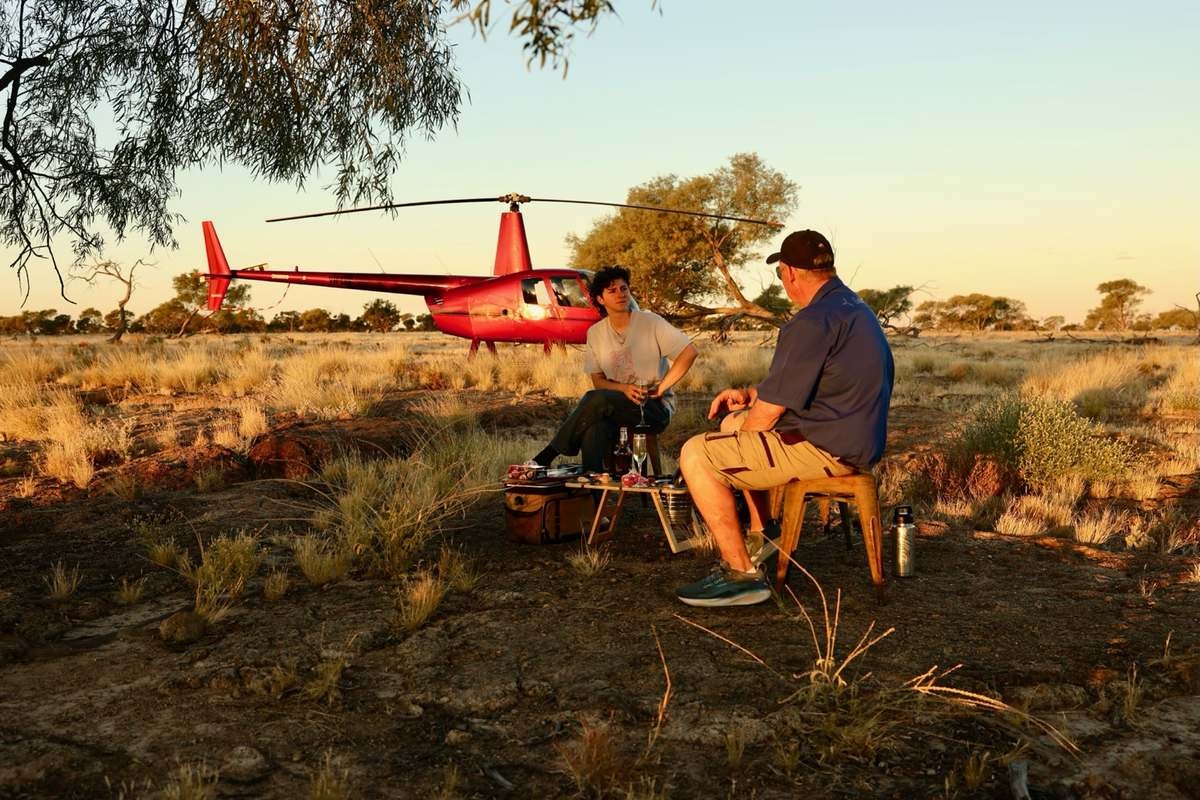
We simply need to explain to them what luxury they are seeking. For the Outback’s luxury is not necessarily a five-star suite. It can be a table set facing the sunset, a helicopter perched alone above the plains, a beer shared with the owner of a remote pub, a Thomson River cruise, or the absolute silence of the Channel Country.
Comfort also exists. In Longreach and especially Winton, more sophisticated accommodations now allow immersion with quality services. But we must be clear with the client: the Outback retains a rustic edge, and that is also why people come here.
Its natural market is obviously that of repeaters, those clients who already know Sydney, Melbourne, the Great Barrier Reef or the Red Centre and who now ask what else they could discover in Australia.
But the potential is broader. Couples accustomed to self-drives, travelers drawn to wide open spaces, photography lovers, heritage or train enthusiasts, families with teenagers, premium clients who prioritize experience over ticking off sites — the profiles likely to love the Outback are numerous.
We simply need to explain to them what luxury they are seeking. For the Outback’s luxury is not necessarily a five-star suite. It can be a table set facing the sunset, a helicopter perched alone above the plains, a beer shared with the owner of a remote pub, a Thomson River cruise, or the absolute silence of the Channel Country.
Comfort also exists. In Longreach and especially Winton, more sophisticated accommodations now allow immersion with quality services. But we must be clear with the client: the Outback retains a rustic edge, and that is also why people come here.
Do not turn our 5,000 kilometers into a catalog product
Our expedition surpassed 5,000 kilometers. That certainly does not mean we should ask a client to reproduce them. It’s probably the first business lesson of these three weeks: the Outback must be modularized.
For a first discovery, Longreach and Winton already allow for an immersion of four to six nights.
Read also: Longreach, why this gateway to the Outback still escapes French travelers
Longreach brings together several of the great stories of inland Australia around Qantas, stockmen and the Thomson River. Winton adds Waltzing Matilda, the dinosaurs, the Royal Theatre, aerial experiences and a surprisingly creative community.
For travelers with more time, the route can extend to Mount Isa and become a ten-day or longer itinerary.
Then comes another level of immersion: Boulia, Bedourie, Birdsville, Betoota and the Channel Country. Distances grow, services become sparser, and the road gradually becomes an essential component of the journey.
Finally, for lovers of the grand road trip, there is a much more ambitious crossing: Broken Hill, Silverton, Tibooburra, the Corner Country, the Queensland Outback, then Birdsville. Three weeks then allow building a trip where the road is no longer merely the means to reach the stops. It becomes the experience itself.
For a first discovery, Longreach and Winton already allow for an immersion of four to six nights.
Read also: Longreach, why this gateway to the Outback still escapes French travelers
Longreach brings together several of the great stories of inland Australia around Qantas, stockmen and the Thomson River. Winton adds Waltzing Matilda, the dinosaurs, the Royal Theatre, aerial experiences and a surprisingly creative community.
For travelers with more time, the route can extend to Mount Isa and become a ten-day or longer itinerary.
Then comes another level of immersion: Boulia, Bedourie, Birdsville, Betoota and the Channel Country. Distances grow, services become sparser, and the road gradually becomes an essential component of the journey.
Finally, for lovers of the grand road trip, there is a much more ambitious crossing: Broken Hill, Silverton, Tibooburra, the Corner Country, the Queensland Outback, then Birdsville. Three weeks then allow building a trip where the road is no longer merely the means to reach the stops. It becomes the experience itself.
In the Outback, slowing down is part of the product
We sometimes followed the kilometers because our editorial mission required it. We needed to reach an interview, film before sunset, keep an appointment, or simply continue our loop.
For a holiday client, I would build it differently. The mistake would be to try to recoup the kilometers by multiplying overnight stops.
Longreach deserves several nights, Winton as well. Mount Isa can become a true stop when paired with an event. Birdsville deserves more than a photo in front of its famous pub before hitting the road again.
Because it is often when one stops driving that the Outback truly begins to speak.
In Winton, the time spent on site allowed us to meet entrepreneurs, artists, residents and personalities we would never have known during a simple pass-through. No brochure can guarantee these encounters, and one should not try to script them all.
On the other hand, a good itinerary can create the time needed for them to arrive. For the producer, the question should not be how many kilometers a client can travel in two weeks, but how much time to allow for them to begin to belong a little to the place they pass through.
For a holiday client, I would build it differently. The mistake would be to try to recoup the kilometers by multiplying overnight stops.
Longreach deserves several nights, Winton as well. Mount Isa can become a true stop when paired with an event. Birdsville deserves more than a photo in front of its famous pub before hitting the road again.
Because it is often when one stops driving that the Outback truly begins to speak.
In Winton, the time spent on site allowed us to meet entrepreneurs, artists, residents and personalities we would never have known during a simple pass-through. No brochure can guarantee these encounters, and one should not try to script them all.
On the other hand, a good itinerary can create the time needed for them to arrive. For the producer, the question should not be how many kilometers a client can travel in two weeks, but how much time to allow for them to begin to belong a little to the place they pass through.
The road is better than its reputation, but it doesn’t improvise
This is where bespoke travel reclaims all its science
This reality places back at the center a chain that online booking sometimes tends to forget: the client, their travel agent, the tour operator and the Australian receptive. Each holds a part of the answer.
The agent knows their client, their road-trip experience, their comfort level, their budget, their tolerance for distances and their capacity to accept some unpredictability.
The tour operator assembles the trip, the flights, the vehicle, the accommodations, the experiences and the overall rhythm.
The Australian receptive brings this knowledge of the terrain that becomes particularly valuable as soon as you leave the major classic itineraries: realistic distances, seasonality, road conditions, alternatives, events, rental constraints and small addresses.
This is precisely the kind of destination where bespoke travel regains all its science.
The right trip is not about connecting dots on a map. An extra night can change the experience, an event can determine the travel dates, a closed route can impose another loop and the vehicle choice can depend on the itinerary. What might appear as a complication becomes exactly what the travel professional knows how to do: transform complexity into freedom for the client.
The agent knows their client, their road-trip experience, their comfort level, their budget, their tolerance for distances and their capacity to accept some unpredictability.
The tour operator assembles the trip, the flights, the vehicle, the accommodations, the experiences and the overall rhythm.
The Australian receptive brings this knowledge of the terrain that becomes particularly valuable as soon as you leave the major classic itineraries: realistic distances, seasonality, road conditions, alternatives, events, rental constraints and small addresses.
This is precisely the kind of destination where bespoke travel regains all its science.
The right trip is not about connecting dots on a map. An extra night can change the experience, an event can determine the travel dates, a closed route can impose another loop and the vehicle choice can depend on the itinerary. What might appear as a complication becomes exactly what the travel professional knows how to do: transform complexity into freedom for the client.
From historic pubs to glamping, do not oversell comfort
Accommodation deserves the same transparency. A large part of the charm of this Australia rests on its historic pubs, its independent motels, and its small family properties.
Tibooburra, Birdsville, Betoota and other stops should not be compared to hotels in Sydney or Melbourne. They offer something else.
Sleeping on-site, dining at the counter, hearing the floor creak under your steps and talking with the person who runs the establishment are part of the journey.
Next to this deliberately rustic Australia there are nonetheless more sophisticated accommodations, notably around Longreach and Winton. The right product can thus alternate the two: one night for history, another for comfort.
Tibooburra, Birdsville, Betoota and other stops should not be compared to hotels in Sydney or Melbourne. They offer something else.
Sleeping on-site, dining at the counter, hearing the floor creak under your steps and talking with the person who runs the establishment are part of the journey.
Next to this deliberately rustic Australia there are nonetheless more sophisticated accommodations, notably around Longreach and Winton. The right product can thus alternate the two: one night for history, another for comfort.
When tourist expenditure stays within the community
This is perhaps one of the most interesting dimensions of the product. In a large part of our itinerary, the traveler’s money goes directly to small local businesses and communities.
The pub owner may be the one who serves dinner. The pilot who takes you to see the sunset is a local entrepreneur.
The guides, museums, shows, cruises and events often rely on family-run, community or small-scale structures.
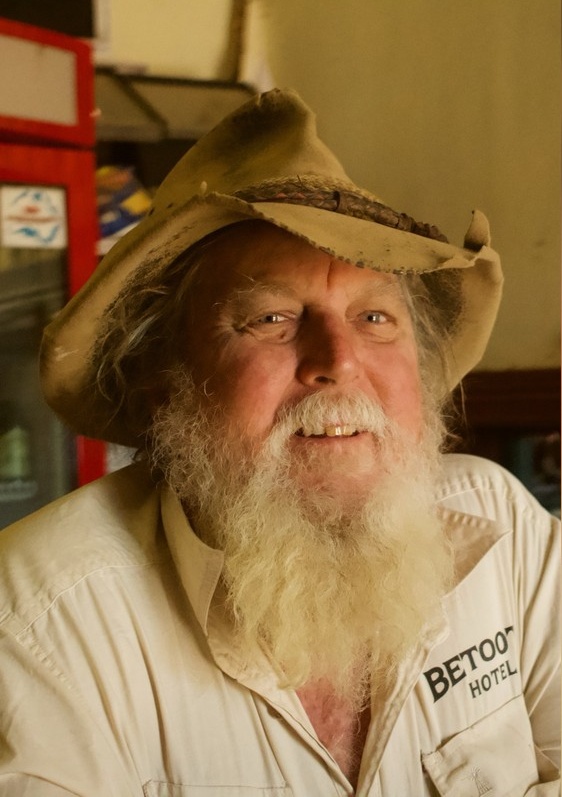
In Betoota, Robert “Robbo” Haken revived a pub that had been closed for more than twenty years in a town that had ended up with a population of zero. When I asked him what to tell the French, his reply had nothing to do with marketing: More French people! Tell them to come over here.
Behind the humor lies an economic reality. In communities sometimes counting only a few hundred inhabitants, tourist spending is immediately noticeable. Selling the Outback also means helping to sustain the Outback.
The pub owner may be the one who serves dinner. The pilot who takes you to see the sunset is a local entrepreneur.
The guides, museums, shows, cruises and events often rely on family-run, community or small-scale structures.
In Betoota, Robert “Robbo” Haken revived a pub that had been closed for more than twenty years in a town that had ended up with a population of zero. When I asked him what to tell the French, his reply had nothing to do with marketing: More French people! Tell them to come over here.
Behind the humor lies an economic reality. In communities sometimes counting only a few hundred inhabitants, tourist spending is immediately noticeable. Selling the Outback also means helping to sustain the Outback.
Isolation does not mean danger
I wanted to ask Marion. She is 23, arrived from Paris, and had never traveled in this Australia before.
After more than 5,000 kilometers, her answer was simple: At no moment did I feel unsafe.
This does not, of course, excuse the precautions proper to remote regions: water, fuel, weather, road conditions, distances, adapted driving, offline maps and a prepared itinerary.
But one must distinguish two notions that European travelers sometimes confuse: isolation and danger are not synonyms.
After more than 5,000 kilometers, her answer was simple: At no moment did I feel unsafe.
This does not, of course, excuse the precautions proper to remote regions: water, fuel, weather, road conditions, distances, adapted driving, offline maps and a prepared itinerary.
But one must distinguish two notions that European travelers sometimes confuse: isolation and danger are not synonyms.
2027, an opportunity to showcase another Australia
The Rugby World Cup 2027 finally offers a particularly interesting window for the French market.
With Brisbane and Townsville among the host cities, Queensland will be directly integrated into the travel plans of a portion of the international supporters.
Some will already know Australia, others will take the trip as an opportunity to extend their stay. Why offer only the Australia they already know?
Longreach, Winton, Mount Isa or parts of the Channel Country can offer very differentiated extensions, depending on dates, connections and available time.
More broadly, the product’s ingredients are already present: air gateways, rail, roads, self-drives, accommodations at different levels, bookable experiences and an events calendar. And above all, French travelers remain rare there. It’s rare, and commercially valuable.
With Brisbane and Townsville among the host cities, Queensland will be directly integrated into the travel plans of a portion of the international supporters.
Some will already know Australia, others will take the trip as an opportunity to extend their stay. Why offer only the Australia they already know?
Longreach, Winton, Mount Isa or parts of the Channel Country can offer very differentiated extensions, depending on dates, connections and available time.
More broadly, the product’s ingredients are already present: air gateways, rail, roads, self-drives, accommodations at different levels, bookable experiences and an events calendar. And above all, French travelers remain rare there. It’s rare, and commercially valuable.
The Outback does not require being an adventurer; it requires good advice
After 24 days and more than 5,000 kilometers, this is probably the most useful conclusion I can share with the trade. We must neither trivialize the Outback nor present it as an expedition reserved for a few specialists. It must be sold properly.
Choose the client, determine the time they have, build the right rhythm, select the entry door, then choose the vehicle, cross-check the itinerary with the event calendar, plan alternatives and above all leave enough time for encounters to take place: this is exactly why the travel agent, the tour operator, and the Australian receptive have an essential role here.
Rather than reproducing our 5,000 kilometers, the goal should be to build the Outback that truly matches the client.
Four nights or three weeks, by train, by plane, then by car, in a SUV or a 4×4, around Winton, a rodeo at Mount Isa, an arrival at Birdsville or a grand crossing from Broken Hill: there is not a single Outback journey.
And perhaps that is its greatest strength. The challenge is no longer whether the Queensland Outback can be sold in France. The product already exists. The challenge now is to translate it for the French market and, perhaps especially, not to transform it too much.
Because what we sought during these 5,000 kilometers was not merely a new route to put in a brochure. It was an Australia where one can still push open the door of a pub and speak to the person who runs it, meet the one who collects the kangaroos, listen to a stockman tell his country, or stay an hour longer simply because a conversation has just begun.
An Australia still lived in before being staged. For us, travel professionals, to build the road that leads there.
Choose the client, determine the time they have, build the right rhythm, select the entry door, then choose the vehicle, cross-check the itinerary with the event calendar, plan alternatives and above all leave enough time for encounters to take place: this is exactly why the travel agent, the tour operator, and the Australian receptive have an essential role here.
Rather than reproducing our 5,000 kilometers, the goal should be to build the Outback that truly matches the client.
Four nights or three weeks, by train, by plane, then by car, in a SUV or a 4×4, around Winton, a rodeo at Mount Isa, an arrival at Birdsville or a grand crossing from Broken Hill: there is not a single Outback journey.
And perhaps that is its greatest strength. The challenge is no longer whether the Queensland Outback can be sold in France. The product already exists. The challenge now is to translate it for the French market and, perhaps especially, not to transform it too much.
Because what we sought during these 5,000 kilometers was not merely a new route to put in a brochure. It was an Australia where one can still push open the door of a pub and speak to the person who runs it, meet the one who collects the kangaroos, listen to a stockman tell his country, or stay an hour longer simply because a conversation has just begun.
An Australia still lived in before being staged. For us, travel professionals, to build the road that leads there.
Sébastien Cros
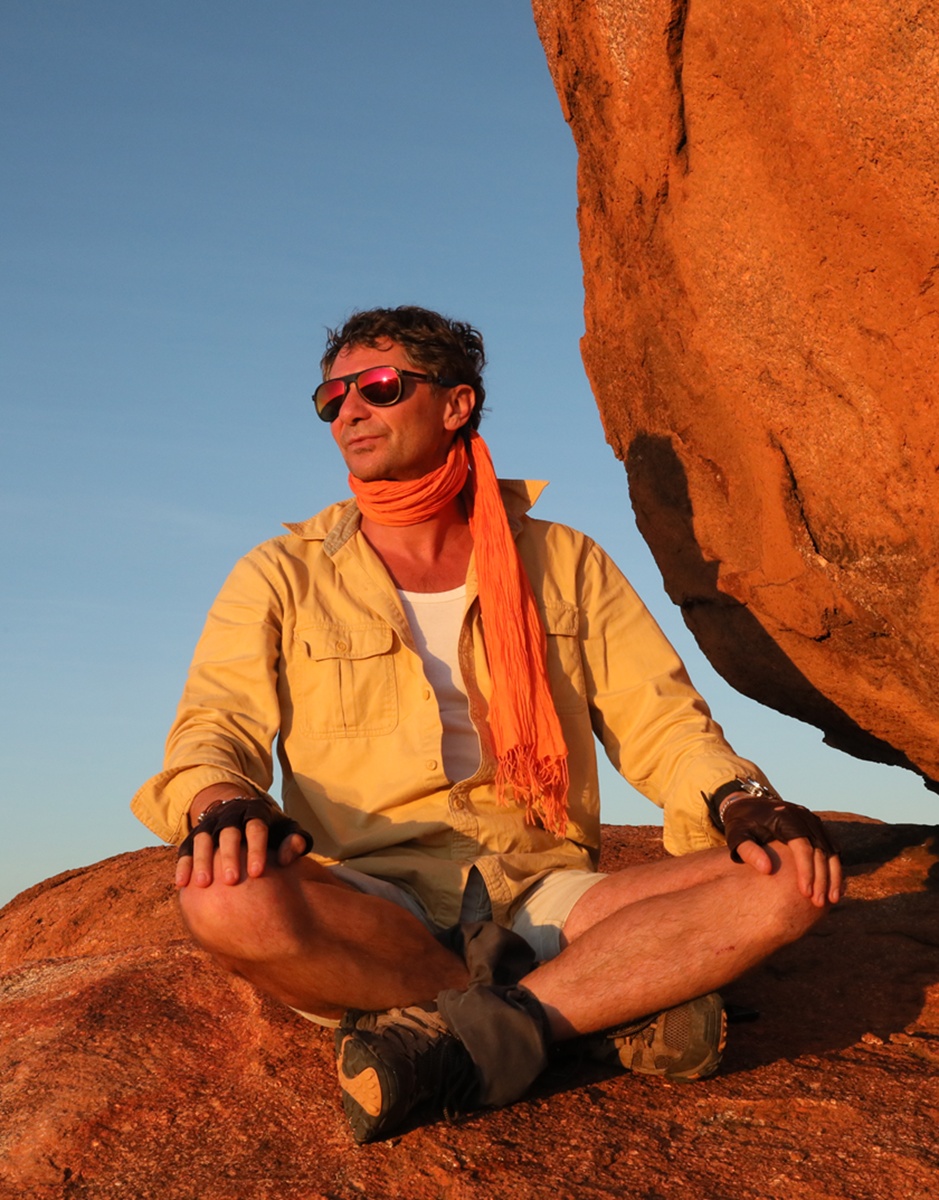
Sébastien Cros is an independent journalist and photographer based in Australia, founder of WeTravelAustralia™.
After twenty-five years in the Australian tourism industry, notably as Managing Director of Across Australia (Goway group), he now dedicates his writing to editorial narratives dedicated to the destination, at the crossroads of storytelling, photography and on-the-ground perspective.
After twenty-five years in the Australian tourism industry, notably as Managing Director of Across Australia (Goway group), he now dedicates his writing to editorial narratives dedicated to the destination, at the crossroads of storytelling, photography and on-the-ground perspective.




 To return to the mythology of paid vacations in France, note that photos and documentary films from the Popular Front era show vacationers who were rather young.









 Published by Caroline Lelievre






 Published by Amelia Brille