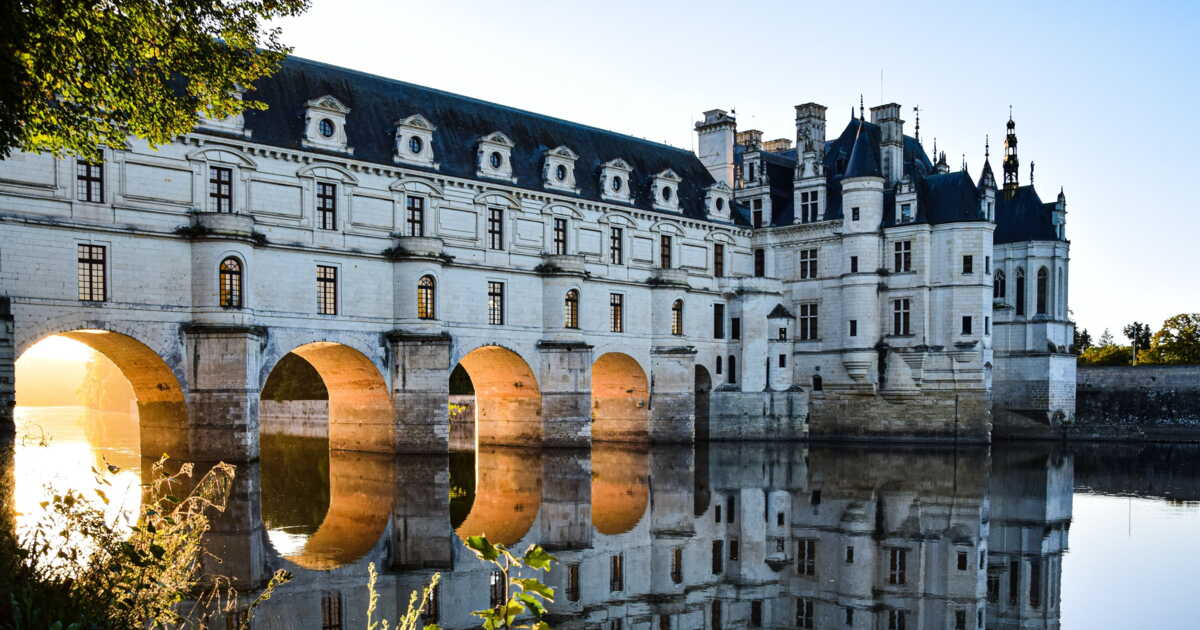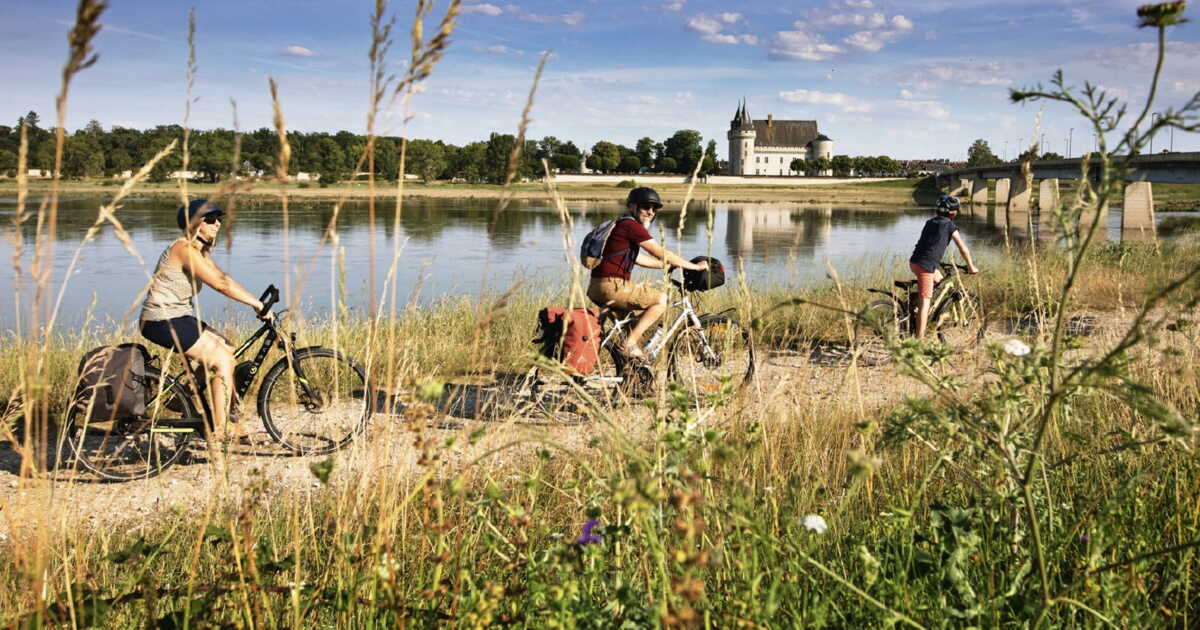
By bicycle, the Loire slows down its pace. The royal river offers a playground of strikingly diverse character: here, the majestic silhouettes of Chambord and Sully-sur-Loire recall the grandeur of Renaissance castles; there, the locks, canal bridges, and towpaths tell another story, that of river navigation. Further south, the Loire and the Allier reveal a wilder face, with sandbanks, forests, and nature reserves.
From Blois to Chambord: a bike visit to the most royal of estates
A fairly short itinerary, where the Loire dresses in its finest attire. Leaving the Blois train station, you simply let yourself drift to reach the river. We follow it westward, then quickly branch toward Chailles and the Russy forest, which we traverse along a shaded avenue to Cellettes, on the Beuvron river. This village boasts a total of… 18 castles and manor houses! The Beauregard estate, famous for its Gallery of the Illustrious with 327 portraits of historical figures, is open to visits.
A little further south, here is Cheverny, which inspired Hergé to create Moulinsart in his drawings. After passing the Château de Villesavin, at Tour-en-Sologne, comes the centerpiece of the journey: Chambord. Along forest tracks, the scent of the undergrowth precedes the visual impact of the 282 chimneys of François I’s colossal château, built in the 16th and 17th centuries. A stone’s throw away, La Loire à Vélo brings you back to Blois, where you should not forget to visit the royal château. This route can easily be extended, for instance by heading downstream toward Candé-sur-Beuvron and the Chaumont-sur-Loire estate, enhanced from April to October during the International Garden Festival.
To find inspiration, study the map “Châteaux de La Loire à Vélo,” available on bloischambord.com
Practical
Length : 70 km
Duration : 2 days
What to see along the way : Beauregard Castle and its Gallery of the Illustrious, Cheverny and Villesavin castles, the park and Chambord Castle…
To the east of Orléans: from Loire banks to canal tranquility
Starting from Orléans, this loop emphasizes water and canals. Leaving the city of Joan of Arc, first La Loire à Vélo invites cyclists to ascend the river along its southern bank, then the northern one. First stops: Saint-Benoît-sur-Loire and its Fleury Abbey, a Romanesque architectural jewel, then Sully-sur-Loire, 8 km further, whose castle ringed by moats stands at the confluence of the river and the Sange.
Next, at Briare, the Loire is crossed by a famous canal-bridge built at the end of the 19th century, spanning it over more than 600 meters. The ascent northward then begins along the Briare Canal, one of the oldest in France, linking the Loire to the Seine — with, along the way, the spectacular flight of locks at Rogny-les-Sept-Écluses. Here, you ride on EuroVelo 3, which connects Spain to Norway… and you leave it at Montargis, nicknamed “the Venice of the Gâtinais” for its 131 bridges and footbridges. The route then veers onto the Orléans Canal bike route, a newly inaugurated path in 2025. This bucolic greenway winds 80 km to Orléans, weaving between flowered locks, ponds, forests and tranquil villages.
Practical
Length : 230 km
Duration : 5 to 6 days
What to see along the way : the abbey of Saint-Benoît-sur-Loire, Sully-sur-Loire Castle, the Briare canal-bridge, Rogny-les-SeptÉcluses, Montargis…
Upstream of Nevers: a nature stroll along the wild waters
Is it the Allier that flows into the Loire, or the other way around? Some geographers argue that the tributary could be seen as the main branch… This loop explores the places at the heart of that debate. Leaving Nevers to the west along the initial (or final, depending on direction) kilometers of La Loire à Vélo, you reach the confluence of the two rivers: the Bec d’Allier, a mosaic of sandbanks with a touch of Amazonian vibe. From there, you head south along the Via Allier, a bike route that leads to Moulins via Apremont-sur-Allier, named a “Plus Beaux Villages de France”, then Le Veurdre, where the Maison de la batellerie narrates the history of navigation on this lively river.
From Moulins, the bike route 75 reconnects with the Loire at Diou, via the small roads of the Bourbonnais Sologne. We then descend the river along the rolling terrain of the EuroVelo 6, on the right bank, past the medieval town of Bourbon-Lancy (to reduce elevation and distance, follow the left-bank canal along the Loire). A detour to the Loire Bourguignonne nature reserve lets you connect with the river in a setting of sandy plains that shift with the floods. After Decize, the canal gently guides you back to Nevers.
Practical
Length : 230 km
Duration : 5 to 6 days
What to see along the way : the Bec d’Allier, the villages of Apremont-sur-Allier and Le Veurdre, Moulins, Bourbon-Lancy, the Loire Bourguignonne nature reserve…
➤ Article published in GEO HS magazine no. 134, “Grand Escapes at Slow Speed,” August-September 2026.
➤ Do you love GEO? Then to miss nothing, discover our subscription plans to receive GEO every month at home.