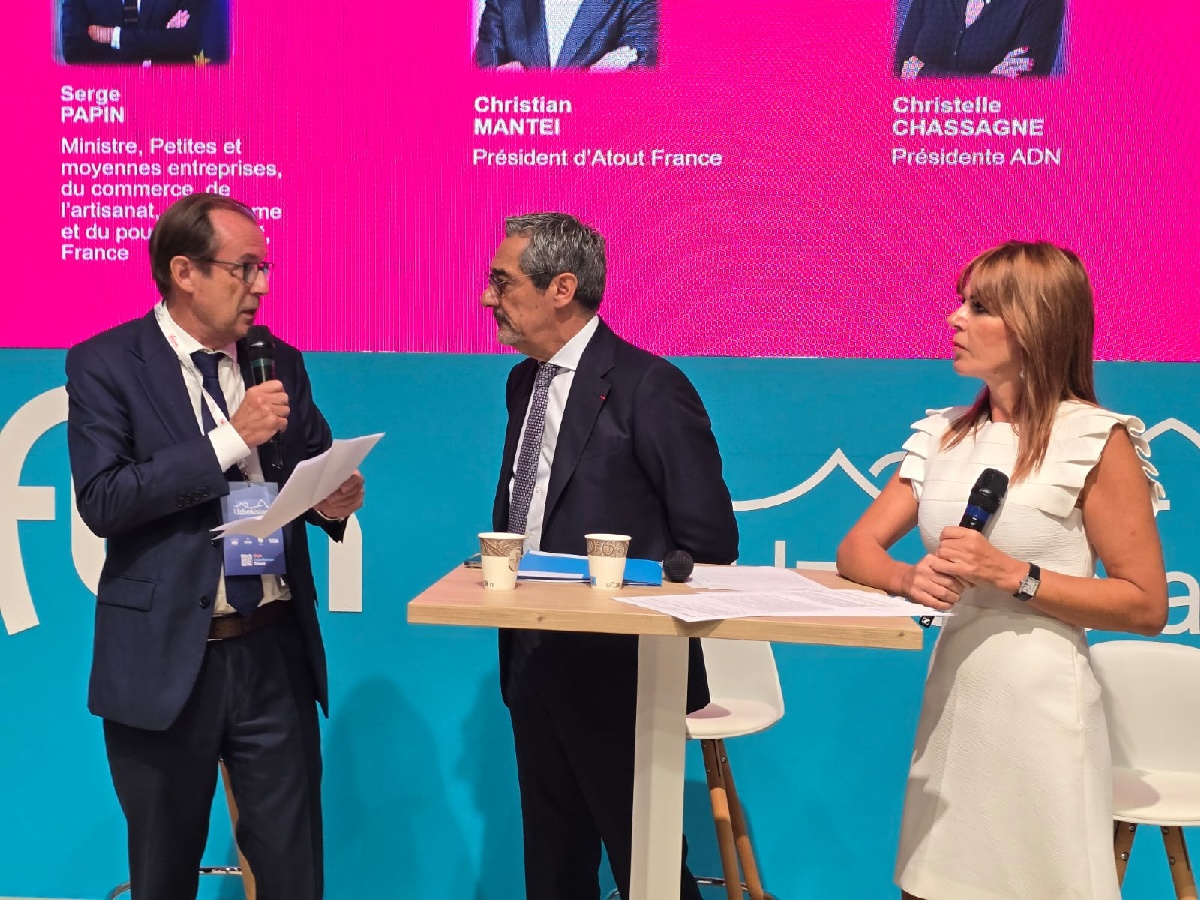


In opening of the IFTM 2026, Serge Papin, minister of Small and Medium Enterprises, Trade, Crafts, Tourism and Purchasing Power, presented, on Tuesday 15 September 2026, a first assessment of the summer tourism season.
According to the data presented by the minister, international tourism receipts reach 49.5 billion euros between January and the end of July 2026.
For the month of July alone, they amount to 9.4 billion euros, i.e., +3.7% compared to 2025.
“France continues to attract, to seduce, to persuade and even very far,” emphasized Serge Papin.
“At this stage, we can reasonably anticipate that international tourism will generate this year more than 80 billion euros in receipts, with attendance expected to exceed 100 million international tourists,” adds Christian Mantei, president of Atout France.
International air arrivals also rose during the summer, with a particularly marked increase for some long-haul markets. Mexico shows a 14% increase, ahead of Canada (+10%), China (+5%), Japan (+4%) and the United States (+3%).
The Departure Rates of French People in France Fall
However, the rate of French departures within France in midsummer, in July–August, falls by 5 points to 59%.
The Climate Action Network notes on its site that this drop confirms the retreat in summer departures observed since 2019 (-20% of overnight stays in August between 2019 and 2025 according to INSEE).
The rate of French people leaving abroad continues to rise (+4 points, to 34%).
Serge Papin nevertheless notes that June and September resist: “Tourism remains an essential need, a breathing space. The shoulder seasons are gaining importance: the French no longer go away only in July and August, but increasingly early and late,” the Minister stressed.
The departure rate in June climbs from 15% to 18%, and the intentions to depart in September rise from 20% to 22% compared with last year.
The departure rate of the French would thus be stable over the June-to-September period at 72%.
“A Climate Shock, and an Inflation Shock”
The coastline remains the primary tourist space frequented with 43% of stays, ahead of cities (33%) and the countryside (32%). The mountains account for 15% of stays and continue to grow, notably in the Northern Alps, where attendance increased by 16% in August.
Conversely, some destinations in the south of France experience a more contrasting season, notably due to the budgetary choices made by tourists.
“On the scale of France this summer, we had territories that experienced a more contrasting season. This summer we faced two shocks: a climate shock, and an inflation shock,” said Christelle Chassagne, president of ADN Tourisme.
In Nouvelle-Aquitaine, which was affected by wildfires and despite a campaign to revive activity, 42% of professionals report a drop in bookings; 32% report stability and 12% report an increase.
Purchasing power also weighed in decisions: “We want to go on vacation, but we go for shorter durations. We increasingly go to family settings, in non-market units, and we will have major trade-offs on dining and leisure,” she notes.




 Published by Amelia Brille