France’s Most Creative Cities

France was crowned with the title of “Creative Country of the Year 2026” last February at the Cannes Lions International Festival of Creativity, underscoring France’s influence in the realm of creativity. But beyond this global recognition, which French cities truly embody this momentum? A new study conducted by Adobe sheds light, analyzing close to 200 French communes.

To construct this ranking, several criteria were scrutinized in detail. For example: the number of self-employed workers in creative sectors, the presence of cultural education institutions, venues dedicated to culture, festivals, museums, as well as job openings and independent creative studios or agencies.

Cannes tops the ranking

It is the city of Cannes that finishes at the top of the list with a score of 9.67/10. The azure-coast city stands out thanks to an impressive concentration of cultural events. With 31 festivals for under 75,000 inhabitants, the city led by David Lisnard demonstrates remarkable density, and the study shows that more than six times as many festivals were held there as in Versailles, and almost as many as Grenoble, despite Grenoble’s twofold greater population.

Its appeal is also grounded in its cultural infrastructure. The municipality hosts 28 cultural venues, which is higher per capita than Lille or Paris. In terms of employment, the city records 374 openings in creative industries, a notably high volume given its size. This performance also mirrors the weight of the Cannes Film Festival, a major global cinema event.

Versailles, queen of job opportunities

Ranked second, Versailles owes its excellent score to a particularly dynamic job market in the creative sectors. The city totals more than 8,500 creative job openings, i.e., more than 22 times the volume observed in Cannes and more than 40 times that of Avignon. It also records more than 27,000 self-employed workers, one of the highest figures in the ranking behind Paris. Unlike Cannes, Versailles relies less on cultural events, as only five festivals and 26 cultural venues are listed there.

Avignon, cultural bridge?

In third place, Avignon confirms its well-established reputation as a cultural hotspot. Its overall score of 8.9/10 rests largely on its significant number of events and infrastructures. The city hosts no fewer than 47 festivals and 59 cultural venues for fewer than 100,000 inhabitants, which represents a proportionally higher festival density than Lille or Grenoble, and more than double the festivals per inhabitant compared with Paris. The standing of Avignon as a national reference is further strengthened by the influence of the Festival d’Avignon, which is scheduled this year from Saturday, July 4, to Saturday, July 25, 2026.

Grenoble bets on innovation

Fourth in the ranking, Grenoble combines innovation, design, and culture. The city counts 53 cultural venues, 35 festivals, and six museums, the largest number of museums among the top five cities. It also hosts two higher education institutions specializing in the cultural sector. With nearly 1,000 self-employed creative workers and more than 340 job openings in the creative industries, Grenoble attracts profiles oriented toward technology and creation.

Lille, the North’s Creative Engine

Fifth in the ranking, Lille emerges as one of the country’s most dynamic cultural metropolises. Indeed, the northern city records 84 cultural venues, the second-largest total in the top 10 after Paris, along with 51 festivals and 40 independent creative studios or agencies. Lille also houses more than 2,600 self-employed professionals in creative trades, further confirming its status as a true hub for the northern region.

Paris, far down the ranking…

Despite its image as a global cultural capital, Paris only ranks 14th, with a score of 8.41/10. On paper, however, the City of Light dominates every indicator: 622 cultural venues, 299 festivals, 50 museums, more than 28,000 self-employed workers, and 382 studios or creative agencies. Yet its enormous population, with 2,103,778 Parisians, slightly dampens these performances when measured per inhabitant.

Thus, Cannes shows nearly three times as many festivals per inhabitant, while Avignon exhibits a noticeably higher cultural density. Paris remains, however, the city that concentrates the most professional opportunities, with over 3,800 openings in the creative industries. At the opposite end of the ranking, Saint-Laurent-du-Maroni finishes last with a score of 0.68/10. The commune suffers from a substantial shortage of cultural infrastructure and records no identified job openings in the creative industries…
Creative Tours: Cyprus Without Borders — 8-Day Tour


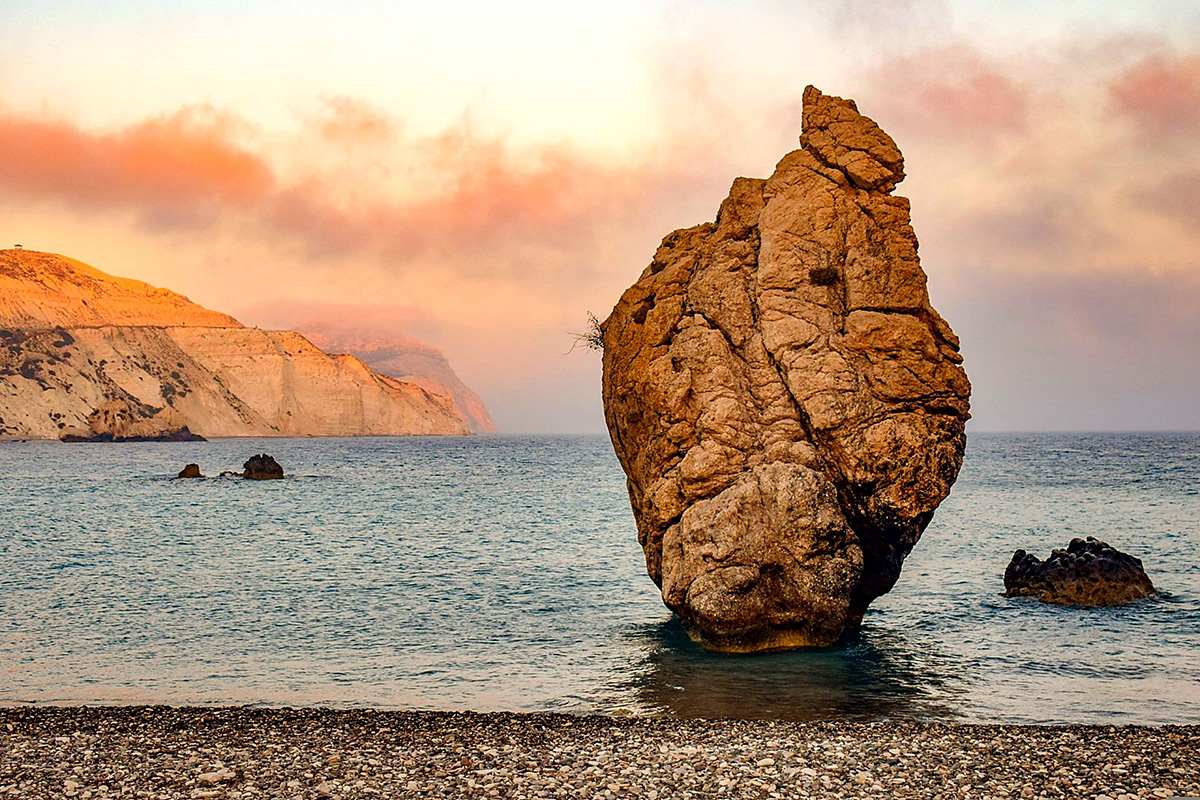
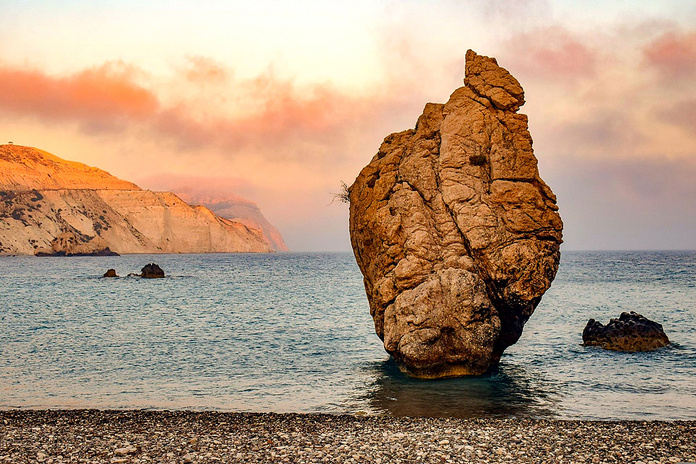
Roundtrip Chypre sans frontières : le rocher d'Aphrodite, étape mythologique du circuit © Creative Tours Cyprus

CroisiEurope


A Circuit Designed as a Journey Through Time

With “Roundtrip Cyprus Without Borders,” Creative Tours Cyprus — a French-speaking inbound operator in Cyprus from Limassol — has crafted a circuit that spans nearly the entire island in eight days and seven nights. The concept is that of a Regrouped Individual Circuit (CIR): our clients travel autonomously while enjoying a shared programme, an air-conditioned coach, a French-speaking guide certified by the Cyprus Tourism Office, and departures guaranteed every Saturday during the season. This format enables individual travelers — couples, families, solo explorers — to access a complete circuit, typically reserved for organized groups, while preserving flexibility and comfort. Our objective is simple: to tell Cyprus in its full depth, from UNESCO-listed ancient sites to mountain villages, passing through mythology, gastronomy, and the successive heritages that have shaped the island.


From Limassol to Paphos: tracing the sources of Cypriot antiquity

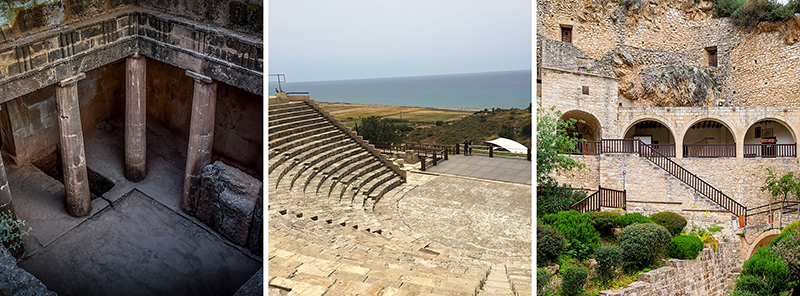
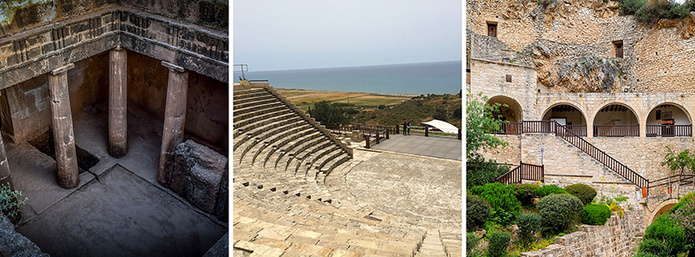
The circuit opens in Limassol with the medieval citadel of Lemesos, built in the 13th century by the Lusignans, where tradition places the marriage of Richard the Lionheart to Berengaria of Navarre in 1191. The day continues with the donjon of Kolossi, the ancient city-kingdom of Curium, the Greco-Roman theatre, the basilica, the baptistery, and the mosaics of the house of Eustolios, before visiting the sanctuary of Apollo Hylates. The village of Lefkara, renowned for its Lefkaritica embroidery and filigreed silverware, rounds out the day. The next leg takes us to Paphos by Aphrodite’s Rock, Yeroskipou and its Paraskevi church, the Monastery of Saint Neophytos, and the Baths of Aphrodite. In Paphos itself, the circuit explores the Tombs of the Kings, the Pillar of Saint Paul, the Church of Chrysopolitissa, and the famous mosaics of the houses of Dionysos, Aion, and Theseus — all UNESCO World Heritage-listed sites.


Circuit francophone à Chypre : Tombeaux des Rois (Paphos), théâtre antique de Kourion et monastère Saint-Neophyte © Creative Tours Cyprus


Troodos, Kykkos and Byzantine villages: Cyprus of the mountains

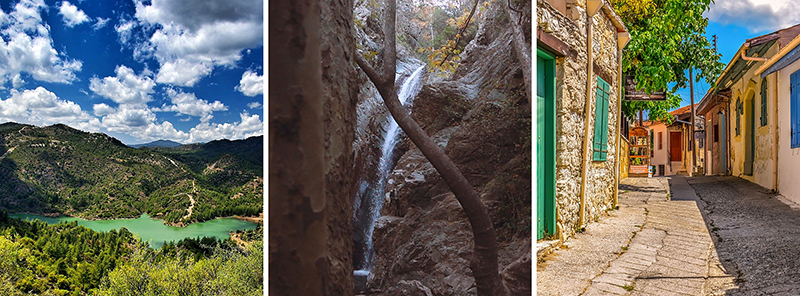
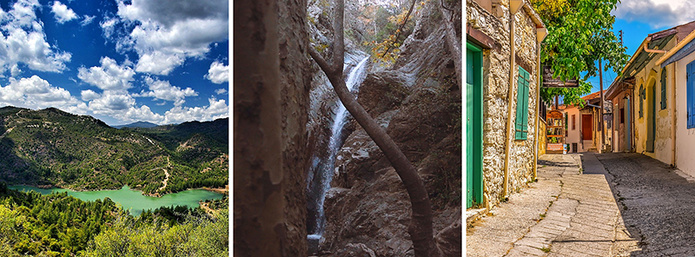
Leaving the coast for the heights of the Troodos is one of the circuit’s most remarkable moments. The itinerary passes through the village of Omodos, its wine press “Linos,” and the Church of the Holy Cross, with a tasting of local wine. The next day leads to Kykkos Monastery, the island’s most famous, which houses the icon of the Virgin attributed to the Evangelist Saint Luke, then to the tomb of Archbishop and first President of Cyprus, Makarios III. The route then winds through a succession of mountain villages and Byzantine churches listed by UNESCO: Saint Nicholas of the Roof in Kakopetria, famed for frescoes from the 10th and 17th centuries, then the church of Asinou, dating from the 12th century. These stops reveal another Cyprus, a more contemplative one, where sunlit landscapes and the quiet of the upland plateaus offer a new perspective on the island.


Circuit Chypre francophone : massif du Troodos, cascade et ruelles du village d'Omodos © Creative Tours Cyprus


Nicosia, Kyrenia and Bellapais: crossing the line to understand the island

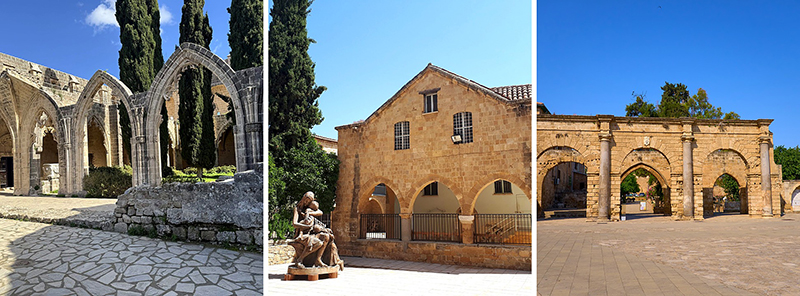
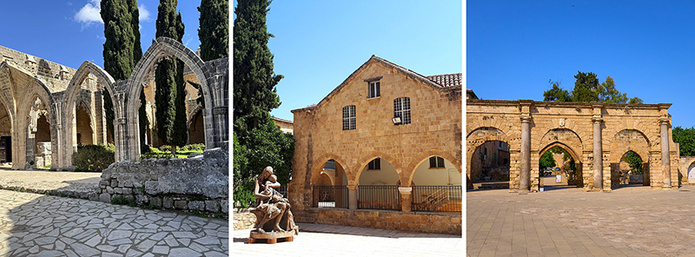
The capital, Nicosia, sits at the heart of the circuit. Since the Middle Ages it has been alternately governed by the Templars, the Lusignans, and the Ottomans, and a visit to the ancient Cathedral of Saint Sophia bears that memory. The journey continues to the north with Saint Hilarion Castle, a fortified refuge perched at 732 metres, then Kyrenia and its Venetian fortress-palace, at the foot of which stands the small Byzantine church of Saint George. The visit to Bellapais Abbey, founded in the 12th century by the Premonstratensian order, ranks among the most striking moments of the itinerary. It is precisely this borderless passage that gives the circuit its strength: it allows Cyprus to be read in the continuity of its history, without truncating the tale of its great Venetian, Lusignan and Byzantine chapters.


Roundtrip Chypre sans frontières : abbaye de Bellapais, Nicosie et porte vénitienne de Famagouste © Creative Tours Cyprus


Flavors and the art of living: the circuit’s guiding thread

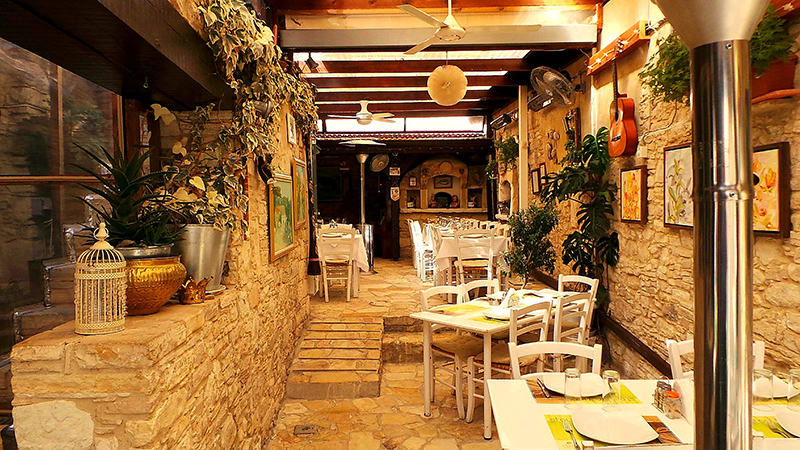
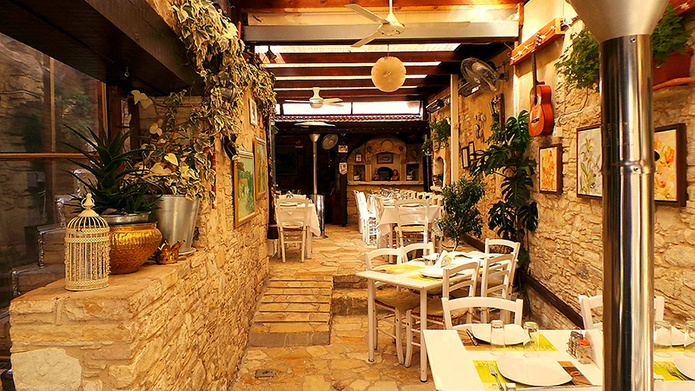
Beyond the sites, this circuit places significant emphasis on the human and gastronomic dimension of Cyprus. Tasting loukoum in Yeroskipou, local wine in Omodos, lunches en route in chosen tavernas, and above all a tavern evening in Larnaca with a dinner featuring traditional Cypriot flavors: meze, grilled halloumi, Koupepia, and kleftiko. The circuit concludes in Larnaca with visits to Saint John, the Byzantine Museum, the Cyprus Archaeological Museum — the island’s richest museum — the village of Kiti and its Angeloktisti church, the salt lake with its view of the Hala Sultan Tekke mosque, and the Church of Saint Lazarus. At every step, guidance is provided in French by our Cypriot guides certified by the Deputy Ministry of Tourism, ensuring a fluent, structured, and immediately comprehensible experience for French-speaking clients — which, on the Cypriot market, is our distinctive feature, as highlighted in our recent press release published on TourMaG.


Saveurs chypriotes : un dîner en taverne traditionnelle, étape gourmande du Roundtrip francophone © Creative Tours Cyprus