Foreign visitors planning a stay in Kenya could soon have to contend with a new requirement before departure. The Kenyan government’s proposal aims to strengthen the medical coverage of people coming from abroad, as travel to the country remains particularly popular for safaris and expansive natural landscapes. But the measure is already stirring debate even before any potential implementation. The judiciary must now examine several points that could determine its future.
A medical coverage with very specific guarantees
The project applies to foreign nationals coming to Kenya for less than twelve months. It provides that they hold a travel health insurance with a minimum coverage of $50,000, or about €42,900. But the total amount is not the only feature of the scheme. The text details the various expenses that should be covered. The coverage would thus include up to $20,000 for medical costs, $25,000 for emergency medical transport, and $5,000 for the repatriation of remains. The scheme also provides $1,000 for mental health care and $300 for prescribed medications.
Travelers could subscribe to their policy before departing, from their country of origin. Another possibility would be to obtain insurance upon arrival, at certain designated entry points in Kenya. In both cases, the text governs the companies that may offer these policies: the insurances “must be provided by insurers licensed and authorized under the Insurance Act” , reports the Daily Nation.
This obligation would have a different scope from the optional insurances usually offered to travelers. High-end bank cards can, for instance, include medical guarantees or cover emergency evacuation, but the terms and ceilings depend on the contract. Some travel insurances, meanwhile, offer much broader international coverage. However, it remains to be seen whether these usual insurances, whether purchased separately or included with a bank card, will meet Kenya’s new requirements.
A measure suspended prior to its entry into force
However, the project has not (yet) become an obligation for visitors. Before its implementation, the Kenyan judiciary decided to temporarily suspend the arrangement. A hearing is scheduled for September 16 to examine more precisely the challenges raised against this new policy. Opponents of the project highlight in particular the lack of a sufficiently clear framework to govern its application. Questions also arise regarding the handling of travelers’ personal information and the protection of their data. These points will need to be reviewed before determining whether the obligation can actually be enforced.
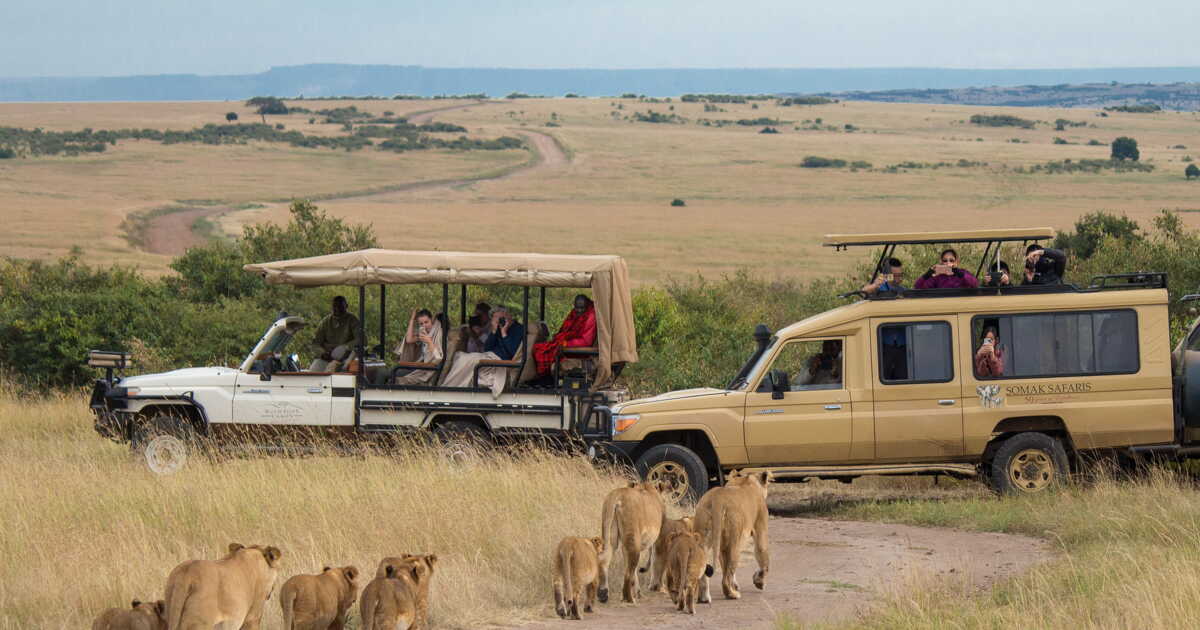
The stakes are far from trivial for a country that attracts visitors every year mainly for its wildlife and landscapes. The current period corresponds notably to one of the most sought-after times for safari enthusiasts: the great migration. In Masai Mara, wildebeest, zebras and gazelles traverse the plains as they move seasonally, with river crossings that are especially spectacular. The phenomenon typically unfolds from mid-July to mid-September, sometimes into October.
Other regions offer the possibility to discover different wildlife. In Samburu National Reserve in northern Kenya, visitors can notably look for the five species grouped under the name “Special Five”: the reticulated giraffe, Grévy’s zebra, Somali ostrich, Beisa oryx and gerenuk. Nairobi rounds out this panorama with an urban stop that also grants access to several sites devoted to wildlife. For travelers planning a stay in Kenya, the situation remains to be watched. As long as the suspension is in effect and until the court renders its decision, the final terms of this potential mandatory insurance are not yet set.
The brand Destination by Hyatt strengthens its presence in Greece with the opening of the Parian Chronicle Hotel Paros.
Co-developed with the management company SWOT Hospitality, this new contemporary establishment of 50 rooms is set on the island of Paros, in the heart of the Cyclades archipelago.
This project marks the first insular presence for this particular brand, whose global network now comprises 25 hotels and complexes operating in about ten countries.
This new opening comes amid strong growth for the national travel market, which recorded nearly 38 million visitors during the 2025 season.
Located in Kampos village, near Parikia airport and port, the hotel targets travelers aged 13 and older.
“ We are delighted to celebrate the brand’s first opening on a Greek island,” said Manuel Melenchón, Managing Director EMEA South at Hyatt, in a press release.
A private accommodation offering complemented by local dining services
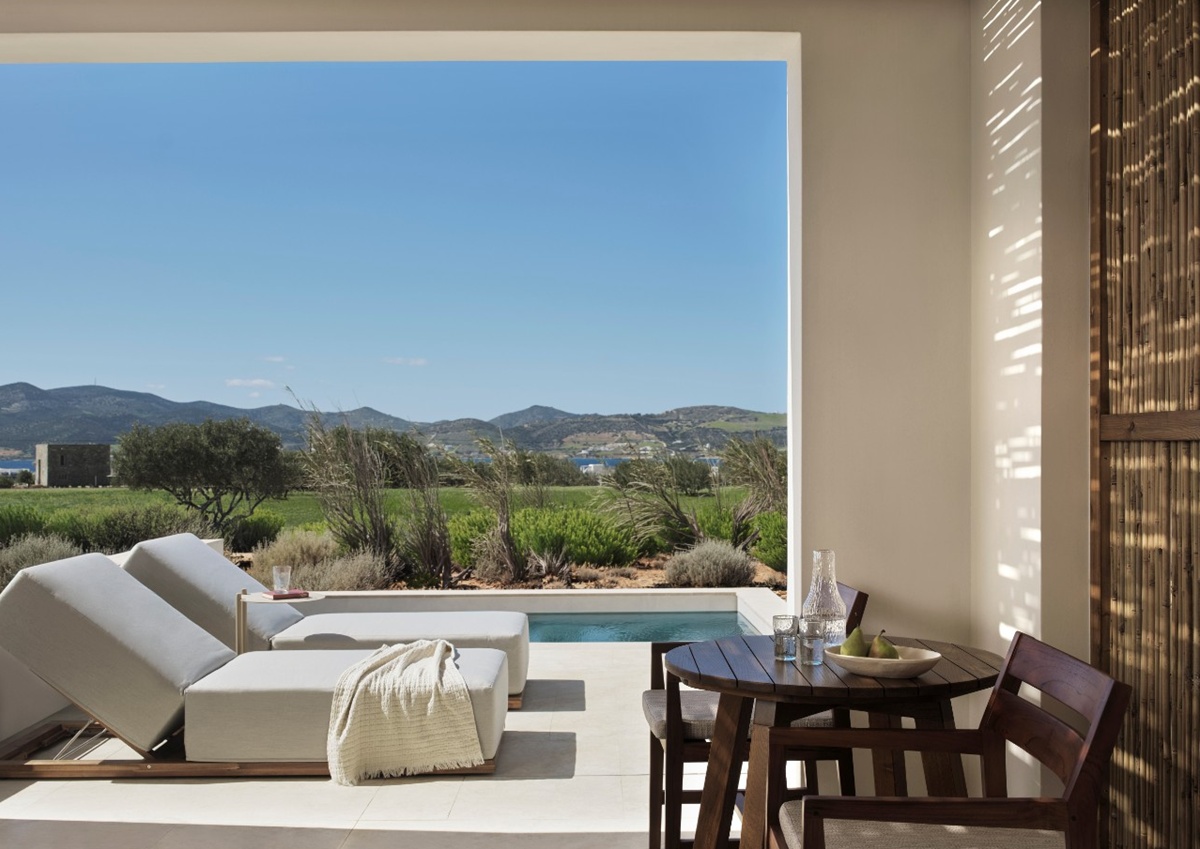
The design of the accommodations, entrusted to the architectural firm Makridis Associates, uses natural materials such as stone, wood, and linen to echo the Cycladic architectural tradition.
Across the total of 50 rooms and suites, ranging in size from 30 to 42 square meters, 39 units feature a private swimming pool, while the others benefit from an outdoor jacuzzi installed on private terraces or patios.
The catering aspect revolves around the signature restaurant NAAO, which structures its menus around the island’s artisanal and agricultural productions.
The lunch service, dubbed The Parian Table, highlights seasonal dishes to be shared, while the dinner offerings rely on regional culinary techniques such as curing, sun-drying, and grilling, accompanied by a selection of wines from the archipelago.
Spa facilities and activities centered on island craftsmanship
The resort complex includes a 120 square meter wellness hub, centered around the Nipson Spa.
This area houses a fitness center, two non-gender-specific saunas, a double treatment room, and relaxation lounges.
The treatment protocols and body therapies offered at the facility draw on the therapeutic methods of ancient Greece.
In addition to these wellness facilities and the large outdoor pool, the property offers a program of cultural excursions, with discovery routes through traditional villages and regular encounters with Paros’ winemakers and artisans.
To read: Hyatt announces three new openings in Italy
Créé en 2015 à l’initiative de l’État, le Contrat de Destination Provence rassemble aujourd’hui 34 partenaires autour d’une ambition commune : renforcer l’attractivité internationale de la Provence tout en favorisant un développement touristique plus équilibré.
Pour Isabelle Brémond, directrice générale de Provence Tourisme, cette démarche collective constitue l’une des principales réussites du dispositif.
Au fil des années, le contrat a non seulement conservé ses partenaires historiques, mais il a également accueilli de nouveaux acteurs, à l’image des Saintes-Maries-de-la-Mer.
« Nous sommes aujourd’hui le contrat de destination qui réunit le plus grand nombre de partenaires en France », souligne-t-elle, mettant en avant un fonctionnement fondé sur la coopération plutôt que sur une structure administrative lourde.
Seasonal Balancing Without Distorting the Destination
Si la promotion internationale reste au cœur des missions du Contrat de Destination, la stratégie a sensiblement évolué ces dernières années.
L’objectif n’est plus uniquement d’attirer davantage de visiteurs, mais de mieux répartir la fréquentation dans le temps et sur l’ensemble du territoire.
Pour la directrice générale de Provence Tourisme, cette évolution répond autant aux attentes des habitants qu’à celles des voyageurs.
« La Provence est agréable toute l’année », rappelle-t-elle, estimant que développer les séjours hors saison permet à la fois de limiter la pression estivale et de créer de nouvelles retombées économiques pour les territoires.
Cette stratégie repose également sur une meilleure connaissance des clientèles internationales. Les campagnes sont désormais construites à partir d’analyses croisées portant sur les habitudes de voyage, le pouvoir d’achat ou encore les dessertes aériennes.
Les marchés de proximité, comme l’Espagne ou la Suisse, font ainsi l’objet d’actions spécifiques afin de renforcer leur fréquentation en dehors des mois d’été, tandis que les marchés plus lointains sont développés en lien avec les stratégies des aéroports de Marseille et Toulon.
Artificial Intelligence Enters Tourism Promotion
Parmi les nouveaux chantiers figure également l’intelligence artificielle. Pour Isabelle Brémond, les IA génératives deviennent progressivement un canal incontournable pour préparer un voyage, et bientôt pour réserver directement des prestations touristiques.
L’enjeu est donc de s’assurer que les données des hébergements, activités et destinations soient correctement référencées afin qu’elles apparaissent dans les réponses fournies par ces nouveaux outils.
Pour autant, la responsable estime que la technologie ne remplacera jamais l’expérience vécue sur place. « L’intelligence artificielle facilite l’information et demain la réservation, mais elle ne remplacera jamais les rencontres, la culture, la gastronomie ou l’hospitalité », insiste-t-elle.
Lire aussi : L. Bertounèche (Genial) : « L’intelligence artificielle ne remplacera jamais l’expérience du territoire »
Au-delà de ces évolutions technologiques, la feuille de route reste inchangée : préserver ce qui fait l’identité de la Provence.
Cela passe par le développement des mobilités douces, la valorisation des savoir-faire locaux, des circuits courts et d’un tourisme respectueux des habitants comme de l’environnement.
Pour Isabelle Brémond, la force de la destination réside avant tout dans son identité. Une Provence qui, rappelle-t-elle, est « tout un monde », façonnée par son histoire, ses paysages, son art de vivre et sa culture. Un patrimoine qu’il convient désormais de promouvoir sans le dénaturer.
Guatemala is a land of contrasts. A country that intrigues as much as it fascinates, a destination that never leaves anyone indifferent… and one that travel agencies sometimes struggle to highlight in a brochure.
To begin with, you need to know how to place it on a map. Believe us, it isn’t always obvious (but yes, you know, just below Mexico…)
Next, you must know how to “tell” this destination, to bring it to life in travelers’ imagination. Heart of the Maya World, a country of eternal spring, land of volcanoes, a country of a thousand colors.
Each expression speaks of its identity… but only partly.
Finally, you have to know how to slip Guatemala into the ear of a traveler who perhaps wouldn’t have thought of it first.
Guatemala isn’t always the destination travelers ask for…
It is the one they choose.
Guatemala’s Identity
Cradle of the Maya civilization:
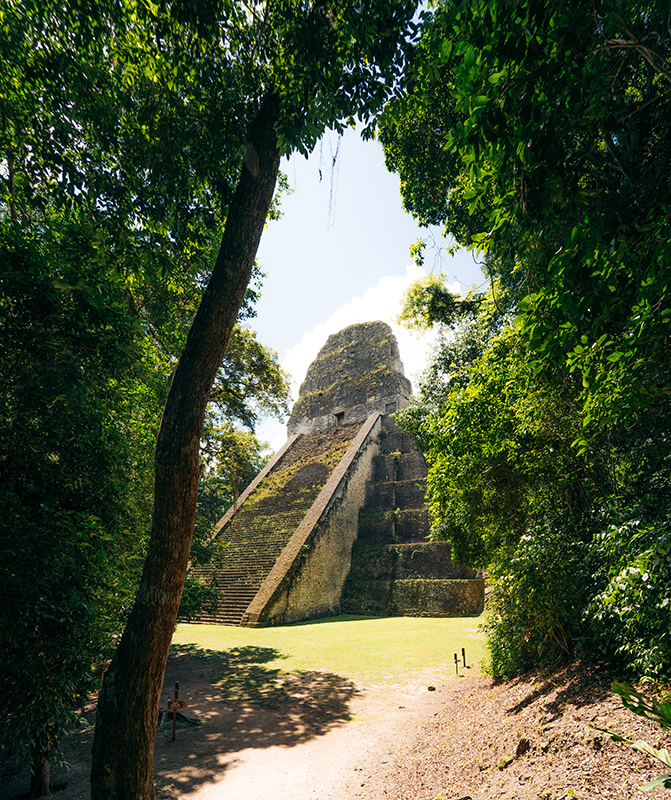
Guatemala is foremost one of the principal cradles of the Maya civilization. The archaeological heritage is outstanding, and it often serves as a gateway for travelers. Of course, there is Tikal, whose temples rise from the jungle as if drawn from the City of Gold of our childhood.
Our local experts select the sites to visit according to each traveler’s profile. Some will dream of witnessing sunrise at Tikal. Others will prefer the view from the era of the Red Hands at Yaxha. The more adventurous will appreciate arriving by canoe at Aguateca, while archaeology buffs will recall meeting one of the archaeologists who uncovered Copán in Honduras.
A living Maya culture:
Many travelers imagine they are discovering a vanished civilization. This is often the first idea we aim to dispel when proposing a Guatemala journey.
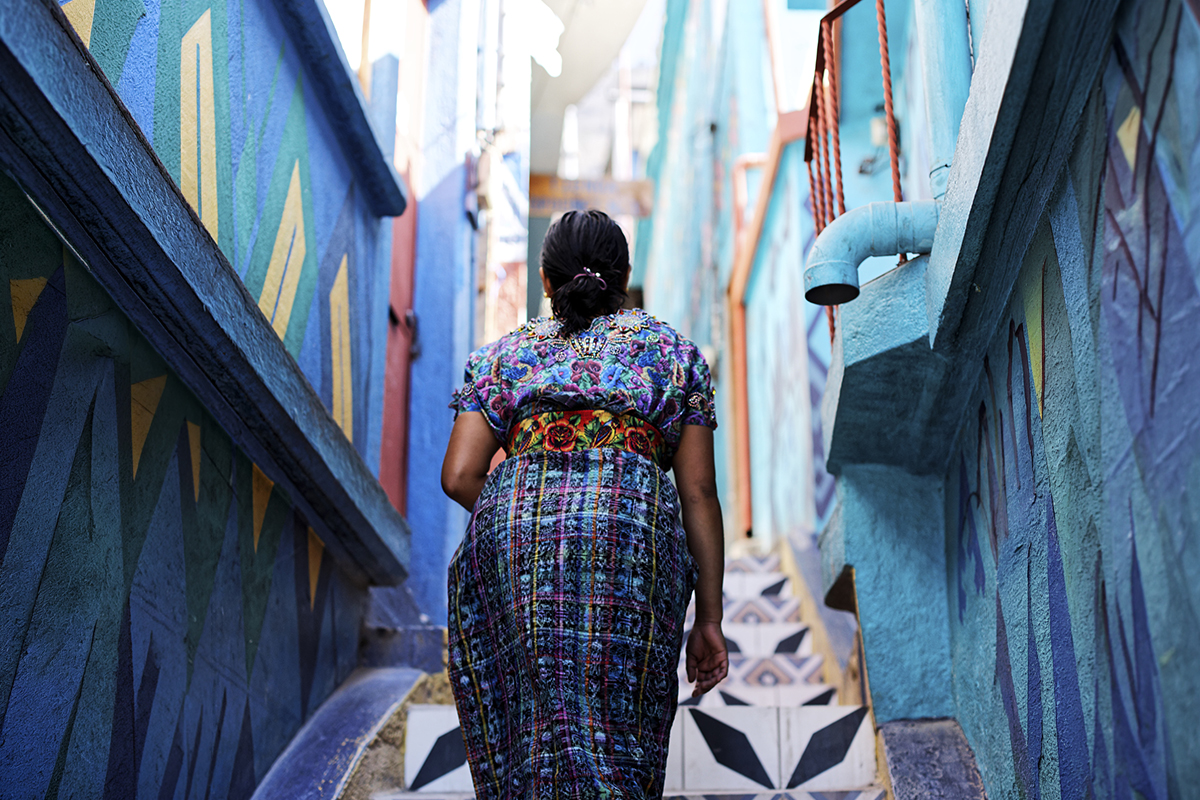
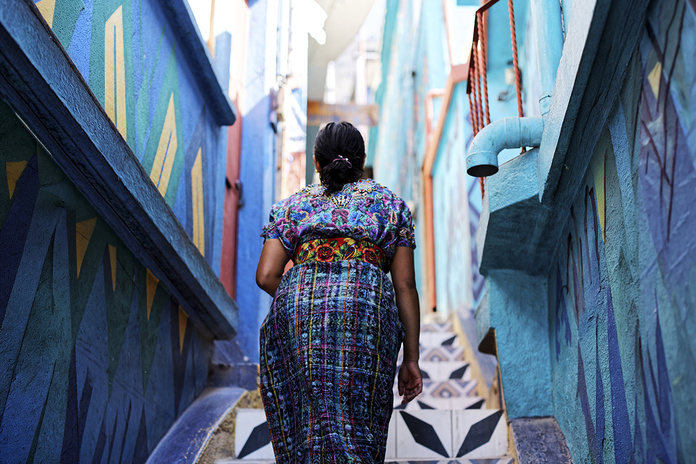
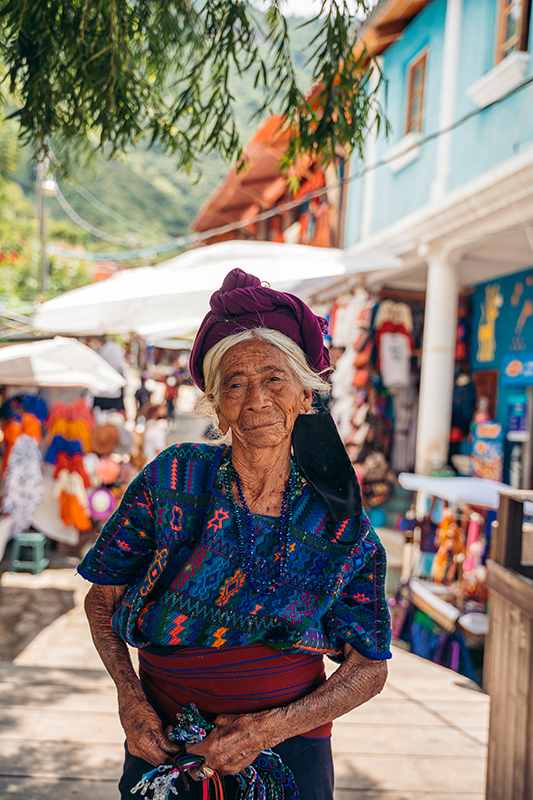
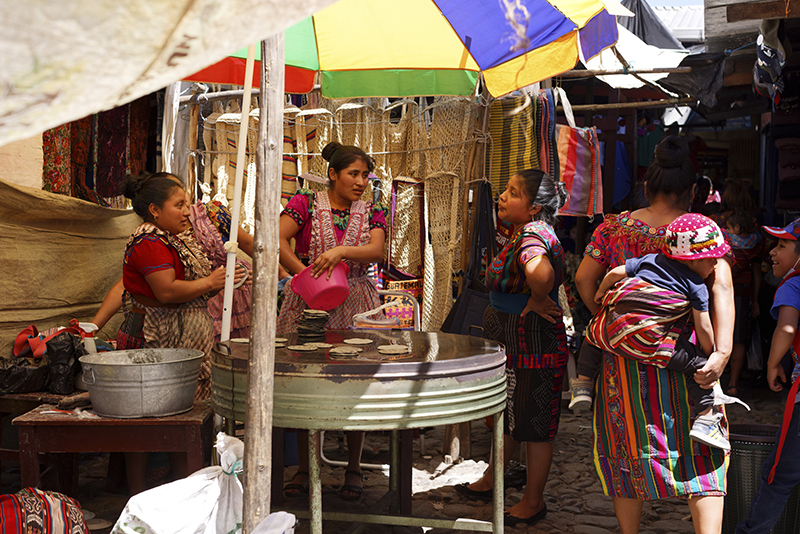
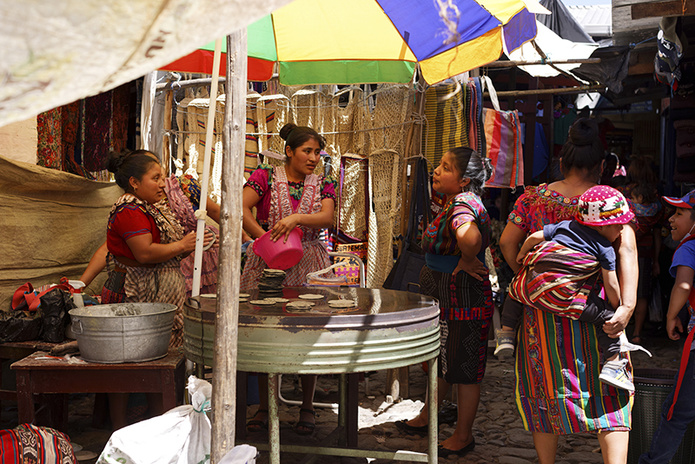
The Maya culture isn’t a thing of the past; it is lived daily. One of the 22 officially recognized Maya languages is spoken here, traditional clothing is worn day-to-day, and spiritual guides occupy an important place in the communities.
This is also why we like to weave in visits to local markets along our itineraries. They are more than mere stops; they immerse you in this living culture, among artisans, producers, daily life scenes, and everyday encounters.
A land of water and fire
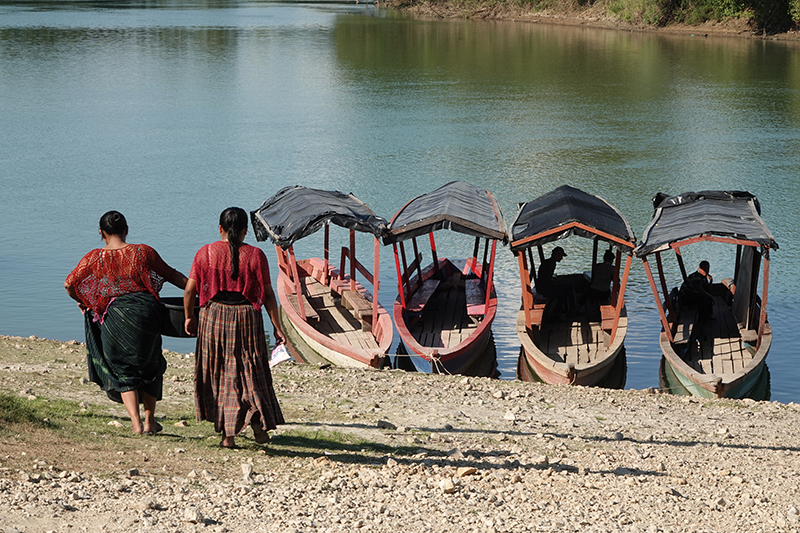
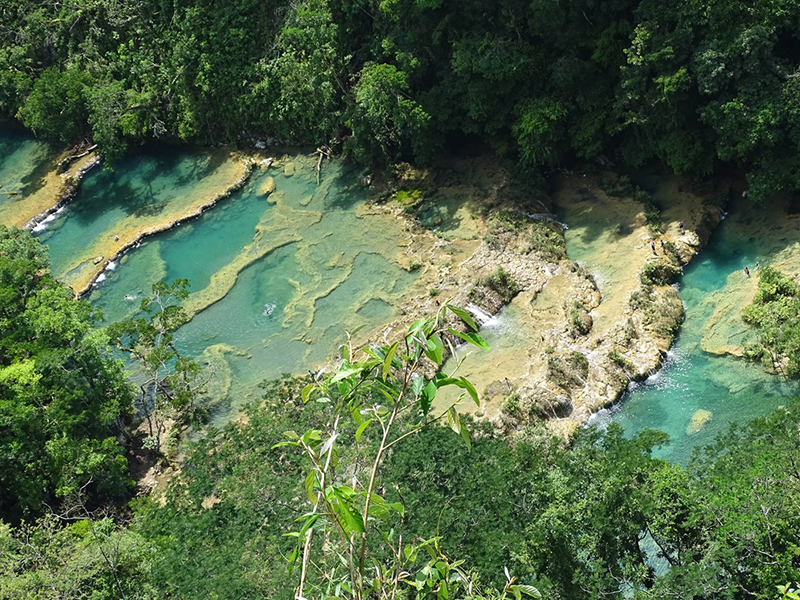
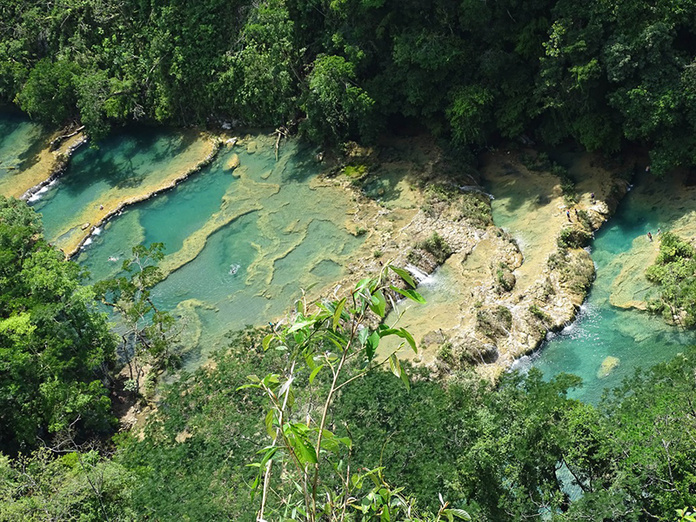
Culture is the guiding thread of the journey, while the landscapes provide the setting. In just a few hours of driving, you travel from the highland Maya villages to the Petén rainforest. The lakes and waterfalls offer refreshing breaks, and some hotels are reached by boat.
Volcanoes add drama on the Altiplano. Sports-minded travelers can venture to the Acatenango Volcano to witness the massive eruptions of the Fuego Volcano. Others can enjoy Terra Guatemala’s recommendations to view the spectacle from a terrace in Antigua.
In Petén, the forest reclaims its dominance. The howler monkeys cry out during visits, toucans frequently cross the canopy, and for the luckiest, traces of the jaguar remind us that the king of the forest is never far away.
For families
Children rarely remember the names of archaeological sites. They do, however, recall the howler monkeys at dawn, the toucans spotted in the canopy, or an improvised football game with village kids.
In Guatemala, wanting to see everything is often the best way to miss the country. We regularly advise against a very well-known stop, simply because it doesn’t match the traveler’s profile or the desired pace of the trip.
For travelers seeking exclusive experiences
Guatemala remains a relatively intimate destination. This is exactly what allows us to offer highly exclusive experiences.
Sleeping in an old convent in Antigua, staying at a jungle lodge, or ending a trip on a private island in Belize find their place in a tailor-made itinerary.
Exclusivity also comes from experiences that stand apart from a standard circuit. For example, a night-time exploration of an archaeological site swallowed by the jungle, and stargazing from the site’s astronomical observatory.
A destination unlike any other
Each Central American destination has its own personality. Some captivate primarily with their archaeological heritage, others with their biodiversity.
Guatemala remains less known than some regional destinations. It blends culture, nature, and a strong human dimension. It is often this balance that convinces travelers…
For an agency, talking about Guatemala is also an opportunity to propose a less expected destination, one that steps away from the most traditional itineraries.
The Importance of the Local Expert
Guatemala is a destination that cannot be improvised. Here, the choice of the receptive operator makes the difference, even more than elsewhere.
A successful trip rests on a multitude of details: the right itinerary, the right pace, the right driver, the right guide, or the right hotel. Sometimes you have to be firm and know how to say no to a traveler who asks for too much.
This is our trade. Based in Antigua, our team is on the ground year-round. We continuously open new addresses, refine our itineraries, and keep exploring the country. This work never stops.
Our role doesn’t end with trip planning. We stay close to travelers to assist them, advise them, reassure them… before and during the journey.
We hold a simple conviction: a trip to Guatemala is an itinerary tailored to a specific person. Every journey must be unique.
Contact us to access a selection of customized circuits:
Cyprus’ climate is one of the major assets for golfers visiting the destination. With nearly 340 days of sunshine each year, a spring that begins as early as February, and an autumn that lasts until November, the island offers a playing season that is exceptionally long compared with major European golf destinations. In winter, daytime temperatures typically stay between 15 and 20 °C along the coast, allowing continued comfortable play while northern Europe endures the cold. The island’s five courses are concentrated in the southern half, within reasonable reach of Paphos International Airport (PFO) and Larnaca International Airport (LCA). Four courses lie in the Paphos region, less than a thirty-minute drive from the airport; the fifth, Limassol Greens, is located in Limassol. Creative Tours Cyprus supports its French-speaking partners in discovering these five golf destinations, offering a turnkey service that includes transfers, tee-time bookings, and guided excursions in French.
Paphos, the capital of Cypriot golf: four signature courses
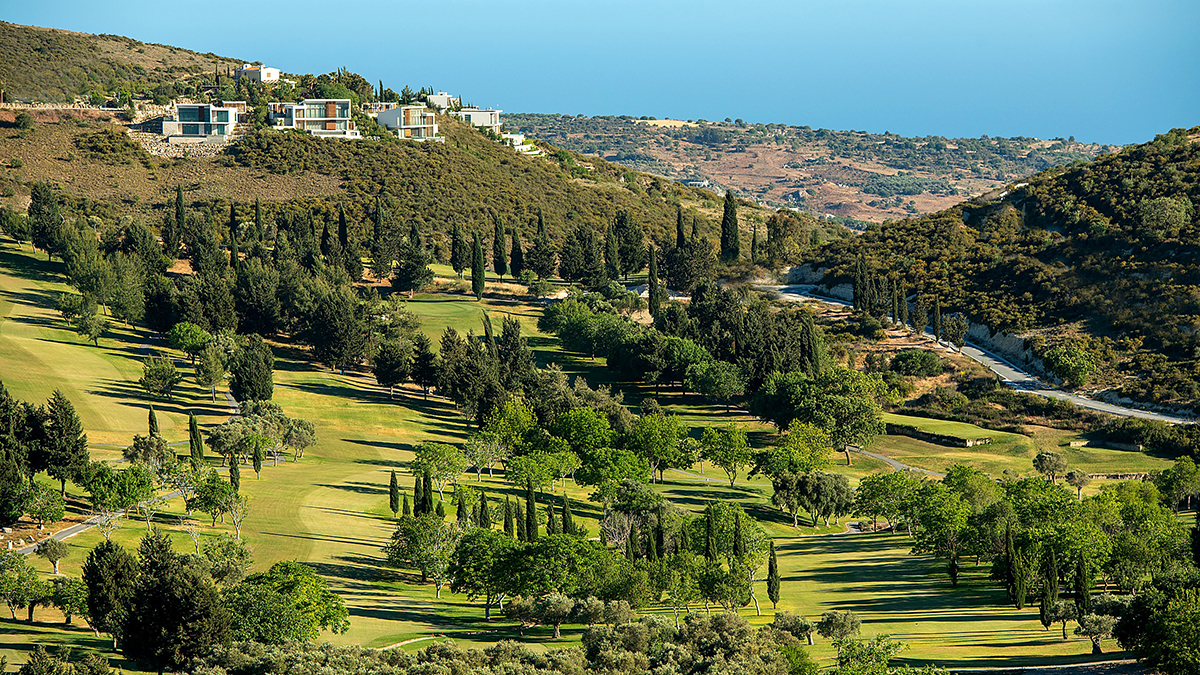
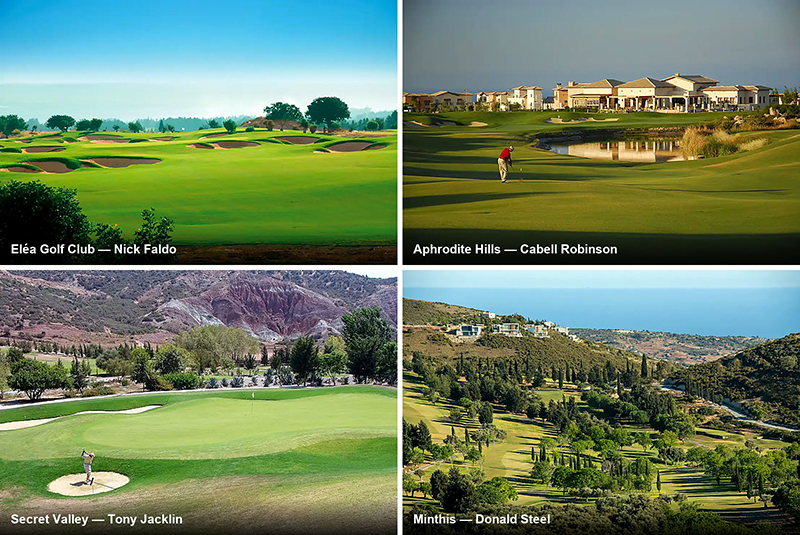
The Paphos region concentrates four of the island’s five courses, each designed by an internationally renowned architect. Eléa Golf Club, about five kilometres from downtown Paphos, was designed by Nick Faldo and opened in October 2010. This par-71 course features a 2,260 m² clubhouse and an academy with a 300-metre driving range, a facility geared toward both seasoned players and learners. Aphrodite Hills, in Kouklia, is probably the destination’s best-known signature: designed by Cabell Robinson and inaugurated in November 2002, this par-71/70 course spans 6,299 metres within a 234-hectare resort. Buggy use is mandatory there. Secret Valley, also located in Kouklia about 18 km east of Paphos, was designed by Tony Jacklin in collaboration with Erhardt/Vijhalmsson. This par-71 course with 419 Bermuda grass greens offers a feature sought by some clients: a three-hole illuminated loop, playable on summer evenings, as well as simulators. Finally Minthis, at Tsada, perched 550 metres above sea level on the site of a XIIth-century monastery: originally designed by Donald Steel in 1994, it has been fully renovated by the Mackenzie & Ebert firm. This par-72 course is the first in Cyprus to obtain GEO (Golf Environment Organization) certification and lies within a Natura 2000 zone.
Limassol Greens: the island’s fifth course, on the southern coast
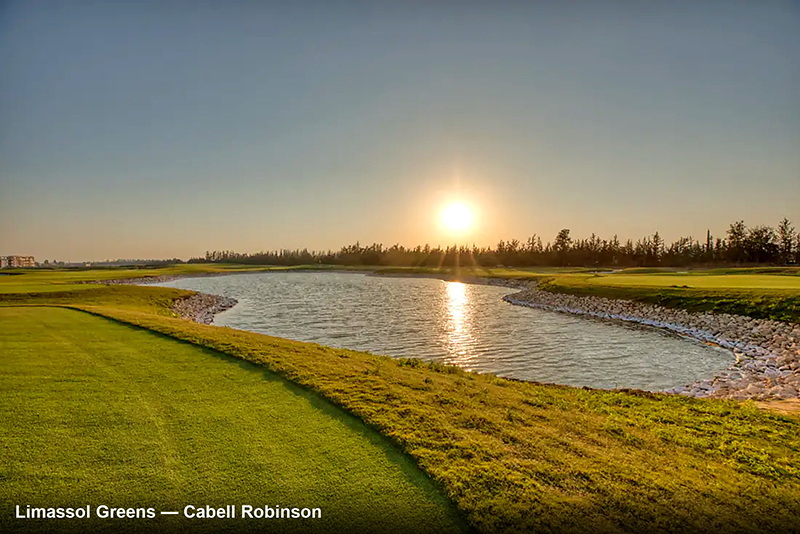
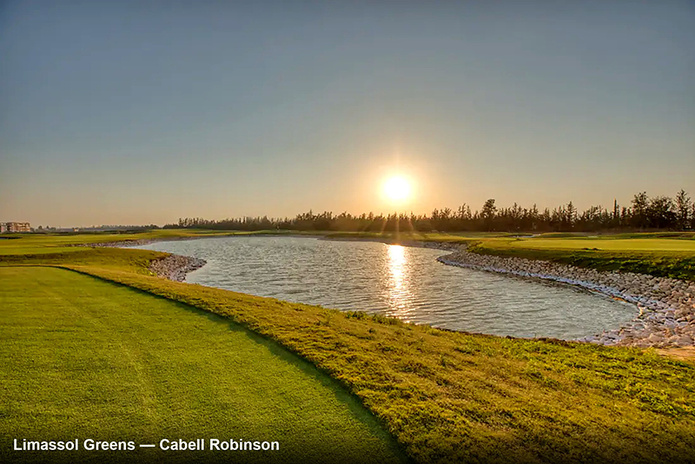
For a long time, Cyprus’ golf offer was centered on the Paphos region; it has recently expanded to Limassol with the opening of Limassol Greens, the island’s fifth course. Designed by Cabell Robinson, it spans roughly 6,300 metres, par 71, with five tee positions per hole to cover all playing abilities. The course blends two types of grass: Bermuda Tahoma 31 on the fairways and Bentgrass 007 on the greens, a combination recognized for delivering excellent playing quality even in hot weather. For Francophone partners, Limassol Greens is a strategic asset: it complements Cyprus’ golf portfolio by offering an alternative to Paphos, nearer to Limassol’s major five-star hotels, and rebalances the destination’s geography for a stay that combines golf with Mediterranean city life.
Required handicaps, transfers and golf practice in Cyprus
For agencies building golf holidays, here are a few practical points to know about the destination. The four Paphos courses require a handicap of Men 28 / Women 36 for access. Limassol Greens applies a somewhat more open rule, with a handicap of Men 36 / Women 45, making it an entry point for more intermediate players. The peak golf season runs mainly from March to November, with busy periods in spring and autumn — the European interseasons — and a winter season that remains playable, particularly sought after by Nordic and British clients. On the logistical side, Creative Tours offers dedicated transfers from the Paphos region, Aphrodite Hills Hotel, and Pissouri to each of the five courses, by car and air-conditioned coach with a Francophone welcome.
As a Francophone incoming operator in Cyprus, our golf expertise rests on a precise mastery of green-fee availabilities and rates, updated season after season. We negotiate conditions tailored to our partners and design tailor-made stays centered around golf: lodging in a golf resort (Aphrodite Hills, Elysium, Minthis) or in a 3- to 5-star hotel, in Paphos and Limassol; personalized transfers to the courses; and excursions to Cyprus’s highlights — Tombs of the Kings, Baths of Aphrodite, Akamas, wine tastings, Cypriot flavors — guided by our Francophone Cypriot guides certified by the Cyprus Tourism Office. Our take is simple: these five courses do not compete, they complement each other through architectural signatures, geography, and playing profiles. As highlighted in our latest press release published on TourMaG, Creative Tours remains the island’s only 100% Francophone receptive operator — a single point of contact for any golf stay in Cyprus. For any quote or inquiry about a golf stay combining one or more of these courses, our partners can reach us at [email protected] for individuals and [email protected] for groups.
Hyatt Hotels Corporation a ouvert le Beldersoy Resort and SPA, marquant l’arrivée de sa marque Destination by Hyatt en Ouzbékistan.
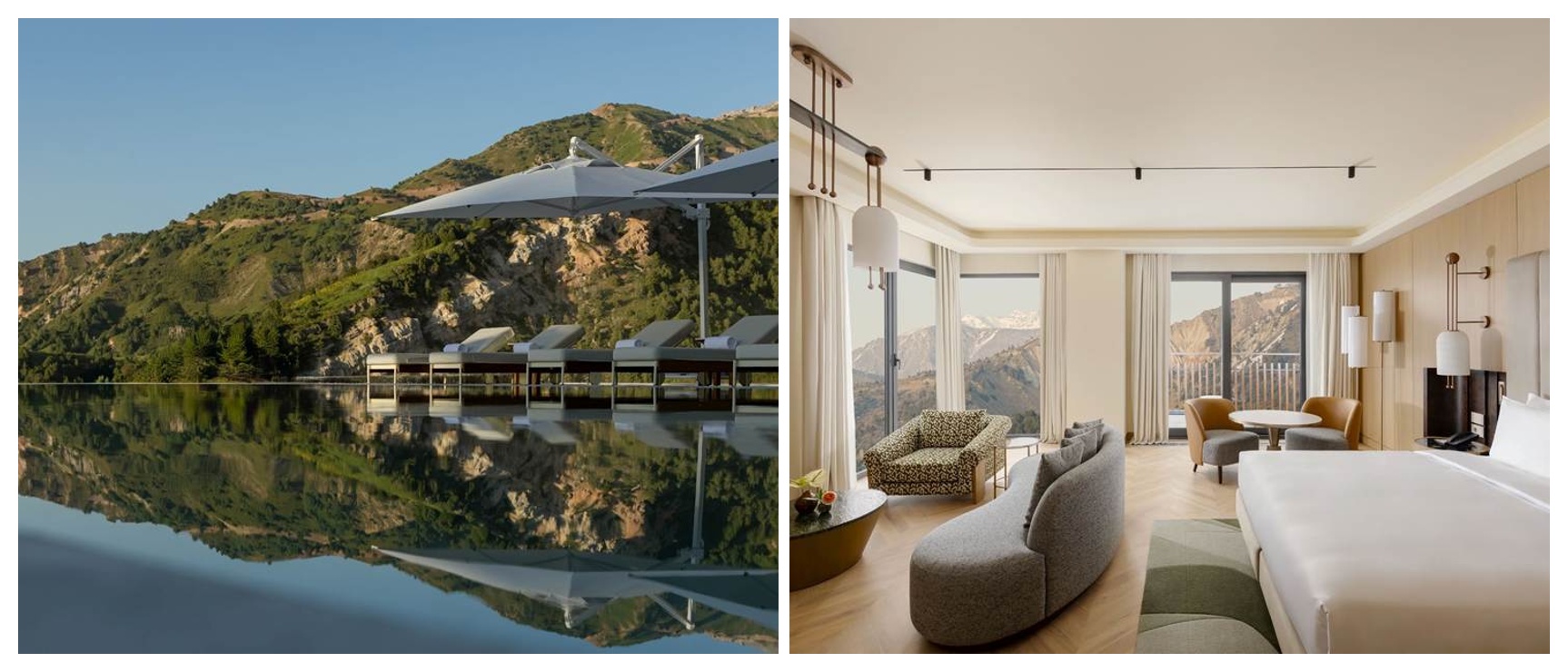
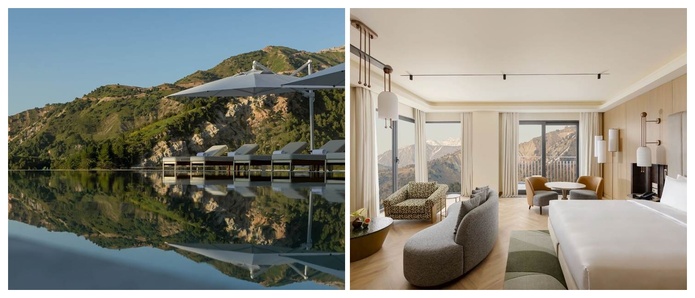
Installé dans la région de Chimgan-Bostanliq, à proximité de la capitale Tachkent, ce nouveau complexe propose un accès direct aux pistes de ski et aux sentiers de randonnée ainsi qu’une offre de soins inspirée de la thalassothérapie d’altitude.
Michel Morauw, Managing Director Hyatt EAME North, explique l’orientation de cet établissement : « Beldersoy Resort & SPA a été soigneusement conçu pour refléter la culture alpine ouzbèke, en phase avec notre vision qui consiste à associer une profonde appréciation du patrimoine local à un design contemporain distinctif et à un service accueillant. »
Le design intérieur du resort s’inspire de l’environnement des montagnes de Chimgan et du patrimoine culturel ouzbek. La palette de couleurs s’appuie sur des teintes naturelles telles que la pierre, le sable, l’argile et le vert profond, associées à des matériaux bruts.
Dans les chambres, les clients disposent d’un espace de travail, d’une douche à l’italienne et d’un écran de 55 pouces.
Integration of Wellness, Culinary Offering, and Environmental Management
L’offre de bien-être repose sur un concept de spa qui applique des principes de thalassothérapie en altitude. Les installations comprennent plusieurs piscines, dont un bassin intérieur d’eau de mer enrichi en sels minéraux, un bassin de flottaison riche en magnésium et une piscine extérieure à débordement offrant une vue sur les reliefs.
Côté restauration, l’établissement dispose de plusieurs adresses, dont Nafis, qui propose des spécialités de saison tout au long de la journée.
Pour l’organisation d’événements, le resort propose deux salles de réunion et une grande salle de bal baptisée Tian Shan, configurées pour accueillir des conférences, des séminaires d’entreprise ou des réceptions privées. Sur le plan de la durabilité, la direction met en avant des choix d’ingénierie spécifiques visant à réduire la consommation d’énergie, à traiter l’eau de manière responsable et à préserver les ressources naturelles du site.
Read also: Destination by Hyatt brand expands to the island of Paros
4. Dive into the Heart of Ranomafana National Park
5. Venture into the Bemaraha Tsingy Strict Nature Reserve
6. Experience a Cultural Immersion in Antananarivo
7. Discover Nosy Sakatia Island
8. Visit Lemurs’ Park
9. Hike in Mantadia National Park
10. Marvel at Tsingy Rouge Park
Is Madagascar Worth Visiting? A Destination with Unique Biodiversity to Discover with Preparation
What Budget to Plan for 15 Days in Madagascar? Between Local Realities and Logistical Costs
How Much Time Does It Take to Visit Madagascar? The Scope of a Trip on an Island Continent
What to Do in Madagascar with Children? A Pedagogical Adventure at the Heart of Accessible Nature
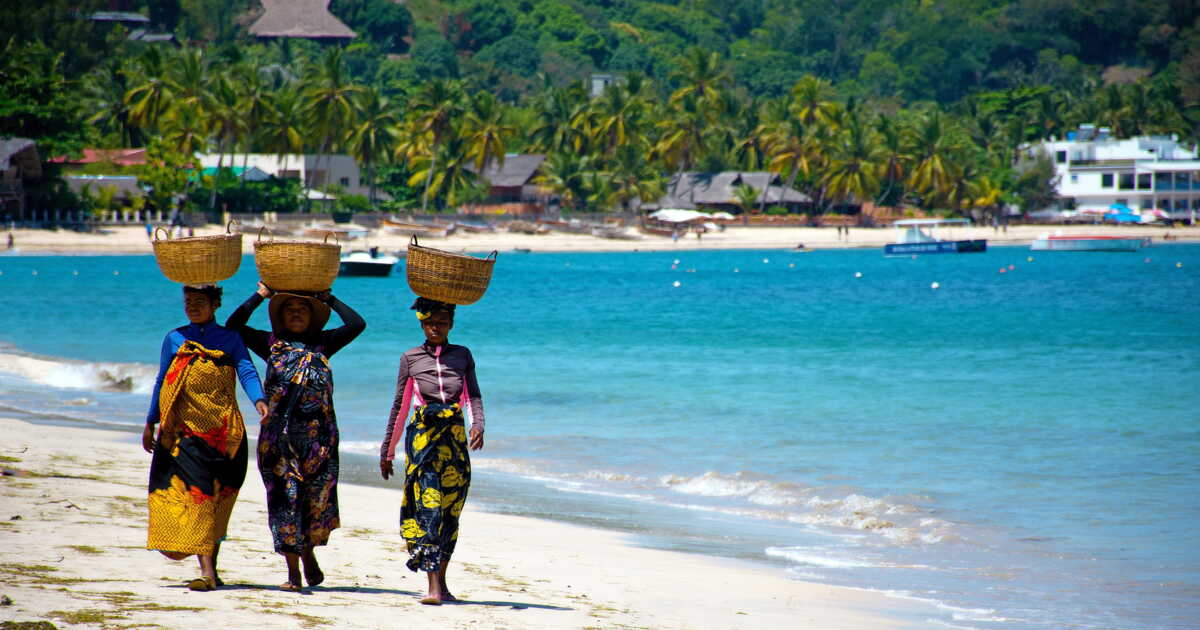
Off the African coast, Madagascar unfolds as a land where each region reveals a different face. From hikes in spectacular ranges, to paradisiacal islands and encounters with wildlife found nowhere else, the island offers a multitude of experiences that captivate both nature enthusiasts and travelers in search of authenticity.
1. Lose Yourself in Isalo National Park
Located in the southwest of Madagascar, the Isalo National Park is one of the island’s most iconic natural sites, renowned for its spectacular rock formations, its deep canyons and its semi-desert landscapes with western-style scenery.
Spanning over more than 80,000 hectares, this eroded sandstone massif houses a remarkable biodiversity, at the crossroads of , offering a privileged viewing framework for numerous endemic species, notably lemurs, chameleons or rare birds.
By combining geological advantages, ecological richness and accessibility, the Isalo Park meets the expectations of travelers keen to discover the diversity of Malagasy landscapes while engaging in responsible and guided tourism.
2. Walk the Fine White Sands of Nosy Be
Nosy Be, an island located northwest of Madagascar, stands as one of the major seaside destinations in the Indian Ocean, famed for its white-sand beaches, its turquoise waters and its atmosphere conducive to relaxation as well as marine exploration.
The conditions are ideal for snorkeling or scuba diving, with pristine coral bottoms hosting a diverse fauna, ranging from tropical fish to sea turtles. The island, however, is not limited to its coast: a trip to the Lokobe Nature Reserve allows observing endemic species in a protected forest ecosystem.
This site complements the experience by offering a broader view of Malagasy biodiversity, accessible from a territory that is welcoming, preserved and well-structured for nature tourism. Nosy Be thus meets the expectations of travelers seeking a balance between seaside leisure, wildlife observation and ecological discovery in a safe setting.
3. Be Enchanted by the Avenue of the Baobabs
Near Morondava, on Madagascar’s west coast, the Avenue of the Baobabs stands as one of the island’s most iconic natural sites, designated a natural monument. Lined along a red dirt track, these Grandidier’s baobabs, reaching up to 30 meters tall, form a striking perspective, especially at sunset, when the tall trunks cast oversized shadows on an almost motionless landscape.
True place of contemplation, this avenue is loved by photographers and nature lovers, for both its aesthetics and symbolic significance. These trees, remnants of a once-dense forest now vanished, form Madagascar’s living heritage, carrying myths, oral traditions and major ecological concerns. A visit there offers more than a visual moment: it is a silent encounter with the island’s natural and cultural history, a must for those seeking to understand the soul of Malagasy scenery.
4. Dive into the Heart of Ranomafana National Park
Listed as a UNESCO World Heritage site, the Ranomafana National Park, located in the central-eastern region of Madagascar, represents one of the island’s green lungs richest in biodiversity. Its humid tropical forest, typical of the eastern region, hosts an exceptional concentration of endemic species, including several lemur species. The marked trails, winding between waterfalls, tree ferns and giant bamboos, offer a full sensory immersion at the heart of an ecosystem still largely preserved.
The rare birds, the chameleons and the lush tropical flora compose an ecological environment of great complexity, conducive to naturalist observation as well as scientific research. By combining biological richness, scenic beauty and educational dimension, the Ranomafana Park stands out as an essential destination for travelers seeking ecotourism, enabling a direct connection with Madagascar’s wild and authentic nature.
5. Venture into the Bemaraha Tsingy Strict Nature Reserve
Listed as a UNESCO World Heritage site, the Bemaraha Tsingy National Park, located in western Madagascar, hosts an exceptional karst relief shaped by limestone erosion over millions of years. These sharp formations, known as “tsingy”, draw a spectacular mineral landscape, characterized by jagged peaks, deep crevasses and suspended bridges offering dizzying viewpoints.
Accessible via marked and guided circuits, the site is particularly enjoyed by fans of technical hiking and light climbing, within a safe yet demanding setting. This geological labyrinth also houses remarkable endemic biodiversity, with lemurs, bats, and numerous nesting bird species that have adapted to this inhospitable environment. By blending geomorphological interest, athletic challenge and ecological richness, the Bemaraha Tsingy become a top destination for travelers curious about rare landscapes, where nature expresses itself with a raw and unique force.
6. Experience a Cultural Immersion in Antananarivo
Antananarivo, Madagascar’s capital, concentrates the historical, cultural and social layers of a country with many faces. Built on a series of hills, the city unfolds through its steep alleys, its red-brick traditional houses and its colonial buildings, witness to a plural past.
A visit to the Queen’s Palace, an iconic monument perched on the heights, helps illuminate the Malagasy monarchy’s organization and its role in national history. Local markets, such as Analakely, offer a sensory immersion, between fragrant spices, colorful crafts and lively urban life.
On the flavor side, Malagasy cuisine blends African, Asian and European influences, and is discovered through lively street food and more traditional establishments. By combining historical heritage, bustling everyday life and access to local culture, Antananarivo stands as an essential gateway to understanding Madagascar, which as a whole is a complete destination, rich in diverse landscapes, unique ecosystems and authentic encounters.
7. Discover Nosy Sakatia Island
Nosy Sakatia, a small confidential island off Nosy Be, presents itself as a perfect spot for travelers seeking authenticity. Far from the tourist bustle, this charming place hosts wild beaches, intact coral reefs and exceptional underwater biodiversity.
Accommodations on Madagascar’s island are few but carefully chosen, some boasting the comfort of a chic hotel facing the lagoon. It’s a paradise for lovers, ideal for a rendezvous with the sea, sea turtles, or peaceful sunsets. With a hotel comparison tool, organizing a stay on this large island becomes easy, where understated luxury blends with pristine nature, in one of the favorite spots for couples seeking tranquility.
8. Visit Lemurs’ Park
Lemurs’ Park, located about 22–25 km southwest of Antananarivo on the RN1 toward Imerintsiatosika, is an accessible and educational place, perfect for travelers wishing to discover Madagascar’s flora and emblematic species in a semi-natural setting. This private park, home to several lemur varieties, including the Coquerel’s sifaka, offers an easy stroll through a wooded area where species roam freely.
The site, well equipped, provides an excellent introduction to Madagascar’s biodiversity for young and old. It also offers an opportunity to raise awareness about species preservation, while enjoying the warm hospitality of the surrounding hotels.
9. Hike in Mantadia National Park
The Mantadia National Park, not far from Andasibe, is a preferred hiking spot at the heart of Malagasy flora, where humid and dense forests shelter endangered endemic species. This wild territory attracts naturalists, photographers and hikers seeking an immersion in an environment evoking a tropical Jurassic Park.
The richness of the ecosystems there is striking, from crystal-clear rivers to shaded trails dotted with rare orchids, chameleons and the mythical crowned ibis. The park is known for housing the largest living lemur: the indri indri. Away from the standard circuits, it is an ideal place to combine beautiful natural discoveries with an immersion in Madagascar’s unique landscapes.
10. Marvel at Tsingy Rouge Park
The Tsingy Rouge Park, located near Diego-Suarez, stands out for its spectacular geological formations: red clay peaks sculpted by erosion, in a canyon with Martian-like scenery. This place steeped in natural history makes a great discovery for fans of unusual landscapes. The park fits well into a route connecting the Amber Mountain, the northern beaches and traditional villages. It is also a perfect spot for photographers seeking striking contrasts, especially at dawn.
Is Madagascar Worth Visiting? A Destination with Unique Biodiversity to Discover with Preparation
Asking whether it is advisable to go to Madagascar essentially asks about the conditions for traveling in a country that is both fascinating and demanding. The island offers exceptional biodiversity, contrasting landscapes and a distinctive culture, but it requires careful planning. Tourism infrastructure varies by region, and travel can be long. However, well-visited areas such as Nosy Be, Sainte-Marie or the highlands remain accessible and relatively well supervised.
Regarding whether visiting Madagascar is dangerous, the answer is nuanced: the country is generally safe for informed travelers, provided health advice is followed, certain isolated night routes are avoided, and travel is conducted with reputable operators. Travel there becomes a rare, meaningful and authentic experience.
What Budget to Plan for 15 Days in Madagascar? Between Local Realities and Logistical Costs
The budget for 15 days in Madagascar largely depends on the level of comfort sought and the chosen itinerary. For an independent traveler combining mid-range accommodations, internal transfers and a few organized excursions, a budget of roughly 1,500 to 2,200 euros per person (excluding flights) provides a realistic baseline. Domestic flights, needed to connect major regions (such as Antananarivo, Nosy Be or Sainte-Marie), weigh on the overall budget.
Food, ground transport and mid-range accommodations remain affordable. It is advisable to book certain services in advance, especially in peak season, and to allow a margin for logistical surprises, common on the island. Madagascar remains a destination with a favorable cost-to-discovery ratio, if its particularities are anticipated.
How Much Time Does It Take to Visit Madagascar? The Scope of a Trip on an Island Continent
For a first structured discovery, combining the highlands, a coastal zone (East or Northwest) and one or two nature reserves, it is advisable to plan at least three weeks. In two weeks, a more targeted itinerary can be considered, notably by focusing on the northwest (Nosy Be, Nosy Sakatia) or the east (Sainte-Marie, Canal des Pangalanes). Traveling in Madagascar means accepting long travel times, logistical hiccups, but also the reward of access to exceptionally pristine natural environments.
What to Do in Madagascar with Children? A Pedagogical Adventure at the Heart of Accessible Nature
Exploring Madagascar with children can be an enriching yet demanding experience. Some regions, well served and safe, are suitable for family tourism. The Lemurs’ Park, about thirty kilometers from Antananarivo, allows discovering several lemur species in a semi-natural environment, with trails suitable for the younger ones.
On the coast, the tranquil beaches of Nosy Be or Sainte-Marie offer safe settings for relaxation. Many guided excursions let children discover wildlife, botany and local ways of life. Traveling with children in Madagascar requires preparation, but yields concrete and formative discoveries in a living, immersive and often welcoming environment.
This article was written with the aid of artificial intelligence, then corrected, expanded and validated by the editors of the editorial team.
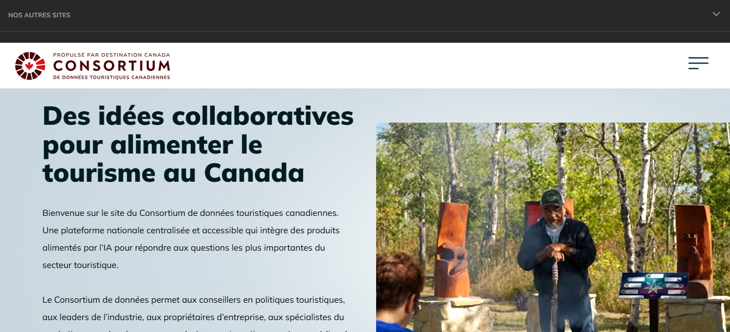
With Aurora AI and its Traveller Twin, Destination Canada makes access to tourism data easier and helps professionals better understand their audiences, test their projects, and steer their business decisions more quickly. Canada is simplifying access to its data through Aurora AI.
In tourism, data is a powerful driver of performance. Yet for tour operators, online agencies, destinations, or activity providers, extracting value from it can still demand significant time and resources.
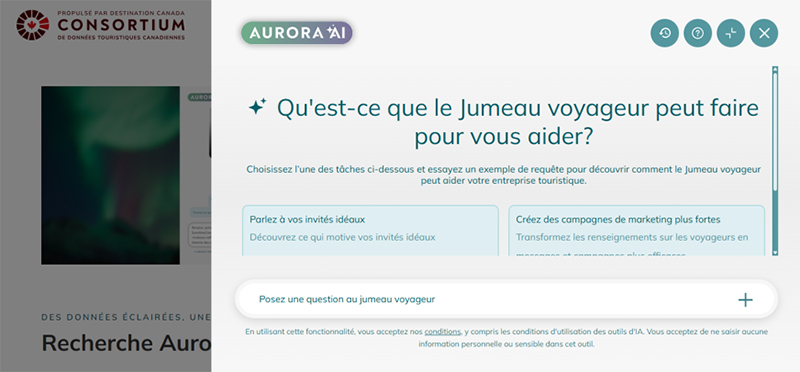
With Aurora AI, Destination Canada aims to make this knowledge more easily accessible and directly usable. This AI ecosystem enables tourism professionals to query reliable data in natural language and rapidly obtain insights that inform their decisions.
The objective is concrete: reduce the time spent on research and analysis, better target travelers, and mitigate risks before investing in a new product or a marketing campaign.
Tourism data accessible in seconds
Fruit of Canada’s tourism know-how, Aurora AI rests on an unmatched understanding of travel information at global and national scales. Built by Destination Canada, Aurora AI is a knowledge network that uses Gemini Enterprise and is fueled by the Canadian Tourism Data Consortium. This consortium provides validated research, reliable data sets, and insights from Destination Canada’s partners, ensuring credibility and relevance. It was launched in 2024 and won the Best Use of Artificial Intelligence for Nonprofit or Non-commercial Purposes at the 2024 DataIQ AI Awards.
Launched in November 2025, Aurora AI combines natural language querying, predictive models, traveler simulation tools, and AI agents in an integrated system that learns, adapts, and responds.
The Traveller Twin to test a project before launch
Among the features offered, the Traveller Twin lets you simulate how different traveler profiles would react. It builds on the segmentation program of the Canadian Tourism Data Consortium, created from research conducted with real travelers in Destination Canada’s ten major markets, including France.
“Its French version, launched in May 2026 at Rendez-vous Canada, can notably assist tour operators and reservation platforms marketing the destination.” explains Cyrielle Bon, CEO of Destination Canada in France
A professional can, for example, propose a stay idea, a new product, an advertising message, or a campaign concept. The Traveller Twin then helps identify the most receptive audiences, better understand their expectations, and anticipate their reactions.
The tool can also be used to refine a sales pitch or support a recommendation with structured traveler insights. The aim is to adjust a project upstream, before mobilizing production budgets or media buying.
A tool in service of return on investment
By easing the research, targeting, and testing stages, Aurora AI can help improve the effectiveness of marketing investments. It isn’t about predicting consumer behavior with certainty, but about providing extra data to make more informed decisions.
For tourism companies, the potential benefits show up in several ways: shorter analysis time, more precisely targeted campaigns, products more aligned with travelers’ expectations, and resources focused on the most promising opportunities.
This deeper understanding of audiences also serves as a differentiator. In a sector where travelers increasingly seek highly personalized offerings, the ability to quickly tailor products and messages can become a real competitive edge.
Commercial results already observed
Several Canadian tourism companies have already used the Traveller Twin to evolve their offerings.
Brett Soberg, co-founder and captain of Eagle Wing Whale Watching explains: “We leaned on the tool to identify new interests among our visitors and to explore experiences that complement our usual excursions.” By expanding their portfolio, they doubled the number of their specialized tours.
At Bay of Fundy Adventures, founder Jordan Jamison also used Aurora AI: it helped them identify refined globetrotters as the segment with the strongest potential to book guided experiences and stay in the region. They shifted their strategy from promoting individual activities to promoting a destination conducive to immersive experiences. This new approach was accompanied by a 200% rise in bookings compared with the previous year.
These results illustrate how a better understanding of traveler expectations can translate into product evolution and improved business performance.
A technological expertise serving the industry
Participate in the development of Aurora AI
Aurora AI is developing new agents and continuously innovating to meet the evolving needs of the tourism sector. We want to hear your feedback on your experiences with Aurora AI.
Please send your questions, comments, and ideas to the Data Consortium team by writing your feedback here.
Hyatt inaugure son premier resort Destination by Hyatt au Portugal avec une offre résidentielle en Algarve.
Le Masana Algarve est implanté à Olhos de Água, à proximité immédiate de l’océan Atlantique, dans un environnement composé de falaises, de sentiers côtiers et de plages, dont celles d’Olhos de Água et de Maria Luísa.
L’établissement comprend 33 résidences, incluant suites et villas d’une ou deux chambres, avec vue sur les jardins, la piscine ou la mer.
Chaque unité dispose d’une cuisine équipée, d’espaces de vie, d’un extérieur privatif et d’équipements destinés aux séjours prolongés.
Le resort propose également un accompagnement personnalisé avec un Guest Experience Manager dédié pour chaque séjour.
Une offre articulée autour de la restauration et du bien-être
The Masana Algarve features two dining spaces operated by TUPUQ: Casa da Praia, open during the day, and the TUPUQ Restaurant & Bar situated on the rooftop, offering meals and beverages in the evening.
The property also includes a spa providing treatments, as well as facilities including a sauna, a hammam, sensory showers and a two-person treatment cabin. A Technogym-equipped fitness area and two outdoor pools, one of which is adults-only, complete the offering.
This opening is part of Hyatt’s expansion of its brands in Portugal, following recent openings in Lisbon and Madeira.
Published by Noah Penalva TourMaG.com Editor View all articles by Noah Penalva
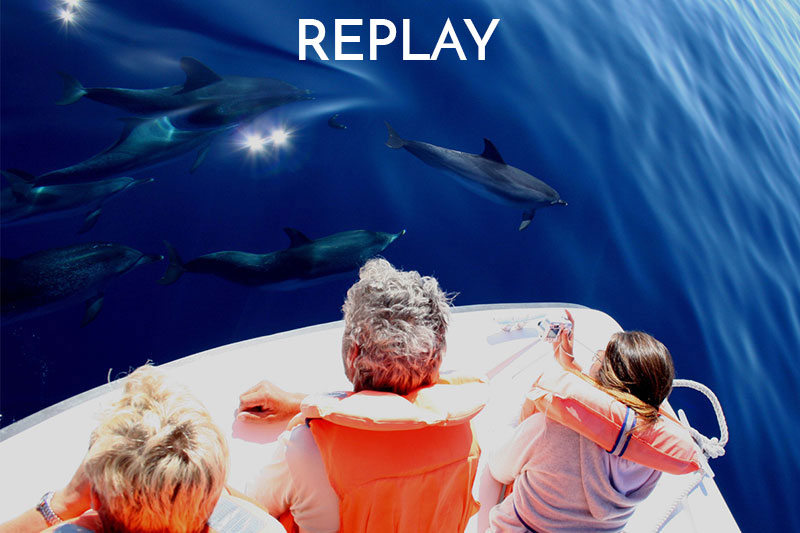
Just four hours by plane from Paris, SATA Azores Airlines and Visit Azores invite you to discover the Azores archipelago. Outdoor activities, whale watching, and much more; the Azores abound with riches to delight both young and old.
Other sessions
● Nature and a change of scenery just four hours from Paris : Replay
Our other tools for tourism professionals
Consult our online brochures to learn more about the destination in general and to discover all the potential the Azores offer for diving enthusiasts.
✔ See Visit Azores brochures
Who we are:
Visit Azores is on a mission to promote the Azores as a nature-oriented travel destination focused on experiential travel, and to grow the volume/number of stays across all the Azores islands, as well as the revenue of all players in the sector.
Since 1941, the SATA group has been involved in air transport, tourism promotion, airport management, and ground handling services for all airlines landing on the Azorean soil. Its fleet is divided between SATA Air Açores (SP) and SATA Azores Airlines (S4), which operate flights to continental Portugal and the islands, Europe, the Cape Verde, the United States and Canada, with a network that combines codeshare and interline agreements.
Its mission: Connect the Azores to the rest of the World and the World to the Azores.















 Published by Noah Penalva