Far from the big cities where stress and pollution are sometimes more palpable than a speed bump at 80 km/h, there are scattered around the world places where life can feel so good that people grow old, even very old. But what do they have that is so magical as to let their inhabitants blow out hundreds of candles?
What is a “Blue Zone”?
In the early 2000s, Michel Poulain, a Belgian demographer concerned with the role of the elderly in our societies, and Gianni Pes, an Italian physician, studied the longevity of the Sardinian population and mapped the villages where the most centenarians live. One area stood out more than the others: the Barbagia-Ogliastra zone, in the Nuoro province.
The two researchers are said to have outlined it in blue, and the first “Blue Zone” would thus be born. The journalist Dan Buettner would subsequently popularize the concept in National Geographic in 2004, enabling other “Blue Zones” to be identified later:
- Okinawa, Japan
- Nicoya, Costa Rica
- Ikaria, Greece
- Loma Linda, California
But while Blue Zones are the subject of extensive research today, their interpretation remains debated. Some scientists argue that the concept has sometimes been greatly simplified, or even idealized, by the wellness industry.
Where is the Sardinian Blue Zone?
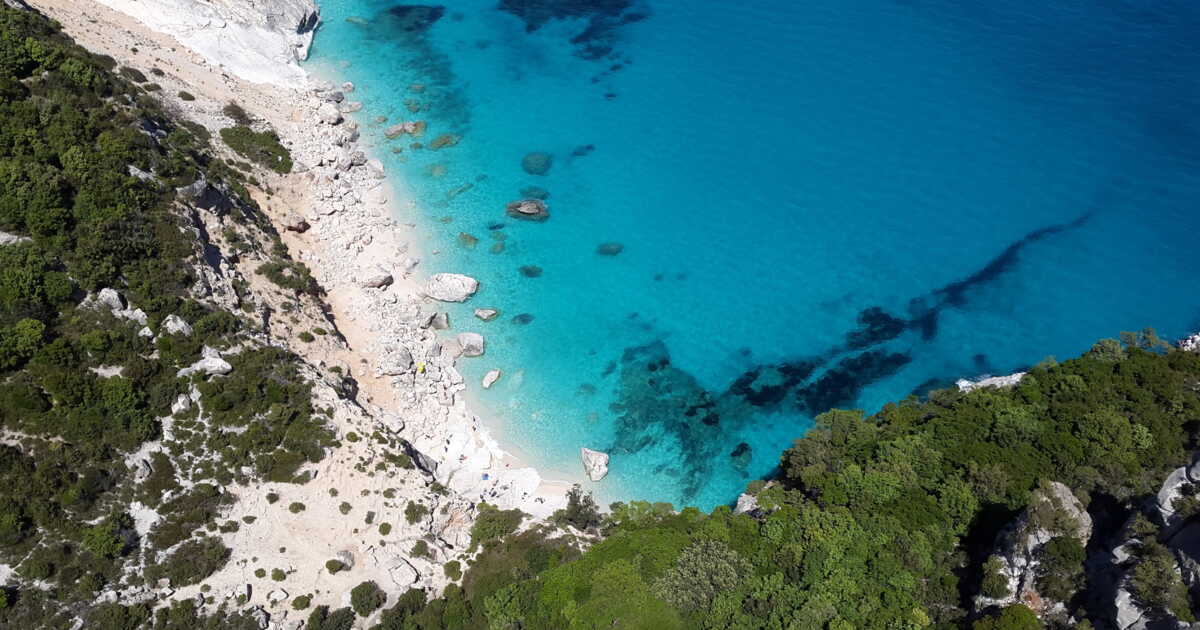
Contrary to a widespread belief, there is not a single Blue Zone in Sardinia covering the entire island. The area identified by Michel Poulain and Gianni Pes in the early 2000s lies in east-central Sardinia, in Ogliastra and Barbagia, in the Nuoro province.
Among the villages regularly cited: Villagrande Strisaili, Arzana, Talana, Baunei, Urzulei, Perdasdefogu, Tiana, Ovodda and Orgosolo.
Note that in southern Sardinia, three other villages stand out for their number of nonagenarians and centenarians: Seulo, Teulada, Orroli.
Then in 2025, another site joined the list of already identified Blue Zones: the municipality of Arzachena, in Gallura (northeast Sardinia). However, this claim does not rest on scientific recognition as established as that of the Barbagia-Ogliastra historic zone.
View this post on Instagram