
Sardinia’s Secret: The Blue Zone Where People Live Longer

Far from the big cities where stress and pollution are sometimes more palpable than a speed bump at 80 km/h, there are scattered around the world places where life can feel so good that people grow old, even very old. But what do they have that is so magical as to let their inhabitants blow out hundreds of candles?

What is a “Blue Zone”?

In the early 2000s, Michel Poulain, a Belgian demographer concerned with the role of the elderly in our societies, and Gianni Pes, an Italian physician, studied the longevity of the Sardinian population and mapped the villages where the most centenarians live. One area stood out more than the others: the Barbagia-Ogliastra zone, in the Nuoro province.

The two researchers are said to have outlined it in blue, and the first “Blue Zone” would thus be born. The journalist Dan Buettner would subsequently popularize the concept in National Geographic in 2004, enabling other “Blue Zones” to be identified later:

  • Okinawa, Japan
  • Nicoya, Costa Rica
  • Ikaria, Greece
  • Loma Linda, California

But while Blue Zones are the subject of extensive research today, their interpretation remains debated. Some scientists argue that the concept has sometimes been greatly simplified, or even idealized, by the wellness industry.

Where is the Sardinian Blue Zone?

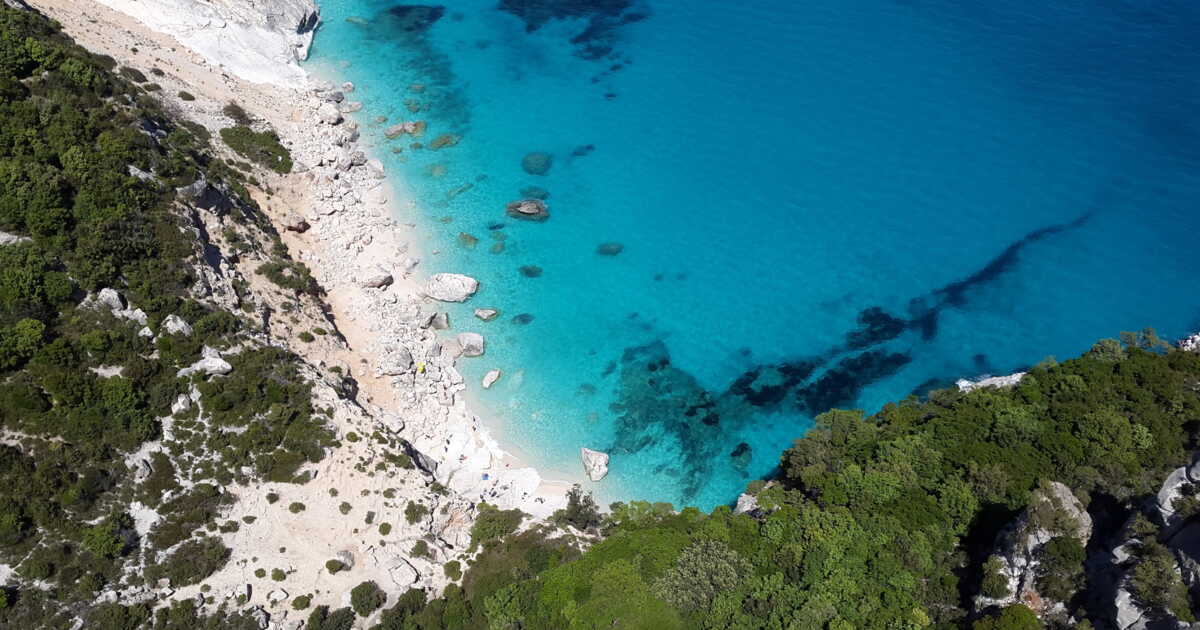
Contrary to a widespread belief, there is not a single Blue Zone in Sardinia covering the entire island. The area identified by Michel Poulain and Gianni Pes in the early 2000s lies in east-central Sardinia, in Ogliastra and Barbagia, in the Nuoro province.

Among the villages regularly cited: Villagrande Strisaili, Arzana, Talana, Baunei, Urzulei, Perdasdefogu, Tiana, Ovodda and Orgosolo.

Note that in southern Sardinia, three other villages stand out for their number of nonagenarians and centenarians: Seulo, Teulada, Orroli.

Then in 2025, another site joined the list of already identified Blue Zones: the municipality of Arzachena, in Gallura (northeast Sardinia). However, this claim does not rest on scientific recognition as established as that of the Barbagia-Ogliastra historic zone.

View this post on Instagram

Nordic Island With Caribbean Vibes Becomes a Timeless Zone Every Summer

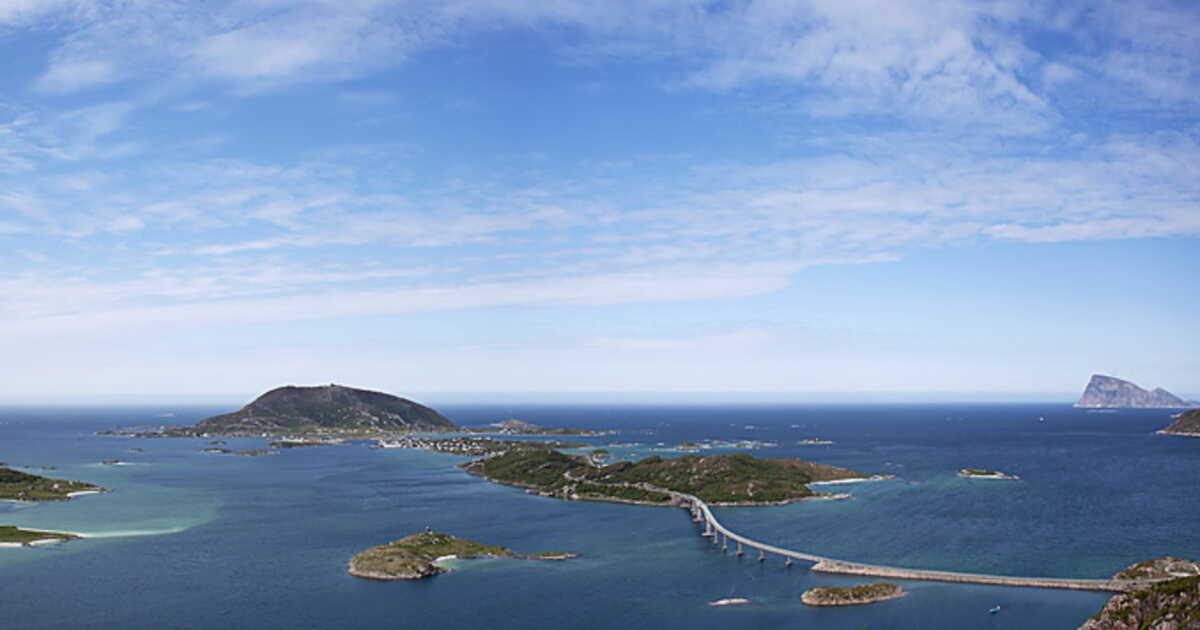
While Norway often evokes rugged fjords, snow-covered mountains, and Arctic landscapes, a small island in the north of the country defies all clichés. Located above the Arctic Circle, Sommarøy surprises with its white-sand beaches and turquoise waters, earning it the nickname of the “Caribbean of the North.” But this unexpected scenery is not its only asset. Each summer, a spectacular natural phenomenon transforms the daily life of its inhabitants and offers visitors an extraordinary experience.

An Arctic Island That Resembles the Tropics

About thirty kilometers west of Tromsø, often considered the gateway to the Norwegian Arctic, Sommarøy has only a few hundred inhabitants. Yet this small fishing community attracts more and more travelers intrigued by its singular landscape. Here, the pristine beaches contrast with the usual image of the High North.

The origin of this scenery is very different from that of classic tropical beaches. In the Caribbean, the sand is mainly composed of crushed quartz. But on Sommarøy, it comes from the accumulation, over thousands of years, of fragments of shells and calcareous algae. This particular composition gives the seabed a very light color. Since the waters around the island are shallow, sunlight reflects off this white bottom and creates these turquoise and emerald hues that recall tropical destinations.

The very name of the island also means “summer island.” Historically, fishermen would come to this place during the good season to exploit the abundant shoals of herring present in the surrounding waters. Today, while fishing remains important, tourism occupies an increasing place in the local economy.

When the Sun No Longer Sets

If Sommarøy is today known far beyond the borders of Norway, it is in large part thanks to an initiative that earned worldwide attention in 2019. The inhabitants proposed turning the island into a kind of “time-free zone,” or “hourless” area, during the summer. An idea inspired by the midnight sun: for 69 consecutive days, the sun never sets.

In this light-filled, day-and-night landscape, usual benchmarks fade away. A midnight hike, a night-time kayak excursion, cycling, paddling between islets, or a late swim become perfectly ordinary activities. The residents summed up this mindset by saying they wanted “do what we want, when we want”.

Subsequently, it became clear that the proposal to remove schedules was never intended to be applied in practice. The operation was in fact part of a promotional campaign aimed at making the island known internationally. A staging that nonetheless rested on a tangible reality: in Sommarøy, the midnight sun allows enjoying the scenery and activities at any hour of the day or night.

Note that the winter period offers an equally impressive spectacle. When the sun disappears for long weeks, the northern lights take over and regularly illuminate the sky. The island’s terrain also enables skiing with a view of the ocean.

To extend the experience, travelers can stay at a local hotel equipped with large bay windows opening onto the surrounding landscapes. The cuisine highlights Arctic resources, notably seafood, reindeer meat, mushrooms, and wild berries. A way to discover another facet of this surprising island.