Discover Oman, a captivating country located at the southeastern tip of the Arabian Peninsula, renowned for its diverse landscapes—from dramatic mountain ranges to sweeping deserts and pristine beaches. Whether you’re drawn to culture, craving adventure, or seeking relaxation, Oman offers a multitude of experiences to suit every taste. To help plan your trip, you’re likely wondering what to do in Oman. Here is a detailed list of must-see activities and places to add to your itinerary.
1. Explore Muscat, Oman’s capital
A visit to the Sultanate of Oman naturally starts with Muscat, a capital that blends institutional modernity with a preserved cultural heritage. Among the highlights, the Sultan Qaboos Grand Mosque stands out for the precision of its contemporary Islamic architecture, the hand-woven Persian carpet among the largest in the world, and the monumental crystal chandelier, offering an experience that is both aesthetic and spiritual. Nearby, the Muttrah Souk, one of the oldest traditional markets in the Arabian Peninsula, provides a direct contact with Omani craftsmanship, especially at stalls offering incense, spices, and textiles.
Le long de la Corniche de Muttrah s’offre une promenade aménagée en bord de mer, offrant des vues dégagées sur le port et les dhows traditionnels, permettant une lecture paysagère de la ville. Sur le plan muséal, le Musée National d’Oman présente une approche structurée de l’histoire du sultanat, tandis que le musée Bait Al Zubair approfondit ce propos avec des collections axées sur le patrimoine domestique, vestimentaire et militaire. Muscat s’impose ainsi comme une capitale riche de patrimoine, idéale pour une découverte progressive de la diversité culturelle et géographique du territoire omanais.
2. Aventure dans le désert des Wahiba Sands
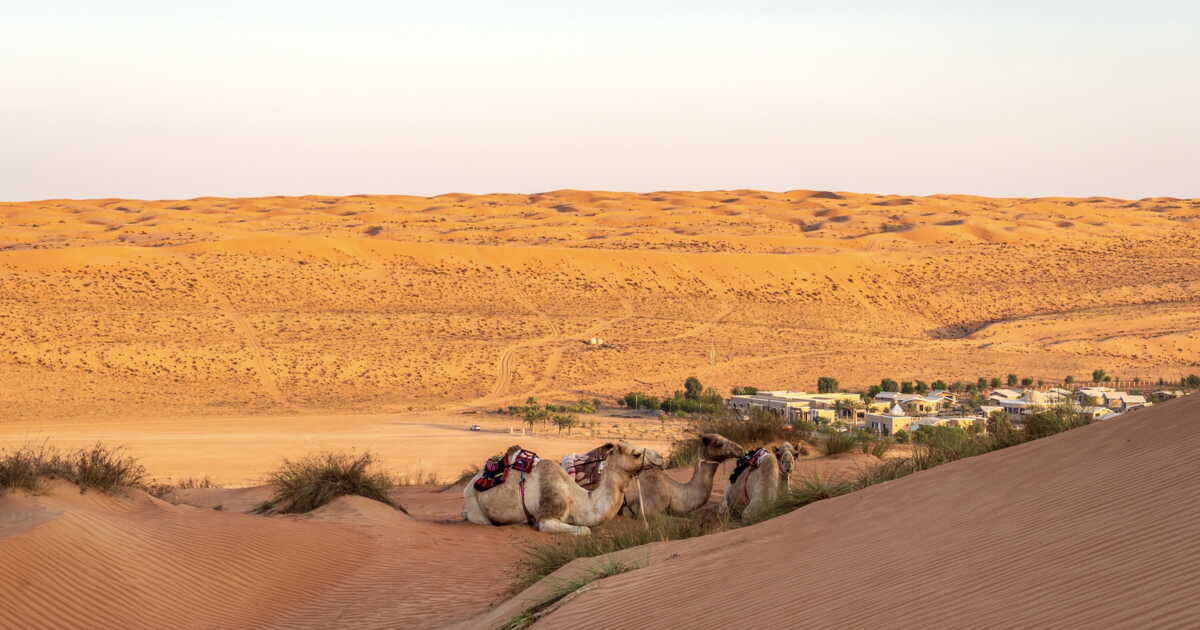
Plonger dans le désert des Wahiba Sands constitue une étape essentielle de toute exploration omanaise, tant pour la richesse de son environnement que pour la transmission de pratiques culturelles traditionnelles. Ce désert, également appelé Sharqiya Sands, se caractérise par des dunes ondulantes aux teintes ocres et rouges qui s’étendent sur des centaines de kilomètres carrés. Plusieurs formules encadrées permettent d’y accéder, notamment des excursions en 4×4 à travers les reliefs sablonneux via des itinéraires sécurisés, ou des balades à dos de chameau pour une approche plus lente et immersive.
L’expérience ne se résume pas à la traversée : passer une nuit sous tente bédouine, dans un camp organisé, permet de découvrir l’hospitalité omanaise, de partager un repas traditionnel, et surtout d’observer un ciel nocturne dégagé, où l’absence de pollution lumineuse favorise une observation astronomique exceptionnelle. Adaptée autant aux visiteurs en quête d’aventure maîtrisée qu’à ceux souhaitant comprendre les modes de vie nomades, cette étape dans les Wahiba Sands s’inscrit de manière cohérente dans l’exploration du paysage désertique et culturel d’Oman.
3. Randonnée et baignade dans les wadis
Les wadis d’Oman, formations géologiques typiques des zones montagneuses arides, constituent des vallées fluviales temporaires où l’eau, lorsque présente, façonne des paysages contrastés entre falaises abruptes, bassins d’un bleu turquoise et végétation éparse. Ces sites, prisés pour leur beauté et leur accessibilité maîtrisée, offrent des possibilités d’activités de plein air encadrées, allant de la randonnée à la baignade naturelle.
Parmi les plus fréquentés, Wadi Shab propose un trajet pédestre balisé menant à une série de piscines naturelles et culminant dans une grotte partiellement submergée, accessible en nage. De son côté, Wadi Bani Khalid se distingue par la constance de son cours d’eau, la présence de palmiers dattiers en bordure et ses bassins d’eau claire, propices à une pause récréative. Ces sites combinent valeur écologique, tourisme raisonné et intérêt géomorphologique, faisant des wadis omanais des étapes incontournables pour les voyageurs désirant explorer la diversité naturelle du sultanat dans un cadre semi‑aquatique unique.
4. Découverte des forts historiques et châteaux
Le territoire omanais se distingue par un réseau dense de forts et de châteaux historiques, témoignant de son passé défensif, administratif et culturel. Ces structures, bâties principalement entre le XVIIe et le XIXe siècle, illustrent l’évolution des techniques architecturales dans la péninsule arabique tout en jouant un rôle central dans l’organisation des anciennes cités. Le fort de Nizwa, l’un des plus emblématiques du pays, se distingue par sa tour circulaire monumentale, conçue pour la surveillance et la défense, ainsi que par la présence d’un souk traditionnel voisin, encore actif, qui prolonge l’expérience historique dans un cadre commercial vivant.
Le château de Jabrin, lui, se distingue par la richesse décorative de ses plafonds en bois peints, ses mashrabiyas ouvragées et ses espaces résidentiels bien conservés, offrant un aperçu structuré de l’architecture résidentielle omanaise raffinée. Enfin, le fort de Bahla, classé au patrimoine mondial de l’UNESCO, impressionne par l’étendue de ses remparts et par l’ampleur de ses travaux de restauration, soulignant sa valeur patrimoniale internationale. L’ensemble de ces sites compose une trame cohérente pour explorer les dynamiques historiques, politiques et esthétiques qui ont façonné le sultanat d’Oman.
5. Excursions dans les montagnes du Hajar pour découvrir le Jebel Shams et le Jebel Akhdar
Les montagnes du Hajar, principale chaîne montagneuse du nord d’Oman, constituent une destination de référence pour les amateurs de randonnée, de géographie structurée et de paysages à forte valeur esthétique. Ce massif, qui s’étend sur plusieurs gouvernorats, abrite des itinéraires balisés permettant une exploration encadrée de ses formations rocheuses, de villages perchés et de vallées profondes. Le Jebel Shams, point culminant du pays, est souvent surnommé le « Grand Canyon d’Oman » en raison de ses falaises vertigineuses et de la profondeur du Wadi Ghul qu’il domine.
Il propose des parcours de trekking adaptés à différents niveaux, avec des points d’observation offrant une vue panoramique sur l’ensemble du relief environnant. Le Jebel Akhdar, littéralement « la montagne verte », est réputé pour ses villages agricoles en terrasses, ses cultures de roses et son microclimat plus frais qui permet une agriculture traditionnelle encore active. Ces deux secteurs illustrent la diversité écologique et topographique des montagnes omanaises et s’intègrent pleinement dans une logique de tourisme durable, alliant accessibilité, préservation des écosystèmes et valorisation du patrimoine rural.
6. Activités marines le long de la côte omanaise
La côte d’Oman, qui s’étend sur plus de 3 000 kilomètres, se distingue par sa capacité à combiner patrimoine maritime, biodiversité marine et activités nautiques guidées, faisant d’elle une destination pensée pour les voyageurs intéressés par l’environnement côtier. À Sur, ville historique du commerce maritime, la visite du chantier naval des dhows permet d’observer les techniques traditionnelles de fabrication de ces embarcations en bois, toujours construites selon des méthodes artisanales.
À proximité, le site protégé de Ras Al Jinz offre un accès réglementé à l’un des principaux lieux de nidification des tortues vertes, avec des visites nocturnes encadrées pour observer ce phénomène naturel sans perturber l’écosystème. Plus au nord, les îles Daymaniyat, classées réserve naturelle, sont connues pour leurs récifs coralliens préservés, accessibles via des excursions de snorkeling ou de plongée sous‑marine, idéales pour observer la faune marine tropicale.
Enfin, au large de Mascate, des sorties en mer permettent d’observer des phénomènes de migration des dauphins et des baleines bleues, offrant une lecture complémentaire de l’environnement marin omanais. Dans l’ensemble, ces sites témoignent de l’équilibre réussi entre des activités de loisir encadrées et la préservation du patrimoine naturel et maritime.
Oman est une destination riche en découvertes, offrant une diversité d’activités et de paysages qui combleront tous les voyageurs en quête d’aventures, de culture ou de détente. Que vous exploriez les trésors culturels de Muscat, que vous partiez à l’assaut du désert ou que vous vous émerveillez devant les paysages marins, chaque instant passé à Oman promet d’être inoubliable. Pour tirer le meilleur parti de votre séjour, n’oubliez pas de prendre en compte les conseils de sécurité et de planification propres à chaque activité.
What to Do in Oman with Family or Children? A Destination Between Gentle Adventure and Cultural Discoveries
Traveling with family in Oman means combining safety, accessibility and wonder. The country is stable and welcoming, making it well suited for family trips by car or on organized excursions. Children particularly enjoy swimming in the wadis, camel rides in the desert, and coastal strolls in search of dolphins.
Historic forts, such as Nizwa Fort, bring a playful and educational dimension. Infrastructure is modern, distances are reasonable, and the local population is respectful and friendly toward families. Oman thus stands out as an ideal destination for a family vacation in the Middle East.
What to Do in Oman in the Evening? Traditions, Quietness and Tranquil Atmospheres After Sunset
Evening in Oman unfolds in a calm cadence, in harmony with local customs. In Muscat, strolls along the Mutrah waterfront remain a favored pastime, especially at sunset. Markets come alive toward the end of the day, offering a sensory immersion in spices, frankincense, and fabrics. Some upscale hotels host outdoor dinners, often accompanied by traditional music. In the desert, the evening becomes a memorable moment with stargazing and fireside gatherings. Without excess or bustle, Oman in the evening invites a form of slowness conducive to contemplation, respectful of local norms.
Why Oman’s tourism attracts more travelers seeking authenticity and rugged landscapes
Long known for its discreet presence on the international scene, Oman’s tourism now appeals for reasons tied to a balance between measured modernity and embraced tradition. The country does not strive to outdo its neighbors in spectacle but to offer a sustainable model that values its natural and architectural heritage.
Whether it’s UNESCO-listed forts, rugged mountains, green oases or the coastline of the Indian Ocean, Oman offers a spectrum of experiences where authenticity takes precedence over spectacle. This positioning gives the sultanate a distinctive appeal for travelers seeking meaning, cultural exchange and environmental respect.
This article was drafted with the help of artificial intelligence, then revised, expanded and validated by the publication’s editors.