

Brazil, Spain, Rail Travel: This Week in Tourism News [ABO]


La revue de presse internationale de la semaine - Depositphotos.com Auteur serezniy

Hurtigruten


Au sommaire de la revue de presse de la semaine du 24 août 2026 :


Eurostar bientôt concurrencé sur le tunnel sous la Manche

Brésil : le voyage d’affaires accélère

Thaïlande, Australie, Japon : les choix de voyage varient selon les générations

European Sleeper met le cap sur la Scandinavie

EF World Journeys courtise enfin les agences de voyages

Israël : le tourisme international reprend de la hauteur

En Espagne, le « flex living » séduit aussi les plus de 50 ans

Voyages d’affaires et réunions : la frontière s’efface

Insolite ! À Los Angeles, bientôt des taxis pour éviter… les bouchons


Eurostar soon facing competition on the Channel Tunnel


D’ici 2030, la concurrence devrait se développer sur la liaison ferroviaire entre Londres et l’Europe pour atteindre jusqu’à 55 allers-retours quotidiens. @depositphotos/jonkempner

La liaison ferroviaire entre Londres et l’Europe pourrait fortement se développer d’ici 2030, avec jusqu’à 55 allers-retours quotidiens, soit environ un train toutes les 15 minutes.

Eurostar devrait faire face à l’arrivée de Virgin Trains et de Trenitalia, qui prévoient respectivement leurs premiers services en 2030 et 2029.

Un troisième acteur, Gemini Trains, ambitionne également de se lancer. Cette concurrence pourrait accroître l’offre et faire baisser les tarifs, mais plusieurs obstacles restent à lever, notamment les autorisations réglementaires et la capacité des gares et infrastructures.

Plus à lire sur politico.eu


Brésil : le voyage d’affaires accélère


Le Brésil connaît un fort développement du voyage d’affaires. @depositphotos/iveklitch.gmail.com

Le Brésil s’impose comme l’un des marchés les plus dynamiques du voyage d’affaires.

Selon la GBTA, les dépenses corporate devraient atteindre 35,8 milliards de dollars en 2026, soit une croissance de 13,8 %, la plus forte parmi les 15 principaux marchés mondiaux.

Une dynamique qui accompagne celle du tourisme international : les recettes des visiteurs étrangers ont progressé de 12,1 % au premier semestre, à 5,6 milliards de dollars.

Plus à lire sur abouttravel.ch


Thailand, Australia, Japan: travel choices vary by generation


Les attentes des jeunes voyageurs diffèrent d’une génération à l’autre. @depositphotos/luckybusiness

Une étude basée sur plus de 4 700 réservations met en évidence des différences entre Gen Z et Millennials. La Thaïlande arrive en tête chez les plus jeunes, devant l’Australie, l’Indonésie et le Vietnam, tandis que les Millennials privilégient l’Australie, la Thaïlande et le Japon.

Budget, réseaux sociaux, recherche de destinations moins fréquentées et dispositifs comme le visa vacances-travail expliquent en partie ces écarts.

Plus d’informations sur le site euronews.com


EF World Journeys finally courting travel agencies


Israel: international tourism rebounds


En Israël, les hôtels ont enregistré 395 000 nuitées de touristes en juillet 2026, soit une hausse spectaculaire de 139 % sur un an.@depositphoto/VeronikaGorBO

Le tourisme international en Israël semble retrouver des couleurs : les hôtels ont enregistré 395 000 nuitées de touristes en juillet 2026, soit une hausse spectaculaire de 139 % sur un an.

Sur les sept premiers mois de l’année, le nombre de nuitées atteint 1,7 million, contre 1,5 million en 2025.

La reprise semble également s’accélérer, avec une moyenne mensuelle de 247 000 nuitées sur les trois derniers mois, contre 181 000 auparavant.

A lire sur traveldailynews.com


In Spain, the “flex living” also appeals to those over 50


En Espagne, les plus de 50 ans, séduits par les logements flexibles.@depositphotos/marimar8989

Le logement flexible change de cible en Espagne : longtemps associé aux étudiants et jeunes actifs, il attire désormais aussi les plus de 50 ans, séduits par l’autonomie, les services et les espaces partagés.

Selon Cando Living, le parc espagnol devrait doubler d’ici 2028, passant de 19 000 à près de 39 000 logements. Madrid concentre une grande partie des nouveaux projets, tandis que le secteur attire de plus en plus d’investisseurs.

Un article du site hosteltur.com


Business travel and meetings: the boundary is blurring


La frontière entre voyages d’affaires et réunions s’estompe. @depositphotos/kasto

Les voyages d’affaires et les réunions d’entreprise pourraient bientôt se gérer sur une même plateforme. Avec l’acquisition de TROOP, spécialiste de la planification de réunions, Spotnana veut réunir déplacements individuels, événements, réservations et dépenses.

Une tendance qui se confirme : plus de 60 % des responsables voyages et achats supervisent désormais à la fois les voyages et les réunions, contre 50 % en 2025. De quoi donner aux travel managers un terrain de jeu encore plus vaste !

Plus à lire skift.com


Insolite ! À Los Angeles, bientôt des taxis pour éviter… les bouchons


Les Américains feront-ils mieux que les Français ? Parviendront-ils à transporter les visiteurs en taxis volants pendant les JO de 2028 ? @depositphotos/rikitikitao@gmail.com

Pour les JO de 2028, Los Angeles pourrait proposer une solution très californienne aux embouteillages : prendre les airs !

Un premier « vertiport » accueillera des taxis volants électriques d’Archer Aviation, capables de transporter quatre passagers.

Le trajet entre Burbank et le SoFi Stadium passerait ainsi d’environ une heure en voiture à 14 minutes dans les airs.

Une idée qui rappelle les JO de Paris 2024 : la France avait elle aussi prévu des taxis volants, mais le projet s’était finalement soldé par un échec et 2,9 millions d’euros de dépenses publiques. À Los Angeles, les taxis volants auront donc une petite revanche à prendre !

Une info à lire sur euronews.com
Forex Market: Volatility Persists This Week [ABO]


Economic Situation

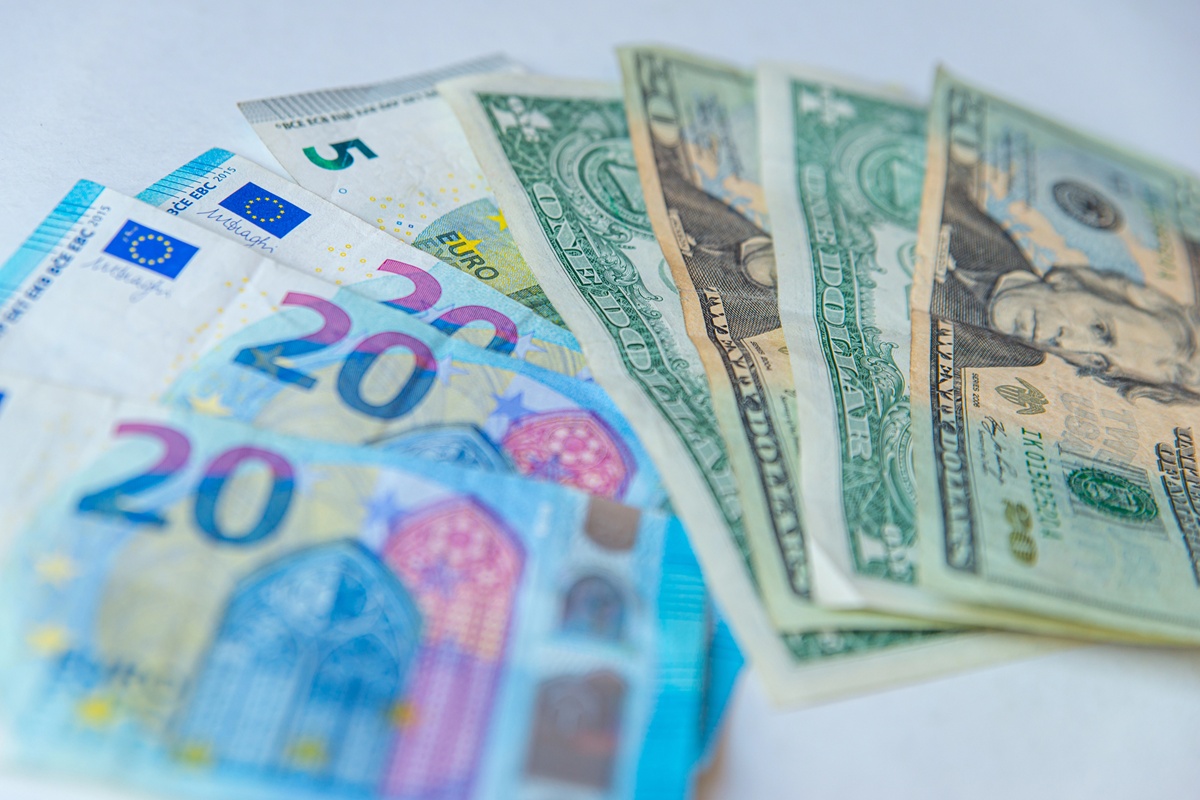
L'euro contre dollar se situe autour de 1,1440, en légère hausse sur la semaine, après avoir atteint son meilleur niveau depuis le 19 juin - Depositphotos.com, LeleMezzadri

IFTM prenez RDV avec TourMaG


In June, prices in the United States fell by 0.4% for the month, a first since April 2020. The market immediately assumed that the Fed would stop raising rates, and the dollar finished the week lower.

But there is a wrinkle: this weekend, tensions between the United States and Iran intensified, and Brent crude rose above $90, its highest level since mid-June. In other words, the snapshot taken in June is already out of date.

This inflation figure, published on July 14, surprised everyone. Annual inflation fell from 4.2% to 3.5%, well below the 3.8% expected. The main driver is clear: energy dropped by 5.7% for the month, and gasoline by 9.7%.

As a result, bond yields plunged and the dollar hit its lowest level of the month.

Why did this drop happen? This figure reflects June, a calmer period thanks to a ceasefire agreement signed on June 17 between Washington and Tehran. The Strait of Hormuz had reopened, oil had fallen, and so had gasoline.

But that calm has ended. Last week, attacks resumed on both sides. On Saturday, Iran struck a major oil facility in Kuwait, and then announced that the ceasefire was no longer valid.

Traffic in the Strait of Hormuz collapsed, and on Monday morning Brent rose again above $90, about 20% higher than before the conflict began.

Should we ignore this June price drop? Not, because it isn’t explained solely by energy. The core inflation (which excludes energy and food) remained stable for the month and slowed on an annual basis, from 2.9% to 2.6%. Services excluding energy did not rise, and housing gained only 0.1%. A portion of this decline is therefore real, and that is what reassured markets about Fed rate expectations.

The issue, however, is the calendar. The next inflation figure, July’s (which will reflect the latest energy price rise), will be published only in mid-August, i.e., after the Fed meeting scheduled for July 28–29. The central bank will thus have to decide based on a June figure that the current oil situation has already rendered obsolete.

The market expects the Fed to hold rates steady (between 3.50% and 3.75%), but the Fed chair Kevin Warsh’s press conference promises to be tricky: it’s hard to rule out a rate hike when oil is rising, yet difficult to advocate one right after prices have fallen.

In short, this June inflation decline is partly a misleading effect tied to the temporary drop in oil. As long as the situation around the Hormuz Strait remains tense, inflation will stay elevated, and it seems premature to say the Fed will not raise rates again.

For the companies involved, this means that the euro/dollar exchange rate will stay volatile, oscillating between seeking safe havens and pricing in rate expectations.

In this context, it is better to systematically hedge against these fluctuations than to bet on a specific direction.


Exchange Rates: The Technical Overview

On the foreign exchange market, two forces are currently at odds.

On one side, geopolitical tensions push investors toward safe-haven assets. On the other, expectations about interest rates weigh on the dollar since the U.S. inflation data was released.

The euro against the dollar is around 1.1440, up slightly for the week, after hitting its best level since June 19. Thursday, the European Central Bank is expected to hold its rate at 2.25%, but what matters most is what Christine Lagarde will say at the press conference.

A rate hike in September is already widely anticipated by the markets, and if it confirms this idea, it would support the euro.

Conversely, if oil continues to rise sharply, investors will again favor the dollar as a safe haven. It is expected that the EUR/USD pair will move between 1.1325 and 1.1555 this week.

For the Canadian dollar, the Bank of Canada left its rate unchanged on Wednesday at 2.25%, for the sixth consecutive time, with a cautious tone. Its governor, Tiff Macklem, however warned that rate hikes could become possible again if the price of oil remained high for a sustained period.

An interesting detail: bets against the Canadian dollar are at their highest since late 2024. Yet, with oil above $90, many of these investors could be forced to buy back the currency, which could push the EUR/CAD pair lower.

The Japanese yen remains the most penalized currency in the current environment. It stands at 185.76 against the euro and about 162.35 against the dollar, near its historical lows. The Bank of Japan did raise its rate to 1.00% in June, but the gap with rates of other major central banks remains enormous, and no one expects another hike before autumn. Japan’s June inflation, published on Friday, will reveal whether this normalization can accelerate.

The Swiss franc continues to play its usual stabilizing role. The euro against the franc remains around 0.9230, within the 0.92 to 0.93 range that analysts expect it to trade in the coming months.

On the British side, the euro against the pound is around 0.8502. Britain’s inflation data on Wednesday, expected to ease to 2.7%, will be decisive for the Bank of England’s July 30 decision, with the rate currently at 3.75%. A reassuring inflation figure would confirm the view that the bank will hold its rates and keep the pair in its current range.


WEEKLY SUPPORTS WEEKLY RESISTANCES
S2 S1 R1 R2
EUR/USD 1.1215 1.1325 1.1555 1.1670
EUR/GBP 0.8330 0.8415 0.8590 0.8675
EUR/CHF 0.9045 0.9140 0.9320 0.9415
EUR/CAD 1.5715 1.5875 1.6195 1.6355
EUR/JPY 182.05 183.90 187.60 189.45


The weekly supports and resistances shown below indicate the lower and upper bounds within which prices are expected to move during the coming week.


The information presented in this publication is provided for purely informational purposes and does not constitute investment advice, an offer to sell, or a solicitation to buy, and should in no way be used as a basis or considered as an inducement to engage in any investment activity.


Mondial Change is a French financial institution, founded in 2015, specializing in the management of international payments and foreign exchange risk.

Mondial Change also supports numerous players in the tourism sector, including travel agencies, group organizers, tour operators, and inbound operators…

www.mondialchange.com

Contact: [email protected]


Visiting Museums Every Week Could Slow Human Aging, Science Says

What if visit prescriptions were about to become standard practice? For a year now, Yvelines has been testing a scheme that allows caregivers to offer patients a free museum visit. A model already adopted in Canada for several years.

And for good reason, in 2019 the WHO confirmed in a report that art has positive effects on mental and physical health. While several research studies have corroborated this report, a new British study suggests that art could influence biomarkers of aging.

This study conducted by scientists at University College London (UCL) and published Monday, May 11, 2026 in the journal Innovation in Aging asserts that a weekly artistic or cultural activity could slow the pace of aging, and as much as a weekly physical activity.

“Our study provides the first evidence that engaging in an artistic or cultural activity is linked to a slowing of biological aging”, declares Feifei Bu, an epidemiologist at UCL and senior author of the study, as reported by Science Alert.

A study conducted on 3,500 people

To reach their conclusions, the researchers analyzed health data from more than 3,500 adults in the United Kingdom, while measuring how often they participated in artistic or cultural activities. The scientists included visits to a museum or library, attending an art exhibition, crafts, singing or painting.

They then used epigenetic clocks (a biochemical test that measures the accumulation of methyl groups on DNA), thereby measuring the biological age of these individuals. In general, study participants who practiced at least once a week one of the activities mentioned above showed less pronounced signs of aging than those with a less varied cultural life.

According to the PhenoAge clock, their biological ages were on average one year younger than those who did not engage in artistic activities. The DunedinPACE clock, which measures the pace of aging, indicates a 4% slowdown for weekly practice.

Is art as effective as exercise for health?

Their findings indicate that artistic activities reduce stress, inflammation and improve cardiovascular disease risk, i.e., benefits similar to those of physical activity.

“These results prove that engaging in artistic and cultural practice should be recognized as a health-beneficial behavior, on par with physical exercise,” says Daisy Fancourt, an epidemiologist and lead author of the study, who has been studying the health benefits of art at UCL for nearly ten years.