After Montenegro, Banyan Tree Announces Its European Ambitions


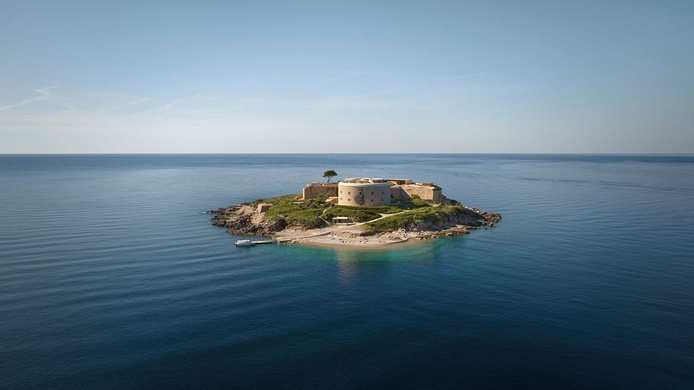
Mamula Island by Banyan Tree est juché sur un ilot isolé dans la baie de Kotor, au Monténégro. © Banyan Tree

Costa Rica


Since 2025, Banyan Tree, the flagship brand of the Singaporean-origin hotel group Banyan, has established its first address in Europe, specifically in Montenegro: “perched on an isolated islet, Mamula Island by Banyan Tree is installed in one of the three forts built in the mid-19th century to protect the Bay of Kotor”, details Kishan Chandnani, the new Global Head of Brand Marketing and Management.

The Bay of Kotor is part of the UNESCO World Heritage list. The fortress sits between sea and sky, on Mamula Island, dating from the period when Montenegro was under Austro-Hungarian rule.

It had been abandoned for quite some time. Before it could become an elegant five-star property, seven years of restoration work were required under the impulse of Samih Sawiris, a billionaire Egyptian businessman, who has been the majority shareholder of FTI Group since the Covid crisis and is already known for his tourism investments, notably in Montenegro, Egypt and Morocco.


Regenerative travel
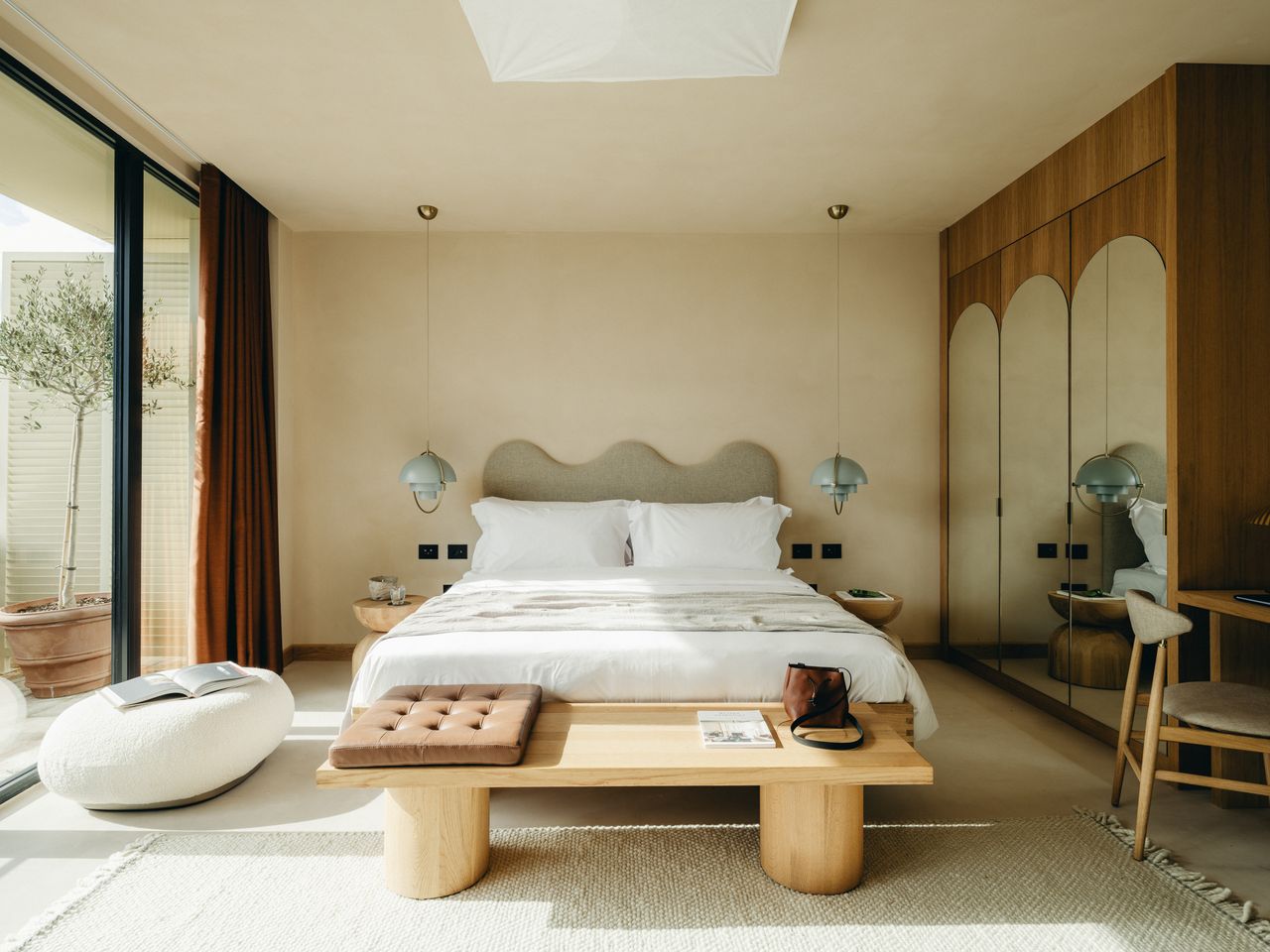

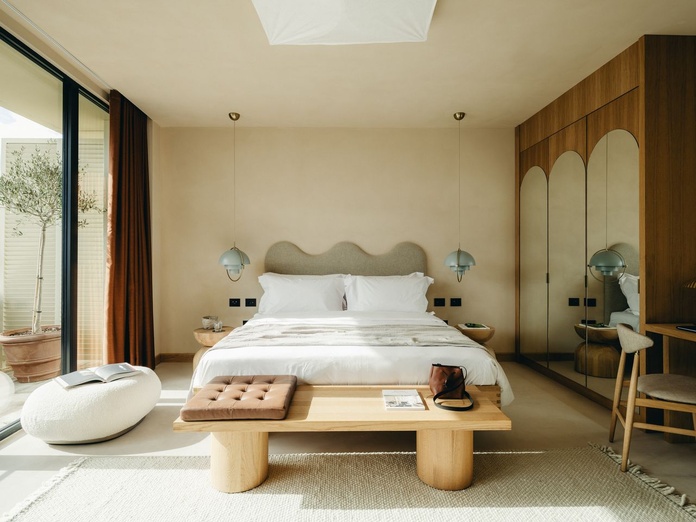
Une chambre du Mamula Island By Banyan Tree © Banyan Tree

Open from April to October and accessible only by private boat or helicopter, Mamula Island by Banyan Tree promises ultra-luxury experiences and can, upon request, be fully privatized for weddings or private events.

This private retreat of 32 rooms and suites (from €700 per night in the shoulder season and €1,471 in high season) with views over the Adriatic Sea features a beach, a Spa installed in the fortress’s central tower, three pools, three restaurants, and a bar. Resident artists are invited, and opera nights are held there.

Mamula Island by Banyan Tree targets a very high-end clientele seeking an authenticity that “luxury hotels don’t always offer”.

Banyan Group has no intention of stopping there. The brand now carries ambitious plans for Europe, both in Western and Eastern Europe. « We are on the lookout for new opportunities, provided they align with our philosophy », insists Kishan Chandnani.


A singular venture that began in Thailand
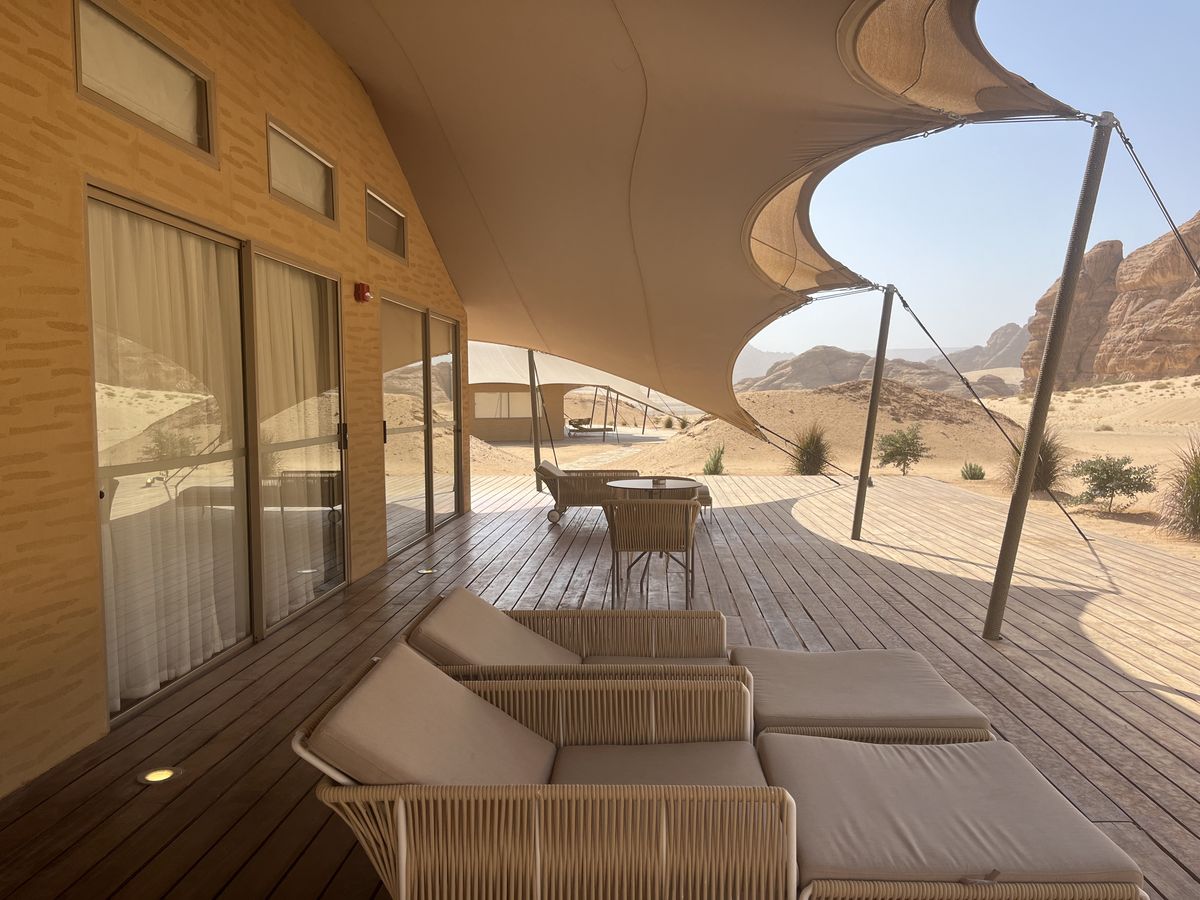

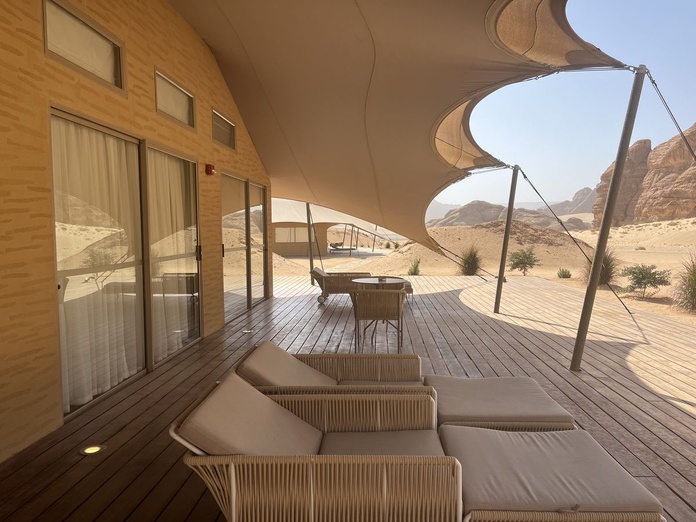
Banyan Tree AlUla s'intègre merveilleusement dans l'environnement désertique de la vallée d'Ashar © PB

In a world that is increasingly fast-paced, Banyan Tree seeks to give its guests time to slow down and reconnect with what they love. Kishan Chandnani speaks of “regenerative travel.”

< b> The brand has stayed true to this approach since its beginnings. Banyan Tree is, in fact, a unique adventure born in 1994 at the initiative of two Singaporeans, Ho Kwon Ping and his wife Claire Chiang.

< b> This adventure first rooted in Thailand. In 1984, during a holiday at Bang Tao Bay on Phuket’s west coast, in the Andaman Sea, the couple discovered a vast tract of land nestled in a secluded lagoon. Enchanted by the beauty of the site, they bought it, believing it to be the perfect place to build a nature hotel.

Unfortunately, Ho Kwon Ping and his wife were disappointed: the land had been polluted by the discharge from a tin mine. They had to implement an environmental regeneration program by introducing native plants and planting nearly 7,000 trees.

It was only ten years later that they were able to construct their very first five-star complex, the Banyan Tree Phuket: 173 luxurious private villas, nestled in lush greenery.


Banyan Tree: luxury in nature
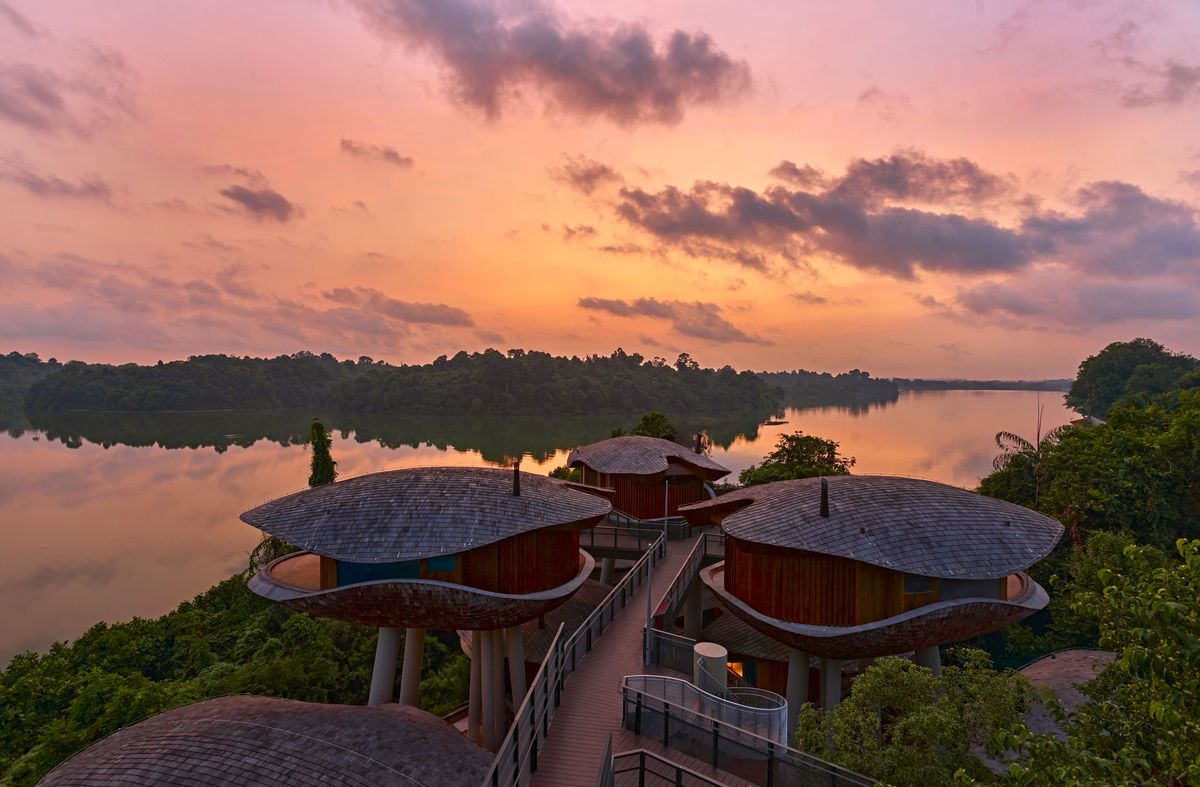

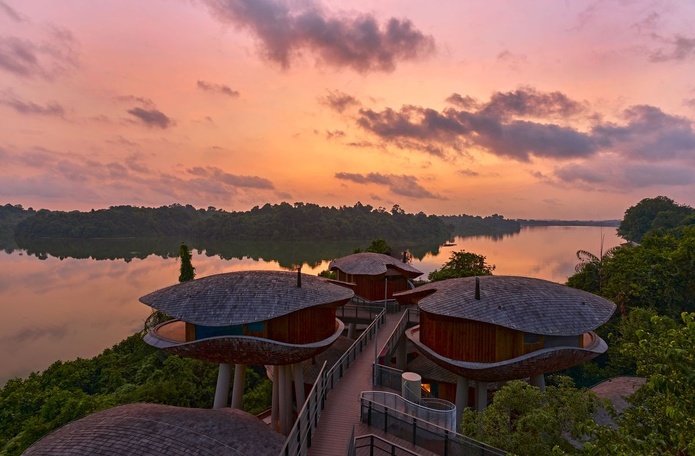
Avec Mandai Rainforest Resort by Banyan Tree, la marque a enfin pris pied à Singapour. © Banyan Tree

By betting on authentic and eco-friendly luxury on an island — Phuket — known for mass tourism excesses, Ho Kwon Ping and his wife established themselves as pioneers.

Even though, today, the Banyan Tree brand also develops urban hotels in key markets like Bangkok, Dubai, Doha, the aim of harmonizing with the environment continues to guide the design of its hotel complexes, not unlike Six Senses (IHG).

Wherever they are, Banyan Tree properties are anchored in the spirit of the place.

This is the case with Banyan Tree AlUla, in Saudi Arabia. Wrapped in the silence of the Ashar desert valley, its 72 standalone villas, cloaked in canvas, display the sandy hues of the surrounding dunes and neighboring sandstone towers.

They confirm Banyan Tree’s intention to immerse itself in local history — here, the Nabataean civilization — combining service excellence with environmental respect to offer unique experiences to travel connoisseurs.

This is also true of the Mandai Rainforest Resort by Banyan Tree, which marked in November 2025 the brand’s debut in Singapore, in the heart of a nature reserve. Its 338 rooms and 24 Tree Houses shaped like seeds perched in trees were designed in harmony with nature, as were the wellness offerings, retreats, and guided walks.

This Resort has also earned the BCA Green Mark Platinum certification for its low environmental impact.


Reconnect one’s soul to wildlife
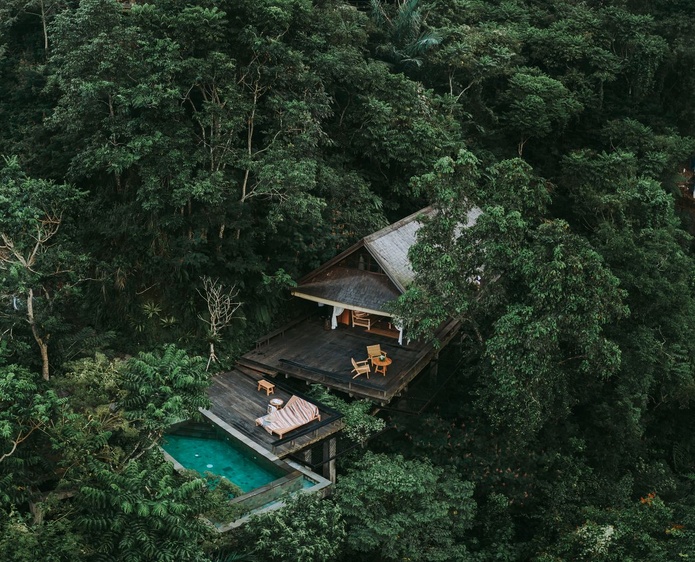

Les villas de Buahan, A Banyan Tree Escape sont guidées par la philsophie "ni murs, ni portes". © Banyan Tree

Similar concerns have shaped Ubuyu, A Banyan Tree Escape, which will, next August, become the brand’s very first safari retreat.

Located in Tanzania, this intimate eco-luxury refuge inviting “to reconnect one’s soul with the wild” comprises only six villas. Built by artisans and inspired by Maasai architecture, they blend into the surrounding savanna where wildlife roams freely.

However, the most accomplished expression of Banyan Tree’s nature-led luxury surely lies, since June 2022, in Bali, Indonesia.

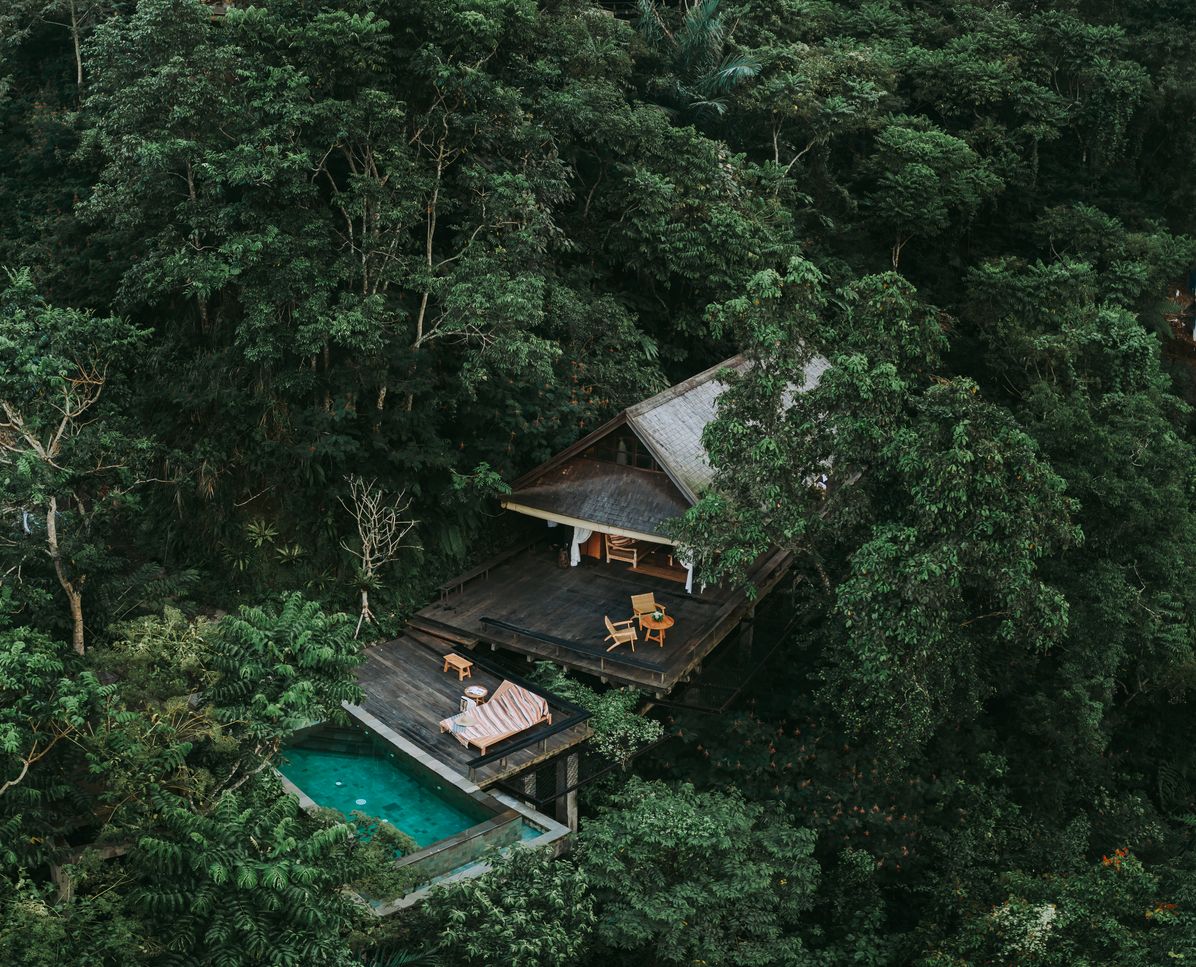
Guided by the philosophy “no walls, no doors”, the 16 wooden private villas, decorated with handcrafted items from Buahan, A Banyan Tree Escape, invite a deep communion with the rice paddies, the tropical forest, and the Ayung River that surrounds them.


In partnership with AccorHotels


PAULA BOYER Published by Paula Boyer Head of LuxuryTravelMaG – TourMaG.com
See all articles by Paula Boyer

  • picto Twitter
  • picto Linkedin
  • picto email
Add TourMaG to your Google News feed Google Actualités icône

Integration with Lufthansa, NDC, New Routes, and Rome Hub: ITA Airways’ Ambitions


Intégration à Lufthansa, NDC, nouvelles lignes et hub de Rome : les ambitions d'ITA Airways !

Costa Rica


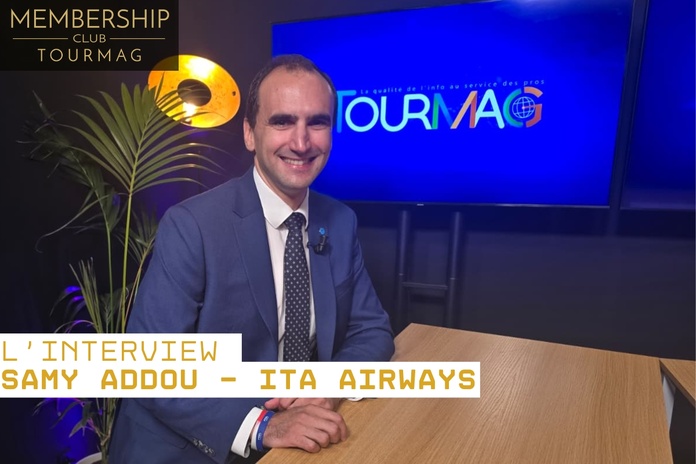
TourMaG – Tensions in the Middle East have significantly disrupted air travel. What impact has that had on ITA Airways?

Samy Addou: The impact is the same as for all market participants. The situation is not easy.

At ITA Airways, we have been very dynamic. We have leveraged fuel hedges that cover about 80% through year-end to try to control costs and, above all, to limit the impact of rising prices.

And we have primarily adjusted capacity and destinations to be as responsive as possible.

As part of this recovery plan, we reopened Tel Aviv on July 1. We will reopen Riyadh in September.

TourMaG – Should we expect capacity adjustments on certain routes?

Samy Addou: No, that is not the case. The program remains stable via Rome-Fiumicino, whether heading to Italy or on the long-haul network.


TourMaG – Travel agencies are noticing later bookings and customers who are more budget-conscious. Do you see the same trend?

Samy Addou: Yes, absolutely, that is a trend that is being confirmed. But what we note is that even if bookings are increasingly late, it does not affect overall demand.

What is very important for us is revenue, so we focus on load factors and yield to ensure we achieve our objectives.

We also adjust capacity, as I mentioned, but also our commercial strategy on a continuous basis, and that is very important for us.


TourMaG – What exactly does this commercial strategy entail?


Samy Addou: We stay close to market players, to distributors, and we work to support them in managing operational variabilities and finding solutions for their clients because ultimately, our distributors need support and we are at their service.


“Marseille is a great success”: ITA Airways continues its development in France

TourMaG – You recently launched the Marseille-Rome route and strengthened Nice. How is this development going?

Samy Addou: Marseille is a great success. The launch is going wonderfully, first of all thanks to our distribution partners. I want to particularly thank them. But also thanks to the Marseille airport, with whom we are working extremely well, and that is very important for us.

The value proposition from Marseille to Rome-Fiumicino is not only point-to-point, but it also enables connectivity from the region to Italy, and beyond, on ITA Airways’ long-haul network.

This is part of a seasonal development plan, as we also opened, at the same time as Marseille, Malaga, Valencia, Alicante, Mykonos and Trapani.

We have also added frequencies on important seasonal destinations in Southern Italy with Brindisi, Lampedusa, Pantelleria, Palma de Mallorca and, above all, Nice.

TourMaG – Specifically, why does Nice occupy a special place in your network?

Samy Addou: Nice is a destination and/or starting point in France that is historic for ITA Airways. The city has accompanied us since the start of operations.

We added a fourth flight starting July 1, through September. And this flight is a night stop. The aircraft stays in Nice and departs very early the next morning. It connects to the entire ITA Airways network.

This enables Nice residents and the PACA region, but also Monaco, to travel to all destinations in our network.

This increase in frequencies and capacity reflects the commitment of customers, but also of distributors to the route; it also reflects growing demand.

Our strategy is really to be efficient and to put in place solutions that are profitable for the future.

TourMaG – Can the Rome-Fiumicino hub become a genuine alternative to other major hubs in Europe or the Middle East?

Samy Addou: For me, it is a more than credible alternative. Rome-Fiumicino is a five-star airport as rated by Skytrax. That is the maximum rating.

The airport was totally renovated after Covid; it is brand new. Connections are a short walk from the Schengen area to non-Schengen. You have access to all the best Italian cuisine, and to many shops. It is really a pleasure to connect via Rome-Fiumicino.

I have no doubt that the other airports are also excellent. But if you travel via Rome, you will not be disappointed.


“Rome-Fiumicino is a more than credible alternative to the major hubs”

TourMaG – Which long-haul routes are currently the most promising via Rome-Fiumicino?

Samy Addou: Thank you for asking, because ITA Airways is of course the national Italian airline, but not only that.

We have a long-haul network that has grown in recent years, and we cover all five continents.

The strongest destinations from Rome-Fiumicino are in North America, because ITA serves Toronto in Canada and eight destinations in the United States.

We also have a wonderful network in South America: Rio daily, Sao Paulo twice daily, Buenos Aires nine to ten times a week. That is very important to us.

We have also developed our network in West Africa, the Middle East, Oceania with the Maldives, Mauritius, and Asia, of course, with Tokyo Haneda, Bangkok, and India.

TourMaG – Could France benefit from new regional route openings?

Samy Addou: I would like to give you an answer, but it is a bit premature.

What I can tell you is that at ITA Airways we are very attentive to network efficiency. We study all opportunities and we will seize, if the opportunity arises, the opening of new regional routes.

TourMaG – Lufthansa Group intends to raise its stake to 90%. concretely, what does that change for ITA Airways?

Samy Addou: Before talking about the future, I will first talk about the present, because concretely, it brings a lot of value for customers and passengers.

Since April 1, we have joined Star Alliance, the world’s largest airline alliance.

We have also joined the Miles & More loyalty program of the Lufthansa Group.

The integration allows for code-sharing. For ITA, that already means 150 additional destinations, 130 lounges that our passengers can access directly thanks to this development in recent weeks.

In Germany, at Frankfurt and Munich airports, we are now a single entity under the Lufthansa Group. We have already joined Lufthansa for operations.

Then, there is a whole range of advantages: cargo is unified, fares are aligned, and we benefit from cost reductions in distribution costs (GDS).

And the big novelty is the NDC, which we migrated to on May 12.

TourMaG – Is the move to NDC linked to the closer integration with Lufthansa?

Samy Addou: We are doing things in order. Migrating to NDC solutions was part of our action plan.

The advantage is that we benefited from the great expertise and experience of the Lufthansa Group, which is a pioneer on the subject.

This greatly facilitated our internal tasks, but above all, it allowed a very smooth implementation for all our partners since May 12.

TourMaG – Where will tourism professionals be able to meet you in the coming months?

Samy Addou: I invite them to meet at the start of the season, at IFTM, on the Business Club, where we will have a shared stand with the Lufthansa Group.

We will be eager to present our innovations to them, represent the group at our stand, and then welcome them for a spritz.


Céline Eymery Published by Céline Eymery Editor-in-Chief – TourMaG.com
See all articles by Céline Eymery

  • picto Facebook
  • picto Twitter
  • picto Linkedin
  • picto email
Ajoutez TourMaG à votre flux Google Actualités Google Actualités icône