Blue Flag 2026: Which Beaches and Marinas Are Blue Flag Certified?


Le Pavillon Bleu, dévoile son palmarès 2026 le lundi 18 mai à Saverne - Photo : Pavillon Bleu

CroisiEurope


The Pavillon Bleu label unveils its 2026 standings on May 18 in Saverne, in the Bas-Rhin. A first for this national ceremony, held on a waterway site.

The Saverne port, labeled since 2018, had notably received the Thomas Joly Award in 2020 for a project to revegetate the riverbanks in favor of biodiversity.

Developed in France by Teragir, the Pavillon Bleu has for more than 40 years distinguished beaches and pleasure ports engaged in sustainable tourism initiatives.

The label rests on several criteria related to water management, biodiversity preservation, pollution reduction, and visitor awareness.

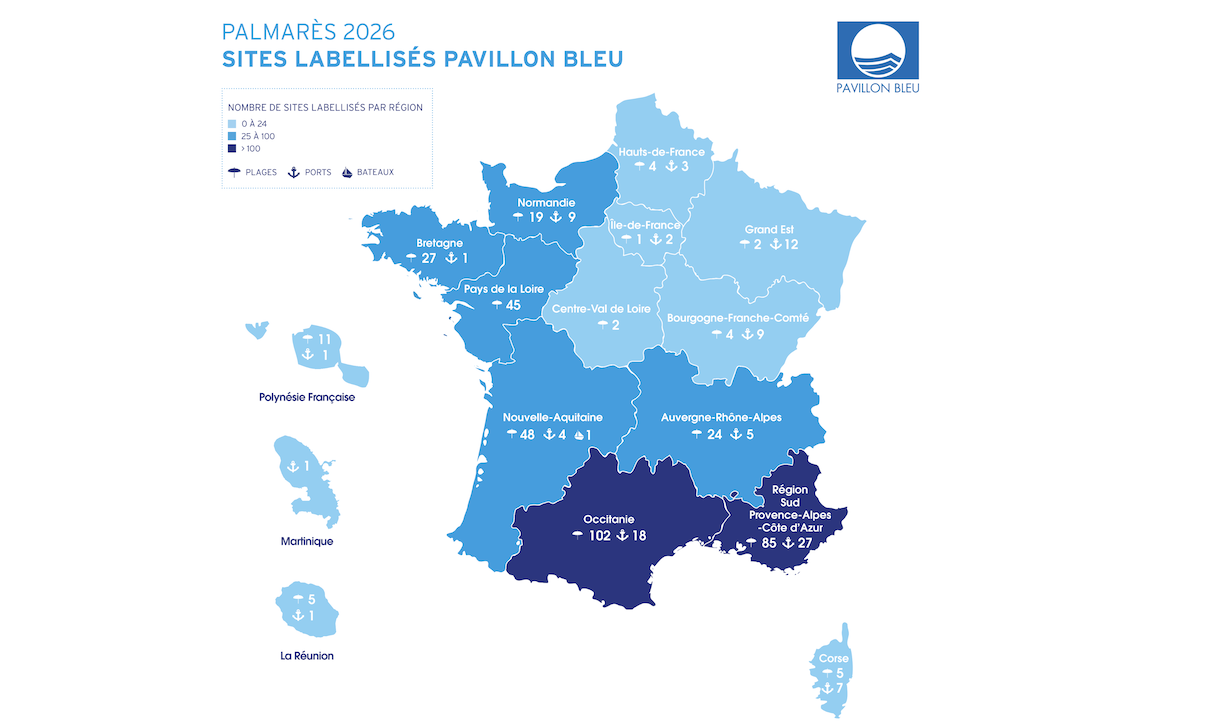
This year, 485 French sites obtain the label, comprising 384 beaches, 100 ports de plaisance and one boat. The sites concerned may fly the Blue Flag throughout the 2026 season.


Les régions littorales toujours en tête

France thus maintains its position among the five countries with the largest number of labeled sites in the world.

The program, carried internationally by the Foundation for Environmental Education, is now present in 50 countries and brings together more than 5,300 labeled beaches, ports and boats.

The 2026 list confirms the strong presence of the major coastal tourist regions in France. Occitanie tops the list with 120 labeled sites, ahead of the Provence-Alpes-Côte d’Azur region with 112 sites.

Nouvelle-Aquitaine accounts for 52 distinguished sites.

Several new sites also join the ranking this year, among them the ports of Saint-Léger-sur-Dheune, Nevers, Charleville-Mézières, Buzet, the Old Port of Golfe Juan and the Jacques-Yves Cousteau port in Castelsarrasin.

On the beaches side, Le Tréport, Carqueiranne and Saint-Symphorien-de-Thénières are among the newly labeled municipalities.

A boat also earns the label: the Atalaya catamaran from Explore Océan, based in Hendaye, offering sea outings dedicated to cetacean watching.


Le tourisme fluvial mis en avant

Choosing Saverne to host the national ceremony highlights the growing importance of inland waterways in sustainable tourism strategies.

According to Teragir, river and lake spaces now account for more than a third of the labeled sites.

The Pavillon Bleu emphasizes several advantages of these territories: generally lower environmental pressure than coastal areas, a role in maintaining ecological corridors, potential for soft mobility, and a contribution to the economic revitalization of river-adjacent municipalities.

This evolution also aligns with travelers’ new expectations, who favor shorter getaways, slow tourism, and experiences reconnecting with nature.


Deux initiatives réunionnaises récompensées

The Thomas Joly Prize, which annually rewards biodiversity initiatives, distinguishes in 2026 two Réunion-based projects.

The City of Saint-Leu is rewarded for its biodiversity preservation and awareness strategy within the framework of its Municipal Biodiversity Atlas.

The Port of Saint-Gilles-les-Bains is, for its part, distinguished for its involvement in the campaigns “Nights Without Light” and “Days of the Night,” aimed at reducing light pollution and preserving nocturnal biodiversity.


Amelia Brille Published by Amelia Brille TourMaG.com Editor
View all articles by Amelia Brille

  • picto Linkedin
  • picto email
Add TourMaG to your Google News feed Google News icon  

6 European Beaches That Now Require Reservations

Listening to the sound of the waves while soaking up the sun on your towel is your favorite vacation activity? Be aware that it is now mandatory to reserve certain beaches in Europe in order to hope to access them. Indeed, faced with a constantly growing number of tourists, some highly popular beaches have had to implement visitor quotas and reservation systems to allow everyone to fully enjoy the place.

This is notably the case in Italy, where about twenty beaches now limit the number of people allowed to visit. Some are already showing as full for the summer season. For vacationers who like to follow their impulses, especially during their holidays, this new setup can therefore feel somewhat disconcerting.

Moreover, some beaches go a step further by charging for access via reservation. “This is the first time I’m visiting Italy, and honestly, I hadn’t even thought about the possibility that you might have to pay to access the beach”, a holidaymaker quoted by the Daily Mail said. Meanwhile, another tourist lamented: “it’s heartbreaking to have to book a spot online just to stand on a beach”. Here are six European beaches where you will need to reserve in advance to enjoy their idyllic settings.

Cala Goloritzé Beach in Italy

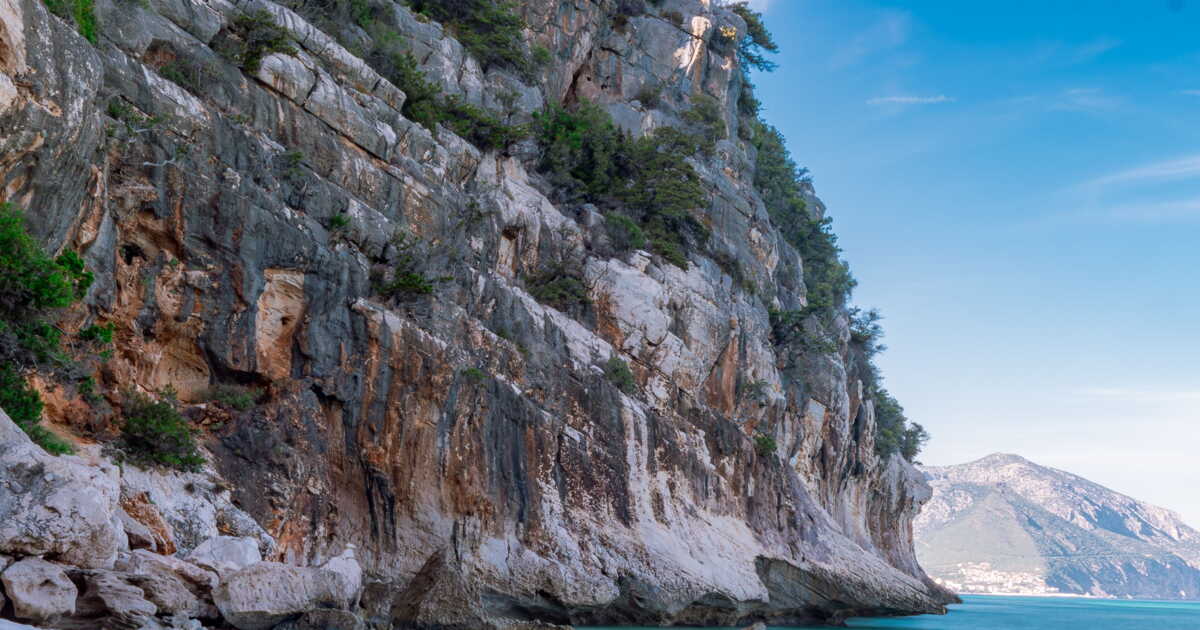
It is a cove in the Gulf of Orosei, located at the foot of the Supramonte di Baunei, on the eastern coast of Sardinia. This beach of white pebbles, 150 meters long and 30 meters wide, is bathed in turquoise water renowned for its high transparency. It also offers a remarkable rocky backdrop, with sandstone cliffs, karst pinnacles rising from the sea, and a stone arch shaped by erosion. Its attendance is limited to 250 people. Reservations open three days in advance and cost 7 €. Children aged 5 and under, as well as local residents, can reserve for free.

It is an aerial view of Cala Goloritzé Beach.

Praia das Catedrais Beach in Spain

It is located in Galicia, at the far northwest of Spain, at the seaside resort of Aguas Santas. Its arches and monumental caves give it a unique landscape, earning it the nickname “Cathedrals Beach.” Indeed, its cliffs form vast natural arches reminiscent of medieval cathedrals. During the months of July, August and September, it is necessary to reserve entry to be able to access it. This is also the case during Holy Week, which typically takes place between March and April. Access remains free, however.

Cette photo illustre les célèbres formations rocheuses visibles sur la plage Praia das Catedrais.
This photo illustrates the famous rock formations visible on Praia das Catedrais Beach.

Tuerredda Beach in Italy

It is one of the most beautiful beaches in Sardinia. It sits in the heart of a cove, between Capo Malfatano and Capo Spartivento, in the territory of Teulada, at the island’s southwestern tip. Renowned for its turquoise waters and fine sand, it is accessible only by reservation from June 2 to October 11. Attendance is limited to 1,100 visitors and tickets cost 3 € per person. Visitors then receive a QR code that they must present to gain access to the beach.

The Sugiton Calanque in France

It’s a true little paradise! It sits within the Calanques massif, in the south of the Marseille metropolitan area, near the Luminy university site. “The Sugiton Calanque and the Pierres Tombées are suffering from pronounced erosion due to overcrowding. To protect the sites, the National Park limits the number of visitors by making access subject to a mandatory and free reservation during the peak season,” one reads on the reservation site, which is open on June 20 and 21, every day from June 27 to August 30, on September 5 and 6, and on September 12 and 13. The reservation is free.

Il s'agit de calanque de Sugiton située dans le parc national des Calanques.
It is the Sugiton Calanque located in the Calanques National Park.

The Cala Brandinchi and Lu Impostu Beaches in Italy

The two stunning Sardinian bays of Cala Brandinchi and Lu Impostu both require reservations from June 1 to September 30. Visitors can book their access one or two days in advance only, depending on the period, at a price of 2 € per person. They are renowned for their exceptional natural beauty and crystal-clear waters.

The Sandwich Bay in the United Kingdom

Sandwich Bay is a long sea inlet between Ramsgate and Deal, on the east coast of Kent, England. The coastal area consists of sandy flats with their salt marshes and coastal sand dunes. Public access to the site is blocked by a barrier; there is no mandatory booking system for visitors, but entry is paid. Visitors can purchase seasonal memberships from April 2026 to March 2027 or pay on-site. Prices range from £5 to £16, depending on the vehicle parked.

Il s'agit d'une plage du Royaume-Uni.
It is a beach in the United Kingdom.

The 10 Most Beautiful Beaches in Europe, According to a Recent Ranking

From the crystal-clear waters of the Mediterranean to the wild shores of the Atlantic, Europe is brimming with beaches with spectacular landscapes. To establish its ranking of the continent’s most beautiful beaches, European Best Destinations analyzed hundreds of coastal sites before selecting the best-rated according to several criteria, including natural beauty, water quality, authenticity, accessibility, and environmental preservation. The top 30 beaches were then presented to an international panel of tourism experts. A result that notably highlights Greece, represented alone by five beaches in the top 10.

The Greek Islands Dominate the Rankings

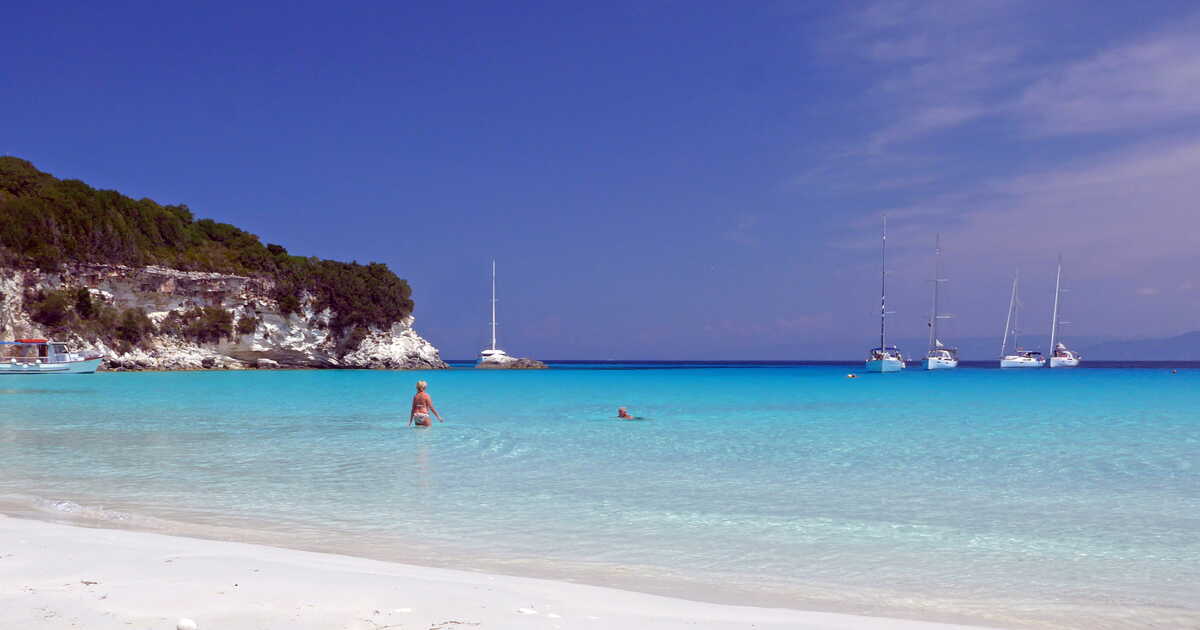
Greece places several of its coastal gems among Europe’s most sought-after destinations. In second place, Voutoumi Beach, on the small Ionian island of Antipaxos, captivates with its particularly clear turquoise waters, white pebbles, and the surrounding green hills. Its tranquil setting makes it a favored spot for swimming and snorkeling, far from the bustle of some Mediterranean resort towns.

Third place goes to Fteri Beach on the island of Kefalonia. This beach is often regarded as one of Greece’s most pristine spots. Its relatively challenging access, by boat-taxi or along a hiking trail, keeps crowds away. Visitors discover a stretch of white pebbles bordered by steep limestone cliffs plunging into turquoise waters.

Another iconic site, Elafonissi Beach in Crete, ranks fourth. Located on the island’s southwest coast, this beach is globally renowned for its pink-tinged sand. This natural phenomenon, combined with shallow lagoons and clear waters, creates a landscape often likened to Caribbean scenes. Protected within a nature reserve, it also attracts many families thanks to its calm waters and wide bathing areas.

Corfu, meanwhile, manages to place two beaches in the ranking. Rovinia Beach, eighth, is tucked beneath tall, vegetation-covered cliffs on the island’s western coast. Accessible only on foot or by boat, it preserves a wild character valued by travelers seeking tranquility. Its preserved environment and the clarity of its water are among its main assets.

The tenth place is Paleokastritsa Beach, one of Corfu’s most famous seaside destinations. The region is distinguished by a succession of rocky bays, sea caves, and green hills that descend into the sea. Visitors come for swimming as well as boat trips, snorkeling, or water sports.

From Portugal to Norway, the Other Beaches Completing the Top 10

The top spot goes to Monte Clérigo Beach in the Algarve, Portugal. Situated along the Costa Vicentina, this beach is renowned for its wide ribbon of golden sand, wild Atlantic landscapes, and spectacular sunsets, which has earned it the nickname “Sunset Beach.” Located within the Southwest Alentejo and Costa Vicentina Natural Park, it attracts nature lovers, surfers, and those seeking wide, preserved spaces. Its calmer atmosphere compared to the more crowded resorts of the Algarve is also a strong selling point.

In fifth place is Bogliasco Beach in Liguria, northwest Italy. This small pebble cove sits within one of the most charming fishing villages of the Italian Riviera. The colorful houses that overlook the sea and the relaxed atmosphere contribute to its appeal. Loved by locals during the summer, it offers a more authentic face of the Ligurian coast.

Spain is represented by Cala Mesquida on Mallorca, ranking sixth. This dune-fringed bay stands out for its 300-meter-long white-sand beach. Unlike some of the island’s highly urbanized beaches, it preserves a relatively natural setting, framed by rugged hills. Its turquoise waters and wide spaces attract both families and lovers of preserved landscapes.

Further north, Kvalvika Beach, in Norway, earns seventh place. Hidden in the heart of the Lofoten Islands, this Arctic beach presents a dramatic scene where golden sand meets rugged mountains and surprisingly turquoise waters. Accessible only after a one- to two-hour hike, it remains completely free of urban development. The absence of infrastructure further amplifies the sense of isolation that makes it famous.

Finally, Kaputaş Beach in Turkey ranks ninth. Nestled between the resort towns of Kaş and Kalkan, this sheltered cove is surrounded by steep cliffs that heighten the intensity of the blue of its waters. Though it has become one of the most photographed beaches along the Turkish coast, its spectacular setting continues to attract visitors seeking exceptional panoramas.