Royal Caribbean Hosts Over 500 Travel Agents Aboard the Legend of the Seas


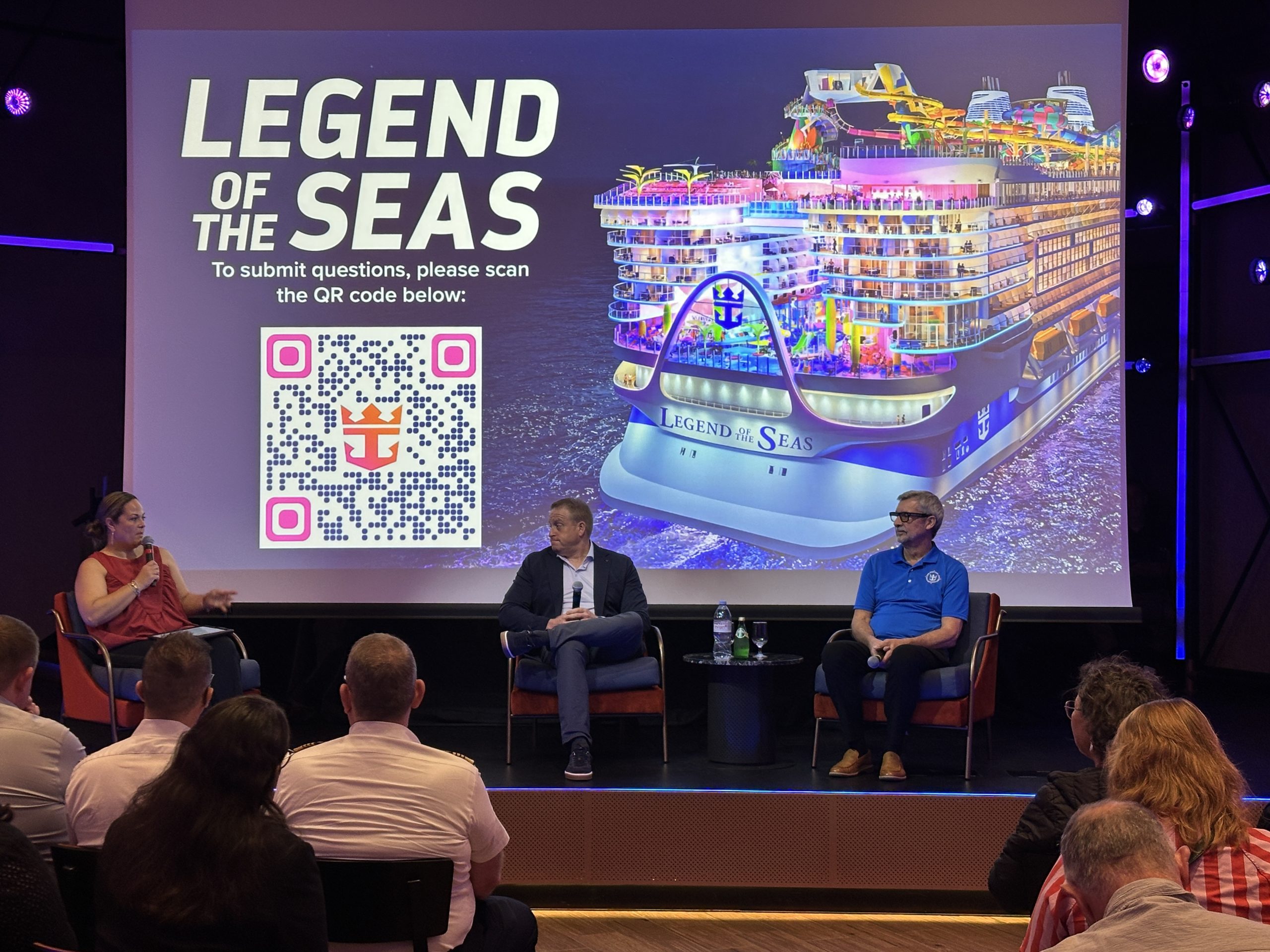
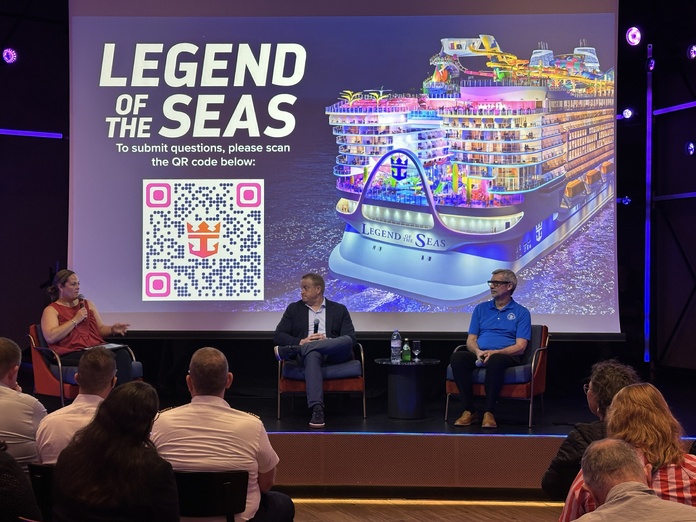
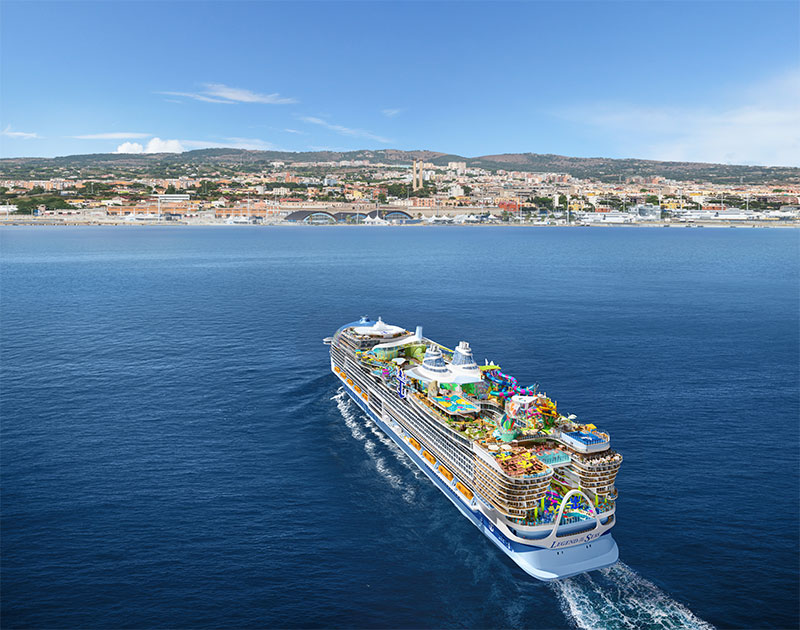
Plus de 500 agents de voyages EMEA ont participé au « Seminar at Sea » de Royal Caribbean à bord du Legend of the Seas.   Photo: Royal Caribbean

Hurtigruten


Royal Caribbean a réuni plus de 500 agents de voyages venus de toute la région EMEA à bord du Legend of the Seas pour son plus important « Seminar at Sea » jamais organisé.

Pendant five days, les professionnels ont pu se familiariser avec le nouveau navire, premier de la Icon class à naviguer en Europe, et approfondir leur connaissance de l’offre de la compagnie.

Les participants ont notamment découvert les différentes catégories d’hébergement, les expériences proposées à bord, les principales escales du navire ainsi que le portefeuille de destinations Ultimate de Royal Caribbean. Ils ont également pu tester en avant-première le nouvel outil de traduction en direct basé sur l’intelligence artificielle, avec des contenus audio et des sous-titres disponibles dans plusieurs langues.


Royal Caribbean : formation et immersion à bord

The program combined training sessions and product discovery. The agents were notably able to participate in Legend Quest, an interactive experience in the form of a game that lets participants explore the ship and its various activities.

They also had access to roughly 40 dining, drinks and entertainment experiences offered onboard, including the new Hollywoodland Supper Club and the show Roald Dahl’s Charlie and the Chocolate Factory. The itinerary also included calls at Palma de Mallorca and La Spezia.

Royal Caribbean emphasizes that this format should enable travel partners to better grasp the experience offered to their clients and to strengthen their expertise on the company’s offerings.
Italy: Verona Is Worth More Than the Romeo and Juliet Legend


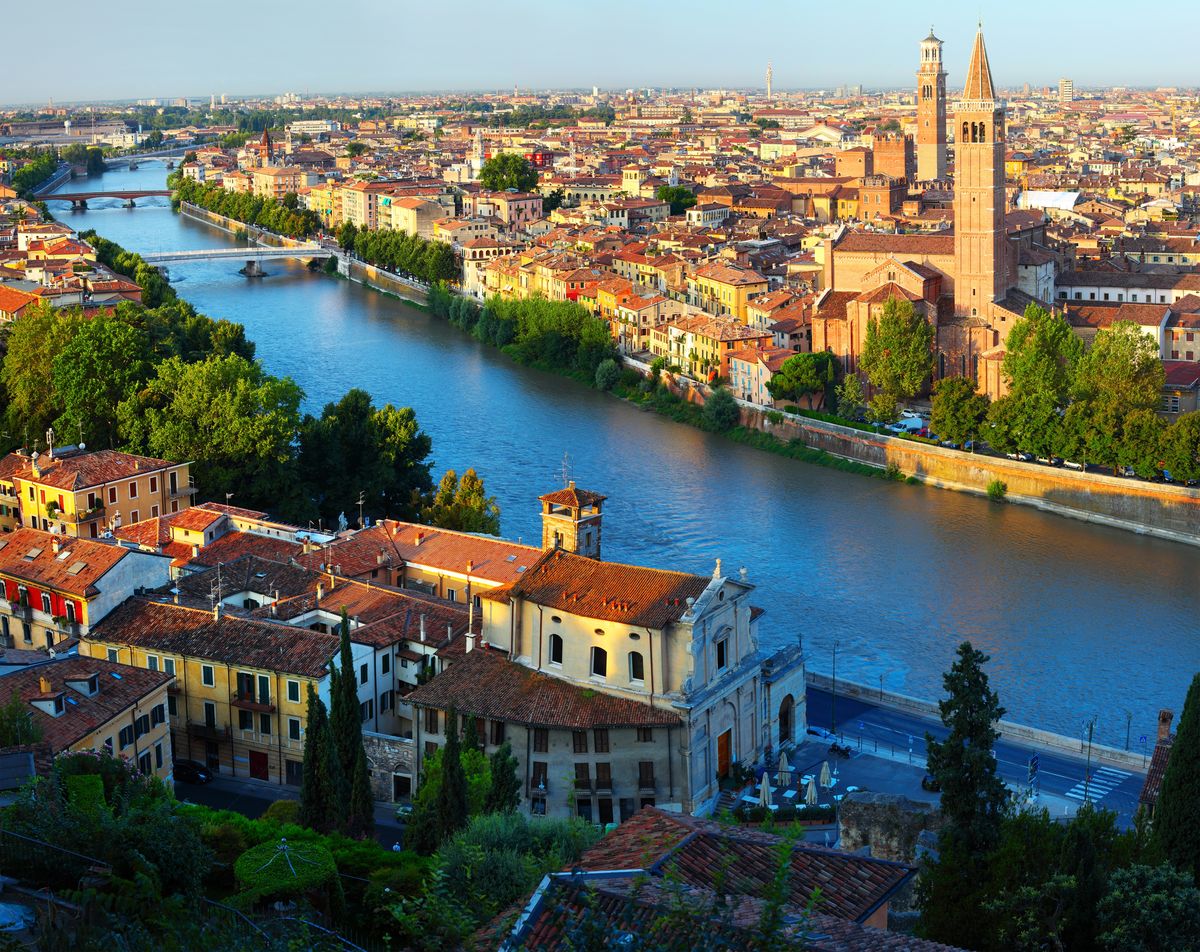
Vue générale de Vérone. © Deposit Photos.

Hurtigruten


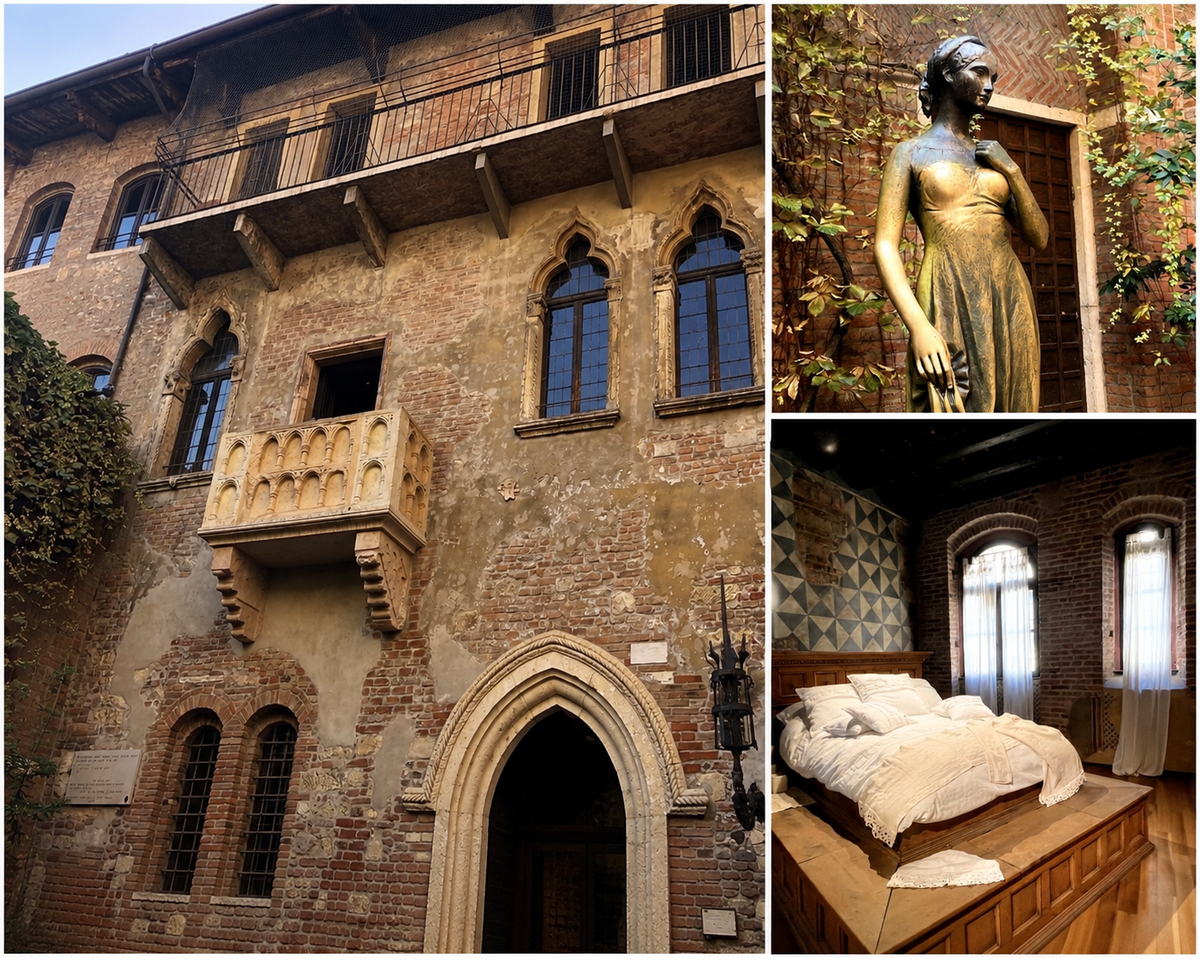
No. 23, Via Cappello is never quiet.

It is here that Juliet Capulet, Romeo Montague’s passionate lover, is believed to have lived, two Verona youths whose story ends in tragedy due to the hatred between their two families.

Poignant, this tragic love story is nevertheless fictional. The “Juliet’s House” is not much more authentic. Indeed, it is a 14th‑century Gothic dwelling, but the balcony Roméo is said to have climbed was added in the 20th century, as is the bronze statue of Juliet in the courtyard.

This does not stop tourists from flocking there, as the “Lovers of Verona” have been captivating figures since, in 1596—a couple of centuries after the alleged events—the English playwright William Shakespeare made them the heroes of one of his most famous plays.


A Legend in Solid Gold


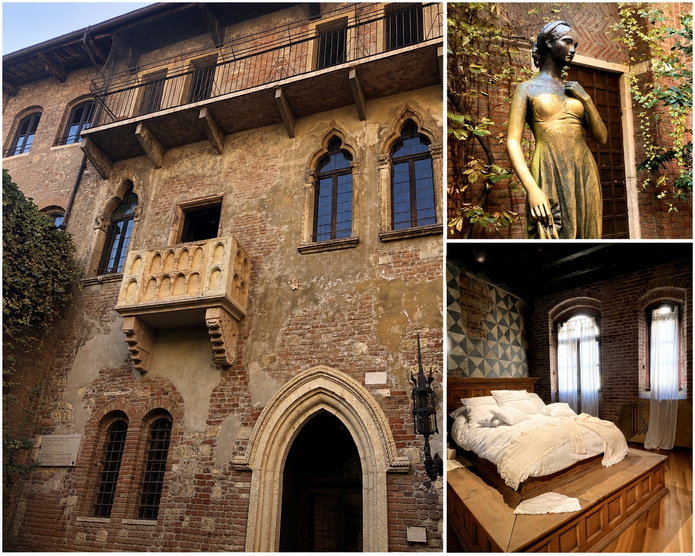
La maison et son balcon rajouté au XXe siècle; la statue de Juliette ; dans le petit musée installé dans les étages, le lit des "amants de Vérone" utilisé en 1969 par Franco Zeffirelli pour son film Roméo et Juliette. Photos PB. Composition générée par IA.

This drama did not originate from Shakespeare’s imagination: the story reached him after nearly a century’s journey, across Italy, France, and England, and through the hands of at least five different writers.

It was a certain Luigi da Porto who, first (the date is 1531), placed the plot in Verona. Reading Dante’s Divine Comedy, he learned that the Renaissance poet explicitly cited the Montecchi (Montagues) and the Cappelletti (Capulets) to illustrate the political struggles between rival families that stained medieval Italy, Verona in particular.

It is from these history-laden names that Da Porto and, in his wake, Shakespeare wove this story which, after them, inspired numerous books, films and performances. As for the city of Verona, it leans into this legend to boost its tourist appeal…


Two thousand years of history


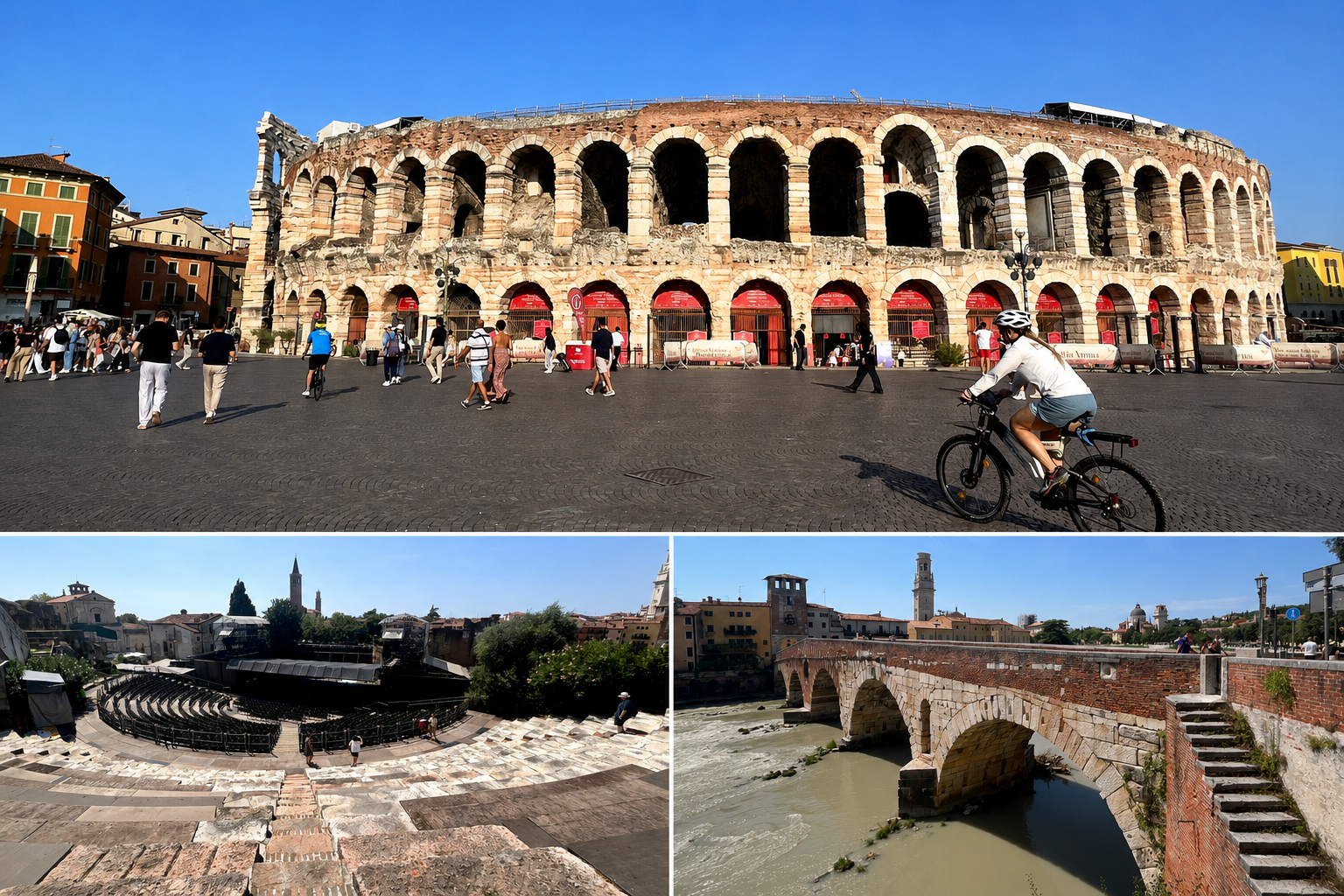
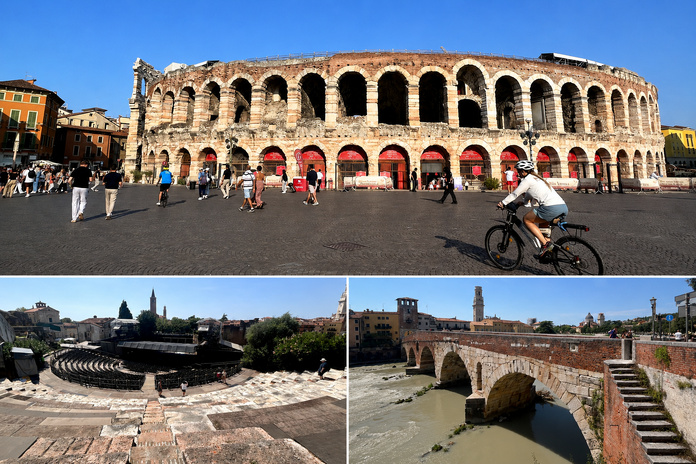
Les arènes de Verone. Le théâtre antique. Le pont romain qui enjambe l'Adige. Seules ses premières arches sont d'origine. Photos PB. Composition générée par IA.

Although Juliet’s House is almost obligatory on the itinerary (15 € entry, all the same), Verona deserves to be explored for many other reasons that make one regret the myth’s heavy prominence.

Indeed, in this Northern Italian city founded by the Romans over 2000 years ago, everything is beautiful: pink marble (sourced from Valpolicella, a region best known for its wines) and the bricks used for so many palaces, the colorful façades, the carved window and door frames, the ornate balconies, the fountains, the squares, the courtyards, the countless churches…

From its origins, Verona preserves many Roman remains, two gates, part of the ancient ramparts, its Ponte Pietra spanning the Adige river, and of course its ancient open-air theater perched against San Pietro hill: rediscovered in the 19th century after centuries of neglect, it hosts a Shakespeare Festival every July, while the contiguously located former monastery San Girolamo houses a rather interesting archaeological museum.

And then, on the imposing Piazza Bra, there are the Arenas which, every summer, draw in lyric artists and opera lovers from around the world.


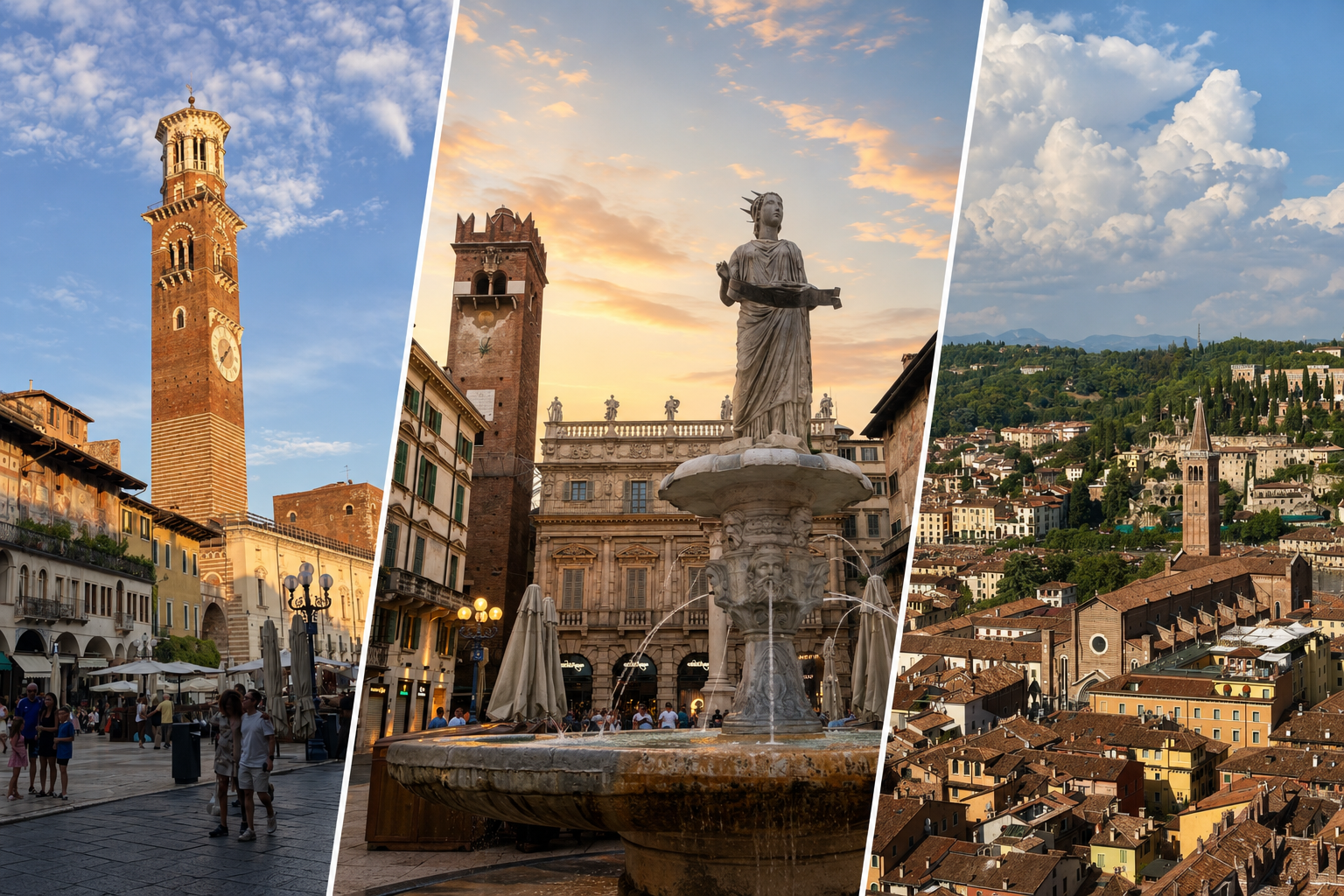
Verona: the jewels of Piazza delle Erbe


La tour des Lamberti. La place aux herbes, la fontaine Madonna et au fond, le palais Maffei. Vue des toits de Vérone depuis la tour des Lamberti. Photos PB. Composition générée par IA.

Verona today blends historic charm, cultural energy and the Italian art of living to perfection.

If, on Piazza Bra where the Arenas stand, you can admire a few palaces (Barbieri Palace, Gran Guardia Palace) before sitting under the arcades, on the prestigious Piazza delle Erbe you are spoilt for views, even though souvenir and ice cream vendors and fresh fruit stalls slightly spoil the perspective.

This square sits at the site of the ancient Roman forum and right at the intersection of the two main arteries that formed the grid of the ancient city: one axis, running east-west, connected Venice, Milan and France; the other, north-south, linked England to Rome and was long used by merchants from northern Europe.

A major commercial crossroads of northern Italy since antiquity, Verona remained so in the Middle Ages: witness the red-brick Domus Mercatorum, also called Casa dei Mercanti (House of Merchants), built in 1301 at a corner of Piazza delle Erbe.

This square is surrounded by so many magnificent historic buildings that you can almost get dizzy: Gardello Tower, completed in 1370, housing one of Europe’s oldest public clocks; right next to it, Maffei Palace, with a Baroque façade and a balustrade adorned with statues of Greek gods; then, the Mazzanti Houses decorated with splendid 16th-century frescoes; finally, Palazzo della Ragione (Palace of Reason, seat of medieval justice).

Adjacent to this palace rises the Tower erected by Verona’s wealthy noble family, the Lamberti. About 300 steps lead to its panoramic terrace (84 meters) from which the view over Verona’s rooftops is sublime. Don’t worry—the elevator is available!

In the middle of the square, the Madonna Verona fountain has displayed since 1368 its elegant red marble and its Roman statue.


At the Heart of the Medieval Struggles


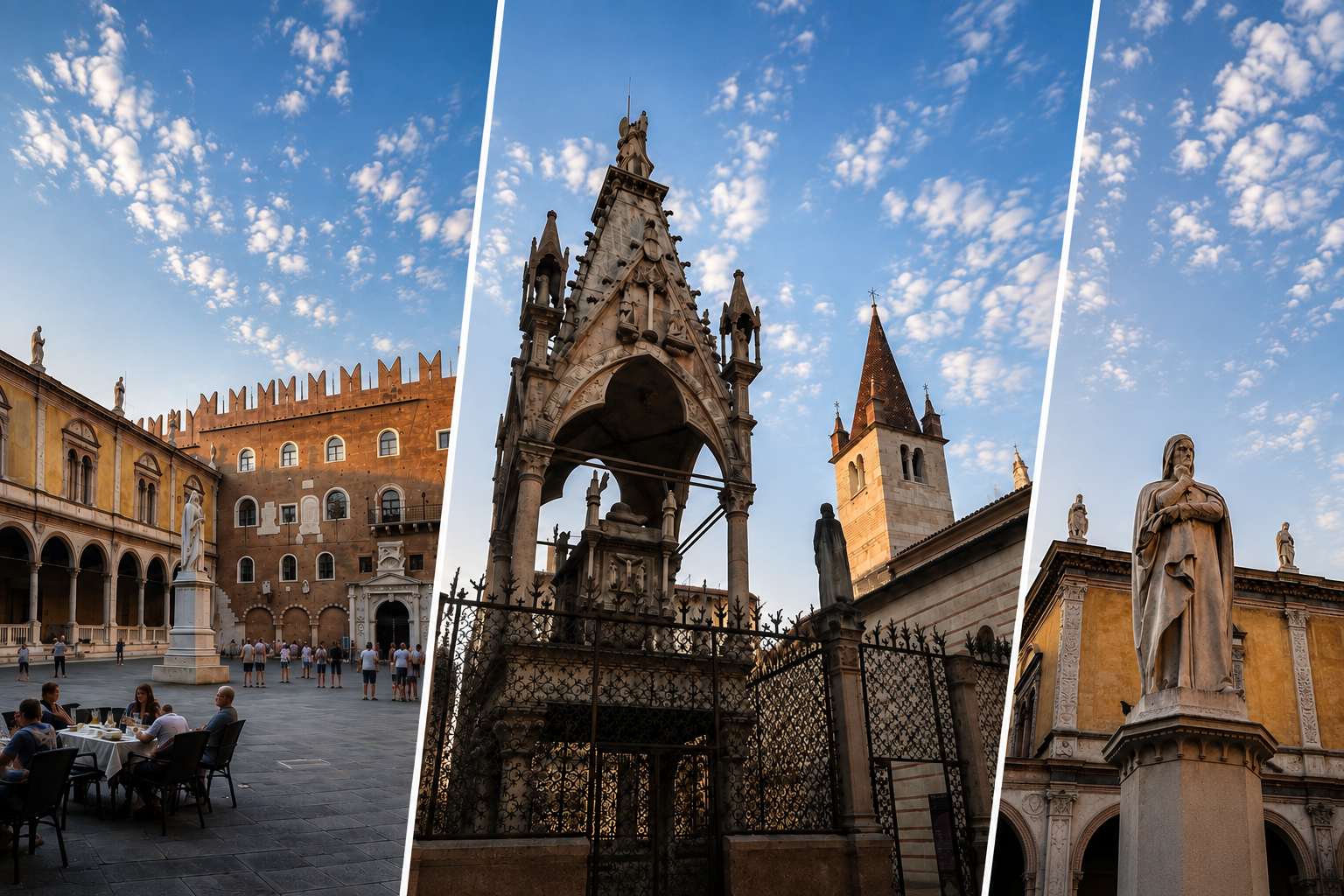
Place de la Seigneurie. Complexe funéraire gothique de la dynastie des Scaglieri. Statue de Dante Alighieri sur la place de la Seigneurie. Photos PB, composition générée par IA

Two steps from the Piazza delle Erbe, the Piazza della Signoria — the political heart of the medieval city — houses a statue of the poet Dante, who took refuge in Verona after his exile from Florence.

All around, elegant palaces — linked together by arcaded galleries and loggias — speak of the splendor of the past. Among them, the former Residence of Cangrande I della Scala, the most prestigious figure of the powerful Scaligeri family, who, after a merciless struggle, seized power in Verona in 1262 and made it a prosperous city.

After the Scaligeri lost power in 1387, Verona lived under other dominations, notably that of the Republic of Venice (hence the column bearing the Lion of Saint Mark on Piazza delle Erbe): begun in 1405, this period ended in 1797 with Napoleon Bonaparte’s occupation during his Italian Campaign, which led to Verona’s… alignment with Austria.

Just a few steps from the Piazza della Signoria, right beside Santa Maria Antica, a Gothic funeral complex leaves one astonished: lay in marble sarcophagi the principal figures of the Scaligeri dynasty. That of Cangrande I is topped by a magnificent equestrian statue!


Four churches not to miss


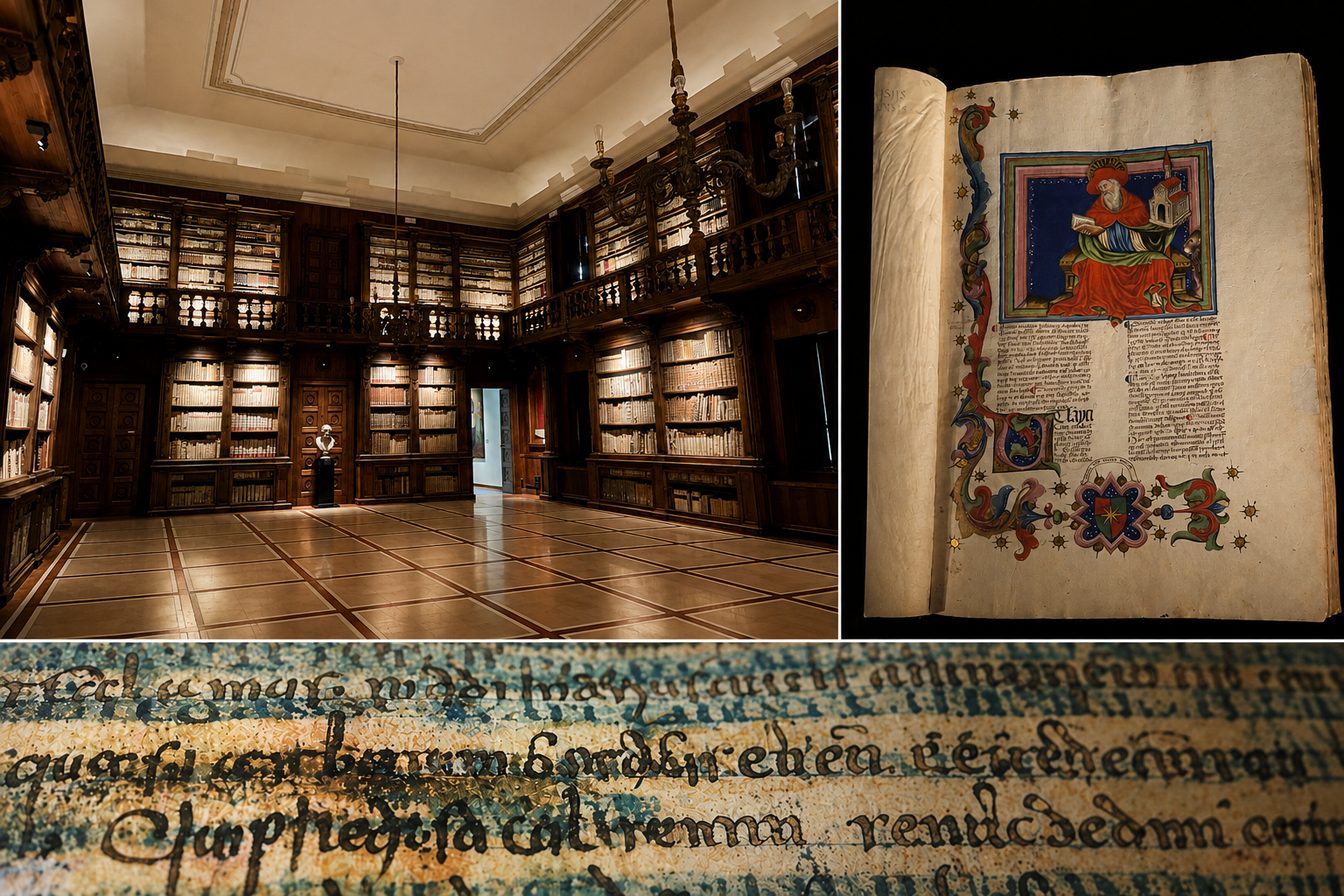
The Capitular Library, a genuine treasure


La salle principale de la Bibliothèque capitulaire. Liniature de Saint-Jérôme illustrant un manuscrit du XIVe. Détail (reproduction) du Palimpseste de Gaius. Photos PB. Composition générée par IA.

The most extraordinary jewel, nonetheless, is the Capitular Library, housed in the canonical palace just to the left of the Duomo!

Now managed by a Foundation, it was originally the study library of the Cathedral’s Chapter of canons.

“Founded 1600 years ago, it is, insists Valeria Nicolis, the conservator, the oldest library still in operation in the world”. It houses 700 rare works of art, 1200 manuscripts and 100,000 printed books, ancient and modern, spanning disciplines from theology and history to philosophy, literature, law, medicine, botany and astronomy. The main hall, with shelves from floor to ceiling, holds no fewer than 15,000 volumes.

Its most precious treasures are manuscripts, including major and unique pieces, notes Valeria Nicolis.

The oldest (the Codex Ursicinus) dates from 517! The Indovinello veronese is, itself, the oldest testimony of the transition between Latin and the vernacular Italian language. Finally, the Palimpsest of Gaius is the only text we have that attests to the foundations of classical Roman law.

No wonder scholars from around the world come to study there on site (possible since 2023)!

The general public, meanwhile, swoons over manuscripts adorned with delicate illuminations: some are displayed for a few weeks in hermetically sealed cases (temperature and humidity controlled), before a long return to the depths of the archives. Seeing originals is such a rarity!


A city terrifically alive


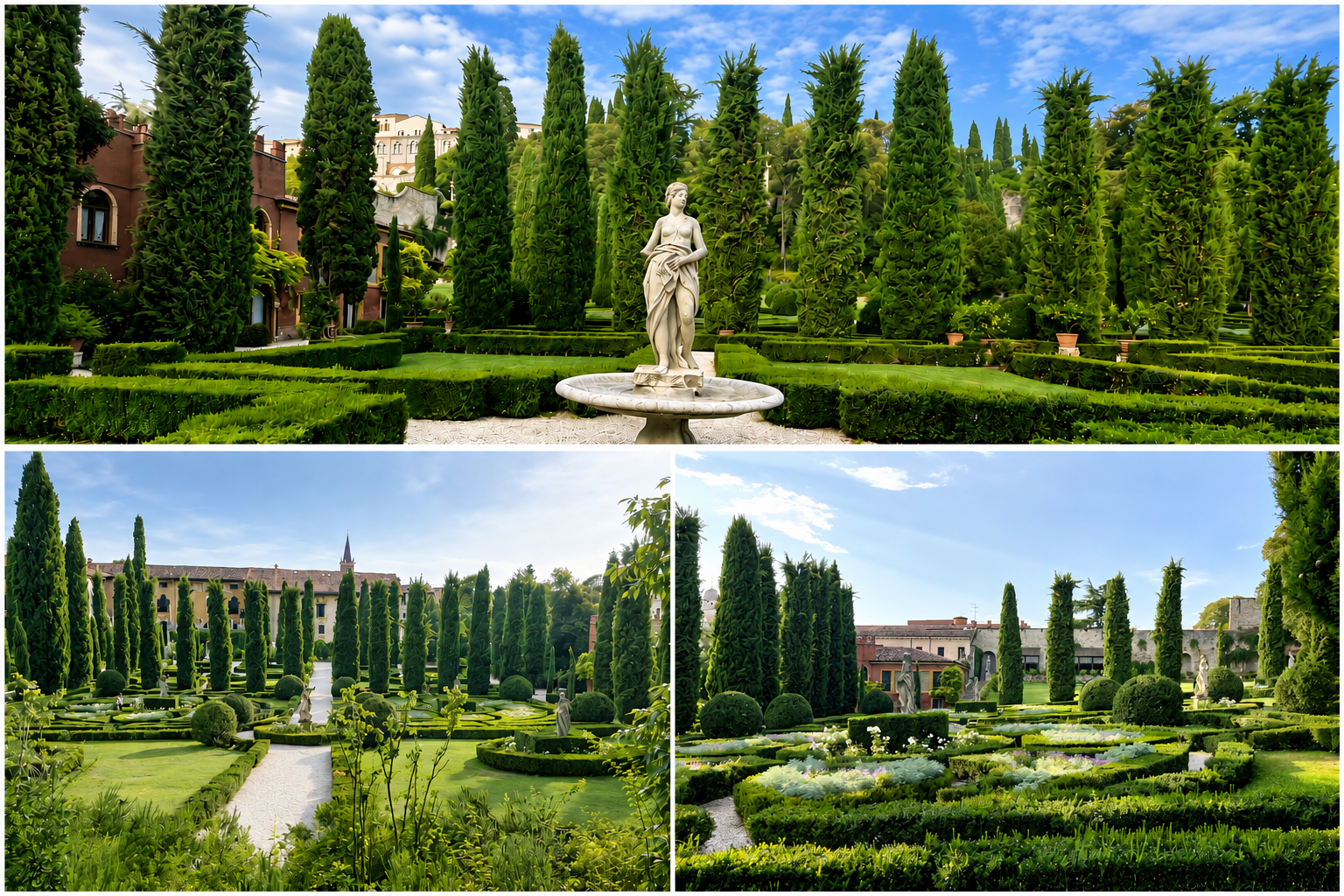
Créés au XVIe pour la famille Giusti, ces jardins en terrasse constituent l’un des exemples les plus aboutis de l’influence de la Renaissance italienne. Photos PB. Composition générée par IA.

Although all these marvels leave little room for doubt, Verona is above all a city where life is good, to stroll, to savor specialties (risotto all’Amarone soaked in wine, gnocchi, sweet Pandoro…), or simply to sip an espresso or a spritz on the numerous terraces of Piazza Bra and Piazza delle Erbe! Even shopping in the charming shops of Via Mazzini, Corso Porta Borsari or Via Rosa.

It is also pleasant to cross the Adige to explore, on its left bank, the Giusti Palace garden — one of the finest Renaissance-era parks — and the Veronetta student district, peaceful in the summer when the city center is buzzing.

This Verona escape ends on a high note if you ascend—though you can take the funicular!—to Castel San Pietro’s belvedere. Perched on a hill, this former fortress offers an unforgettable view of Verona, especially at sunset. It is also an ideal starting point for strolling along the old ramparts or across the surrounding hills.


PAULA BOYER Publié par Paula Boyer Responsable rubrique LuxuryTravelMaG – TourMaG.com
Voir tous les articles de Paula Boyer

  • picto Twitter
  • picto Linkedin
  • picto email
Ajoutez TourMaG à votre flux Google Actualités Google Actualités icône


We Tested the Legend of the Seas: Videos


Jason Liberty, président-directeur général de Royal Caribbean Group et Michael Bayley Président- CEO de la compagnie en conférence de presse lors de l'inauguration du bateau le 29 juin 2026, à Malaga - Photo : RS

CroisiEurope


In Malaga, on June 29, the mood had all the trappings of a Hollywood-style launch.

Fireworks, performances on every deck, hundreds of journalists from around the world, influencers…

Royal Caribbean spared no expense and all eyes were on the Legend of the Seas, the third ship of the Icon class.

But behind the spectacle, the message is far more strategic. “Europe is a very important market for us,” declared Jason Liberty, Chief Executive Officer of Royal Caribbean Group.

“The Legend of the Seas’ arrival in the Mediterranean is not simply a new fleet deployment. It signifies the world’s second-largest cruise company’s intent to deepen its presence in a European market where demand continues to grow.”, he added.


Une inauguration européenne

For Michael Bayley, President of Royal Caribbean International, this decision reflects an obvious truth, since until now, ships of this new generation had been reserved for the North American market.

Indeed, the calendar speaks for itself. After a first nearly fully booked summer season this year, the Legend of the Seas will, in 2027, operate a full Mediterranean season from April to late October.

Royal Caribbean also plans to gradually expand its European offering, with a second Icon-class ship also positioned in the Mediterranean. “The second ship will have more embarkation ports, notably Lisbon, with itineraries including Morocco, the Canary Islands and a large part of the Western Mediterranean,” the president, Michael Bayley, confirmed at a press conference.

“France clearly features among the targeted markets, however our product is not intended for a single nationality. We are seeking international guests. Wherever you are in the world, you can probably board a Royal Caribbean ship within five hours’ flight,” added Gianni Rotondo, head of the EMEA markets.

This global strategy remains one of the group’s main strengths, now present in North America, Europe, Asia, Australia, and South America.


L’Icon comme vitrine du modèle Royal Caribbean

The Legend of the Seas naturally impresses with its size. Among the largest cruise ships in the world, its capacity can reach nearly 7,600 passengers.

But Royal Caribbean stresses another point: size is not a goal in itself.

“It’s a ship capable of delivering an excellent vacation experience, both extraordinary and intimate in the quality of its offerings, for a solo traveler, a couple, a family or a multigenerational family.” insists Jason Liberty.

To achieve this, the company started from a clean slate.

The Icon class does not merely reuse the codes of Oasis or Quantum.

It introduces an entirely new organization around eight themed neighborhoods, designed for different customer profiles… even though the emphasis here is clearly on families.

“80% of Icon-class cabins can accommodate three or four people, compared with only 30 to 35% on other classes of the company.” recalls Gianni Rotondo.

Surfside, a district entirely dedicated to young families, the new Ultimate Family Townhouse on three levels, and the proliferation of shared living spaces illustrate this orientation.

Teenagers themselves also influenced the ship’s design. Studies by Royal Caribbean show that they are now seeking more social spaces than clubs reserved for their age group.


L’expérience comme moteur économique

According to Royal Caribbean, up to 20 to 30% of guests now choose to stay onboard during certain port calls. This trend has led the company to rethink its ships, designed as genuine destinations in their own right.

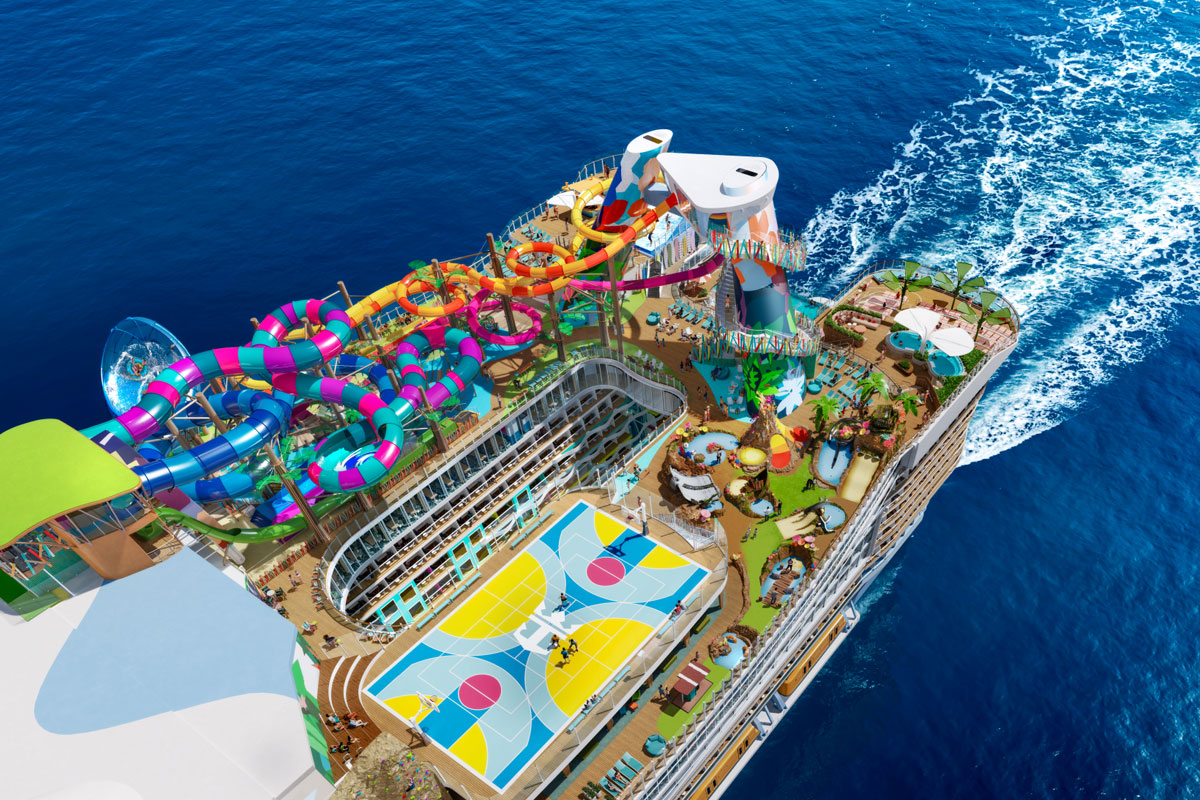
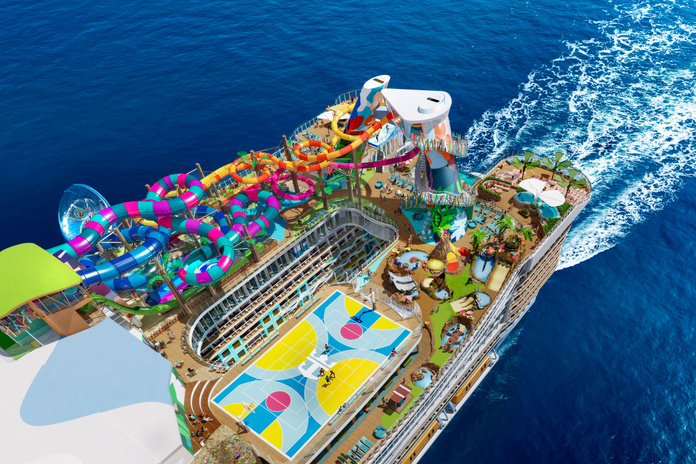
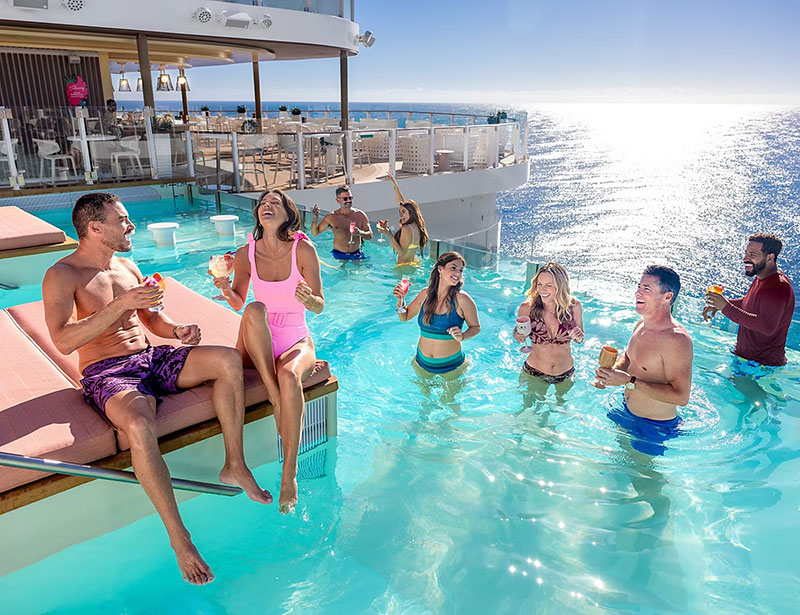
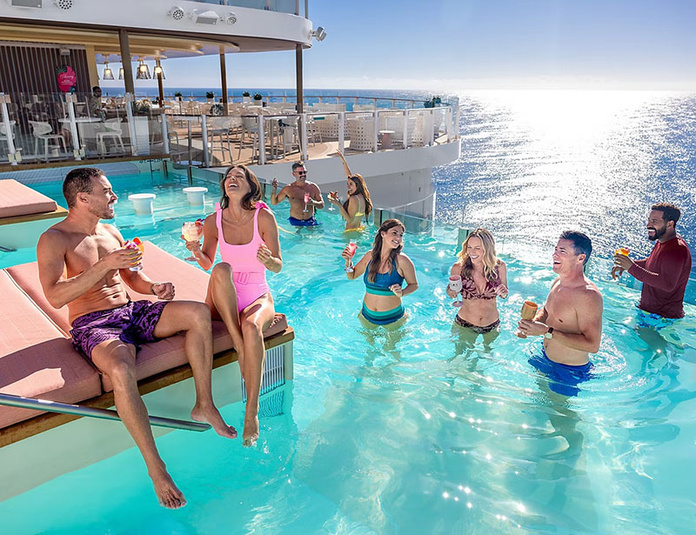
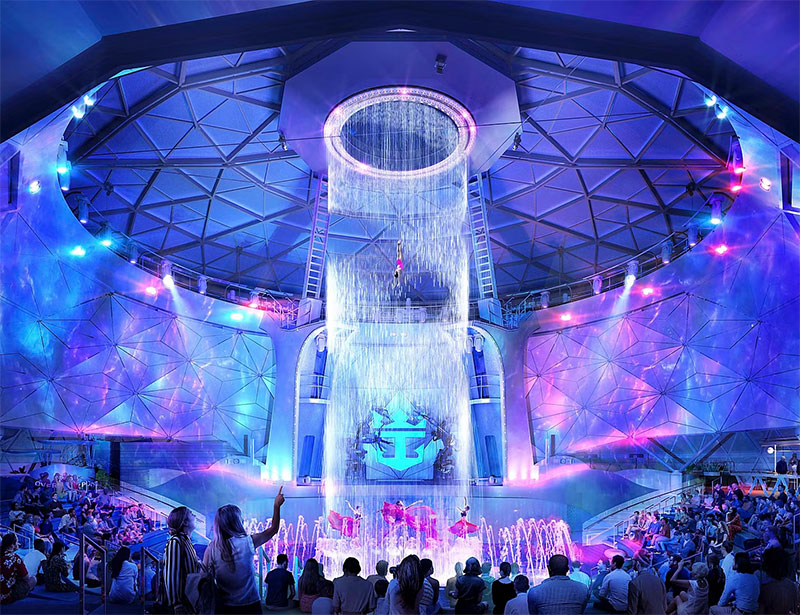
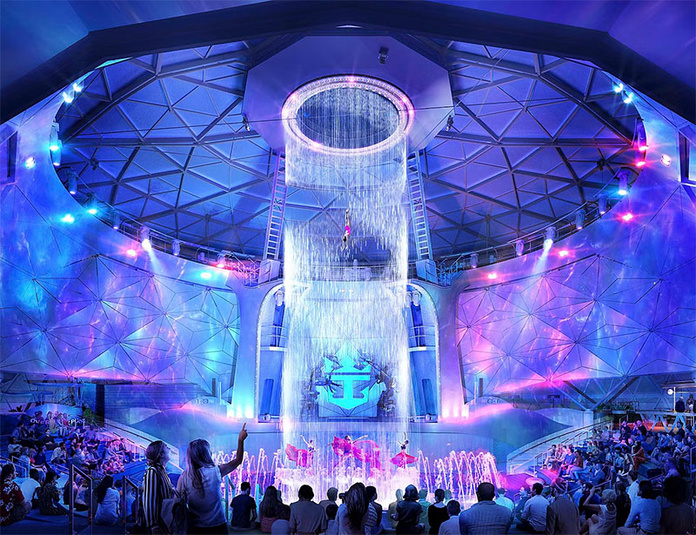
The Legend of the Seas offers 28 food and beverage options, including about ten complimentary, more than 40 culinary and entertainment experiences, seven swimming pools, the largest water park ever built at sea with Category 6, Crown’s Edge or the Aqua Dome, now one of the ship’s architectural signatures.

Social networks now directly influence design. “They changed everything.” acknowledges Michael Bayley.

Jason Liberty adds: “We deliberately create places where guests will want to take photos and share them.”

The Pearl, an immense sphere at the heart of the ship, perfectly illustrates this logic.

For Jason Liberty, the real challenge today “is no longer to promote cruising, but to persuade those who think it isn’t for them.” According to the group, a guest who discovers cruising is five times more likely to sail again.


Royal Caribbean prépare déjà l’avenir, entre technologie et développement durable

If the spectacular draws the eyes, the most significant investments are often invisible.

The Legend of the Seas carries thousands of sensors capable of continuously analyzing the ship’s operations. “We consider artificial intelligence a superpower,” states Jason Liberty.

AI now enables a vessel to optimize energy consumption, air conditioning, predictive maintenance or even supply management.

“We have reduced food waste by more than half thanks to AI, and when we realize savings, we reinvest them into product improvement,” explains Jason Liberty.

In terms of product improvements, the leader emphasizes environmental impact, a topic that can still deter some potential customers.

Propelled by LNG, the Legend of the Seas also incorporates heat recovery systems, shore power connections and technologies designed to prepare for the eventual use of synthetic fuels. “Our ultimate mission is to offer the best vacation experiences in a responsible way,” he adds.

These innovations enable Royal Caribbean to prepare the future Discovery Class, develop new Royal Beach Clubs, continue expanding Perfect Day and even prepare its entry into the river cruise market.

Royal Caribbean’s Legend of the Seas Completes Its Maiden Mediterranean Cruise, Impressing Industry Professionals


© Royal Caribbean

CroisiEurope


Parlons chiffres pour commencer. Fruit d’un investissement de 2 milliards de dollars, le Legend of the Seas mesure 364 mètres de long, compte 20 ponts et dispose de 2 805 cabines réparties en 28 catégories, dont certaines comme les suites donnent accès à des restaurants réservés exclusivement à leurs occupants. Mais le « Legend of the Seas » c’est bien plus que cela…

Ce n’est pas un hasard si le troisième navire de la classe Icon de Royal Caribbean a conçu ses espaces comme les quartiers d’une ville, huit au total. À l’image de Central Park, un véritable parc urbain avec plus de 30.000 plantes naturelles entourant les bars et restaurants qui s’y trouvent, et où l’on recherche une plus grande tranquillité avec le chant des oiseaux pour bruit de fond. Tout en contraste avec le Category 6, la zone qui abrite le plus grand parc aquatique jamais construit sur un paquebot de croisière et où vous trouverez des toboggans à couper le souffle. Parce que sur le « Legend of the Seas » il y a une croisière, des installations et des moments pour tous les types de clients. Les plus petits ont même un quartier de plus de 1.500m2, l’Adventure Ocean où des moniteurs spécialisés les accueillent pour des activités réparties par groupes d’âge. Sans oublier les clients des Suites qui peuvent profiter d’un quartier qui leur est exclusivement réservé, sur 3 étages et avec des vues époustouflantes. Avec leur restaurant, leur lounge, leur solarium et leurs macro-jacuzzis, tout cela en exclusivité pour les clients qui voyagent en Suites.


© Royal Caribbean

Ce qui est certain aussi, c’est que Royal Caribbean maîtrise parfaitement l’art de la logistique en mer, gérant les flux comme personne, évitant les attroupements dans les zones les plus prisées comme les buffets, les restaurants, les salles de spectacles ou les ponts supérieurs. La zone des ascenseurs du « Legend of the Seas » nous transporte dans le futur, un futur où prendre l’ascenseur est un jeu d’enfant et une master-class d’efficacité.

Au-delà des principales caractéristiques qui définissent le nouveau navire de la compagnie, les dirigeants de Royal Caribbean ont présenté les messages clés pour le secteur lors d’une conférence de presse organisée à bord lors de la traversée inaugurale.


Design and Vacation Ecosystem

L’idée n’est plus de rivaliser dans la construction des plus grands navires, mais de concevoir et de développer un véritable écosystème complet de vacances, en mettant l’accent sur l’innovation technologique, l’intelligence artificielle appliquée à une gestion efficace, les destinations privées et des itinéraires comprenant différents ports d’escale. À cette fin, Royal Caribbean a annoncé la nouvelle génération de navires appartenant à la classe Discovery, dont le premier est prévu pour 2029 et le second pour 2032, tous deux de taille inférieure à leurs prédécesseurs et prêts à traverser le canal de Panama, mais aussi à voguer sur les eaux en Alaska et en Europe.

De même, les dirigeants ont souligné l’importance stratégique de l’Europe dans leurs opérations, où les dépenses moyennes de leurs passagers sur les destinations sont plus élevées qu’ailleurs, et où l’offre culturelle est unique, tout en respectant les réglementations environnementales exigées par les ports européens. Une excellente nouvelle pour continuer à voir de plus en plus de navires de Royal Caribbean programmés dans le futur pour une saison en Europe.

A cet effet, Barcelone s’impose comme le port d’embarquement du « Legend of the Seas » sur 2026 et 2027 pour les itinéraires en Méditerranée occidentale, aux côtés de Civitavecchia (Rome), juste avant le début de la saison des Caraïbes et leurs escales sur l’île privée de Royal Caribbean aux Bahamas, Perfect Day at CocoCay.

Au-delà des 28 options gastronomiques, des sept piscines et des expériences aquatiques des plus variées, des espaces réservés aux adultes à The Hideaway et du bar aquatique Swim & Tonic, de la tyrolienne et de la passerelle suspendue à 47 mètres au-dessus de la mer à Crown’s Edge, les vues panoramiques sur l’océan depuis la Royal Promenade et le Pearl, ainsi que le Central Park mentionné précédemment, en passant par le quartier des Suites jusqu’à l’Ultimate Family Townhouse de trois étages, réaménagée avec des espaces pour toute la famille, il y a un domaine dans lequel Royal Caribbean n’a pas de concurrence : les spectacles.


© Royal Caribbean


Music, Shows and Exceptional Performances

Des spectacles tels que Charlie and the Chocolate Factory de Roald Dahl et America’s Got Talent LIVE à bord du Legend of the Seas, ainsi que les acrobaties époustouflantes de Shockwave dans l’AquaTheater, où des plongeurs s’élancent depuis le plafond, et les spectacles de patinage sur glace de Fusion à l’Absolute Zero, font de Royal Caribbean le roi incontesté du divertissement en mer, avec un déploiement de moyens et de professionnels dignes des meilleurs spectacles du monde. Et tout cela est inclus dans le prix de votre cabine, une valeur incontestable qu’il convient de mettre en avant.


© Royal Caribbean


A Benchmark for ‘New Generation’ Cruises

Le « Legend of the Seas » est une véritable déclaration d’intentions. Il traduit avant tout comment Royal Caribbean sait satisfaire les différents goûts et attentes des passagers. L’œil expert des professionnels embarqués pendant la croisière inaugurale a aussi été impressionné par un navire qui nous avance le fonctionnement de l’industrie des croisières dans le futur, ses tendances, et l’art de gérer la logistique en donnant l’impression que sa complexité absolue est un jeu d’enfant. Et tout cela au départ de Barcelone, à moins d’1h30 de Paris… Alors qu’attendons-nous pour découvrir les meilleures vacances en mer ?


© Royal Caribbean