

« Sports tourism isn’t a niche, it’s systemic. » The formulation from Nicolas Dayot, deputy president of the Confederation of Tourism Actors, sums up the two days of exchanges organized in Mandelieu-la-Napoule.
For a long time regarded as a specialized segment, sports tourism now sits at the crossroads of several major sector priorities: territory attractiveness, off-season management, ecological transition, health, mobility, flow distribution, and renewal of the tourist experience.
The European Federation of the Sports Industry (FESI) estimates the global market for sports tourism at 585 billion euros, with nearly 40% realized in Europe.
Its secretary-general, Jérôme Pero, highlighted a structural weakness above all: the lack of a common definition and methodology that would allow precise measurement of flows and impacts. The federation is now calling for the creation of a European observatory of sport, physical activity and sports tourism.
For a long time regarded as a specialized segment, sports tourism now sits at the crossroads of several major sector priorities: territory attractiveness, off-season management, ecological transition, health, mobility, flow distribution, and renewal of the tourist experience.
The European Federation of the Sports Industry (FESI) estimates the global market for sports tourism at 585 billion euros, with nearly 40% realized in Europe.
Its secretary-general, Jérôme Pero, highlighted a structural weakness above all: the lack of a common definition and methodology that would allow precise measurement of flows and impacts. The federation is now calling for the creation of a European observatory of sport, physical activity and sports tourism.
From Sporting Practice to Destination
One of the main evolutions discussed during the congress concerns the role of sport in the tourist experience. It is no longer merely about bringing practitioners to a competition, a hotspot, or an equipment.
« We must move from a logic of practice to a logic of destination », summarized Jean-Louis Rodrigues, president of EuroSIMA. Sport becomes a way to discover a place, to meet its inhabitants and to experience its landscapes.
This evolution requires destinations to look well beyond infrastructure. A cycle route, a hiking area or a surfing spot by themselves do not constitute a tourist product. There must be options to rent and repair equipment, to find suitable accommodation, to access the site, to book a service, to obtain reliable information or to be assisted when one is not familiar with the rules of the activity.
The Destination France à Vélo program, whose first 30 laureates have just been announced, illustrates this approach. Criteria include the quality of the cycling offer, services, accommodations, car-free accessibility, local governance or events.
Cycling also concentrates several of the transformations currently pursued by tourism: it helps address seasonality, irrigates less-visited territories and creates infrastructures that also serve residents for leisure or daily mobility.
« We must move from a logic of practice to a logic of destination », summarized Jean-Louis Rodrigues, president of EuroSIMA. Sport becomes a way to discover a place, to meet its inhabitants and to experience its landscapes.
This evolution requires destinations to look well beyond infrastructure. A cycle route, a hiking area or a surfing spot by themselves do not constitute a tourist product. There must be options to rent and repair equipment, to find suitable accommodation, to access the site, to book a service, to obtain reliable information or to be assisted when one is not familiar with the rules of the activity.
The Destination France à Vélo program, whose first 30 laureates have just been announced, illustrates this approach. Criteria include the quality of the cycling offer, services, accommodations, car-free accessibility, local governance or events.
Cycling also concentrates several of the transformations currently pursued by tourism: it helps address seasonality, irrigates less-visited territories and creates infrastructures that also serve residents for leisure or daily mobility.
Major events urged to leave a legacy
The other major topic of debate concerned the model of sporting events. The number of spectators and immediate economic spillovers no longer suffice to define their success. Territories now look more to the legacy left after the event: infrastructures, sporting practices, mobility, jobs, skills, attractiveness or quality of life.
The Grand Départ of the Tour de France 2028 in Reims is thus conceived well in advance as a tool capable of supporting local cycling, mobility, associations and the territory’s tourism offer.
But acceptability becomes a major challenge as well. The roundtable dedicated to UTMB (Ultra-Trail du Mont-Blanc, editor’s note) was particularly enlightening. In the face of increasing attendance and a rise in brand activations, the city of Chamonix and the organizer now work around three pillars: the sporting format, brand presence and spectator management.
The environmental question also enters the equation. The UTMB Group has been measuring its carbon footprint since 2024 and aims for a 20% reduction compared to the reference year, while testing measures intended to guide the mobility behaviors of its participants.
At the same time, shrinking public funds force organizers to rethink their economic models. Several speakers argued that communities could no longer be solicited once the project is defined: funding, legacy and alignment with the territorial strategy must now be addressed from the design phase of the event.
The Grand Départ of the Tour de France 2028 in Reims is thus conceived well in advance as a tool capable of supporting local cycling, mobility, associations and the territory’s tourism offer.
But acceptability becomes a major challenge as well. The roundtable dedicated to UTMB (Ultra-Trail du Mont-Blanc, editor’s note) was particularly enlightening. In the face of increasing attendance and a rise in brand activations, the city of Chamonix and the organizer now work around three pillars: the sporting format, brand presence and spectator management.
The environmental question also enters the equation. The UTMB Group has been measuring its carbon footprint since 2024 and aims for a 20% reduction compared to the reference year, while testing measures intended to guide the mobility behaviors of its participants.
At the same time, shrinking public funds force organizers to rethink their economic models. Several speakers argued that communities could no longer be solicited once the project is defined: funding, legacy and alignment with the territorial strategy must now be addressed from the design phase of the event.
Climate, Health and New Uses
Climate change is also accelerating the transformation of the sport-tourism offer. Nordic France provided a very concrete example.
Consulted on the creation of a “Maison du Nordique” in Valberg, the organization recommended favoring a “House of Outdoor Activities,” capable in the future of supporting other practices if snow conditions no longer permit maintaining the current model.
Beyond climate issues, several interventions have placed health and well-being at the heart of the topic. Sport and tourism are increasingly linked to prevention, active aging, social ties or the pursuit of reconnection. Sport vacations thus no longer respond solely to a performance-driven logic.
This evolution aligns with the forward-looking trends presented by Armelle Solelhac, CEO of SWiTCH, on the future of sport tourism by 2035: the search for memorable experiences, disconnection, frugality, the appeal of iconic places, and rewarding responsible behaviors.
As discussions progressed, one idea ultimately became apparent: sports tourism is gradually shifting from a volume-based logic to a value-based logic.
A value that is economic, but also social, environmental and territorial. For tourism professionals, the challenge is now less about adding a sports activity to a stay and more about asking what experience their destination can truly enable for which visitors and under what conditions.
Consulted on the creation of a “Maison du Nordique” in Valberg, the organization recommended favoring a “House of Outdoor Activities,” capable in the future of supporting other practices if snow conditions no longer permit maintaining the current model.
Beyond climate issues, several interventions have placed health and well-being at the heart of the topic. Sport and tourism are increasingly linked to prevention, active aging, social ties or the pursuit of reconnection. Sport vacations thus no longer respond solely to a performance-driven logic.
This evolution aligns with the forward-looking trends presented by Armelle Solelhac, CEO of SWiTCH, on the future of sport tourism by 2035: the search for memorable experiences, disconnection, frugality, the appeal of iconic places, and rewarding responsible behaviors.
As discussions progressed, one idea ultimately became apparent: sports tourism is gradually shifting from a volume-based logic to a value-based logic.
A value that is economic, but also social, environmental and territorial. For tourism professionals, the challenge is now less about adding a sports activity to a stay and more about asking what experience their destination can truly enable for which visitors and under what conditions.
About Armelle Solelhac
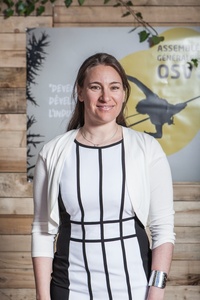
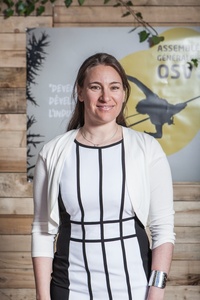
With a Master’s degree in law and from ESCP Business School, Armelle Solelhac set off in 2005 on a world tour across 286 ski resorts, spanning 27 countries on 5 continents over 2 years.
Upon return, she founded SWiTCH, a marketing and CSR strategy consultancy focused on tourism and outdoor sports.
In 2016, she embarked on a second world tour of more than 100 coastal destinations in 14 countries across 4 continents.
In October 2019, she published a book that has become a reference on the Management and Marketing of Mountain Resorts worldwide.
Upon return, she founded SWiTCH, a marketing and CSR strategy consultancy focused on tourism and outdoor sports.
In 2016, she embarked on a second world tour of more than 100 coastal destinations in 14 countries across 4 continents.
In October 2019, she published a book that has become a reference on the Management and Marketing of Mountain Resorts worldwide.

 Word-of-mouth surprisingly no longer, or hardly, a factor in choice. While stars convinced 64% of European travelers in 2009, they weigh in at only 8% today, i.e., half as much as in 2022. Why? Mostly due to a lack of understanding of the references assigned to each range.



 Published by Amelia Brille