
Fortunes: Wealthy Families Investing in Hospitality and Tourism


Fortunes : ces familles qui investissent dans l’hôtellerie et le tourisme - Depositphotos.com Auteur aeydenphumi

MSC Croisières


This summer, the Challenges magazine published its ranking of France’s 500 largest professional fortunes


This list helps to identify several profiles who are particularly present in hospitality and related activities.


Hospitality and tourism are not necessarily the main business of France’s fortunes, but many of them own groups or assets in these sectors.


The Duval family posts an estimated fortune of 2 billion euros

At 62nd place, the Duval family shows an estimated fortune of 2 billion euros, unchanged from 2025.


They own the Duval Group, presented in the ranking as a group active in holding, real estate, services and hospitality.


The Challenges commentary notes that Éric Duval and his children, Pauline and Louis-Victor, are building a group whose turnover reaches 1 billion euros, with a particular focus on real estate, tourism, leisure and microfinance in Africa.


At 85th place, Patrice Pichet and his family are credited with a fortune of 1.6 billion euros, stable compared to 2025.


The Pichet Group operates in real estate, wines and hospitality.


According to the table, Patrice Pichet, supported by his four sons, leads a group reporting 1.8 billion euros in turnover, with activities in property development, a property holding company, a vineyard – Les Carmes de Haut-Brion – and hospitality.


The Altitude Group is presented as active in telecoms, real estate and hospitality

Also ranked 85th, Jean-Paul Rivière and his family have a fortune estimated at 1.6 billion euros, down from 1.7 billion in 2025.


The Altitude Group is described as active in telecoms, real estate and hospitality.


The table indicates that the Norman founder and his family notably own the group’s fiber-optics infrastructure operator, run by his daughter, as well as activities in real estate and senior residences.


Frédéric Jousset, ranked 140th with a fortune estimated at 1.05 billion euros, holds notably a stake in Karavel, a major player in travel.


Further down the list, Jean-Louis Costes appears at 271st place, with a fortune estimated at 540 million euros, unchanged from 2025.


His group, Saint Honoré, is described in the sectors of real estate and hospitality.


The ranking’s commentary recalls that he developed, with his brother, a network of Parisian brasseries and owns the Hôtel Costes, a five-star establishment on Rue Saint-Honoré, featuring a spa.


The Gad-Roblin family: 525 million euros

Jacques Gad, Françoise Roblin and their family sit at 272nd place, with a fortune of 525 million euros, stable over one year.


Their group, Cofigad, operates in hospitality. The family owns a hotel group of around thirty establishments under an Accor franchise, representing 2,600 rooms, primarily in Paris but also in Switzerland.


At 257th place, Pierre and Marie-Laure Esnée have a fortune estimated at 560 million euros, versus 580 million in 2025.


Their company, You Famille Hôtelière, operates in hospitality.


The table notes that these former agro-food industrialists, from Frial, have transformed over more than fifteen years into this hotel-management group of 100 hotels, as well as into wine with Château Garraud.


Also ranked 257th, Anne Jousse and her family show a fortune of 560 million euros, up from 440 million in 2025.


Her group, B Signature Hotels & Resorts, appears under the “Insurance” category, but the commentary highlights its hotel activity: she is developing a collection of seven luxury hotels in Paris, Saint-Barthélemy and Brittany, in addition to the family insurance brokerage group.


Other fortunes linked to hospitality

The ranking reveals several other fortunes connected, directly or indirectly, to hospitality and tourism.


At 282nd place, Célia Chambon and her family hold 500 million euros. The Socri-IFC Group is described as active in real estate and hospitality. The table notes that Célia Chambon controls this commercial real estate and hospitality group, while her brother is developing luxury real estate promotion.


At 261st place, Jean-François Gobertier shows a fortune of 500 million euros, down from 525 million in 2025. His group, GDP Vendôme, operates in real estate and hospitality. The table mentions a group comprising health assets and service residences.


Finally, at 462nd place, Alain Thiénot shows a fortune of 280 million euros, down from 290 million in 2025. His group, Arvitis, operates in wines, champagne and hospitality. The table notes that the family owns notably the champagnes Thiénot, Canard-Duchêne, Marie Stuart and Joseph Perrier, as well as the wines Dourthe and Kressmann, and that they opened a luxury boutique-hotel in Reims at the end of 2025.
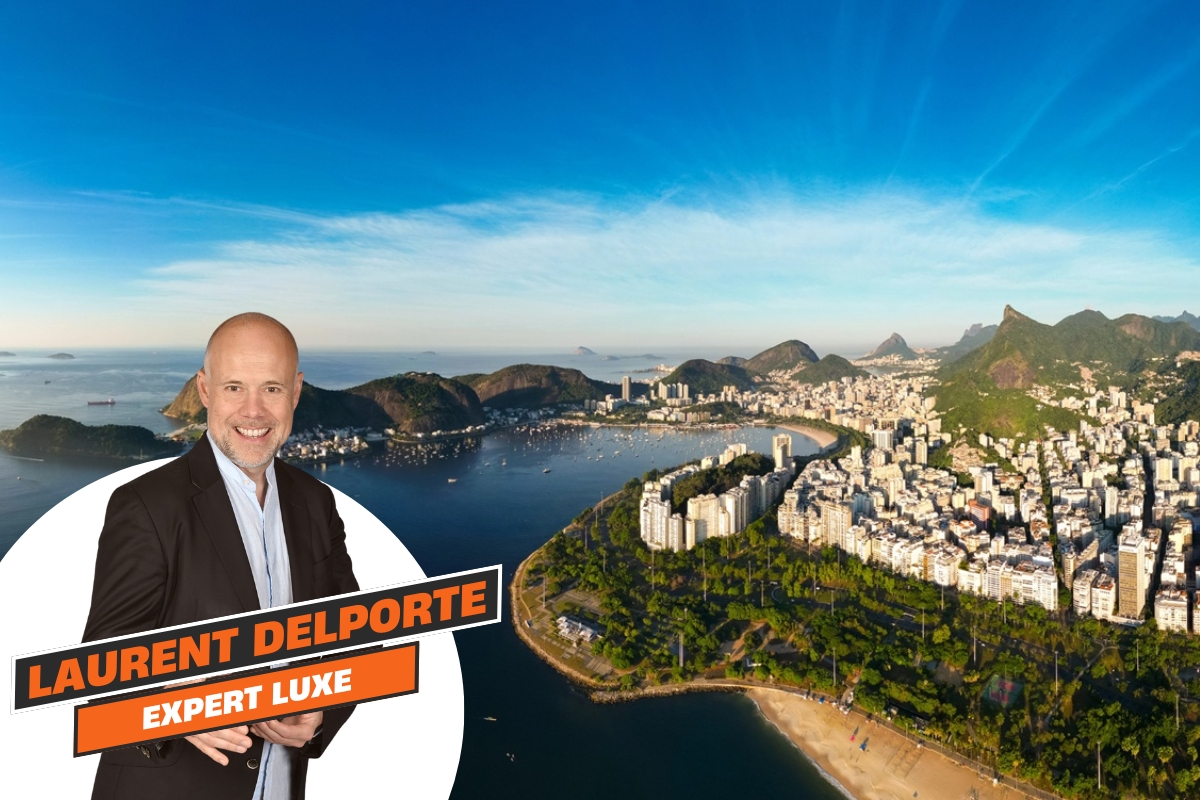
Brazil: Generous Hospitality as a Driver of Transformation in Luxury Tourism [ABO]


Au Brésil, l’hospitalité n’est pas une construction récente. Elle s’inscrit dans la culture, dans les comportements et dans la relation à l’autre - DepositPhotos.com, dabldy

Hurtigruten


Brazil has always nourished a powerful imagination, spanning nature, history, and the relationship with others.

This imagination is not unfamiliar to French culture. Since the 16th century, France has shown interest in this territory, notably through the episode of France Antarctique in the bay of Rio de Janeiro.

This long-standing relationship echoes in literature, notably with Rouge Brésil by Jean-Christophe Rufin, which traces this encounter between two worlds. The narrative highlights what still today makes Brazil unique: the capacity to welcome, to blend cultures, and to forge a different relationship with others.

This historical and cultural link between France and Brazil goes beyond the frame of the narrative.

It is reflected in certain architectural influences, in the cross perspectives between the two countries, but also in how French travelers today approach the destination.


A redefining of luxury around experience, relationship and the identity of places

In the context of luxury tourism, this relationship takes on a particular dimension.

It enables French professionals – agencies, investors, hoteliers – to better understand a destination that, while deeply different, shares a common sensitivity around culture, the art of living and hospitality.

Long perceived through partial prisms, sometimes reduced to its structural challenges or to its most iconic images, Brazil today asserts itself as one of the most distinctive destinations in international tourism.

This evolution is neither a fashion trend nor a marketing repositioning. It is part of a long-term movement led by players who have progressively organized the country’s upscale transition.

This transformation does not merely rely on opening new hotels or upgrading infrastructure. It rests on a deeper change: a redefinition of luxury around experience, relationship and the identity of places.

At the heart of this transformation, the Brazilian Luxury Travel Association (BLTA) plays a central role. Created in 2008, the association now brings together 66 hotels and 8 DMCs across 39 destinations throughout the country.

Its mission goes far beyond promotion. It aims to structure a vision of Brazilian luxury, define its standards and carry its voice on the international stage.


A paradigm shift: from product to experience

The international luxury sector is undergoing a structural evolution. Value is no longer measured solely by the quality of equipment or the standardization of service. It shifts toward the ability to create a singular, embodied, and memorable experience.

Brazil presents a strong uniqueness in this context: hospitality is not a recent construction there. It is embedded in culture, in behaviors and in the relationship to others.

This reality constitutes a major competitive advantage. Camilla Barretto, CEO of the BLTA, offers a clear reading: « This is not an obvious luxury. It is a luxury combined with authenticity. If you go to Brazil, you won’t find this place anywhere else. »

This approach redefines the selection criteria for agencies and clients. The choice of a destination no longer rests solely on its level of equipment, but on its ability to create .


A complex territory that requires strong expertise

The main challenge for Brazil lies in its complexity. A continent-country, it cannot be approached as a homogeneous destination.

Each region has its own codes, operational constraints and opportunities.

For travel agencies, this reality implies an increased need for qualified intermediation. Value no longer lies solely in booking, but in the ability to build a coherent, smooth itinerary tailored to the client’s profile.

This is precisely where the Brazilian market is progressing. Actors, including the BLTA, have helped raise the overall level of professionalism by creating standards, networks and selection tools.

The development of tools such as the Mystery Shopper Audit, based on more than 240 criteria, responds to a key expectation of international buyers: transparency of quality.


Emblematic references that structure the perception of luxury


Generous hospitality as a competitive advantage

One of the most differentiating elements of Brazil lies in its relational culture.

The welcome goes beyond mere service. It is expressed in a way of being, in spontaneity, and in a natural attentiveness to others.

Camilla Barretto summarizes this specificity: « We do not pretend to welcome people. We smile at them.In Brazil, it’s open, it’s free, it’s vibrant. »

This dimension corresponds to what I call generous hospitality. For tourism professionals, this notion represents a strategic lever. It allows creating differentiating experiences without resorting to artifices or excessive investments.

It also constitutes a loyalty driver. A strong relational experience creates a lasting memory, well beyond the material elements of the stay.

Read also : Luxury hospitality: the three keys to creating an experience that leaves travelers with a lasting impression


Sustainability and preservation: a central challenge

The upgrading of Brazil goes hand in hand with a major challenge: preserving the authenticity of its territories. The development of luxury tourism cannot come at the expense of ecosystems and local cultures.

This question becomes central for investors and operators.

The BLTA has integrated this dimension by setting an ESG certification objective for all its members by 2029, in line with the Global Sustainable Tourism Council standards.

This positioning responds to growing expectations from international clients, but also to a long-term requirement: maintain the country’s attractiveness.

Read also: Hospitality: the luxury of tomorrow will be sustainable or no longer


What to remember: Brazil, a strategic market to structure with precision

– Brazil is entering a decisive phase of its tourism development. The country has unique assets: diverse landscapes, rich culture, natural hospitality. The challenge is no longer to discover these assets, but to structure them.

– For travel agencies, Brazil offers a clear opportunity: to propose differentiated experiences with high emotional value, in a market still under construction.

For investors and operators, the question is more strategic: how to develop a luxury offering while preserving the country’s essence? The answer lies in a fine understanding of what makes Brazil’s singularity. This singularity rests on a simple truth: luxury is not limited to what is seen. It is played out in relationships, attentiveness, and the ability to create connection.

– Generous hospitality is not a concept. It constitutes a real competitive advantage, already present, still partly untapped.

– Brazil does not seek to catch up with the great international luxury destinations. It offers something else: a more human, more embodied, more memorable experience. A territory that does not ask to be transformed, but to be understood.


To follow: Rio de Janeiro: a collection of hotels embodying different cultures of luxury


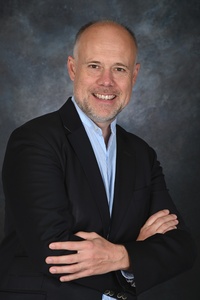
Laurent Delporte


Laurent Delporte - Delporte Hospitality

Laurent Delporte is the president and founder of DELPORTE Hospitality.

After 25 years of experience in luxury hospitality, notably within the Accor group, he combines a visionary spirit, an international hospitality culture, managerial and operational skills, and a network of independent experts to support decision-makers in hospitality in service of their clients, employees and partners.

As a recognized consultant in the hotel industry, an executive coach to leaders, a speaker in the world of hospitality, he also runs the DH-Mag magazine dedicated to trends in the hotel industry and speaks at leading schools and trade shows (HEC, Sup de Luxe, EquipHotel, Maison & Objets…).

Moreover, Laurent Delporte ranked 8th in the international ranking of hotel influence in 2024 by the American magazine Global Hospitality and the International Hospitality Institute (IHI) based in the United States. He was also selected in the list of the 25 luxury sector speakers worldwide.


From Camping to Hospitality: Huttopia Opens Two New Properties at Lake Aiguebelette


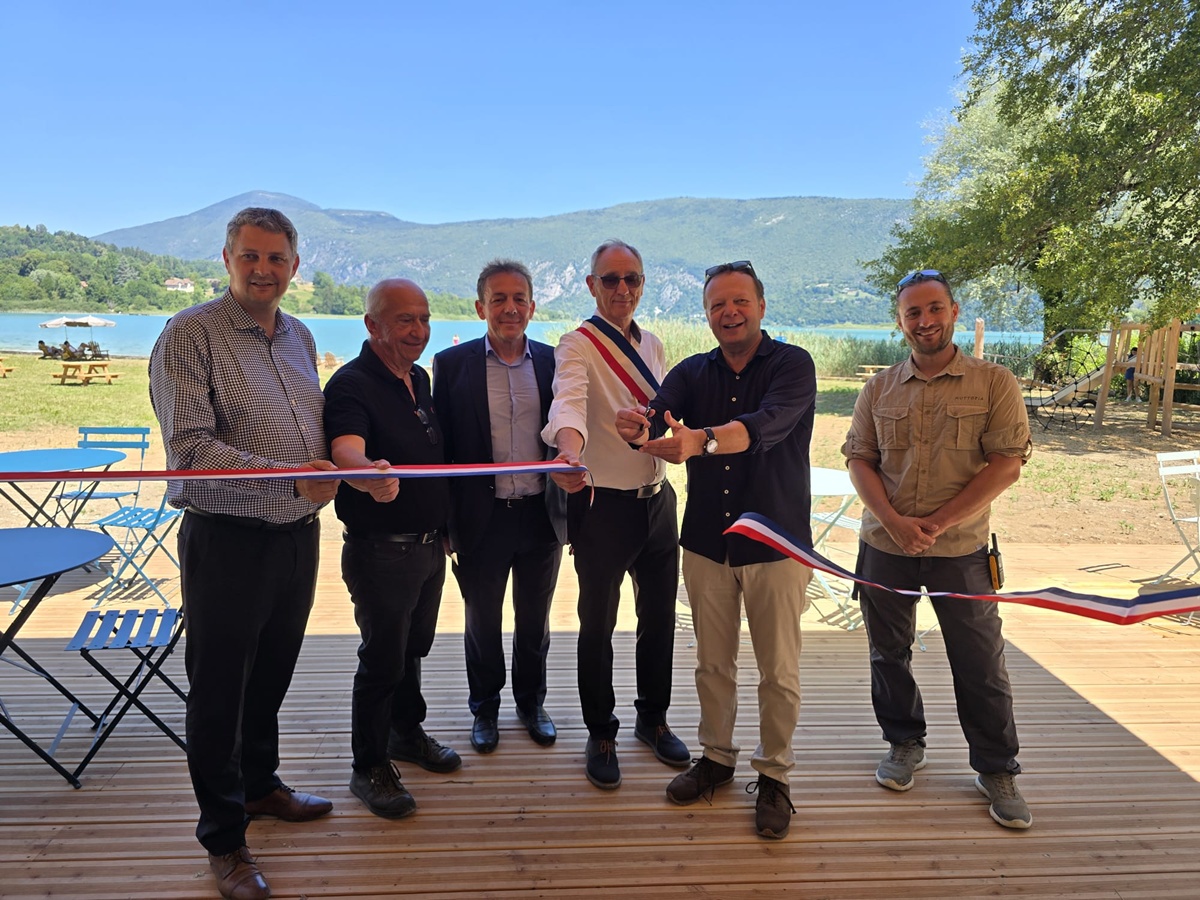
Philippe Bossanne, cofondateur d'Huttopia entouré du directeur d'Huttopia Domaine du Lac, des élus de la région, dont le maire de Lépin-Le-Lac - Photo CE

Costa Rica


« This is an event for the group » announced Philippe Bossanne, co-founder of Huttopia, this Thursday, July 9, on the occasion of the inauguration, not of one but of two new sites on the shores of Lake Aiguebelette in Savoie.

The group strengthens its regional presence with the simultaneous opening of two new addresses: Huttopia Domaine du Lac – Maison Ronde, combining hotel service with nature-oriented accommodations, and OnlyCamp Le Ferrand, a campsite dedicated to tents, vans and other caravans.

With this double inauguration, Huttopia now brings the number of its establishments around the lake to four, alongside Huttopia Lac d’Aiguebelette and OnlyCamp Les Peupliers.

In total, the group says it has invested nearly 20 million euros around Lake Aiguebelette since its arrival in 2017, « without resorting to public funding » insists Philippe Bossanne.


La Maison Ronde rénovée : hôtel 3 étoiles de 13 chambres, réception, bar, terrasse... - Photo CE

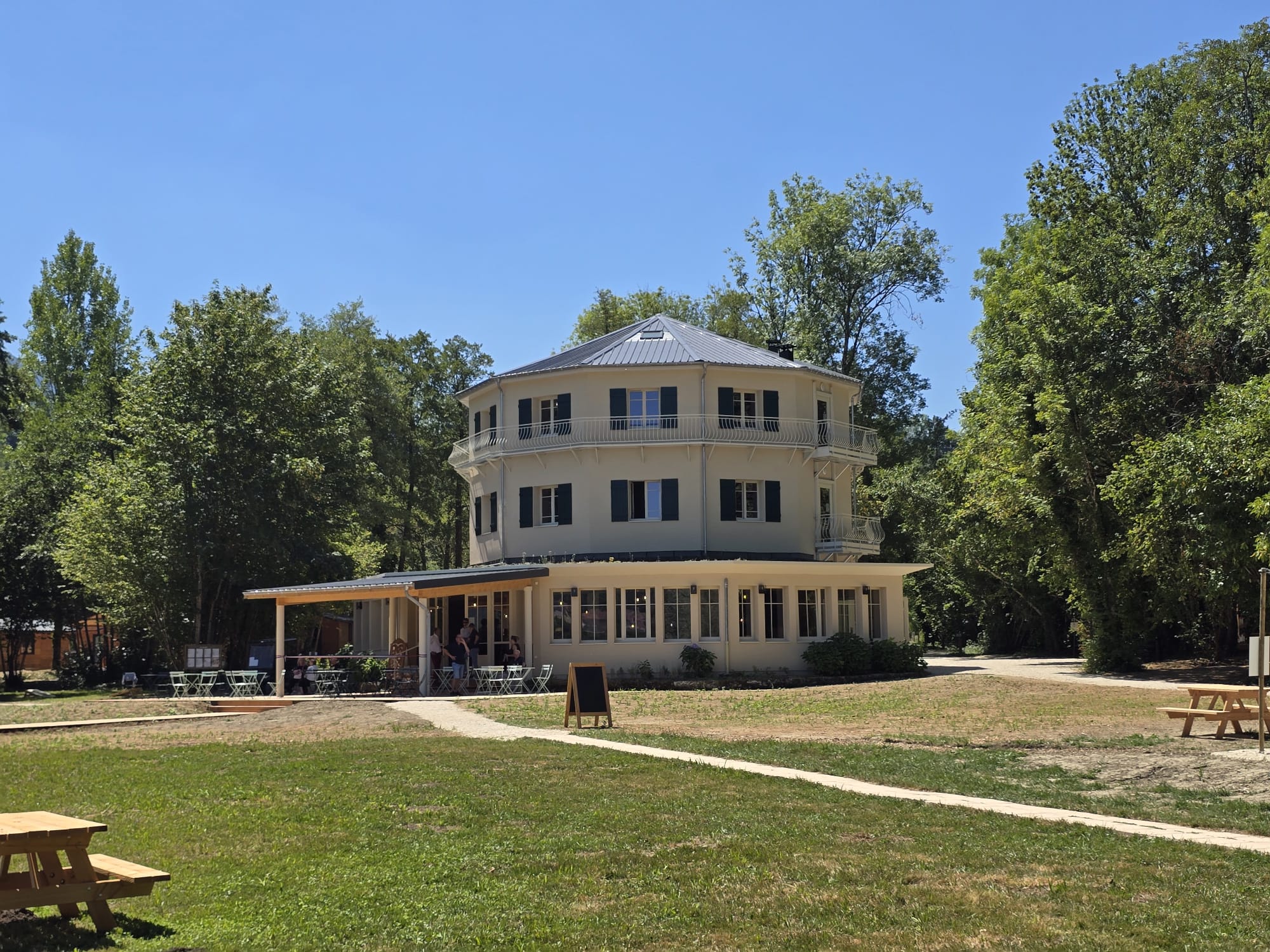
The flagship project concerns the transformation of Huttopia Domaine du Lac – Maison Ronde.

« The overall project cost us nearly €9 million » specifies Philippe Bossanne during the inauguration.

It includes notably the revival of La Maison Ronde. Built in the 1920s–1930s as a hotel, the establishment later became a holiday center in the 1950s before closing its doors for almost three decades.

« I didn’t even know that this building stood right next to the Le Curtelet campsite, which we had acquired », recalls the founder. Fascinated for a long time by its architecture, he eventually decided to undertake a rehabilitation project that he now acknowledges as particularly ambitious.

« Wanting to rehabilitate this building wasn’t very reasonable », acknowledged Philippe Bossanne at the inauguration. The leader explains that he quickly realized the project would exceed the initial estimates.

For several decades, the building remained abandoned. In 2020, Serge Grollier, the Mayor of Lépin-le-Lac, took the matter in hand again and launched a call for proposals: « When we visited La Maison Ronde in 2020, we found a real ruin, with many brambles on the site, but we were convinced it needed to be brought back to life », he recalled during the inauguration.

In 2022, the choice fell on an operator who wished to transform the site into a youth hostel, but the project did not go through. It was in 2023 that the search for investors was restarted and Huttopia was approached.

« It is a success when you see the quality of the result obtained by Huttopia and the companies that contributed to the projects, after only seven months of work, five of which were carried out in the mud due to heavy rains. Opening for the 2026 season is a real feat » added the Mayor.


The new Domaine du Lac combines hotel, hotel lodges, canvas-and-wood tents, and chalets


L'espace de séminaire associé à l'offre hôtelière permet de diversifier l'offre sur le Domaine du Lac - Photo CE

« We do not have a financial shareholder demanding dividends every year. This allows us to reinvest and carry out this type of project », explained the Huttopia co-founder, asserting a participatory family capitalism.

If the Domaine du Lac is operated under a 90-year lease, Philippe Bossanne acknowledges that the challenge now is economic. « The balance of such a project is not obvious. It will have to appeal and attract a lot of people »

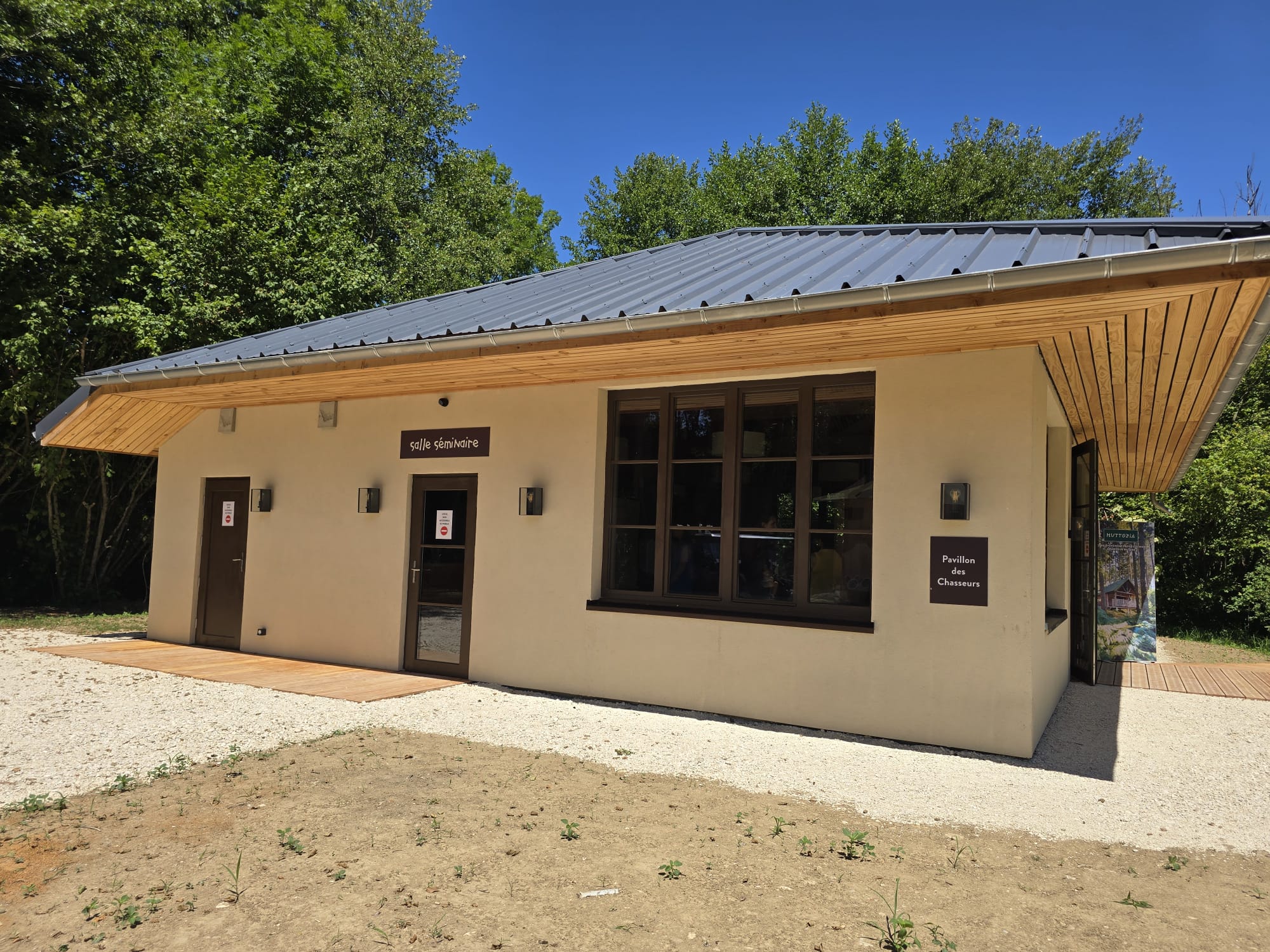
The new Domaine du Lac now combines several activities on a single site: a 13-room 3-star hotel in La Maison Ronde along with 12 wooden hotel lodges, 59 outdoor accommodations (32 wooden chalets and 27 canvas-and-wood tents), a café, a beach, a jetty, water activities as well as an old hunting pavilion converted into a seminar space capable of hosting up to 80 people.

« This hotel offering with our hotel lodges and the seminar space will allow us to fill the wings during the shoulder seasons, and perhaps in autumn as well. We must always pursue the project’s viability. » states the group’s founding president.

The establishment will be open from April to mid-November and aims at both local clientele—particularly from Lyon and Chambéry—and international visitors. The Maison Ronde could also, in a later phase, develop a dining offer for local customers: « We have planned it, but for now it is not on the agenda. »


A development built around the lake


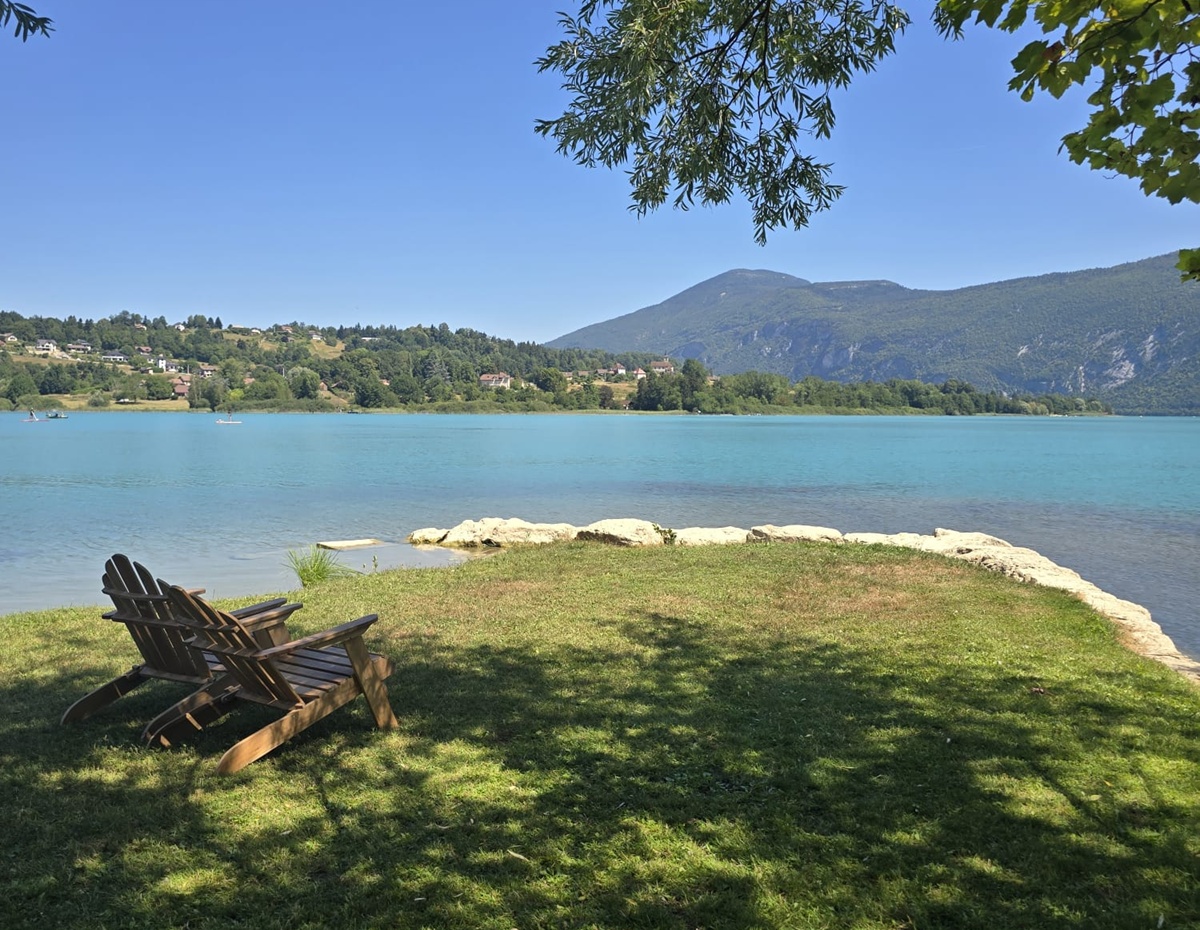
Vue sur le lac d'Aiguebelette depuis le Domaine du Lac - Photo CE

The history of Huttopia at Aiguebelette developed gradually.

Philippe Bossanne explains that he was first approached by local officials to develop the first Huttopia campground on the lake: Huttopia Lac d’Aiguebelette opened in 2017.

The success of this installation then led the group to take over Les Peupliers, and, during a real estate visit, the OnlyCamp Le Curtelet campsite, which has become today Huttopia Domaine du Lac.

In addition, there is a fourth address, adjacent to Les Peupliers, the OnlyCamp Le Ferrand, inaugurated on this same day in its new configuration.

The two sites will also be brought together next year to become OnlyCamp Grands Peupliers.


OnlyCamp Le Ferrand: €1 million invested


OnlyCamp Le Ferrand a bénéficié d'une rénovation l'hiver dernier pour 1 million d'euros - Photo CE

The OnlyCamp Le Ferrand campsite also underwent an investment of more than €1 million.

The works mainly focused on infrastructure, the complete renewal of networks, the creation of a new sanitary block, the modernization of the living center, and the development of a dining offer.

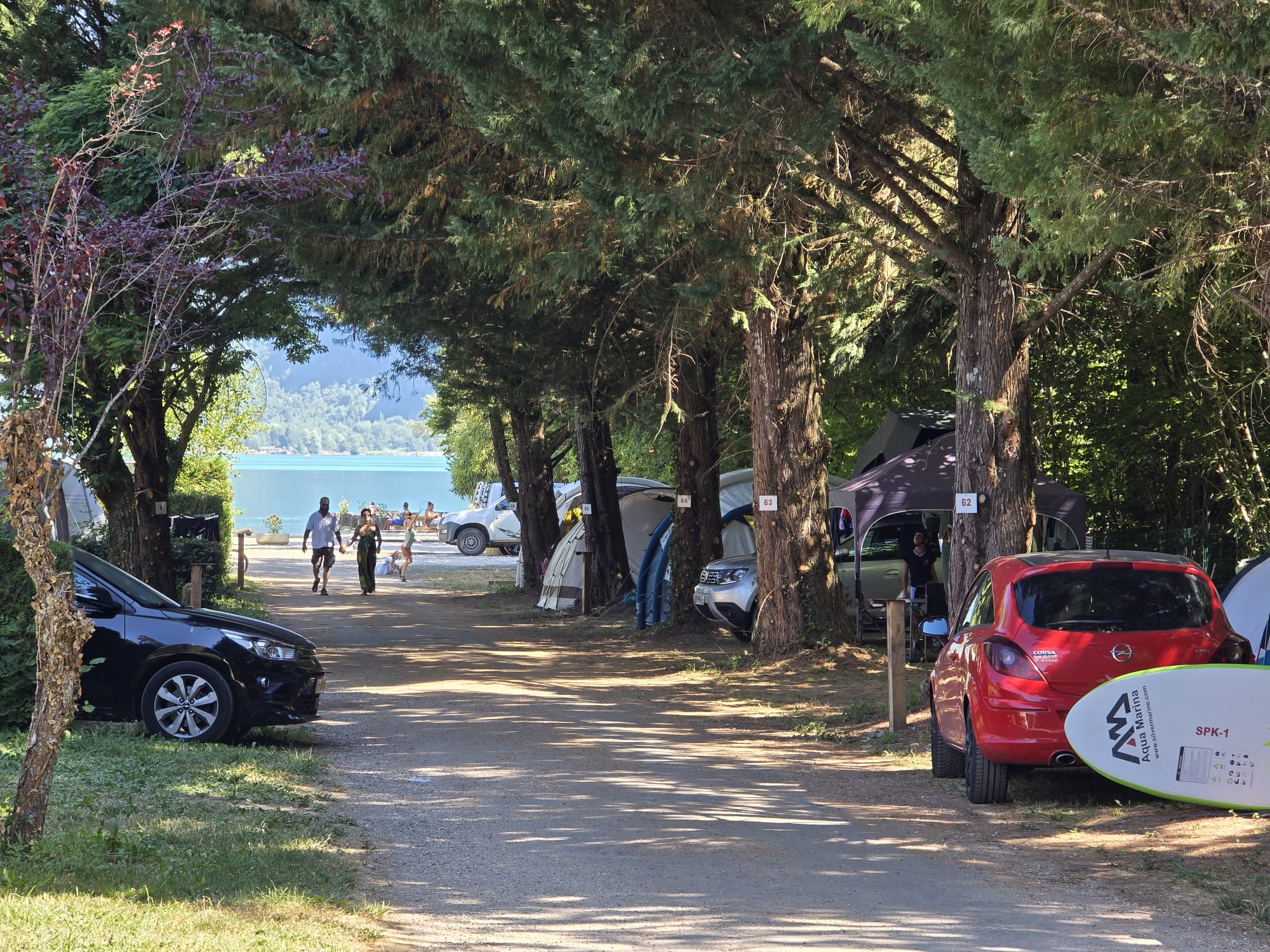
Faithful to its philosophy, the site is dedicated to bare pitches. « We decided to make it a 100% pitch campsite, where people arrive with their tent, caravan, van or motorhome », explained Philippe Bossanne.

The site now has 190 bare pitches spread over four hectares, with direct lake access.

For Axel Pénin, the managing director of OnlyCamp, this strategy responds to a sustained demand from traditional campers. The brand network, now with 104 destinations, favors bare pitches, simple yet high-quality facilities and a deliberately affordable pricing policy: « A family with two children can spend a week in the heart of summer for less than €250 », he notes.

A single rate is applied across all OnlyCamp campgrounds, regardless of location.

Pitches for two people are offered at €12 (no swimming) or €15 (with swimming) in off-peak season, then €17 and €24 between July 1 and August 31.


Huttopia Le Domaine du Lac – Maison Ronde under the spotlight


Céline Eymery Published by Céline Eymery Editor-in-Chief – TourMaG.com
See all articles by Céline Eymery

  • picto Facebook
  • picto Twitter
  • picto Linkedin
  • picto email
Add TourMaG to your Google News feed Google Actualités icône

Characterful Hospitality: How to Turn Uniqueness into a Performance Driver [ABO]


L'hôtellerie de caractère gagne en performance le jour où elle transforme sa singularité subie en singularité assumée. Ici, l'établissement Relais & Châteaux de La Bretesche à Missillac, France - DepositPhotos.com, jqnoc

Costa Rica


In characterful establishments, from French castles to island lodges, including golf resorts and wine estates, it is not uncommon to hear the owner of a distinctive place speak of its particularities as much as an advantage as a challenge: a limited number of rooms to optimize, spaces that resemble one another little, and a heritage architectural fabric that complicates day-to-day operations.

These particularities, however, form the foundation of solid performance, capable of being structured around three levers that strengthen each other.


Pricing the Difference, Measuring Beyond the Room

The first lever touches the revenue strategy, and it rests on a widely documented conviction: in a competitive market, product differentiation yields more durable revenues than chasing the bottom prices.

The rarity and heterogeneity of the rooms become the arguments, since a restricted inventory, made up of spaces that stand out for their history, view, and size, allows a pricing grid where each room represents a product in its own right.

The value-creation phase is essential because the sector is gradually moving away from RevPAR, which centers on the room alone, in favor of indicators that incorporate the value created per guest and actual profitability, from TRevPAR to GOPPAR.

A characterful property, whose dining, experiences, and ancillary services often carry as much weight as the nightly rate, benefits from thinking this way, and its pricing grid is built as an overall strategy.

Consequently, hoteliers might place less emphasis on price based on sleep quality and more on the guest journey.


The service and the human, the most difficult advantage to copy

The second lever is the one that large brands find the hardest to replicate.

A small establishment potentially benefits from a higher personnel-to-guest ratio and a relational proximity that enables a level of attentiveness that mass scale dilutes.

Harvard Business School has formalized this mechanism under the name of the “service-profit chain”, where employee satisfaction fuels client satisfaction, which in turn underpins financial performance.

This effect of internal climate always translates into the client’s lived experience. The advantage of human intervention therefore bears fruit once organized, when training, the quality of procedures, and the smoothness of internal communication turn hospitality intentions into measurable loyalty.

In this era of AI, the quality of human service remains a condition for the value of hospitality, and we now have the tools to devote the necessary time to it.


The narrative, turning heritage into experience

The third lever extends the first two by giving them meaning.

The experience economy, theorized by Pine and Gilmore, established that travelers seek memorable moments and judge offerings by the level of authenticity they perceive.

For a characterful property, heritage and territory constitute an asset ready to become a story, because the history of a building, its regional anchoring, and local know-how form what luxury hospitality calls the soul of a house, a differentiating source that underpins loyalty as well as recognition.

The narrative proves its value when it leaves the brochure to take shape in lived experience, from a staged arrival to partnerships with regional artisans, and it fully aligns with the principles of regenerative tourism.


Hospitality: Dida Drives Bookings Without Leaving AI-Powered Apps


Dida veut générer des réservations de vols et d’expériences directement dans l’IA - Depositphotos

CroisiEurope


Dida fait entrer l’hôtellerie dans l’ère de la réservation entièrement gérée par l’IA.

Avec Dida MCP, l’objectif est de répondre à un enjeu clé du voyage dopé par l’IA, c’est-à-dire transformer une simple recommandation en réservation confirmée, sans faire sortir l’utilisateur de l’environnement du partenaire.

Dida MCP donne accès à un portefeuille de plus de 2 millions d’établissements hôteliers dans plus de 100 pays, à destination de ses partenaires professionnels du tourisme.

Ces derniers peuvent donc faire bénéficier les internautes et les voyageurs de ce vaste portefeuille d’hôtels directement dans leurs applications utilisant l’IA, leurs agents conversationnels ou leurs plateformes clients.


Dida aims to generate flight and experience bookings directly within AI

La société insiste sur le fait qu’elle ne souhaite pas se positionner comme un acteur B2C, mais prolonger son modèle d’infrastructure B2B.

Le partenaire conserve ainsi sa marque, la relation client et la donnée, tandis que Dida opère en coulisses la connectivité, les disponibilités, les tarifs, les réservations, les paiements, les confirmations et le service.

La solution s’adresse notamment aux agences, OTA, TMC, tour-opérateurs, grossistes, banques, programmes de fidélité, plateformes e-commerce ou encore opérateurs télécoms.

Dida prévoit, à terme, d’étendre cette approche au-delà de l’hôtel, vers les vols, le transport terrestre et les expériences.

Hospitality: Growth Shifts to Value Over Bookings


Le marché hôtelier français entre dans une phase de maturité - Depositphotos.com, vverve

IFTM prenez RDV avec TourMaG


According to the 2026* report on hotel distribution published by D-EDGE, the growth of the sector now relies more on value creation than on increasing the number of bookings.

The study, based on the analysis of distribution data between 2022 and 2025, highlights several structural evolutions in hotel revenue strategies.

If the number of bookings continues to rise, the momentum is gradually waning.

After an increase of 8% between 2022 and 2023, growth fell to 2.8% between 2023 and 2024, then to 2.3% between 2024 and 2025.

At the same time, value generated per booking grows faster. Revenue from bookings rose by 8.4% between 2024 and 2025, driven notably by the recovery of the average room rate.

“The French hotel market is entering a stabilization phase where performance will rely less on generating new bookings than on the ability to maximize the value of each of them“, explains Swann Couston, France Director of D-EDGE.

For hoteliers, the question is no longer just to generate more volume, but to optimize revenue per booking, the distribution mix, and the stability of revenues.


Bookings Are Being Made Earlier and Earlier

Another notable development: travelers are booking earlier. The average booking lead time increased by five days between 2024 and 2025, rising from 33 to 38 days.

Differences remain pronounced by channel. The direct channel shows the longest lead time, with 47 days on average, indicating typically more planned demand. It drops to 35 days on Booking.com and 31 days on Expedia.

The distribution structure changes little. Online travel agencies (OTAs) still account for about 70% of booking volumes.

The direct channel, meanwhile, remains around 25% of bookings by volume, but weighs more in value, with around 33% of revenue.

After a slight dip in 2024, the average daily rate (ADR) rises again in 2025 to reach €192.66, i.e., an increase of 4.28%.

This trend affects all major distribution channels, confirming that market growth now relies more on optimizing the average price and value per booking than on increasing volumes.


The GDS, a Channel That Remains Strong

In this context of overall slowdown, luxury establishments stand out. The 5-star segment shows a 6.8% rise in bookings and a 12% increase in value generated between 2024 and 2025.

According to the report, this performance reflects a progressive market polarization, where value creation concentrates more on premium and ultra-luxury segments.

The report also highlights the weight of the GDS in value creation. In France, the average ADR via this channel reaches €233, a level close to that of the direct channel. In the 5-star segment, it even becomes the most contributive channel, with an average price of around €660.

Another positive development for hoteliers: the cancellation rate declines in 2025, from 24.6% to 22.6%. This drop is notably explained by the rise of prepaid rates and non-refundable terms.

Differences remain significant across platforms. Nearly 44% of revenue generated via Booking.com ends up canceled, compared with a much lower level on the direct channel.


AI Transforms Search, Not Yet Booking

Finally, the report examines the impact of artificial intelligence on hotel distribution. While channel balances remain unchanged for now, AI already influences the early phase of the customer journey.

Travelers increasingly use these tools to search, compare, and discover properties before booking.

* The D-EDGE Hotel Distribution Report France 2026 is based on the analysis of confirmed reservation data collected via the D-EDGE platform from a constant panel of more than 5,000 hotels in France between 2022 and 2025. The study analyzes booking volumes, revenues generated, booking lead times, cancellation rates, and the performance of different distribution channels to offer a detailed reading of the structural dynamics of the French hotel market.


Amelia Brille Published by Amelia Brille TourMaG.com Editor

See all articles by Amelia Brille

  • picto Linkedin
  • picto email
Add TourMaG to your Google News feed Google Actualités icône  

Tourism Careers in the AI Era: Technological Change or the New Hospitality? [ABO]


L’IA ne transforme pas seulement les métiers du tourisme existants, elle fait apparaître de nouvelles fonctions - DepositPhotos.com, BiancoBlue

Dream Yacht


Artificial intelligence is no longer a speculative topic in French tourism.

In under three years, it has established itself within travel agencies, tourism offices, hotels, booking platforms, airlines, and even the professions of cultural mediation.

Behind the trend, a tangible reality is taking shape: AI already reshapes professional practices, the skills expected, and the relationship between travelers and destinations.

The phenomenon is all the more significant because tourism is a sector characterized by abundant human interactions, data, and personalization. AI therefore acts simultaneously on three dimensions: automating repetitive tasks, augmenting human capacities, and creating new services.

Moreover, according to a study by OPCO Mobilités dedicated to “Artificial Intelligence in Travel Jobs in 2025,” usages are spreading rapidly across sector companies, even though maturity levels remain highly uneven.

The study highlights that AI is now seen less as a peripheral innovation and more as a structural transformation of travel professions.


A transformation comparable to the arrival of the Internet

For many professionals, AI represents a disruption on a scale comparable to the web’s emergence in the 2000s or the smartphone revolution of the 2010s.

In the tourism trades, the earliest uses developed around chatbots, recommendation engines, or hotel revenue management.

Today, generative AI enables the production of content, the construction of personalized itineraries, the automation of a portion of customer relations, and assistance to staff in their daily tasks.

Also read: Artificial Intelligence: How to Use It Daily in Travel Agencies?

This evolution touches nearly the entire travel chain: inspiration and search for stays, booking, customer relations, hotel operations, flow management, territorial marketing, heritage mediation, data analysis, HR management and training.

The challenge is no longer purely technological. It becomes organizational, human, and strategic.


The jobs most affected

TRAVEL AGENTS: from seller to “augmented travel designer”

The role of a travel agent is among the most exposed to generative AI. Long focused on booking and information access, it is shifting toward advisory duties, expertise, and emotional support. Travelers already use ChatGPT, Gemini, or Claude to prepare itineraries, compare destinations or generate customized programs.

The added value of the professional thus lies not in access to raw information, but in the reliability of recommendations, the safety of itineraries, deep destination knowledge, the ability to create bespoke experiences, and human guidance.

AI thus becomes an assistance tool. It helps draft commercial proposals, create complex itineraries, produce quotes, respond quickly to requests, and personalize offers.

French platforms such as Galdeo are developing automated quotation and travel notebook solutions for bespoke travel professionals. The profession gradually shifts toward the role of an “augmented travel designer,” where humans retain roles of arbitration, creativity, and relationship.

HOTEL INDUSTRY: automate without dehumanizing

Hospitality is another major testing ground. AI is used for dynamic pricing, demand forecasting, energy optimization, automated check-ins, conversational assistants, review management, satisfaction analysis, and predictive maintenance.

New API-first PMS like those developed by Mews or Cloudbeds facilitate the integration of automation and predictive analytics.

But hospitality remains a sector where human warmth remains central. Several groups now emphasize an “AI + human” logic rather than a wholesale replacement of staff.

Industry leaders remind that automation should free time to strengthen high-value interactions: front desk, concierge, guest experiences, and handling delicate situations.

In other words, fewer repetitive tasks, more attention paid to the guest.

TOURISM OFFICES AND DESTINATIONS: toward “conversational destinations”

Destination management organizations (DMOs) are entering a new phase as well. Generative AI profoundly reshapes content production, multilingual translation, social media dissemination, visitor relations, data qualification, flow and behavior analysis.

Tourism offices are already piloting conversational assistants capable of replying to visitors 24/7 in several languages.

The emergence of “conversational destinations” is likely to be one of the major shifts to come: tomorrow, visitors will converse directly with territorial AIs able to recommend experiences, manage mobility, book activities, or tailor suggestions in real time.

Actors such as Ask Mona or Moovtoo are already working on conversational experiences applied to heritage, museums, and cultural territories. This evolution changes the roles of communications officers, community managers, and tourism promotion managers.

The skills expected evolve toward editorial leadership, supervision of AI content, conversational strategy, data management, and the analysis of user behavior.


The new roles that are emerging

AI is not only transforming existing professions: it is creating new roles.

Among emerging profiles in tourism:

AI Content Manager: a professional responsible for supervising AI-produced content (texts, images, videos, translation, editorial coherence, search engine optimization).

Tourism Prompt Designer: a specialist in crafting AI prompts tailored to tourism uses (creating itineraries, client responses, mediation scenarios, marketing production).

Head of AI & Customer Experience: a hybrid role spanning marketing, customer relations, and innovation, tasked with steering conversational tools and personalisation.

Territorial Data Analyst: a profile increasingly sought to analyze attendance, mobilities, visitor behaviors, tourism consumption, e-reputation, and campaign performance.

Tourism AI Trainer: the surge in needs for cultural acclimation is creating a substantial training market. Many organizations now offer modules dedicated to AI applied to travel, hospitality, or destinations.


L’IA agentique : prochaine révolution ?


Vers une nouvelle hospitalité ?

The real challenge of artificial intelligence in tourism is likely not solely technological, but profoundly cultural.

AI pushes the sector to redefine what makes its human value: the attention given to visitors, the personalization of experiences, the quality of guidance, mediation, emotion, and the relationship.

Professionals who extract the most benefit from these tools will probably not be those who attempt to replace humans, but those able to use technology to strengthen the quality of hospitality and free up time for high-value interactions.

Tourism thus enters a paradoxical phase: the more services become automated, the more human authenticity becomes precious.

AI does not herald the disappearance of tourism jobs; it accelerates their transformation and forces destinations, businesses, and schools to rethink the training of professionals.

The question becomes strategic: how can we master technologies while preserving the very essence of welcome and human connection?


Brice Duthion - Photo : BD

Brice Duthion is the president and founder of the agency “Les nouveaux voyages extraordinaires” (LNVE), specializing in consultancy, conferences, and communication.

He engages with numerous public and private actors in his areas of expertise: tourism and hospitality, culture and heritage, territories and public policy.

[email protected]