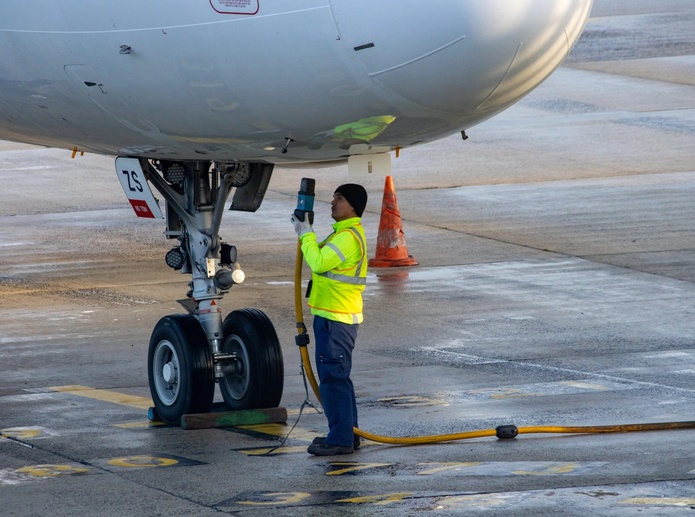

French Airports Oppose Proposed Tax Increase in the 2027 Finance Bill


Les aéroports français dénoncent le projet de hausse de taxe du PLF 2027 - Depositphotos.com Auteur info.cineberg.com

CroisiEurope


The government plans to strengthen the tax on the operation of long-distance transport infrastructure (TEITLD) as part of the 2027 Finance Bill.

The scheme, which concerns notably large highway concession companies and several airport operators, could see its rate gradually rise to 12.2%. The Union of French Airports (UAF) denounces a measure announced without consultation and warns about its consequences for investments and the competitiveness of French aviation hubs.

TEITLD is not a new tax for airport operators. Created by the 2024 Finance Law, it targets companies whose revenues from operating a transport infrastructure exceed 120 million euros and whose average profitability exceeds 10% over seven financial years.

Initially presented as a contribution aimed notably at highway concession companies, the tax also applies to large airport operators. According to BFM Business, sont notamment concernés ADP, les Aéroports de Lyon, Marseille-Provence et les Aéroports de la Côte d’Azur, qui exploitent notamment Nice.

With a rate currently set at 4.6%, the TEITLD brought in 549 million euros in 2024, according to data from the Ministry of Transport. Its proceeds are allocated to the France Transport Infrastructure Financing Agency (AFIT France).


The 4.6% rate could become progressive and reach up to 12.2%

For the 2027 PL, the government plans to modify the mechanism. The 4.6% rate could become progressive and reach up to 12.2% for operators showing the highest profitability levels.

The yield from the tax would thus rise from around 600 million euros to nearly 1.4 billion euros per year.

The measure would therefore affect both highway concession companies and major airport operators meeting the scheme’s criteria.

The announcement triggers a strong reaction from the Union of French Airports. In a statement, the organization denounces a decision “revealed by the press and taken without consultation” and says that this increase would directly weigh on the competitiveness of French airports and their ability to invest.


The UAF denounces a “new fiscal shock”

The UAF intervenes as French air traffic remains behind the European momentum. In the first half of 2026, French airports welcomed 98.3 million passengers, a decrease of 0.8% year on year and still 2.6% below the 2019 level.

The organization also highlights the parliamentary debates of December 2025.

During the examination by the Senate of the 2026 Finance Bill, David Amiel, then the minister delegated to the Minister of Public Action and the Accounts, had defended maintaining the TEITLD rate. He had notably warned against the risk of weakening regional airports.

The UAF believes that the proposed plan for 2027 now contradicts that position.
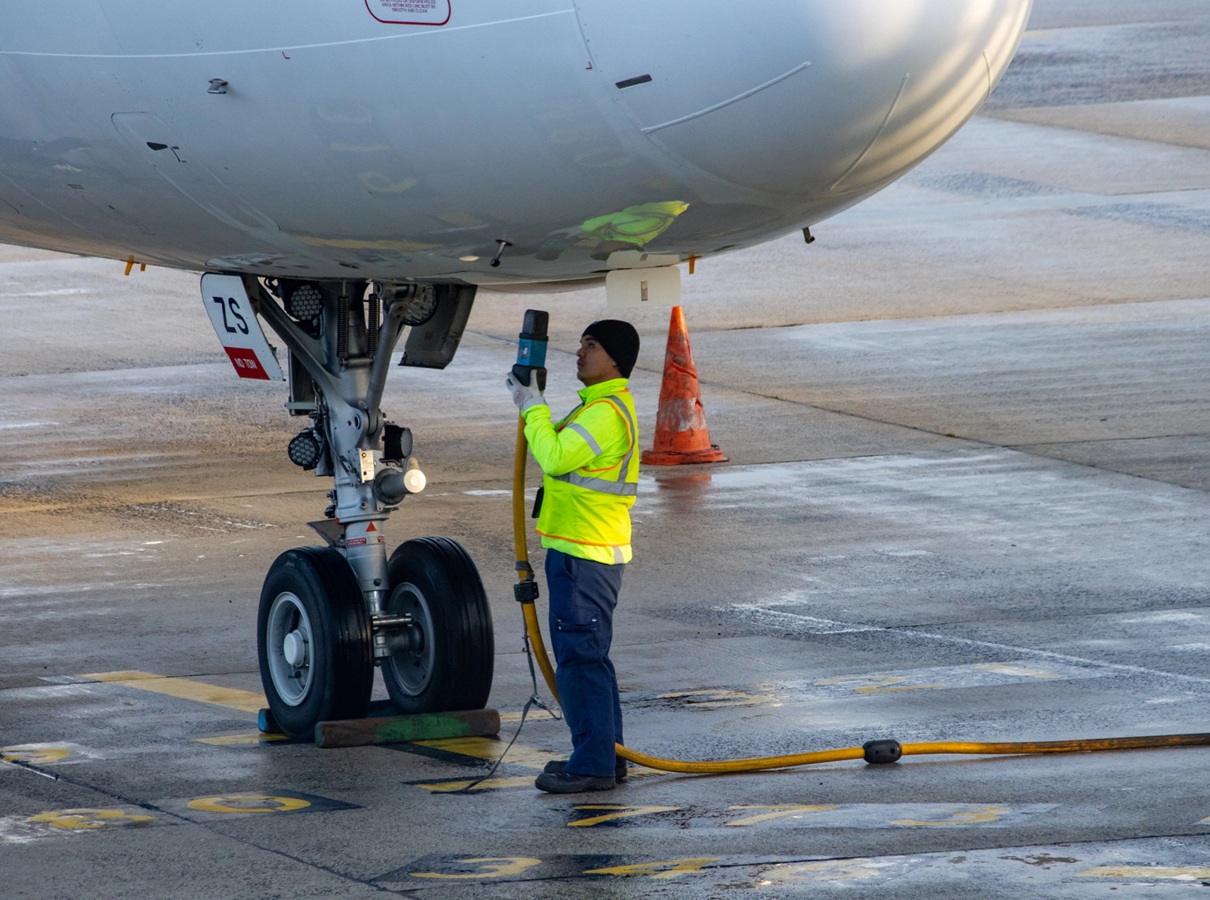
Finance Bill: Government to Indirectly Tax Kerosene


PLF 2027 : une contribution sur le kérosène  - crédit photo : depositphotos

CroisiEurope


If the mood was grim at IFTM, airline leaders seemed relieved at the idea that the sector would be spared from the PLF 2027.

The carriers are not truly targeted by the measures unveiled by the government, last Thursday.

For reminder, as warning signs multiply around the French debt, the executive seemed to want to reassure financial markets. It planned a 54‑billion‑euro effort and a halving of the Social Security budget deficit.

The government’s aim is to bring the deficit below 5% of GDP, a rate still far from the 3% required by European rules, while the debt stands at 119% of GDP, a first since the end of World War II.

And to achieve this, Sébastien Lecornu and his team decided to put a little more on the airline ecosystem’s shoulders.

Thus, two measures will impact the industry.


PLF 2027: a kerosene contribution!

The text provides for the creation of a mechanism to enable and support the emergence of a synthetic aviation fuel production chain.


For this, the government thus plans a levy on kerosene consumption, so as not to affect public finances.

Concretely, this tax will apply to suppliers of kerosene derived from petroleum, based in metropolitan France, and will depend on the volumes circulated.

This measure is thus intended to ease the finances of French airlines, as the price of SAF is far higher than that of conventional kerosene.

In addition, an agency created or designated by the State will be responsible for contracting with suppliers of more durable fuels, in order to provide carriers with visibility on the availability of these essential resources to decarbonize aviation.

To read: Train more expensive than plane: “a matter of political will”

As a reminder, Europe requires airlines to carry 2% SAF, a rate that must rise gradually to 6% by 2030, then 70% by 2050. However, this obligation clashes with the availability of these more sustainable fuels and their economic cost.

Note that kerosene is not taxed worldwide as diesel or other everyday fuels are.

Due to the Chicago Convention, adopted in 1944, the convention provides that an aircraft’s fuel cannot be taxed on arrival. Moreover, an amendment filed last autumn by ecologist MPs proposed imposing a tax for domestic flights.

“If the Chicago Convention of 1944 exempts aviation fuel for international flights from any tax, it does not prevent taxation for domestic flights, which is in effect in countries like the United States or Japan.

Yet kerosene continues to escape any taxation, remaining one of the few fuels benefiting from such an exemption, even as it powers one of the most polluting modes of transport,” explained the lawmakers.


A tax targeting toll concessionaires and airports will triple

That’s not all, because the government wants to triple once again a tax.

Don’t worry, this will not concern the TSBA, the Chirac tax, but the Tax on the Exploitation of Long-Distance Transport Infrastructure, the TEITLD.

This latter targets all long-distance transport infrastructures, whether rail, air, or road transport.

But the main target of this tax is none other than toll concessionaires. To be eligible for this measure, the company must show an average profitability rate above 10%.

We are far from the margins of the tourism industry.

Thus, the bill provides for raising the TEITLD from 4.6% to 12.2%. A rise announced as gradual by the government.

This reform is expected to generate an additional 800 million euros and aims to finance the “Ambition Transports” fund, whose purpose is to “regenerate, modernize and adapt to climate change the current transport networks.”

A decision that sparked uproar, even though infrastructures with profitability below 10% would not be affected.

Moreover, nearly 8 billion euros are planned to be invested to enlarge Roissy-Charles-de-Gaulle, to raise its capacity to nearly 90 million passengers per year.

“It’s Absurd, Unreal”: Tour Operators Rally Against Maldives’ 17% Tax [ABO]


"C'est aberrant, irréel" : les voyagistes vent debout contre la taxe de 17 % aux Maldives - Depositphotos.com wirestock_creators

CroisiEurope


It’s another dossier for SETO, EDV and ECTAA that has come to the forefront in August.

The Maldivian government announced last month an expansion of the Tourism Goods and Services Tax (TGST) to foreign travel operators.

The Maldivian tax administration, the Maldives Inland Revenue Authority (MIRA), has indeed drafted a new measure that has provoked a global uproar among tour operators worldwide.

It provides for taxing at 17% the producers, agencies, OTAs or other foreign companies that assemble accommodation, transfers and other land-based services.

However, the TGST will not be levied on the entire price of the stay. The taxable base roughly corresponds to what remains for the tour operator after deducting the amounts paid to Maldivian suppliers. In other words, the tax effectively targets the margin that professionals make on the package.


It’s Completely Unreal, It Makes No Sense

A move that set off a wave of indignation among tour operators and travel operators alike.

“They are asking us to fold into our prices a tax equal to 17% of the margin earned on the land-based services sold to the Maldives for a given file. In other words, it’s incomprehensible, because we don’t know our margins before selling. Moreover, our margins do not apply only to the land portion, but also to the air component,” explains Patrice Caradec, president of SETO, a touch irate.

“It’s absurd, continues Hélion de Villeneuve, chief executive of Austral Lagons. They could have raised entry fees, the e-visa, or the local taxes on hotels and services. That would have been passed on to us automatically, and it would have been much simpler. If they need money, we can understand that.

But now they’re asking us to register on a site, to declare the margins we make on the destination and, on those margins, they will take 17%. This is utterly unreal, it makes no sense.
”


SETO, EDV and ECTAA Have Written to Maldivian Tax Authorities

SETO, along with the Voyage Companies (Entreprise du Voyage) and ECTAA, thus penned a letter to the Maldivian authorities, and to the tax services handling this file. A letter that essentially went unanswered.

«  We explained to them that their regulation is unintelligible and cannot be implemented in these terms. This cannot be done overnight.

We asked for a meeting to try to imagine an alternative arrangement.» details Patrice Caradec, who adds: «  It’s utterly crazy: they’re asking us to provide the purchase prices of hotels and the selling prices of hotels. But we don’t sell hotels; we sell packages. We could pretend we don’t margin on hotels, only on the flight ticket. That would be ridiculous. »

Tour operators and Maldivian producers must therefore register on an online platform before September 30, something that French tour operators as a whole have rejected, according to Patrice Caradec.

«  We asked our members what their position was and who intended to register on the platform. It is clear that, across Europe, not a single operator is registering.  » specifies the SETO president.


The Protest Extends Beyond European Tour Operators

Activated on the dossier since the end of August, ECTAA continues to press the Maldivian finance and tourism ministers to demand an urgent postponement of the October 1 deadline.

The association laments a deficient preparation by local authorities, unable to provide clear answers to industry questions.

For Eric Drésin, secretary-general of ECTAA: “Faced with a tax reform of such complexity imposed within untenable deadlines, we are maintaining pressure on the Maldivian authorities, while ensuring active coordination with our members and the WTAAA international association.

All tour operators and distributors working with the Maldives denounce an undue administrative burden and clear risks of double taxation. We could not be clearer.
”

Indeed, the challenge is not confined to French tour operators. In India, for instance, the Outbound Tour Operators Association of India (OTOAI) has also urged the Maldivian government to review and withdraw this provision, according to Travel Trade Journal.

In Germany, the Deutscher Reiseverband (DRV) is calling for a postponement of the measure. The organization notes that the legal basis was adopted only on August 31, with an effective date planned for October 1, even though operators market and price their programs several months in advance.

In the United Kingdom, the Association of British Travel Agents (ABTA) has also stepped forward. The professional association has written directly to the president of the Maldives to request at least a six-month postponement of the application of the new tax, in order to allow for genuine consultation.


Towards a Tourist Tax in Thailand?


Vers une taxe touristique en Thaïlande ? - Depositphotos.com ViktoriiaDyachenko

Hurtigruten


The tourism tax proposal, discussed for several years, takes a new step forward in Thailand. The National Tourism Policy Committee (NTPC) convened on August 14, 2026 to examine the principles of the scheme and the draft regulation, ahead of its public consultation, according to the Thai Ministry of Tourism and Sports.

In a statement published on August 17, the Thai government specifies that the proposed amount is now set at 450 baht per person (about 12 euros), regardless of arrival mode: by air, land, or sea (Thailand.go.th).

The implementation of the tax would be phased in. For travelers arriving by plane, it would begin 180 days after the text is published in the Royal Gazette. Land and sea arrivals would be affected roughly 360 days after the launch of the first phase, according to the Thai government.

This timeline aims, in particular, to avoid difficulties at the most frequented border crossings, especially at the border with Malaysia.


Thailand: the tourist tax could be introduced early 2027 for air travel

Several payment options are currently being considered: integration into the airline ticket, online payment, mobile app, or self-service kiosks.

The Thailand Digital Arrival Card (TDAC) could also be linked to the system. VisaNews notes, however, that the modalities of this potential integration remain to be defined: the TDAC is currently a free formality, and its possible connection to the payment system does not necessarily mean it would itself become payable.

At this stage, travelers do not yet have to pay the 450 baht to enter Thailand. The project must still pass several steps before its final adoption.

According to VisaNews, the start of 2027 is now the horizon envisaged for the first charges levied on travelers arriving by plane, but no firm effective date has yet been set.

65% Cut in Air Passenger Tax: Here Are the 26 Affected Lines


Baisse de 65 % de la taxe sur les billets d'avion : voici les lignes 26 lignes concernées ! - depositphotos.com Auteur ilixe48

IFTM


The government is implementing, from June 1, 2026, a reduction in the passenger air transport tax (TSBA) for certain air routes deemed essential to territorial development.

Announced by Philippe Tabarot, Minister of Transport, this measure targets routes operated under a public service obligation (PSO) and under a public service delegation (DSP).

The scheme reduces by 65 % the amount of tax applied to each ticket, dropping it from 7.40 euros to 2.63 euros.

Planned by the initial 2025 finance law, this reduction was conditioned on the prior agreement of the European Commission. French authorities had begun talks with Brussels since the law’s enactment. Following these exchanges, the Commission confirmed the measure’s compatibility with EU law, thus paving the way for its entry into force.


The government is working to extend the scheme to overseas territories.

The measure covers, notably, several metropolitan routes serving towns such as Aurillac, Brive, Le Puy-en-Velay or Rodez. It also includes connections between Corsica and the mainland, notably to Paris-Orly, Marseille and Nice, as well as the links connecting Strasbourg to various European metropolises and the Brest–Ouessant line. In total, 26 air routes are affected.

The decree implementing this reduction was published on May 31, 2026.

“By making these routes more financially accessible, this measure reflects the Government’s will to support the connectivity of the least-served territories and to ease the cost of air travel to and from these destinations,” stated Philippe Tabarot.

The minister also indicated that the government would continue its work to extend a similar scheme to overseas territories.

The European Commission, however, regarded the mechanism provided for in the finance law for Overseas routes as not legally retainable in its current form. “We therefore actively pursue the work started to find a solid and appropriate legal solution for our Overseas Territories,” he added.


Here are the 26 routes affected by the air ticket tax reduction:

– Aurillac – Paris ;

– Brive – Paris ;

– Le Puy – Paris ;

– Castres – Paris ;

– Rodez – Paris ;

– Limoges – Paris ;

– Tarbes – Paris ;

– Brest – Ouessant ;

– Limoges – Lyon ;

– La Rochelle – Lyon ;

– Poitiers – Lyon ;

– Strasbourg – Madrid ;

– Strasbourg – Munich ;

– Strasbourg – Copenhagen ;

– Ajaccio – Paris (Orly) ;

– Bastia – Paris (Orly) ;

– Calvi – Paris (Orly) ;

– Figari – Paris (Orly) ;

– Bastia – Marseille ;

– Bastia – Nice ;

– Calvi – Marseille ;

– Calvi – Nice ;

– Ajaccio – Marseille ;

– Ajaccio – Nice ;

– Figari – Marseille ;

– Figari – Nice.