
Canal du Midi: 30 Years of UNESCO Recognition — Still the Engine of Inland Waterway Tourism


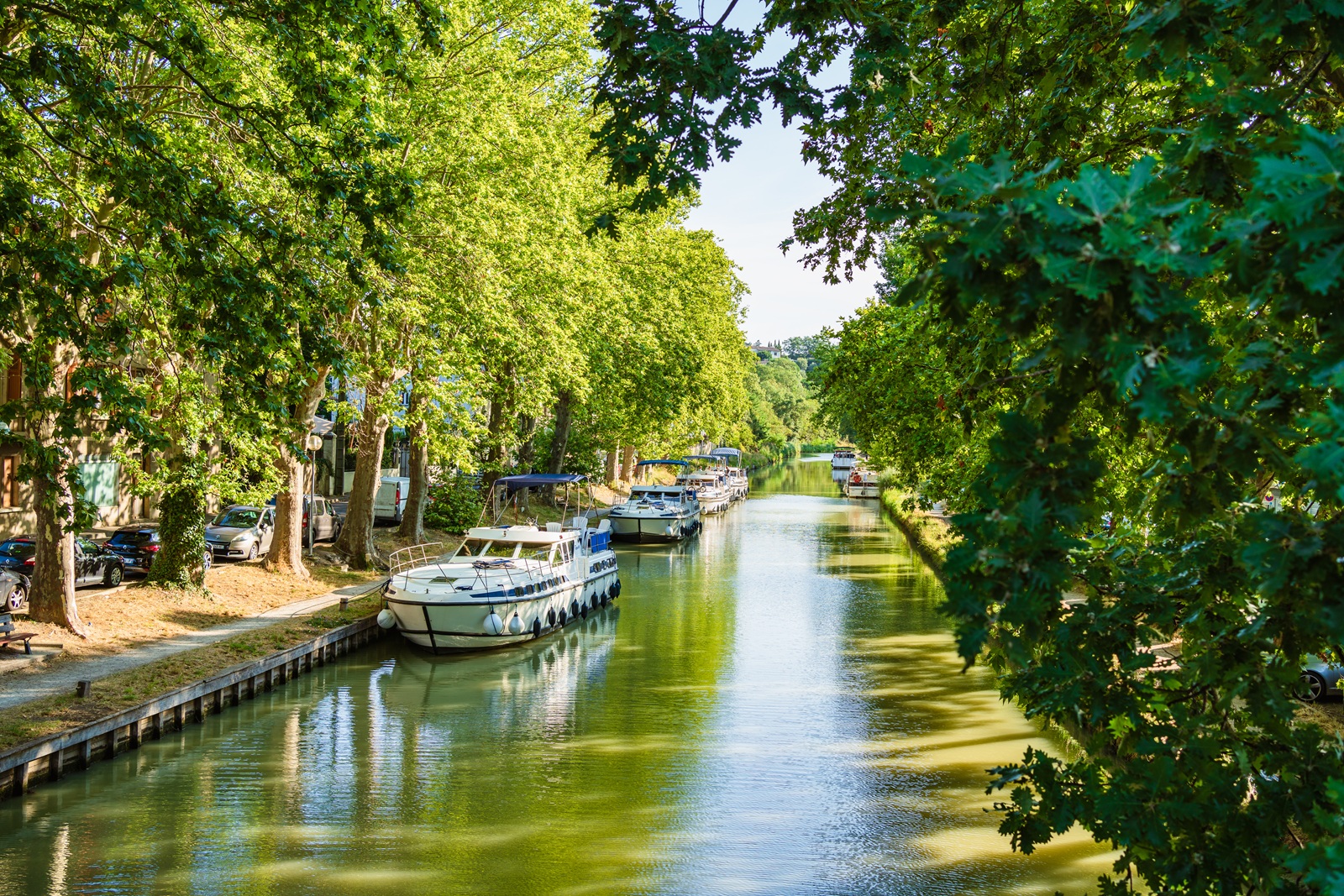
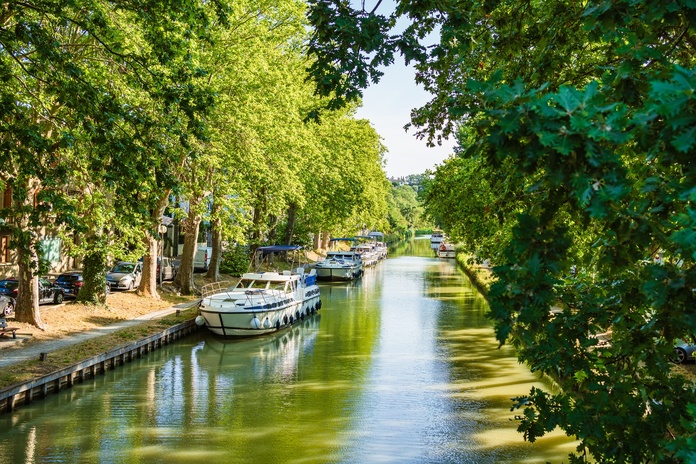
Inscrit au patrimoine mondial de l'UNESCO depuis 1996, le Canal du Midi célèbre cette année les trente ans de son classement. Une reconnaissance qui a conforté son statut de locomotive du tourisme fluvial français - DepositPhotos.com, pabkov

CroisiEurope


You don’t simply visit the Canal du Midi. You traverse it.

At the wheel of a license-free boat, by bicycle along the towpaths, on foot in the villages or from the terrace of a winery, everyone designs their own itinerary.

It is undoubtedly this ability to offer multiple ways of traveling that explains why, thirty years after its UNESCO World Heritage inscription, the Canal du Midi remains the emblematic destination of French inland-waterway tourism.

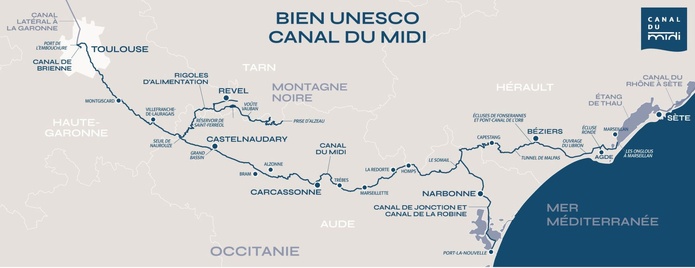
When UNESCO distinguished, in 1996, this feat imagined by Pierre-Paul Riquet in the 17th century, it saluted as much an engineering masterpiece as an exceptional cultural landscape. Four centuries later, the 240 kilometers linking Toulouse to the Étang de Thau remain navigable and continue to shape the territories they traverse.

The canal also constitutes the central link in a genuine waterway crossing of France, connecting the Atlantic to the Mediterranean thanks to the Canal de Garonne. A continuity that underlines the singularity of the Canal des Deux-Mers. Today, a recreational boater can still travel from Bordeaux to Sète without leaving inland waterways.


The locomotive of river tourism

The UNESCO designation has greatly contributed to the Canal du Midi’s international renown. Today, it accounts for nearly 30% of French inland-waterway tourism, a status that professionals observe each season.

« Our number one destination remains the Canal du Midi, ahead of Burgundy », confirms Anne-Fleur Noual, marketing director of Riverly. This position illustrates the enduring appeal of this waterway among both French and international audiences.

European leader in no-license boat rental, Le Boat also makes it one of its flagship destinations. The operator notes that the Canal du Midi accounts for almost 30% of its bookings made in France and presents it as a “living heritage”, discovered as much along the water as at the stops.


The Canal du Midi: the laboratory of “fluvestre” tourism
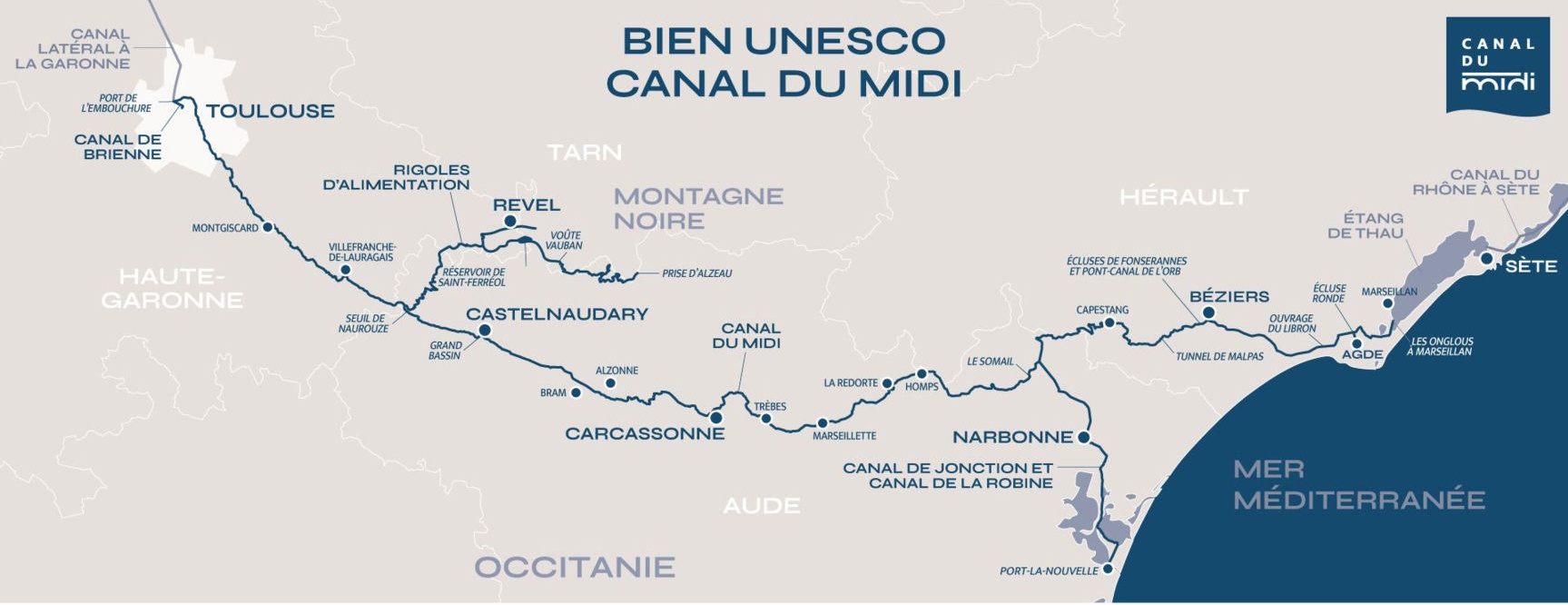

Le Canal du Midi, le canal des Deux-Mers qui relie l'Atlantique à la Méditerranée grâce au canal de Garonne - Photo Canal du Midi

This success is also explained by the evolution of practices. The Canal du Midi is no longer limited to navigation: it has become one of the best illustrations of the “fluvestre” tourism, where experiences on the water naturally extend onto land.

Boaters alternate cycling along the towpaths, visits to Carcassonne, Castelnaudary or Le Somail, tastings in the Minervois vineyards and gastronomic discoveries. Cyclists, for their part, traverse the 240 kilometers from Toulouse to Sète, sometimes in three days, sometimes in a week, at the pace of villages and locks.

This complementarity between navigation, gentle itineraries, heritage and gastronomy today makes the Canal du Midi far more than a simple nautical destination. It makes it a fully-fledged tourist destination, capable of appealing to boaters as well as cyclists or wine-tourism enthusiasts.


The water challenge

The Canal du Midi owes its success not only to its history or its landscapes. To stay navigable, it now undergoes increasingly refined management in response to climate change.

« The years 2022, 2023 and 2025 were marked by episodes of severe drought in the Adour-Garonne basin, which concentrates a significant portion of the national water deficits » explains Jean Niquet, head of the Infrastructure, Water and Environment Service of Voies navigables de France Sud-Ouest.

Despite these conditions, the network operator has managed to preserve tourist activity. « On the Canal du Midi, navigation was nonetheless maintained at 99.8% of traffic during these difficult years. On the Canal latéral à la Garonne, no interruptions were recorded », he notes.

To achieve this, VNF has profoundly adapted its hydraulic management. « We raised the Saint-Ferréol dam operating level by 12%, organized water transfers from Montagne Noire to Ganguise, and implemented targeted restrictions at the end of the season », details Jean Niquet.

Beyond these adaptations, VNF also continues replacing the plane trees affected by the colored canker, the maintenance of civil engineering works and the preservation of landscapes that earned the Canal du Midi its World Heritage inscription.
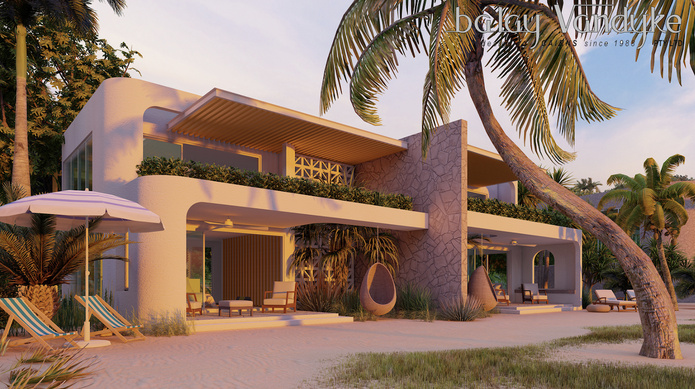
Double Island to Reopen to Tourism in Australia After 13 Years of Closure


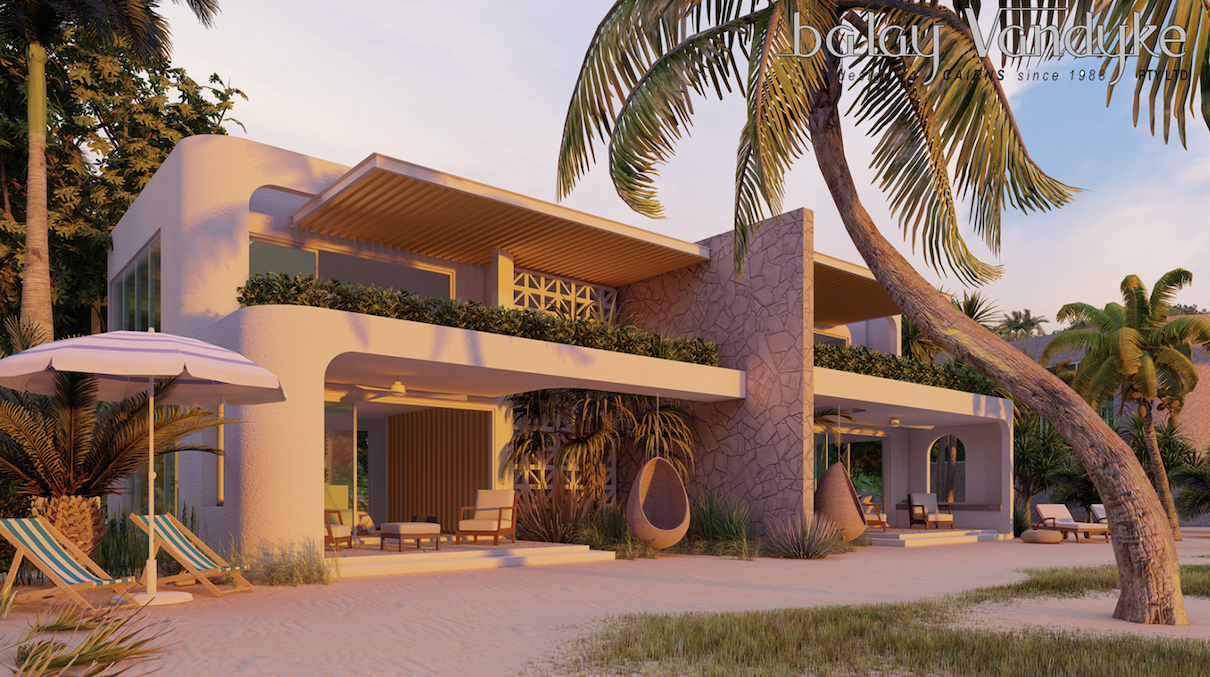
Double Island, une île emblématique du Queensland, se réinvente - Photo : Morris Group

CroisiEurope


Après treize années de fermeture, Double Island s’apprête à changer de dimension.

Le groupe familial australien Morris Group a remporté l’appel d’offres lancé par le gouvernement du Queensland pour exploiter cette île située au large de Palm Cove, à une trentaine de kilomètres de Cairns.

L’entreprise prévoit d’investir 40 millions de dollars australiens dans la relance touristique du site, avec un projet combinant excursion à la journée, infrastructures de loisirs et hôtellerie haut de gamme.


An initial public opening planned for 2027

Ancien resort insulaire parmi les plus réputés d’Australie, Double Island doit d’abord renouer avec une clientèle de proximité et les visiteurs de passage dans le Tropical North Queensland.

La première phase du projet prévoit la construction d’un nouveau ponton ainsi que l’ouverture d’un bar-restaurant de plage. Cet espace accessible au public doit accueillir ses premiers visiteurs en décembre 2027.

Le groupe Morris souhaite faire de l’île une destination d’excursion à part entière, accessible aussi bien aux habitants de la région qu’aux touristes. Des sentiers de randonnée doivent également être aménagés afin de valoriser l’environnement naturel de l’île.

“Nous voulions nous assurer que chaque étape de ce projet soit bien accueillie par la communauté locale“, explique Chris Morris, dirigeant du groupe.

L’accès à la journée constitue ainsi la première étape de la stratégie de relance de Double Island, avant le développement d’une offre d’hébergement plus exclusive.


24 villas de luxe à l’horizon 2029

La seconde phase du projet doit être consacrée à la Double Island Lodge, dont l’ouverture est annoncée pour 2029.

Le futur resort comprendra 24 villas de luxe, réparties sur six secteurs de plage. L’établissement intégrera également une piscine, un spa, une salle de fitness et un Sunset Bar situé entre les deux collines de l’île.

Un restaurant-boutique cinq étoiles de 100 couverts doit compléter l’offre. Outre les clients de l’hôtel, il pourra accueillir des mariages et des conférences.

Avec cette offre, Morris Group entend positionner Double Island sur le marché du tourisme haut de gamme, en ciblant à la fois les voyageurs australiens et la clientèle internationale.

“La Double Island Lodge sera un hébergement de luxe sans équivalent dans la région“, affirme Chris Morris, qui veut en faire une nouvelle référence touristique pour le Queensland.


Un projet intégré au développement touristique de la région de Cairns

La stratégie d’accès constitue un autre volet important de l’investissement. Le nouveau ponton doit permettre l’accueil d’opérateurs d’excursions maritimes, tandis que la flotte de Morris Nautical pourra également être mobilisée pour assurer les transferts.

Le groupe prévoit notamment d’utiliser trois superyachts de luxe stationnés à Cairns. Depuis Palm Cove, la traversée devrait durer environ 20 minutes.

Un héliport doit également être aménagé sur l’île. Il permettra d’organiser des transferts directs depuis le continent, mais aussi des vols panoramiques au-dessus de la Grande Barrière de corail.

Double Island entend ainsi s’inscrire dans l’écosystème touristique déjà développé autour de Cairns et du Tropical North Queensland, où plusieurs îles proposent des expériences complémentaires, de l’excursion à la journée au séjour en resort de luxe.

Pour le Queensland, la réhabilitation de Double Island représente également un enjeu de valorisation d’un site touristique emblématique resté fermé pendant plus d’une décennie.


Amelia Brille Publié par Amelia Brille Rédactrice TourMaG.com
Voir tous les articles d’Amélia Brille

  • picto Linkedin
  • picto email
Ajoutez TourMaG à votre flux Google Actualités Google Actualités icône  

Air Caraïbes Celebrates 25 Years of Travel With Its Customers


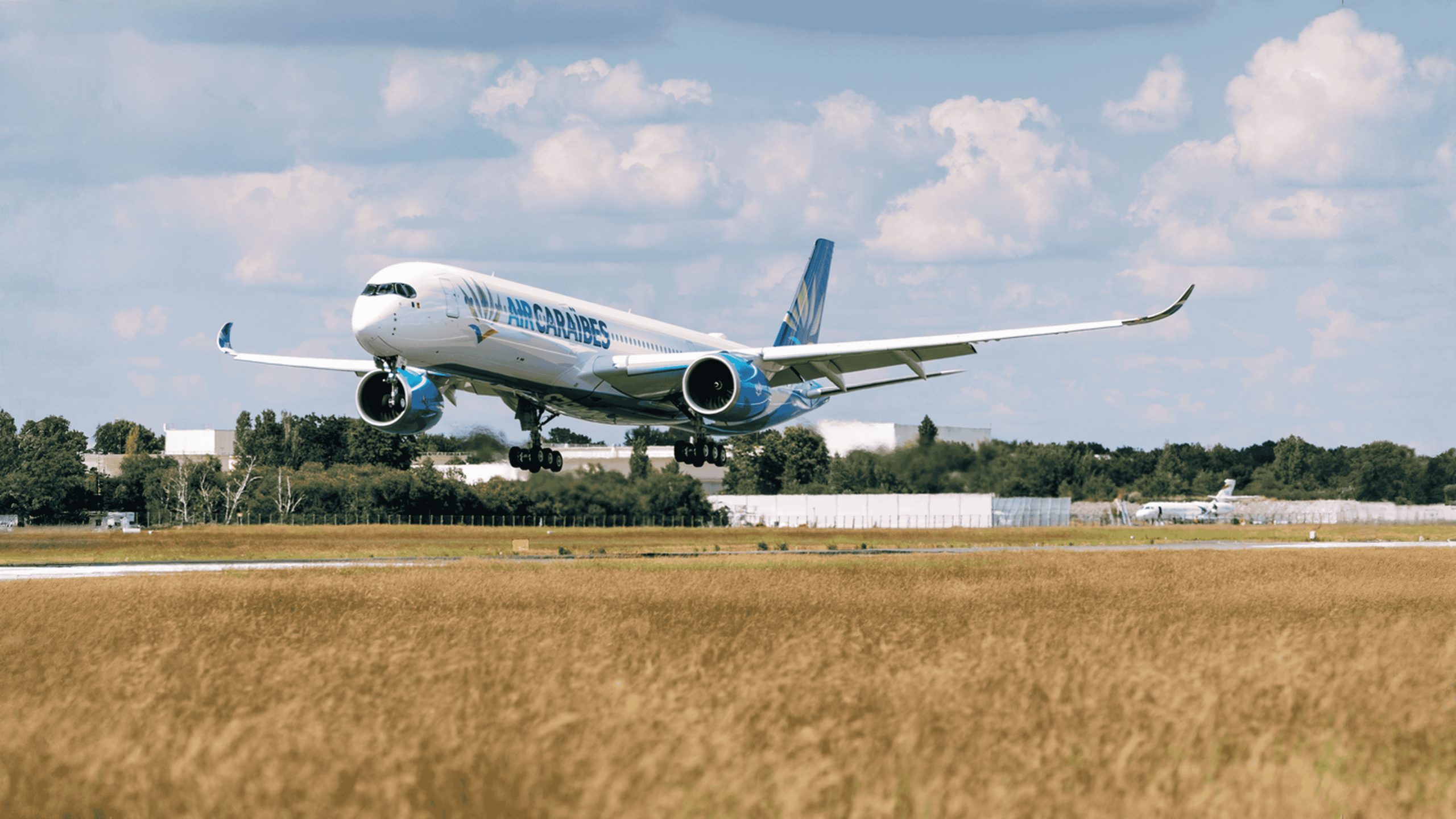
La marque Air Caraïbes célèbre 25 ans de voyages avec ses clients, photo Air Caraïbes

CroisiEurope


This year, Air Caraïbes marks its 25 years of existence: a quarter-century of history and growth dedicated to connecting mainland France, the Antilles, French Guiana, and the Caribbean. Since its creation, the airline has achieved a highly symbolic milestone by carrying 30 million passengers, equal to about 30 times the combined population of Guadeloupe, Martinique, Saint Martin, and French Guiana.

This success is, above all, the story of a family-owned entrepreneurial venture. Air Caraïbes arose from the takeover and restructuring of struggling regional Antillean carriers led by Jean-Paul Dubreuil. Today, the group is chaired by his son, Paul-Henri Dubreuil.

The company distinguished itself by becoming the first French carrier to operate the Airbus A350 XWB. It will continue on this momentum starting October 15, becoming the first to operate flights to Saint-Martin Juliana in the A350-900.

In terms of network, the airline currently serves nine destinations from Paris-Orly. It maintains a dense schedule with up to 120 long-haul flights and around 190 regional flights per week. To support this activity, Air Caraïbes relies on a fleet of 13 aircraft (including seven latest-generation Airbus A350 XWB) and the commitment of more than 1,200 employees.

To read: LIAT and Air Caraïbes join forces to strengthen Caribbean connectivity


A major contest to thank travelers

To celebrate this anniversary, Air Caraïbes has launched a major prize draw titled “30 Million Thanks!”. The campaign, which begins this Tuesday, June 2, 2026, will run until June 11, 2026.

Completely free and with no purchase requirement, the contest is accessible directly on the airline’s website.

It is open to residents of Guadeloupe, Martinique, French Guiana, Saint Martin, and mainland France. Up for grabs for participants: 10 round-trip tickets to be won on the airline’s transatlantic network.

.

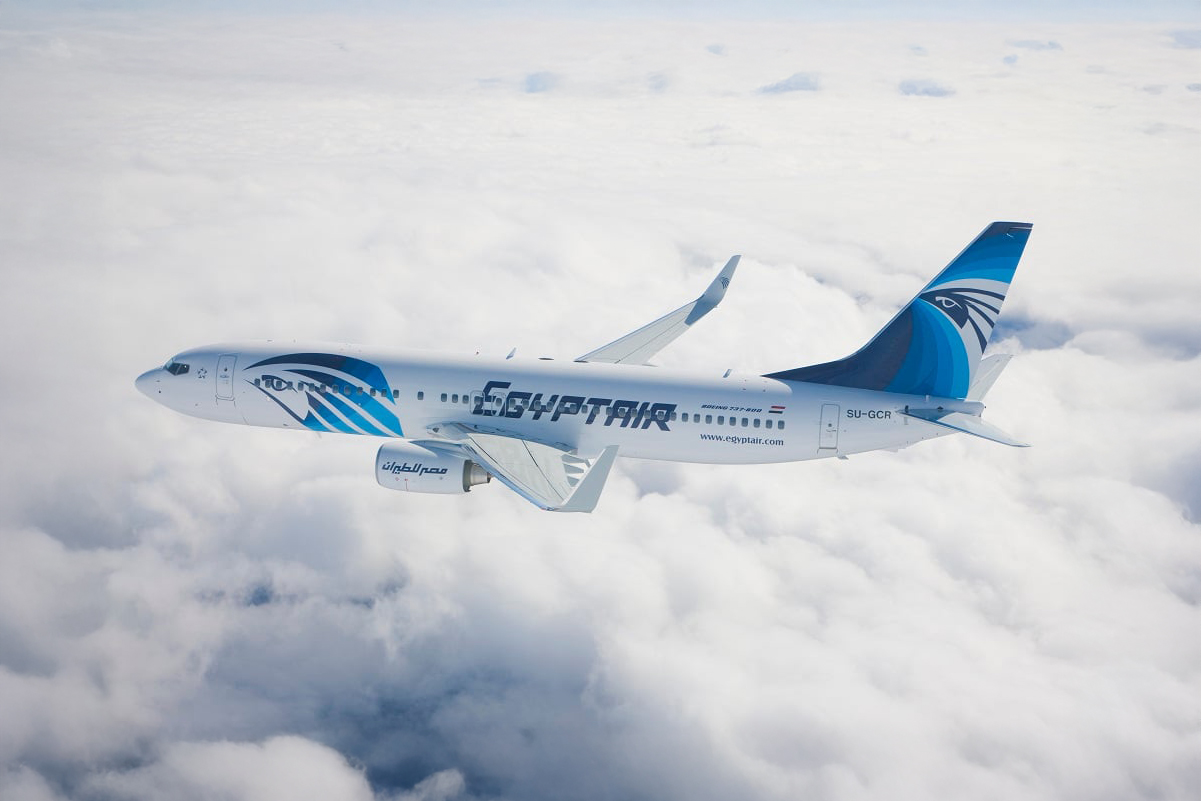
EgyptAir: 94 Years of Flying to Connect Egypt


© Egyptair

Top of Travel


Founded in 1932, EGYPTAIR is one of the oldest airlines in the world. For more than nine decades, it has carried a clear mission: to ensure Egypt’s international connectivity and to support the development of a destination at the crossroads of history, culture, and the major dynamics of today’s tourism.

In EGYPTAIR’s name, it is a genuine honor to welcome you to Egypt — a land where history and the future meet, where travel is far more than just a move from one place to another: it is discoveries.

For more than nine decades, EGYPTAIR has carried the spirit of Egypt across the skies. We have linked continents, cultures, and communities, ensuring that Egypt remains not only a destination but a global crossroads.

Today, as the travel industry evolves, EGYPTAIR stands at the forefront of the major global trends. We are adopting a sustainability-minded approach, modernizing our fleet, and investing in digital innovation to meet the expectations of tomorrow’s travelers. We are expanding our connectivity network, linking Africa, Europe, the Middle East and beyond, so that Egypt stays within reach of the world.

Yet our mission goes further. We are proud to be the gateway to Egypt’s treasures — from the timeless monuments of Cairo and Luxor to the vibrant shores of the Red Sea. Each flight we operate is not just a journey; it is an invitation to discover Egypt’s culture, heritage, and hospitality.

The Pioneer Forum embodies the same vision as ours: to deepen knowledge, create opportunities, and anticipate the future of travel. Together, we shape a more connected, more sustainable, and more inspiring industry.

EGYPTAIR is not only Egypt’s national carrier; we are the ambassador of Egypt in the skies. And as you gather here to explore, learn, and build, know that EGYPTAIR will continue to carry this mission: welcoming the world to Egypt.


Un réseau pensé pour ouvrir l’Égypte au monde

The Cairo hub stands as a major geographic crossroads, located at the meeting point of Africa, Europe, and the Middle East. From this platform, EGYPTAIR operates a network of over 70 destinations across four continents, with a fleet of around 70 aircraft including the A350-900, Boeing 787 Dreamliner, B737 MAX 8, and the new-generation Airbus A320neo. The airline’s membership in Star Alliance extends this reach even further, offering travelers a wide array of connections and seamless service on a global scale.

For French tourism professionals, the offering is both concrete and competitive. EGYPTAIR operates up to 10 direct weekly flights between Paris-CDG and Cairo, with daily departures. With a flight time of about 4 hours and 30 minutes, Egypt proves to be a mid-range destination that is easily planable.

Once in Cairo, the domestic network takes over and connects the hub to Egypt’s key tourist destinations: Luxor, Aswan, Hurghada, and Sharm el-Sheikh. This integration between international flights and domestic coverage enables tour operators and travel agencies to build combined cultural and beach itineraries on a single network, simplifying both scheduling and ticketing.

In total, the Cairo hub serves more than 75 destinations across about fifty countries, with many connection opportunities via partner airlines and a consistent level of service worldwide.

Egypt is entering a new era. The Grand Egyptian Museum (GEM), at the foot of the Giza pyramids, is now the largest archaeological museum in the world — a major asset for the cultural segment. The Red Sea coastline continues to develop its high-end resort and diving offerings. New destinations are gaining visibility: Fayoum Oasis, Siwa, and El-Alamein, each offering options for travelers seeking authenticity and experiences less standardized.

This diversification calls for a parallel evolution of the airline network. For EGYPTAIR, the challenge is to adjust frequencies, develop new routes, and improve access to under-served areas, in line with Egypt’s national tourism strategy. The results speak for themselves: in 2025, Egypt reached a symbolic milestone with a historic record of international visitors, confirming the destination’s renewed appeal.

It is in this context that EGYPTAIR joins the Pioneer Forum 2026 as an official partner. The theme chosen for this edition, “Navigating Through Uncertainty,” naturally resonates with the experience of a national carrier that, for 94 years, has operated at the heart of a shifting geography and continually adapts its operations to guarantee Egypt’s connectivity with the rest of the world.

Thank you, and welcome aboard the journey of discovery.


Contact


EGYPTAIR : 94 ans de vol au service de la connectivité égyptienne
Website: https://www.egyptair.com/fr/


Louis Vuitton Trunks on Display: 130 Years of Adventures and Grand Journeys

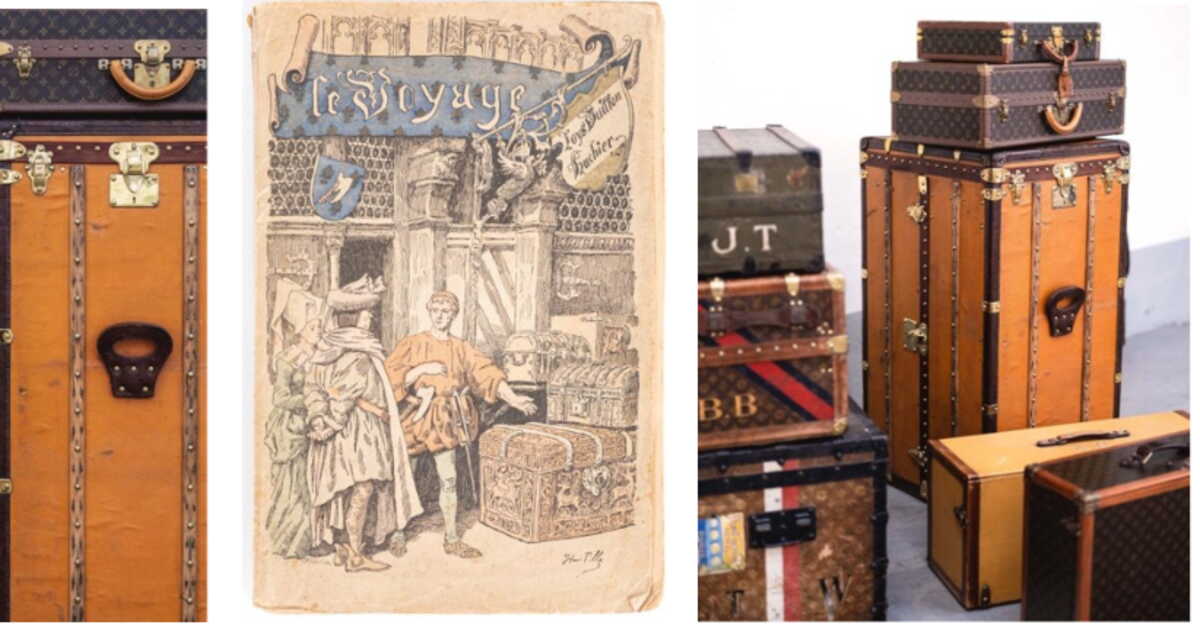
Sleeping in the heart of the jungle, writing aboard the Orient Express, or crossing the Atlantic with dozens of suitcases: Louis Vuitton trunks tell a whole history of travel on their own. On the occasion of the Monogram canvas’s 130th anniversary, the auction house Gros & Delettrez is organizing a public exhibition from May 19 to 21, 2026 at 2, rue de Bérite, in the 6th arrondissement of Paris, ahead of an exceptional auction on May 21 dedicated to the universe of the French house: explorer bed-trunks, library trunks, travel cases, or models designed for transatlantic crossings.

Far more than mere luggage, these objects tell a certain idea of travel, between luxury, innovation and adventure. To understand how these creations accompanied the evolution of travel styles since the 19th century, we spoke with the auctioneer Antoine Saulnier, who has led the sales of this specialty for over 15 years.

The Monogram canvas is celebrating its 130th anniversary this year. How did this motif become such a strong symbol of luxury and travel?

Antoine Saulnier: Even when it was created in 1896, this canvas was truly a mark of distinction. At the time, most trunk-makers used plain canvases, often Trianon gray or khaki, or striped canvases. Georges Vuitton, Louis Vuitton’s son, created this monogram largely because the house was heavily copied. When he passed by the shop windows of rivals on Rue Saint-Honoré, he saw models very similar to theirs, sometimes even presented with phrases like “as with Louis Vuitton”. The creation of the monogram was therefore also a way to assert a distinct identity and to combat counterfeiting. The initials “LV” became a real signature.

Then, Louis Vuitton quickly became a major house. Louis Vuitton was the layetier-emballeur of Empress Eugénie, which contributed greatly to its reputation.

Then, in the 20th century, the house did not limit itself to trunks: the monogram expanded to leather goods and other objects. It went down into the street, it became visible everywhere.

And obviously, the brand’s international expansion amplified this phenomenon. The monogram has been revisited by artists such as Takashi Murakami or Stephen Sprouse. Today, Louis Vuitton is probably one of the most well-known luxury brands in the world.

What is fascinating is that it all started with a young man who arrived in Paris on foot, penniless, from the East of France.

Were Louis Vuitton trunks particularly innovative for their time?

Yes, absolutely. It’s even the brand’s great strength. Louis Vuitton has always sought to invent solutions that others did not dare to offer. There is, by the way, a famous anecdote: before creating his own house, Louis Vuitton worked for another trunk-maker. A client reportedly asked for a solution to transport glasses during a long journey. His boss refused, but Louis Vuitton allegedly replied that it was possible. This spirit of innovation has truly marked the house’s entire history.

Everything was fully customizable. This is clearly evident in this sale with trunks designed for explorers. We showcase notably two exceptional bed-trunks, including one made for Jules Tivan, an explorer of the French Congo. These are objects designed for extreme conditions.

There were also “Aéro” trunks, created to be lighter in order to travel by hot air balloon or by airplane. Louis Vuitton also designed trunks for automobile cruises, such as those used in the Citroën expeditions of the Yellow Cruise (April 4, 1931 to February 12, 1932) or the Black Cruise (October 28, 1924 to June 26, 1925).

And that went even further, the house produced medical boxes, trunks to transport photographic equipment, picnic necessities, travel secretaries… We even had very specific models, such as suitcases intended for transporting hunting rifles for ladies. At the time, travel often meant departing with an entire personal universe: clothes, accessories, writing objects or leisure equipment. Each creation met a very precise need.

Did the explorer models require particular materials?

Yes, everything was designed according to the travel conditions and the type of expedition. For explorers like Pierre Savorgnan de Brazza or Jules Tivan, trunks had to withstand extremely difficult environments, whether humidity, bad weather, insects, heat or long transports.

We can see this clearly with the bed trunks presented in this sale. They are quite extraordinary: inside, there was the entire frame of a foldable bed allowing comfortable sleep during an expedition, even in the jungle. These trunks were also very heavy and often required porters.

Some were made with materials specially chosen to protect their contents. For example, there were trunks coated with zinc, sometimes considered unsinkable, to prevent moisture from entering. Others were made of brass, wood or entirely leather for the most luxurious models.

Everything was designed to measure according to the traveler’s needs and the nature of the expedition. Some trunks were intended for transporting clothes, others for delicate equipment, furs, pharmaceuticals or even equipment specific to great explorations. Everything was organized to prevent objects from moving during transport and to arrive intact despite sometimes extremely long journeys and challenging weather conditions.

Looking at the evolution of the models, can we see a change in the way of traveling over time?

Yes, entirely. At the time, traveling often meant crossing the Atlantic with thirty or forty trunks. Luggage was designed to be stored for long periods, sometimes for weeks of crossing. One could bring a lot of belongings. Even a single full trunk required porters; you did not carry your luggage yourself.

With the arrival of the automobile and especially the airplane, constraints changed: lighter luggage, more maneuverable, and easier to carry by oneself. Today, journeys are much faster. Louis Vuitton understood this very well, and the house developed rolling models, more practical, suited to modern travel.

The very notion of luxury has changed. In the past, luxury also meant taking the time of travel. We crossed the world by boat, we traveled by train, we settled in for weeks. The journey almost became part of the experience. Some travelers carried wardrobe trunks, travel libraries or travel secretaries to continue writing, reading or changing clothes during several weeks of crossing. Today, travel is much faster and more frequent, especially by airplane, so the relationship with luggage is no longer the same at all.

But the know-how, it continues to exist. Louis Vuitton still maintains its historic workshop in Asnières-sur-Seine, where bespoke orders are crafted. The artisanal precision remains the same.

What are your favorites in this sale?

I really like the yellow canvas desk and laundry trunk from the early 20th century. It’s a very rare model, entirely original and in remarkable condition. The bed trunks are also quite extraordinary. They are seen very rarely today.

But I also have a soft spot for the small writing-library trunk. I find that it perfectly embodies the luxurious travel of the early 20th century. One can easily imagine someone on the Orient Express, writing after dinner, reading during the journey, then closing his trunk before stepping off the train. This type of object truly tells of an era when travel took time and was part of everyday life. It’s a very famous model. A similar example belonged to Ernest Hemingway and was found after his death in the Ritz’s cellars with an unpublished manuscript. I find this story fascinating.

Who buys these kinds of pieces nowadays?

The profiles are very varied. There are Louis Vuitton collectors, travel enthusiasts, lovers of vintage leather goods, but also institutions. These objects represent a piece of history: the history of travel, of luxury, of craftsmanship and fashion.

But there are also buyers who simply want a beautiful decorative piece. Today, most of these trunks no longer travel. They become coffee tables, decorative objects in a living room or a bedroom. There are also decorators, hotels or interior designers who buy this kind of pieces for their projects.

Even if some people still occasionally use vintage Louis Vuitton luggage for particular trips, these pieces have become, above all, collectibles and decorative objects, more than everyday travel luggage.