Air Caraïbes Celebrates 25 Years of Travel With Its Customers


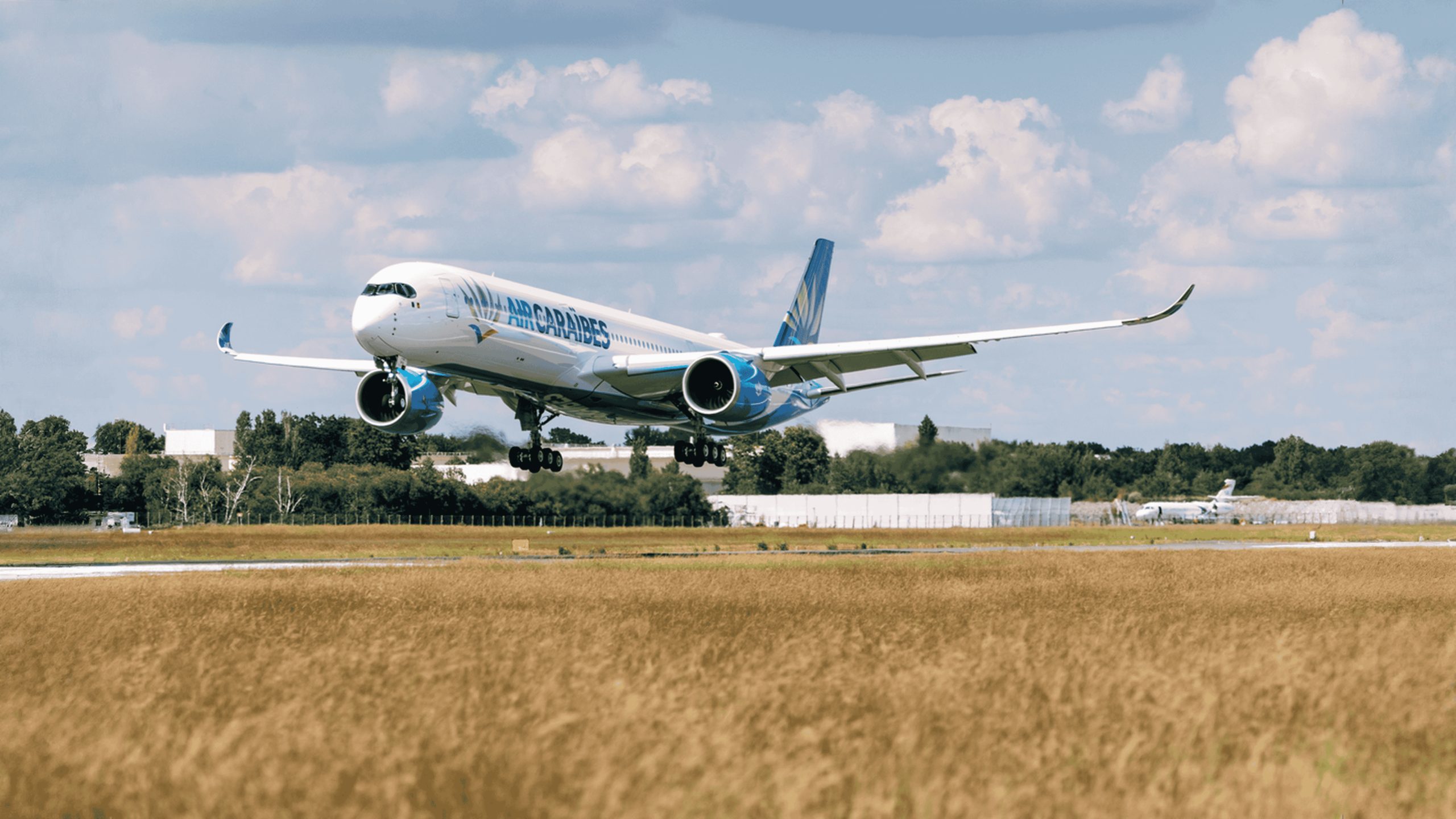
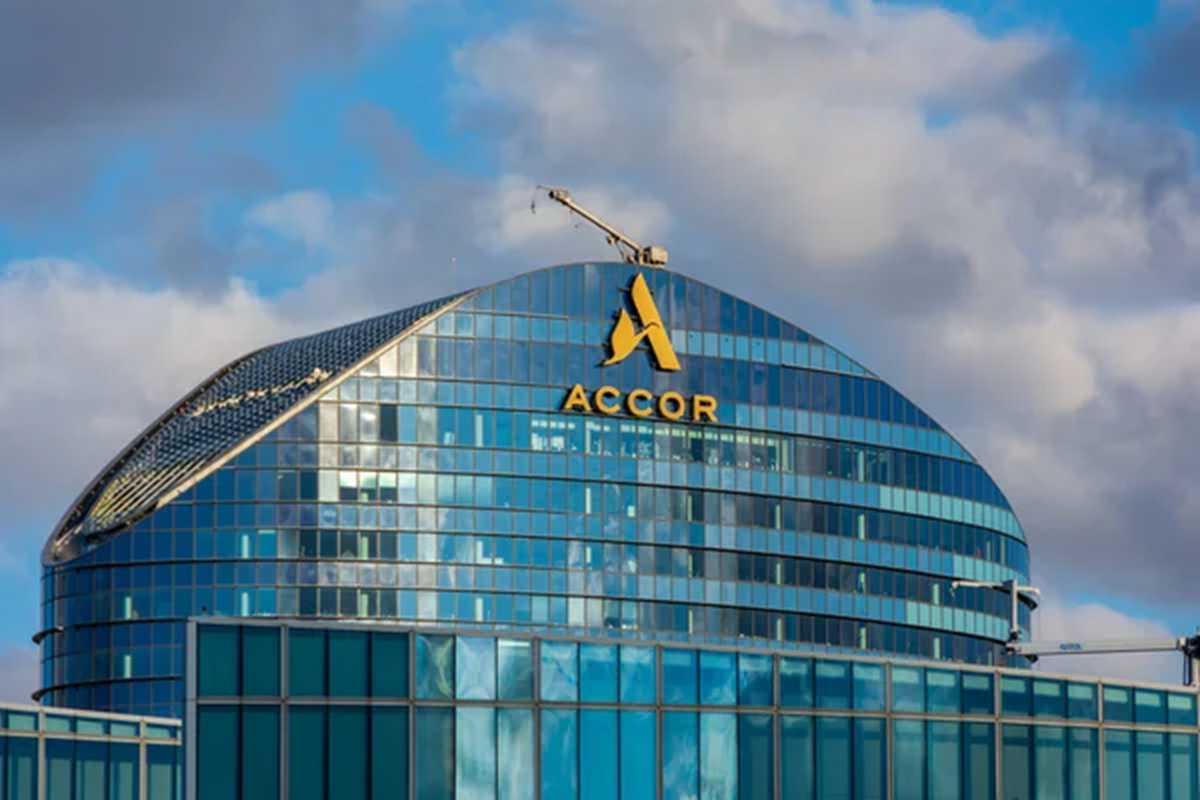
La marque Air Caraïbes célèbre 25 ans de voyages avec ses clients, photo Air Caraïbes

CroisiEurope


This year, Air Caraïbes marks its 25 years of existence: a quarter-century of history and growth dedicated to connecting mainland France, the Antilles, French Guiana, and the Caribbean. Since its creation, the airline has achieved a highly symbolic milestone by carrying 30 million passengers, equal to about 30 times the combined population of Guadeloupe, Martinique, Saint Martin, and French Guiana.

This success is, above all, the story of a family-owned entrepreneurial venture. Air Caraïbes arose from the takeover and restructuring of struggling regional Antillean carriers led by Jean-Paul Dubreuil. Today, the group is chaired by his son, Paul-Henri Dubreuil.

The company distinguished itself by becoming the first French carrier to operate the Airbus A350 XWB. It will continue on this momentum starting October 15, becoming the first to operate flights to Saint-Martin Juliana in the A350-900.

In terms of network, the airline currently serves nine destinations from Paris-Orly. It maintains a dense schedule with up to 120 long-haul flights and around 190 regional flights per week. To support this activity, Air Caraïbes relies on a fleet of 13 aircraft (including seven latest-generation Airbus A350 XWB) and the commitment of more than 1,200 employees.

To read: LIAT and Air Caraïbes join forces to strengthen Caribbean connectivity


A major contest to thank travelers

To celebrate this anniversary, Air Caraïbes has launched a major prize draw titled “30 Million Thanks!”. The campaign, which begins this Tuesday, June 2, 2026, will run until June 11, 2026.

Completely free and with no purchase requirement, the contest is accessible directly on the airline’s website.

It is open to residents of Guadeloupe, Martinique, French Guiana, Saint Martin, and mainland France. Up for grabs for participants: 10 round-trip tickets to be won on the airline’s transatlantic network.

.

Local Tourism: How to Attract Customers Within 100 Kilometers


Tourisme local : comment attirer les clients à moins de 100 km ? - Depositphotos.com Studiostock

CroisiEurope


Before selling travel, one must first establish its brand in the local landscape. For Fatima Faivre, regional director of Ready to Go, the priority remains physical visibility.

« The first reflexes will be communication: 4×3 signs, communication supports in the surroundings to highlight this new agency, » she explains.

The regional director explains adapting the communication radius to the territory: « In some areas, we communicate within a 10 to 20 km radius. In cities that draw several valleys, that can go up to 30 km. »


The same logic applies to Pierre Doucet, who bets on regular, multichannel communication to anchor his agencies locally.

« We run radio campaigns, bus-stop advertising, and we participate in all the trade fairs in the towns where we have shops, » he details.

For the head of the Terre D’Ailleurs network, the stakes are simple: staying visible so as not to be forgotten.

« Today, creating a travel agency is a very risky move. Customers will only come to you if they need you. You have to offer something relevant », recalls the founder who opened his Blois agency in January 2020 before having to close it during the Covid period.


The social networks: building closeness before the visit

Social networks have become essential for creating a relationship with locals before they even push open the agency door.

At Ready to Go, teams notably work on teaser videos before an opening.

« The team starts communicating about a great new thing coming to the city, in order to grab the shoppers’ attention and make them want to come see us, » explains Fatima Faivre.

Contests are also part of the tools used to create engagement.

« For a trip purchased, customers can take part in a game that will allow them to win their trip », cites the regional director of the Ready to Go network.

For Léa Joulia, founder of the online Naïa Journey agency, social networks and digital tools remain essential to tell a brand identity.

« Social networks, the website, or the newsletter are indispensable to present offers and tell the travel universe », says Léa Joulia, who is very active on Instagram.

But one must still choose the right channels. Pierre Doucet reminds that the strategy depends above all on the target clientele: « Our 60-year-old clients are on Facebook . We need to be where our customers are. »

The head of the network also uses YouTube to work on local notoriety.


Events to foster local connections

Event marketing remains a powerful lever to attract locals into a physical agency and create a tangible travel experience.

Jessica Sorin, for example, organized her agency’s inauguration on May 14 around a Polynesian immersion in her concept store Maison Manaventura.

Read also: Maison Manaventura: from Tahiti to Vendée, Jessica Sorin paves her way

Pierre Doucet, for his part, continues to rely on local trade fairs and exhibitions.

« Trade fairs are my hallmark for 30 years. It takes presence, but they create ties and a network », he explains.

To refresh the experience, the professional multiplies activities: virtual reality headsets, scratch games, or immediate discounts.

« Today, people want to win something. Even a small discount can build a relationship and trigger a booking. »

At Ready to Go, games and rewards also help to drive foot traffic to the agency.

« For example, you can reward clients who booked the most significant file. It can be valuable goodies, like a bottle of rum, a quality suitcase… or even plane tickets for a future trip. People who win talk about it to others, and that’s wonderful as well, » confirms Fatima Faivre.

Some formats, however, are losing steam. Pierre Doucet believes that traditional client evenings no longer suffice. « If it’s just offering a drink and giving a presentation, that’s no longer enough. People come if they have a real reason to come », notes the Terre d’Ailleurs founder.


Word of mouth, still king

Despite the rise of the digital world, all the professionals interviewed agree on one point: nothing replaces local recommendations.

« The network, the network, the network: network culture is essential, » sums up Pierre Doucet.

Based in Châteauroux for 30 years, he relies on daily presence in local life. « People have been seeing me around the local landscape for 30 years. This presence builds trust », he confirms.

The same sentiment for Léa Joulia, especially on experiential travel: « Word of mouth remains incredibly strong for this type of trip where the human experience matters a lot. »

The founder adds: « A satisfied traveler is your best advertisement. »

In the end, attracting clients within a 100 km radius relies less on a miracle recipe than on steady visibility, proximity, and human connection.

As Pierre Doucet summarizes: « We must stay true to ourselves, keep our values, and make sure people feel the need to come to us. »


Find all articles in our series “Very Special Agent – The Practical Guide for the Pro” by clicking this link.

Can Asia Still Surprise Your Customers in 2026?


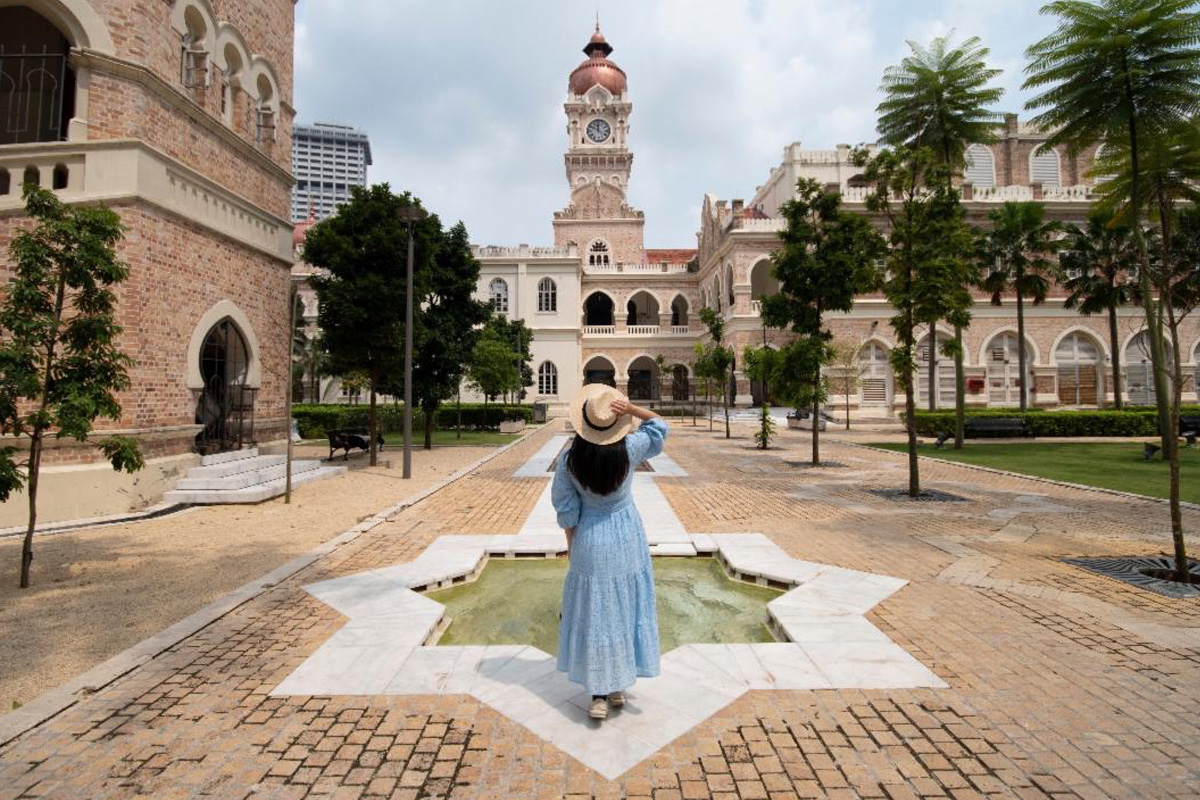
Kuala Lumpur, Malaisie © DTH Travel

CroisiEurope


Laos, Vietnam, China, Hong Kong, Malaysia… destinations now essential for travelers from France.

For tourism professionals, the challenge is no longer merely to offer them, but to tell their stories differently.

In the face of more experienced and demanding clients, itineraries are evolving: less demonstrative, more authentic. Less “checklist”, more immersive.

Present in 14 destinations in Asia, DTH Travel relies on its local teams to design tailor-made programs, aligned with these new expectations.


Laos and Vietnam: Active exploration, responsible tourism, and gentle mobility

In Laos as in Vietnam, DTH Travel develops an approach centered on gentle mobility and human-scale itineraries to foster immersion while limiting environmental impact.

In Oudomxay Province in Laos, Nam Kat Yorla Pa illustrates an approach where tourism development adapts to the forest, not the other way around.

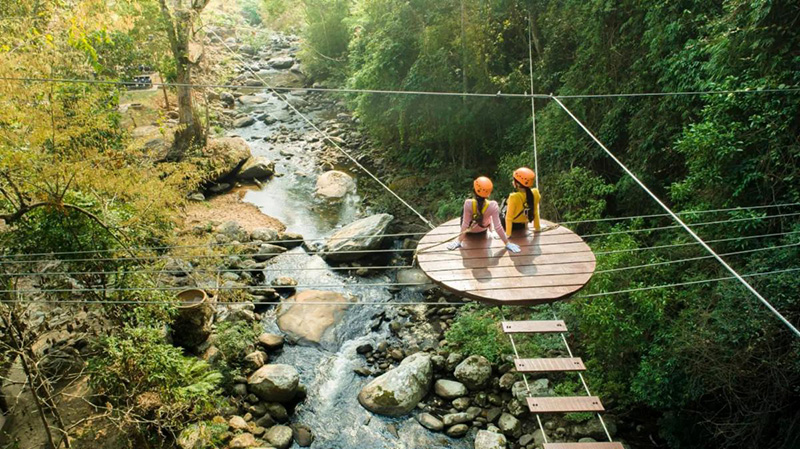
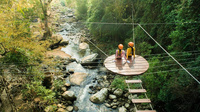
Located along the Nam Kat River, at the heart of a protected environment, the site offers experiences built around this ecosystem: forest hikes, zip lines, guided treks by local experts, and bicycle rides.


Nam Kat Yorla Pa, Laos © DTH Travel

In Vietnam, DTH Travel emphasizes gentle mobility to offer a more immersive discovery. Around Hue, bicycle and e-bike itineraries take backroads and traverse rice fields, villages and agricultural landscapes.

Regular stops allow encounters with local communities and the discovery of cultural sites.

In the essential metropolises of Hanoi and Ho Chi Minh City, urban itineraries designed to limit car usage invite travelers to explore these destinations differently, between popular neighborhoods, street markets, culinary experiences, and cultural heritage.


Hong Kong: A Low-Carbon Urban Experience


Jardin Nan Lian à Kowloon © DTH Travel

Often perceived as a stopover destination, Hong Kong deserves a stay in its own right. DTH Travel offers here a distinctly urban and immersive approach, built around a simple principle: explore the destination in one day using only public transport and walking through its districts.

The experience relies on a highly efficient network (tramways, MTR metro, ferries), enabling you to traverse the city and explore its neighborhoods without a car.

A choice that reduces the trip’s carbon footprint while offering immediate immersion in the daily life of residents.

In Central, the exploration centers on Hollywood Road, between galleries, antique shops and street art, in a dense and vibrant urban setting.

Nearby, Upper Lascar Row (commonly known as Cat Street) brings together antique stalls and second-hand objects, ranging from porcelains to collectible pieces in a traditional market.

Across the harbor, in Kowloon, the Chi Lin Nunnery, built in the Tang Dynasty architectural style, and the Nan Lian Garden contrast with the surrounding urban intensity and offer a true breath of air in the heart of the city.

Finally, in Mong Kok, the Ladies Market embodies Hong Kong’s most popular energy. Here the market offers a wide range of everyday products, souvenirs and accessories, in a typically local atmosphere.


Minqin: Ecotourism and Local Engagement at the Heart of China


Minqin, Chine © DTH Travel

In Gansu Province, Minqin illustrates another way of discovering China.

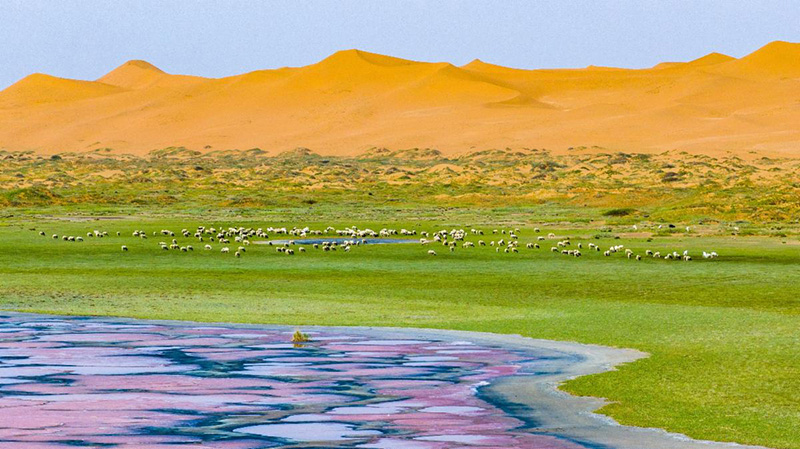
Located between the Tengger and Badain Jaran deserts, this fragile region is defined by a delicate balance between oases, agricultural areas and arid spaces.

For decades, local communities have continuously worked to combat desertification, notably through planting saxaul trees, shrubs essential for soil stabilization and land preservation.

DTH Travel invites travelers to discover these initiatives and also to participate.

Walks along forest belts, encounters with farmers, and even participation in reforestation actions depending on the season.

The experience thus goes beyond mere discovery: it becomes contributive and educational.


A New Way to Build Travel in Asia


Through these examples, a fundamental trend is becoming clear: the value of a journey rests not only on the destination, but on how it is designed.

It is in this logic that DTH Travel supports tourism professionals: by leveraging its local teams to design tailor-made programs, capable of renewing the way these destinations are sold and experienced.

More than ever, the objective is not merely to take travelers to Asia, but to enable them to experience it differently, even when they think they already know it.

To imagine your next itineraries, the DTH Travel teams are at your disposal.

Mathilde Thrierr

[email protected]

www.dth.travel

facebook instagram linkedin

>> DTH Travel in the DESTIMAG Directory