Catalonia Grand Tour


© Agència Catalana de Turisme

IFTM


Destination to be explored as a cultural cornerstone, Catalonia asserts a strong identity marked by traditions, popular festivals, and a rich heritage: Roman ruins, medieval villages, and Gaudí’s modernist masterpieces— every discovery is unique.

And of course, it would be impossible to speak of Catalonia without mentioning its generous and authentic gastronomy, which highlights local products and regional know‑how and has earned it the designation of World Gastronomy Region 2025.


Contest

A través de los distintos épisodes, we will take you on an exceptional itinerary, blending culture, heritage, gastronomy, natural landscapes, and the Mediterranean art of living.

Extend the adventure by joining the grand quiz now and try to win a trip for two on Section 3 of the Grand Tour of Catalonia, from Lleida to La Seu d’Urgell.

A unique experience to live and to share with your clients!

In second and third prizes, a beautiful book “La Catalogne vue du ciel” by Yann Arthus-Bertrand.

👉 Participate in the contest

Contest dates: February 2 to March 31, 2026.


Episode 1: Welcome to Catalonia!

Let’s embark together on a journey to discover Catalonia through the Grand Tour of Catalonia, som-hi (let’s go in Catalan!).

In this episode, Josefina Mariné, director of the French office of Catalonia Tourism, will first present the destination’s cultural and sporting news.

In 2026, we celebrate the Centenary of Gaudí’s death, a genius of Catalan Modernism, and the 150th anniversary of the birth of Pau Casals, the renowned cellist and peacemaker. Moreover, Barcelona has been named a UNESCO World Capital of Architecture and a recognition by the International Union of Architects, highlighting its exceptional buildings and urban design.

Additionally, in July 2026 we will host an international event: the Grand Start of the Tour de FranceBarcelona, Tarragona and Granollers will be stage towns of the Tour de France! A historic moment we can’t wait to live here, on our Catalan soil.

Then, discover the Grand Tour of Catalonia offer — a unique experience designed with regional partners in a framework of sustainability, quality, and authenticity.

This offer allows travelers to discover Catalonia at their own pace, in depth, through more than 300 local experiences blending culture, nature, gastronomy, and traditions.

The Grand Tour of Catalonia can be lived in several ways:

The emblematic route: a circular itinerary of 13 days and almost 2,000 km, for a complete immersion.

The 5 thematic stretches: five sections of 5 to 7 stages each, perfect for exploring the region by zones or according to desires.

The gastronomic version: a tasty itinerary for lovers of Catalan cuisine and terroir.

● The family version: an itinerary designed for family experiences.

● For cycling enthusiasts, the Grand Tour of Catalonia in gravel.

Across five episodes, our Catalonia partners will introduce these 5 stretches that together illustrate the richness and diversity of all of Catalonia.


Credits Episode 1: © apperSTUDIO © Fundació Junta Constructora del Temple Expiatori de la Sagrada Família © Barcelona Turisme © Diputació de Barcelona © Fundació Pau Casals © Patronat de Turisme Costa Brava Girona © Consell Comarcal del Priorat / Joan Capdevila Vallve


Episode 2: From Barcelona to Tarragona, vineyards to the sea taste

In this episode, we are pleased to welcome Cécile Lacroute, head of promotion for the French office of Catalonia Tourism, to discuss the first stretch of the Grand Tour of Catalonia linking Barcelona to Tarragona in 6 stages: culture, spirituality, gastronomy, nature, and relaxation are on the program!

Barcelona, a vibrant Mediterranean city, world capital of Architecture 2026, is the starting point of an unforgettable journey across Catalonia, to Tarragona, the majestic Roman city.

Leaving Barcelona and its Modernist heritage, the road heads to the sacred mountain Montserrat with its millennium-old monastery, symbol of the region, before crossing the spectacular landscapes of the Penedès vineyards, where one can sample Cava and outstanding wines at family estates.

Along the way, travelers will pause in Cardona with its medieval castle, in Solsona to discover its artistic heritage, or in Sitges, a lively seaside town full of charm. Both are renowned for their Carnaval, full of color and festive atmosphere!

In El Vendrell, the music of cellist Pau Casals accompanies the visit like a true soundtrack of the journey.

Finally, the itinerary ends in Tarragona, between golden beaches, Roman culture, and authentic traditions — including calçots, xató and seafood, as well as cultural experiences.

Also discover a spectacular and unique tradition: the Castells of Tarragona, these impressive human towers that electrify the whole city.

Another must: Tàrraco Viva, an immersive festival reviving the grandeur of the Roman era. Visitors discover historical reconstructions, gladiator combats, theatre, music and dance performances, and a living glimpse of daily life in ancient Rome.

And for fans of unusual culinary traditions, discover the calçotada festival of Valls!

🧭Itinerary Section 1: From Barcelona to Tarragona, the vines to the taste of the sea 📍 462 km – 6 stages

Barcelona

Montserrat

El Penedès

Costa Barcelona and Sitges

Cistercian route (Monastery of Santes Creus)

Tarragona


Episode 3: Tarragona – Lleida: Meeting History

In this episode, we welcome Claire Aubertel from the NjoyCatalonia agency who will take us from the Costa Daurada to the lands of the Ebre and Lleida. An exceptional itinerary, between shimmering seas, tranquil rivers and authentic inland landscapes, meeting millennial traditions and an astonishing natural diversity.

This second stage of the Grand Tour of Catalonia begins in Tarragona and takes you to Reus, cradle of Antoni Gaudí—the genius of Catalan Modernism. In June 2026, we will celebrate the centenary of his passing.

Reus, a true jewel of the Modernist Route, houses treasures such as Casa Navàs or the Pere Mata Institute, not to mention the Gaudí Interpretation Center, an immersive experience essential to understand the artist’s universe.

Then, the excitement continues with PortAventura World!

An essential stop for families and thrill-seekers, where shows, attractions and themed lands plunge visitors into an adventurous world. The park celebrated its 30th anniversary in 2025 — the perfect moment to rediscover the realm of Woody Woodpecker and many other iconic worlds.

Next, head to the Costa Daurada coastline: savor the sea cuisine in Cambrils, unwind on the beaches of Salou, then explore the Ebre delta on foot, by bike, by canoe, or by boat. Between golden beaches, rice fields, salt marshes, flamingos and preserved nature, the escape is total.

The route then penetrates inland along the Ebre, amidst millennial olive groves, orchards and vineyards. You will discover the wild nature of the Ports massif and make a mandatory stop in the “cathedrals of wine” of Terra Alta and Priorat. These monumental wine cellars owe their nickname to a spectacular architecture inspired by Gothic cathedrals — soaring vaults, imposing pillars and majestic arches. It feels like being in a real cathedral… but filled with wine casks, offering a visually and sensorially unforgettable experience.

Explore the Catalan Cistercian treasures, with Poblet Monastery at the pinnacle, a UNESCO World Heritage Site.

The journey ends in Lleida, the agricultural capital of Catalonia, famed for its welcoming atmosphere and its Aplec del Caragol, a popular gastronomic festival where every spring 13 tonnes of snails are tasted in a festive and authentic ambiance!

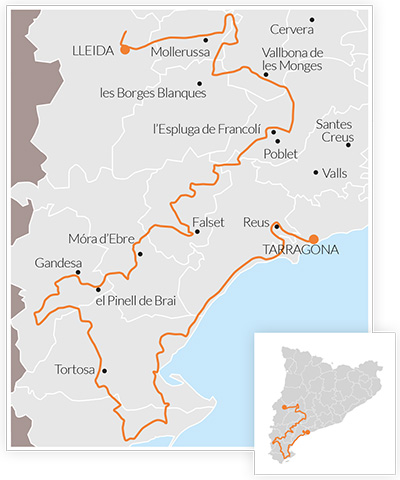
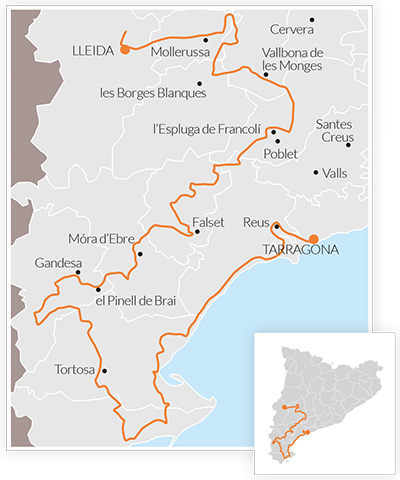
🧭Itinerary Section 2: From Tarragona to Lleida, in search of history 📍 418 km – 7 stages

Tarragona Roman

Reus

Delta de l’Ebre Natural Park

Modernist cellars

El Priorat

Cistercian route (Poblet Monastery and Vallbona de les Monges)

Lleida


© Agència Catalana de Turisme


Credits Episode 3: © Rafa Pérez – ACT © Consell Comarcal del Priorat / Joan Capdevila Vallve © Consell Comarcal del Priorat © Coral Tarrés © Patronat Municipal de Turisme de Salou © Manel R. Granell / Tarragona Turisme © Jaume Boldú / Tarragona Turisme © Tarragona Turisme © Institut per al Desenvolupament de les Comarques de l’Ebre (IDECE) © Turisme de les Terres de l’Ebre © Tortosa Turisme © Turisme de Cambrils © Patronat de Turisme Costa Daurada © PortAventuraEntertainmentSAU © Consell Comarcal de l’Urgell © Patronat de Turisme de la Diputació de Lleida


Episode 4: From Lleida to La Seu d’Urgell: Close to the Sky

In this episode, we welcome Sofia Gonzalez from the Directorate General of Tourism, who guides us through the Catalan plains to the majestic Pyrenees. A inspiring and refreshing journey where culture, preserved nature, starry skies, and outdoor sports come together to appeal to adventure and discovery lovers.

Start with Lleida, an inland city that captivates with its authenticity and its rich historical heritage. Dominated by the majestic former Seu Vella Cathedral, the city offers an exceptional panorama over the Segrià plain. Its historic center, rural traditions, and its local gastronomy — wines of Costers del Segre, olive oil, and regional products — make for a charming stop.

Continue to the Montsec Astronomical Park, an exceptional site certified Starlight, ideal for observing a starry sky among the purest in Europe.

Then discover the Romanesque churches of the Vall de Boí, UNESCO World Heritage, true architectural treasures of the 11th and 12th centuries. These monuments offer a unique blend of medieval history, Romanesque art, and spectacular mountain landscapes.

Then head to the Val d’Aran, tucked in the Catalan Pyrenees at the French border. This valley offers an exceptional playground year-round: skiing and snowboarding at Baqueira-Beret, hiking, mountain biking, rafting or simple walks in its picturesque villages such as Vielha, Arties or Bagergue, with stone houses and slate roofs. The valley also hosts protected areas, including the National Park of Aigüestortes and Estany de Sant Maurici, with its glacial lakes and majestic peaks.

The local gastronomy completes the experience: artisanal cheeses, mountain charcuterie, stews, game, and honeys from the Pyrenees will awaken your senses at every step. Not to mention traditional festivals, like the annual celebrations of Arties and Aranese folklore, which make the valley vibrate.

This unique journey will finally lead you to La Seu d’Urgell, the ideal gateway to continue your cultural and natural exploration of Catalonia.

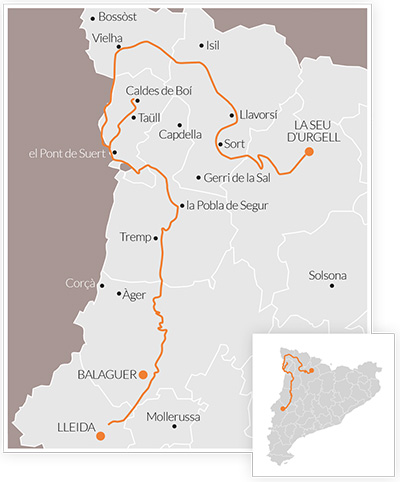
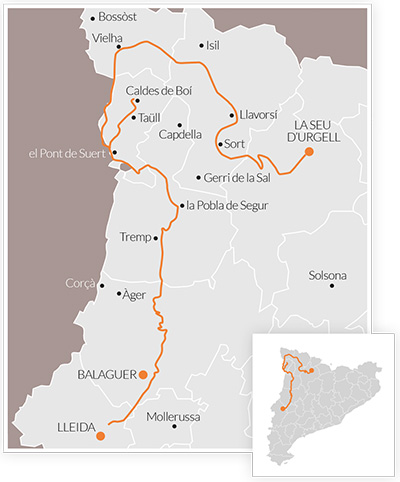
🧭Itinerary Section 3: From Lleida to La Seu d’Urgell, close to the sky 📍 357 km – 5 stages

Lleida

Mont-rebei Gorges

National Park of Aigüestortes and Estany de Sant Maurici

Romanesque art of the Vall de Boí

Val d’Aran

La Seu d’Urgell


© Agència Catalana de Turisme


Credits Episode 4: © Area de Turisme del Consell Comarcal de l’Urgell © Oficina de Turisme del Berguedà © Oficina de Turisme Val d’Aran © Turisme de la Seu © TN Produccions / Arxiu Patronat de Turisme de la Diputació de Lleida © Patronat de Turisme de la Diputació de Lleida © Turisme (visitjussà) del Consell comarcal del Pallars Jussà


Episode 5: From La Seu d’Urgell to Figueres: Ode to Nature

In this episode, we are pleased to welcome Marinel·la Mosquera from the Pedratour agency, who will present the fourth stretch of the Grand Tour of Catalonia, a stage rich in landscapes, culture and emotion.

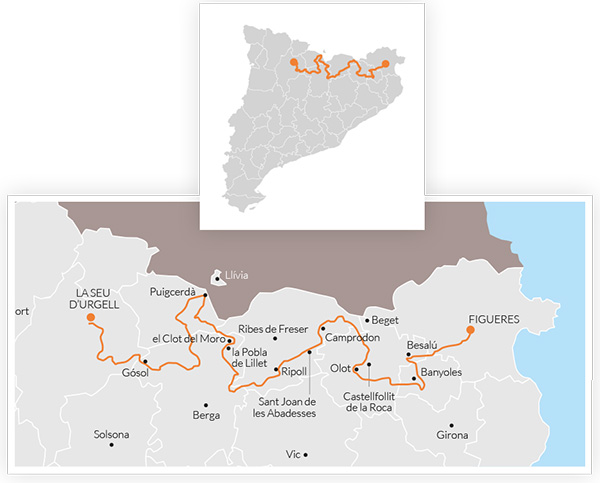
The route starts in La Seu d’Urgell, a charming town at the confluence of two rivers, dominated by the Cadí mountain range. From there, the itinerary heads east and crosses the Catalan Pyrenees, skirting the spectacular Cadí-Moixeró Natural Park with the “forked” Pedraforca massif, a true natural jewel; this park links the Cadí and Moixeró ranges, offering a setting of majestic mountains, green forests, deep gorges and traditional villages.

A perfect site for travelers seeking nature, authenticity and outdoor activities, with numerous hiking trails accessible to all.

Along the way, travelers will visit the Ripoll Monastery, a masterpiece of Catalan heritage and a true symbol of Catalonia’s origins.

Then, head to the Garrotxa volcanic zone natural park, a unique space in Europe, where nearly 40 volcanoes and lush forests offer a fascinating landscape.

From the air, a hot air balloon flight over Olot’s volcanoes guarantees an unforgettable moment! Don’t miss the Espai Cràter, an immersive museum housed in an old crater, perfect for understanding the region’s geological secrets and tasting volcanic cuisine with products from fertile volcanic lands, with unique flavors.

The journey continues through the medieval villages of Gósol, Santa Pau, Besalú, true Catalan postcard towns where history and charm permeate every alley.

Finally, the route ends in Figueres, Salvador Dalí’s birthplace.

🧭Itinerary Section 4: From La Seu d’Urgell to Figueres, ode to nature 📍 357 km – 5 stages

La Seu d’Urgell

Pedraforca

Pittoresque Pyrenean villages

Garrotxa volcanic zone

Besalú

Figueres


© Agència Catalana de Turisme


Credits Episode 5: © Turisme Garrotxa © Patronat de Turisme Costa Brava Girona © Oficina de Turisme de Besalú – vadobuch © Delit – Agència d’Innovació i desenvolupamnt de la Garrotxa © Associació d’Hostalatge de la Garrotxa © Domènec Fernández – Diputació de Barcelona


Episode 6: From Figueres to Barcelona: From Surrealism to Modernism

In this final episode, we are delighted to welcome Daniel Punseti, founder of the Camí de Ronda, to cap off the Grand Tour of Catalonia in style.

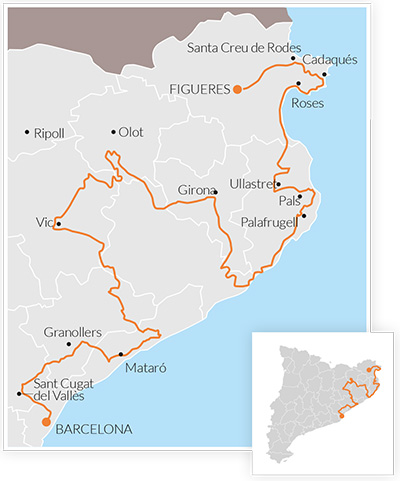
Beginning in Figueres, this fifth stretch extends the journey into Salvador Dalí’s surreal universe. Travelers will discover his birthplace home, retracing his beginnings, then the famous Dalí Theatre‑Museum, conceived by the artist himself — an iconic and essential place for any art and culture lover.

The route then leads to Cadaqués, a beautiful whitewashed village facing the Mediterranean, surrounded by mountains and bathed in a unique light. Nearby, the Portlligat and Púbol Dalí houses, true sources of inspiration for Catalan genius, invite you to dive into his imagination and daily life.

Before reaching the mineral landscapes of Cap de Creus, a stop at the Monastery of Sant Pere de Rodas is a must, a spectacular Romanesque ensemble overlooking the Port de la Selva: between monastic history, wine culture of the Empordà, and panoramas swept by the tramontane, the visit offers a timeless interlude.

The road continues to Cap de Creus, the easternmost point of the Iberian Peninsula, where the Pyrénées meet the Mediterranean. Classified as a Natural Park, this spectacular site stands out for its wind-sculpted cliffs, hidden coves, and crystal-clear waters, hosting an exceptional marine biodiversity.

Visitors can reach the Cap de Creus lighthouse to admire a breathtaking panoramic view, or follow the coastal paths leading to natural gems such as Cala Culip or Cala Jugadora.

The itinerary then runs along the Costa Brava, famous for its fishing villages and coastal trails overlooking the sea. It leads to Girona, a charming medieval city with colorful lanes and the Cathedral of Santa Maria, one of Catalonia’s most impressive. Every May, the city dresses in thousands of floral arrangements for the Temps de Flors festival, a must for travelers.

Halfway, visitors can stop in the medieval villages of Peratallada, Pals or La Bisbal d’Empordà, before reaching Vic, then cross the Montseny massif, a Biosphere Reserve, to finish the journey on the beaches and ports of the Costa Barcelona.

The apex of this Grand Tour of Catalonia is, of course, Barcelona, a cosmopolitan and creative capital where modernism, lifestyle, and Mediterranean energy mingle.

🧭Itinerary Section 5: From Figueres to Barcelona, from Surrealism to Modernism 📍 525 km – 7 stages

Figueres

Cap de Creus Natural Park

Cadaqués and Portlligat

Old interior medieval towns

Girona

Vic

Montseny Natural Park

Costa Barcelona: Modernism and colonist villages

Barcelona


© Agència Catalana de Turisme


Credits Episode 6: © Ajuntament del Port de la Selva – visual13 © Ajuntament de Besalú © Ajuntament de Santa Maria de Palautordera © Ajuntament de Forallac © Barcelona Turisme © Patronat de Turisme Costa Brava Girona © Oficina de Turisme de Vic © Ajuntament de Torroella de Montgrí © Daniel Punseti – Patronat de Turisme Costa Brava Girona © Oficina de Turisme del Port de la Selva © Oficina Municipal de Turisme de Blanes © Ajuntament de Figueres © Oficina Municipal de Turisme de Pals © Diputació de Barcelona © Albert Miró – Diputació Barcelona © Domènec Fernández – Diputació de Barcelona


Contact Catalonia Tourism


Grand Tour de Catalogne
Tourisme de la Catalogne, 50 rue Saint-Ferdinand, 75017 Paris

Contact :

Cécile Lacroute

Responsable promotion

Email : [email protected][email protected]

Téléphone : +33 6 77 95 76 53

Site web : https://www.catalunya.com/fr

facebook instagram

Evaluating hotel name formatting

I think we should make the title more natural, like "Aix-en-Provence: Grand Hôtel Roi René Unveils its Renovation" or perhaps "Aix-en-Provence: Grand Roi René Hotel Reveals its Renovation." However, "Grand Hôtel Roi René" is the formal name of the hotel, and in English, I’m considering how to best render it. For SEO purposes, using "Grand Hotel Roi Rene" without accents might be better. Ultimately, I’m leaning towards keeping it elegant while thinking about its marketing appeal.Considering hotel title options

I’m thinking about the title "Aix-en-Provence: Grand Hotel Roi Rene Unveils Its Renovation." Maybe it’s worth adding "in Aix-en-Provence," but since that’s already the location phrase, it might sound repetitive. It seems best to propose the title as "Aix-en-Provence: Grand Hôtel Roi René Unveils Its Renovation," while pondering whether to drop the accent for SEO purposes. However, keeping "Roi René" as is helps preserve the hotel’s proper name, even if it can confuse search engines. I’ll stick with the hotel’s name in English to ensure clarity.Finalizing the hotel title

I think we should translate the title correctly: "Aix-en-Provence: Grand Hôtel Roi René Unveils Its Renovation." In English, "Grand Hôtel" is "Grand Hotel" without the accent. So, "le Grand Hôtel Roi René" becomes "the Grand Hotel Roi Rene." "Dévoile sa rénovation" translates to "unveils its renovation." Putting it all together, I have: "Aix-en-Provence: the Grand Hotel Roi Rene Unveils Its Renovation." To keep it SEO-friendly, I’ll use title case: "Aix-en-Provence: Grand Hotel Roi Rene Unveils Its Renovation." That’s around 68 characters, which is just right!


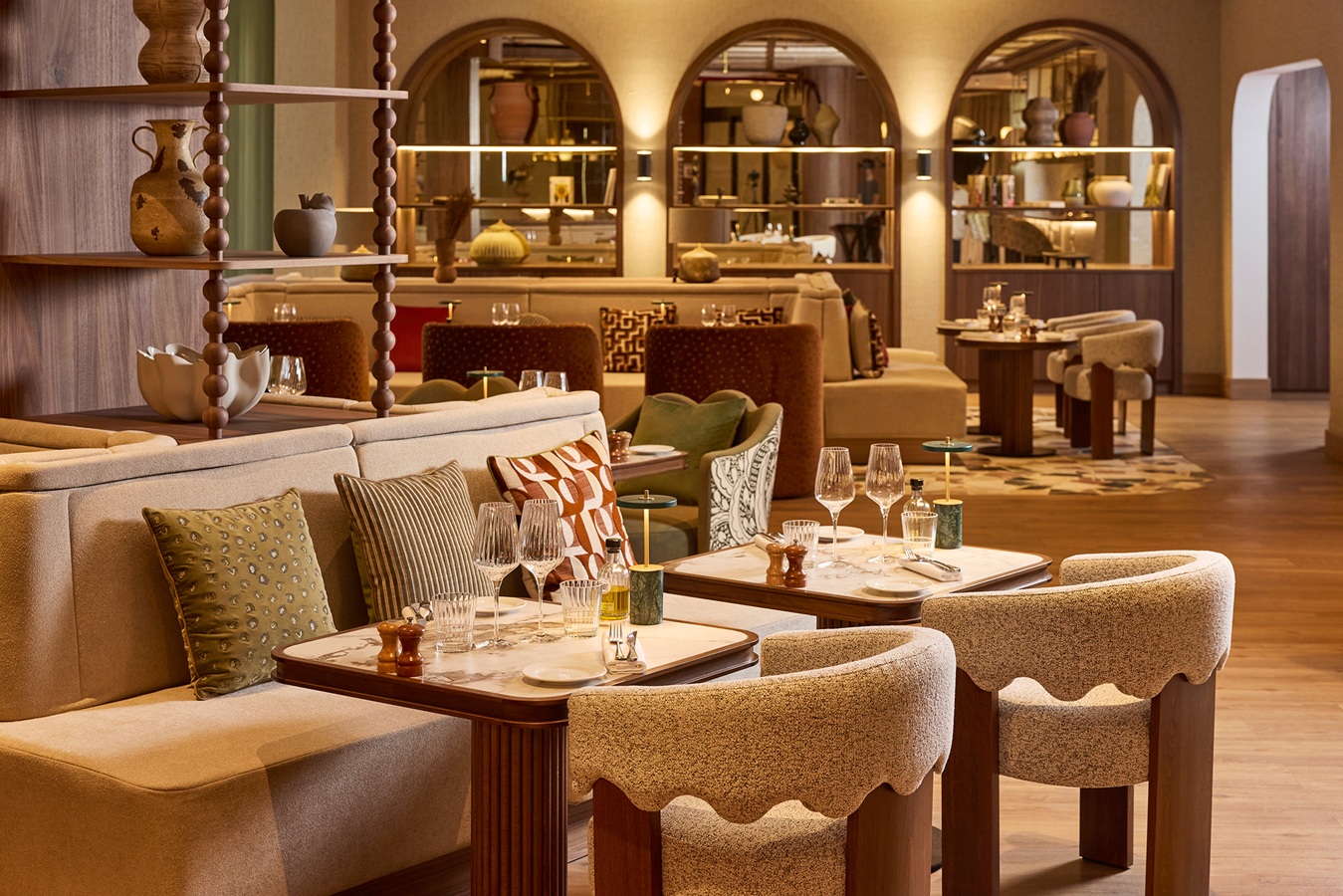
Le Grand Hôtel Roi René réouvre à Aix-en-Provence.   Crédit photo : Grand Hôtel Roi René MGallery

IFTM


The Grand Hôtel Roi René reopened in Aix-en-Provence after a year of renovations, in late April 2026.

The hotel is pursuing a new identity, blending noble materials, craftsmanship, and contemporary design.


The renovation was entrusted to interior designer Fabien Roque, who completely reworked the lobby, the restaurant, the bar, and the reception areas.

The property notably highlights a world inspired by Provençal colors, with terracotta tones, olive green and beige, paired with solid wood, marble, leather and velvet.

The hotel also hosts several artistic creations, including a ceramic screen signed by Marie Levêque, installed in the public areas.

The exteriors have also been redesigned around a spirit of “French Riviera“, particularly around the pool and the relaxation spaces.


Grand Hôtel Roi René: 131 renovated rooms and a new dining offer


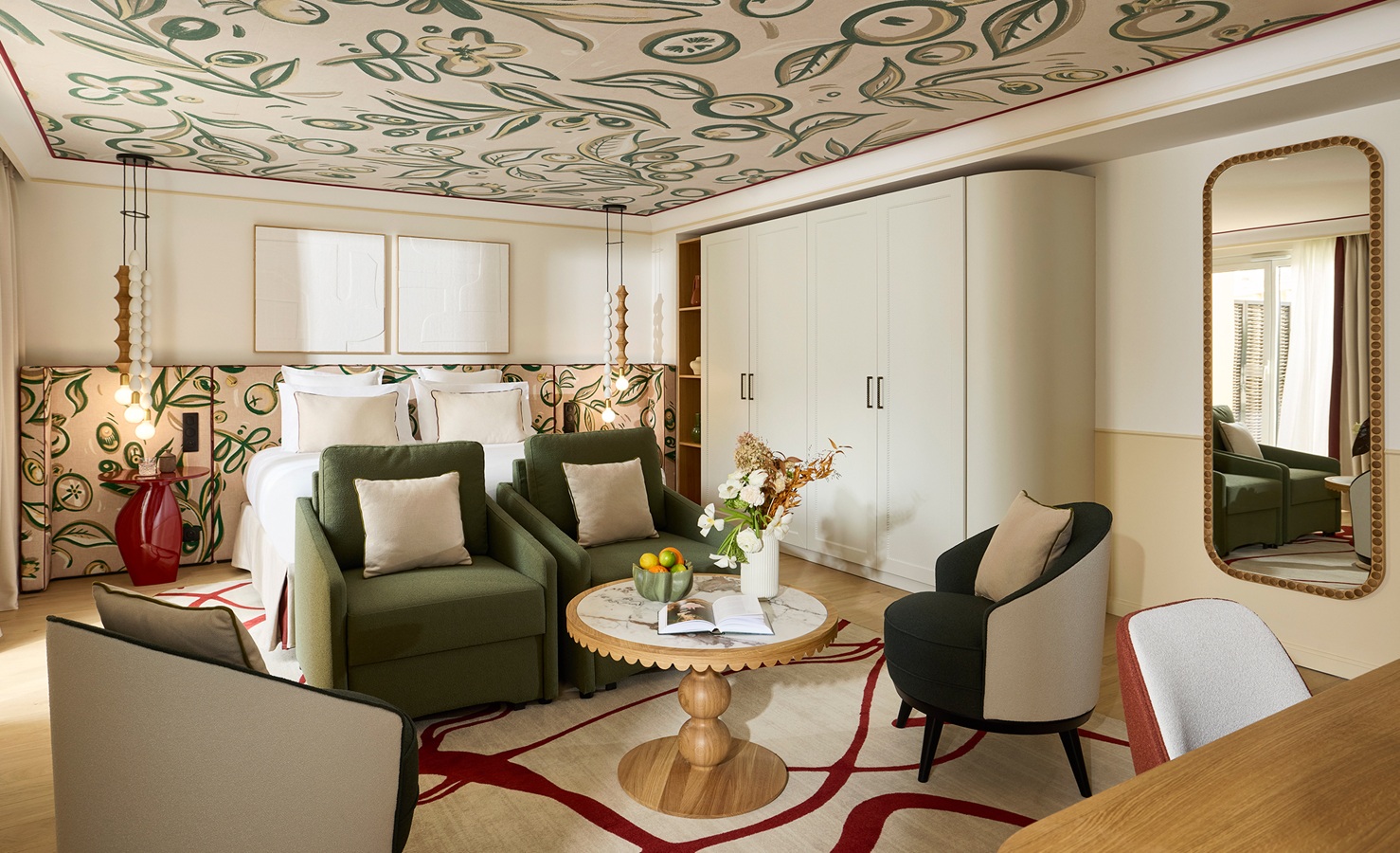
Grand Hôtel Roi René : 131 chambres rénovées et une nouvelle offre de restauration - Crédit photo : Grand Hôtel Roi René MGallery

The establishment has also completely renovated its 131 rooms, including six suites and 17 rooms with terraces.

The rooms now emphasize brighter spaces, with a decor inspired by contemporary Provence and materials such as wood, stone, and linen. Some suites feature furnished terraces.

The project also includes the launch of the AÏGA restaurant, the hotel’s new Mediterranean dining concept. Open for lunch and dinner, the restaurant offers cuisine inspired by Provençal flavors and the Mediterranean basin, with mezzés, shareable dishes, grilled fish and reinvented specialties.

To read: Four places to see near Aix-en-Provence

The Aix calisson, a historic symbol of the city, also plays an important role in the culinary experience offered by the hotel.

Reachable in under three hours from Paris by train, the property also features a restaurant, a bar, an outdoor terrace, a 14-meter pool, and five meeting rooms.

Grand Traverse of the Volcanoes: In the Heart of Auvergne’s Giants

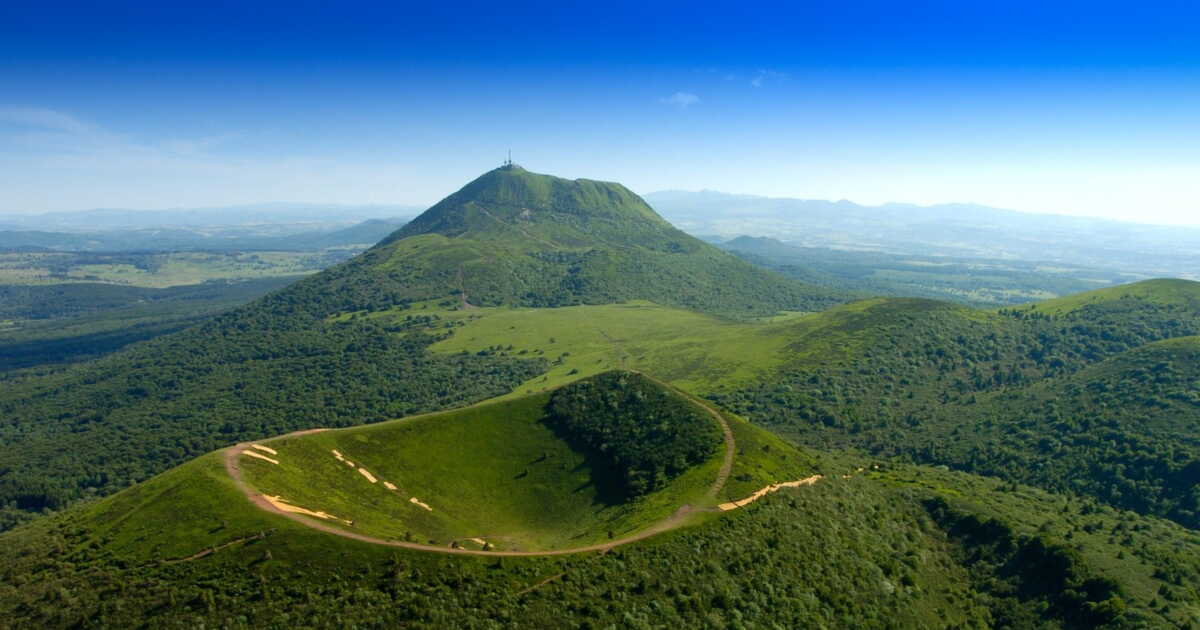
On the roads of Cantal, everyone knows that slender figure with a determined stride, a walking stick in hand, a black beret crowned with a small cow on the head. Each day, Brother François, with a youthful look beneath his white hair, goes from farm to farm to help milk the cows, cut the hay, or repair the fences. François Cassingena-Trévedy, by his civil name, is a regional figure, known far beyond his village of Sainte-Anastasie, reaching Murat and even Aurillac. This affable 66-year-old man defines himself as a peasant monk. An Alsatian, a Normalien, a theology professor, a translator of Virgil, he is also a poet and writer, author of 25 books. One of them (Cantique de l’infinistère, ed. Desclée de Brouwer, 2016) speaks of his love for Auvergne by recounting a walk through the volcanoes that changed his life.

“C’est un pays rude, austère, raboteux, mais aussi sensuel, dit-il depuis les plateaux herbeux qui dominent son village. Un bout du monde infini, où les montagnes sont comme de grandes houles de lave solidifiée. C’est en marchant que j’ai décidé de quitter mon monastère pour me dédier à cette terre et à ses habitants.”

To feel, like him, this telluric summons, nothing beats setting one foot in front of the other on the volcanic bedrock of Auvergne — basalt, phonolite, Volvic stone, pozzolana… — while contemplating the conical mountains and the valleys that lie ahead on the horizon. And why not undertake the Grande Traversée des Volcans d’Auvergne (GTVA)?

The Great Volcanic Crossing

This new itinerary, created in 2024 and spanning the départements of Puy-de-Dôme and Cantal, invites you to discover the natural heritage of the region, from the iconic Puy de Dôme (1,465 m) to the Plomb du Cantal (1,855 m), passing through the Sancy massif, the Cézallier plateau and the valleys of Puy Mary. Open to all, it stretches 210 kilometers and can be completed in one go in eleven days for the bravest, but one can of course choose only a portion. Arriving in Cantal, some travelers may cross Brother François along the last third of the route. “We imagined this itinerary as a condensate of the region’s beauties – peaks, plateaus, rivers, lakes, villages – using the already existing GR [long-distance hiking trails], explains Michel Faure, local head of the French Hiking Federation, who designed the 98 kilometers of the route in the Puy-de-Dôme.

The Grand Train Tour of Switzerland


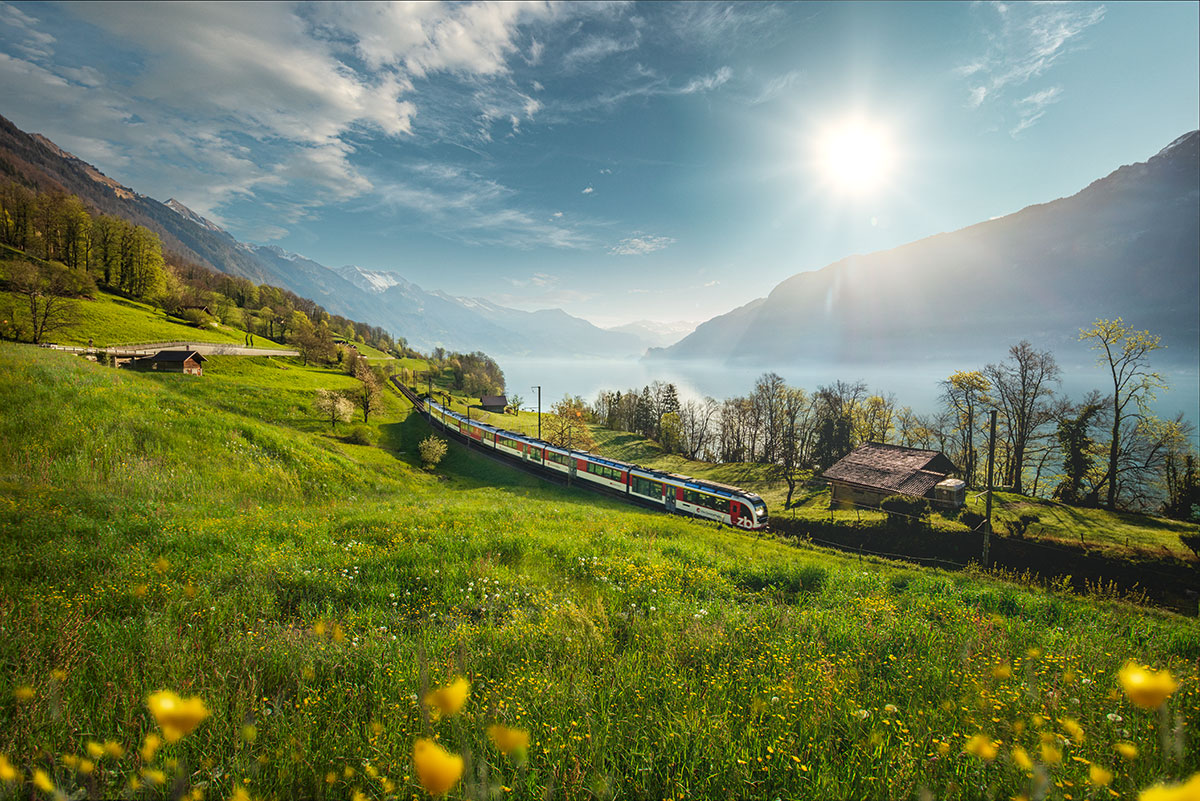
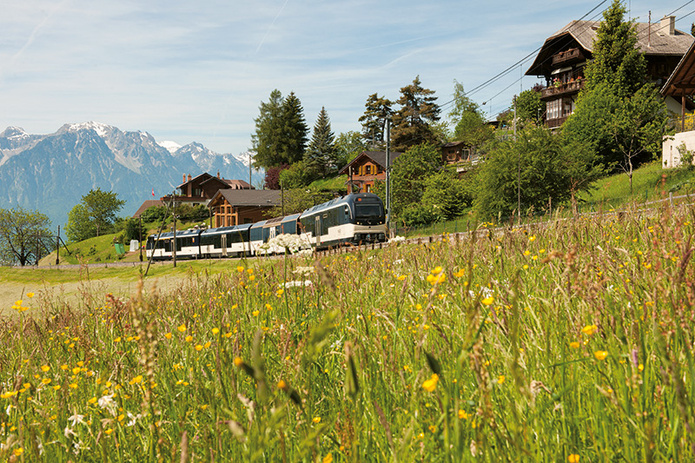
© Zentralbahn, 2024, photographe : Kim Sokola

CroisiEurope


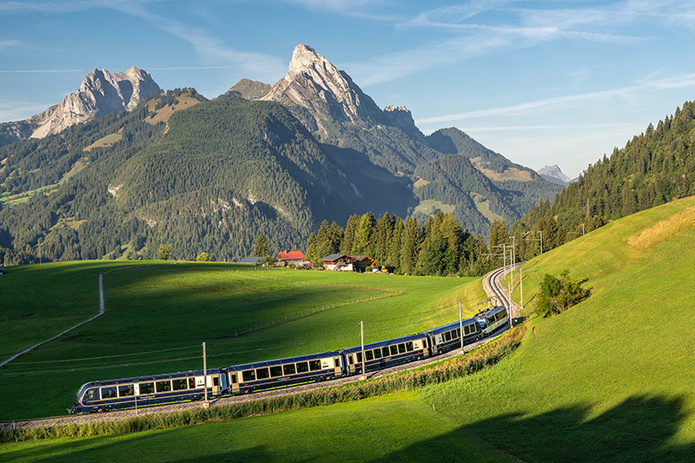
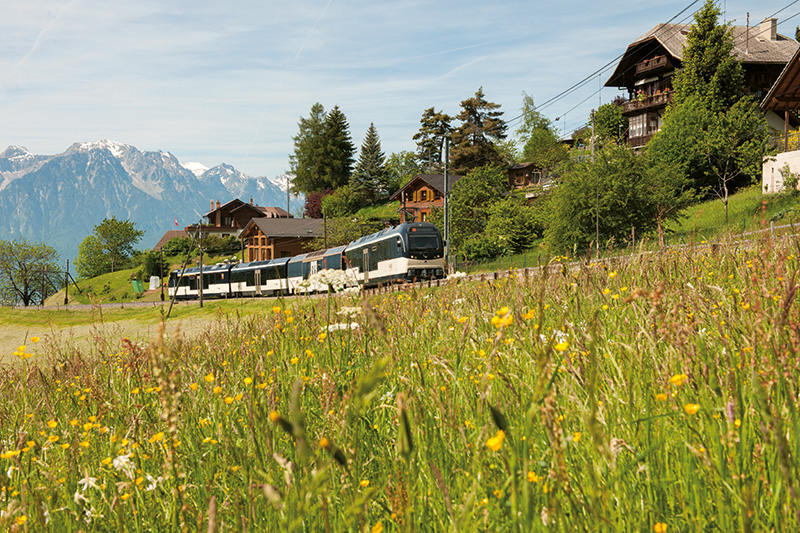
The Grand Train Tour of Switzerland is truly the quintessential Swiss rail experience, to be enjoyed throughout the year. Comprising 1,280 kilometers of tracks and eleven different lines, including eight panoramic trains, it offers a particularly comfortable and relaxing way to discover Switzerland.

Few train journeys worldwide concentrate so many highlights: panoramic lines such as the Bernina Express, the Glacier Express, and the GoldenPass Express; alpine destinations like Zermatt and St. Moritz; as well as lakeside cities such as Montreux, Lucerne, and Zurich. Throughout the journey, travelers enjoy mountain excursions and visits to some of Switzerland’s most famous sites, notably Jungfraujoch, Glacier 3000, and Chillon Castle.


The itinerary can be explored all year round. In Switzerland, even the highest mountain railways operate reliably during winter. In summer, it is possible to explore a glacier in the morning and then enjoy the banks of an urban lake in the evening. In spring and autumn, the off-season offers more space and availability thanks to lower crowds, for a more relaxed travel experience.

What makes the Grand Train Tour of Switzerland particularly unique are the many ways to enjoy it. Booking-ready travel suggestions, offered as standalone packages, enable agents to easily find itineraries that fit their clients’ budgets, calendars, and expectations. They avoid complex customizations and instead present a series of “products within the product” to inspire travelers.


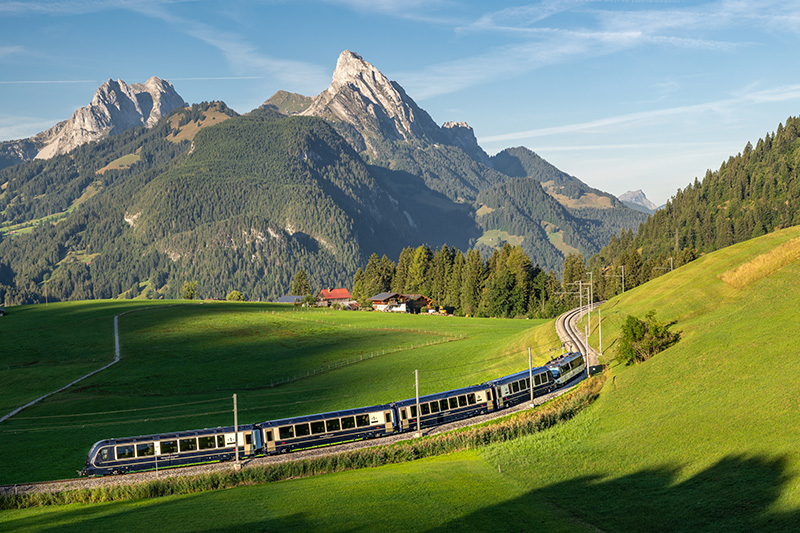
© Swiss Travel System AG, 2022, photographe : Tobias Ryser


For example, the “Glaciers and Palms” circuit highlights Switzerland’s geographical contrasts by taking passengers across Lake Lucerne, over the Bernina Pass at an altitude of 2,238 meters, to the palm-fringed shores of Ticino, in the sunny south of the Alps.

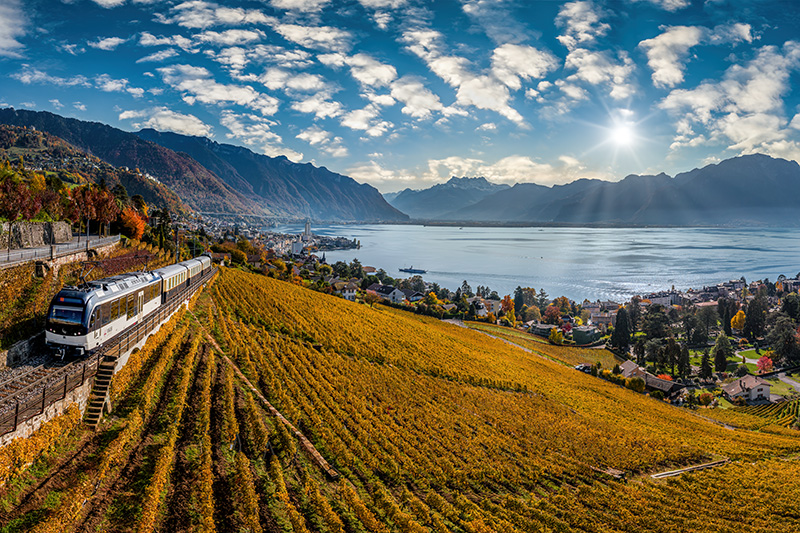
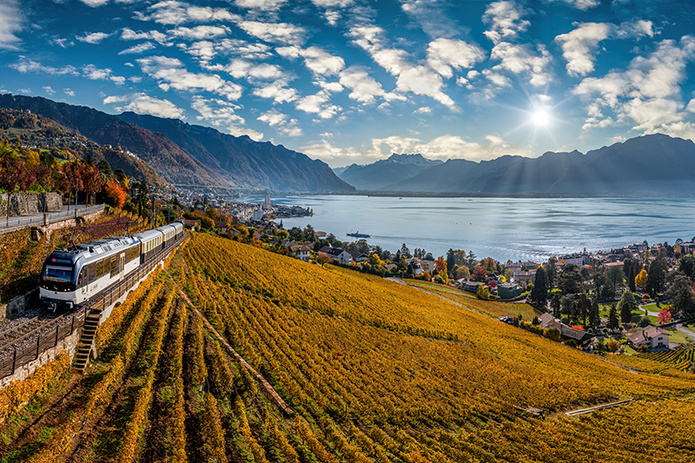
For wine enthusiasts, the “Vines and Valleys” itinerary traverses the heart of Switzerland’s wine regions, including the terraced vineyards of Lavaux – particularly spectacular in autumn.

The “East–West” circuit is ideally suited for travelers arriving from France or via Geneva Airport. Departing from Geneva, it follows the lakefront before ascending to the Alps to link the panoramic lines: the Glacier Express, the Bernina Express, the Gotthard Panorama Express, the Luzern–Interlaken Express, and the GoldenPass Express.


© Swiss Travel System AG, 2020, photographe : Tobias Ryser


Seventeen carefully designed packages can be viewed and booked directly on the Switzerland Travel Centre site. Now, with the discount code STCTA10, agencies benefit from the following advantages:

✔ A 10% commission on the displayed price.

✔ Online payment by Visa or Mastercard.

✔ No additional commission accounting is required – efficient, simple and ideal for your daily professional life.

✔ All travel documents are emailed.

For more information about the Grand Train Tour of Switzerland: Grand Train Tour of Switzerland | Switzerland Travel Centre.


© MOB, 2018


Le Grand Train Tour of Switzerland
For tailor-made journeys, our team of experts is at your disposal.

Simply send your individual inquiries to [email protected] – or call us at

+41 43 210 55 95 – and you will receive a personalized offer within 24 to 48 hours.

You benefit here from true Swiss travel know-how and extensive experience in crafting bespoke itineraries.

>> Switzerland Travel Centre in the DESTIMAG Directory


Airbnb: 3rd Edition of the Heritage and Local Tourism Grand Prix


Airbnb et la Fondation du patrimoine lancent la 3e édition du « Grand Prix du patrimoine et du tourisme local », Despositphotos.com, Photo by Primakov

Dream Yacht


From Monday, June 1, Airbnb and the Heritage Foundation invite the French to vote to support the project of their choice among 12 emblematic rural sites spread across France.

This initiative, with Airbnb as a sponsor, aims to restore the heritage of communes with less than 20,000 inhabitants that hold significant historical, architectural, or cultural interest, in order to turn them into drivers of economic and tourist development:

  • The Pionsat Castle (Puy-de-Dôme)​
  • The Cachat refreshment stand in Evian-les-Bains (Haute-Savoie)
  • The La Mure Market Hall (Isère)

  • The Châtelet of the Château de Vitré (Ille-et-Vilaine)
  • Capu Neru Tower in Coti-Chiavari (South Corsica)
  • The Governor’s Stables and the King’s Bastion in Rocroi (Ardennes)
  • The Lewarde Mining History Center (Nord)
  • The Daubigny Museum in Auvers-sur-Oise (Val-d’Oise)
  • The Medieval Castle of Château-sur-Epte (Eure)
  • The Suspension Bridge of Tonnay-Charente (Charente-Maritime)​
  • Saint-Pierre Church of Collonges-la-Rouge (Corrèze)​​
  • Marsillargues Castle (Hérault)

The three communes that receive the most votes will benefit from substantial financial support to accelerate restoration work: €150,000 for first prize, €125,000 for second, and €100,000 for third.


How to vote?

The general public has a voting window from June 1 to June 28, 2026, at midnight to express their vote and back their favorite site.

To participate, all you need to do is log on to the official website of the Heritage Foundation. The winners will then be announced during July 2026.

Alexandre Giuglaris, General Manager of the Heritage Foundation, states: “Heritage is a cause that brings people together. Through this Grand Prix, the Heritage Foundation invites everyone to support the heritage site that matters most to them. By voting, you contribute concretely to safeguarding the treasures of our rural landscapes.”


A Real Impact for France’s Rural Areas

This competition is part of a broader program: since 2022, 215 projects located in rural zones across France have already benefited from support through this partnership.

Demonstrating the local roots of the initiative, nearly 90% of these projects are in towns with fewer than 3,500 inhabitants, and about 75% of them aim to ultimately welcome the public.

Louis Vuitton Trunks on Display: 130 Years of Adventures and Grand Journeys

Sleeping in the heart of the jungle, writing aboard the Orient Express, or crossing the Atlantic with dozens of suitcases: Louis Vuitton trunks tell a whole history of travel on their own. On the occasion of the Monogram canvas’s 130th anniversary, the auction house Gros & Delettrez is organizing a public exhibition from May 19 to 21, 2026 at 2, rue de Bérite, in the 6th arrondissement of Paris, ahead of an exceptional auction on May 21 dedicated to the universe of the French house: explorer bed-trunks, library trunks, travel cases, or models designed for transatlantic crossings.

Far more than mere luggage, these objects tell a certain idea of travel, between luxury, innovation and adventure. To understand how these creations accompanied the evolution of travel styles since the 19th century, we spoke with the auctioneer Antoine Saulnier, who has led the sales of this specialty for over 15 years.

The Monogram canvas is celebrating its 130th anniversary this year. How did this motif become such a strong symbol of luxury and travel?

Antoine Saulnier: Even when it was created in 1896, this canvas was truly a mark of distinction. At the time, most trunk-makers used plain canvases, often Trianon gray or khaki, or striped canvases. Georges Vuitton, Louis Vuitton’s son, created this monogram largely because the house was heavily copied. When he passed by the shop windows of rivals on Rue Saint-Honoré, he saw models very similar to theirs, sometimes even presented with phrases like “as with Louis Vuitton”. The creation of the monogram was therefore also a way to assert a distinct identity and to combat counterfeiting. The initials “LV” became a real signature.

Then, Louis Vuitton quickly became a major house. Louis Vuitton was the layetier-emballeur of Empress Eugénie, which contributed greatly to its reputation.

Then, in the 20th century, the house did not limit itself to trunks: the monogram expanded to leather goods and other objects. It went down into the street, it became visible everywhere.

And obviously, the brand’s international expansion amplified this phenomenon. The monogram has been revisited by artists such as Takashi Murakami or Stephen Sprouse. Today, Louis Vuitton is probably one of the most well-known luxury brands in the world.

What is fascinating is that it all started with a young man who arrived in Paris on foot, penniless, from the East of France.

Were Louis Vuitton trunks particularly innovative for their time?

Yes, absolutely. It’s even the brand’s great strength. Louis Vuitton has always sought to invent solutions that others did not dare to offer. There is, by the way, a famous anecdote: before creating his own house, Louis Vuitton worked for another trunk-maker. A client reportedly asked for a solution to transport glasses during a long journey. His boss refused, but Louis Vuitton allegedly replied that it was possible. This spirit of innovation has truly marked the house’s entire history.

Everything was fully customizable. This is clearly evident in this sale with trunks designed for explorers. We showcase notably two exceptional bed-trunks, including one made for Jules Tivan, an explorer of the French Congo. These are objects designed for extreme conditions.

There were also “Aéro” trunks, created to be lighter in order to travel by hot air balloon or by airplane. Louis Vuitton also designed trunks for automobile cruises, such as those used in the Citroën expeditions of the Yellow Cruise (April 4, 1931 to February 12, 1932) or the Black Cruise (October 28, 1924 to June 26, 1925).

And that went even further, the house produced medical boxes, trunks to transport photographic equipment, picnic necessities, travel secretaries… We even had very specific models, such as suitcases intended for transporting hunting rifles for ladies. At the time, travel often meant departing with an entire personal universe: clothes, accessories, writing objects or leisure equipment. Each creation met a very precise need.

Did the explorer models require particular materials?

Yes, everything was designed according to the travel conditions and the type of expedition. For explorers like Pierre Savorgnan de Brazza or Jules Tivan, trunks had to withstand extremely difficult environments, whether humidity, bad weather, insects, heat or long transports.

We can see this clearly with the bed trunks presented in this sale. They are quite extraordinary: inside, there was the entire frame of a foldable bed allowing comfortable sleep during an expedition, even in the jungle. These trunks were also very heavy and often required porters.

Some were made with materials specially chosen to protect their contents. For example, there were trunks coated with zinc, sometimes considered unsinkable, to prevent moisture from entering. Others were made of brass, wood or entirely leather for the most luxurious models.

Everything was designed to measure according to the traveler’s needs and the nature of the expedition. Some trunks were intended for transporting clothes, others for delicate equipment, furs, pharmaceuticals or even equipment specific to great explorations. Everything was organized to prevent objects from moving during transport and to arrive intact despite sometimes extremely long journeys and challenging weather conditions.

Looking at the evolution of the models, can we see a change in the way of traveling over time?

Yes, entirely. At the time, traveling often meant crossing the Atlantic with thirty or forty trunks. Luggage was designed to be stored for long periods, sometimes for weeks of crossing. One could bring a lot of belongings. Even a single full trunk required porters; you did not carry your luggage yourself.

With the arrival of the automobile and especially the airplane, constraints changed: lighter luggage, more maneuverable, and easier to carry by oneself. Today, journeys are much faster. Louis Vuitton understood this very well, and the house developed rolling models, more practical, suited to modern travel.

The very notion of luxury has changed. In the past, luxury also meant taking the time of travel. We crossed the world by boat, we traveled by train, we settled in for weeks. The journey almost became part of the experience. Some travelers carried wardrobe trunks, travel libraries or travel secretaries to continue writing, reading or changing clothes during several weeks of crossing. Today, travel is much faster and more frequent, especially by airplane, so the relationship with luggage is no longer the same at all.

But the know-how, it continues to exist. Louis Vuitton still maintains its historic workshop in Asnières-sur-Seine, where bespoke orders are crafted. The artisanal precision remains the same.

What are your favorites in this sale?

I really like the yellow canvas desk and laundry trunk from the early 20th century. It’s a very rare model, entirely original and in remarkable condition. The bed trunks are also quite extraordinary. They are seen very rarely today.

But I also have a soft spot for the small writing-library trunk. I find that it perfectly embodies the luxurious travel of the early 20th century. One can easily imagine someone on the Orient Express, writing after dinner, reading during the journey, then closing his trunk before stepping off the train. This type of object truly tells of an era when travel took time and was part of everyday life. It’s a very famous model. A similar example belonged to Ernest Hemingway and was found after his death in the Ritz’s cellars with an unpublished manuscript. I find this story fascinating.

Who buys these kinds of pieces nowadays?

The profiles are very varied. There are Louis Vuitton collectors, travel enthusiasts, lovers of vintage leather goods, but also institutions. These objects represent a piece of history: the history of travel, of luxury, of craftsmanship and fashion.

But there are also buyers who simply want a beautiful decorative piece. Today, most of these trunks no longer travel. They become coffee tables, decorative objects in a living room or a bedroom. There are also decorators, hotels or interior designers who buy this kind of pieces for their projects.

Even if some people still occasionally use vintage Louis Vuitton luggage for particular trips, these pieces have become, above all, collectibles and decorative objects, more than everyday travel luggage.