In Kyrgyzstan, These American Cowboys Embrace an Unconventional Sport

Imagine eight riders racing at full tilt around a 32 kg goat carcass, each striving to yank it away before driving it into a goal. This spectacular scene isn’t taken from a film but from kok-boru, a traditional horseback sport particularly popular in Central Asia. During the World Nomad Games, held in Kyrgyzstan, an American team made up largely of ranchers and rodeo enthusiasts regularly tests itself against the region’s top players. And while U.S. cowboys have yet to win a match, they have become local stars.

A Kok-Boru Game Resembles a Giant Rodeo

Kok-boru is played on horseback, with two teams of eight players. Their objective is to retrieve a goat carcass from the ground and carry it to the taikazan, a large circular goal. The players must contend with their opponents, but also with the power and motion of the horses, which makes the clashes especially physically demanding.

The practice is ancient. It is said to have been played in the past with a dead wolf, killed after attacking livestock. Over time, the game has become a central element of the culture of the nomadic peoples of Central Asia. UNESCO even listed it on its Representative List of the Intangible Cultural Heritage of Humanity.

“It is one of the most important elements of our culture, especially our traditional culture, because our ancestors have practiced this game for many centuries”, explains Kyrgyz volunteer Jantai Saparbekov to CNN Travel.

Kok-boru remains today a highly demanding sport. In Kyrgyzstan, some players make it their profession and participate in national championships. The World Nomad Games, meanwhile, bring together cultures and traditions of the nomadic peoples: horse archery, equestrian wrestling or tug-of-war games. More than 600 cultural events are thus organized during the week.

In 2026, around 3,000 athletes from 112 countries participated. The events are set amid the mountainous landscapes of Kyrchyn Gorge, where sports venues sit alongside yurts, food stalls and cultural performances.

Why do American cowboys come to Kyrgyzstan?

The American kok-boru team, on the other hand, sprang from a surprising meeting of two equestrian cultures. Its members are mostly from the American West, working on ranches or in the rodeo world. Some are also practitioners of combat sports. Their captain, Ladd Howell, is a cattle rancher and knows Russian well, a language he learned during a religious mission in Russia in his youth.

The Americans have been taking part in the World Nomad Games since 2014. For this edition, 52 American athletes traveled, including the nine players on the kok-boru team. Their journey is far from that of a favorites’ squad: they are the only ones funding their own participation and do not have enough American horses trained to meet the demands of the game.

” We are at a disadvantage every time. We are the big outsiders, but that’s a bit the principle of sport. For us, to keep coming back and improving, we earn that respect, even if we don’t win “, says player Nick Willert in CNN Travel.

Those risks are, indeed, very real. Nick Willert, aged 50, had to withdraw from the tournament after being trampled by his own horse during a horse-wrestling event. Their former Kyrgyz coach, Mirlan Srazhdinov, died in 2025 after being fatally struck in the head by a horse during a match.

Despite these dangers and their repeated defeats, the American cowboys keep returning. Their presence has become a symbol of the meeting between two equestrian traditions. In Kyrgyzstan, the horse represents freedom and holds a central place in nomadic heritage. “A horse is freedom. A horse is the road. A horse is the wings of the nomad”, sums up Urmat Asanbaev, head of the Kyrgyz State Agency for Physical Culture and Sports, to CNN Travel.

The Americans share a similar view of their own equestrian culture, which they feel is under threat in the American West. And their cowboy hats have become their best calling card. “We simply want people to know that, when the Games are over, that the culture in the United States is amazing and authentic. After meeting us here with our cowboy hats, we want them to remember: ‘Hey, the cowboys are good guys’ “, says Ladd Howell.

For Kyrgyz spectators, the American team is now almost as popular as the local champions. An unexpected way for kok-boru to gain visibility beyond Central Asia, while the cowboys seem to have found a new playing field.


Trenitalia France Accepts American Express Card


Trenitalia en France accepte désormais les paiements par carte American Express, Depositphotos.com Photo by teamtime

TAP Air Portugal


Travelers on Trenitalia in France can now pay for their train tickets with their American Express card across all of the company’s sales channels.

This option applies to reservations made on the website, the Trenitalia Pro platform, the mobile app, the call center, as well as at the company’s ticket counters.

This new payment method is being rolled out ahead of the summer season to simplify ticket purchases on the network’s main routes, such as Paris-Lyon, Paris-Marseille and Paris-Milan.


Une flexibilité accrue pour les déplacements professionnels et de loisirs

Beyond the journey itself, we know that the quality of the experience starts as soon as you book: choosing the sales channel, ease of payment, clarity and smoothness of the purchase.

By diversifying the available payment methods, we strengthen this service promise and support how travelers use services, whether they are traveling for leisure, holidays, or business needs,
” commented Marco Caposciutti, the president of Trenitalia France.

The integration of this payment option aims to offer greater flexibility to passengers, whether they travel for personal or professional reasons.

The American Express network currently counts more than 170 million partner merchants worldwide. In the French market, the number of establishments and services that accept this payment method has tripled since 2021.

ALL Accor Aims to Attract Premium Customers With American Express


American Express et ALL Accor s'associent, Depositphotos.com Photo by HJBC

Costa Rica


American Express and the hotel group Accor announce a global partnership.

Through this synergy, eligible American Express cardholders gain direct access to ALL Accor program statuses and benefit from new conversion options for their loyalty points.

This new global arrangement is gradually rolled out across a dozen key markets, including France, Germany, the United Kingdom, Canada, and Japan.

The main objective is to optimize the customer journey within the Accor group’s network of more than 45 brands, among which are prestigious names such as Raffles, Fairmont, and Sofitel.

The two parties aim to offer greater value and flexibility to travelers within their high-end clientele.


Some American Express Holders Will Benefit from ALL Accor Gold Status

L’un des axes centraux de cet accord repose sur l’attribution automatique de statuts au sein du programme ALL Accor pour les porteurs de cartes éligibles.

À ce titre, les titulaires des cartes Platinum, qu’il s’agisse des offres pour particuliers, TPE-PME ou entreprises, se voient accorder le statut ALL Accor Gold.

Ce niveau de privilège inclut notamment le Wi-Fi Premium, le départ tardif, des attentions personnalisées lors du séjour, des opportunités de surclassement de chambre sous réserve de disponibilité, ainsi qu’un cumul bonifié de points Rewards.

Parallèlement, la passerelle entre les programmes de fidélité permet d’effectuer un transfert des points Membership Rewards d’American Express vers ALL Accor.

En France, la conversion s’établit sur un barème de 3 points Membership Rewards pour 1 point Reward ALL Accor.

Les points ainsi transférés peuvent être utilisés pour la réservation de nuitées, des services de restauration, l’accès à des événements culturels ou sportifs, ainsi qu’auprès de l’écosystème de partenaires du groupe.

AirlinePros: Leading American GSA Represented in France by Frédéric d’Hauthuille (Video)


In tourism, there are bosses who juggle multiple roles as others wear yellow jerseys.

Frédéric d’Hauthuille is one of them.

Not only is the founder and leader of Monde Authentique the driving force behind the Club des Créateurs de Voyages, but he also teaches at two tourism schools.

Do you think his commitments stop there?

“I am a partner and development director at Prodesti, which provides training to travel agents and the employees of tour operators.

And then, I speak of it less, but I hold the license for the French market of AirlinePros, which represents airlines.

I have worked within airlines since 1992 up to the launch of Monde Authentique. In 2022, AirlinePros contacted me
“, we share Frédéric d’Hauthuille.

Achma Asokan, the cofounder of the company, then decides to broaden the activity beyond the United States, where she has quickly established herself as one of the leading General Sales Agents, or general sales agents, for airlines.


What is AirlinePros?

AirlinePros was launched in the late 1990s, led by James W. Foster and Achma Asokan.

Its teams are located in India, the United States and Namibia. The company has opened offices around the world, eventually operating in more than 40 countries.

AirlinePros handles the representation of airlines, primarily in the United States and Canada. It counts 57 client airlines, therefore it represents 57 carriers.

In France, more than 50 airlines do not have a direct presence, but rather operate through a GSA, a general sales agent, hence a representative
“, explains Frédéric d’Hauthuille.

For newcomers, a GSA ensures the commercial representation of airlines that do not have the means, or the desire, to be present in France by employing their own staff.


AirlinePros: “InterCaribbean will open routes from Pointe-à-Pitre and Fort-de-France”


"Les clients refusent de voyager sur une compagnie aérienne du Golfe" selon Frédéric d’Hauthuille - RP

This model is widespread across the world. There are several players, such as Global Airline Services in France, Aviareps, APG, or AirlinePros, who will adapt to the needs of airlines according to markets.

Some do not need to be represented in France, while others do not need to be represented in the United States.

We have contracts with five airlines. The one occupying the most of my attention at the moment is InterCaribbean, based in the Turks and Caicos Islands, hence on a British territory, with British traffic rights.

InterCaribbean will open, in the coming months, routes from Pointe-à-Pitre and Fort-de-France.

We are laying out the strategy to be implemented with the airline’s headquarters on the Caribbean territories, and finding ways to route customers from mainland France onto the InterCaribbean network
“, reveals Frédéric d’Hauthuille.

If the name InterCaribbean doesn’t ring a bell, it’s partly because the airline has regularly changed its name.

Created in 1991, it was then called InterIsland Airways. Then, in 2003, it was renamed Air Turks & Caicos. Five years later, it merged with SkyKing, before taking its final name in 2013.

It operates around ten aircraft, mainly ATRs and Embraer jets. And that’s not all.

AirlinePros has signed a contract with Sunrise Airways, a Haitian carrier operating two weekly flights between Pointe-à-Pitre and Haiti, and it offers “excellent connections to reach Miami.

Between July and September 13, this route will be operated with an A320, replacing the Embraer 145. This represents a 180% increase in capacity, a major challenge for the summer.


“Customers refuse to travel on a Gulf airline”

The GSA also represents LIFT, a South African airline founded in 2020, as well as FastJet, a Zimbabwean carrier.

On the Prodesti side, Frédéric d’Hauthuille’s other hat, the first half-year was marked by a slowdown in trainings. In light of falling bookings, the leaders apparently paused some expenditures, starting with training.

We have 35 trainings and we will launch French Polynesia, which met a demand from our client travel agencies. For 2027, we are preparing trainings on China and Indonesia” announces the head.

As for his latest role, that of head of Monde Authentique, after the turmoil triggered by the war in Iran, with passengers stranded all over the world, evacuations to be carried out, and then bookings thinning out, the summer will be quieter.

A few last-minute dossiers could nevertheless improve the statistics. “We have noticed since late May that more than half of our sales pertain to departures in June, July and August. There are still plenty of seats almost everywhere. I have never seen this in 40 years in the industry.

Most clients, from the first contact, tell us they will refuse to travel on a Gulf airline. There are many who do not want to depart towards the East, i.e., toward Asia“, he explains, rather unconcerned about 2027, as clients already envision the next year.


Romain Pommier Publié par Romain Pommier Journaliste – TourMaG.com
Voir tous les articles de Romain Pommier

  • picto Facebook
  • picto Linkedin
  • picto email
Ajoutez TourMaG à votre flux Google Actualités Google Actualités icône

Louisiana and Texas: The American South Where All Cultures Meet


Louisiana – Texas

Enjoy a combination of these two states to traverse the astonishing byways of the Southern USA: Louisiana and Texas, two regions where cultures cross and mingle, and whose blended identities have no equal 😊…


✈ Arrival in Louisiana


©Revamerica Tours

Strange and mysterious territory of mixed Indian, European colonial, Acadian, and Creole heritage, Louisiana’s bayou country intrigues and astonishes visitors with a history shaped by encounters and exchanges from elsewhere.

Here, time goes back on the banks of the Mississippi: in the old days, King Louis XIV sent his men to these swampy, hostile lands, convincing them that the soil teemed with gold and precious stones… their encounter with the Houmas Indians, settled on the delta, already marks the beginnings of a South at the crossroads of peoples. Then comes the splendor of plantations and the WASP society that settles there, not forgetting slavery and the freedom finally regained. Then arrive the Cajuns, this group of individuals from France, who first immigrated to Canada in Acadie, then were driven out and now settled in the Louisiana bayous, where their culture blends with that of the local Indian tribes.

Thus these lands welcome a lively mix of immigrant histories and peoples that has left an incredible cultural wealth: heirs of plantation WASPs, Acadians from the bayous, Houma Indians, and Creole and African-American communities, all together shaping Louisiana’s distinctive identity. The famous blues and jazz music, born from this blending, shapes the atmosphere of the clubs on Frenchmen Street, while a delectable Creole and French cuisine, colorful and spicy, mixing French, African, Spanish, and Indigenous influences, awaits you in New Orleans!


Onward to Texas


©Revamerica Tours

Head out into the stars with a visit to NASA.

Stroll along the welcoming River Walk in San Antonio, a true cultural crossroads where the Mexican influence is felt at every step: Tex-Mex cuisine, mariachis, colorful markets, and Hispanic architecture mingle with Texan heritage.

Discover the show of real cowboys: cattle ranchers rope and lasso in Dallas, in the pure tradition of rural Texas.

Enjoy a true Texas-style barbecue steak!

Hear the story of the wealthy Texan landowners through J.R. Ewing, the powerful character from a TV show with its ruthless universe, who embodies the other face of Texas: that of grand land-owning fortunes inherited from WASP traditions, today in constant dialogue with the Mexican culture that pervades this territory.


Before: Georgia – Tennessee – Mississippi

Deepen your Deep South journey by starting with the history of the blues and the civil rights movement: Atlanta, the hometown of Martin Luther King; Nashville, the cradle of American country music; Memphis and its historic music studios; the mystical towns of Tennessee and Mississippi, home to some of the greatest blues artists who marked music history: Chuck Berry, Elvis Presley, B.B. King, Muddy Waters, Sam Cooke…


©Revamerica Tours


After: Florida

Fancy some fun and beaches? Let’s go for the Florida extension. From a 3-night stay in Miami Beach to a full 7- or 8-night circuit to complete your exploration: EVERYTHING IS POSSIBLE!


Behind Italian Gelato: An Astonishing Story of American Military Equipment

Every summer, millions of visitors savor an ice cream in Italy, unaware that its modern story owes much to American ingenuity. Before becoming a staple of beaches, cafes, and summer strolls, gelato was a delicate preparation, produced in small quantities and difficult to preserve. In the postwar era, a Tuscan family would transform this constraint into an opportunity. Their idea: repurpose abandoned American military equipment to allow gelato to move beyond the boundaries of its neighborhood.

Before mechanization, gelato remained a local affair

The Italians did not discover frozen desserts only after the war. Since Antiquity, the Romans cooled wine and fruit preparations with snow. In Sicily, the Arabs later used the snow from Mount Etna to craft sweet, scented mixtures, laying the groundwork for the granita tradition.

During the Renaissance, the preparations continued to evolve. In Florence, the architect Bernardo Buontalenti devised in the 16th century a frozen cream enriched with milk and eggs, bearing a texture close to today’s gelato. Yet for a long time, making a frozen dessert remained a complex endeavor. The mixture was cooled in a blend of natural ice and salt, while the churn was done by hand. This method demanded time and constant attention, limiting production and complicating long-term preservation of the product.

Production thus remained limited and essentially local. Even the arrival of electric refrigeration gear, at the end of the 1920s, did not suffice to turn gelato into a product easy to produce and distribute on a large scale. There was still a need to produce regularly, preserve the dessert, and above all transport it without it losing its texture.

Cruically, this is the challenge the Bagnoli family would face in Empoli. In 1946, Renzo Bagnoli transformed the family dairy into a bar-ice cream shop called Sammontana, and began producing its own gelato. Two years later, his brothers Sergio and Loriano joined, and production took on a new dimension. They started selling their gelato beyond Empoli.

American equipment recovered after the war

That is where Sammontana’s story intersects with the American army. After World War II, they headed to Genoa, where a scrap yard held discarded ice-making machine parts left by the U.S. Army. With limited means, they bought whatever could be useful and adapted it themselves to mechanize production. The shift was significant: it was no longer just about making gelato in small batches behind a bar, but about having a tool capable of increasing production while preserving an artisanal touch.

This evolution, however, solved only part of the problem. Once gelato could be produced in larger quantities, distribution remained a hurdle. The Bagnoli brothers then devised their own solutions. They designed a six-liter metal container, practical enough to transport the gelato and allow bars and cafés to serve it directly from the canister. This innovation appeared in 1955, as sales began to rise outside Empoli.

“The Bagnoli brothers designed a six-liter can that integrated seamlessly into their improvised supply chain. Bars and cafés could serve the ice directly from the can,” explains Luca Cesari, an Italian food historian, to the BBC. “When they began lending their freezers to bar owners, the model was complete.”

The strategy works. Gelato could now be produced in Empoli and then sold to other establishments.

Gelato accompanies the Italian economic miracle

From the 1950s onward, Italy entered a period of rapid growth known as the “Italian economic miracle.” Between 1950 and 1963, wages rose, many families left rural areas for cities, and living standards improved. Italians spent more on leisure, while seaside holidays and evening strolls became new habits. Gelato found an ideal setting to become popular: it was inexpensive, easy to enjoy, and associated with these new leisure moments.

Sammontana took advantage of this shift to continue expanding. After starting to distribute its gelato beyond Empoli, the company rode the rising demand and gradually expanded its network. In 1960, the Bagnoli brothers opened a factory in Empoli to cope with growth. Their gelato was no longer just the product of a Tuscan bar‑ice cream shop; it became a product available in numerous establishments across Italy.

The success of this new approach to producing and distributing ice creams soon inspired other companies. Manufacturers such as Algida, Motta, or Spica developed larger-scale production as well. Yet this industrialization did not erase artisanal gelaterias; it helped two models cohabit: that of the large brands and that of the artisans.

“Industrial gelato forced artisanal gelato to evolve, and ultimately Italy developed both a powerful industrial sector and a vast network of independent and artisanal gelaterias,” explains Eduardo Zucchini, spokesman for the Gelato Museum Carpigiani, to the BBC. Competition particularly pushed artisans to improve their hygiene, equipment, and organization.

Between Cartels, Carnivals, and Soccer: The Reconfiguration of the American Imagination


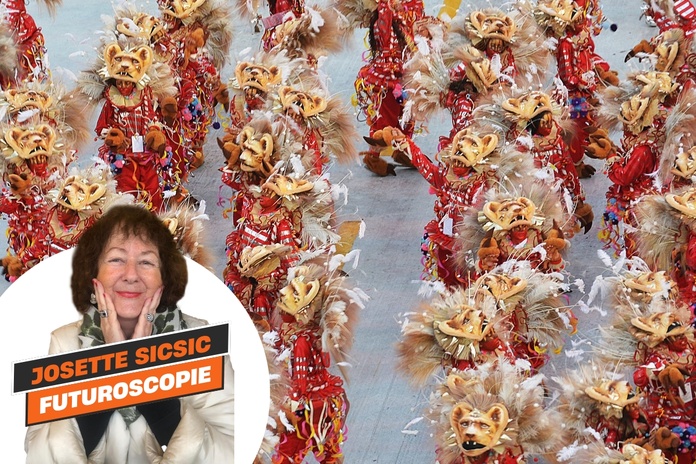
Les carnavals reflètent à merveille l’histoire humaine, religieuse, artistique d’un continent, tout en lui conférant un outil de promotion touristique puissant - Crédit photo : Embratur

CroisiEurope


This Sunday and Monday, Mexico has demonstrated the insecurity that pervades its stunning landscapes, seaside resorts, and colonial towns… following the death of the cartel kingpin: El Mencho.

Put under a genuine curfew, numerous cities closed schools and government offices, sometimes airports, to shield their populations from the violence of armed clashes between police and traffickers.

Backed by American intelligence, the army indeed achieved the unthinkable: killing the godfather of these monstrous networks that operate from south to north across the continent and today threaten around twenty Mexican states, including the major ones from Jalisco and its capital Guadalajara to Puebla and Veracruz.

In tourist-heavy zones, visitors attempted to leave as quickly as possible as airports were closing.

From France, the Quai d’Orsay immediately reacted and urged “to strictly avoid zones where the security forces are operating, to stay vigilant, to seek shelter, and to limit any non-essential travel by following information shared by reliable local media and the authorities’ instructions…” !


From Mexico to Veracruz

While waiting for a clearer picture of a situation that could either intensify or temporarily ease, the mood here is therefore not festive.


Yet, among all Latin American countries, Mexico ranks among the most festive. Indeed, its carnivals are less famous than its Day of the Dead festival which, across the country, attracts thousands of curious visitors eager to immerse themselves in a local tradition that is particularly captivating.

A century old, the Veracruz Carnival tops the list of the most spectacular, but there are also carnivals in Campeche, Merida, and Mazatlan — one of the oldest — which attract a significant share of visitors, the majority of whom are indigenous. This lends them the sought-after authenticity.

In fact, mixing pagan and Christian traditions, the spectacularly costumed parades, loudly powered by the trumpets of the “mariachis” and the satirical verses aimed at local and national authorities, help shape, here as elsewhere, that eccentric and transgressive atmosphere that gives carnival its charm.


From New Orleans to Mobile, American carnivals

Plus au nord of this country with 140 million inhabitants that attracts around 40 million international tourists each year – including members of the American diaspora -, we arrive in the USA, where one can discover the renowned New Orleans Carnival which each year, over about ten days, draws roughly one and a half million spectators who come to applaud 5,000 participants in musical parades and other processions.

Yet New Orleans is not the only place to celebrate this now-secular event where one discovers costumes, dances, music, and where people get drunk and party in a particularly joyful and wild atmosphere.

Elsewhere in Louisiana but also in Alabama, smaller carnivals attract a mixed national audience and some international visitors drawn by the originality of the event and the quality of the musicians.

They pour into the streets of Montgomery and especially Mobile, which offer a bustling schedule of parades organized by the region’s “mystic societies,” parading throughout the city and displaying their traditions, and thus their identity.


The Carnival King: Rio and its samba schools

Obviously, the crown for the most surprising and memorable carnivals goes to Rio.

Pouring millions of people into the streets to have fun, let off steam, and push daily reality to the limit, this carnival features, beyond the official parades of the samba schools, hundreds of smaller processions: the “bloсos,” where Cariocas and national and international tourists, this year totaling about 65 million participants, come together. That figure is 22% higher than last year.

According to Embratur and the tourism ministry, the carnival injected into the city’s economy, especially through hospitality which operated at near full capacity with an almost 100% occupancy rate, 67 million USD.

On the aviation side, aircraft ticket purchases rose by 9% from abroad, notably from Chile (+41%), the USA (+11%) and Argentina (+8%)… to which are added millions of travelers who arrived by road, making the powerful neighbor the leading outbound market for Brazil, with 40% of its total foreign visitors.

Beyond Rio and its famous finale at the Sambódromo drawing about 80,000 privileged spectators, perfectly managed by the municipality, other Brazilian carnivals fire the imaginations of millions of tourists:

Bahia: international reservations and ticket sales to the state jumped 43%, with Argentina and Portugal leading;

São Paulo: more than 16 million people attended the parades of 600 “bloсos”;

Belo Horizonte: the number of participants is estimated at 6.2 million and the economic impact at 190 million USD;

– as for Recife and Olinda, they recorded 3.6 million and 4 million attendees respectively, with a carnival featuring its own musical rhythms (frevo and maracatu instead of samba), drawing crowds to street parades and outdoor shows.


Risks of violence and soccer


Josette Sicsic - DR

Journalist, consultant, speaker, Josette Sicsic has been observing world changes for more than 25 years to analyze their consequences for the tourism sector.

After developing Touriscopie for over 20 years, she remains at the forefront of current events where she decodes the present to forecast the future. On the site www.tourmag.com, in the Futuroscopie section, she publishes several times a week forward-looking and analytical articles.

Contact: 06 14 47 99 04

Email: [email protected]