FRAM Ambassadors Explore Albania (Video)


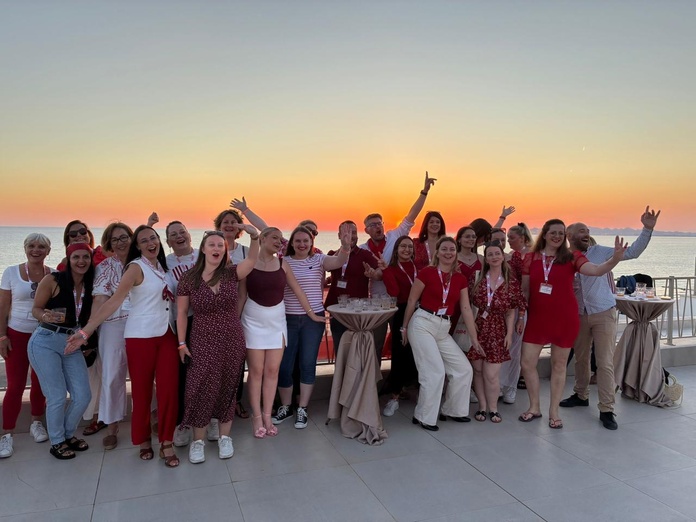
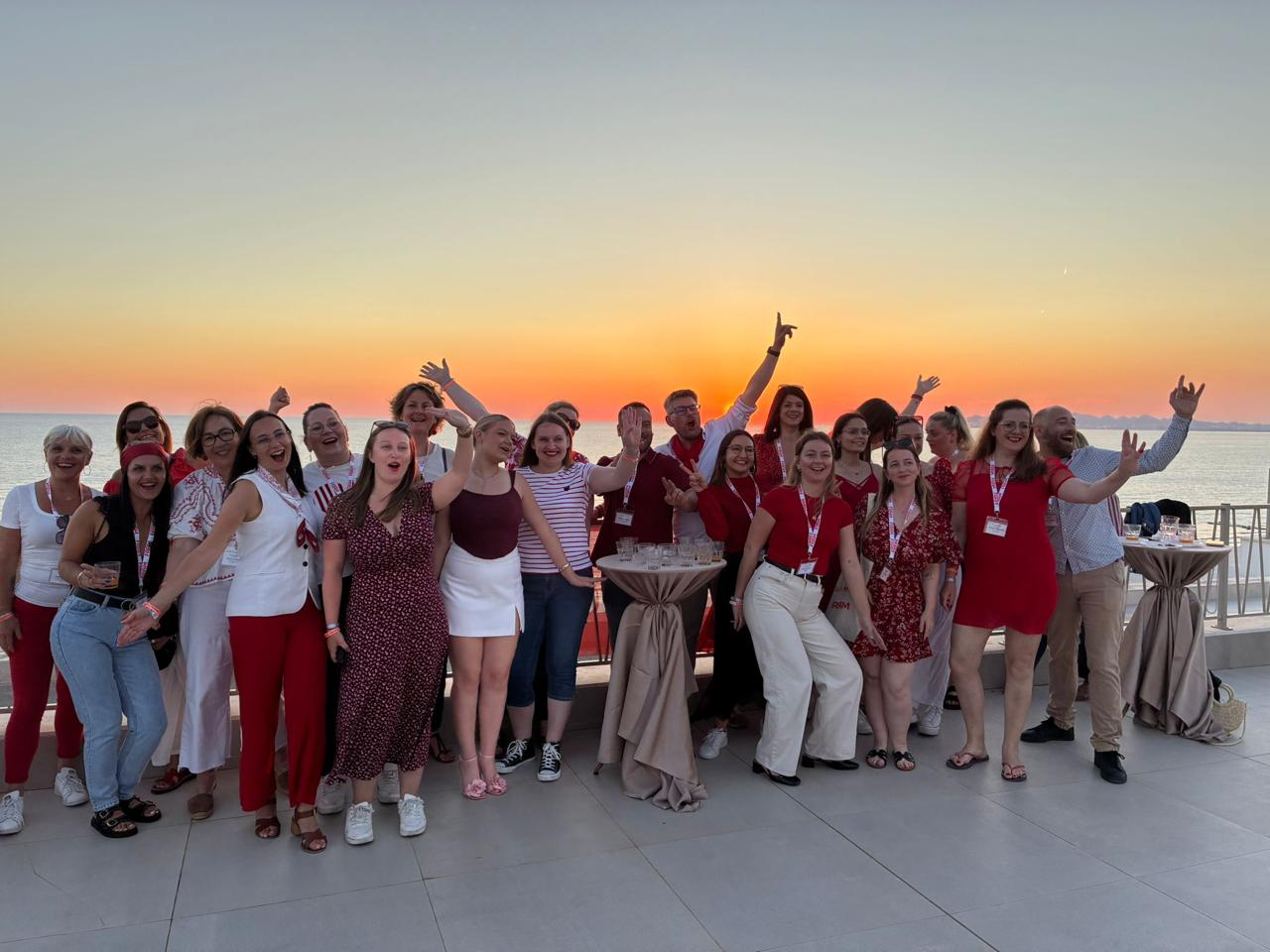
FRAM fait découvrir l'Albanie à ses ambassadeurs - Photo : AB

CroisiEurope


À moins de trois heures de vol de la France, l’Albanie poursuit sa montée en puissance sur le marché touristique européen.

Longtemps restée à l’écart des grands flux touristiques, la destination séduit désormais par la diversité de son offre, combinant stations balnéaires, patrimoine historique, gastronomie locale et expériences authentiques dans l’arrière-pays.

À l’occasion d’un éductour organisé par Fram avec ses Ambassadeurs, TourMaG a parcouru plusieurs régions du pays afin de découvrir les infrastructures touristiques, les nouveautés hôtelières et les principaux atouts de cette destination en pleine transformation.

Dès l’arrivée à Tirana, la capitale albanaise, les participants ont pu mesurer les investissements réalisés ces dernières années dans le développement touristique du pays.

L’aéroport international constitue aujourd’hui une porte d’entrée efficace vers la côte adriatique, principal bassin touristique du pays. La capitale albanaise illustre les profondes mutations du pays depuis la fin du régime communiste.

Capitale depuis 1920, la ville mêle aujourd’hui héritage historique et modernité. Les visiteurs y découvrent notamment les nombreux bunkers construits sous la dictature d’Enver Hoxha, témoins d’une période marquante de l’histoire albanaise.


Golem and Durres: the heart of Albania’s seaside tourism

Située à une quarantaine de minutes de l’aéroport de Tirana, la zone touristique de Golem concentre une grande partie de l’offre hôtelière internationale du pays.

Parmi les établissements visités figure le Perandor Beach Hotel. Situé entre Durres et Golem, cet hôtel dispose de 96 chambres réparties entre un bâtiment principal de huit étages et une annexe familiale située à 350 mètres du bâtiment principal.

Autre établissement emblématique de l’offre Fram : le Framissima Henry Resort & Spa. Avec ses 108 chambres réparties dans deux bâtiments, son rooftop, ses piscines, son espace bien-être et son parc aquatique, l’hôtel cible principalement une clientèle recherchant une formule tout compris associée à des animations francophones.

Plus récemment intégré à la programmation Fram, l’Amber Village mise sur un positionnement plus intimiste. Cet établissement de seulement 64 chambres séduit par son environnement paisible, sa plage préservée et son éloignement relatif des zones urbaines les plus fréquentées.

Le Bonita Luxury Resort & Spa, où résidait le groupe durant l’éductour, compte 350 chambres réparties dans deux bâtiments, plusieurs espaces aquatiques ainsi qu’un accès à la plage et à un beach club.

Enfin, le Signature Epidamn, futur produit de la gamme Signature de Fram, témoigne des investissements en cours sur le littoral albanais. L’hôtel dispose actuellement de 120 chambres et prévoit une extension de 80 chambres supplémentaires. Son architecture contemporaine, ses espaces bien-être et sa situation en bord de mer visent une clientèle à la recherche d’une expérience plus premium.


The hinterland, a still relatively untapped potential

Si le littoral reste la principale porte d’entrée touristique du pays, l’Albanie possède également de nombreux atouts dans ses régions intérieures.

À Berat, classée au patrimoine mondial de l’UNESCO, les visiteurs découvrent l’une des villes les plus emblématiques du pays. Surnommée la “ville aux mille fenêtres”, elle séduit par ses ruelles pavées, son architecture ottomane et sa citadelle dominant la vallée.

Plus au sud, la ville de Gjirokastër, également inscrite au patrimoine mondial de l’UNESCO, constitue l’un des joyaux culturels du pays. Connue sous le nom de “ville de pierre”, elle conserve un remarquable ensemble de maisons ottomanes et une imposante forteresse offrant une vue panoramique sur les montagnes environnantes.

Le parcours a également conduit le groupe à Tepelena, porte d’entrée de la vallée de la Vjosa. Ce fleuve, considéré comme l’un des derniers grands cours d’eau sauvages d’Europe, constitue un argument fort pour le développement d’un tourisme de nature et d’aventure.

Impossible de découvrir l’Albanie sans faire étape à Kruja. Cette ville historique est intimement liée à la figure de Skanderbeg, héros national ayant résisté à l’Empire ottoman pendant près de vingt-cinq ans.

Son vieux bazar, ses artisans perpétuant les savoir-faire traditionnels et son musée consacré à Skanderbeg permettent aux visiteurs de mieux comprendre l’histoire et l’identité du pays. L’étape constitue aujourd’hui l’une des excursions culturelles les plus populaires au départ de la côte adriatique.


Find the other educational tour videos on our YouTube channel

Jour 3 avec Apolline Iltis conseillère voyage à l’agence La Rochelle Voyages

Jour 4 avec Marylin Thibault conseillère voyage chez Fitour Voyages

Jour 5 avec Stéphanie Renard conseillère voyage chez Josy Tourisme


Amelia Brille Publié par Amelia Brille Rédactrice TourMaG.com
Voir tous les articles d’Amélia Brille

  • picto Linkedin
  • picto email
Ajoutez TourMaG à votre flux Google Actualités Google Actualités icône  

Year 10 Internship and Summer Camp: Anglais in France Launches Several New Features (Video)


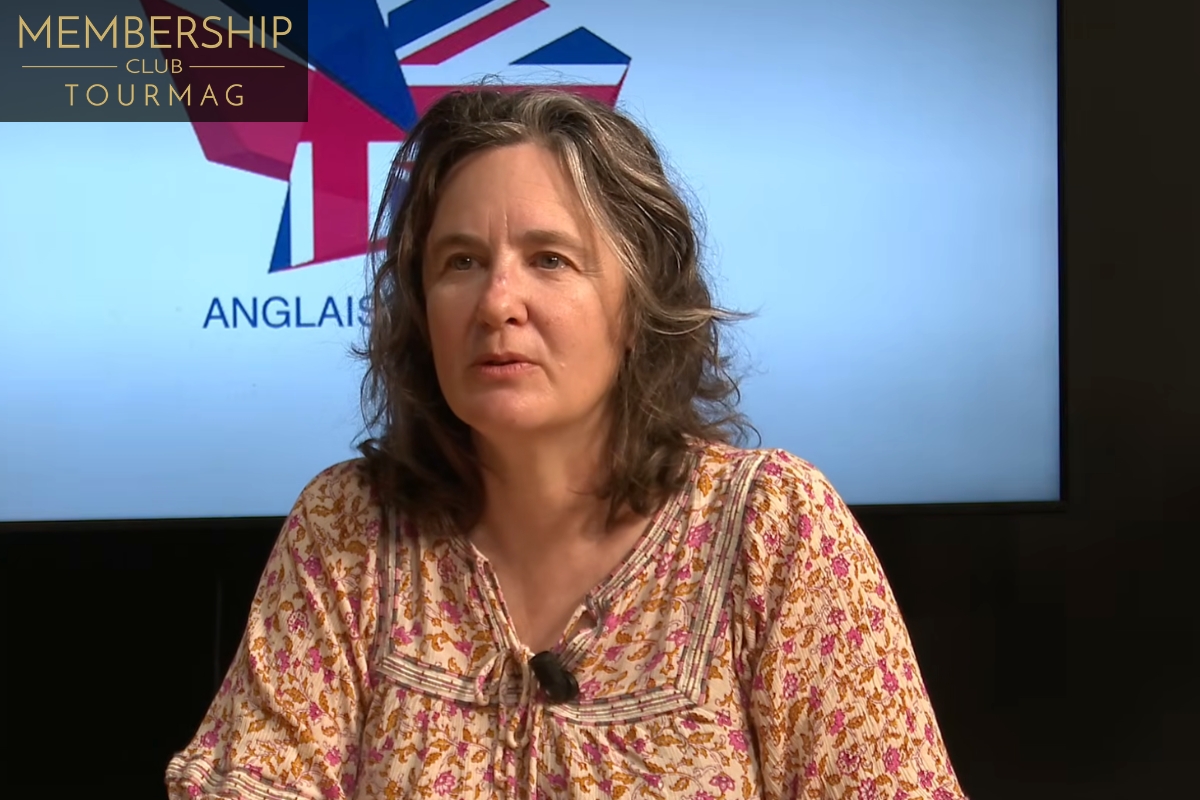
TourMaG – You are the founder of Anglais in France, but before that you were a teacher. What was your journey?

Jennifer Laur :
The path is fairly straightforward. I hold a licence in English and civilization, then I worked as a teacher, both with the national education system and at the Ministry of Agriculture. Later, this led to the creation of Anglais in France in 2008.

TourMaG – How did the idea of creating this agency come about?

Jennifer Laur :
With my family, we were host families for English girls coming from a Welsh secondary school. I really enjoyed welcoming these girls into our home and I found this work very interesting.

My mother was in contact with someone who had set up an agency in Versailles, and I already found that sector interesting. Then, with the rise of the Internet, I thought it was the right moment to take action.

TourMaG – At what point did you realize there was a real market?

Jennifer Laur :
Being a former civil servant, I didn’t really think in terms of a market. I mainly aimed to do something enjoyable for myself and to please people who wanted to learn English differently.

I also wanted to enable English speakers, mostly British, living in our rural areas to share their culture and their new life in France with the residents of their host country.


We launched a second-year internship called “Bridge’nWork”

TourMaG – Your concept is unusual: 100% English… but in France. How does it work?

Jennifer Laur :
The starting idea was to allow French people to connect with Britons living in France who hold a qualification to teach their language. As a teacher, that pedagogical aspect seemed essential.

The goal is to live an “English way” of life without crossing the Channel. These British families also understand cultural differences very well since they themselves are immigrants in France. They know how challenging certain situations can be when you don’t fully master the language or the cultural codes.

TourMaG – Do you address both young people and adults?

Jennifer Laur :
Yes, absolutely. The stays start from 12 years old and go up to 80, including students and professionals.

TourMaG – Do you learn English just as well in France as abroad?

Jennifer Laur :
It’s not necessarily the same approach. People who choose our stays often seek something very cocooning. We see more and more young people who refuse to go abroad for a first stay and who prefer to stay relatively close to home.

They need to feel reassured, to know they are only a few hundred kilometers from home and that they will be cared for all week within a family setting. There are no transportation logistics to manage, everything happens within a family environment.

TourMaG – What new features are you launching this year?

Jennifer Laur :
We have launched a second-year internship called “Bridge’nWork.” It allows high school students to come to our agency in Vazerac, in Tarn-et-Garonne, to practice professional English.

They meet British partners with whom we work daily and discover how Britons build their activity in France: administrative difficulties, language barriers, but also the entire Anglo-Saxon culture of associations.

For example, we have 100% English-language charitable bookstores or associations devoted to protecting stray cats. All of this associative fabric around animals is very developed in the United Kingdom and also represents an interesting cultural contribution.


Summer camps for the younger participants

TourMaG – And for the younger ones?

Jennifer Laur :
We have also created a mini summer camp in Vazerac, with a maximum of six youngsters and a native English-speaking animator.

There is always equestrian activity, English outings, and a very rural, family setting. It’s designed for youths who don’t yet feel ready to go abroad on a full family immersion on their own, and who want a first step before a more intensive stay.

TourMaG – CPF training programs are now capped at 1,500 euros. Is that a barrier for you?

Jennifer Laur :
Yes, clearly. It compels people to fund a larger portion of their training themselves. We can offer shorter trainings, but it’s a pity because a full week yielded very good results.

We already have an advantage by offering immersion in France. The trainers must have an activity number and be based in France. If they are not auto-entrepreneurs or micro-entrepreneurs, they must hold Qualiopi certification, which is very challenging for language schools located abroad.

TourMaG – Does offering stays in France shield you more from the current geopolitical context?

Jennifer Laur :
Yes, without a doubt. We haven’t seen a drop in demand; on the contrary, we think it could rise this year.

Our clients look for something very specific. The market has matured: people know exactly what they want and what they don’t want. Usually, when they contact us, they book a stay.

TourMaG – Yet the language-stay market has struggled since Covid…

Jennifer Laur :
Yes, the sector is generally struggling, but it depends a lot on destinations and the types of stays offered. We are in a period of transformation. Young people may want something different today, and we must reinvent the language stay of tomorrow.

TourMaG – How do you specifically imagine the language stay in ten years?

Jennifer Laur :
Very honestly, I don’t foresee it clearly. We discuss this a lot with my colleagues at UNOSEL, and it’s hard to project. Everything evolves very fast, just like travel agencies or tour operators. We must stay attentive to market evolutions and try to sense where the wind is blowing. Today, projecting ten years ahead is difficult.

TourMaG – And how do you see your company evolving?

Jennifer Laur :
We picture ourselves remaining a two-person team. We don’t aim to expand the agency beyond measure. The idea is above all to continue doing what we enjoy and to satisfy our clients. We like developing new products to adapt to the market, but we want to stay in France, notably to preserve the closeness with the host families we meet in person every two years. Human quality and tailor-made experiences remain essential for us.

TourMaG – Are your clients loyal?

Jennifer Laur :
Extremely so. Today we welcome younger siblings, cousins of former participants, and the like. Families find us mainly through Google and increasingly via AI. But more than anything, people want to speak directly with the founders. They seek that human contact.

We simply explain what we do, and if they connect with the concept, they book a stay.

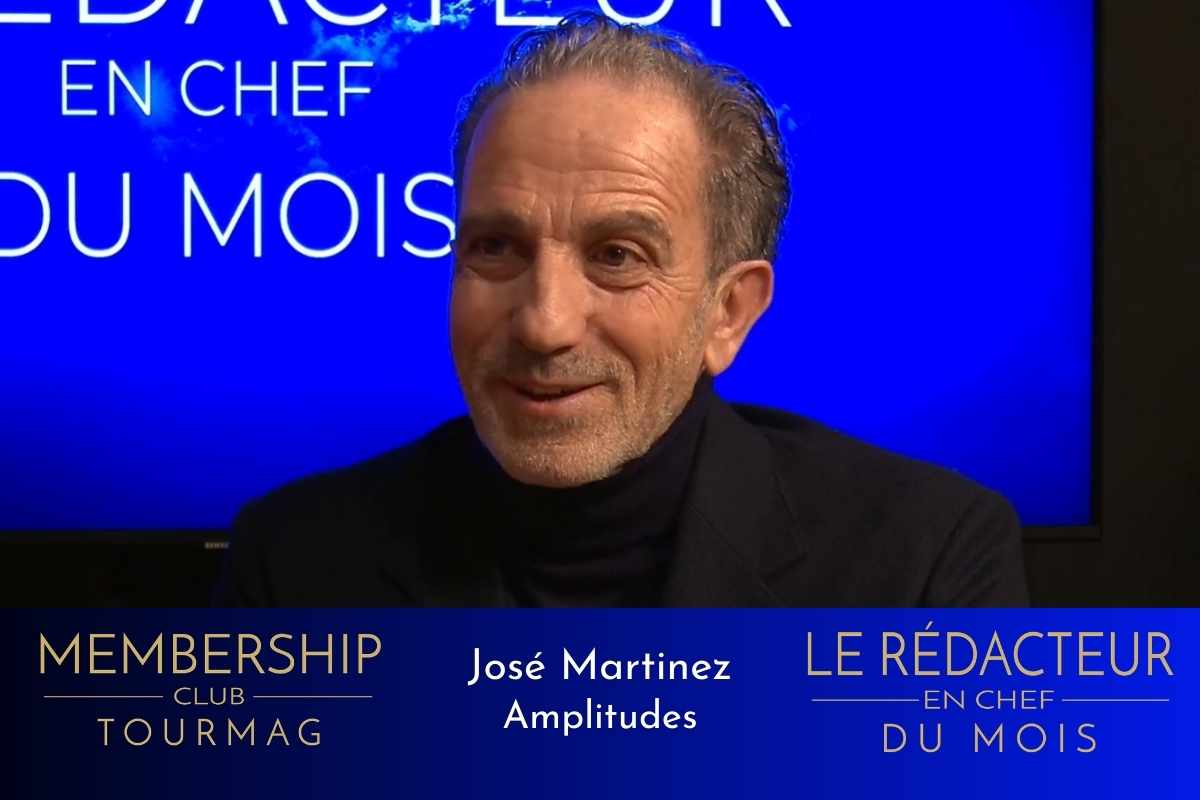
José Martinez: Turning Amplitudes Into a European and Then International Company (Video)


TourMaG – The fact that your daughter is taking over the business, does that make you an entrepreneur and a happy father ?

José Martinez : Yes, obviously. It’s a real joy. As a father, being able to hand down the company we created 35 years ago is a great satisfaction.

We work very well together with Laura, which is very positive. She has been in the company for almost eight years and we have not had any disagreements. That’s an important point.

As an entrepreneur too, this is excellent news. In a career, there inevitably comes a moment when one approaches the end of one’s professional journey. Often the last years before retirement are quieter: the leaders let the company run and slow down the development.

The fact that Laura expressed her willingness to take over the company and to continue its development has completely changed my own mindset. It has rekindled my desire to restart the growth dynamic.

This is especially reflected by the opening of the Bordeaux agency and by a very strong commercial development in the TMC activity. We also rely on what differentiates us: our own SBT tool. Today, it is on the market and allows us to win many new accounts. Between 2025 and 2026, we have already confirmed a growth of more than 30% thanks to these new contracts. It is very positive.


A also to see the interview of Laura Martinez, CEO of Amplitudes on TourMaG’s TV platform.


TourMaG – Precisely, you mention your SBT, eYoma. What are the strengths of this solution and its development prospects?

José Martinez : The development prospects are very significant.

One of the strengths of eYoma is its very recent technology. It is a cloud-native tool that makes it easy to connect the platform to different systems: those of our clients, expense reporting tools, and suppliers.

For example, we are directly connected to Air France to offer the entire NDC offering at no extra cost, including without the GDS surcharge that exists. We are also connected to PAO to directly access the SNCF offer and all of its features, without going through an intermediary.

We also have a connection with Distribution, an international rail provider, which allows us to offer cross-border and trans-European journeys. With eYoma, it is possible to book routes such as Prague–Budapest, Vienna–Munich or Rome–Milan.

We are also connected to Travelfusion to access the entire global low-cost offer. In practical terms, you can book a low-cost carrier on the other side of the world, even in China.

The tool has been developed with very recent technologies. It is hosted entirely in France on OVH servers, which guarantees a high level of security. In a context where digital sovereignty is becoming an important topic, we can ensure 100% French hosting.


eYoma, a multi-traveler and multi-service tool

TourMaG – How did you design this tool?

José Martinez :
When we began developing eYoma, I gathered my account managers and asked them to list all the client requests that we could not address with market tools.

That list became the project’s roadmap. Today, when we present our SBT to our clients, they are often surprised by how many of the issues they face we have already resolved. It’s a tool that is popular and helps us win markets.

It isn’t just an SBT. Behind it there is also eYoma Pro, the tool used by our agents. This enables a complete integration between online and offline.

For our teams, the tool is designed around our needs: priority management, task sharing among colleagues, alert systems to track travel progress.

eYoma is also a multi-traveler and multi-service tool. Unlike many SBTs on the market that charge per PNR and limit files to a single traveler, we do not have that constraint. We can therefore include several travelers in one file and group all the travel services together.

Eventually, we will also integrate the possibility of paying for certain services directly via virtual cards created by our clients to manage their travel expenses.

The development possibilities are therefore very numerous.


Amplitudes, “the only TMC in France to own its own technology”

TourMaG – Amplitudes started with bespoke travel, then business travel and now technology. Could you become a technology company?

José Martinez : Becoming a technology company, yes, to some extent. In fact, I think we already are.

This is probably the future of TMCs. In France, we are currently the only TMC to own our own technology. Others rely on external solutions. Yet this model already exists in other countries.

In England, Germany or the United States, several major players have their own technologies. For example, Navan or Perk. We are aligned with this logic.


About twenty years ago, call centers operated entirely with human teams. With the advent of SBT tools, the share of human intervention gradually decreased to around 50%. Today, thanks to capable tools, adoption rates approach 90%. Tomorrow, with the development of artificial intelligence, this figure should rise even further and could reach 95%, or more.


“We are among the French TMCs that want and have the means to internationalize”


“Our vision is more of Amplitudes Worldwide”

TourMaG – Would this internationalization go more through partnerships or through establishments? You also imply that without a large account you could not make the leap.

José Martinez : We are ready to develop internationally if we are given the time and the opportunity. But I am not a strong advocate of partnerships.

Since the beginning, in our leisure activity, we chose not to resell third-party products. We have our own production team and trips we design ourselves, with a high level of mastery and quality control. For the TMC, the logic is the same, with the development of our own SBT.

The day we cross this threshold, I think it will more likely be through direct establishments and full control of what we do. Our technology tool is already ready for this: it is multilingual and can connect to different systems like Sabre or Amadeus. It could therefore work internationally.

Our vision is therefore more that of Amplitudes Worldwide, rather than operating with networks or partners. Networks often pose several difficulties: governance, uniformity of service, data consolidation. These are complex issues when governance is dispersed.


“My analysis, the GDSs have won the battle of the NDC”

TourMaG – You want to keep control…

José Martinez : Exactly. We want to preserve this control.

TourMaG – A word on the NDC, a hot topic in recent years. Where does it stand today? Air France announces rising adoption rates.

José Martinez : Contrary to what the GDSs initially thought, the NDC has ultimately established itself. It is still a relatively young technology that sometimes encounters difficulties, but it is progressing.

Today, for example in our eYoma tool, we pull in both GDS content and NDC content. The NDC share represents about 70% of bookings, which is already very significant, especially for corporate clients. The main reason is simple: fares are often more advantageous.

Features are also improving. Today you can modify a ticket, change a date or destination. It happens that some fare conditions do not surface correctly or some fares appear and then disappear, but that is quite normal for a technology still maturing. Airline booking remains a very complex system.

Moreover, GDSs have regained an important place in this ecosystem. Today there are very wide NDC offerings in Amadeus or Sabre. In a sense, they have managed to re-enter the race, whereas airlines initially hoped to free themselves from it thanks to NDC. My analysis nonetheless is that the GDSs have won the NDC battle.

In the French market, the majority of NDC bookings today go through GDSs, except for some companies like ours that have a culture of difference by choosing direct connection.

For us, it makes sense, especially with Air France which represents about half of our air sales. Just as we found it relevant to connect directly to PAO because 95% of our rail sales today are with SNCF.

We probably will not connect directly to every airline, because GDSs or certain aggregators do a very good job of handling that. However, being directly connected to Air France allows us to offer exactly the same fares and the same offer as on the airline’s site.

This also answers a growing demand for transparency. We can even commit to our clients: if they find a cheaper fare at the same time and under the same conditions, we refund the difference.


Electronic invoicing: the return of commissions ?

TourMaG – You know the issues around electronic invoicing, notably the question of margins that could become completely transparent. Could it change the business travel business model?

José Martinez : For us, the question of margins does not pose an immediate risk.

If an airline grants us a negotiated fare, I am talking about a fare negotiated by Amplitudes, not corporate-negotiated fares, on which we apply a margin, there may be a discrepancy between the invoice sent by the airline and ours. That can create a form of distortion.

The question is therefore how the model will evolve. Perhaps some agencies will ask airlines to revert to a commission system rather than operating with negotiated agency fares. That is a possibility.

These negotiated fares are an integral part of agencies’ business models. Regulatory changes should not undermine this balance. But if the objective is to move toward more transparency, a return to commission could indeed be a solution.

TourMaG – What are Amplitudes’ objectives for 2026 and the vision for the coming years?

José Martinez :
For the TMC part, we already know that the accounts won will ensure a growth of between 15 and 20 points. That’s very good news.

We also began the year with a very positive momentum in leisure activity, even if some events slowed this momentum. Despite that, I think 2026 will be a year of growth. Our objective is clearly to maintain double-digit growth.

Amplitudes is a company built from scratch, without initial capital, and which has gradually grown on solid foundations, with high growth rates.

This year again, we have received two important distinctions: a Financial Times award for high-growth European companies and a distinction from Les Échos, which also published an article about our post-Covid growth.

Our vision remains that of a company in motion. We do not want to be a static enterprise. We want to continue integrating sector evolutions, such as artificial intelligence, explore new destinations and invent new ways to travel.

On our scale, we also try to contribute to the positive image of travel agencies: a committed agency for its clients, whether individuals or businesses, capable of negotiating the best conditions with providers.

The vision we share today with Laura is clear: continue to develop Amplitudes to make it a European company in the near future, and perhaps an international company in the medium term.


Céline Eymery Published by Céline Eymery Editor-in-Chief – TourMaG.com
See all articles by Céline Eymery

  • picto Facebook
  • picto Twitter
  • picto Linkedin
  • picto email
Add TourMaG to your Google News feed Google Actualités icône


Viewed 3,816 times

Tags :
amplitudes, jose martinez, editor-in-chief-of-the-month

Rate

New comment :


All rude, insulting or defamatory comments will be immediately removed by the moderator.

Report abuse

In the same section :

<
>

Thursday, July 16, 2026 – 13:38 Travelodge teams up with DerbySoft to boost its corporate bookings

Wednesday, July 15, 2026 – 15:40 Perk launches the first MCP connector to unify trips, expenses and invoices

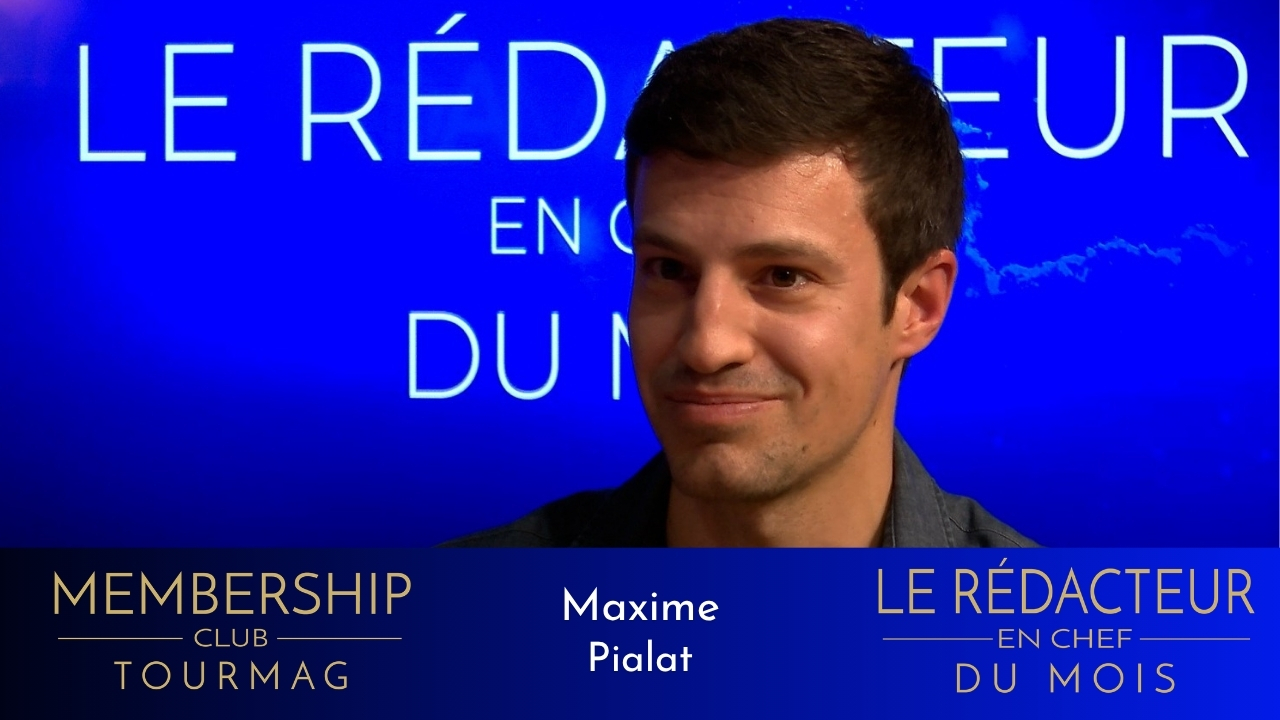
Maxime Pialat (Supertripper): Exploring Acquisition Opportunities Abroad (Video)


TourMaG – How is business travel faring today in the current geopolitical context?

Maxime Pialat : Business travel is doing quite well. It is probably the most resilient segment of the travel industry. We are seeing a slight dip in demand, but it remains very limited.

On the other hand, in this climate of uncertainty, some companies are tending to tighten their budgets a bit. Despite that, the market remains broadly solid and we all hope for a return to greater stability in the coming months.

TourMaG – Supertripper nevertheless continues to show strong growth?

Maxime Pialat : Yes, we are fortunate to operate in a very positive dynamic. For several years now, we have been growing at about 40% per year and we maintain this pace.

At a constant scope, we may observe a slight slowdown on the order of 5 to 6%, but acquiring new clients allows us to keep a growth rate between 30 and 40%. Our objective remains to reach 40% this year.


“Our ambition is to combine technology and service”

TourMaG – You are a French company with French technology; in this context, does technological sovereignty become a business argument?

Maxime Pialat : Sovereignty is a fundamental topic. Today it has become rare to respond to a tender without being asked about sovereignty questions. At Supertripper, we have a real advantage since we are the only French business travel agency that controls the entire value chain, from technological design to distribution.

We develop our platform in-house at our Paris offices and we also operate all associated services. Developers, travel agents, and support teams work together within the same organization.

TourMaG – Your image remains very technology-oriented. What role does technological development play within the company?

Maxime Pialat : We are indeed a highly digital company, even though our ambition is to combine technology and service. We position ourselves as an actor that will offer both to businesses, with an efficient technology featuring numerous direct connections, homegrown tools for both our travel agents and our clients on the SBT side, and at the same time a service side with travel agents who are all experts in their field and who typically have 15 to 20 years of experience.

Concretely, about one third of our staff works on product and development. Another third is devoted to customer service and to assisting the companies. The final third covers support and administrative functions.


AI: “Our objective is to bring added value to genuinely enhance the user experience”

TourMaG – Artificial intelligence is omnipresent. What is your approach?

Maxime Pialat : We take the issue of AI very seriously. But we also see a lot of “AI washing”. There are many announcements around AI in travel, but some refer to capabilities that aren’t truly AI and don’t necessarily add value to the user experience.

At Supertripper, we have an AI roadmap. Our goal is to deliver added value to genuinely improve the user experience. This can be done directly in the product through new features, or by strengthening the efficiency of our teams: travel agents and support.

We already use AI to help our travel agents analyze client requests and process files more quickly. The idea is to transform our experts into “super experts”.

TourMaG – Since your integration into the Marietton group, what has changed?

Maxime Pialat : Marietton is a group that represents more than 2 billion euros in activity and more than 1,600 employees. In addition, the strength of the GIE ASHA, which negotiates suppliers for 6 billion euros per year, adds to that.

For us, this brings buying power on the financial side and on the negotiation side, which will ultimately allow our clients to benefit from the best prices on all services.

However, in the day-to-day management of Supertripper, product strategy or management, nothing changes. The objective is precisely to preserve our agility while benefiting from the group’s power.


“We are exploring several acquisition opportunities to become a European player”

TourMaG – So you can truly stay agile within a large group?

Maxime Pialat : Yes, it all depends on the management’s vision. We are fortunate to have joined a group that wants to let the companies it acquires continue their trajectory. Our road map remains the same. Supertripper’s growth trajectory continues unabated.

Marietton Développement will come in to provide more support as an accelerator. The vision does not change; it accelerates.

TourMaG – Exactly, how will you accelerate? Do you seek growth in other markets?

Maxime Pialat : The priority remains to continue our growth in France to become the largest French agency specialized in business travel. In parallel, we are studying several acquisition opportunities that could accelerate our development and make us a European player in the coming years. This is a true objective.

We are actively looking at possibilities that could enable us to establish ourselves in other markets.


Supertripper: clients ranging from SMEs to large accounts including ETIs

TourMaG – So Supertripper would be ready to conduct acquisitions?

Maxime Pialat : We are looking to leverage our technology and to develop the brand so that we can have the same impact as we do in France on other markets in Europe.

TourMaG – Is it easier to enter a market by acquiring an existing player rather than starting from scratch?

Maxime Pialat : There are all sorts of viewpoints. To establish in a new country, I think it is easier to succeed with the support of local expertise, with collaborators who know the market, and with an existing client base. That greatly facilitates entry and reduces the time needed to understand the market.

TourMaG – What is your client profile today?

Maxime Pialat : We work with a very diverse clientele, ranging from SMEs to large accounts, including ETIs. We are currently seeing strong growth in the ETI and large-account segments. We complete numerous client acquisitions in this area. Today, we consider that we are capable of supporting and serving any type of company, regardless of its size.