
Aerial: SFMA Returns in January 2027 with 100+ Exhibitors Expected


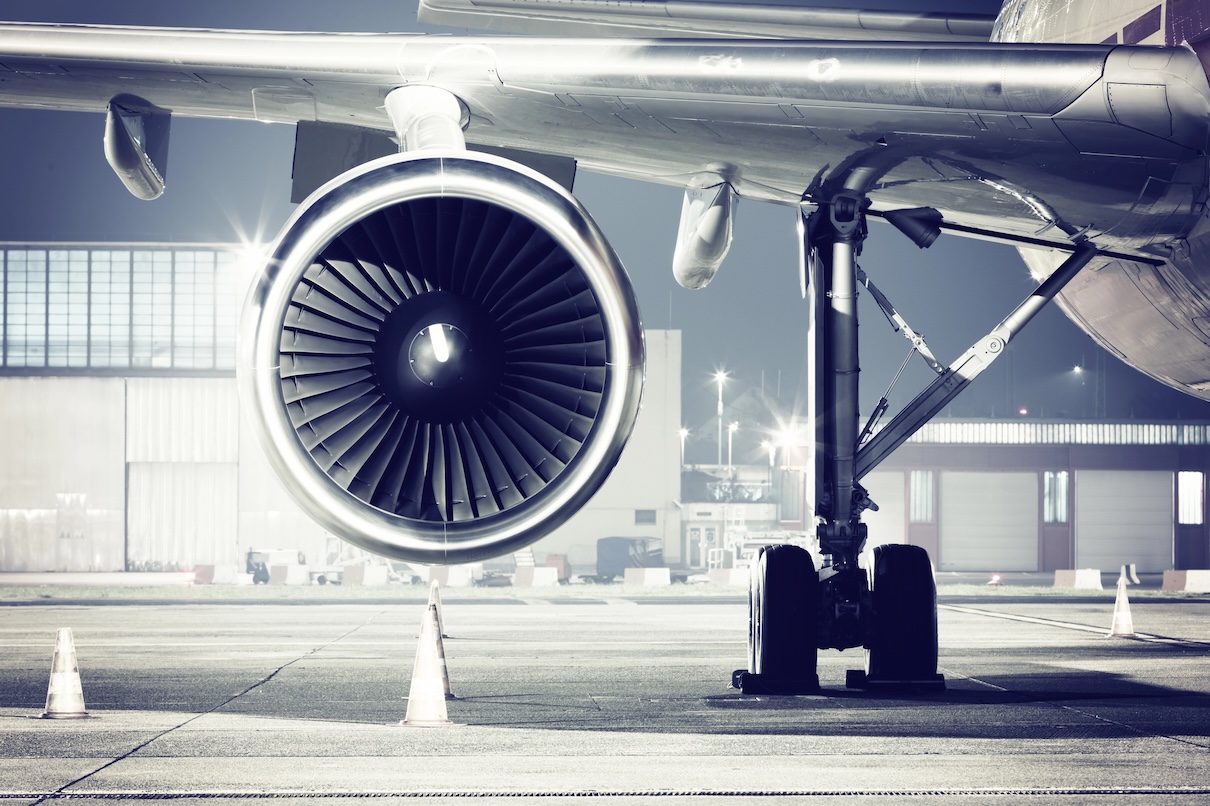
Le SFMA revient pour sa 35e édition les 29, 30 et 31 janvier 2027 - Depositphotos.com, maroti

CroisiEurope


The Aviation Training and Careers Fair (SFMA) will stage its 35th edition from January 29 to 31, 2027 at the Aéronautical Museum and Space Museum – Paris-Le Bourget.

Regarded as the only fair in France entirely dedicated to employment, training, and recruitment within the aviation, air transport, and space sectors, the event takes place amid strong hiring pressures within the industry.

The 2027 edition will build on the momentum observed in 2026, which brought together 18,292 visitors, up 17.5% year over year.

A audience largely focused on orientation and career integration: 69% of attendees came to pursue training or to clarify their path, and 46% were seeking employment, internships, or apprenticeships.


An Essential Event for Guidance and Employment

For three days, more than 100 exhibitors – schools, apprenticeship centers, universities, training organizations, airlines, manufacturers, equipment suppliers, and institutions – will gather in Hall Concorde.

They will showcase their professions, the corresponding trainings, and the recruitment opportunities, and will interact directly with visitors.

The fair also reinforces its role as an orientation platform for a predominantly young audience: nearly half of attendees are between 16 and 25 years old, and 47% are high school students, college students, or secondary school pupils.

The event attracts visitors from beyond the Île-de-France region, with 30% coming from the provinces and 5% from the overseas departments and territories or abroad.


A Sector Under Strain in Search of Talent

The program will feature around 40 thematic conferences, continuing the approach of the previous edition, dedicated to careers, training pathways, the required competencies, and the prospects for progression in a sector undergoing transformation.

In a context shaped by the ecological transition, the rise of new technologies, and the development of drones, this 35th edition also aims to highlight how aeronautics and space jobs are evolving and the skills associated with them.

The upsurge in SFMA attendance reflects both the urgency of recruitment needs in a sector hiring on a large scale and the growing interest of young people in these professions.

The fair has been designed to foster this encounter
“, emphasizes Emmanuelle Husson, the SFMA curator.

Also read: SFMA 2026: three days to meet the aviation recruiters


Amelia Brille Published by Amelia Brille TourMaG.com Editor
See all articles by Amelia Brille

  • picto Linkedin
  • picto email
Add TourMaG to your Google News feed Google Actualités icône  

Returning to France After a Long Trip: Why the Homecoming Is Often Harder Than Expected

Four years ago, they dropped everything: the apartment, the steady job, the car. They headed to Australia for what was meant to be the first big journey of their lives. Thibaut and Pauline, 25 and 26, didn’t know each other yet when they left France. A few weeks later, they fell in love and began traveling together.

At first, they stayed because they loved Australia and wanted to keep exploring the country. But when their visa could no longer be renewed, the return became unavoidable: “We told ourselves, it’s the end of Australia, a page is turning. We are going to travel for six months in Southeast Asia before returning to France.”

But as the deadline drew closer, concerns emerged: “What scares us is re-acclimating to the French system, explains Pauline. We are bilingual, we don’t want to lose our English and we are used to the Anglophone system, with a great openness in companies. Here, we focus more on our experience and our personality than on our diplomas. And I earn a better living.”

Finalement, au lieu de rentrer, le couple a postulé à un Programme Vacances-Travail (PVT) en Nouvelle-Zélande.

“Nous n’évitons pas à 100 % de rentrer en France, mais nous n’essayons pas d’y retourner non plus. Si nous ne trouvons pas de sponsor pour obtenir un visa en Nouvelle-Zélande, nous pensons déjà au Canada”, raconte le couple. Avec la distance, les aspects qui leur plaisent moins en France se sont accentués. Ils s’inquiètent du coût des loyers, de la qualité de vie, mais aussi du sentiment d’insécurité. Malgré les atouts qu’ils reconnaissent au pays, une part d’eux appréhende toujours l’idée d’y revenir.

Travel, Identity Change and Acclimatization

Pour de nombreux voyageurs, le retour est loin d’être une simple formalité. Après plusieurs années à l’étranger, retrouver sa vie d’avant peut s’avérer plus difficile qu’on ne l’imagine. Floriane, 32 ans, en a fait l’expérience.

Après plusieurs séjours à l’étranger pendant ses études, puis près de deux ans en Australie et un PVT en Nouvelle-Zélande, Floriane décide de rentrer en France en juin 2025 : “Je me suis dit : j’ai 31 ans, ça fait trois ans que je ne vis plus en France, je ne cotise pas pour la retraite, mon CV ressemble un peu à n’importe quoi… ce sont toutes ces questions qui m’ont fait revenir.” Pourtant, une fois en France, les doutes s’intensifient. Lorsqu’elle retrouve ses amis, le décalage est brutal : “Certains de mes proches me disaient : “On vient d’acheter l’appart” ou “On attend le bébé”. J’étais contente pour eux, mais je me prenais un coup de poignard à chaque fois, à me dire : “Mais merde, qu’est-ce que j’ai foutu ?”.

Peu à peu, elle remet en question ses choix, à commencer par son métier de journaliste. Mais ses doutes dépassent le cadre professionnel : ai-je bien fait de rentrer ? Dois-je repartir ? Mais où, et pourquoi ? Des interrogations qu’elle traverse seule, son expérience étant difficile à partager avec son entourage.

Bien vivre son retour en France est possible, à condition de l’anticiper. Le piège est de penser que revenir dans son pays d’origine ne nécessite aucun ajustement. Pour Matthieu Fouché, il faut anticiper ce changement sur le plan mental : « n arrive dans un nouveau pays, l’environnement est tellement différent qu’il y a forcément des modifications identitaires, explique-t-il. Cela entraîne souvent le sentiment d’évoluer positivement : apprendre de nouvelles choses, devenir quelqu’un que l’on apprécie à ce moment-là.”

Le retour implique alors un nouveau bouleversement, parfois appelé en psychologie « choc culturel inversé » : le fait de revenir dans un lieu censé être familier, mais qui semble soudain étranger. “Souvent, de retour d’ expatriation, on ne se rend pas compte de ce qu’il va se passer, explique Pascale Chazelle, coach certifiée dans l’accompagnement des conjoints expatriés. Il y a souvent une période de questionnement et une nécessité de se réinventer : les valeurs ont changé, la relation avec la famille ou les amis aussi, et se pose la question de qui je suis et quels sont mes projets.”

Living Well Upon Returning to France

Living well upon returning to France is possible, provided it is anticipated. The trap is to think that returning to one’s homeland requires no adjustment. For Matthieu Fouché, one must anticipate this mental shift: “When you’re preparing to go to a new country, you expect it to be difficult, that you’ll have to make an effort to meet people. And, well, you should have a bit of that same mental preparation before returning to France.”

This work can also involve introspection. Pascale Chazelle particularly recommends listing the skills gained abroad, to become aware of the evolutions you’ve undergone and to integrate this new identity.

After several years in Australia and Asia, Damien and Fanny, 31, decide to return. After a month of happiness at seeing their loved ones again, the blues arrive: “We were looking forward to our return to France, and yet after a month, ouch. Small depression,” recounts Damien. It’s the first time I’ve ever experienced this in my life. It hurts, I hadn’t seen it coming.

Alors, le couple prend une décision : faire les saisons en France. “C’était une manière pour nous de garder un peu ce côté backpacker, ajoute le jeune homme. Nous avons enchaîné les saisons dans le Sud-Ouest, puis fait une saison en Savoie et actuellement nous sommes du côté de Saint-Malo. Après cet été, je pense que nous allons essayer de nous poser définitivement.”

Si Damien et Fanny ont pu compter l’un sur l’autre, et sont aujourd’hui heureux d’être rentrés, certains voyageurs se retrouvent confrontés à l’incompréhension de leur entourage, renforçant leur sentiment d’isolement. Matthieu Fouché et Pascale Chazelle conseillent alors de se rapprocher de personnes ayant vécu des expériences similaires.

Cependant si le coup de blues s’installe dans le temps avec un réel impact sur la vie quotidienne, une difficulté à établir des liens avec les autres, une tristesse qui se rapproche des symptômes dépressifs, il convient de se faire accompagner par un psychologue.

Le retour en France n’est donc pas forcément un renoncement, mais peut devenir une nouvelle étape. Et si, malgré tout, l’envie de repartir se fait sentir, l’aéroport ne sera jamais bien loin.