
Volotea: 92% Cancellations in Rennes, 62% in Bordeaux — Discover the Scale of the Cancellations [ABO]


La France représente plus de la moitié des annulations de Volotea en octobre et aussi en novembre - Depositphotos

PONANT


Volotea is racing against the clock.

By opening a “preconcurso” procedure to restructure its debt, it secured a three-month breathing spell.

By the latest end of December, it must therefore be able to reach an agreement with its creditors, notably the Sociedad Estatal de Participaciones Industriales, the SEPI, for its 200 million euros loan taken during the health crisis.

On top of this amount, there is the bill caused by the surge in kerosene prices, which has boosted its costs by around 150 million euros.

To provide lenders with signs of sustainability and to restructure the company, Volotea published a plan that foresees the removal of 50 jobs, mainly in Barcelona, but also a reduction of its fleet, which should fall from 45 to 35, or even 30 aircraft.

And management quickly moved from words to actions.


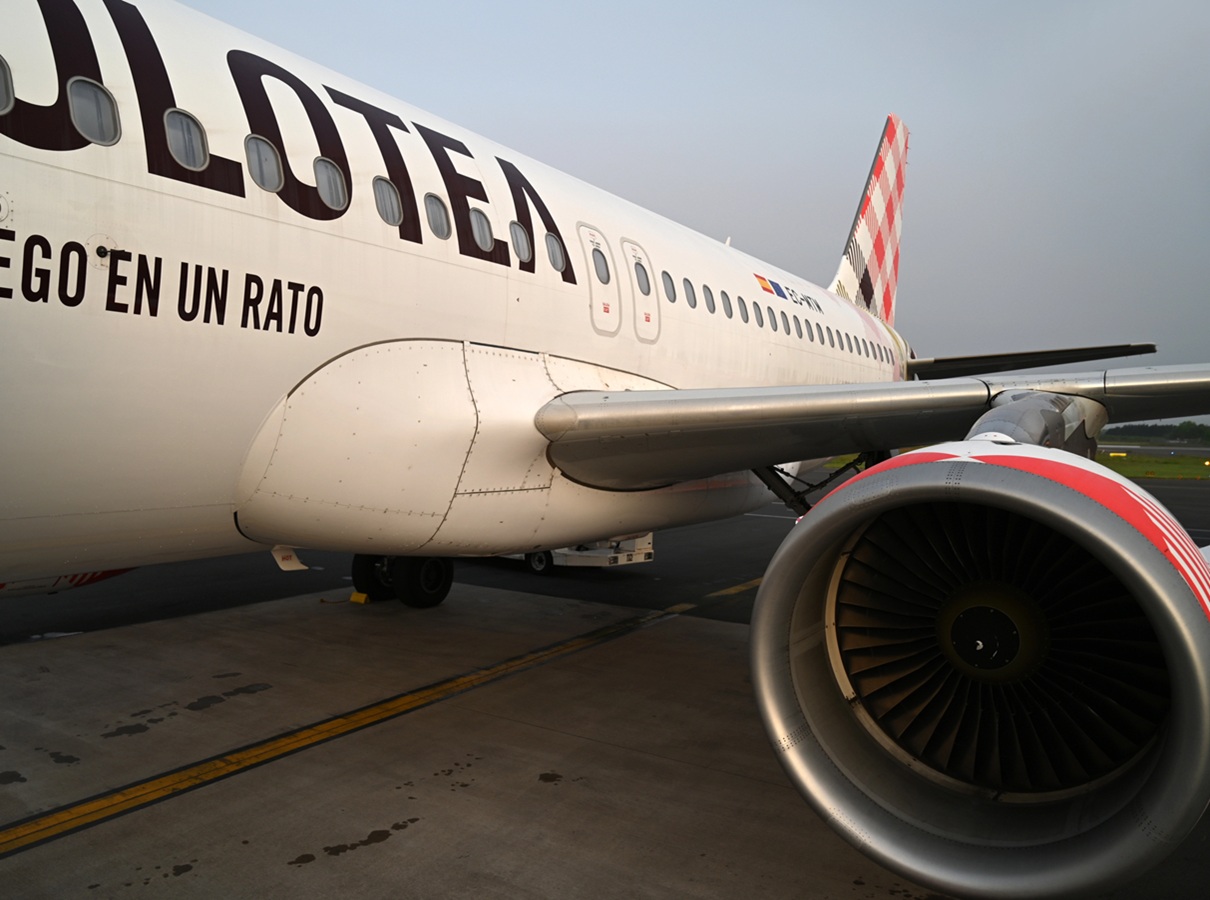
By regularly monitoring the carrier’s flights, it is rare to find more than 26 aircraft in the air at the same time. The number tends to hover between 15 in recent days and 25 at most.

Moreover, the reduction in offer, and thus in the active fleet, had at one point led management to suspend its charter activity.


Volotea: “We’re getting cancellations by the bucketload”

It has returned in smaller proportions and only for a few dates, betraying a sharp reduction in supply. What happened to these aircraft? No one knows. It is possible that some of them have been returned to leasing companies, although that comes at a cost.

“Some airlines have leasing contracts that include a ‘power by the hour’ component — i.e., a payment based on the aircraft’s actual usage.

If that is the case, leaving planes idle when demand slows and costs rise can be a way to reduce losses,” explains an expert.

This fleet reduction, aimed at minimizing cash burn, leads to sometimes harsh schedule adjustments in the program, notably in France.

And this is not neutral for tourism professionals, as Toussaint holidays approach. They find themselves confronted with cancellations left and right, without always having backup options.

“We’re getting cancellations by the bucketful,” laments an intermediary specializing in air distribution.

The situation is such that travel agents have tried to protect their clients for upcoming flights. Except that, given the carrier’s unique position on certain routes, it can be very difficult to find solutions.

Looking at the figures, we measure the scale of the task and the difficulties that also affect travelers. The reduction of the October flight plan was 27.8% for France, according to statistics provided by OAG.

The global provider of transportation data told us the number of flights planned in October as of August 3, then the number of flights actually scheduled as of October 11.

And this regulation affects French airports differently, although all platforms appear concerned. At the top of the list, Perpignan stands out with 81.8% of flights canceled, followed by Bastia (-62.4%) and Brest (-56.5%).


Volotea trims its October 2026 schedule

Data provided by OAG

By departure country

Change in the number of flights scheduled from airports in each country.

The 10 most affected airports

Source : OAG Analyser, Schedules Power Table. Flights operated by Volotea (IATA code V7), non-stop, from the European regions EU1 and EU2, monthly frequencies in one-way.

Method : comparison of the October 2026 program published on August 3, 2026 and on October 11, 2026. Each flight is counted once, at its departure airport.

‘+
‘

‘+pct(t0,t1)+’‘+fmt(t1)+’ flights vs ‘+fmt(t0)+’

‘+
‘

‘+rows.filter(function(r){return r[3]*/
– truncated content for readability – placeholder for widget summary
}
function rankings(){
$(‘vto-rnote’).innerHTML=(mode===’v’?’Ranked by the number of flights canceled from the schedule.’:’Ranked by the share of the original schedule that was canceled.’)+’ Airports with at least 10 flights in the initial program.’;
var srt=mode===’v’?function(a,b){return (a[3]-a[2])-(b[3]-b[2])||b[2]-a[2];}:function(a,b){return (a[3]/a[2])-(b[3]/b[2])||(b[2]-b[3])-(a[2]-a[3]);};
var html=””;
[[cur,”]].forEach(function(m){
var base=D[m[0]].rows.filter(function(r){return r[3]=10;});
[[‘France’,function(r){return r[1]===’FR’;}],[‘Europe (excluding France)’,function(r){return r[1]!==’FR’;}]].filter(function(g,k){return geo===’FR’?k===0:k===1;}).forEach(function(g){
var top=base.filter(g[1]).sort(srt).slice(0,10);
var mx=mode===’v’?Math.max.apply(null,top.map(function(r){return r[2]-r[3];})):100;
html+=’

‘+g[0]+’
‘+
top.map(function(r,i){var d=r[2]-r[3],w=mode===’v’?d/mx*100:d/r[2]*100;
return ‘

‘;}).join(”)+’

# Aéroport Initial → Revised ‘+(mode===’v’?’u00E9cart’:’Var.’)+’
‘+(i+1)+’ ‘+esc(r[0])+(r[1]!==’FR’?’‘+esc(CN[r[1]])+’‘:”)+’ ‘+fmt(r[2])+’ → ‘+fmt(r[3])+’ ‘+(mode===’v’?’-‘+fmt(d):pct(r[2],r[3]))+’‘+(mode===’v’?pct(r[2],r[3]):’-‘+fmt(d)+(d>1?’ flights’:’ flight’))+’

‘;
});
});
$(‘vto-rkg’).innerHTML=html;
}
var COLS=[[‘Airport’,0,”],[‘Country’,1,’vto-hide-m’],[‘Initial’,2,”],[‘Revised’,3,”],[‘Δ’,4,”],[‘Var.’,5,”]];
function table(){
$(‘vto-thr’).innerHTML=COLS.map(function(c){return ‘

‘+c[0]+’

‘;}).join(”);
var q=($(‘vto-search’).value||”).toLowerCase().normalize(‘NFD’).replace(/[u0300-u036f]/g,”);
var rs=D[cur].rows.map(function(r){return [r[0],CN[r[1]],r[2],r[3],r[3]-r[2],r[2]?(r[3]-r[2])/r[2]:0];});
rs=rs.filter(function(r){return !q||(r[0]+’ ‘+r[1]).toLowerCase().normalize(‘NFD’).replace(/[u0300-u036f]/g,”).indexOf(q)>-1;});
rs.sort(function(a,b){var x=a[sortK],y=b[sortK];if(typeof x===’string’)return x.localeCompare(y,’fr’)*sortD;return (x-y)*sortD||b[2]-a[2];});
$(‘vto-tb’).innerHTML=rs.map(function(r){return ‘

‘+esc(r[0])+’ ‘+esc(r[1])+’ ‘+fmt(r[2])+’ ‘+fmt(r[3])+’ ‘+sgn(r[4])+’ ‘+pct(r[2],r[3])+’

‘;}).join(”)||’

Aucun résultat

‘;
}
root.querySelectorAll(‘.vto-gb’).forEach(function(b){b.addEventListener(‘click’,function(){geo=b.getAttribute(‘data-g’);root.querySelectorAll(‘.vto-gb’).forEach(function(x){x.setAttribute(‘aria-selected’,x===b?’true’:’false’);});rankings();});});
root.querySelectorAll(‘.vto-swb’).forEach(function(b){b.addEventListener(‘click’,function(){mode=b.getAttribute(‘data-s’);root.querySelectorAll(‘.vto-swb’).forEach(function(x){x.setAttribute(‘aria-selected’,x===b?’true’:’false’);});rankings();});});
render();
var vp=$(‘vto-vp’),trk=$(‘vto-trk’),sl=trk.children,si=0,stp=root.querySelectorAll(‘.vto-st2′);
function fit(){vp.style.height=sl[si].offsetHeight+’px’;}
function go(i){si=Math.max(0,Math.min(sl.length-1,i));trk.style.transform=’translateX(‘+(-100*si)+’%)’;
for(var k=0;k50&&Math.abs(dx)>Math.abs(dy))go(si+(dx

Travelers’ Concerns Evolve: Health, Cancellations, and Assistance Top the List


© Sharmaine Monticalbo / Pexels

CroisiEurope


The behavior of French travelers has profoundly changed in recent years. Repeated flight delays and cancellations during peak periods, extreme weather events that disrupt certain stays, geopolitical tensions and an increased sensitivity to health issues have made safety and flexibility genuine booking criteria.

This evolution directly challenges tourism professionals.


Key takeaways:

● Travelers place increasing importance on health, cancellation policies, and assistance before booking a stay.

● Unforeseen events related to transport, geopolitical situations, weather events or medical issues reinforce this demand for security.

● Tourism professionals are tasked with better informing their clients about available protection solutions.


Health remains the primary concern before a trip

The medical costs abroad can reach tens of thousands of euros depending on the destination, especially in the United States or Southeast Asia. Travelers are also increasingly aware that a single incident—a appendicitis, a bad fall while hiking, or several days in hospital after food poisoning—can quickly upset a trip’s budget. This financial reality has heightened attention to health considerations before departure.

Access to care and cost of consultations

In many destinations, access to care is neither immediate nor free for a foreign national. A simple consultation can cost several hundred euros outside the European Union, and hospitalization can quickly become a major expense. The European Health Insurance Card offers partial coverage in member countries, but it does not apply outside the European area.

Facing these realities, travelers ask more about protections available before leaving. Comparing various travel insurance options, such as those offered by AXA Travel Insurance, helps identify guarantees suited to the destination, the type of stay, and the traveler’s profile, depending on the chosen coverage.

Medical assistance and repatriation

The medical repatriation represents one of the highest cost items in case of a serious accident abroad. Depending on the type of trip and the destination, arranging it may require a medically equipped aircraft and international coordination.

Longer stays, itinerant travel, and the growth of outdoor activities also contribute to increasing attention to this coverage.

Travelers are increasingly aware that national social protection does not cover these situations. On-site medical assistance, available 24/7, has thus become a criterion of choice for a growing share of travelers, especially for trips outside the Schengen area or family journeys.


Cancellations and transport disruptions worry travelers more

In Europe, Regulation CE 261/2004 obliges airlines to compensate passengers for significant delays or flight cancellations caused by them, but these obligations do not cover every possible scenario.

Trip cancellations and financial consequences

A trip cancellation rarely results in a full refund without strings attached. Cancellation fees vary by providers, timing, and general sale conditions. For a stay worth several thousand euros, the financial loss can be significant. Travelers are increasingly proactive at booking, checking cancellation terms offered by agencies and tour operators.

Delays, strikes and weather events

Disruptions linked to crew strikes, or airspace closures are not always subject to compensation obligations by carriers.

These so-called “extraordinary” events are often excluded from European regulatory frameworks. Travelers must then cover extra costs themselves: hotel nights, meals, a new ticket. This reality fuels a growing demand for flexibility and additional guarantees, depending on the type of trip involved.


Assistance has become a real reassurance criterion

Recent studies on traveler behavior show that assistance and handling of unforeseen events occupy an increasingly important place in the criteria for selecting travel protection. Beyond financial compensation, travelers primarily seek quick and easily accessible support when an incident occurs abroad.

It means being able to readily contact a human interlocutor, able to provide advice and help reorganize the trip in case of disruption, or to coordinate on-site procedures. This rising emphasis on service is reshaping how offers are evaluated, whether for business travel or leisure stays, depending on the traveler’s profile.


Beyond price, a more holistic approach to traveler protection


FAQ on travelers’ protection expectations

What are today the main concerns of travelers before departure?

Travelers cite health, cancellations, and transport disruptions as the main worries. These concerns vary by destination, trip type, and traveler profile. The availability of responsive assistance has also become an important decision factor, especially for long-haul stays.

Do carriers cover all contingencies in case of disruption?

No. The European Regulation CE 261/2004 imposes compensation obligations on airlines for delays or cancellations caused by them, but it excludes extraordinary circumstances such as external strikes, extreme weather conditions, or airspace closures. In those cases, additional expenses remain the passenger’s responsibility, unless extra guarantees are purchased.

Is a bank card enough to cover travel contingencies?

High-end bank cards sometimes include assistance or cancellation protections, but their limits, waiting periods, and exclusions vary by bank and card type. They do not automatically cover all risks, notably high medical costs outside Europe or medical repatriation. It is advisable to check the exact terms before traveling.

How are travel agencies adapting to new protection expectations?

Tourism professionals are progressively incorporating a protection advisory into their sales process. This involves better information on formalities, greater transparency about included guarantees, and personalized support before and during the trip. The digitization of assistance services also facilitates real-time management of unforeseen events.

Strike: Flight Delays and Cancellations Expected at Airports


La Direction générale de l'Aviation civile (DGAC) a demandé aux compagnies aériennes de réduire leur programme de vols à Paris - CDG et Marseille - Photo piste de l'aéroport de Marseille - Provence CE

CroisiEurope


The mobilization announced in the public sector this Tuesday, September 29, 2026, will lead to disruptions in air transport.

Some representative unions of the aviation sector have indeed echoed the call for strike launched by the public service inter-union.

In order to limit disruptions and ensure the safety of air operations, the DGAC has asked airlines to reduce their flight schedules across several hubs.


5 % of flights canceled at Paris-CDG

At Paris-Charles-de-Gaulle, airlines will have to reduce their flight schedules by 5% between 7:00 a.m. and 8:00 p.m.

The Paris hub is thus expected to see some schedule adjustments throughout the day, with cancellations or changes that could affect some passengers.

In Marseille-Provence, the restrictions will be more substantial. The DGAC is requesting a 25% reduction in the flight program between 4:00 p.m. and midnight.

Other disruptions are also expected during the day at several regional airports.

The DGAC specifically cites Nantes-Atlantique, Strasbourg-Entzheim, Limoges, Tarbes-Lourdes-Pyrénées and Pau-Pyrénées, where disruptions could occur in certain time slots.

Conversely, traffic is expected to be normal at the other French airports.

The DGAC recommends that passengers contact their airline directly to check the status of their flight before heading to the airport.


Strike: in trains, what disruptions?

SNCF Voyageurs has indicated that train traffic will be “normal on TGV and Intercités services” and “almost normal on TER.”

By contrast, it will be disrupted on TER services and on Transilien trains in the Île-de-France region. (See box). Note that RATP traffic in Paris is expected to be only sporadically affected.


Forecasts for RER and Île-de-France trains for Tuesday, September 29, 2026

In the context of a national interprofessional social movement on Tuesday, September 29, 2026, the movement of trains and RER services operated by Transilien SNCF Voyageurs for Île-de-France Mobilités will be normal on the RER lines A and B as well as on lines H, J, K, L, N, P and U.

On the other lines, the circulation forecasts are as follows:

• RER C and E: 3 trains out of 4 ;

• Line V: 2 trains out of 3 ;

• RER D: between 1 out of 2 and 1 out of 3 depending on the branches ;

• Line R: 1 train out of 3, only during peak hours (schedules vary by branch).

Detailed, line-by-line forecasts are available at 5 p.m. on mobility sites and apps: Île-de-France Mobilités, transilien.com and SNCF Connect.

Transilien SNCF Voyageurs and Île-de-France Mobilités urge travelers on the affected lines who can to limit planned travel on Tuesday, September 29, 2026 and to favor teleworking.

Flight Cancellations Right Before Your Trip: What Compensation Is Available for Package Holidays? [ABO]


Vols annulés juste avant un séjour : quid du dédommagement dans le cadre d'un forfait ? - Depositphotos.com  Auteur alexeynovikov

CroisiEurope


A female traveler filed a request with the Mediation after the cancellation of the flights included in a package holiday bound for Iceland. If the travel agency agreed to refund the stay, the client also believed she was entitled to a so-called ‘mirror’ compensation.

The trip consisted of a one-week stay in Iceland. A few days before departure, the airline responsible for the outbound and return flights canceled both legs.

Following this cancellation, the travel agency offered two options: reschedule the stay by one day, at a surcharge of €330, or keep the original dates with new flights, which would incur a surcharge of €980.

The traveler refused these two proposals and requested a full refund of the package, as well as an additional compensation.

The agency agreed to refund all amounts paid, but refused any additional compensation.


Ce que disent les textes :

To render its opinion, the Mediation relied on the provisions of Article R. 211-9 of the Tourism Code. This text provides that when an essential element of the contract is modified before departure, the professional must inform the traveler of the proposed changes and give them the choice to accept them or terminate the contract.

If the traveler refuses these modifications, they can obtain a full refund of the amounts paid.

In this case, the cancellation of the flights indeed constituted a modification of an essential element of the contract. The agency proposed replacement solutions, which the traveler was free to accept or refuse. After rejecting these proposals, she was allowed to cancel her stay at no cost and obtain the full refund of her package.


Ce que préconise la Médiation Tourisme et Voyage :

Dans ces conditions, la Médiation a considéré que le professionnel avait respecté les obligations prévues par le Code du tourisme.

Aucun élément ne permettrait de justifier l’octroi d’une indemnisation complémentaire, le remboursement intégral du séjour constituant une réparation suffisante.


Retrouvez tous les cas pratiques de la Médiation Tourisme et Voyage en cliquant HERE.


Which European Airports Are Most Affected by Flight Cancellations?

From choosing a place to stay to organizing activities and packing, a trip typically requires several months of preparation. So, what could be more unpleasant than arriving at the airport only to discover that your flight has been canceled?

A situation we want to avoid at all costs and which, fortunately, remains relatively rare, but that nonetheless affects some travelers, no matter which airport they are at.

To determine which European airports are most affected, Maaltalk, a company offering eSIMs usable across Europe, analyzed the air traffic of 115 airports over the past 30 days to identify those with the highest cancellation rates.

The United Kingdom has several airports strongly affected by cancellations

Leading the list of airports with the most cancellations is London City Airport, with 3.70% of its flights canceled during the studied 30-day period. Of the 3,597 scheduled flights, 133 were canceled, roughly one cancellation for every 27 flights. Inverness Airport in Scotland follows in second place with a cancellation rate of 3.43%. Of the 379 scheduled flights, 13 were canceled. Belfast City Airport closes the podium with a 3.17% rate, after canceling 37 of its 1,168 flights.

In fourth place, London Luton Airport shows a 3.13% cancellation rate, with 105 cancellations out of 3,358 scheduled flights. It is followed closely by Aberdeen Airport in Scotland, with 31 cancellations out of 1,002 flights, a 3.09% rate. From England to Scotland, and including Northern Ireland, this top five is therefore made up exclusively of airports located in the United Kingdom. Only in seventh place does the ranking move outside the British Isles, with EuroAirport Basel Mulhouse Freiburg, which records a 2.45% cancellation rate, with 148 cancellations out of 6,046 flights in total.

Several French airports report fewer than 1% cancellations

The two French airports with the highest number of cancellations are Bordeaux, with 48 cancellations out of 2,155, i.e., a rate of 2.23%, and Lille, which closes the top 10 with a cancellation rate of 2.20%, after six cancellations on 273 scheduled flights. Apart from these two airports, France generally performs fairly well, as several of its airports record a minimal cancellation rate. This is notably the case for Strasbourg Airport, with only two cancellations on 208 flights, a 0.96% rate. The same goes for Brest Airport, which has four cancellations on 415 flights.

Among the best-ranked French airports, Paris-Charles de Gaulle stands out, with many airlines present, reporting a cancellation rate of 0.82%, i.e., 467 cancellations on 56,612 flights. Lyon Airport records a cancellation rate of 0.78%, with 59 cancellations on 7,518 flights, while Paris-Orly shows a rate of 0.77% after 125 cancellations on 16,234 flights.