

In previous installments, we talked about personal branding, storytelling, and building a community. You learned to present yourself more effectively, to tell your craft in a different way, to create connection, and to inspire travelers to follow you.
Very well. But once your community is there, a question quickly arises: how do you keep it alive?
For this, there is a simple, powerful, and often underestimated lever: gamification.
Behind this somewhat marketing-y word, the idea is very concrete: use game mechanics to create interaction, convey messages, and engage travelers. Quizzes, challenges, votes, puzzles, simulations, raffles, Advent calendars, community challenges… all of this is gamification.
And honestly, who doesn’t like to play? Even the person who claims that “it’s not their thing” often ends up answering the quiz from their sofa.
Playing doesn’t mean losing your seriousness
Attention, gamification does not mean throwing caution to the wind. This isn’t about turning your agency into an amusement park, nor about launching contests every few hours with confetti, a wheel of fortune, and “tag 27 friends to win a baggage tag.”
The goal is more interesting: engage your community while delivering a message. And in our line of work, there are plenty of messages to convey: the value of advice, the formalities, the insurance, the traps of fake good deals, realistic budgets, seasonality, or the behind-the-scenes of the trade.
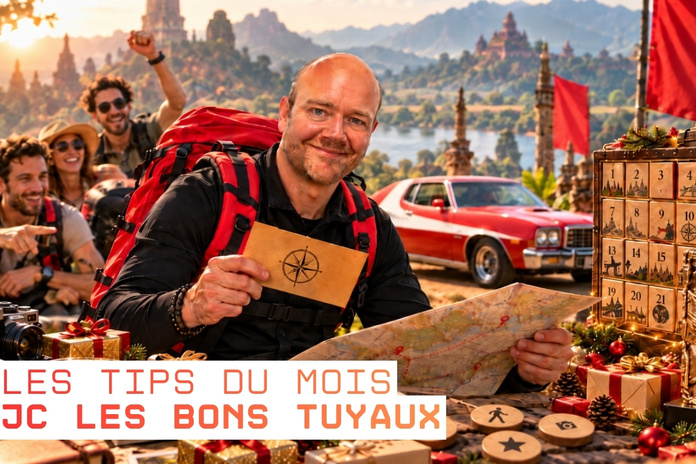
A good game is a bit like a step in Pékin Express: a clear instruction, a goal, a touch of suspense, and the desire to see it through.
Find all JC’s best tips by clicking here
A lever already used by our partners
Gamification, our suppliers and partners have been using it for a long time: destination quizzes, sales challenges, incentives, interactive training, badges, rankings, raffles, sweepstakes, Advent calendars.
If it works in B2B, why not adapt it to your community of travelers? No need for an enormous budget. A solid concept, a well-posed question, a coherent reward, and a bit of regularity can already generate a lot of engagement.
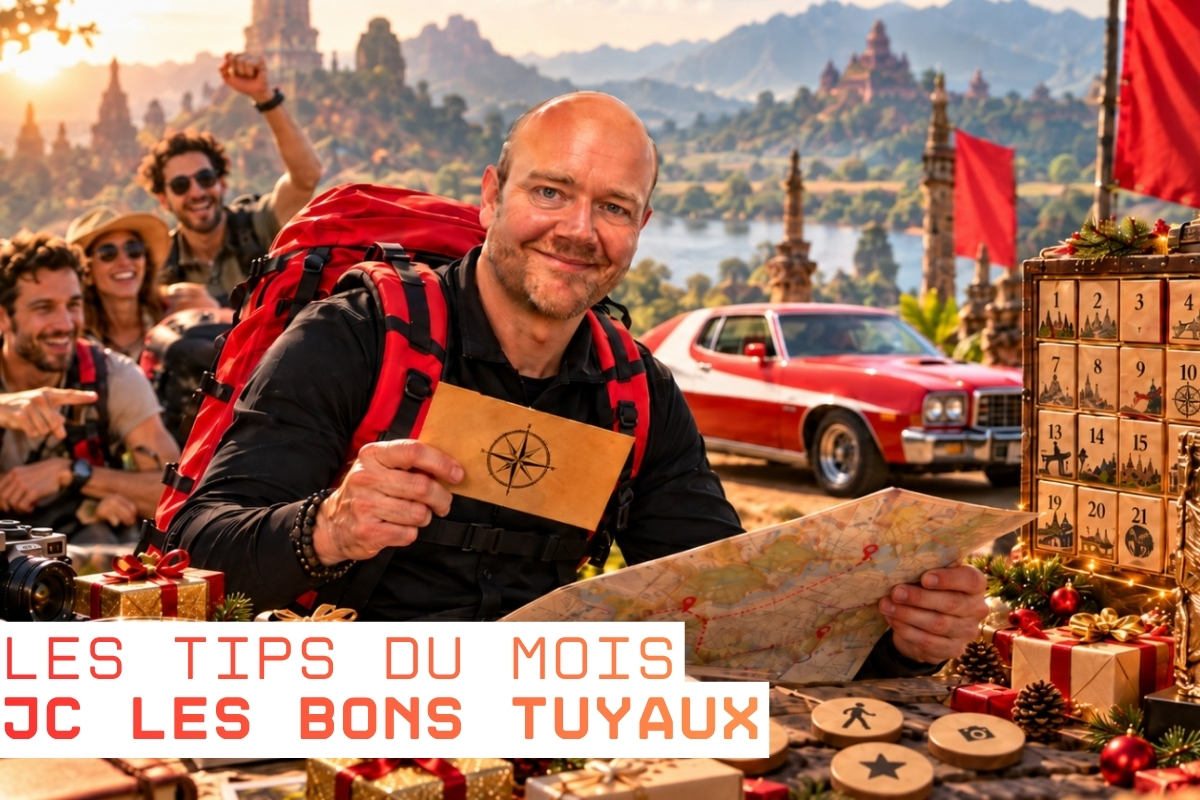
First concrete example: the Advent calendar. It’s an excellent way to animate your community during the holidays because it creates a daily appointment.
Each day you can propose a question, a challenge, a destination riddle, a travel anecdote, or a scenario. The prize doesn’t need to be huge: a scarf, a passport holder, a guide, a gift card, a baggage tag, or a small supplier prize can be enough.
What matters isn’t just the prize. It’s the ritual, the desire to return, and especially the possibility to teach without feeling like pulling out a whiteboard.
For example, you can pose a simple question:
“What are the three essential elements to legally open a travel agency?”
Your community participates. Then you explain the answer: registration, financial guarantee, professional liability insurance. In a few lines, you bring clarity to a sector where shortcuts can move very quickly.
There, you deliver useful content, but in a playful form.
Put your community in the shoes of a travel agent
Another effective idea: role-playing. You invite your travelers, for the duration of a post, to step into the role of a travel agent.
No need to craft a three-page scenario. A short prompt suffices:
“A couple wants to go away for three days in Europe with 700 € per person, including flights, hotel, and breakfast. They want an easily accessible, romantic city that’s pleasant to walk. What do you propose, and why?”
There, you trigger responses. Then you do your teaching work: you explain what is coherent, what isn’t, the traps to avoid, the importance of flight times, hotel location, the real budget, or the pace of the stay.
Result: your community participates, but they also understand your trade. They realize that a real proposal isn’t simply typing “cheap weekend in Europe” into Google.
Gamification can also involve travelers in your content and even in your own projects.
You can ask them to choose the next destination to analyze, the theme of the next post, or the destination of your next scouting trip. You present three options, they vote, and then you take them along behind the scenes: preparation, hotel choices, visits, good addresses, favorites, and cautions.
The benefit is double: you create interaction and you gather valuable information about what truly interests your community. It’s content, engagement, and a mini real-time customer study.
Most importantly, travelers no longer feel like mere bystanders of your posts. They participate in shaping them.
The real objective is to create a rendezvous
JC, whose real name is Jean-Charles Franchomme, has been active in tourism for more than 20 years.
Since 2024, he has been a commercial executives and web administrator for groups at Steam Evasion, where he leverages his dual field and digital expertise.
He is also the founder of the Facebook community “100% voyages bons plans et expertises” which gathers 3,800 travelers.
An entrepreneur at heart, he co-founded two influential Facebook groups in the sector: CDMV (Collectif de Défense des Métiers du Voyage) and Helpdesk des Pros du Tourisme, which have become essential exchange spaces for professionals.


 Published by Amelia Brille