Hotels and Taxis: The Hidden Price Women Pay for Safety When Traveling Alone

When you’re a woman, traveling alone can sometimes be pricey. More expensive than for a man. In London, BBC journalist Lorin Bozkurt recounts that she was offered two types of capsules in a Piccadilly Circus hotel, those small design spaces where a bed simply fits in. The ones reserved for an exclusively female clientele were priced at 45 pounds (about 52 euros) per night, while the others, mixed, were priced at 35 pounds (about 41 euros).

Yet no extra comfort accompanied the first offer, aside from a corridor accessible only by card and, above all, the promise of feeling safer for an extra 10 pounds. This difference illustrates what some specialists call the “avoidance tax”, akin to its marketing cousin, the “pink tax”. Female travelers do not necessarily pay more for the same trip than their male counterparts, but they often make different decisions, motivated by safety, which can end up increasing the bill.

The luxury of having peace of mind

Better-located hotels, a taxi rather than public transport, travel insurance or an extra charge for an earlier early check-in during the day… Expenses pile up. And they aren’t necessarily the same for men. Carried by the British broadcaster, a study from the Safer Tourism Foundation shows that “64 % of women avoid walking home alone at night abroad”, compared with 43 % for the opposite sex.

Nearly half of women also forgo wandering the backstreets of an unfamiliar city at night. “They don’t travel less because they are less adventurous than men. They operate in an environment where the risks are different”, explains Stephanie Boyle, director of the Safer Tourism Foundation’s She Travels Safe campaign.

Safer, therefore more expensive

For women accustomed to traveling solo, these precautions eventually become reflexes. Jen Kaarlo, who has 53 countries under her belt, tells the BBC she plans all her movements in advance. After experiencing several troubling incidents, including being drugged without her knowledge in a bar in Paris, the young woman avoids “any risky situation”. In Panama, she even preferred to pay nearly $200 extra (about €173) to ensure she wouldn’t have to share her sleeping arrangements with strangers during a trip to the San Blas Islands.

Jodie Hughes, who has been traveling alone since the age of 19, makes the same point. She says she used to favor youth hostels to save money, but now chooses other options because a women-only dorm can be more expensive than a mixed dorm. “I’d rather travel less often, but when I travel, I want to be safer”, she says. At Generator Hostels, whose Bruges property has been singled out, it is explained that women’s rooms are “in high demand” and that their prices reflect that demand.

“Safety should not be a competitive element. It shouldn’t be something that lets companies think they can charge more because they are safer”, replies Stephanie Boyle. Beyond the price of rooms or transport, these precautions also carry a less visible cost. They force travelers to plan more, sometimes give up going out, or choose a more expensive option rather than a spontaneous one. The question is therefore no longer only whether one can afford an extra expense, but whether one can afford not to spend it. “The mental load, I think, is the heaviest of all”, confesses Jen Kaarlo.
River Port Operations Manager: The Hidden Job That Makes All the Difference


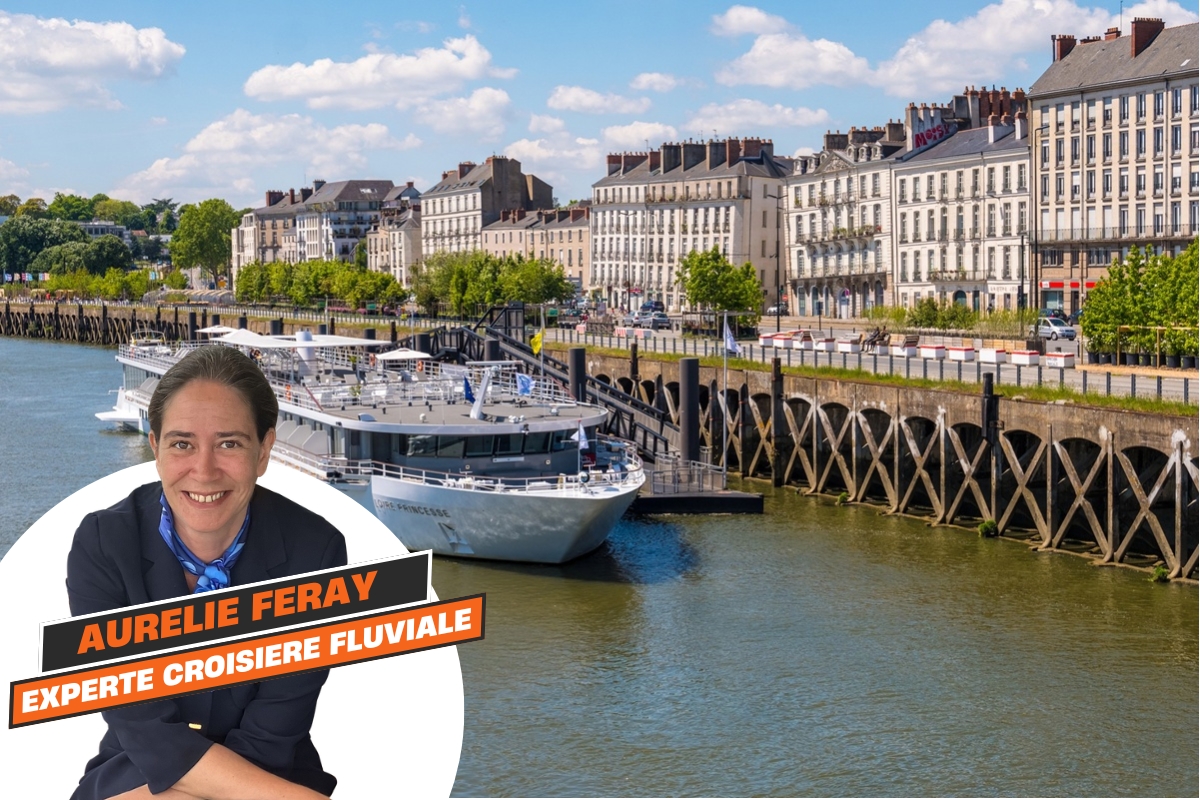
Un responsable d'escale n'est pas là pour accueillir un bateau, il est là pour préparer son arrivée - DepositPhotos.com, kateafter

CroisiEurope


I didn’t wear the stripes, but I was in charge of my destination. For nearly twenty years, that sentence summed up my daily life as a port-of-call manager.

Over the seasons, some captains even greeted me with a smile: “The Pitbull of Caudebec has arrived!”

A nickname given with much affection, because they knew that, if I could help them, I would always do so. But they also knew that when it was time to remind a safety rule, enforce a procedure or settle a delicate situation, I would not yield.

At the time, this sometimes led to some lively discussions. Today, when I meet some of these captains, they tell me again about those little frictions, laughing. It just shows that they mostly gave way to a genuine relationship of trust.

I wasn’t a captain. I wore no insignia. Yet I was responsible for everything that awaited the ship on land. And that is perhaps the most beautiful definition of the job of a port-of-call manager.


A profession that goes unnoticed… until it does not exist

Contrary to common belief, a port-of-call manager isn’t there to greet a ship. They are there to prepare its arrival.

Well before the vessel docks, they coordinate local stakeholders, anticipate difficulties, share useful information and ensure that everyone has the elements they need to work calmly.

The captain is responsible for his ship, his crew, his passengers and on-board safety.

The port-of-call manager is responsible for onshore reception conditions.

Two different responsibilities, one common goal: to offer a smooth, safe and enjoyable call. And above all, to entice companies to come back!


Anticipate rather than repair

We often imagine that our job consists of solving problems. In reality, our greatest achievement is precisely preventing them.

I recall the commissioning of a new pontoon. The first vessel was due to arrive around four in the morning. I was on the quay. The Seine pilot, surprised to see me at that hour, said: “What are you doing here?” I simply replied: “It’s the first use of this pontoon. I want to see how the maneuver and the docking unfold.”

Once the boat was moored, I felt reassured. I knew I could tell the following captains that everything worked perfectly.

This scene perfectly sums up this profession: being present before a problem arises, checking before reassuring, observing before asserting.

A demonstration, works, a change in circulation, a power outlet out of service or important information for the crews… nothing should be discovered at the last minute.

And when an unforeseen event occurs despite everything, of course we must find a solution, but above all understand why it happened so it does not recur.

A procedure to clarify, information to convey earlier, an organization to adjust: every difficulty should help improve the next call.


The bridge between the shore and the sea

The port-of-call manager is above all a facilitator.

They understand the constraints of captains and crews, but also those of local authorities, tourism offices, merchants, sightseeing sites, technical services, quay managers and security services.

They must know how to speak all languages: the language of the shore, that of elected officials, that of tourism, and that of economic partners.

Their role is to circulate information, foster understanding and build a relationship of trust, because a successful call does not rest solely on a quay or infrastructures: it rests above all on the women and men who make it possible.


A deeply human adventure

For nearly twenty years, the captains taught me as much as I offered them. They knew their vessel inside out; I knew my territory inside out.

As the seasons passed, a genuine relationship of trust was built.

Some captains would simply call me on arrival: “Hello Aurélie, we’re arriving soon!”

Of course, we spoke about the call. But I also had the chance to share with them the major moments of their lives. I was invited to weddings, to baptisms, I shared their joys as well as their worries. I even received a photo of a newborn before the company was informed.

Sometimes, a simple glance or a simple call was enough to understand that we needed to adjust an organization or to convey information before it became a problem.

This trust, built call after call, is surely the most beautiful reward of this job. Because beyond the quays, the procedures and the schedules, there are above all women and men who pursue the same objective.


A responsibility in service of an entire destination

The port-of-call manager is probably one of the few professionals who works for cruise lines, crews, local authorities, tourism offices, merchants, sightseeing sites and, of course, passengers, all at once.

Their role is to bring together all these interests toward a common goal: a successful call.

When crews are well welcomed, they work in better conditions.

When local actors are informed and coordinated, visitors fully enjoy the destination.

When companies find reliable interlocutors, they naturally want to return.

Cruise passengers, for their part, generally will never meet the port-of-call manager. And that is rather good news. Because when a call is perfectly prepared, everyone can simply enjoy their day without imagining all that happened behind the scenes.

Passengers will carry memories of a wonderful discovery; companies will remember a destination where it is easy to work; and crews will run into, call after call, familiar faces.

Because at heart, a successful call is not only the one where no one noticed any difficulties. It is also the one where you want to return, as much for the destination as for the women and men who bring it to life.

Read also: Our special dossier dedicated to river cruising


About Aurélie Feray


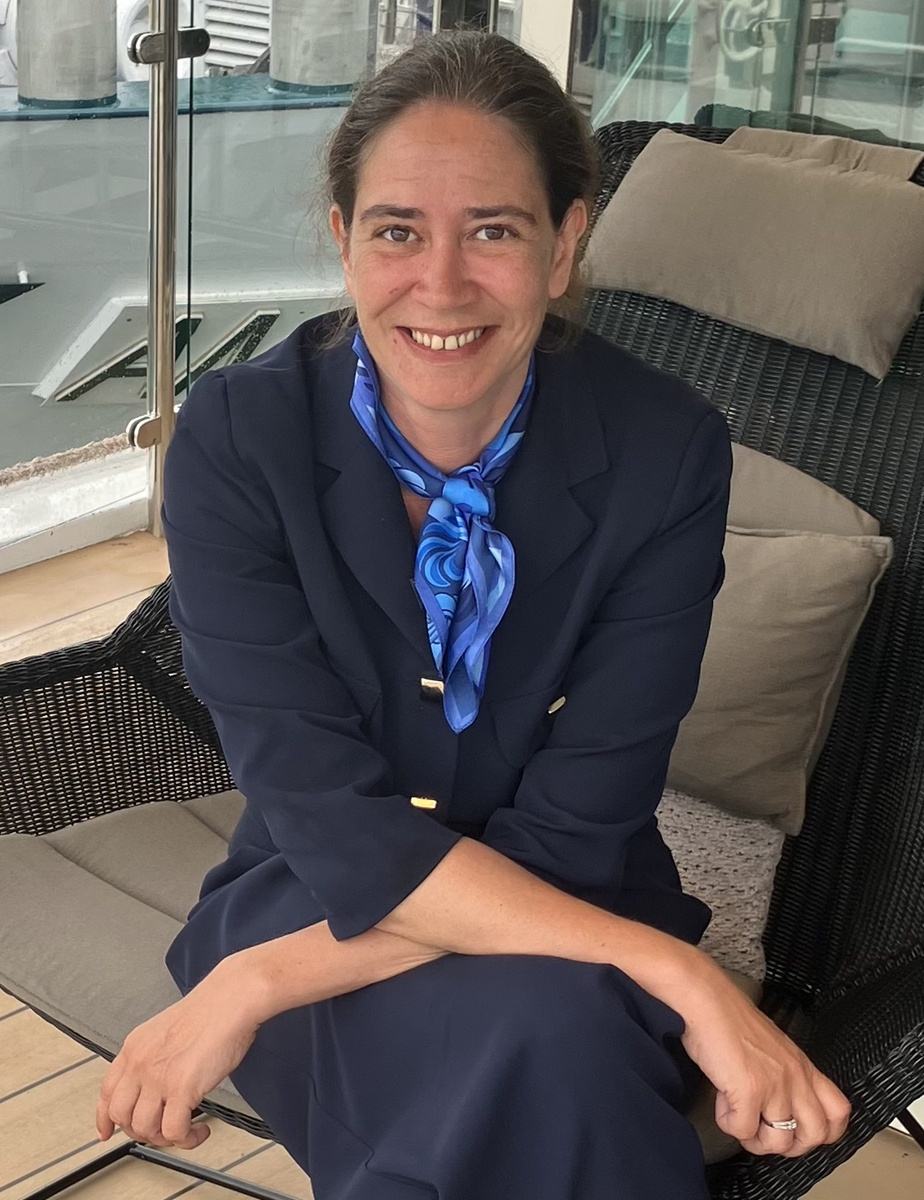
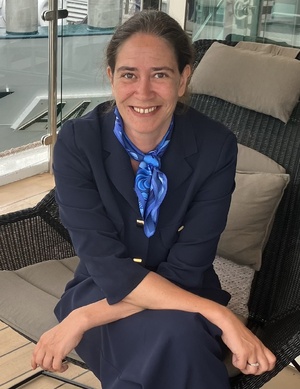
Aurélie Feray - Photo : AF Fluvial Conseil

Founder of’AF Fluvial Conseil, Aurélie Feray supports territories and actors in river tourism on the challenges of port calls, passenger experience and tourism development.

Through her chroniques, she shares a ground-level view of the backstage of river tourism, the functioning of port calls and the links between boats, crews, destinations and travelers.

Contact : [email protected]

Motion Sickness: This Hidden iPhone Feature Could Change Your Routes

Dizziness, nausea and vomiting, sweating, excessive salivation, headaches — motion sickness can turn a vacation road trip into a real nightmare. More common in children, though it also affects some adults quite severely, motion sickness can strike in a car, on a boat (the famous seasickness), but also on a plane and, though rarer, on a train or even in the subway.

Motion sickness is thought to stem from an inadequate brain response to two conflicting cues: the eyes perceive a stationary environment, while the vestibular system, located in the inner ear, detects the vehicle’s movements. A range of techniques, more or less effective, can help lessen the symptoms. But a solution might lie deep within your iPhone.

Make the body believe it is in motion

Homeopathy, acupressure bracelets, antihistamine medications, choosing the right seat, or simply keeping your gaze fixed on the horizon — all of these tips can help limit motion sickness, provided you avoid reading or watching a moving screen. And yet, as the BBC details, the lead may lie in the little-known functionality of your smartphone that could help you better cope with travel.

Called “Vehicle Motion Indicators”, it displays animated dots along the edges of the screen that move in sync with the vehicle’s movements in which you are traveling. All of this, without interfering with using the phone.

“If you can send signals to your body about how you move through space, this can alleviate motion sickness,” explains to the BBC Kristen Steenerson, a professor at Stanford University in the United States. The vestibular system expert herself uses this feature, praising its effectiveness. “Everyone thinks there’s a problem with my screen, but these dots are really brilliant,” she says enthusiastically.

How to enable this feature on your smartphone?

To test this option, go to the Settings on your iPhone, then choose Accessibility > Movement > Vehicle Motion Indicators. You can opt to keep it enabled permanently or in Automatic mode. In this case, small animated dots appear along the edges of the screen when the phone detects that you are in motion, and disappear when the movement stops. If this feature is currently only available on iPhone, it is possible to download an app that offers a similar result on Android phones.

The BBC journalist collected numerous very positive testimonials, although all pointed to the same paradox: this feature is only useful when you have motion sickness because you’re looking at your phone! Nevertheless, nothing prevents you from turning it on just to try to relieve your motion sickness, even if you hadn’t planned to use your phone during the trip. Or you can also put your phone down… and look at the horizon!

Sioule River: Between Auvergne Volcanoes and Hidden Gorges

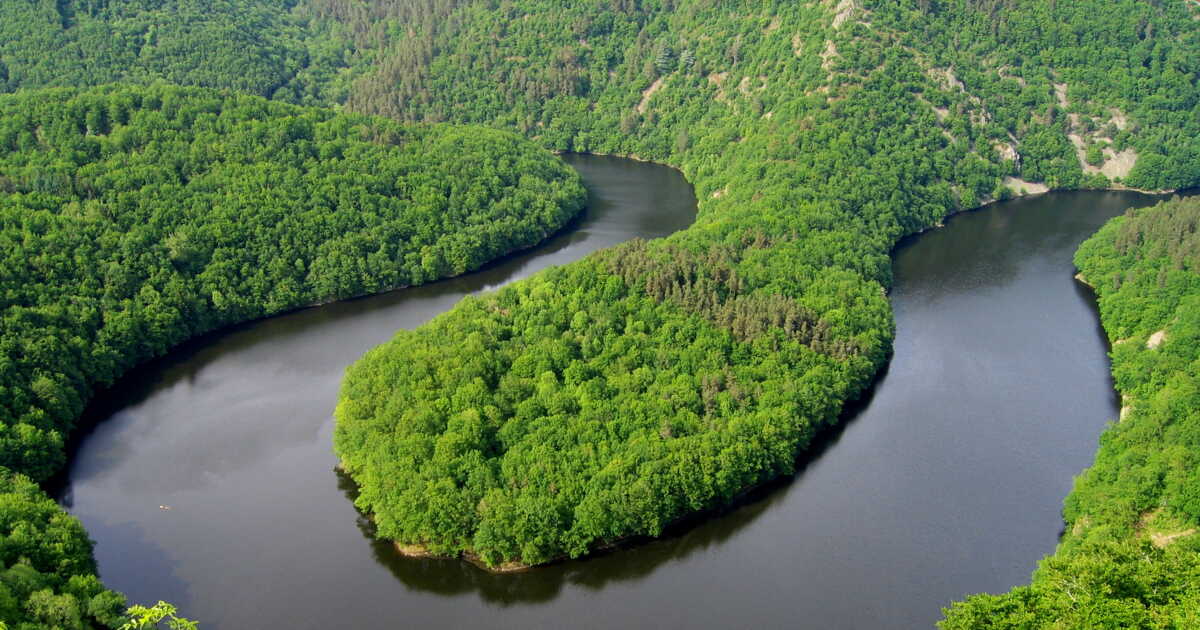
Up there, the Sioule is still little more than a slender thread of clear water, bending gently between cow-dotted grasses and the blossoms of spring. In a high-altitude meadow at the foot of the Dore mountains, not far from Servières lake, in austere landscapes dotted with beech forests and moors, one can easily make a path to its source, at 1100 meters above sea level. Or rather its sources, for it is several tiny streams, born of melting snow and precipitation, that eventually join to form this brook with its divine splashing, a place where it feels good to splash your face for a refreshment.

Enchanting landscapes