Airbnb: French Prefer English Channel Coasts and Mountains This Summer


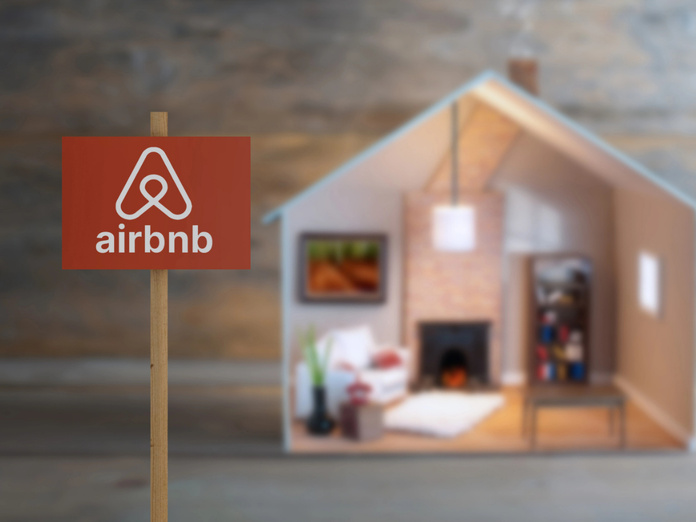
Villers-sur-Mer arrive en tête des destinations françaises enregistrant les plus fortes progressions de recherches sur Airbnb cet été.  Depositphotos.com/nupix

MSC Croisières


The French have prioritized nearby destinations this summer.

According to Airbnb, searches were notably concentrated on the coastal towns of the Manche, with five destinations among those showing the strongest increases: Villers-sur-Mer (+45 %), Cherbourg-en-Cotentin (+34 %), Saint-Valery-sur-Somme (+31 %), Le Crotoy (+30 %) and Le Tréport (+25 %).


The Northern Coastline Appeals

The ranking is led by Villers-sur-Mer, ahead of Collioure (+39 %) and Saint-Hilaire-de-Riez (+36 %). Benodet (+35 %) and Cherbourg-en-Cotentin round out the top of the table, while Perros-Guirec (+29 %) and Noirmoutier-en-l’Île (+26 %) also feature among the most searched destinations.

This rise in northern coastal destinations comes during a summer marked by several heatwaves. Airbnb highlights the appeal of these territories for their natural spaces and a climate perceived as milder.


The Mountains Continue to Grow in Popularity

Rural areas account for 64% of bookings made in France on Airbnb. The mountain region is also gaining traction: the volume of searches for Le Bourg-d’Oisans has notably more than doubled. Huez, Les Gets, Chambon-sur-Lac and Samoëns are also among the mountain destinations favored by users.

Another takeaway: the French prefer relatively close destinations, with stays averaging less than 350 km from home. For Clément Eulry, director of Airbnb France, this shift reflects a desire to explore a broader palette of destinations beyond the main tourist hubs.


What If the Real Barrier to Recruiting French Cabin Crew Was… English?


Recrutement PNC : beaucoup de candidats français maîtrisent les règles de la langue anglaise mais bloquent lorsqu'il faut improviser une réponse - Depositphotos.com, garagestock

IFTM prenez RDV avec TourMaG


Ten years ago, a B2 level in English sufficed to join a French airline.


Candidates would obtain their certification, tick the box, and move on to the next step.

Today, the rules have changed.

The official criteria remain the same, but recruiters now verify what a certificate does not always measure: the ability to hold a fluent conversation.

This shift comes as France shows a marked lag in spoken expression.

According to the EF English Proficiency Index 2025, the French rank 32nd out of 35 European countries for spoken English. A heavy handicap in a sector where interviews are increasingly conducted in English.


French Companies Raise Their Requirements

En 2022, Air France demandait un niveau B1 avec listening (compréhension orale) et reading (lecture) uniquement. Le speaking (expression orale) n’était pas encore exigé.

 

En 2024, les critères ont évolué : la compagnie demande désormais soit un a minimum B2 on the LILATE, soit un Linguaskill score de B2 dans chacun des trois skills (compétences).
Pour l’anecdote, la majorité des candidats retenus chez Air France et HOP! en 2026 et accompagnés par l’organisme de formation SkySuccess affichaient un niveau C1 au LILATE.

Le TOEIC, dans sa version la plus courante, ne teste que le listening et le reading, pas l’expression orale. Une version avec les 4 skills existe et est acceptée chez French Bee.

Le TOEIC classique n’est d’ailleurs plus accepté par le groupe Air France. Linguaskill et LILATE évaluent les 4 compétences, et les compagnies exigent cette option.

French Bee, qui a récemment ouvert une campagne de recrutement, accepte le Linguaskill B2 ou le TOEIC B2, tous deux avec les 4 skills. Pour le LILATE, le seuil de recevabilité est fixé à C1.

Lors du salon SFMA, plusieurs compagnies françaises et internationales expliquaient que les candidats titulaires d’un C1 étaient valorisés. Certaines testaient même l’anglais directement sur leur stand.

Lire aussi : TOEIC, Linguaskill, LILATE : quelle certification d’anglais choisir pour devenir PNC ?


32nd out of 35 in Europe: the French handicap

The EF English Proficiency Index 2025 measures, for the first time, the four language skills separately. The French results are unequivocal.

In reading comprehension, France scores 555 points. In speaking, it drops to 456 points. Close to a 100-point gap. This gap places France at the 32nd position out of 35 European countries for spoken English. Only Moldova, Turkey, and Italy perform worse.

A Cambridge Assessment English study, echoed by Le Figaro, confirms this finding: the average level of French people in English is around B1. Yet airlines require a minimum B2. Bridging this gap is real.

The explanation is well known. For decades, the French school system prioritized grammar and reading at the expense of speaking.

Many candidates master the rules of the language but freeze when they have to improvise an answer.


Find all articles by Rémi Duchange by clicking here.


How do candidates close the gap?


A challenge for the sector

Against the rankings, the French paradox becomes clear.


French applicants often possess solid theoretical knowledge. But the skill where France ranks 32nd in Europe is precisely the one recruiters prioritize in evaluations.


This raises a question for the sector. With more than 25,000 annual recruitments according to GIFAS and 678 000 cabin crew members to recruit worldwide by 2034 according to the CAE 2025 study, the level of spoken English among French candidates remains a challenge to overcome.


Who is Rémi Duchange?


Rémi Duchange - Photo : SkySuccess

Rémi Duchange is the cofounder of SkySuccess, a Qualiopi-certified training organization dedicated to future cabin crew, with nearly 15 years of experience in aviation, including roles as a PNC, cabin chief, and instructor within an international airline.


With his team, he offers a human, bilingual (French/English) and individualized approach: preparation for the LILATE and Linguaskill certifications, personalized recruitment coaching up to hire.


For four years, SkySuccess has helped more than 1,000 students join an airline. The organization supports all profiles, with or without a CCA, beginners or seasoned, thanks to a tailor-made method.


Backed by more than 50,000 followers on Instagram and LinkedIn, as well as its newsletter, Rémi daily shares on his career hub job openings for PNC and ramp agents, as well as tips for succeeding in aviation recruiting.

Evaluating hotel name formatting

I think we should make the title more natural, like "Aix-en-Provence: Grand Hôtel Roi René Unveils its Renovation" or perhaps "Aix-en-Provence: Grand Roi René Hotel Reveals its Renovation." However, "Grand Hôtel Roi René" is the formal name of the hotel, and in English, I’m considering how to best render it. For SEO purposes, using "Grand Hotel Roi Rene" without accents might be better. Ultimately, I’m leaning towards keeping it elegant while thinking about its marketing appeal.Considering hotel title options

I’m thinking about the title "Aix-en-Provence: Grand Hotel Roi Rene Unveils Its Renovation." Maybe it’s worth adding "in Aix-en-Provence," but since that’s already the location phrase, it might sound repetitive. It seems best to propose the title as "Aix-en-Provence: Grand Hôtel Roi René Unveils Its Renovation," while pondering whether to drop the accent for SEO purposes. However, keeping "Roi René" as is helps preserve the hotel’s proper name, even if it can confuse search engines. I’ll stick with the hotel’s name in English to ensure clarity.Finalizing the hotel title

I think we should translate the title correctly: "Aix-en-Provence: Grand Hôtel Roi René Unveils Its Renovation." In English, "Grand Hôtel" is "Grand Hotel" without the accent. So, "le Grand Hôtel Roi René" becomes "the Grand Hotel Roi Rene." "Dévoile sa rénovation" translates to "unveils its renovation." Putting it all together, I have: "Aix-en-Provence: the Grand Hotel Roi Rene Unveils Its Renovation." To keep it SEO-friendly, I’ll use title case: "Aix-en-Provence: Grand Hotel Roi Rene Unveils Its Renovation." That’s around 68 characters, which is just right!


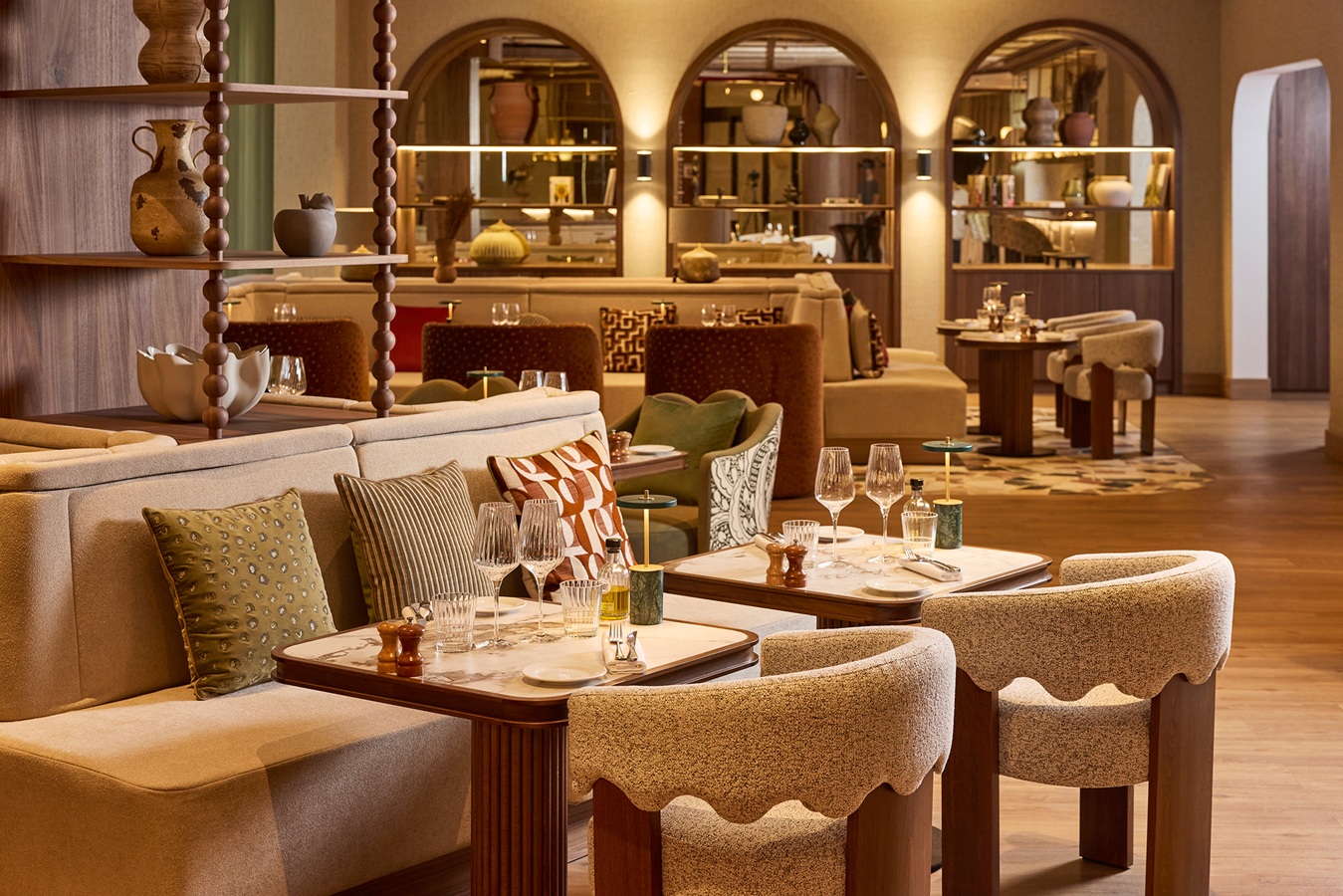
Le Grand Hôtel Roi René réouvre à Aix-en-Provence.   Crédit photo : Grand Hôtel Roi René MGallery

IFTM


The Grand Hôtel Roi René reopened in Aix-en-Provence after a year of renovations, in late April 2026.

The hotel is pursuing a new identity, blending noble materials, craftsmanship, and contemporary design.


The renovation was entrusted to interior designer Fabien Roque, who completely reworked the lobby, the restaurant, the bar, and the reception areas.

The property notably highlights a world inspired by Provençal colors, with terracotta tones, olive green and beige, paired with solid wood, marble, leather and velvet.

The hotel also hosts several artistic creations, including a ceramic screen signed by Marie Levêque, installed in the public areas.

The exteriors have also been redesigned around a spirit of “French Riviera“, particularly around the pool and the relaxation spaces.


Grand Hôtel Roi René: 131 renovated rooms and a new dining offer


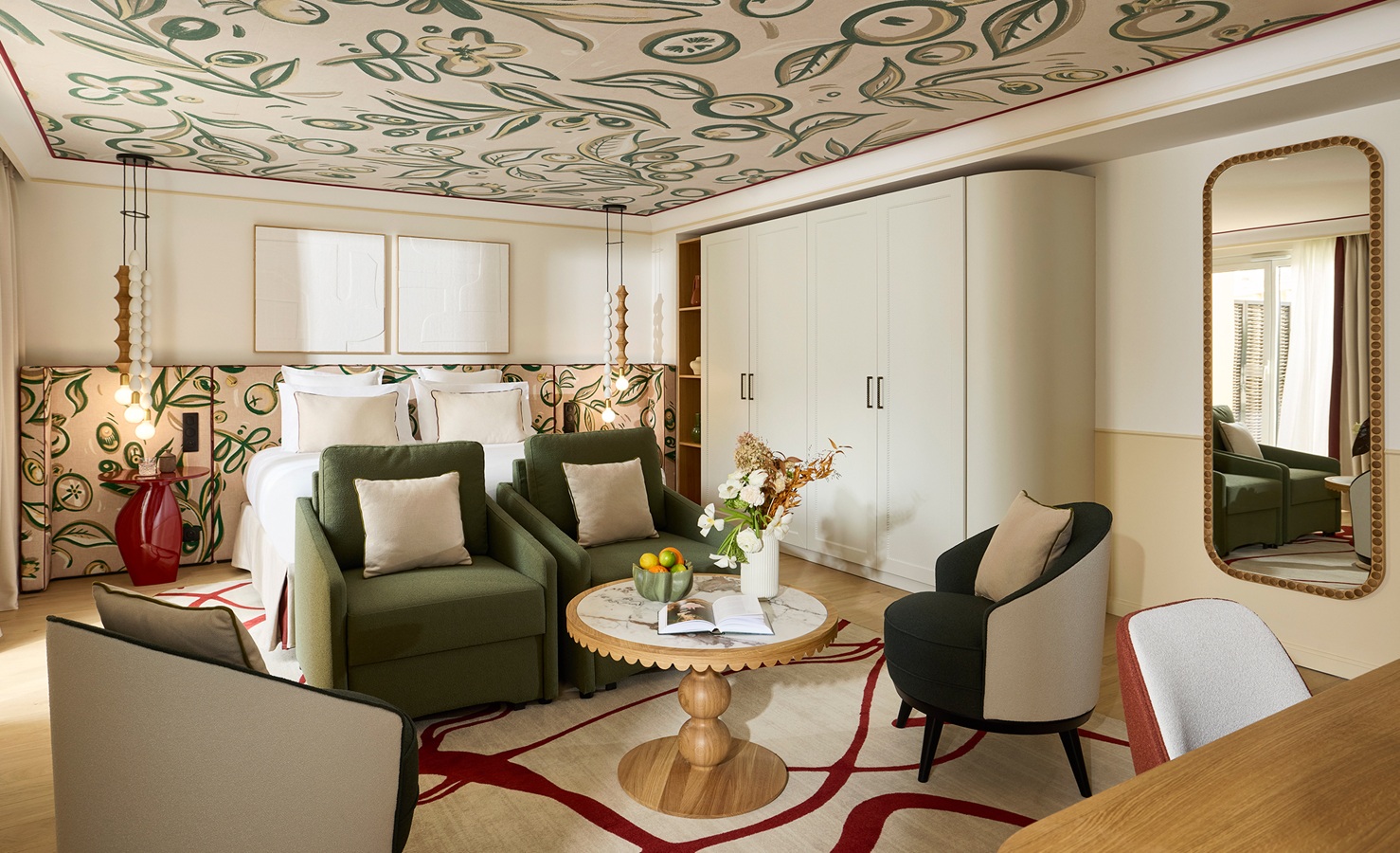
Grand Hôtel Roi René : 131 chambres rénovées et une nouvelle offre de restauration - Crédit photo : Grand Hôtel Roi René MGallery

The establishment has also completely renovated its 131 rooms, including six suites and 17 rooms with terraces.

The rooms now emphasize brighter spaces, with a decor inspired by contemporary Provence and materials such as wood, stone, and linen. Some suites feature furnished terraces.

The project also includes the launch of the AÏGA restaurant, the hotel’s new Mediterranean dining concept. Open for lunch and dinner, the restaurant offers cuisine inspired by Provençal flavors and the Mediterranean basin, with mezzés, shareable dishes, grilled fish and reinvented specialties.

To read: Four places to see near Aix-en-Provence

The Aix calisson, a historic symbol of the city, also plays an important role in the culinary experience offered by the hotel.

Reachable in under three hours from Paris by train, the property also features a restaurant, a bar, an outdoor terrace, a 14-meter pool, and five meeting rooms.