Why Do Some Canadians Hide Their Trips to the United States?

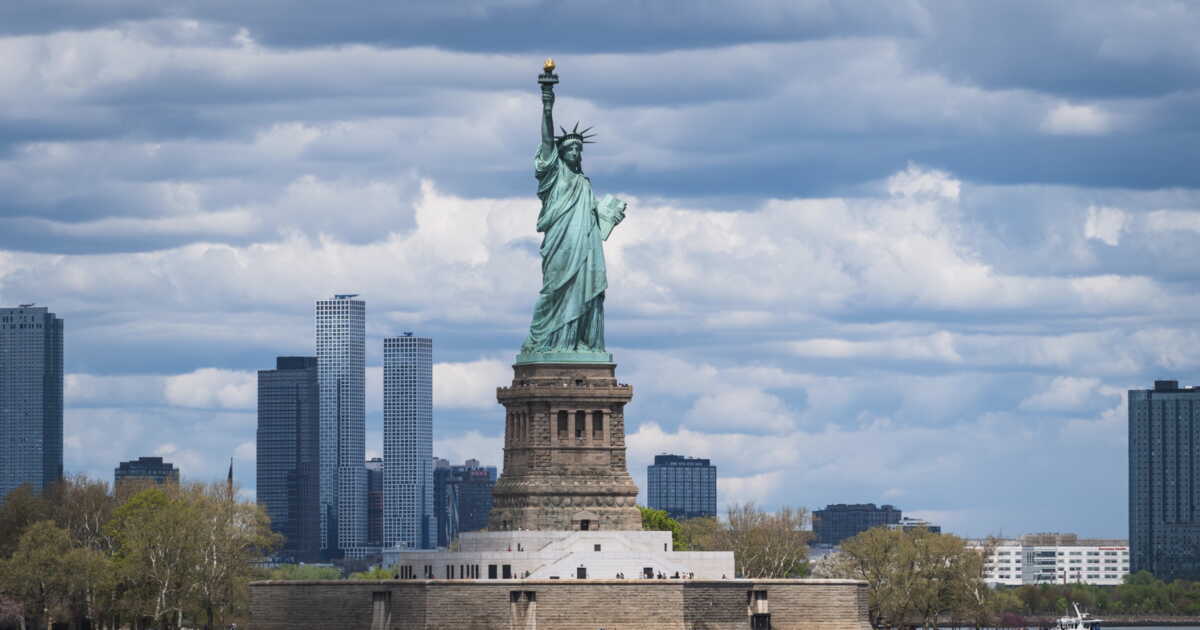
For decades, crossing the U.S. border to attend a game, reconnect with loved ones, or enjoy a family vacation was second nature for many Canadians. But political tensions between Ottawa and Washington have shifted the landscape. Some continue to travel to the United States… but avoid telling friends or posting photos on social media. Between a fondness for their routines, political disagreements, and fear of judgment, these travelers now go about it openly… but not on the Internet.

American Vacations Have Become Difficult to Embrace Publicly

As CNN reports, Stefanie Ricchio knows New York well. This Toronto-based accountant has been taking her children there since they were born. Every year in April she marks her daughter’s birthday by attending a Yankees game at Yankee Stadium. A family tradition she did not want to give up in 2026, despite the political climate between the two countries.

This time, however, she chose to keep the trip to herself. “I told myself that it’s not really something I want to publicly display, because I feel like I shouldn’t be spending my money on it”, she tells American media. She speaks of a tug-of-war between national pride and the memories she hopes to continue building with her daughter.

This unease sits within a broader movement. Since March 2025, the tariffs imposed by Donald Trump and his remarks about making Canada the 51st American state have nourished a movement of rejection. The boycott of American products has been accompanied by a questioning of travel to the United States.

The numbers bear witness to this shift. In 2024, Canadians had undertaken 39 million round trips to their neighbor. Travel then declined for 15 consecutive months year over year, through April 2026. According to a study by Environics Research published as part of Canada Tourism Outlook 2026, six in ten Canadians now avoid the United States, or consider traveling there with reservations. Specifically, 46% report actively avoiding that destination and 15% say they are torn.

Cross-border passages, however, began creeping up slowly again during the summer of 2026. They remained, nonetheless, 25.6% below those of the same period in 2024, according to Statistics Canada. Sporting events, concerts, and theme parks continue to draw visitors. But as Canadians begin to return to their neighbor in small steps, some still prefer not to publish anything about their escapades. The fear of criticism weighs on everyday conversations: Stefanie Ricchio fears that loved ones will ask why she does not simply attend a Yankees game in Toronto.

Between Personal Attachments and Border Wariness

For Kemi Wells-Conrad, founder of a Vancouver-based luxury travel agency, clients fall into two camps. Some cancel their American trips, and even avoid layovers at Canadian airports. Others keep their plans, especially when they travel with children or own a residence in the United States.

Hawaii remains a favored destination for its family-friendly resort complexes. According to the agency founder, some travelers even differentiate the archipelago from the rest of the United States, due in part to its distinctive culture. Yet, despite this, “I’ve clearly had people tell me, ‘Oh, I won’t tell my friends I’m going there’, or ‘I won’t post on social media that I’m going there’,

reports Kemi Wells-Conrad.

Barry Choi, a Toronto personal-finance and rewards programs expert, has taken a different stance. After initially keeping his trips low-profile, he began sharing them again on Instagram, where he boasts more than 12,000 followers. A decision that drew criticisms. Yet he defends the option to keep traveling, without endorsing the president’s choices.

“The reality is that I’m not going to the United States to visit Donald Trump. I’m going to see friends, family, and things we don’t have here in Canada,” he explains. During a stay in Florida, several locals even apologized to him for the president’s behavior, claiming they did not vote for him. A reaction that surprised him and reminded him that political tensions also affect Americans.

Donald Trump, a Real Brake for Some Travelers

Other travelers remain less convinced. Caleigh, a Toronto marketing manager who prefers to stay anonymous, recently crossed the border to attend a Hayley Williams concert in northern New York state. She hesitated until the last moment, particularly after new remarks by Donald Trump and the announcement of additional tariffs. She also feared that border controls would tighten.

Ultimately she published nothing on social media during the trip. Her phone was not searched at the entry to the United States, but her car was subjected to an inspection. “The mood has completely changed. The level of scrutiny has completely changed”, she says. As a child, she used to travel to this region with her family. This time, the experience felt radically different. She no longer plans to return to the United States. Even without talking about it publicly, the trip no longer seems worth it.

Guadeloupe–United States: Marseille-Provence Airport to Boost Long-Haul Direct Flights


Workshop de l'aéroport Marseille-Provence, le 8 octobre dernier - Photo : NP

PONANT


There was a crowd in the Jardins Sainte-Victoire restaurant, inside Terminal 1 of Marseille-Provence Airport, on October 8 last.

The reason? The traditional workshop held twice a year, ahead of the summer and winter seasons.

“At every edition, more than 200 participants, airlines, travel agents, tour operators, come to honor us with their presence,” emphasized Julien Boullay, the airport’s commercial, marketing and services director, who noted that these gatherings constitute an important appointment for professionals.

The airport, which welcomed 11.3 million passengers in 2025, aims in particular to continue developing the “long-haul direct routes from Marseille-Provence”, he explained.


Corsair and United Airlines strengthen the network

The Guadeloupe was the destination highlighted at this edition, with the presence of the Guadeloupe Islands Tourism Committee and Corsair.

Objective: to showcase the archipelago to Provençal tourism professionals.

“We are here to highlight the archipelagic nature of the six islands”, summarized by Patrick Gaulin, in charge of destination promotion at the Guadeloupe Islands Tourism Committee.

For reference, Corsair will open a direct link between Marseille and Pointe-à-Pitre starting December 15, 2026, with flights scheduled until the end of April 2027.

For Mouloud Hammar, Corsair’s regional commercial manager, this opening fits into a strategy to grow the regional network, alongside the routes to Réunion. Corsair has also launched a Toulouse–Pointe-à-Pitre connection.

The airport also highlighted the launch of the Marseille–Strasbourg route by Twin Jet starting November 3, as well as Transavia’s new destinations to Bari and Tirana for summer 2027, at a cadence of two flights per week.

Another major novelty for the platform: United Airlines will inaugurate a daily direct link between Marseille and New York–Newark starting June 5, 2027. Tickets are already on sale. The route will be operated with an Airbus A321XLR, with a scheduled flight time of 9h15.

For the moment, among the travel advisors present at the workshop whom we could question, this future connection has not yet generated bookings.

Géraldine Guillot, head of the Aix-en-Provence agency Au Temps du Voyage, notes even a slump in interest for the United States, linked in particular to the political climate and the cost of living there, which also weighs on tourism activities.

New York nonetheless remains in demand, with trips more often being considered at the last minute.


Travel agencies between expectations and caution

Among the hot topics of this evening were also Volotea’s program reductions.

According to OAG data, the airline decreased its planned schedule in France for October 2026 by 27.8% compared with what was initially published.

Amandine Pesce of the Eurafrique agency (Aix-en-Provence) notes “a limited, but real, impact on her clients,” while Sylvie Basso of Ailleurs Voyage in Trets explains “avoid booking with the airline when another option is available.”

As for Géraldine Guillot (Au Temps du Voyage), she takes a similar stance, while underscoring the limits of this strategy: on some destinations, like Venice and its Marco Polo airport, other carriers do not necessarily offer an equivalent service.

Between new routes and adapting to the vagaries of air transport, this autumn workshop thus brought airline forecasts closer to the distributors’ practical concerns.

This Unique African Culture Has Survived in the United States for Centuries

A language born of slavery, spoken nowhere else in the world, still echoes along the southeastern coast of the United States. From North Carolina to Florida, the Gullah Geechee communities have preserved a culture born among the descendants of people enslaved in the English colonies of North America. Their language, their cuisine, their music, and their traditions have carried forward many legacies from West and Central Africa. Today, this distinctive culture continues to be transmitted in the region’s islands and coastal communities, as the BBC notes.

A culture shaped by the isolation of the islands

The roots of the Gullah Geechee culture trace back to the 17th and 18th centuries, when Africans were relocated to the English colonies of North America and enslaved. In the coastal regions of South Carolina and Georgia, plantation owners specifically sought people from West and Central Africa for their agricultural knowledge, essential to cultivating rice, indigo, and Sea Islands cotton.

The harshness of slavery did not prevent certain African traditions from surviving. The geographic isolation of the islands and wetland areas even helped in their transmission and evolution. West African culinary techniques met locally available ingredients, giving rise to specialties such as red rice—a dish based on rice, tomatoes, spices, smoked pork, and sausage. The basket-weaving techniques brought from Africa were also adapted to the plants found in the Lowcountry.

This cultural continuity is also reflected in the language. Gullah developed as a means of communication among African populations speaking different languages and the English-speaking colonists. While its vocabulary rests largely on colonial English, certain words come from African languages. Oona, meaning “you all,” or nyam, “to eat,” are two examples.

Even the origin of the Gullah Geechee name remains uncertain. “Gullah could derive from Angola or from the Gola people of West Africa. Geechee could come from the Kissi people or from Geechee, linked to the Ogeechee River in Georgia”, explained Luana Graves Sellars, a cultural preservation expert and founder of the Lowcountry Gullah organization.

The Civil War then marked a turning point. After Union forces captured Port Royal Sound and Hilton Head Island in 1861, hundreds of people who had escaped slavery sought shelter behind the Northern lines. In 1862, the town of Mitchelville was founded on Hilton Head Island. It became the first self-governed town of freed Black people in the United States. Gradually abandoned after the war, it was largely deserted by the early 1880s before being ravaged by the Sea Islands hurricane in 1893.

A living memory, yet under threat

Two centuries after the birth of this culture, about a million people in the United States claim Gullah Geechee ancestry. Their heritage still manifests in daily practices, especially during gatherings and ceremonies.

Among its most iconic traditions is the “ring shout.” Participants form a circle, move counterclockwise, stomp their feet, clap their hands, and sing in call-and-response. For Luana Graves Sellars, this practice carries a particular force: “A ring shout has this effect. There are festive ring shouts. Religious ring shouts, ring shouts reserved for adults. But they seize your attention and almost make you want to participate”, she tells the BBC.

The language itself remains a central expression of this heritage. “To understand the Gullah Geechee language is to understand that everything we do is a form of expression”, said Sellars. Cooking also plays a central role. Rice and peas, shrimp with cornmeal mush, purloo or gumbo, continue to be staples in homes and restaurants across the region.

The Gullah Geechee legacy has enjoyed official recognition since 2006. The Gullah Geechee Cultural Heritage Corridor spans roughly 804 kilometers, from North Carolina to the southern tip of Florida. On October 12, 2026, it will celebrate the 20th anniversary of its designation as a National Heritage Area by the United States Congress.

Yet this recognition does not shield all sites tied to this history. The loss of ancestral lands, mounting real estate pressure, and climate change threaten several communities. “The cemeteries where our founders lie are under threat, the land passages that once connected the islands are no longer usable”, warns the expert.

In Hilton Head, Town Council member Alex Brown, himself from a fifth-generation Gullah family, summarizes the challenge of preserving memory: “Our people form a significant part of American history. The history of American democracy cannot be told in full without mentioning Gullah sites like Mitchelville.” A history long marginalized, but whose language, traditions, and places continue today to tell of the African presence in the southeastern United States.

Rail Baltica: Baltic States Soon Within Reach by Train

Among the canola fields, about a hundred freight wagons linger in the mild air of May. Spanning several tracks, these trains form convoys over 500 meters long, packed with fertilizers, fuels, and manufactured goods. Among them, a few passenger trains push through and stop here as well, at Mockava.

A 1,200-kilometer Route

This hamlet of 50 inhabitants in southern Lithuania houses the Baltic region’s first station for trains arriving from Poland, eight kilometers away. We are in the Suwałki Corridor, a strategic border zone between Lithuania and Poland: it is the sole land access that connects the Baltic states to the European Union. To the west lies Russia’s Kaliningrad exclave; to the east, Belarus under Alexander Lukashenko, close to Vladimir Putin. Suddenly, passenger trains disgorge travelers in astonishment — the Mockava stop isn’t indicated on itineraries. Yet it is essential because passengers must change trains. A relic of the Russian Empire, then the USSR, the rails in the Baltic states use a gauge of 1.52 meters, compared with 1.435 meters in the rest of Europe.

Those 85 millimeters change everything! Indeed, trains coming from neighboring Poland can no longer run on the rail networks of Lithuania, Latvia, and Estonia… even though these countries have been part of the European Union since 2004. Passengers are therefore asked to transfer. Goods, meanwhile, are transferred from one train to another using cranes, and petroleum products are pumped from one tanker wagon to another.

These operations can take up to ten hours, but they should soon belong to the past. Beginning in 2030, a high‑speed line with European gauge is set to connect Poland to the three Baltic states. Its name: Rail Baltica. A 1,200-kilometer route (870 of which run through the Baltic states) that will enable travel from Warsaw, the Polish capital and starting point of Rail Baltica, to the terminus in Tallinn, the Estonian capital facing the Gulf of Finland, in under seven hours — versus twenty today. This colossal project, with a total cost estimated at 24 billion euros and primarily funded by the European Union, involves building new tracks and adapting existing lines. “Until now, trains connected the Baltic states to the Russia. The aim is to create a north–south axis toward Europe”, explains the French engineer Émilien Dang, technical director of Rail Baltica. The line was slated for inauguration in 2026, but the project, plagued by delays and rising costs, is expected to be delivered in 2030. The project was conceived in the 1990s for passenger and freight transport between the Baltic states and the rest of Europe. But in recent years it has taken on a strategic dimension. “Since Russia’s invasion of Ukraine in 2022, the line’s primary objective is military mobility”, Dang adds.

Ebola: Air France Flight Crews Barred from Entering the United States


Les PNC d'Air France demandent l’obtention d’un droit de retrait sur la ligne vers Kinshasa - Depositphotos @RLGUESSAZ

CroisiEurope


After being shaken by hantavirus, the world watches with concern what is happening in the Democratic Republic of the Congo.

Since the beginning of May, the Central African country has been hit by a resurgence of the Ebola virus. On May 15, the government officially declared the 17th outbreak of Ebola virus disease to strike the country.

And unfortunately, the virus is spreading quite rapidly to neighboring nations. To date, more than 1,100 suspected Ebola virus cases have been recorded in Africa, including 263 confirmed cases and 43 deaths.

The strain behind this outbreak currently has neither a vaccine nor a treatment.

And the virus exhibits a case fatality rate between 30% and 50%. Under these conditions, the World Health Organization has declared the situation an international public health emergency.


Several countries have imposed restrictions on travelers heading to the Democratic Republic of the Congo and its neighboring countries, starting with the United States.

These decisions, taken to prevent the virus’s importation, are now causing difficulties in the aviation sector, starting with Air France.


Democratic Republic of the Congo: travelers barred from entering the USA…

Since May 22, 2026, the Centers for Disease Control and Prevention has issued a decree limiting entries into the United States.

Thus, the Donald Trump administration “suspends entry to the United States for foreign nationals who have stayed in the Democratic Republic of the Congo, in Uganda, or in South Sudan within the last 21 days“.

However, whereas commercial flight crews had previously been exempt, with the stricter rule now in place, Air France cabin crew cannot travel to the USA after completing a rotation between Paris and the DRC.

The UNAC, a union counting 2,500 members within the company, fears after having “learned today, Thursday, May 28, 2026, that the cabin crew are now affected by the ban on re-entering the US territory.

Shipments are being rebuilt
“.

Kinshasa is served from Paris at four flights per week. The flight is operated with an Airbus A350-900. Air France has 41 aircraft of this type in its fleet.

Discussions have begun between the unions and Air France management to establish a right of withdrawal for crew members who no longer wish to operate on the France–Democratic Republic of the Congo route.


Flight Attendants Not Spared by Ebola Restrictions

They could thereby avoid being barred from staying in the United States, and also sidestep the risk of contracting the virus.

“An extraordinary CSSCT meeting has, however, been requested by the UNAC to management more than a week ago.

We have renewed our request to organize an extraordinary CSSCT meeting and invite representative trade unions to join us
“, the union specifies.

On its side, the airline has acknowledged receipt of the American decision.

It recalls that French and foreign passengers can no longer travel to the USA after staying in one of the countries affected by the outbreak within the last 21 days.

To read: Dominican Republic, Maldives: Air France redeploys its aircraft for the next winter

“American citizens or residents affected by this measure are still allowed to enter the United States, but only via certain specific airports.

As with all airlines, Air France is required to comply with the entry conditions imposed by the countries it serves.

Customers affected by these new rules will be informed, and commercial measures have been put in place to allow them to modify their trip without charges
“, the national carrier told us.

For now, while the DRC is the source of the outbreak, Uganda has recorded several cases, but all neighboring countries of the giant African nation are now considered at risk.

According to Africa CDC, the African Center for Disease Control and Prevention, the countries that could be affected are: South Sudan, Rwanda, Kenya, Tanzania, Ethiopia, the Congo, Burundi, Angola, the Central African Republic, and Zambia.


Romain Pommier Published by Romain Pommier Journalist – TourMaG.com
See all articles by Romain Pommier

  • picto Facebook
  • picto Linkedin
  • picto email
Add TourMaG to your Google News feed Google Actualités icône

Nick Adams, Trump’s Tourism Ambassador, Responds to Criticism of the United States [ABO]


Nick Adams, le Monsieur Tourisme de Trump ce 2 juin à Paris. Photos C.Hardin

CroisiEurope


Here in France, Nick Adams isn’t widely known yet, having been personally appointed by President Trump to the role of American presidential envoy for tourism, with the mission of strengthening the United States’ appeal to international visitors.

Born in Australia where he got involved in politics at a young age, he eventually settled in the United States in 2012 and became an American citizen in 2021.

Very Republican in his public statements, one can read in a document published by the U.S. Department of State, the equivalent of the foreign affairs ministry, that: “For more than ten years, he has appeared as a commentator on television and radio, in the United States and internationally, on topics such as conflict resolution and international relations. His work promoting American exceptionalism has earned him recognition from several governors across the country…”

Nick Adams has set himself the objective of attracting 100 million visitors per year to the United States by 2030, particularly in light of major international events that the country will soon host, such as the FIFA World Cup, the Rugby World Cup and the Olympic Games.

With the observation that in 2025, the United States is the only country among 184 economies to see its tourism revenues decline, and at a time when budgets to promote the country are being slashed, the mission is somewhat challenging.

Yet the man is enthusiastic, jovial, and possesses that sales savvy aimed at bringing in and re-attracting as many visitors as possible to the United States. On the terrace of the Cheval Blanc hotel in Paris, which earned its Palace designation this Tuesday, Nick Adams answered our questions.


99.9 % of tourists traveling to the United States will not have their social media checked

TourMaG – It’s an undeniable fact that in 2025, demand for travel from Europe to the United States has fallen. This results from three factors: a sense that crossing the border is harder, the cost of living in the United States, but also — let’s be honest — a poor image of the American administration and President Trump. One of the leaders of a major French travel association recently stated:

“
We cannot say that Trump is the best ambassador for tourism to the United States. ” What is your response to these three points?

Nick Adams : Regarding the drop in demand, what we generally believe is that many people who had planned to come in 2025 realized that 2026 would be a far more interesting year in America, with the 250th anniversary, Independence Day celebrations, the FIFA World Cup and so many other events.

For us, the good news is that the data we have shows there are nearly 93,000 flights planned between Europe and the United States between June and October this year. That is a 3% increase in the number of flights from June to October 2025, which means there are more than a million additional seats to the United States.

Moreover, the World Travel & Tourism Council has forecast a 2.1% rise in tourism’s contribution to the U.S. GDP and a 12% increase in American jobs in the tourism sector.

Finally, the World Travel & Tourism Council has also forecast a 5% rise in the number of visitors to the United States in 2026. All the data I receive show an upward trend and that people are choosing to return to America.

Now, on the other points, I acknowledge there is this perception among people. However, I am here, in my role, to tell people the truth, the reality.

You spoke about the cost of living. Prices are rising; that is the reality, but it is everywhere, and I sincerely believe that America still offers good value for money.

Second, you mentioned rumors about scrubbing social media profiles of visitors, and I want to clarify this: 99.9% of tourists traveling to the United States will not have their social media checked. That is not true. It was never done. It has never happened.

I checked with the Department of Homeland Security, and they told me that the number of people whose social media have been checked since the start of the Trump administration is no different from the number under the Biden administration, nor under Trump’s first term, nor under Obama.

The figures are identical. Nothing has changed. It’s a false story that was manufactured and spread by people who do not like America, who do not like the president, and who want to damage the American economy and the American tourism industry.

And I’ll add something else for TourMaG readers: if you really want to understand what tourism in the United States is, go talk to your friends, neighbors, colleagues who have returned, and ask them. I guarantee that every person you ask will tell you they had a good time, and that’s all.

About the criticisms of the President: if there is anyone who truly understands the travel and tourism industry, it’s President Trump. Before leading this country, he built hotels, resorts. He is someone who knows what a problem at a hotel reception at 3 a.m. looks like, the issues of a bus trip with tight schedules… He has lived in this industry.

Additionally, your colleagues in the United States—the American travel industry, the Brand USA association—have, for decades, asked many presidents to create an American Minister of Tourism. “Please, create someone who represents us, who can be a spokesperson.”

That has never happened. But who made it happen? Donald Trump. That should give you an indication of why I think he is good for tourism and travel.

As for me, I have loved tourism and travel my entire life. It’s about exploration, discovery, personal growth, gastronomy, learning, meeting people, visiting relatives who live in another country, and reconnecting with friends you met in college.

And then, if you worry about going to a country depending on who is Prime Minister or President, or on government policy, in my view, that isn’t a good idea. The country doesn’t change.


“We are ready for the World Cup”

TourMaG – The World Cup is the major event in the coming weeks. Are you ready?

Nick Adams : Absolutely. Ready to go. We’re looking forward to it and it will be a great success.

There will be 78 matches in the United States that we have planned and prepared for a long time. We will also maintain the highest possible level of security.

TourMaG – Will you host Iran?

Nick Adams : Iran will be based in Mexico. We will welcome people from around the world. We are very, very, very excited and very optimistic about the World Cup results.


Brand USA, a valid partner

TourMaG – A question about “Brand USA.” You work with them. I’ve read that you value their work, yet their budget has been cut. They have gone from $100 million to $20 million. Do you want them to regain their previous budget?

Nick Adams : I am not involved in that and I do not have any power on this matter. What I can say is that they are still very active. They have just launched two very nice campaigns. They are a legitimate partner. I enjoy working with Brand USA.

There are a lot of people in the federal government who work with tourism: the White House, the State Department, the Interior Department, the Department of Transportation, the Department of Homeland Security, the Department of Commerce, the NTTO (National Travel and Tourism Office). These are all incredible allies.

I couldn’t do the work I do without their support and help. But I think the best news for Brand USA, for the NTTO, hoteliers, airlines and all tourism operators, is that my role has been created.


Best Train Trips in the United States This Summer

Traversing the Rockies, skirting the Pacific Ocean, or reaching the Grand Canyon aboard a historic train… In the United States, several rail lines turn travel into a true journey experience. While summer holidays often herald crowded airports and saturated highways, train travel is attracting more and more travelers who seek slower pace and spectacular scenery. This renewed interest is far from incidental: Amtrak, the U.S. public railway company, logged 34.5 million passenger trips in the latest fiscal year. From panoramic cars to steam locomotives, certain American routes offer journeys among the continent’s most impressive landscapes.

From the Rockies to the Pacific, routes carved for the great outdoors

In the western United States, several lines let visitors discover iconic scenery without taking the wheel. Among them, the Canyon Spirit, formerly known as the Rocky Mountaineer, links Moab to Denver in two days, threading the Rockies and the red rock formations of Utah and Colorado. The itinerary passes through Glenwood Canyon, carved by the Colorado River, and provides access to Arches National Park. On board, travelers enjoy glass-dome panoramic cars, spacious seating, and meals inspired by regional specialties. Nights are spent in hotels along the route.

Further north, in Alaska, the Coastal Classic of the Alaska Railroad connects Anchorage to Seward in 4 hours and 30 minutes. This seasonal line, operated from mid-May to mid-September, runs along Turnagain Arm before traversing the wild landscapes of the Kenai Peninsula. Glaciers and waterfalls punctuate the journey to Seward, the gateway to Kenai Fjords National Park.

In California, Amtrak’s Pacific Surfliner remains one of the country’s most popular itineraries. The line runs from San Diego to San Luis Obispo along much of the Pacific coastline, with stops in several seaside towns, including Santa Barbara. “The train journey itself is breathtaking, winding along the southern California coast and offering fascinating views of the Pacific Ocean”, said Jason Abrams, head of public relations at Amtrak, to Travel + Leisure.

The Amtrak network is also betting heavily on this line this summer. New connections have been added between San Diego and Los Angeles to coincide with the FIFA World Cup, further boosting the Surfliner’s appeal for summer travelers.

Historic trains that hark back to the Golden Age of American rail

Other routes appeal mainly for their heritage value. This is the case of the Grand Canyon Railway, which runs daily between the town of Williams, Arizona, and the south rim of the Grand Canyon. The trip lasts about 2 hours and 15 minutes in each direction and then travelers spend more than three hours on site before the return. A distinctive feature of the journey: some rotations are operated by vintage locomotives, recalling the glory days of American rail.

In Colorado, the Durango & Silverton Narrow Gauge Railroad traverses some of the state’s most spectacular mountain scenery. This historic line links Durango to Silverton in 3 hours and 30 minutes aboard a narrow-gauge train classified as a National Historic Landmark, a designation given by the U.S. government for exceptional historical significance. Up to three departures are offered each day during the peak season. Travelers then have a few hours to explore Silverton, an old mining town perched in the mountains.

Another emblematic line is the Cumbres & Toltec Scenic Railroad, straddling New Mexico and Colorado. Considered one of the best-preserved steam railways in the United States, it follows the meanders of a canyon before crossing a viaduct rising 42 meters high. This route operates six days a week from late May to late October.

Finally, long-distance enthusiasts can board the Amtrak Cascades, which connects Eugene, Oregon, to Vancouver, Canada, in a little over ten hours. The journey traverses the Columbia River Gorge and affords views of Mount St. Helens. Jason Abrams also noted to Travel + Leisure that Amtrak’s new Airo trains were set to enter service on this line this summer, with “new levels of physical comfort, a more coherent travel experience, upgraded equipment and dining services meeting today’s travelers’ expectations”.