Travel in 2027: Seven Trends That Could Transform Your Next Vacation

What destinations and experiences will inspire travel in 2027? In its new annual report, Expedia Group identifies seven trends that could shape vacationers’ choices, from short escapes to stays inspired by films and TV series. The study draws on responses from 26,000 travelers across 16 countries, as well as search data and social media analysis. Here are the key developments to watch as you plan your next getaway.

Rising Destinations and Indulgent Getaways

Destinations of the Year

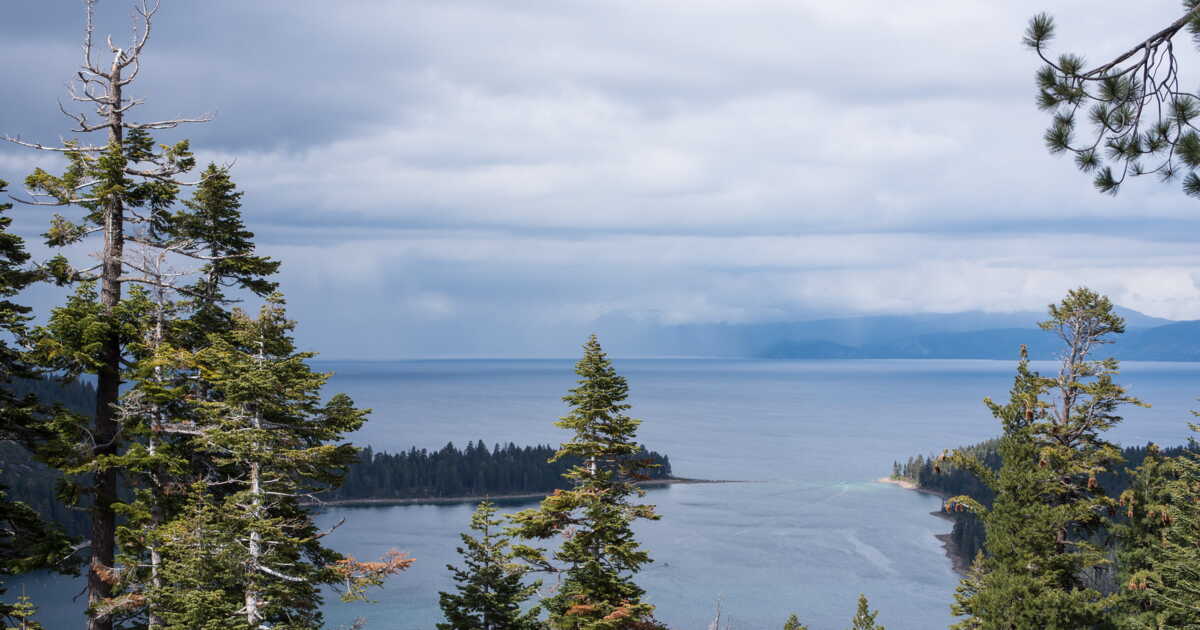
Some destinations are seeing a marked uptick in traveler interest. According to Expedia’s flight and accommodation search data, South Lake Tahoe, California, tops the 2027 list, up 195% from the previous period. This American mountain region is followed by Hyogo, Japan (+95%), then Punta del Este, Uruguay (+65%). Sedona, Arizona, rises 55%, while Busan, South Korea, gains 50%. In total, ten destinations make the ranking, including Holbox, Mexico; Perugia, Italy; and Chichester, United Kingdom. Six of them also meet the Smart Travel Health Check criteria, a framework that distinguishes destinations offering rich cultural and natural experiences along with responsible tourism management.

Micro-breaks

Why wait for the main holidays to travel? Micro-breaks, those one-night stays or brief getaways, are expected to appeal to more travelers in 2027. According to Expedia Group’s survey, 79% of respondents plan to book a one-night stay, compared with 83% among Gen Z and millennials. In France, one-night stay searches on Hotels.com rose by nearly 10% in a year. These short trips allow, among other things, celebrating an important event for 34% of respondents, attending a concert, show, or sports competition for 32%, or recharging between two longer journeys for 28%. For 45% of travelers, the main criterion remains finding a good deal.

A Return to Childhood

Adults also crave the carefree spirit of holidays gone by. This trend involves planning trips centered on play, playful activities, and moments shared with loved ones, away from everyday constraints. In total, 57% of travelers say they are likely to book this type of trip in 2027, a share that climbs to 71% among Gen Z and millennials. Motivations are varied: 69% want to experience a day without obligations, 64% want to spend more time with loved ones, and 56% seek a temporary escape from responsibilities. Mentions of carefree adult getaways on social media have also risen by 41% year over year.

Shared Hobbies

Personal passions are also becoming travel determinants. Photography, board games, creative workshops, or antiquing can now shape the choice of vacation rental. According to the study, 68% of travelers plan to travel in 2027 to pursue a hobby or activity they care about. This share reaches 79% among younger generations. For 41% of those interested, the aim is to practice their hobby in a new environment. The same proportion wants to meet or reconnect with people who share their interests. Board games top the activities cited for family or friends’ trips, ahead of photography, antiquing, and creative hobbies.

Unconventional Accommodations and Pop-Culture-Inspired Travel

The Set-Jetting

Films and TV series continue to shape destination choices. This phenomenon, known as set-jetting, involves traveling to a location discovered on screen. Nearly one in five travelers worldwide has already booked a destination after seeing it in a movie or series, according to Expedia Group. In France, the share reaches 30%. For 2027, several productions could reinforce this trend, notably The White Lotus season 4, tied to Cannes and Saint-Tropez, the upcoming season of Emily in Paris, which is slated to pass through Greece and Monaco, or The Lord of the Rings: The Hunt for Gollum, linked to Wellington, New Zealand. Nearly half of the travelers surveyed are already seeking or booking stays in destinations shown in productions that have not yet been released. This share rises to 58% among Gen Z and millennials.

Gothic Getaways

Hotels are no longer merely places to sleep; they can become attractions in their own right. In 2027, Gothic-style properties, castles, and historic buildings are expected to draw travelers seeking a distinctive atmosphere. According to Hotels.com, 65% of those surveyed want to book a Gothic-style hotel, compared with 71% among Gen Z and millennials. More than half of travelers, 56%, already choose an accommodation solely for its aesthetics or ambiance. Searches for castles on Hotels.com rose by 20% in a year. Interest in these stays aligns with a broader appeal for historic places, legends, and dark fantasy worlds.

The Allure of the Hinterland

Today’s latest trend identified by Expedia Group is the appeal of inland destinations, away from the most frequented coastal resorts. Nearly 58% of travelers who stayed in a vacation rental say they visited an inland destination in the past twelve months. Characterful small towns, valued for their historic heritage by 65% of those surveyed, are especially popular. Travelers also seek culture, cuisine, and local arts scenes (32%), want to venture off the beaten path (31%), or avoid crowds (29%). For 27%, more affordable prices than on the coast are also a factor. This trend highlights another way to discover a territory, prioritizing its villages, rural landscapes, and local life over its most famous tourist sites.

These seven trends, presented in Expedia Group’s Horizons 2027 report, reflect a range of travel desires, from new destinations to themed stays and shorter getaways. They are based on an online survey conducted from August 4 to September 1, 2026, with 26,000 adults across 16 countries, complemented by search data and analysis of social media conversations.
New Trends and Geopolitical Conflicts: European Tourism Holds Strong


Le tourisme européen résiste face aux conflits géopolitique et aux nouvelles priorités des voyageurs, Depositphotos.com

CroisiEurope


Despite a complex economic and geopolitical backdrop, the desire to travel remains steadfast in Europe.

On Thursday, July 9, 2026, the European Travel Commission (ETC) published its indicators for the second quarter of 2026. The assessment reveals solid growth: across the continent, international tourist arrivals show a rise of 5.0 % compared with the same period in 2025, while hotel overnight stays increase by 4.8 %.

This performance nevertheless occurs in a climate of waning consumer confidence and increased pressure on purchasing power.

If growth remains overall positive, holidaymakers’ behaviors are shifting toward more selective choices. Budget considerations, safety, geographic proximity and flexibility are now the decisive factors in choosing stays.


Strong Uptick in Northern Europe and Mediterranean Disparities

The regional results illustrate a healthy overall momentum, even if about one in five destinations manages to reach double-digit growth.

Northern Europe outperforms the rest of the continent, with arrivals up by 10.0 % and overnight stays up by 8.4 %. Meanwhile, Central and Eastern Europe, buoyed by the appeal of new experiences and competitive prices, records a 5.2 % rise in arrivals and a 6.9 % increase in nights spent.

The Mediterranean basin remains a major driver in absolute volume, although the situation there is more uneven. If Greece, with a 38.3 % rise in arrivals, and Italy, up 21.1 %, show excellent performances, Turkey and Cyprus experience a clear slowdown, recording declines of 2.1 % and 17.9 % respectively due to their perceived geographic proximity to the Middle East conflict.

This instability has also been felt in European air traffic: after a very strong first quarter with 7.0 % growth, the pace fell sharply to 1.0 % in April due to changes in air corridors.


A Summer Budget Safeguarded but More Closely Monitored

Spending data indicate an average expenditure per visitor often higher than last year. In Greece, for example, tourism receipts jumped by 64.3 %, far outpacing the rise in physical flows. In Italy, the trend reverses with expenditures rising more modestly (+4.3 %) despite a substantial increase in traveler volumes.

For summer 2026, leisure travel remains a top priority: Europeans plan to devote 13.0 % of their total consumption budget to it, a figure well above the global average set at 8.5 %. Non-European sending markets follow the same trend, increasing from 7.5 % in 2025 to 7.7 % this year.

Nevertheless, price sensitivity accelerates as major departures approach. Nearly 48 % of professionals surveyed in the Travel Industry Monitor say financial accessibility has become the key issue of the quarter, up from 32 % at the start of the year. The southern European destinations benefit from this, capturing 61 % of stay intentions between June and November.

Finally, there is a marked shift toward the off-season. September bookings are rising strongly across Europe, as travelers increasingly seek to avoid extreme heat waves and overtourism.

At the same time, while interest in sustainable tourism grows in online searches, only 41 % of consumers say they are ready to concretely modify their transport or stay habits for environmental reasons.

Google Search Trends: What Travel Agencies Should Anticipate in 2027 [ABO]


La vraie question pour une agence de voyages en 2026 : êtes-vous présent à chaque étape du parcours de votre prospect, ou seulement à la dernière ? - DepositPhotos.com, Y-Boychenko

CroisiEurope


Your traveler will pass through Google, sooner or later. The platform accounts for more than 93% of online searches in France (StatCounter, 2025) and handles about 14 billion queries per day worldwide (SparkToro, 2025).

But reducing Google to a search engine in 2026 greatly underestimates what you are dealing with.

Sophie is searching for her trip to Brazil on Google Search, but she also watches inspirational videos on YouTube, checks itineraries on Google Maps, encounters content in her Discover feed between search sessions, and receives emails in Gmail.

Google is a complete ecosystem of touchpoints, each corresponding to a different stage of a traveler’s decision journey.

Conversational AI platforms, despite the media buzz they generate, accounted for 0.16% of total internet traffic in France in 2025 (SE Ranking, 2025).

OpenAI projects $14 billion in losses in 2026 despite $13 billion in revenue, no advertising format exists in these tools to date, and AI Overviews are not deployed in France.

Google, on the other hand, remains profitable and keeps the user within its ecosystem. Sophie might use ChatGPT in week 1 for inspiration. In week 6, when she’s looking for a reliable agency, she returns to Google.

Google is evolving, though. Short search queries of 1 to 2 words, which represented 42% of searches in January 2025, dropped to 31% by June (Kartic Ahuja, 2025).

Where a traveler used to type “Brazil circuit” in 2018, today they type “Brazil family circuit 2 kids 15 days February.” For an agency whose campaigns target only generic keywords, a growing share of qualified demand escapes them each month.


The real journey of a traveler: Sophie wants to travel to Brazil

Sophie is 38 years old, she lives in Lyon, she has 2 children. She has dreamed of Brazil for several years.

This Monday evening, lying on the sofa after putting the kids to bed, she picks up her phone and types “family Brazil trip February” into Google. She has no intention of booking tonight. She just wants to begin to see, to feel, to imagine.

Week 1. She explores. She watches YouTube videos about Rio and the Amazon, reads blogs from traveling families, accumulates references. She broadens her consideration universe without yet comparing or choosing. This is where SEO plays its role: if your agency publishes expert content about Brazil for families, Sophie may find you before she even thinks of looking for an agency. It’s the discovery lever.

Week 3. Her queries change in nature. “Family Brazil trip” becomes “Brazil circuit 15 days Rio Iguazu Amazon” then “Brazil family travel agency specialist.” She compares itineraries, eliminates options, tightens her criteria. She evaluates. Google Performance Max comes into play: automatically broadcasting your ads on all Google surfaces—Search, YouTube, Gmail, Maps, Discover and Display—it tracks Sophie as she moves across platforms and keeps your presence at every step of her thinking. It’s the lever of coverage and repetition.

Week 6. She looks for proof. “Reviews of Brazil family travel agency,” “testimonials: Brazil circuit with kids.” She reads your Google reviews, checks your Trustpilot page, opens your About page. She wants to know to whom she will entrust two weeks of family life and a budget of 12,000 euros. According to the study “Decoding Decisions” (Google / The Behavioural Architects, 31,000 real buyers), 70% of purchase decisions are influenced by factors other than price, with social proof at the top. Your customer reviews are at this stage as important as your ads. It’s the lever of reassurance.

Week 8. She types your exact name into Google. She already knows you, one way or another. Google Search captures this final intention with precision: it is the decision lever, the one most directly linked to the booking. And if she had filled out a form but didn’t finish during a previous visit, a well-targeted email could have helped bring her back. It’s the lever of the relationship over time.

“The Power of Travel 2050”, published in January 2026 by Google and Alvarez & Marsal based on billions of queries, documents this cycle: 60 to 90 days between the first search and final booking for high-value circuits.

According to Google Consumer Insights, the traveler consults an average of 38 digital sources before contacting a provider. A prospect must be exposed to a brand’s message at least 7 times before making a purchase decision (Braithwaite Communications, 2025).

Between Week 1 and Week 8, Sophie encountered several agencies. Some were present only at the final decision moment. Others had seeded touchpoints throughout her 60 days of reflection. And it is precisely toward those agencies that she sent her quotation request.

Five levers allow you to build this presence, without starting everything at once: Google Search and customer reviews first, Performance Max, then SEO and email, at the pace of your growth.


What 2026 behaviors signal for 2027 and beyond

The trends documented in this article outline a clear trajectory. Here is what a travel agency should anticipate now:

1. Tracking and data have become foundations, not options. With the gradual end of third-party cookies, agencies that have built a solid customer database—emails, on-site behaviors, booking history—will have a durable edge over competitors. A reliable measurement system is the prerequisite for any serious advertising decision.

2. AI agents will enter travel planning. Google and others are developing assistants capable of designing a complete itinerary from expressed preferences. Well-ranked, well-rated, and well-documented agencies on their destinations will be the ones these agents recommend first. That said, no algorithm will replace the judgment of an experienced travel advisor, their ability to detect what a client doesn’t yet know how to express, nor the legal guarantee and human support offered by a licensed agency in case of contingencies. AI helps to discover. The agency protects, advises, and reassures.


3. Personalization of ads will accelerate. Google possesses highly granular behavioral data. Agencies that properly feed their campaigns with their own customer data will achieve increasingly precise targeting, and acquisition costs will mechanically drop.

4. The decision cycle will shorten for strong brands. Experienced travelers decide faster when they trust. An agency with a clear brand, solid reviews, and visible destination expertise does not need 60 days to convince Sophie. She needs 20.

5. Video and UGC (User Generated Content) will become standalone acquisition levers. YouTube Shorts and immersive video formats are advancing in search and inspiration behaviors. Beyond formats, it is the authentic stories of travelers that will make the difference: a client who shares their Brazil experience in video, in a story, in a detailed review, is worth more than any studio-produced advertisement.

6. The true competitive advantage of a travel agency remains the human touch. Quality service, a well-constructed offer, a personalized experience and the ability to spread it by those who have lived it: this is where loyalty and digital word-of-mouth are built. Robert Cialdini demonstrated this with social proof; Dale Carnegie with the art of building lasting relationships: people decide with emotion before justifying with reason. Travel is a 100% emotional experience. Agencies that succeed in getting their travelers to speak, to collect UGC, to transform every satisfied client into an ambassador, build something no algorithm can buy.

Also read: Travel agencies: how much to invest in Google Ads to acquire a customer in 2026?


In brief

– Google accounts for more than 93% of online searches in France and processes about 14 billion queries per day worldwide.

– Your prospects’ search habits have evolved dramatically: searches are longer, more precise, and a traveler’s journey before requesting a quote now spans 60 to 90 days and multiple channels.

– Conversational AI tools are getting a lot of attention, but still represent only 0.16% of total internet traffic in France (SE Ranking, 2025).

– The fundamentals of Google Ads remain solid.

– The real question for a travel agency in 2026: are you present at every stage of your prospect’s journey, or only at the last one?


Where Do the French Go on Vacation? Tourism Trends Decoded by Petit Futé

“Petit Futé” is doing well, and has many bright years ahead. On the occasion of the fifty-year anniversary of the travel guide created in 1976, its co-founder Jean-Paul Labourdette remains optimistic. French travel has evolved, and so has Petit Futé. From a small guide for students in the city of Nancy, the publication has become a reference for travelers, with guides available for 192 destinations. The digital turning point occurred in the 2000s, and by 2025 the site counted 80 million visitors.

France Is Riding the Wave