Evaluating hotel name formatting

I think we should make the title more natural, like "Aix-en-Provence: Grand Hôtel Roi René Unveils its Renovation" or perhaps "Aix-en-Provence: Grand Roi René Hotel Reveals its Renovation." However, "Grand Hôtel Roi René" is the formal name of the hotel, and in English, I’m considering how to best render it. For SEO purposes, using "Grand Hotel Roi Rene" without accents might be better. Ultimately, I’m leaning towards keeping it elegant while thinking about its marketing appeal.Considering hotel title options

I’m thinking about the title "Aix-en-Provence: Grand Hotel Roi Rene Unveils Its Renovation." Maybe it’s worth adding "in Aix-en-Provence," but since that’s already the location phrase, it might sound repetitive. It seems best to propose the title as "Aix-en-Provence: Grand Hôtel Roi René Unveils Its Renovation," while pondering whether to drop the accent for SEO purposes. However, keeping "Roi René" as is helps preserve the hotel’s proper name, even if it can confuse search engines. I’ll stick with the hotel’s name in English to ensure clarity.Finalizing the hotel title

I think we should translate the title correctly: "Aix-en-Provence: Grand Hôtel Roi René Unveils Its Renovation." In English, "Grand Hôtel" is "Grand Hotel" without the accent. So, "le Grand Hôtel Roi René" becomes "the Grand Hotel Roi Rene." "Dévoile sa rénovation" translates to "unveils its renovation." Putting it all together, I have: "Aix-en-Provence: the Grand Hotel Roi Rene Unveils Its Renovation." To keep it SEO-friendly, I’ll use title case: "Aix-en-Provence: Grand Hotel Roi Rene Unveils Its Renovation." That’s around 68 characters, which is just right!


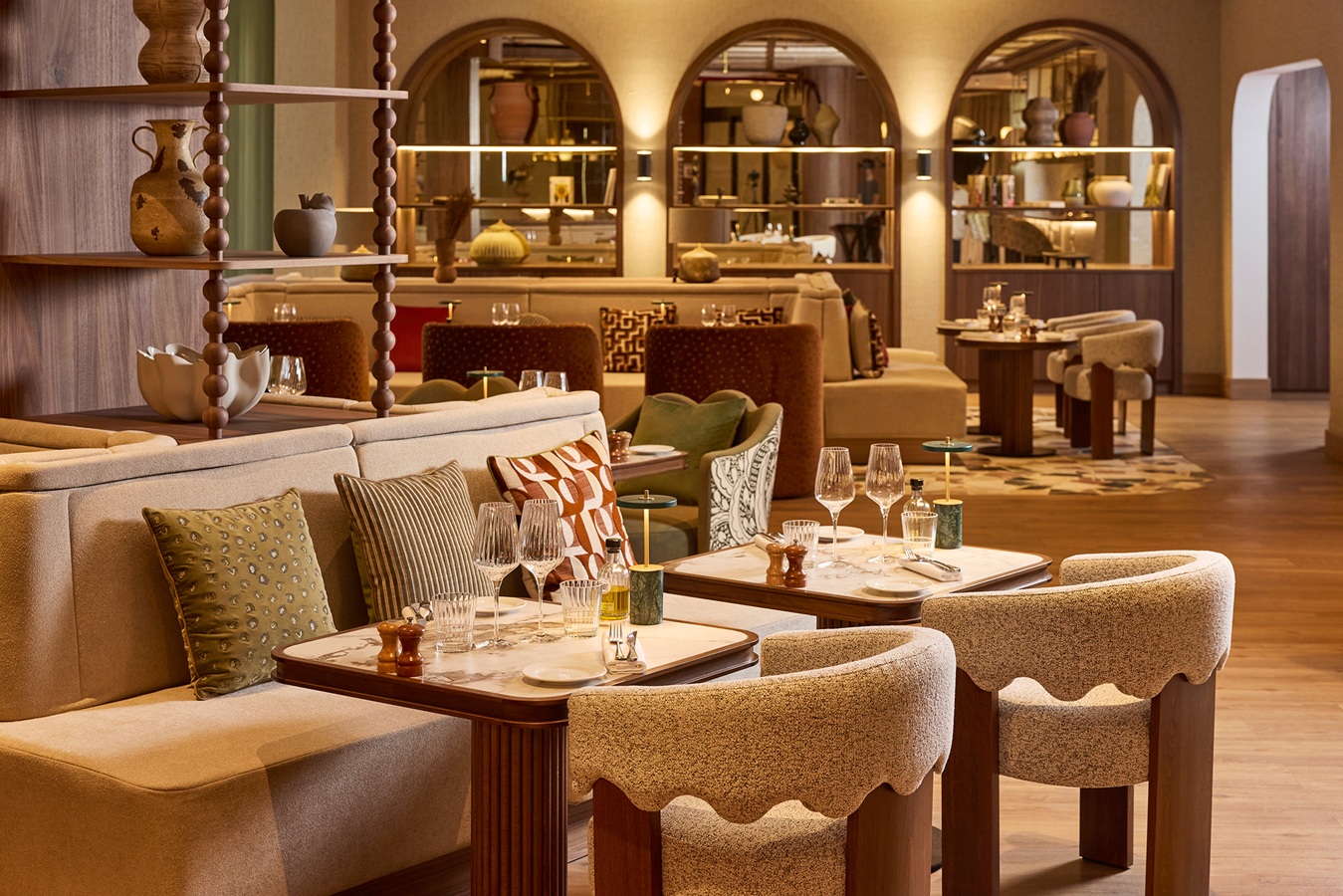
Le Grand Hôtel Roi René réouvre à Aix-en-Provence.   Crédit photo : Grand Hôtel Roi René MGallery

IFTM


The Grand Hôtel Roi René reopened in Aix-en-Provence after a year of renovations, in late April 2026.

The hotel is pursuing a new identity, blending noble materials, craftsmanship, and contemporary design.


The renovation was entrusted to interior designer Fabien Roque, who completely reworked the lobby, the restaurant, the bar, and the reception areas.

The property notably highlights a world inspired by Provençal colors, with terracotta tones, olive green and beige, paired with solid wood, marble, leather and velvet.

The hotel also hosts several artistic creations, including a ceramic screen signed by Marie Levêque, installed in the public areas.

The exteriors have also been redesigned around a spirit of “French Riviera“, particularly around the pool and the relaxation spaces.


Grand Hôtel Roi René: 131 renovated rooms and a new dining offer


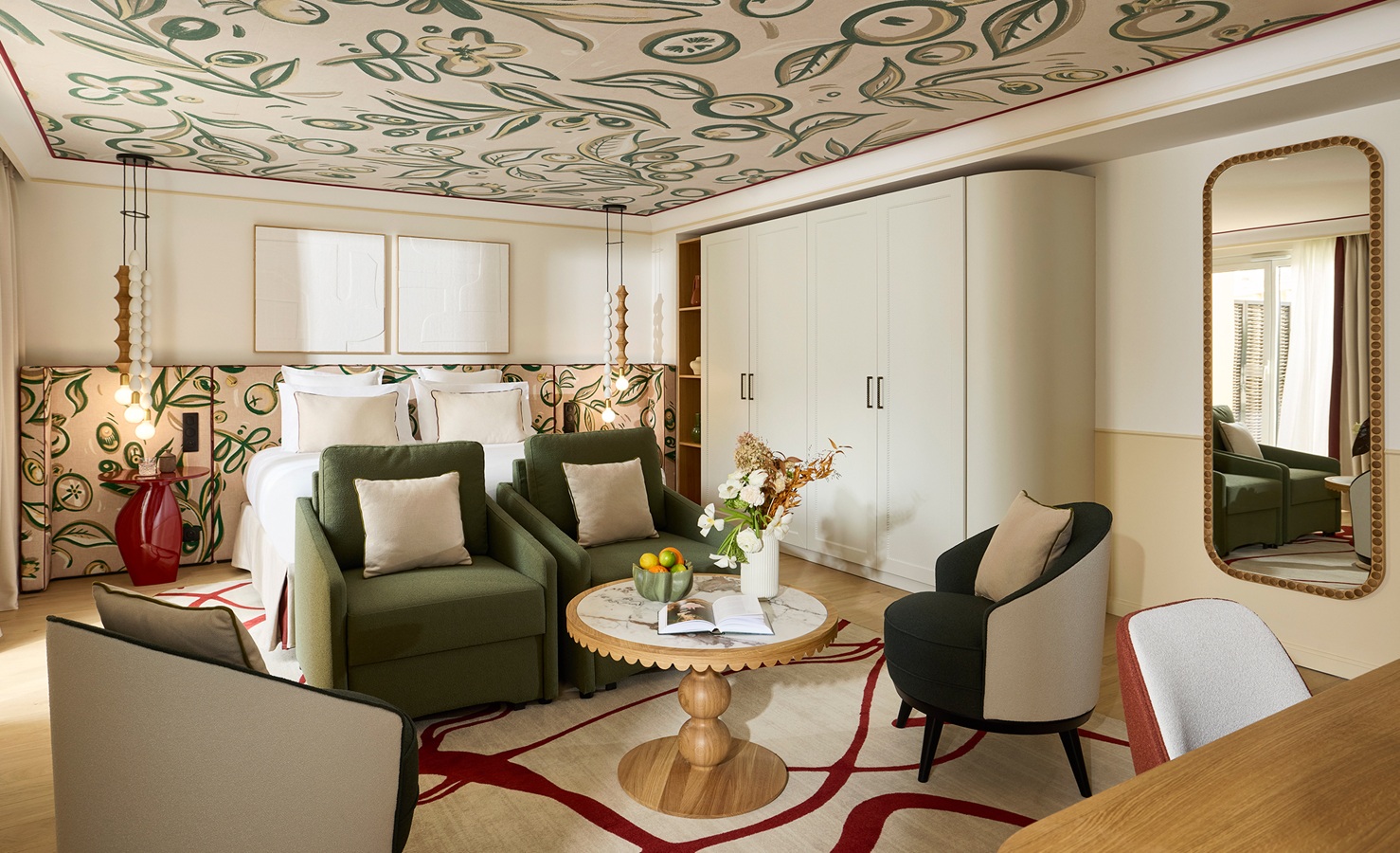
Grand Hôtel Roi René : 131 chambres rénovées et une nouvelle offre de restauration - Crédit photo : Grand Hôtel Roi René MGallery

The establishment has also completely renovated its 131 rooms, including six suites and 17 rooms with terraces.

The rooms now emphasize brighter spaces, with a decor inspired by contemporary Provence and materials such as wood, stone, and linen. Some suites feature furnished terraces.

The project also includes the launch of the AÏGA restaurant, the hotel’s new Mediterranean dining concept. Open for lunch and dinner, the restaurant offers cuisine inspired by Provençal flavors and the Mediterranean basin, with mezzés, shareable dishes, grilled fish and reinvented specialties.

To read: Four places to see near Aix-en-Provence

The Aix calisson, a historic symbol of the city, also plays an important role in the culinary experience offered by the hotel.

Reachable in under three hours from Paris by train, the property also features a restaurant, a bar, an outdoor terrace, a 14-meter pool, and five meeting rooms.

Google Search Trends: What Travel Agencies Should Anticipate in 2027 [ABO]


La vraie question pour une agence de voyages en 2026 : êtes-vous présent à chaque étape du parcours de votre prospect, ou seulement à la dernière ? - DepositPhotos.com, Y-Boychenko

CroisiEurope


Your traveler will pass through Google, sooner or later. The platform accounts for more than 93% of online searches in France (StatCounter, 2025) and handles about 14 billion queries per day worldwide (SparkToro, 2025).

But reducing Google to a search engine in 2026 greatly underestimates what you are dealing with.

Sophie is searching for her trip to Brazil on Google Search, but she also watches inspirational videos on YouTube, checks itineraries on Google Maps, encounters content in her Discover feed between search sessions, and receives emails in Gmail.

Google is a complete ecosystem of touchpoints, each corresponding to a different stage of a traveler’s decision journey.

Conversational AI platforms, despite the media buzz they generate, accounted for 0.16% of total internet traffic in France in 2025 (SE Ranking, 2025).

OpenAI projects $14 billion in losses in 2026 despite $13 billion in revenue, no advertising format exists in these tools to date, and AI Overviews are not deployed in France.

Google, on the other hand, remains profitable and keeps the user within its ecosystem. Sophie might use ChatGPT in week 1 for inspiration. In week 6, when she’s looking for a reliable agency, she returns to Google.

Google is evolving, though. Short search queries of 1 to 2 words, which represented 42% of searches in January 2025, dropped to 31% by June (Kartic Ahuja, 2025).

Where a traveler used to type “Brazil circuit” in 2018, today they type “Brazil family circuit 2 kids 15 days February.” For an agency whose campaigns target only generic keywords, a growing share of qualified demand escapes them each month.


The real journey of a traveler: Sophie wants to travel to Brazil

Sophie is 38 years old, she lives in Lyon, she has 2 children. She has dreamed of Brazil for several years.

This Monday evening, lying on the sofa after putting the kids to bed, she picks up her phone and types “family Brazil trip February” into Google. She has no intention of booking tonight. She just wants to begin to see, to feel, to imagine.

Week 1. She explores. She watches YouTube videos about Rio and the Amazon, reads blogs from traveling families, accumulates references. She broadens her consideration universe without yet comparing or choosing. This is where SEO plays its role: if your agency publishes expert content about Brazil for families, Sophie may find you before she even thinks of looking for an agency. It’s the discovery lever.

Week 3. Her queries change in nature. “Family Brazil trip” becomes “Brazil circuit 15 days Rio Iguazu Amazon” then “Brazil family travel agency specialist.” She compares itineraries, eliminates options, tightens her criteria. She evaluates. Google Performance Max comes into play: automatically broadcasting your ads on all Google surfaces—Search, YouTube, Gmail, Maps, Discover and Display—it tracks Sophie as she moves across platforms and keeps your presence at every step of her thinking. It’s the lever of coverage and repetition.

Week 6. She looks for proof. “Reviews of Brazil family travel agency,” “testimonials: Brazil circuit with kids.” She reads your Google reviews, checks your Trustpilot page, opens your About page. She wants to know to whom she will entrust two weeks of family life and a budget of 12,000 euros. According to the study “Decoding Decisions” (Google / The Behavioural Architects, 31,000 real buyers), 70% of purchase decisions are influenced by factors other than price, with social proof at the top. Your customer reviews are at this stage as important as your ads. It’s the lever of reassurance.

Week 8. She types your exact name into Google. She already knows you, one way or another. Google Search captures this final intention with precision: it is the decision lever, the one most directly linked to the booking. And if she had filled out a form but didn’t finish during a previous visit, a well-targeted email could have helped bring her back. It’s the lever of the relationship over time.

“The Power of Travel 2050”, published in January 2026 by Google and Alvarez & Marsal based on billions of queries, documents this cycle: 60 to 90 days between the first search and final booking for high-value circuits.

According to Google Consumer Insights, the traveler consults an average of 38 digital sources before contacting a provider. A prospect must be exposed to a brand’s message at least 7 times before making a purchase decision (Braithwaite Communications, 2025).

Between Week 1 and Week 8, Sophie encountered several agencies. Some were present only at the final decision moment. Others had seeded touchpoints throughout her 60 days of reflection. And it is precisely toward those agencies that she sent her quotation request.

Five levers allow you to build this presence, without starting everything at once: Google Search and customer reviews first, Performance Max, then SEO and email, at the pace of your growth.


What 2026 behaviors signal for 2027 and beyond

The trends documented in this article outline a clear trajectory. Here is what a travel agency should anticipate now:

1. Tracking and data have become foundations, not options. With the gradual end of third-party cookies, agencies that have built a solid customer database—emails, on-site behaviors, booking history—will have a durable edge over competitors. A reliable measurement system is the prerequisite for any serious advertising decision.

2. AI agents will enter travel planning. Google and others are developing assistants capable of designing a complete itinerary from expressed preferences. Well-ranked, well-rated, and well-documented agencies on their destinations will be the ones these agents recommend first. That said, no algorithm will replace the judgment of an experienced travel advisor, their ability to detect what a client doesn’t yet know how to express, nor the legal guarantee and human support offered by a licensed agency in case of contingencies. AI helps to discover. The agency protects, advises, and reassures.


3. Personalization of ads will accelerate. Google possesses highly granular behavioral data. Agencies that properly feed their campaigns with their own customer data will achieve increasingly precise targeting, and acquisition costs will mechanically drop.

4. The decision cycle will shorten for strong brands. Experienced travelers decide faster when they trust. An agency with a clear brand, solid reviews, and visible destination expertise does not need 60 days to convince Sophie. She needs 20.

5. Video and UGC (User Generated Content) will become standalone acquisition levers. YouTube Shorts and immersive video formats are advancing in search and inspiration behaviors. Beyond formats, it is the authentic stories of travelers that will make the difference: a client who shares their Brazil experience in video, in a story, in a detailed review, is worth more than any studio-produced advertisement.

6. The true competitive advantage of a travel agency remains the human touch. Quality service, a well-constructed offer, a personalized experience and the ability to spread it by those who have lived it: this is where loyalty and digital word-of-mouth are built. Robert Cialdini demonstrated this with social proof; Dale Carnegie with the art of building lasting relationships: people decide with emotion before justifying with reason. Travel is a 100% emotional experience. Agencies that succeed in getting their travelers to speak, to collect UGC, to transform every satisfied client into an ambassador, build something no algorithm can buy.

Also read: Travel agencies: how much to invest in Google Ads to acquire a customer in 2026?


In brief

– Google accounts for more than 93% of online searches in France and processes about 14 billion queries per day worldwide.

– Your prospects’ search habits have evolved dramatically: searches are longer, more precise, and a traveler’s journey before requesting a quote now spans 60 to 90 days and multiple channels.

– Conversational AI tools are getting a lot of attention, but still represent only 0.16% of total internet traffic in France (SE Ranking, 2025).

– The fundamentals of Google Ads remain solid.

– The real question for a travel agency in 2026: are you present at every stage of your prospect’s journey, or only at the last one?