
Discover Dominica Launches Travel Agent Training


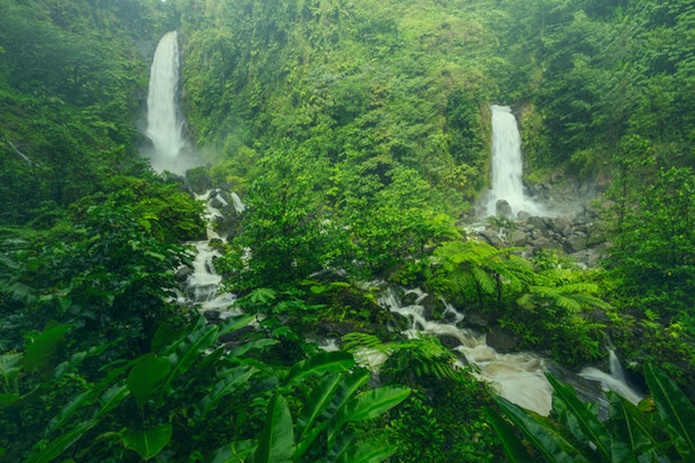
La Discover Dominica Authority (DDA) lance une nouvelle formation en ligne consacrée à la Dominique - Crédit photo : Discover Dominica Authority

CroisiEurope


Available initially in the United States and the United Kingdom, the new online training dedicated to Dominica on the Online Travel Training platform is accessible online and at its own pace.

It presents the main tourist benefits of Dominica through seven themes: adventure, health and well-being, romance, aquatic activities, culture, events and entertainment, as well as agritourism and Kalinago culture.

The program notably highlights the main experiences offered by the destination, including tropical forests, waterfalls and rivers, volcanic landscapes, diving and marine activities, as well as cultural and community experiences.


La Dominique : ene extension prochaine à la France

À l’issue de la formation, les participants obtiennent un certificat attestant de leur réussite et de leur connaissance de la destination.

La DDA prévoit de promouvoir ce programme auprès des professionnels du voyage au Royaume-Uni, aux États-Unis et au Canada.

La formation devrait également être prochainement disponible en France et en Allemagne, afin d’élargir le réseau de conseillers formés à la commercialisation de la Dominique.

La destination est accessible notamment via la Martinique, la Guadeloupe, Saint-Martin et Antigua. Un nouvel aéroport est par ailleurs en construction, avec une ouverture annoncée pour 2027.


Amelia Brille Publié par Amelia Brille Rédactrice TourMaG.com
Voir tous les articles d’Amélia Brille

  • picto Linkedin
  • picto email
Ajoutez TourMaG à votre flux Google Actualités Google Actualités icône  

Travel Agent: How to Build Your Personal Brand


1. Start by defining what you want to embody

Agent de voyages : comment développer son personal branding ? - Depositphotos.com Auteur Studciostock

Aer Lingus


Before publishing, you must know what you want others to associate with your name.

“Personal branding constitutes the summary that others can read about a professional when they are not in the room”, explains Stanislas Lucien, managing partner of Travel Insight and founder of Hautevoix, a company dedicated to personal branding.

The goal is not to talk about everything, but to build a coherent editorial line.

Being recognized as a specialist for a destination, an expert in a type of travel, or an observer of the sector helps create a specific territory of expression.


For Jessica Sorin, founder and CEO of the Manaventura group, a specialist in Polynesia, this reflection was essential: “Working on our brand image allowed us to identify what set us apart, to strengthen our positioning as an expert on Polynesia, and to fully own my voice.”


2. Do not aim to become an influencer

Personal branding does not require copying the playbooks of popular public content creators. A tourism professional does not need to multiply artificial videos or staged scenes.

“The key, in my view, is to stay true to yourself. Copying someone else doesn’t work.”, says Pierre Doucet, founder of Terre d’Ailleurs.

After trying the classic social media codes, he chose a more personal approach: “In the beginning, everyone was showing trips, weekends, a highly staged life. I realized we all ended up doing the same thing. Today, I mainly do Pierre Doucet, without trying to fit into an ideal image.”

The same logic applies to Myriam Tord, deputy head of Versailles Voyages and cofounder of the Helpdesk Official for Tourism Pros. Her presence on LinkedIn sprang from a simple desire: to explain a profession that is often poorly understood.

“Travel agents suffer from a lack of visibility and representation. People don’t know our trade, but you can’t blame them: who really talks about what we do and our added value?”


3. Publish content that is useful, not merely visible

The success of a personal brand rests less on quantity than on the relevance of the content.

At Manaventura, the posts that perform best directly address travelers’ questions.

“We don’t publish for the sake of publishing. Each piece of content answers a question a traveler asks themselves: budget, itineraries, accommodations, local culture or mistakes to avoid,” notes Jessica Sorin. The key to standing out rests on three main things: expertise, consistency and authenticity.”

For Myriam Tord, the best content also comes from the field: “This can come from a problem encountered at the Helpdesk, a discussion during a workshop, or a situation experienced at the agency.”

Her advice: don’t automatically look for the topic “that will get views,” but share a genuine point of view. “When a post is sincere and authentic, you can feel it.”


4. Find your rhythm and sustain it over time

One common mistake is confusing regularity with an obligation to publish. Producing content solely to feed an algorithm often leads to messages with little depth.

Pierre Doucet prefers to prioritize ideas over a strict calendar: “I don’t aim to produce a lot of content. I’d rather have a good idea than publish regularly without substance.”

Myriam Tord operates similarly: “I publish only when a topic speaks to me. When I have an idea, I note it on my phone or draft the post.”

That said, consistency remains essential. “The initial effects don’t appear until six to twelve months. The first year feels slow. The second year changes the game. Past content keeps producing results. The network grows. Mentions come without solicitation. The third year redefines the position. The professional becomes indispensable in their segment.”, recalls Stanislas Lucien. Personal branding is a long-term investment, built on accumulation.


6. Measure the real outcomes: trust, opportunities and sales

Personal branding is not limited to the number of views or followers. Its value is primarily measured by the relationship built with prospects and partners.


At Manaventura, the commercial impact is already visible: “A significant portion of our inquiries today comes directly or indirectly from networks. More than half of travelers discover Manaventura online before contacting us,” says Jessica Sorin.

For Pierre Doucet, networks contribute to several objectives: “Visibility, notoriety and above all conversion into sales.” But all of this works together.”

Stanislas Lucien also notes a shift in the sales journey: “The topic isn’t influence. The topic is trust.” A well-known and recognized professional inspires more confidence even before the first meeting.


7. Professionalize your approach when it becomes strategic

As the journey progresses, some players decide to structure their communications more systematically.

Jessica Sorin has gradually built a dedicated organization: “At first, everything rested on me: the agency, client files, networks, the content. Today, two people are dedicated to the group’s communications.”

Pierre Doucet has also chosen to work with support through a partnership with Travel Insight: “The idea is to provide a more professional framework, without completely replacing my way of communicating. My objective remains to sell trips.”

In a competitive sector like tourism, the ability to embody one’s expertise becomes a differentiating advantage. Personal branding does not replace the know-how of a travel agent. It simply makes it visible.


Caroline Lelievre Published by Caroline Lelievre Journalist – TourMaG.com
See all articles by Caroline Lelievre

  • picto Twitter
  • picto Linkedin
  • picto email
Ajoutez TourMaG à votre flux Google Actualités Google Actualités icône

Travel Agents Cup 2026: Who Will Succeed France’s Best Travel Agent?


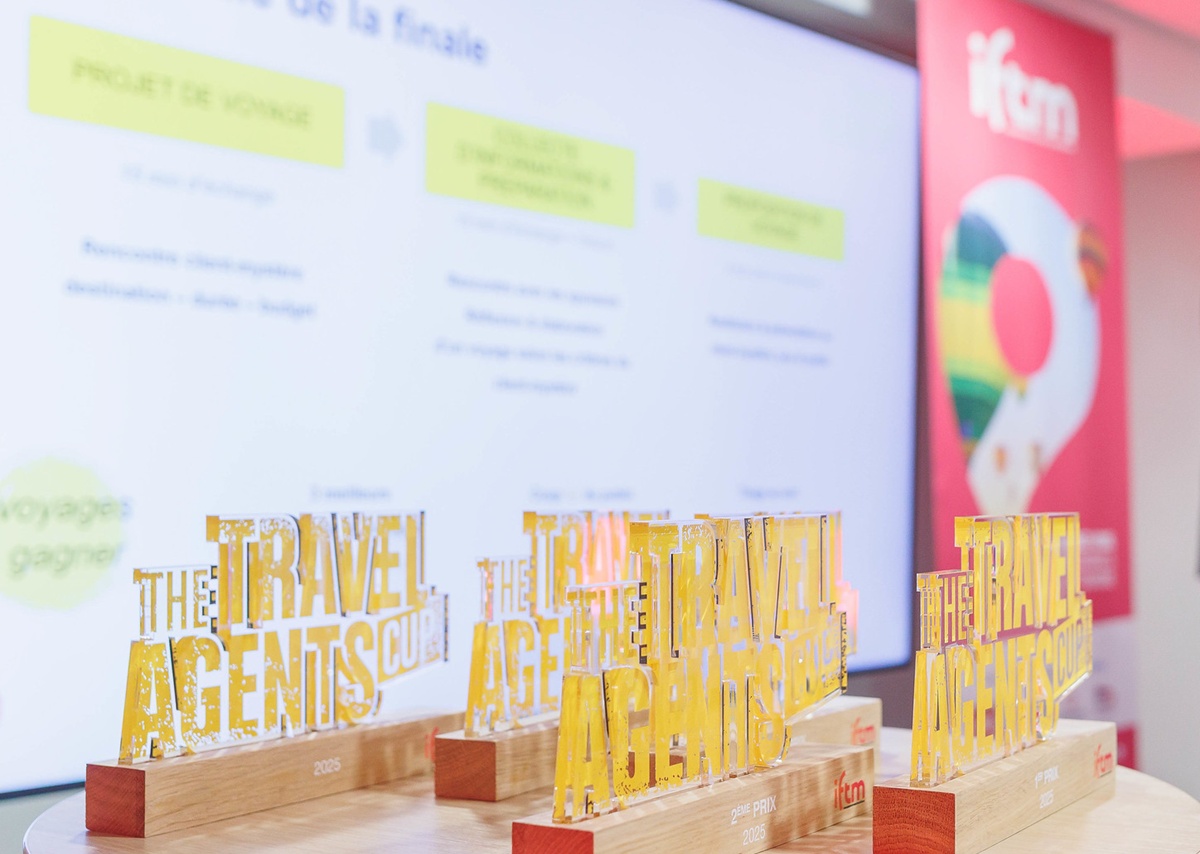
La Travel Agents Cup revient pour une 13e édition - Photo : IFTM

Aer Lingus


For its 13th edition, the Travel Agents Cup has selected ten finalists from the sixteen candidates who tried their luck this year.

Coming from all corners of France and representing different networks and agencies, they will meet on September 17, 2026 at 3:30 PM at the IFTM for a final that will test their ability to listen, advise and persuade, after an initial selection based on a candidacy video.


Ten profiles, one common goal

The finalists are :

– Gabin Blin-Le Tanter, Carrefour Voyages Angers Grand Maine

– Anaïs Devlieger, Havas Voyages Montreuil-sur-Mer

– Emma Gourdoux, Juen Voyages Le Pontet

– Malaury Laviolette, Navitour Compiègne

– Florian Minaux, TUI Store Nancy

– Amandine Mottola, Bleu Voyages Mougins

– Adeline Rimbert, Auchan Voyages Beauvais

– Rémi Roussel, Voyages Couture Marseille

– Vincent Signoret, Verdié Voyages Pau

– Marine Veyssiere, Rêve Voyages Brive-la-Gaillarde


A fictitious client… and no information to start

The final’s premise rests precisely on an element of unpredictability.

On the morning of September 17, each candidate will have twenty minutes to interact with a fictitious client. The peculiarity of the exercise: they will not know in advance either the client’s profile, itinerary, or budget.

It will be up to them to ask the right questions, understand their interlocutor’s expectations, and above all to quickly build a coherent proposal.

Once the needs are identified, the finalists will then have to look for the most suitable solutions directly at the stands of the competition’s partners.

An exercise that thus highlights both knowledge of products and the human and commercial qualities of the trade: listening, responsiveness, curiosity, the ability to rebound and to tailor a proposal.


Four minutes to persuade

In the afternoon, the cards will be redistributed. The ten finalists will take the stage on the Arena by Ouzbékistan, transformed for the occasion into a real travel agency.

They will then have only four minutes to defend their proposal in front of the jury and their fictitious client.

The jury will be composed of professionals from different sectors of the industry: Marie Allantaz for IFTM, Guillaume Beurdeley for Les Entreprises du Voyage, Jean-Charles Franchomme for the CDMV, Fabrice Guagliata for Air France, Stéphane Jaladis for the AJT, Guillaume Linton for ASIA and the Village of Tour Operators, Emmanuelle Llop for Equinoxe Avocats, Karin Mallet Gautier for Konect Agency / ADONET, Émilie Matti for AVIS, Aurélie Soulat for Costa Croisières and Myriam Tord for the Helpdesk des Pros du Tourisme.

At the end of the competition, four prizes will be awarded.

Three podium spots will be chosen by the jury, while a fourth prize will allow the public to participate directly in the competition: the Public Favorite Award, decided by a live vote on social networks.

Now remains to know which of these ten professionals will stand out and win the title of “Best Travel Agent in France.”

The answer on Thursday, September 17, 2026 at 3:30 PM, on the Arena by Ouzbékistan stage, at the IFTM.


Amelia Brille Published by Amelia Brille TourMaG.com Editor
See all articles by Amelia Brille

  • picto Linkedin
  • picto email
Add TourMaG to your Google News feed Google Actualités icône  

From Hospital Director to Travel Agent: Jean-Baptiste Tolsa Aims to Modernize the Travel Profession’s Image


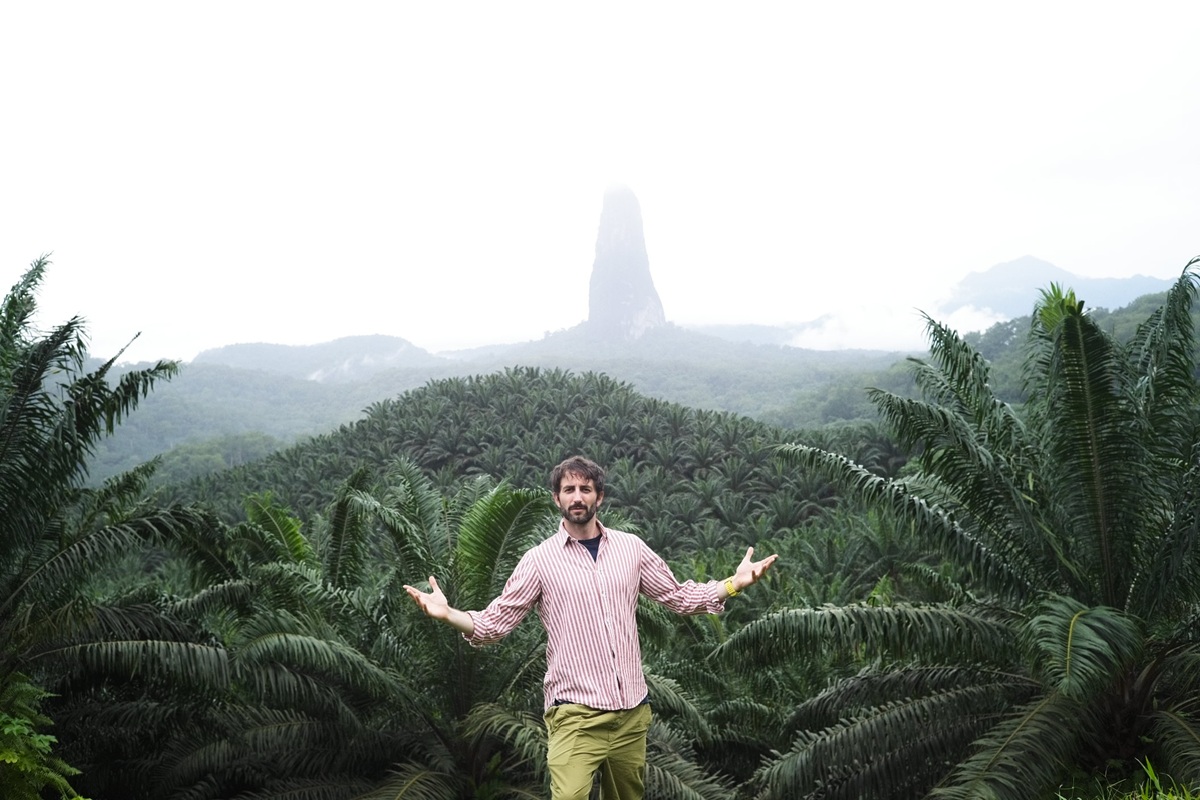
« Je vends ce que j’ai vu et ce que je connais. Je suis allé à São Tomé cette année, une merveilleuse destination contre-tourisme, pour voyager autrement », précise Jean-Baptiste Tolsa, fondateur de l'agence Odyssélux. @odysselux

CroisiEurope


Changer de secteur professionnel n’est jamais un long fleuve tranquille. Pour Jean-Baptiste Tolsa, le passage de la direction d’un hôpital à la création d’une agence de voyages aura même pris des allures de parcours du combattant.

À l’origine de cette reconversion, un voyage de noces en Nouvelle-Zélande. Son meilleur ami lui montre un devis qu’il juge particulièrement élevé et difficile à comprendre. Le futur agent de voyages se penche alors sur les chiffres et estime à près de 50 % la marge brute appliquée au voyage.

« À cette période, à l’hôpital, c’était très compliqué. C’était aussi un moment où je ne me retrouvais plus vraiment dans le monde de la santé. Je lui ai donc proposé de créer son voyage », raconte Jean-Baptiste Tolsa.


Une création d’agence semée d’obstacles

En 2023, il se lance donc dans la création d’Odyssélux, sans reprendre de formation spécifique au tourisme. Son parcours lui fournit toutefois quelques bases solides : école de commerce, master 2 en droit des sociétés et master 2 en gestion des établissements de santé.

« La formation au métier d’agent de voyages, je l’ai faite sur le tas, tout seul », explique le fondateur de l’agence. Le plus compliqué ne sera finalement pas d’apprendre le métier, mais de créer l’entreprise, notamment d’obtenir la garantie financière.

« Pour un nouvel arrivant, c’était très simple : je n’ai eu que des refus pour obtenir la fameuse garantie financière », raconte Jean-Baptiste Tolsa.

Après plusieurs démarches, c’est finalement l’APST qui accepte de l’accompagner. Mais au prix, selon lui, d’un parcours particulièrement lourd.

« La procédure a été très longue et bureaucratique. Je pensais quitter la santé parce que c’était trop bureaucratique et un monde un peu vieillissant. Et, en fait, je suis arrivé dans un monde encore plus vieillissant que la santé », déplore le fondateur d’Odyssélux.

La demande de l’APST est, selon lui, particulièrement conséquente : 80 000 euros d’apport, auxquels s’ajoutent environ 20 000 euros d’engagement personnel.

« 80 000 euros, c’est une somme sensationnelle pour un métier qui n’a pas des marges fantastiques », estime le chef d’entreprise.

La création de son agence en France lui prendra ainsi six mois avant même d’avoir commencé son activité.


L’Estonie comme solution de secours

Face à ces difficultés, Jean-Baptiste Tolsa cherche d’autres solutions. Il découvre qu’il est possible de créer une entreprise dans un autre pays européen et monte une agence de voyages en Estonie, comme solution de secours.

« En Estonie, la création de l’entreprise se fait en 24 heures. En une semaine, vous avez vos statuts d’agence et la garantie financière », affirme Jean-Baptiste Tolsa.

Il indique avoir payé environ 500 euros pour la création de la société et 3 000 euros pour la garantie financière. Il ne s’est finalement pas servi de cette structure, la création française ayant abouti.

L’expérience nourrit néanmoins sa réflexion sur le cadre réglementaire français. « Six mois pour créer une entreprise, aujourd’hui, ce n’est pas possible. Six mois, plus la formation, plus l’argent : il va falloir enlever des étapes », considère le fondateur de l’agence.

Pour lui, il ne s’agit pas de remettre en cause la responsabilité des professionnels, mais de simplifier l’accès à l’entrepreneuriat. « Je pense qu’il faut faire un peu plus confiance aux gens qui se lancent, compte tenu des responsabilités qu’ils prennent sur leurs épaules », plaide le fondateur d’Odyssélux.


« Il faut moderniser notre image »

Au-delà des contraintes administratives, le fondateur d’Odyssélux porte un regard critique sur l’image de la profession.

Dans une publication LinkedIn volontairement provocatrice, il écrivait ainsi : « Il est devenu socialement gênant de passer par une agence de voyage. »


Une formule qui fait suite à une interview du chef d’entreprise publiée dans la presse locale. « 80 % des gens ont commenté, grosso modo, que les agences ne servaient à rien. “Moi, je peux trouver tout seul”, “L’IA est meilleure”, etc. », rapporte Jean-Baptiste Tolsa.

Pour le chef d’entreprise, le problème dépasse la question du prix. Il touche à la perception de la valeur ajoutée de l’agent de voyages. « Il y a une vraie question d’image à revoir autour de l’expertise. On fait confiance à l’expert », souligne le fondateur d’Odyssélux.

Sa réponse ? « Montrer davantage le travail réalisé par les professionnels plutôt que de chercher à culpabiliser ceux qui se passent de leurs services. »

Pour lui, les acteurs du tourisme doivent toutefois changer de méthode. Plutôt que des campagnes défensives ou « anti-quelque chose », il appelle à une communication collective et davantage tournée vers la modernité.

« Il faut arrêter de voir l’agence de voyages comme trois personnes derrière un bureau qui ne savent pas trop où elles sont allées et qui vendent des tarifs 50 % au-dessus de ce qu’on peut trouver ailleurs », lance le fondateur de l’agence.

Il plaide notamment pour davantage de présence sur les réseaux sociaux, une meilleure lisibilité des marges et une véritable réflexion autour des influenceurs.

« Il n’y a pas de véritable gestion des influenceurs dans le voyage », considère le fondateur d’Odyssélux. Autre piste : reconnecter les agences aux destinations qu’elles vendent, en développant par exemple des campagnes de promotion territoriale portées par les professionnels français.


Repenser le modèle de l’agence

Cette réflexion sur l’image rejoint celle qu’il porte sur le modèle économique des agences de voyages.

« J’ai l’impression que les agents de voyages voient le monde du voyage côté business, côté agents, et rarement du côté des voyageurs », constate le chef d’entreprise.

À l’inverse, il mise sur une approche très personnelle chez Odyssélux. « Je crée un itinéraire comme je l’aurais créé pour moi si je partais seul », explique le fondateur de l’agence.

L’agence se positionne sur le sur-mesure et privilégie les destinations que son fondateur connaît personnellement. Avec 70 pays visités, Jean-Baptiste Tolsa dispose déjà d’un terrain de jeu conséquent.

« Je vends ce que j’ai vu et ce que je connais. J’aime découvrir des destinations alternatives. Je suis allé à São Tomé cette année, une merveilleuse destination contre-tourisme, pour voyager autrement », précise Jean-Baptiste Tolsa.


Trouver le bon canal de vente


« Je ne pense pas qu’on soit morts, loin de là »

Après un début d’année 2026 conforme à ses objectifs, l’activité a marqué le pas au printemps avec la guerre au Moyen-Orient, avant de repartir progressivement.

Un comportement qui lui semble révélateur d’une évolution de la demande : les clients voyagent peut-être moins, mais lorsqu’ils partent, ils sont davantage disposés à déléguer.


« On se rend compte que les gens partent de moins en moins, mais quand ils partent, ils partent vraiment. Et ils veulent déléguer à ce moment-là », estime le chef d’entreprise. D’où, une nouvelle fois, l’importance de l’image de la profession. « Je ne pense pas qu’on soit morts, loin de là », affirme Jean-Baptiste Tolsa.


2027 sous le signe de l’IA

Pour 2027, Jean-Baptiste Tolsa entend poursuivre son développement progressivement. Son principal chantier reste encore à trouver : un canal de vente suffisamment clair et efficace.

Il travaille aussi sur l’intelligence artificielle, avec l’idée d’automatiser une partie du processus commercial.

Pas question pour autant de brûler les étapes. Après avoir travaillé sur son blog et testé la publicité ciblée, le fondateur d’Odyssélux compte poursuivre ses expérimentations.

« Comme je suis une petite entreprise, il faut prendre le temps, petit à petit, de construire chaque année un petit truc supplémentaire », conclut Jean-Baptiste Tolsa.

Travel Agent: Selling a Trip Also Means Taking Responsibility


"Les voyages m'ont appris la souffrance, l'amour, la liberté et la responsabilité. Ils m'ont surtout appris qu'avant de vouloir transformer le monde, il faut accepter d'être transformé par lui" - Photos : Cathy Bou et Nicolas Demare

CroisiEurope


I was thirteen when I first discovered Morocco. I could tell you about the light, the Atlas Mountains, or the aromas of spices.

Yet the memory that has accompanied me for more than forty years is quite different. A road toward the Algerian border. A poverty I had never imagined. Glances I did not know how to bear.

I got out of the car. I threw up.

For a long time, I believed it was only a travel memory. Today, I think that my body understood before my mind that there are realities to which one cannot remain indifferent.

We sometimes take decades to find the words for what our hearts already knew.

A few years later, another journey would overturn my perspective.


The Stendhal Syndrome

In 2006, in Cyprus, one evening, in a small tavern, the music stops.

The men rise. One after another, they kneel before their wives and lay rose petals at their feet. Nothing ostentatious. Nothing theatrical. Only an infinitely simple way to honor the woman with whom they share their life.

I stand still. The tears rise and I cannot hold them back.

The next day, I collapse.

In trying to understand what had happened to me, I discover the Stendhal syndrome.

But this medical explanation did not answer the essential question. What had overwhelmed me was not the beauty of a landscape or a work of art. It was the almost physical encounter with a form of unconditional love that our society often speaks of, yet does not always know how to live.

Many years later, when I chose the name Agapè, I understood that that evening had sown a seed whose name I did not yet know.


When discovering a country reveals who we are

In 2013, I set off for India with my twenty-year-old son. We thought we were going to discover a country. It is he who reveals us to ourselves.

We are struck by the constant coexistence of the most dazzling luxury and the most extreme poverty.

One day, a cow rams me with its horn. I was afraid. My son looks at me and simply says: “She sensed it.” This sentence will haunt me for a long time.

I wondered whether my intuitions were drawing to me what I feared. It took me years to understand that they created nothing. They merely perceived what was already unfolding.

We return on August 27. On November 21, I leave Thomas Cook. Many regard it as a rupture. I saw only fidelity. I was not leaving a company I loved. I was simply no longer abandoning myself.

Looking back on this journey today, I understand that these travels and my profession have never told two different stories. They told only one.


Crises Never Strike Without Warning

When I joined Havas Voyages in 1989, I thought I would learn the art of being a travel agent. In reality, I gradually learned what it means to be responsible for the experience others will live through.

Behind every trip lie choices, trade-offs, and responsibilities.

From 2004 onward, I read hundreds, then thousands, of complaints. Food poisonings. Hotels that deteriorate. Fragile suppliers. Decisions that seem trivial when examined in isolation, but when stitched together, tell a far deeper story.

I am not yet speaking of weak signals. I simply discover that crises never strike without warning.

In 2009, I completed my first carbon footprint assessment. Not for public relations. To understand. I needed to confront my intuitions with facts. Intuition opens a door. Knowledge learns to cross it.

When I participated in COP21 in 2015, I first felt immense hope. Finally, scientists, governments, businesses and civil society seemed to be looking in the same direction.

Then a subtle dissonance emerged. Speeches advance faster than decisions. Commitments faster than renunciations.

I left with a conviction that has never left me: life does not negotiate. It responds.


We Struggle to Turn What We Know into Decisions


About Cathy Bou


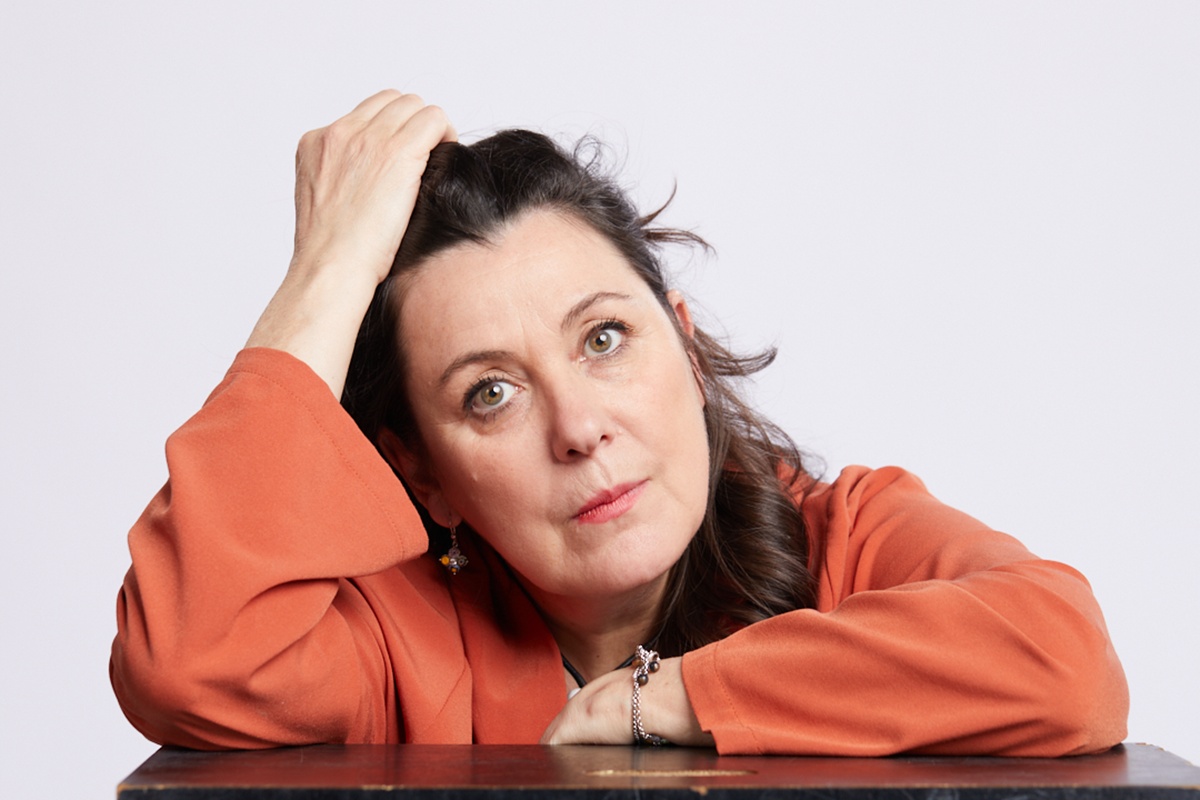
Cathy Bou - Photo : Nicolas Demare, Nidimages

The path of Cathy Bou is that of a professional who grew up with tourism.

Entering Thomas Cook as an intern in a travel agency in Arcachon, she builds there, over nearly twenty-five years, a rich and evolving career.

From travel agent to head of customer relations in the Paris region, she discovers the trade in all its dimensions: distribution, customer relations, the handling of sensitive situations, management, change management and the early challenges of sustainable development.

Driven by a thirst to learn and to share, she chose in 2015 to reinvent herself and earned a Master in Management of Corporate Social Responsibility (CSR) at the Conservatoire national des arts et métiers (CNAM). This training marked a decisive turning point: applying her tourism expertise to sustainable transformation.

She then founded Agapè, a consulting firm specializing in responsible strategy. Since then, she has supported companies, travel agencies, tour operators, event organizers and health sector actors in building models that balance economic performance, environmental responsibility and social impact.

Her journey has led her to speak at major international events such as the COP21, the G7 in Biarritz, the BIG trade show by Bpifrance, and the UICN World Conservation Congress, as well as with public institutions, large companies and reference organizations, including the Curie Institute.

Nothing in her background foretold this path. It is precisely this practitioner’s perspective, forged by on-the-ground experience as much as by strategic reflection, that now informs her analyses.

Through her columns in TourMaG, she defends a belief: the tourism of tomorrow will be built by balancing the health of businesses, the health of people and the health of living beings.


About Agapè

Agapè is a consulting firm in responsible strategy that assists organizations in their transformation efforts, certification processes, environmental assessments and capacity-building initiatives.

The firm primarily operates in the realms of tourism, events and health, with a strong conviction: responsible performance is born from balancing economic, human, environmental and governance dimensions.

It also rests on leaders’ ability to understand complexity, to make informed decisions and to act with coherence.

Through its consulting, auditing, training and digital solution development missions, Agapè helps organizations turn their commitment to responsibility into a genuine lever of performance, resilience and living beings preservation.

More than a consulting firm, Agapè develops an ecosystem of methods, tools and training designed to guide decision-makers through the transitions shaping tomorrow’s world.