Solo Travel in Europe: Popular Destinations Among the Riskiest

Traveling alone abroad allows you to discover a destination at your own pace, without having to take into account the wishes of others. But some countries are less suited to this type of trip… A ranking conducted by TripSIM scrutinized 40 European countries to evaluate the risks that solo travelers may face. Crime, road safety, the quality of care, or the feeling of safety in the streets: several criteria were taken into account. And some very popular tourist destinations appear among the lower-ranked.

Italy, Greece, Albania… These tourist destinations are among the riskiest

Voyageurs du Monde Among Europe’s Growth Champions


Voyageurs du Monde finalise sa sortie de la Bourse de Paris - Depositphotos

CroisiEurope


It is a ranking that should make the tourism industry green with envy.

The very industry, which has seen its margins and supplier commissions shrink year after year, is trying to find a future as earnings face tighter and tighter figures.

And yet, Voyageurs du Monde shows that another path is possible.

Often cited as an example, the tour operator has just been ranked among the 100 European growth leaders.


This ranking is published by the Growth Leaders Observatory, an independent, academic, non-commercial research observatory led by Francesco Castellaneta, professor of strategy and entrepreneurship at SKEMA Business School – Université Côte d’Azur, GREDEG.

“Forty listed French companies have grown their sales, profits, and shareholder returns over three years at the same time.

Vusion, GTT, Sidetrade, Voyageurs du Monde and LISI are among the most notable examples, in very different industries: from connected commerce to LNG transport, from financial software to bespoke travel and aerospace
“, commented Francesco Castellaneta, director of the Growth Leaders Observatory.


Voyageurs du Monde: Net income up 62%

Voyageurs du Monde achieves a very honorable 87th place, just ahead of two other tourism players, Valamar Riviera at 90th and Imperial Riviera at 92nd, Croatian operators.

To make it into the top 100, the French tour operator could rely on various economic indicators.

Thus, between 2022 and 2025, it posted revenue growth of 58% and net income growth of 62%. In the same period, its stock market performance rose by 103%, while the share performance in 2026 was up by 12%.

In 2025, Voyageurs du Monde’s revenues came 55% from tailor-made travel, 30% from adventure travel, and 15% from cycling.

The year 2026, marked by conflict, is expected to be less conducive to growth, as indicators have moved downward for several weeks.

The company also owns several accommodations worldwide, such as Satyagraha House, the Johannesburg home where Gandhi stayed in 1908, as well as Villa Nomade, a riad in Marrakech, Villa Bahia in Brazil, not to mention its ship Steam Ship Sudan.

Moreover, two new boats are expected by 2028.

As we revealed to you, in a previous article, the year 2026 marks the true deployment of the Voyageurs du Monde brand internationally. Not only that, but the company is expected to exit the Paris Stock Exchange very soon.


Voyageurs du Monde completes its exit from the Paris Stock Exchange

The operation was announced last July, exactly 20 years after the company’s stock market debut. The exit was scheduled for November 2026. On Wednesday, September 23, another milestone was reached in this direction, as Crowe HAF concluded the fairness of the withdrawal offer from a financial standpoint.

“The Crowe HAF firm, represented by Olivier Grivillers, named as independent expert, delivered on 21 September 2026 its definitive report concluding the financial fairness of the offer’s terms.

According to this report, the price of 180 euros per share matches the value derived from recent equity transactions and carries a premium of 9.8% on the discounted cash flow method and 13.9% over stock market comparables
“, explained the Ideal Investisseur site.

The next step is due to take place on 26 October 2026, prior to delisting.

This stock-market exit, as Alain Capestan had explained to us, responds to development goals, but also to the aim of attracting private equity funds.

Due to market constraints, some investors are not interested in this type of company. Now relieved of that burden, and with Certares owning more than 50% of the shares, Voyageurs du Monde is likely to open a new chapter in its history.

“In the medium term, nothing will change, as we will stay for another five years to complete this internationalization effort. After that, we will not remain at the helm forever. At some point, this story will end. We are in a slow process of handing over the business. We have recruited general managers across all structures and operational staff in the finance department, whereas before we handled these roles ourselves. We have structured the company, which has become a group“, the Voyageurs du Monde CEO told us.

Armstrong Redwoods State Natural Reserve: A Walk Among California’s Giants

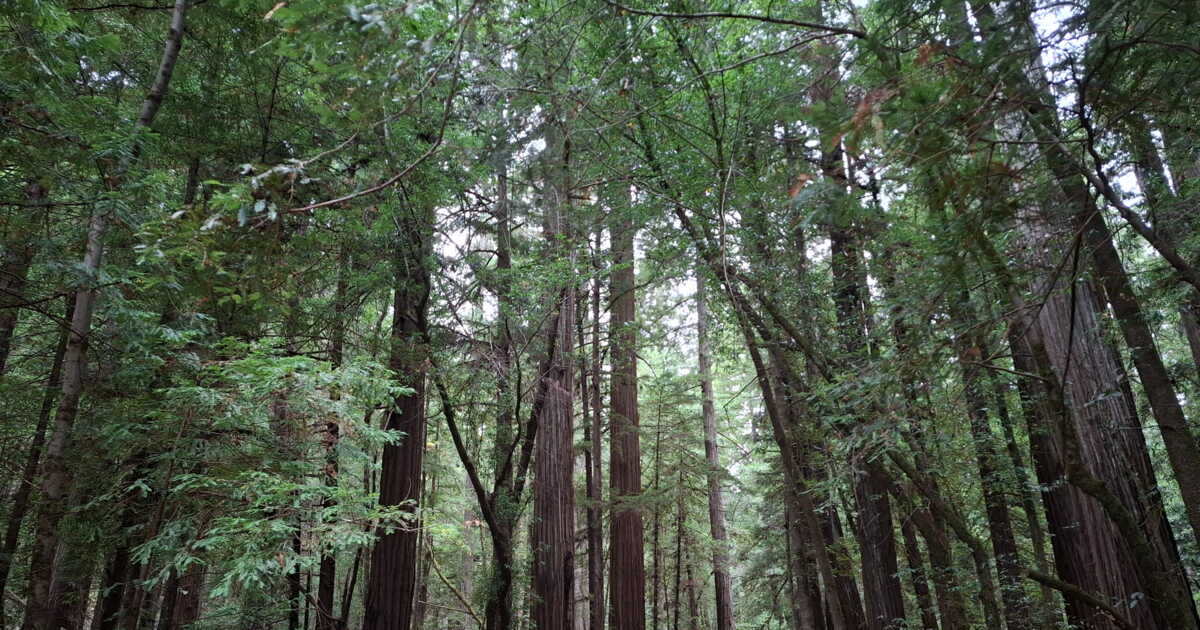
As you pass through California, take a moment to step away from the city’s frenetic pace. North of the Golden Gate across the bay that lends its name to the bridge bridging it, a multitude of natural wonders await. The sunlit vineyards of Sonoma or Napa counties, of course, and the charms of towns such as Petaluma, certainly. But also the austere verticality of the coastal redwoods, an endemic species of the Pacific coastline of North America, which carpets the fog-swept valleys.

Silence falls as soon as you enter Armstrong Redwoods State Natural Reserve in Sonoma County. The city noises fade and vanish among the colossal trunks of the local giants: the coastal redwoods, silent witnesses to the area’s history — from Indigenous customs to the rise of Silicon Valley’s titans, through the Hispanicization and then Americanization of California. Explanatory panels and clearly marked paths guide the walker among the trees: don’t wander off, you would threaten the local species.

A Millennium of History Before Humans

Before becoming a reserve, these woods were first a inhabited territory. Not even two centuries ago, the sequoia clearings welcomed Indigenous populations. Kashaya Pomo, South Pomo, and Coast Miwok would gather there to trade, play, dance, and sing. Under the trees, dwellings were built with the thick bark of the sequoias, sufficiently insulating to keep the heat. The youngest learned the gestures that would allow the group’s know-how to be perpetuated: weaving baskets, shaping flint, working the materials offered by the forest.

Then California’s face changed. At the end of the 19th century, timber operators began to tackle the vast sequoia forests that covered the region. It was in this context that Colonel James B. Armstrong of Ohio settled in California, giving his name to the park’s oldest giant, a 93.9-meter-tall behemoth born 1,400 years ago.

Facing the scale of tree felling, the colonel and his family bought land and positioned themselves as early local guardians of these forests. Armstrong died in 1900, but his battle continued. His family and friends carried on with the efforts to protect the woods. Armstrong Woods eventually became a county park in 1916, before joining the California State Parks system in 1934. The Armstrong State Redwood Reserve today protects about 326 hectares of forest. It constitutes the largest stand of first-generation redwoods accessible to the public in Sonoma County, and offers a unique glimpse into what the great forests that once covered the region looked like.

Parson Jones, the Reverend Friend of Trees

At Armstrong Redwood, history is written in the trees: the tallest of these woods, the Parson Jones Tree (94.5 meters), bears the name of Reverend William Ladd Jones, known as Parson Jones, a missionary pastor of the Congregationalist Church. He served in the gold-bearing Sierra regions, the sequoia forests around Eureka and the San Francisco Bay. For many years he was a neighbor and friend of James Armstrong and his two daughters. The tree that bears his name will outlive him, by far! It is around 1,300 years old.

The tree dedicated to Reverend Parson Jones is the largest of these woods.

In the Fog, Life

Today the coastal redwood, Sequoia sempervirens, is the largest living thing on Earth. Its endemic natural range is reduced to a narrow stretch along the Pacific Coast, from southern Oregon to central California, rarely more than 80 kilometers from the ocean. Here the coast’s characteristic fog becomes vital: it regularly envelopes the trees, limits the forest’s drying, and brings moisture to an ecosystem that many animal and plant species depend on.

The roots of Sequoia sempervirens reach close to the surface underground, but also extend for dozens of meters around the trunk, intertwining with those of neighboring trees. This subterranean architecture gives them stability against winds and helps capture surface water. When fog condenses on the branches, the water drips to the ground and joins the forest litter, that thick layer of organic matter made up of needles, leaves, bark, and plant debris. Moss, lichens, and roots then help hold and redistribute this precious moisture.

Millennia later, the redwood has proven its capacity to adapt. History shows the species has weathered many climate shifts. After a fire, a storm, or the felling of a tree, the immense root system can sprout new shoots around the stump. Look around you: these young trees sometimes form nearly perfect circles, fairy rings. What might appear to be a cluster of distinct trees is in fact the vegetative offspring of a single individual. An entire forest can thus carry the physical memory of a vanished tree.

Just a few meters above the walker, another scene unfolds. A large portion of animal life concentrates in the canopy, sometimes more than 60 meters above the ground. The cry of a raven breaks the stillness, followed by the hammering of a woodpecker or the rustling of a gray squirrel. Red tree voles also move among the heights and feed especially on the needles of Douglas firs. Down below, a black-tailed deer may cross the undergrowth, while a banana slug glides between the damp leaves. Gray foxes, pumas, raccoons, coyotes, acorn woodpeckers, and Steller’s jays also roam the forest, but often far from human eyes.

At Armstrong Redwood, the fog soaks the branches, the roots surge from the soil, lichens retain the moisture, and fallen trees give rise to new life. The visitor, for his part, is only a passing guest. Let it remain so.

MTS Globe Egypt: Growing Popularity Among French Travelers


A Destination Driven by an Exceptional Momentum

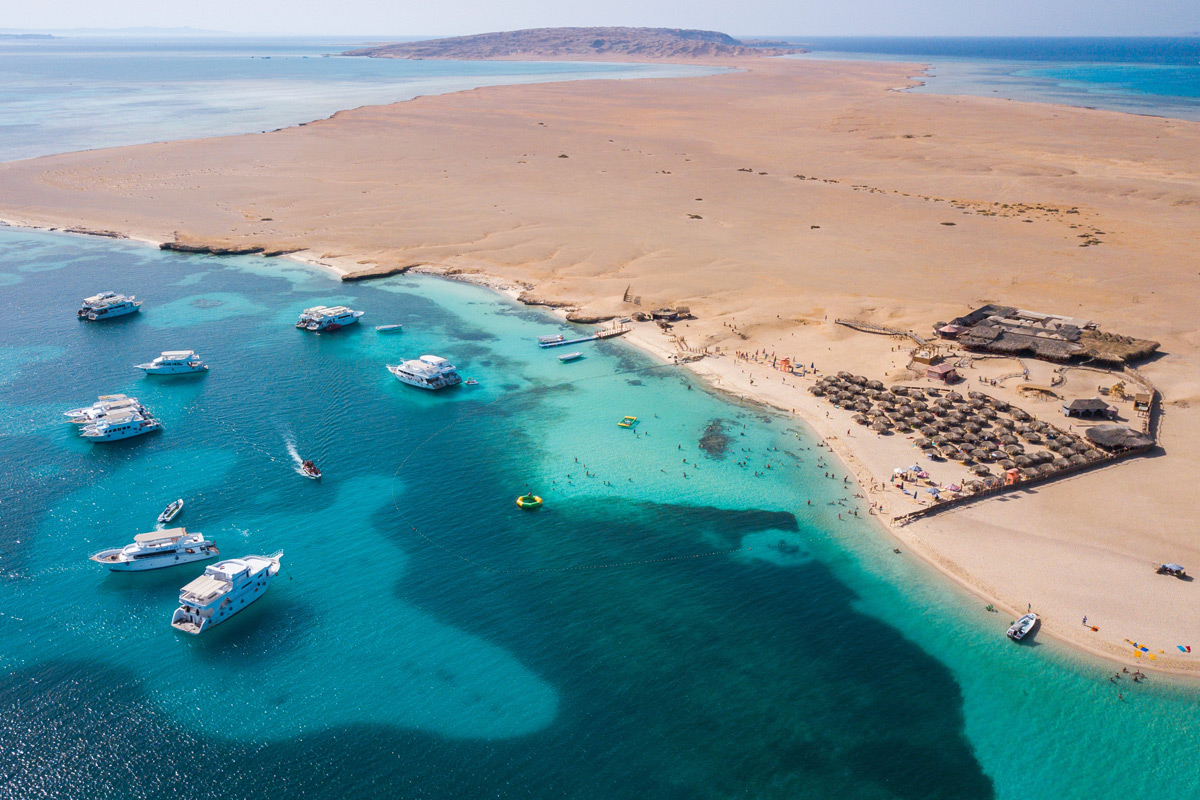
L’île de Giftun, Hurghada, Égypte © Shutterstock

Climats du Monde


With 19 million international visitors welcomed in 2025, Egypt confirms its status as an essential destination. The French market fully participates in this momentum, driven by the appeal of cultural tourism, year-round sun-filled stays, and the opening of the Grand Egyptian Museum (GEM).

One of the destination’s main strengths lies in its diversity. In a single trip, visitors can combine cultural discovery, a Nile cruise, and a beach stay.

Three major regions particularly attract French clients:

• Cairo and Giza, with the pyramids, the Sphinx and the new Grand Egyptian Museum (GEM)

• Upper Egypt, where cruises between Luxor and Aswan allow visitors to discover the most famous treasures of ancient Egypt

• The Red Sea, with destinations such as Hurghada, Marsa Alam and Sharm El Sheikh, valued for their beaches, hotel infrastructures and exceptional underwater life

This unique blend of culture, relaxation and adventure explains Egypt’s growing appeal to French travelers.


Why Egypt Is More Appealing Than Ever to French Travelers


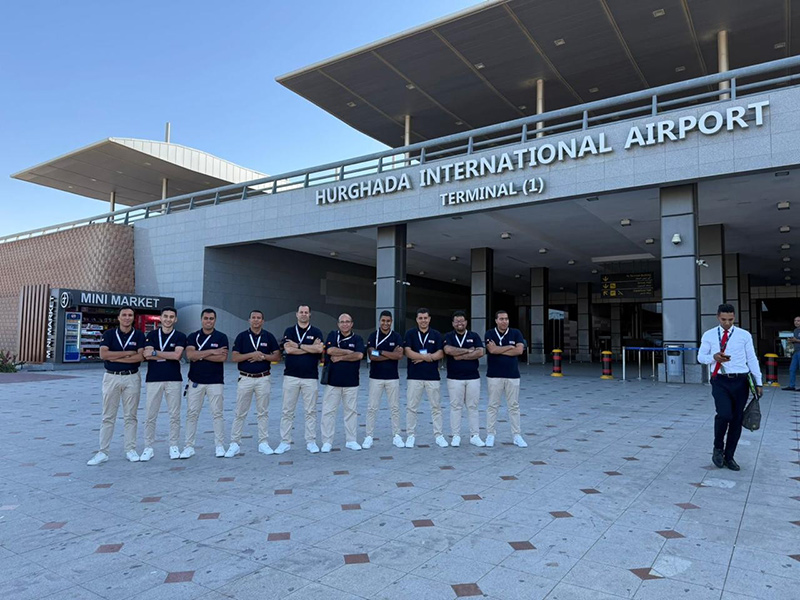
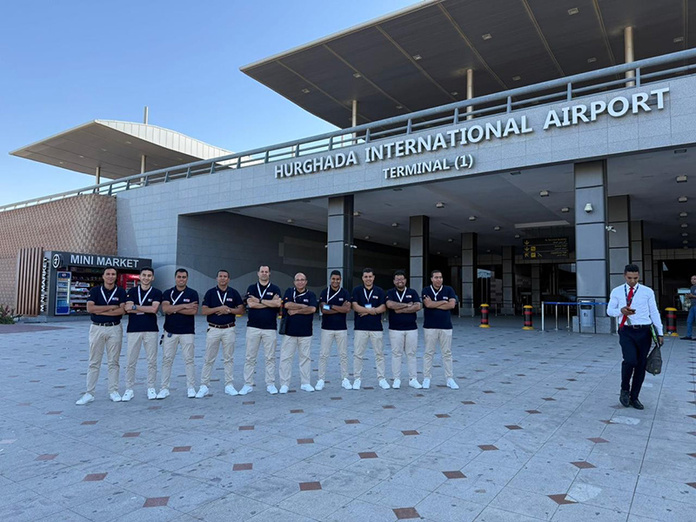
Personnel de l'aéroport © MTS

Beyond the richness of its tourism offering, Egypt captivates French clients thanks to its excellent value for money. The destination offers a wide range of all-inclusive hotels and French-speaking clubs, ranging from family-friendly establishments to high-end resorts, particularly concentrated in the Red Sea coastline resort towns. The presence of French-speaking staff during excursions and within on-site support teams is a real asset, facilitating the vacation experience for visitors throughout their stay. This combination of accessibility, comfort and service quality greatly contributes to the destination’s growing appeal to the French market.


MTS Globe Egypt, a Reference Partner


Transferts MTS © MTS

MTS Globe Egypt offers its services across all major tourist zones of the country. Thanks to its in-depth on-the-ground knowledge, operational excellence and product expertise, the team supports its B2B clients on a daily basis, both for FIT and for Groups.

With a portfolio of more than 400 hotels under contract, MTS Globe Egypt covers all of the country’s strategic destinations:

• Hurghada

• Sharm El Sheikh

• Marsa Alam

• Cairo

• Luxor

• Aswan

• Alexandria

The services offered include, notably:

• Hotel contracting

• Airport transfers and transportation services

• Welcome and arrival assistance

• Excursions and activities

• Tailor-made programs and combined circuits

• Nile cruises

• Destination assistance and support

French-speaking representatives accompany travelers throughout their stay to ensure a smooth and high-quality experience from arrival to departure.


The MTS Globe Egypt Team

The MTS Globe Egypt team relies on solid operational experience and a thorough knowledge of the destination to guarantee partners and their clients high-quality services.

Amr Shahine Amr Shahine
Service & Commercial Manager
[email protected]
>> MTS Globe in the DESTIMAG Directory

Slow Travel and Solo Travel Are Growing in Popularity Among Europeans


Le slow travel et le voyage en solo progressent - DepositPhotos.com, melis82

MSC Croisières


Dertour Group publie les résultats d’une étude consacrée aux nouvelles façons de voyager des Européens.

Réalisée auprès de 8 000 personnes dans 13 pays européens, l’enquête met notamment en évidence l’intérêt pour des séjours plus lents et pour le voyage en solo.

Parmi les personnes intéressées par le slow travel, 58,5% souhaitent prendre davantage leur temps pour découvrir une destination sans se sentir pressées.

Pour 52%, ce mode de voyage est associé au bien-être et à la réduction du stress.


A quest for disconnection

La déconnexion numérique apparaît également comme une motivation importante.

48,9% des répondants considèrent les vacances comme une occasion de s’éloigner des réseaux sociaux et des sollicitations numériques. Cette proportion dépasse 50% chez les 25-44 ans.

Le rapport souligne aussi l’émergence du profil du voyageur JOMO (Joy of Missing Out), qui privilégie un nombre limité d’expériences plutôt qu’une accumulation de visites.


Solo travel is on the rise

Près de 30% des personnes interrogées envisagent de voyager seules dans les douze prochains mois.

Cette proportion atteint 37,6% chez les célibataires, tandis qu’environ un quart des personnes en couple ou mariées envisagent également un voyage en solo.

La France figure parmi les marchés les plus favorables à cette tendance, avec 32,2% des répondants envisageant un voyage seul, derrière l’Allemagne et la Suède.

Les voyageurs solo séjournent par ailleurs en moyenne 10,4 jours, contre 8,9 jours pour l’ensemble des voyageurs, et partent davantage hors saison.

Dertour Group indique enfin développer des offres adaptées à ces nouvelles attentes, avec notamment des circuits « GowiththeFlow », les Blue Cruises d’I.D. Riva Tours ou encore le concept hôtelier Slow Glamour d’ananea.

Relais & Châteaux: Two French Properties Among the Ten New Entrants


Relais & Châteaux s'agrandit avec l'arrivée de dix nouveaux établissements - Photo : Maison des Cimes

Costa Rica


The Relais & Châteaux association officializes the accession of ten new properties in the hotel and gastronomy sector joining its network.

These incorporations illustrate the brand’s commitment to celebrating the cultural diversity and heritage of each region.

Laurent Gardinier, president of Relais & Châteaux, reiterates the organization’s stance: « Our Association has embarked on a sustainable path, one that contributes, through dining and hospitality, to building a world that is more respectful, more supportive, and in harmony with living beings. »

Among the ten new entrants are two French establishments. Beginning with La Maison des Cimes in Malbuisson, in the Jura, which will open in August 2026.

Located on the shores of Lake Saint-Point, this eight-room hotel (including two suites), from 250€ per night, is led by chef Matthias Marc. It houses the fine-dining table La Table des Cimes and the traditional bistro Le Bistrot des Bûcherons (to open in November 2026).

Inside and outside, Relais & Châteaux La Maison des Cimes adopts the local architectural codes. True to the spirit of the building once a carpenter’s workshop, wood reigns on the walls and floors of the six rooms and two suites, each offering a Nordic bath on its balcony.

And then, Megève Bois, a 13-room chalet (including 1 villa and 5 suites
), from 700€ per night, which provides direct access to the La Princesse ski lifts, leading to Mont d’Arbois. It features a gourmet restaurant, The Andrew, and a second refined Franco-Italian dining option, Le Simon, as well as a well-equipped spa (steam sauna, Himalayan salt relaxation room, body and facial treatments, including a ritual immersion in a heated Alpine hay bed).


Who are the other new members?

The collection welcomes eight more addresses with varied profiles :

– Verride Palácio de Santa Catarina (Lisbon, Portugal): This 18th-century palace restored comprises 18 rooms and suites, along with a roof-top terrace overlooking the Tagus. The cuisine is led by chef Fabio Alves across the Suba and The Lisbon Club 55 restaurants.

– Masseria Auraterrae (Polignano a Mare, Italy): This 18th-century historic estate in Puglia features 22 rooms and a restaurant that highlights seasonal Adriatic produce.

– Quintonil Restaurant (Mexico City, Mexico): This two-Michelin-starred dining destination under chef Jorge Vallejo with his partner Alejandra Flores offers a contemporary interpretation of traditional Mexican cuisine.

– Relais Villa Corallo (Sant’Omero, Italy): Nestled in the Abruzzo region, this 19th-century 11-room residence presents terroir-focused cuisine from Zunica 1880, a Michelin-starred restaurant.

– Hiiragiya (Kyoto, Japan): Run by the same family for seven generations, this 23-room ryokan offers an immersion into traditional Japanese hospitality, with dinners served in a Kyo-Kaiseki style room.

– Villa Florhof (Zurich, Switzerland): This historic building underwent three years of renovation under Lalique’s direction. It offers 13 rooms and a gastronomic dining room led by chef Christian Jürgens.

– Wilderness Reserve (Sibton, United Kingdom): This 2,500-hectare estate in Suffolk presents several lodging formats (manor, cottages, and thatched-roof houses) totaling 29 villas and 8 rooms, complemented by the dining rooms The Dining Room and Fire Feast.

– The Nell New York (New York City, United States): Located at 10 Rockefeller Plaza, this Art Deco-inspired hotel with 134 rooms (opening planned for autumn 2027) houses a fine-dining restaurant on the 17th floor with views of the Rockefeller Center, a 325 m2 spa, and a tasting salon.