Women Changing the Face of the Australian Outback


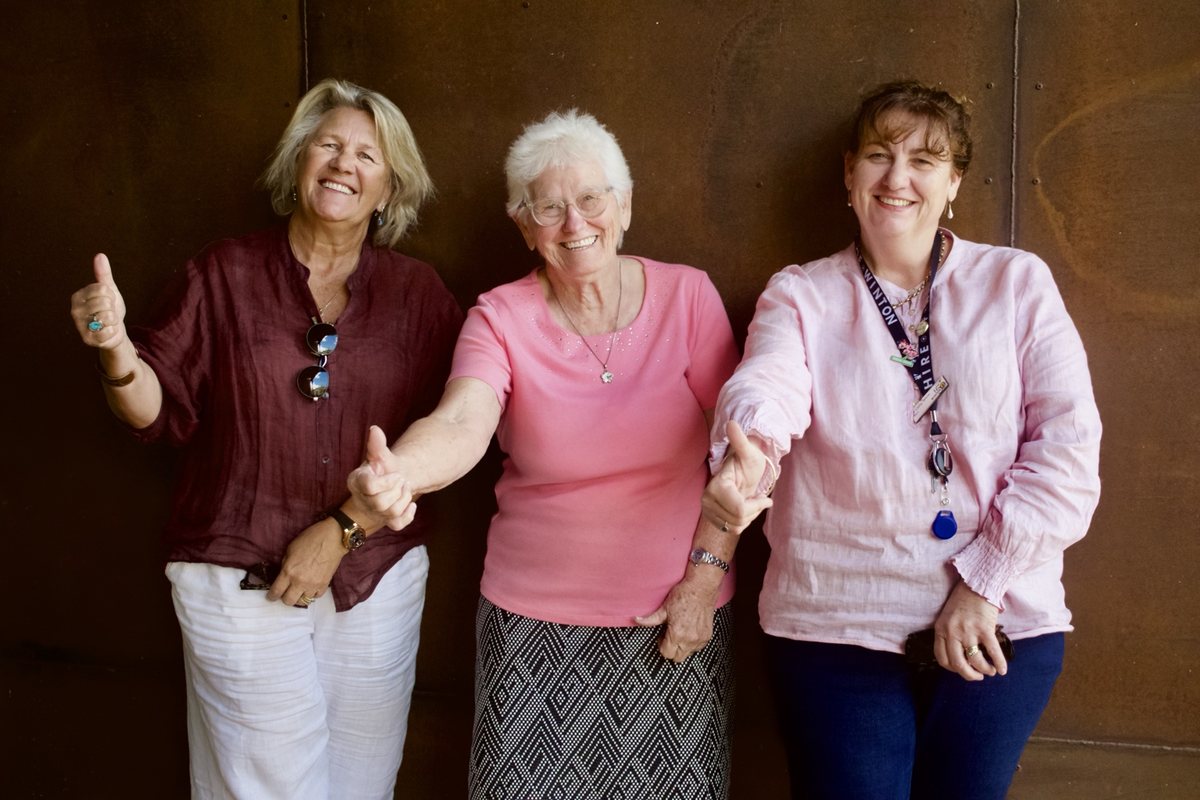
À Winton, trois générations de femmes qui, chacune à leur manière, participent à faire vivre et raconter l’Outback - Photo : Sébastien Cros / WeTravelAustralia

Climats du Monde


I did not come to the Outback to write an article about women.

For three weeks, with my niece Marion behind the camera, our travel diary for TourMaG was meant to tell a territory, its routes, its landscapes and above all those who live there.

Yet, along the kilometers, something began to catch my attention.

At the entrance of a bush hotel, behind the bar of a pub, in an open-air cinema, in the middle of a kangaroo sanctuary, in an art gallery or behind the barriers of a rodeo, they were there.

Not necessarily where the traditional Outback imagination would have placed them, and rarely occupying the spotlight to claim their role. They worked, created, welcomed, transmitted, led.

It took me several steps to understand that this sequence of encounters might tell us something about today’s interior Australia.


In Broken Hill, another story behind the miners’ tale

It’s probably in Broken Hill that the thread began to unfold.

Artist Amanda Johnson belongs to the fourth generation of a family from this mining town on the edge of the desert.

In her studio, her paintings tell of the bush, but also of the women who inhabited it. One of her most revealing works was born from a commission for the centenary of the Country Women’s Association. They initially asked for a painting.

While poring over the association’s archives and a century of local history, Amanda felt that a single painting would not suffice. She ultimately built her narrative across several panels, tracing the achievements of these women by era.

Listening to her, I began to view Broken Hill differently. The city isn’t devoid of masculine legends. Miners went underground, fortunes were made and lost, BHP was born here and the “line of lode” belongs to Australian industrial mythology.

But beside this story existed another reality, perhaps less spectacular but just as fundamental: women raising families, organizing the community, working, caring, bearing isolation, and sustaining lives built around the mine.

Amanda wasn’t trying to rewrite this history. She was complementing it. And this nuance would accompany me for the rest of the journey.


In Winton, intuition becomes evident

A few hundred kilometres further north, Winton would reveal a completely different face to this feminine presence.

This small town in Queensland is associated with some of Australia’s great myths: Waltzing Matilda, the dinosaurs, the origins of Qantas, the vast cattle stations of Western Queensland.

Historically, the world here has been deeply masculine. When I speak with several residents about the impression the town gives today, the same story returns: that of the shearers, the men of the properties, old street fights, a harsh culture shaped by work and isolation.

And yet, the Winton we encountered exuded something else. The town now has as mayor Cathy White, the first woman to hold that role. Lydia Evert, she, oversees the Royal Theatre, one of the last outdoor cinemas still operating in Australia.

In this corrugated-iron venue opened in 1918, handed down in her husband’s family since 1937 and still run by volunteers, locals used to come to dance, attend boxing matches, meet up and sometimes fall in love.

Lydia doesn’t merely preserve the walls: she keeps a place alive where a community continues to gather under the stars.

Elsewhere in Winton, other women lead, undertake, organize events, welcome travelers or take care of wildlife.

In a wildlife refuge in Winton, Marion found herself with a young kangaroo in her arms. This kind of encounter speaks volumes about the Outback: a door opens, someone begins to share their daily life and, a few minutes later, you step into a fragment of their life. These are not staged attractions. They are people who agree to share their world.


Amanda-Lyn Pearson: taking the bush codes and reinventing them

Then we met Amanda-Lyn Pearson. The night before, she had been under the lights of the Dusty Hour: sequins, a top hat, acrobatics and the crack of the stockwhip.

The next morning, with an Akubra on her head and boots on her feet, she guided us through Crackup Corner, the remarkable HQ she built at the edge of Winton with her husband Will.

Amanda-Lyn grew up in remote Australia, often on the road. She wanted to be an artist without really knowing how one could practice this craft from the bush. She learned, traveled, sought skills and performed in different places around the world before the Western Queensland finally asserted itself as an obvious choice: “It felt like home.”

What she does today is hard to classify, and that is precisely what makes it compelling. The Crack Up Sisters borrow from traditional bush arts, the stockwhip, circus, burlesque, acrobatics and clowning to tell Australia in their own way.

She does not reject the old Outback codes. She takes them, plays with them and carries them elsewhere. When we discuss Winton and its evolution, Amanda-Lyn also revisits this masculine story.

The dinosaurs arrived, tourism developed, the town changed. And with it, another energy became more visible. It was at that moment that I stopped thinking my encounters were coincidences.


In small towns, the ones that keep the door open


Guardians, but above all facilitators

One English word kept returning to me during this journey: custodian. “Guardian” would be its most immediate translation, but it remains imperfect.

For these women, they do not stay still protecting an idealized vision of the past. On the contrary. Many of them take what deserves preservation and find a way to pass it on, sometimes reinventing it, for a new generation, for a new generation.

Lydia keeps a cinema that is more than a century old alive rather than a museum piece.

Amanda Johnson brings an otherwise less visible history into painting.

Amanda-Lyn turns bush gestures into contemporary spectacle.

Others protect wildlife, lead a community, host an event or open the door of a pub every morning to travelers from the other end of the country.

To preserve and to evolve, moving together. Perhaps that, at heart, is what touched me most about them.


Another way of telling the Outback to French travelers

For French tourism, this story isn’t merely anecdotal. It speaks to how we might tell the story of the Australian interior.

The Outback will continue to captivate with its red tracks, its cattle stations, its stockmen, its road trains, its centenarian pubs and its rodeos.

It is certainly not about erasing this imagery: it belongs to the country and remains deeply alive. But stopping at that image would today amount to telling only part of the story.

Contemporary travel can also enable meeting the artist who paints the memory of the Broken Hill women, the one who turns the stockwhip into stage language in Winton, the woman who keeps a cinema under the stars, the one who rescues injured kangaroos, or those who work behind one of the country’s great rodeos.

These are precisely the encounters that turn an itinerary into immersion. And they remind us of something our 5,000 kilometers taught us: in the Outback, the territory can never be fully understood from the road. You must stop, push a door and speak to those who live behind it.


The women who changed my view of the Outback
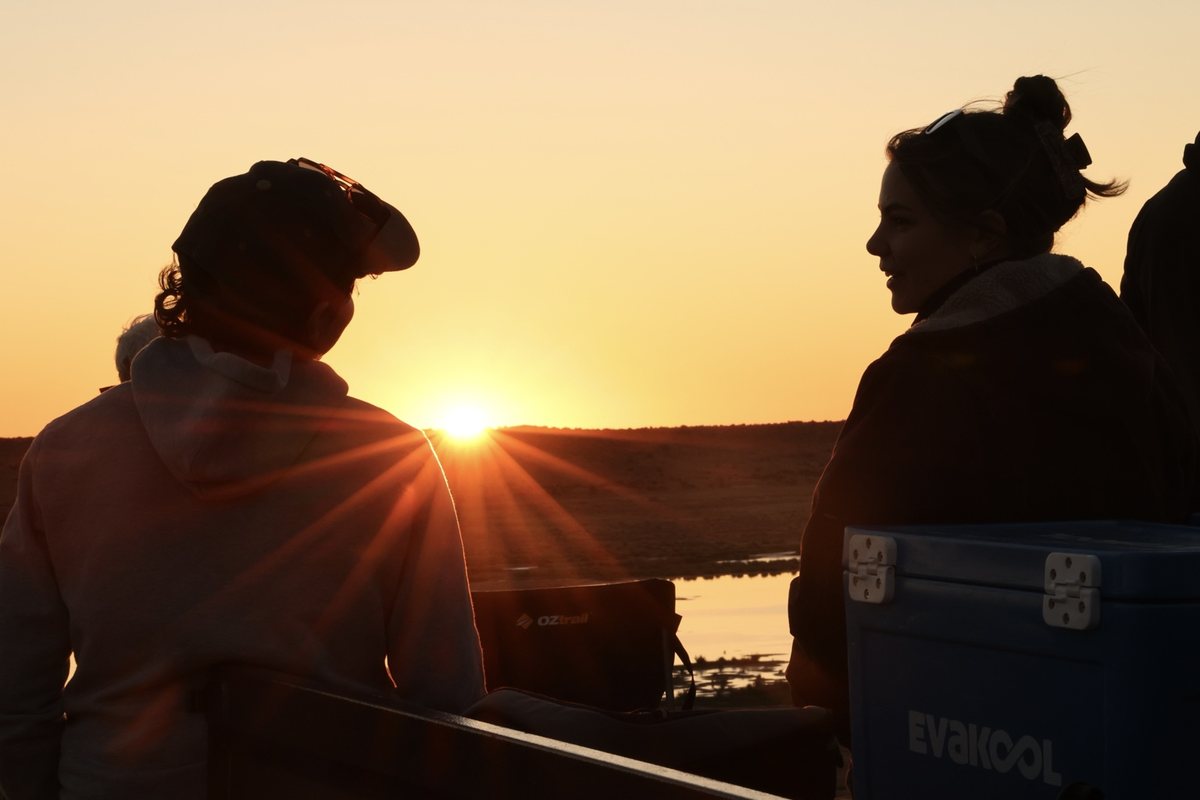

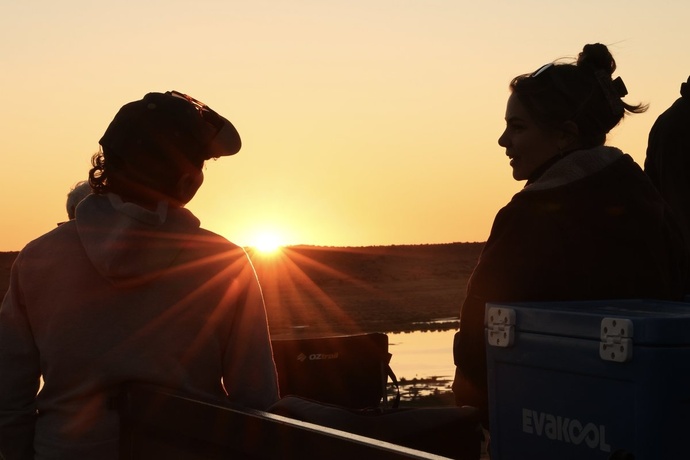
Sur la route, au coucher du soleil : au fil des rencontres, les femmes de l’Outback ont fini par changer ma manière de regarder ce territoire - Photo : Sébastien Cros, WeTravelAustralia

At first, I thought I would find one of the last territories where the masculine imagination of Australia fully survived: miners, stockmen, cattlemen, pilots, cowboys. They were there, and some offered extraordinary encounters.

But that isn’t exactly how I view the Outback today. Behind its most visible myths, I met women who preserve its memory, keep its communities alive, and, without necessarily seeking to proclaim it, are already helping write what it will become.

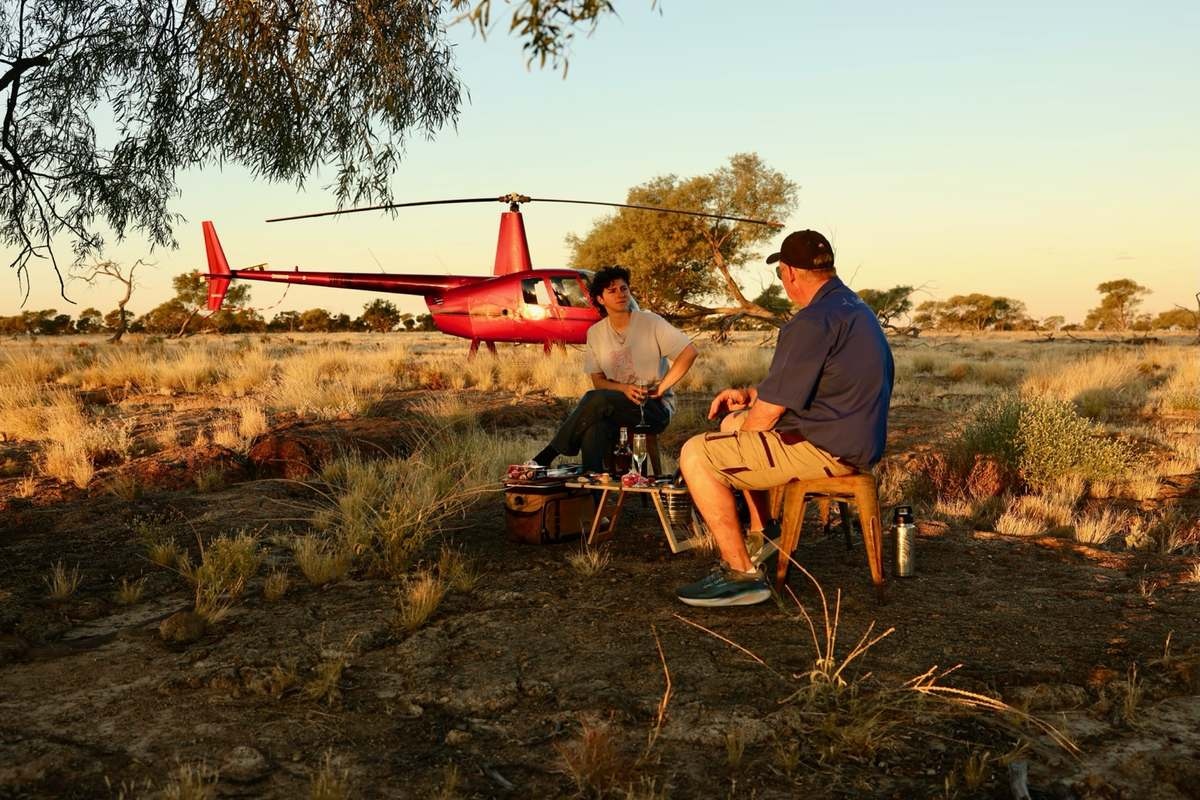
In Big Red, to the west of Birdsville, I photographed Marion at sunset in the middle of a conversation with a young woman from the Birdsville Hotel team.

Two silhouettes against the desert, almost nothing around them, just a conversation as the sun disappeared behind the dunes. I did not yet know that this photograph would probably become the last image of this story.

The road went on. But the women I met along the way had changed the way I looked at the Outback.


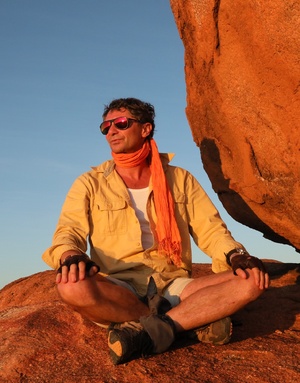
Sébastien Cros
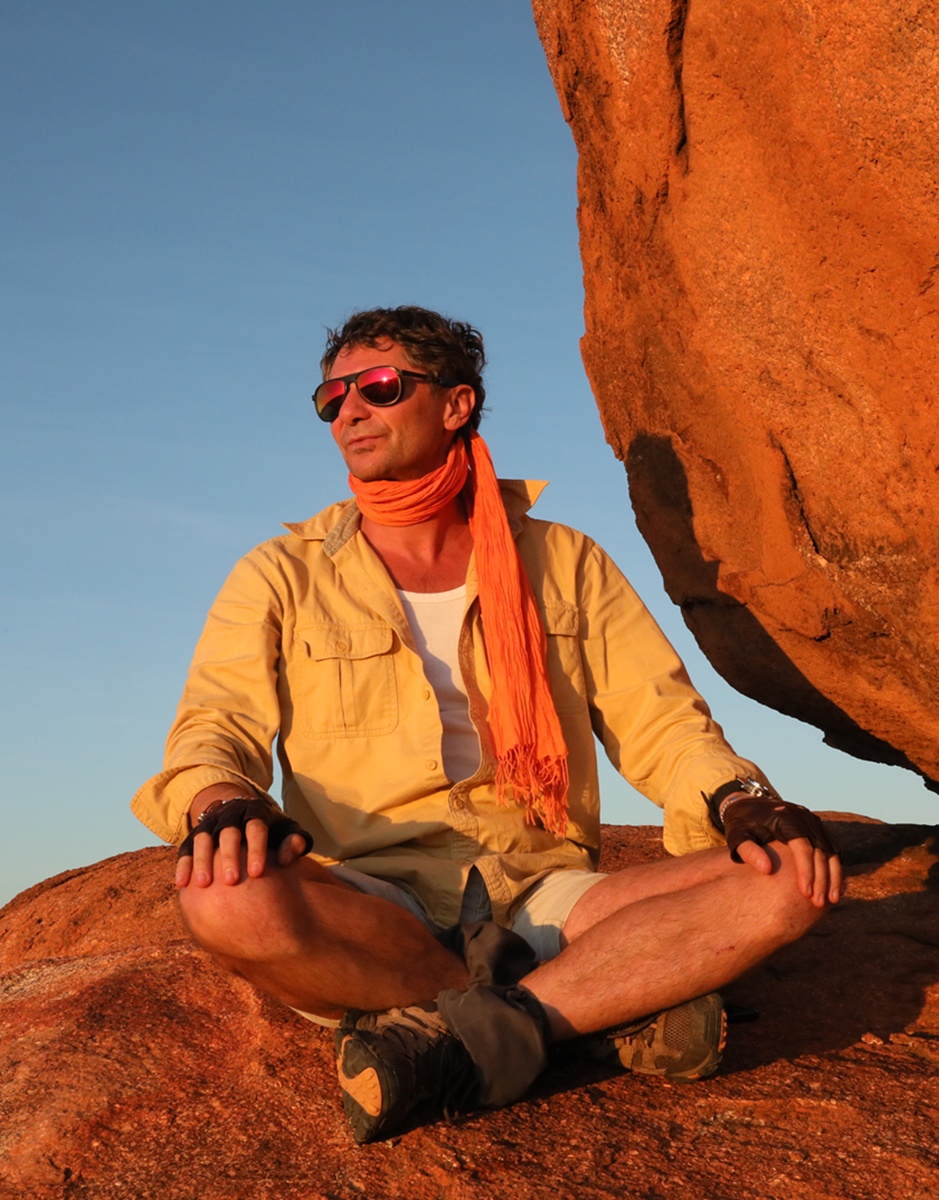

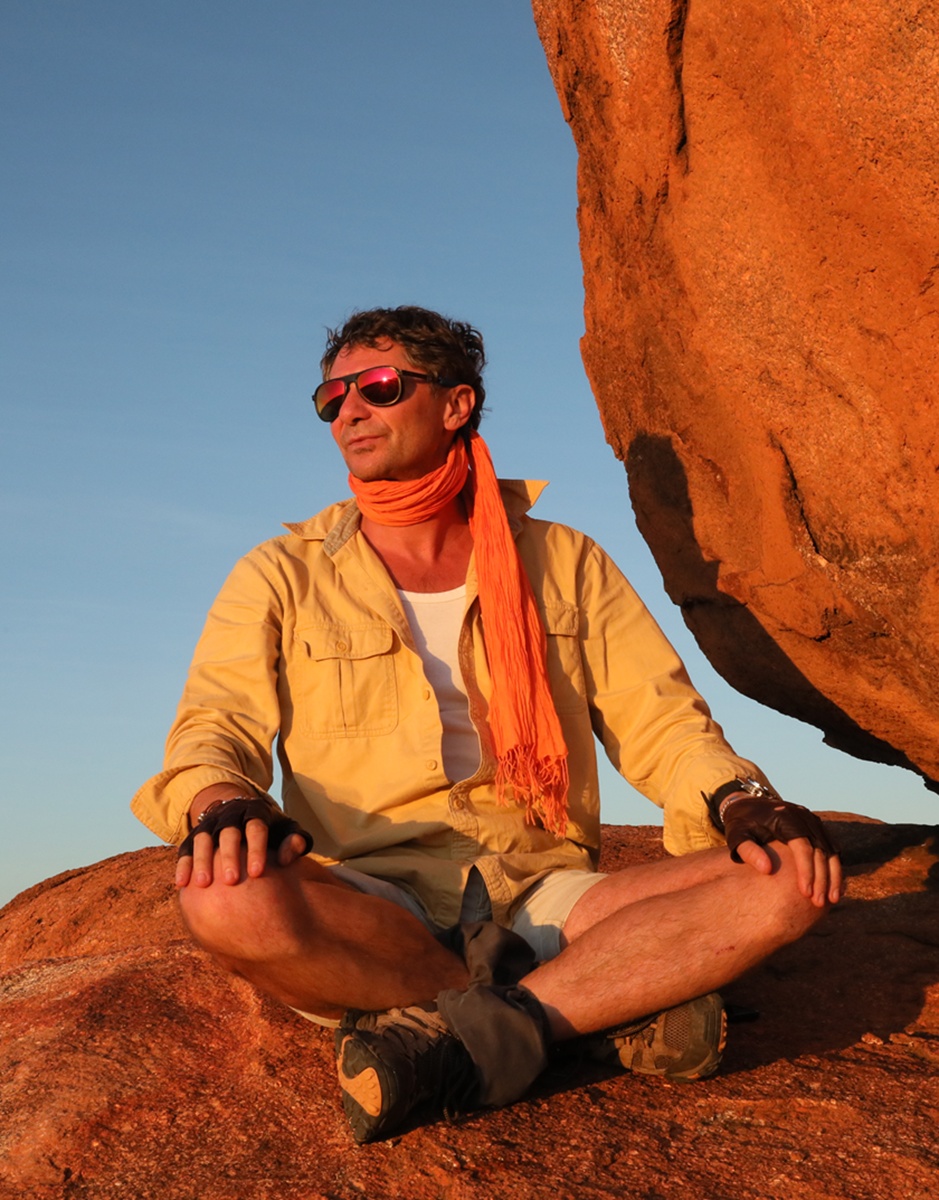
Sébastien Cros - Photo : SC

Sébastien Cros is an independent journalist and photographer based in Australia, founder of WeTravelAustralia™.

After twenty-five years in the Australian travel industry, notably as Managing Director of Across Australia (Goway group), he now dedicates his writing to editorial narratives focused on the destination, at the crossroads of storytelling, photography, and on-the-ground perspectives.
Experience the Real Australian Bush Life Near Darwin at This Lodge

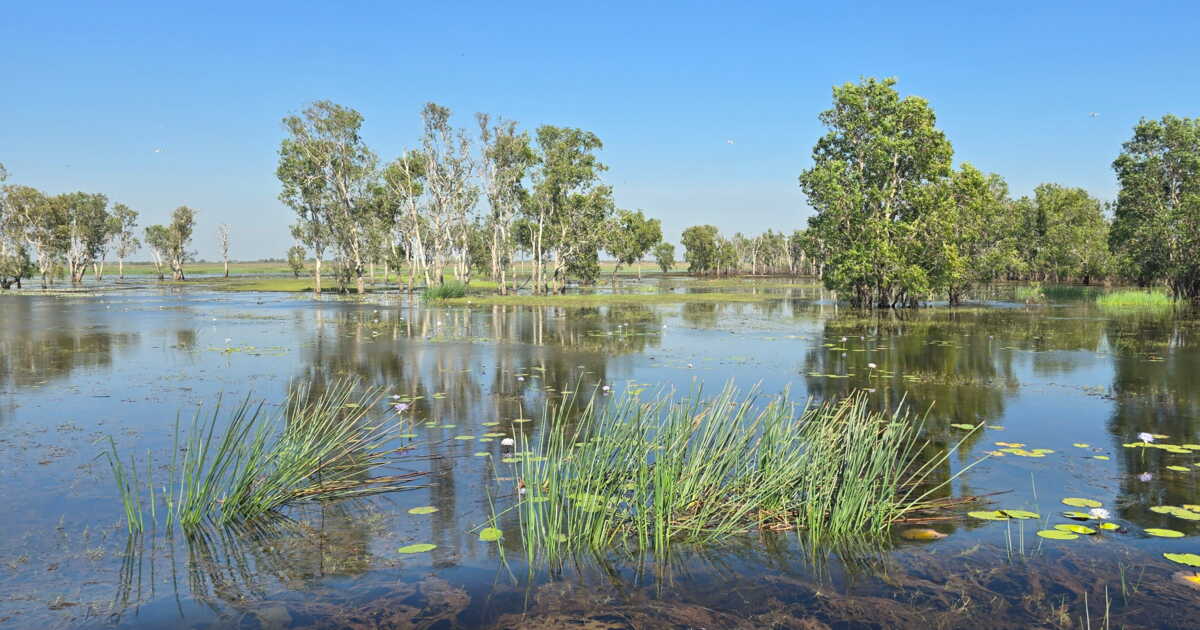
After a stretch of red dirt road, less than two hours from Darwin, the landscape gradually reveals a different face. Fences fade into tall grasses, termite mounds rise in the middle of the plains, and wetlands become the realm of birds and crocodiles. In June, while we were filing a report in the Northern Territory, we discovered the Finniss River Lodge, nestled at the heart of a vast cattle operation. An immersion accessible right at the core of Australia’s Top End.

In a Real Australian Family Station

The Finniss River Lodge story begins with Leo Venturini in 1987, when he purchases this enormous property spanning more than 20,000 hectares. Nearly forty years later, it still belongs to the family and functions first and foremost as a cattle station typical of the region, with around 4,500 head of cattle. Since 2022, however, the family business has diversified with the creation of the lodge, steered by his granddaughter, Olivia.

Staying at the Finniss River Lodge thus means stepping into the workings of a genuine cattle station. The wet season measures its reach. When rains push the water levels up by several meters, the roads can disappear under the floodwaters and cut the property off from the rest of the world. An airstrip enables the arrival of a small plane, and a helipad is also planned for helicopters. Large tanks collect rainwater, enabling the lodge to be entirely autonomous in its water supply.

With six rooms only and a pool facing the floodplains, the place can accommodate at most a dozen guests. Two guided excursions are organized each day, in the morning and late afternoon, and the small capacity makes it possible to travel with a guide in a very small group, or even individually. The station can be explored by 4×4 or by boat, observing the animals, discovering the different ecosystems of the property (floodplains and wetlands, paperbark forests, wooded savannas, pockets of rainforest, and coastal and mangrove zones) or learning about the station’s work. Depending on the season, one can witness the cattle gathering, see the animals move through the enclosures, or participate in certain tasks.

And then there is the “Cows and Canapés.” At sunset, visitors join a small group for the pre-dinner apéritif with a group of fewer than a hundred cattle selected for their particularly sociable temperament. The cows come of their own accord, seeking strokes, and some do not hesitate to lick hands or legs. A rather unconventional way to discover Brahman cattle, recognizable especially by the shoulder hump and their long ears. Native to tropical regions, they endure the intense heat and the harsh conditions of northern Australia.

From Giant Termite Mounds to Crocodiles, Wildlife to Discover

But the cattle are far from the only animals encountered here. The lodge’s guides are invaluable allies for discovering this wildlife: with so few visitors, you can take the time to pause, observe, and above all learn things that would easily escape an untrained eye. Without a guide, a termite mound might be just a big dirt bump at the edge of a track. But with someone who knows the bush, it becomes the starting point for a true lesson on insects, their organization, and the architecture of their habitat.

Did you know, for instance, that some Top End termite mounds reach six to eight meters tall, growing by about a meter every ten years? Inside, the termites construct a genuine network of galleries that allows them to regulate temperature naturally. Heat enters through certain parts of the mound, air circulates through the galleries, and exits through other openings. This natural ventilation system keeps interior temperatures much steadier, despite the scorching heat outside. This architecture is all the more remarkable because it is built and maintained continuously by tiny insects.

And these structures serve other species as well. The forest kingfisher (Todiramphus macleayii) uses the termite mounds to install its nest. To carve the entrance, the small bird darts at the wall with its beak leading, striking repeatedly in violent blows. And as our guide explained, it is this same bird that inspired an invention seemingly unrelated to the Australian bush: the nose of the Japanese Shinkansen.

In the 1990s, engineer Eiji Nakatsu sought to solve a problem faced by high-speed trains: when they entered a tunnel, they produced a large pressure wave that caused a deafening roar as they exited. By studying the shape of the kingfisher’s bill, particularly its streamlined profile, he conceived this principle to design the nose of the Shinkansen 500. The new shape significantly reduced the pressure wave and noise, while improving the train’s energy efficiency.

Even around the lodge, there’s no need to search far to find other inhabitants. At dawn and dusk, wallabies are everywhere, while Corella cockatoos number in the dozens in front of the rooms. More generally, the property is a paradise for birdwatchers, its wetlands and papyrus swamps hosting more than 1% of the world’s population of certain water birds (such as the semipalmated canaries), which classifies the site as an aquatic ecosystem of high conservation value.

Then comes the crocodile, the undeniable star of the Top End. On the property, you can observe the two species present in northern Australia: the saltwater crocodile (Crocodylus porosus) and Johnston’s crocodile (Crocodylus johnstoni). The former is decidedly more aggressive and imposing. It can live in freshwater, brackish, or marine waters. The latter, smaller, stays mainly in rivers, billabongs, and freshwater wetlands. In an airboat, the guide also explains how the station’s inhabitants live with these predators.

A coexistence that comes with its share of surprises: it is not uncommon to see cattle wading into water bodies, despite the presence of the reptiles. There are even occasions when cows are killed by them. But when temperatures rise, they do not hesitate to venture into the water, where they find both cooling and food.

Near Darwin, the Finniss River Lodge thus offers a concrete glimpse into the daily life of the extreme north of the country, between cattle farming and wildlife. A first approach before continuing on to Litchfield and Kakadu National Parks.

Darwin: The Australian City Where the Outback, Aboriginal Culture, and Asia Meet

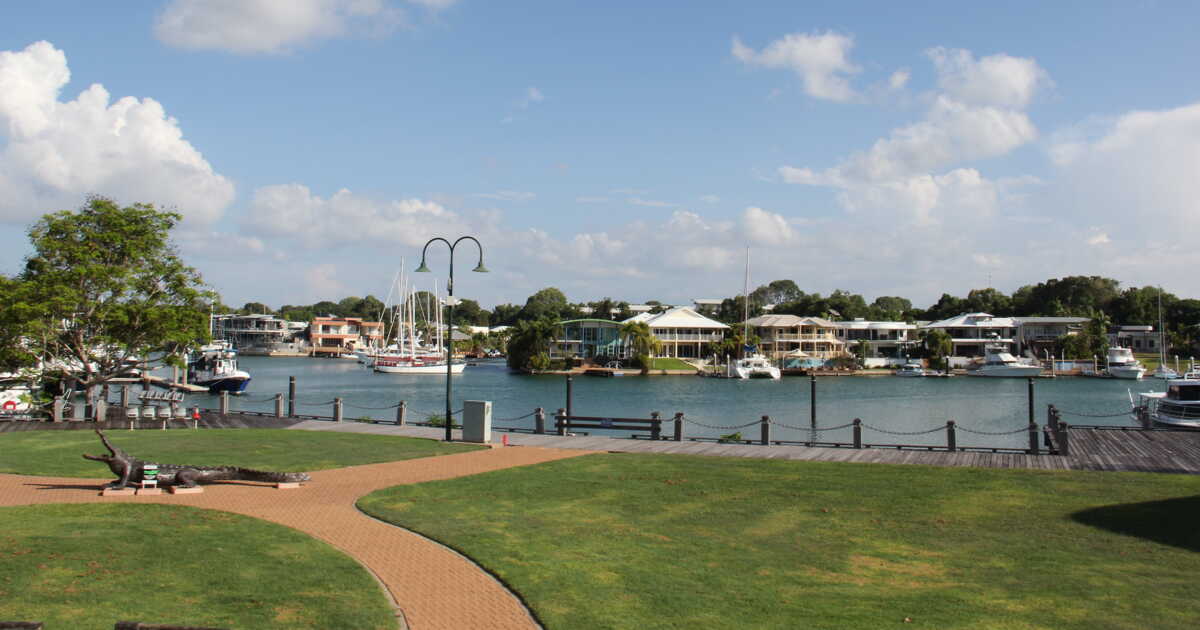
At the extreme north of Australia, Darwin doesn’t resemble any other capital city in the country. We discovered this city in the Northern Territory during a June report, in the heart of the dry season. Between Aboriginal heritage, influences from Asia, a turbulent history and wild nature on the city’s doorstep, Darwin has a character all its own. A destination deserving of time to linger.

Darwin is the capital of the Northern Territory, a vast region at the center and north of Australia that spans more than 1.4 million square kilometers. The city sits in the Top End, the territorial north, on the edge of the Timor Sea, close to Southeast Asia. It is even closer to Jakarta than to Canberra. With a little over 80,000 residents, Darwin has the scale of a mid-sized city rather than a major Australian capital.

Darwin, a Small Capital Marked by Its History

Its location gives it a tropical climate that largely shapes local life, altering how people live with the changing seasons. The dry season, from May to October, brings hot but pleasant days, little rainfall, and limited humidity. The wet season, from November to April, is characterized by intense heat, high humidity, heavy rains, and violent storms. But to understand Darwin, one must look further back. Long before Europeans arrived, the region was inhabited by the Larrakia, the “Saltwater People”, whose territory stretched around the port and coastline.

They maintained exchanges with neighboring peoples, such as the Tiwi, the Wagait, and the Wulna, while navigators from present-day Indonesia had been frequenting these shores for centuries. The European history of the town begins in the 19th century. In 1839, the HMS Beagle enters the port now called Darwin Harbour. Its commander, John Lort Stokes, christens it in honor of his former voyage companion Charles Darwin. The naturalist, however, never actually visited the region. Thirty years later, a European settlement is founded under the name Palmerston. Then the discovery of gold at Pine Creek in 1871 accelerates the city’s development.

Darwin also holds memory of two catastrophes that deeply shaped its history. On February 19, 1942, during World War II, Japanese forces bombarded the town, marking the first air attack on the Australian mainland. About 250 people were killed and several hundred more were wounded. Today, the Darwin Military Museum and several historic sites allow visitors to revisit this major chapter of Australian history.

Then, on the night of December 24–25, 1974, Cyclone Tracy wrecked the city. Much of it was destroyed and tens of thousands of residents had to be evacuated. The reconstruction that followed transformed Darwin and partly explains its current architecture, which is far newer than that of many other Australian cities. To discover this history, a guided tour can be particularly interesting. Darrel Trueman of Darwin Gourmet Tours offers itineraries dedicated to World War II, to gastronomy, and to street art.

A City Where Cultures Meet

Its history partly explains why Darwin is today one of the most multicultural cities in Australia. More than 60 nationalities and 70 different ethnic origins are represented here. This diversity is reflected in the restaurants, markets, and events that fill the year. It’s hard to grasp it better than by tasting laksa. This spicy Southeast Asian noodle soup has become a real institution in Darwin, to the point that the city dedicates an international festival to it every year. During the Darwin International Laksa Festival, restaurants, cafes, and other establishments compete over their own recipes, while locals vote for their favorite bowl.

But the most important cultural dimension is that of the First Nations peoples. The Northern Territory counts more than 100 Aboriginal languages and dialects. In Darwin, the Larrakia occupy a central place, but the city also serves as a gateway to the many cultures of the Top End. This cultural richness today translates into numerous transmission and revitalization projects. Artists, associations, communities and cultural institutions contribute to keeping languages, crafts, and traditional narratives alive.

The Museum and Art Gallery of the Northern Territory hosts the National Aboriginal and Torres Strait Islander Art Awards (NATSIAA), which highlight yearly the contemporary work of Aboriginal and Torres Strait Islander artists from the Torres Strait. The Larrakia Cultural Centre also aligns with this momentum. Its opening, announced for 2026, should allow the public to view Larrakia cultural objects that have recently been repatriated after being kept abroad for decades.

To go further, head to the Tiwi Islands. There you discover a culture different from that of the Larrakia, through a true immersion: traditional dance around the fire, presentations of history and traditions, an introduction to Tiwi motifs, encounters with artists, and a visit to a museum dedicated to the community’s history. An opportunity to better understand the impact of war on the Tiwi and the transformations their culture has undergone.

Another essential stop: Kakadu National Park, UNESCO World Heritage site for its natural and cultural riches. It’s a destination for its landscapes, wetlands and wildlife, but also for the history of the Aboriginal peoples who have inhabited these lands for thousands of years. The park shelters numerous rock art sites, including Ubirr and Burrungkuy (Nourlangie). To explore the sites with a guide, the CYAROUND agency and their guide Jack Tanner offer experiences that combine nature discovery with an understanding of First Nations culture.

From Sunset to the Bush, Experiences Not to Be Missed

Darwin can also be discovered through a multitude of experiences, sometimes surprising! Among the must-sees, the sunset at Mindil Beach is an institution. At day’s end, locals and tourists gather at the market just behind the beach to buy something to eat, then settle on the sand to watch the sun disappear on the horizon. And when the spectacle ends, everyone claps. Even when it rains, the Top End doesn’t stop. The wet season is notably the season for barramundi, the emblematic fish of northern Australia, at the heart of Million Dollar Fish, a competition held in the Northern Territory.

The idea is quite wild: some barramundis are specially tagged before being released, and the fishermen who manage to catch one can win up to one million Australian dollars. For those who want to approach the fish without going fishing, the Barramundi Experience NT offers a striking and entertaining encounter with large, rescued-from-farming individuals. Some exceed a meter in length and can even be caressed and fed by hand!

And for those who love genuinely quirky experiences, Darwin has another rather surprising specialty: the Heli Pub Crawl. Offered by Airborne Solutions, this helicopter/pub tour lets you reach several venues, some of them very isolated in the wild. Between drinks, the passengers fly over the coastline, the wetlands and the tropical landscapes.

The region can also be discovered through its agricultural production. The Northern Territory is Australia’s leading mango producer, accounting for about 52% of national production. In the region, harvest time brings festivals like the NT Mango Festival, featuring tastings, contests, and culinary preparations around the fruit. A tasty way to explore one of the Top End’s iconic products.

But perhaps the most striking thing is how easy it is to leave Darwin and find yourself in nature. Less than two hours by road from the city—or 45 minutes by helicopter—the Finniss River Lodge plunges visitors into a vast wild territory. Located on a sprawling cattle station, the lodge lets guests discover the life of an Australian outpost while getting to know the local wildlife.

Crocodiles, wallabies and birds populate the surroundings, while cattle are an integral part of the experience. At sunset, you can even enjoy an aperitif among particularly friendly cows! Far from a mere stopover, Darwin deserves to be lingered over before venturing further into the Top End.

Tailor-Made Australian Outback


The Outback, uncovering Australia’s most expansive and best-preserved essence

Expérience sur mesure : au cœur des terres rouges et des déserts australiens © Shutterstock

Hurtigruten


Australia captivates with its contrasts: from cosmopolitan cities to endless beaches, from the Great Barrier Reef to the red lands of the Outback.

Yet it is perhaps precisely in the most remote territories, where distances are measured in hundreds of kilometers and where nature still imposes its own tempo, that another face of the country emerges.

This summer, TourMaG readers could follow the exceptional journey of Sébastien Cros across the Australian Outback : more than 5,000 kilometers traveled through largely preserved lands, meeting spectacular landscapes, local communities and experiences that tell another Australia.

A blend of nature, colors, wide-open spaces and adventure, of unique experiences that captivate and inspire an increasing number of travelers.

The challenge for the travel agent is to transform this desire to discover a more authentic Australia into a trip that is truly feasible, coherent and built around the expectations of each client. It is in this context that NAAR Bespoke Travel’s approach fits.


Much more than a destination, an authentic immersion

L’Outback n’est pas simplement un ensemble de lieux à visiter. Il représente une autre manière de vivre l’Australie : prendre le temps nécessaire, parcourir de grandes distances, s’aventurer sur des itinéraires moins connus, découvrir des paysages grandioses et, surtout, vivre des expériences permettant d’entrer en contact avec le territoire et de mieux le comprendre.

Mais c’est peut-être justement dans les territoires les plus reculés, où les distances se mesurent en centaines de kilomètres et où la nature impose encore son propre rythme, qu’émerge un autre visage du pays.

Cet été, les lecteurs de TourMaG ont pu suivre l’exceptionnel voyage de Sébastien Cros à travers l’Outback australien : plus de 5 000 kilomètres parcourus au cœur de territoires encore largement préservés, à la rencontre de paysages spectaculaires, de communautés locales et d’expériences qui racontent une autre Australie.

Un mélange de nature, de couleurs, de grands espaces et d’aventure, d’expériences uniques qui séduisent et inspirent un nombre croissant de voyageurs.

Le défi pour l’agent de voyages consiste à transformer ce désir de découvrir une Australie plus authentique en un voyage réellement réalisable, cohérent et construit autour des attentes de chaque client. C’est dans ce contexte que s’inscrit l’approche de NAAR Bespoke Travel.


From Inspiration to the Co-Construction of the Journey

L’un des défis du voyage sur mesure consiste précisément à transformer l’inspiration en réalité.

Une image, un reportage, une rencontre ou le récit d’un voyage — comme celui de Sébastien Cros pour TourMaG — peuvent faire naître le désir de vivre ces expériences. Mais concevoir un itinéraire dans une destination aussi vaste et complexe que l’Australie nécessite une connaissance approfondie du territoire : distances, temps de trajet, saisonnalité, hébergements, connexions, activités, aspects logistiques et, surtout, le juste équilibre de l’ensemble du voyage.

C’est là que l’expertise du spécialiste prend tout son sens pour accompagner le conseiller en voyages.

Grâce à sa connaissance approfondie de la destination et à un réseau consolidé de partenaires locaux sélectionnés, NAAR accompagne les agences de voyages dans la co-construction de projets très différents : des autotours aux voyages en famille, des itinéraires combinant l’Australie et la Nouvelle-Zélande aux séjours haut de gamme, des expériences au sein des Luxury Lodges of Australia aux voyages à bord du célèbre Ghan.

L’objectif n’est pas d’ajouter le plus grand nombre possible d’étapes, mais d’identifier les expériences les plus pertinentes et de les intégrer dans un itinéraire cohérent.


The Added Value of Expertise and Personalized Advice

Dans l’Outback, c’est souvent l’expérience qui compte davantage que la destination en elle-même.

Dormir au cœur d’un environnement naturel exceptionnel, parcourir une piste accompagné d’un guide qui connaît intimement le territoire, observer un paysage au lever du soleil, s’immerger dans la culture locale et ses origines, rencontrer les communautés locales ou découvrir une région éloignée des circuits les plus fréquentés : ce sont ces moments qui permettent véritablement d’entrer en contact avec une Australie authentique et qui constitueront les souvenirs à rapporter chez soi.

Pour NAAR Bespoke Travel, le voyage sur mesure consiste précisément à aller au-delà de l’itinéraire et à construire une expérience authentique grâce à une connaissance approfondie du territoire et à une écoute attentive des besoins et des envies.

Une approche qui répond également à l’évolution des attentes des voyageurs.

Aujourd’hui, l’accès à l’information est pratiquement illimité. En quelques secondes, il est possible de trouver des images, des conseils, des hébergements et des idées pour construire un itinéraire.

Mais l’information, à elle seule, ne suffit pas à construire un voyage, surtout lorsque l’on recherche une proposition qui tienne compte des besoins et des attentes personnels et qui garantisse un accompagnement adapté en cas de besoin.

La véritable valeur ajoutée réside dans la capacité à comprendre ce qui est réellement adapté à chaque voyageur, à distinguer une expérience intéressante d’une expérience véritablement pertinente et, enfin, à organiser tous les éléments au sein d’un itinéraire fluide et réalisable.


The Added Value of Expertise and Personalized Advice

Human expertise is therefore at the heart of NAAR Bespoke Travel’s offering.

To this, a fundamental element is added: technology.

NAAR has developed a cutting-edge proprietary platform that enables agencies to have advanced tools to search, build, and manage their trips.

Technology eases access to information, optimizes processes, and allows for more efficient work.

But it does not replace guidance.

At NAAR, technology and human expertise work together: the former helps optimize the preparation and organization of the trip; the latter helps understand the client’s expectations, make the right choices, and bring to the project the knowledge that truly makes a difference.

This combination is particularly important for complex destinations like Australia, where the abundance of options can quickly become a source of complexity.

The challenge is thus not to choose between technology and expertise, but to make them work together to build an ever more precise, high-quality, and personalized product.


The Many Facets of Australia’s Territory


About NAAR Bespoke Travel

NAAR Bespoke Travel is an international tour operator specializing in bespoke travel, with more than 30 years of experience in the B2B market. Present in more than 95 destinations, NAAR designs customized itineraries by combining human expertise, a network of selected local partners, and proprietary technology.

Based in Milan and present in Rome, Naples, Paris, Brussels, Frankfurt and Zurich, the group relies on a European organization serving travel agencies.

Since 2025, NAAR Ethical Projects complement this vision through ethically and sustainably impactful initiatives.


Contact Details


L'Outback australien sur mesure
Website : naar.com

Email :

[email protected]

Phone :

01 7935 2001

linkedin


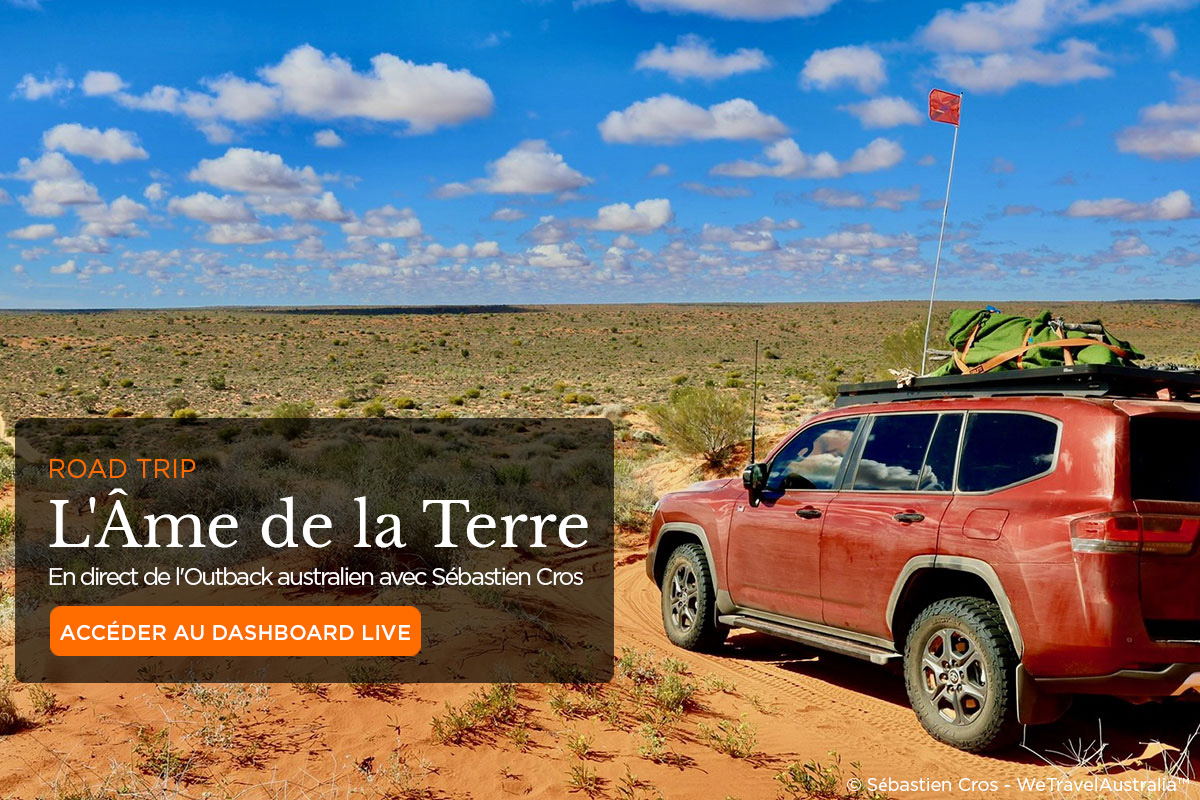
The Soul of the Earth: Live from the Australian Outback with Sébastien Cros

On Tourmag, a promotional banner for Hurtigruten opens the page, immediately catching the eye with a distinct visual pull. The banner features a 350 by 345-pixel image that captures attention and sets the tone for a travel feature centered around exploration and sea journeys. Beside the banner, a nearly invisible tracking pixel operates in the background, silently counting impressions and helping the publication measure reader engagement without interrupting the user experience.

The layout of the article reflects a careful balance between striking visuals and readable typography. The design leans into a bold, legible aesthetic: a strong, high-contrast title sits atop a dark band, drawing the reader’s gaze with its white lettering against a black backdrop. The lead paragraph area—often described in layout notes as the chapeau—employs a warm gradient wash, transitioning from a soft, light amber to a deeper gold, and presents the opening ideas in a concise, centered block. This combination of font choices and color treatment lends the page a classic, travel-magazine feel while keeping the content accessible across devices.

Behind the scenes, a number of layout adjustments work together to ensure the article remains centered and readable on a variety of screens. The right-hand column is intentionally hidden on larger displays, a choice that prioritizes the main narrative and visuals. The main content region is stretched to occupy the available width, with a maximum width that provides ample room for imagery and text without sacrificing readability. On wider screens, the container is tuned so that the content remains visually balanced, avoiding overly wide lines and preserving comfortable line length for readers.

Within the body of the article, a separate element—the live Tourmag widget—appears as an embedded feature. This is delivered via an iframe that stretches across the available width, inviting readers to engage with live content hosted elsewhere. The embedded frame is designed to be responsive and unobtrusive, with a minimum height to ensure the feed is readable regardless of the device. The presence of this live feed adds an interactive dimension to the page, allowing readers to experience real-time updates alongside the static article content.

Towards the bottom of the structure, a prominent image anchors the visual story: a large photograph credited to Sébastien Cros for WeTravelAustralia. The image serves as a powerful visual punctuation mark, grounding the article’s narrative in a tangible moment captured by a seasoned photographer. The credit line—“© Sébastien Cros – WeTravelAustralia™”—appears in clear, respectful typography, acknowledging the photographer’s contribution and the source of the image.

Throughout the page, the design emphasizes clean typography and a restrained color palette, with deliberate decisions about spacing, margins, and image prominence to guide the reader’s eye. The result is a polished, magazine-like experience in which promotional content and editorial elements coexist harmoniously. The Hurtigruten banner opens the journey, the gradient chapeau draws the reader into the introduction, the live feed injects immediacy, and the concluding photograph leaves a lasting impression, all within a layout that remains accessible and aesthetically cohesive across devices.

The Australian Outback: How to Market It to French Travelers


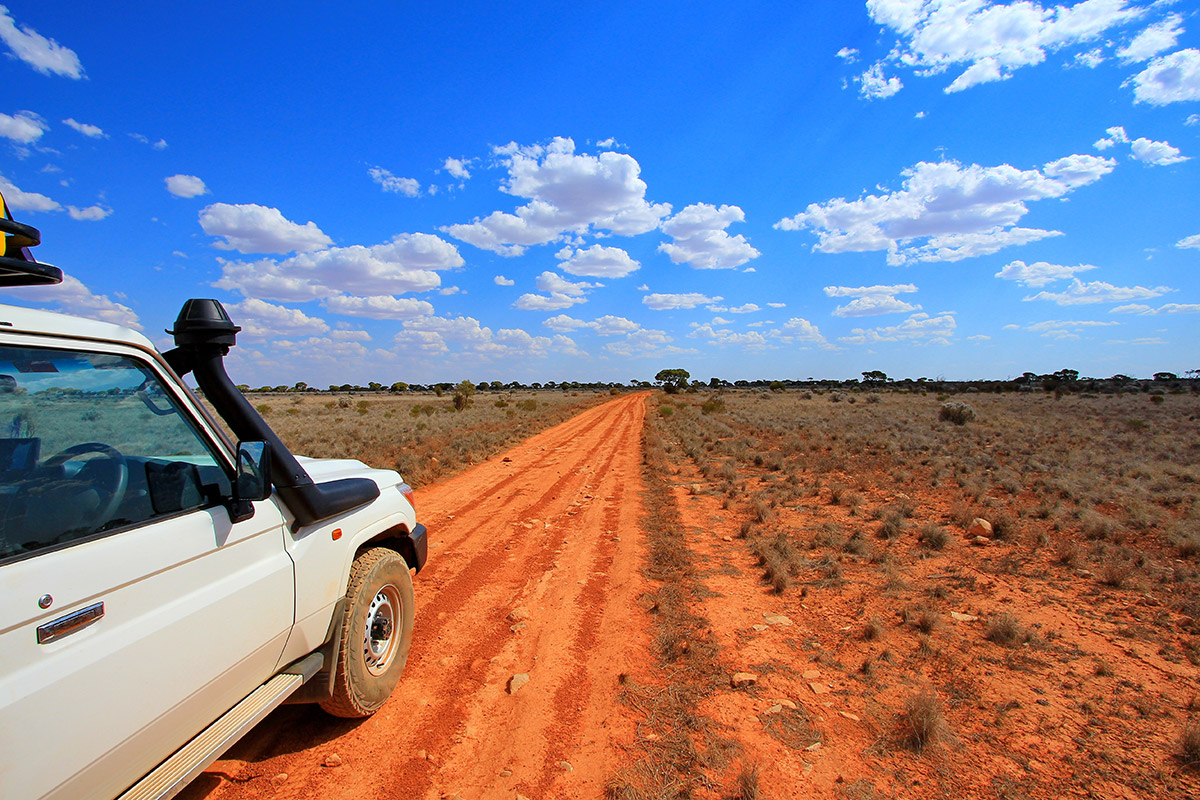
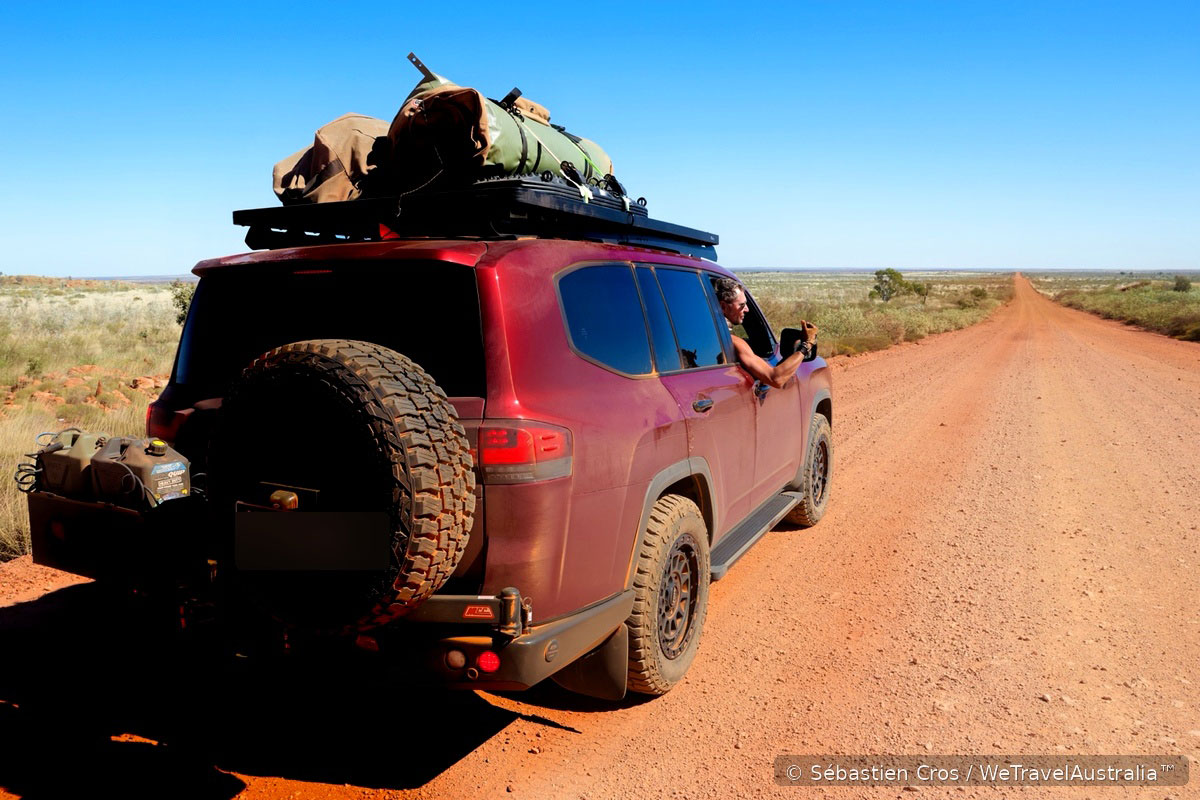
Sur les pistes de l’Outback du Queensland, la route devient une composante à part entière du voyage - Photo : Sébastien Cros / WeTravelAustralia

Hurtigruten


For twenty-four days, we drove between Adelaide, Broken Hill, Tibooburra, Thargomindah, Quilpie, Longreach, Winton, Mount Isa, Boulia, Bedourie, Birdsville, Betoota, then the long descent southward.

More than 5,000 kilometers with Marion, my 23-year-old niece and the expedition’s operations chief, to tell live about an Australia that the French market still astonishingly knows little about.

The live coverage has now ended. We returned with dust in our luggage, thousands of photographs, dozens of hours of footage and testimony, but above all with a conviction: the Queensland Outback is not a tourist product to be invented. It already exists.

Access is there, experiences as well, accommodations are improving, events pace the season and, above all, the men and women who give soul to these territories remain incredibly accessible.

What strikes most on the road is the rarity of European travelers. During our crossing, we met Australians in caravans, families, retirees traveling their own country, a few foreign backpackers on Working Holiday Visa.

But practically no Europeans traveling this Outback as a touring itinerary, and almost no French. For the French trade, this vacuum perhaps constitutes the opportunity.


Another Australia for those who already think they know it


Dans l’Outback, l’expérience peut aussi prendre une dimension plus exclusive : survol et coucher de soleil au cœur des grands espaces - Photo : Sébastien Cros / WeTravelAustralia

The first instinct would be to reserve Queensland’s Outback for seasoned travelers. That would be a mistake.

Its natural market is obviously that of repeaters, those clients who already know Sydney, Melbourne, the Great Barrier Reef or the Red Centre and who now ask what else they could discover in Australia.

But the potential is broader. Couples accustomed to self-drives, travelers drawn to wide open spaces, photography lovers, heritage or train enthusiasts, families with teenagers, premium clients who prioritize experience over ticking off sites — the profiles likely to love the Outback are numerous.

We simply need to explain to them what luxury they are seeking. For the Outback’s luxury is not necessarily a five-star suite. It can be a table set facing the sunset, a helicopter perched alone above the plains, a beer shared with the owner of a remote pub, a Thomson River cruise, or the absolute silence of the Channel Country.

Comfort also exists. In Longreach and especially Winton, more sophisticated accommodations now allow immersion with quality services. But we must be clear with the client: the Outback retains a rustic edge, and that is also why people come here.


Do not turn our 5,000 kilometers into a catalog product

Our expedition surpassed 5,000 kilometers. That certainly does not mean we should ask a client to reproduce them. It’s probably the first business lesson of these three weeks: the Outback must be modularized.

For a first discovery, Longreach and Winton already allow for an immersion of four to six nights.

Read also: Longreach, why this gateway to the Outback still escapes French travelers

Longreach brings together several of the great stories of inland Australia around Qantas, stockmen and the Thomson River. Winton adds Waltzing Matilda, the dinosaurs, the Royal Theatre, aerial experiences and a surprisingly creative community.

For travelers with more time, the route can extend to Mount Isa and become a ten-day or longer itinerary.

Then comes another level of immersion: Boulia, Bedourie, Birdsville, Betoota and the Channel Country. Distances grow, services become sparser, and the road gradually becomes an essential component of the journey.

Finally, for lovers of the grand road trip, there is a much more ambitious crossing: Broken Hill, Silverton, Tibooburra, the Corner Country, the Queensland Outback, then Birdsville. Three weeks then allow building a trip where the road is no longer merely the means to reach the stops. It becomes the experience itself.


In the Outback, slowing down is part of the product

We sometimes followed the kilometers because our editorial mission required it. We needed to reach an interview, film before sunset, keep an appointment, or simply continue our loop.

For a holiday client, I would build it differently. The mistake would be to try to recoup the kilometers by multiplying overnight stops.

Longreach deserves several nights, Winton as well. Mount Isa can become a true stop when paired with an event. Birdsville deserves more than a photo in front of its famous pub before hitting the road again.

Because it is often when one stops driving that the Outback truly begins to speak.

In Winton, the time spent on site allowed us to meet entrepreneurs, artists, residents and personalities we would never have known during a simple pass-through. No brochure can guarantee these encounters, and one should not try to script them all.

On the other hand, a good itinerary can create the time needed for them to arrive. For the producer, the question should not be how many kilometers a client can travel in two weeks, but how much time to allow for them to begin to belong a little to the place they pass through.


The road is better than its reputation, but it doesn’t improvise


This is where bespoke travel reclaims all its science

This reality places back at the center a chain that online booking sometimes tends to forget: the client, their travel agent, the tour operator and the Australian receptive. Each holds a part of the answer.

The agent knows their client, their road-trip experience, their comfort level, their budget, their tolerance for distances and their capacity to accept some unpredictability.

The tour operator assembles the trip, the flights, the vehicle, the accommodations, the experiences and the overall rhythm.

The Australian receptive brings this knowledge of the terrain that becomes particularly valuable as soon as you leave the major classic itineraries: realistic distances, seasonality, road conditions, alternatives, events, rental constraints and small addresses.

This is precisely the kind of destination where bespoke travel regains all its science.

The right trip is not about connecting dots on a map. An extra night can change the experience, an event can determine the travel dates, a closed route can impose another loop and the vehicle choice can depend on the itinerary. What might appear as a complication becomes exactly what the travel professional knows how to do: transform complexity into freedom for the client.


From historic pubs to glamping, do not oversell comfort

Accommodation deserves the same transparency. A large part of the charm of this Australia rests on its historic pubs, its independent motels, and its small family properties.

Tibooburra, Birdsville, Betoota and other stops should not be compared to hotels in Sydney or Melbourne. They offer something else.

Sleeping on-site, dining at the counter, hearing the floor creak under your steps and talking with the person who runs the establishment are part of the journey.

Next to this deliberately rustic Australia there are nonetheless more sophisticated accommodations, notably around Longreach and Winton. The right product can thus alternate the two: one night for history, another for comfort.


When tourist expenditure stays within the community


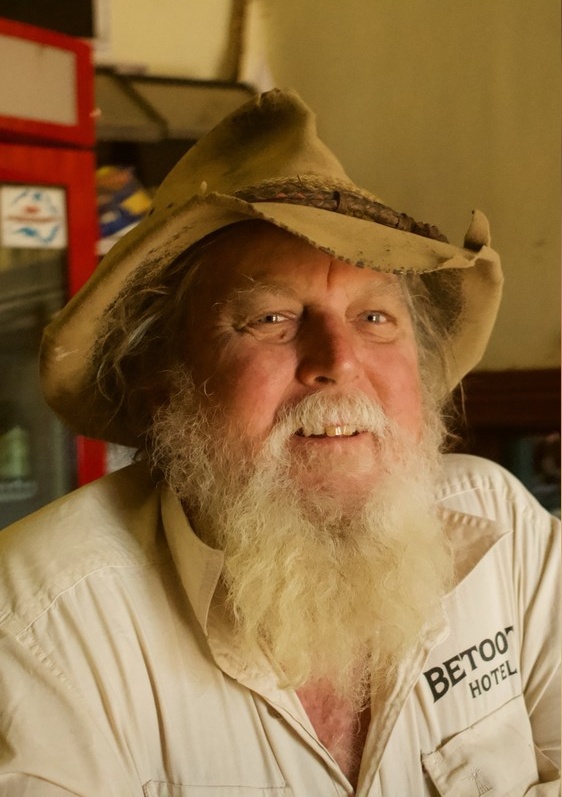
Robert « Robbo » Haken, au Betoota Hotel : « More French people ! Tell them to come over here. » - Photo : Sébastien Cros / WeTravelAustralia

This is perhaps one of the most interesting dimensions of the product. In a large part of our itinerary, the traveler’s money goes directly to small local businesses and communities.

The pub owner may be the one who serves dinner. The pilot who takes you to see the sunset is a local entrepreneur.

The guides, museums, shows, cruises and events often rely on family-run, community or small-scale structures.

In Betoota, Robert “Robbo” Haken revived a pub that had been closed for more than twenty years in a town that had ended up with a population of zero. When I asked him what to tell the French, his reply had nothing to do with marketing: More French people! Tell them to come over here.

Behind the humor lies an economic reality. In communities sometimes counting only a few hundred inhabitants, tourist spending is immediately noticeable. Selling the Outback also means helping to sustain the Outback.


Isolation does not mean danger

I wanted to ask Marion. She is 23, arrived from Paris, and had never traveled in this Australia before.

After more than 5,000 kilometers, her answer was simple: At no moment did I feel unsafe.

This does not, of course, excuse the precautions proper to remote regions: water, fuel, weather, road conditions, distances, adapted driving, offline maps and a prepared itinerary.

But one must distinguish two notions that European travelers sometimes confuse: isolation and danger are not synonyms.


2027, an opportunity to showcase another Australia

The Rugby World Cup 2027 finally offers a particularly interesting window for the French market.

With Brisbane and Townsville among the host cities, Queensland will be directly integrated into the travel plans of a portion of the international supporters.

Some will already know Australia, others will take the trip as an opportunity to extend their stay. Why offer only the Australia they already know?

Longreach, Winton, Mount Isa or parts of the Channel Country can offer very differentiated extensions, depending on dates, connections and available time.

More broadly, the product’s ingredients are already present: air gateways, rail, roads, self-drives, accommodations at different levels, bookable experiences and an events calendar. And above all, French travelers remain rare there. It’s rare, and commercially valuable.


The Outback does not require being an adventurer; it requires good advice

After 24 days and more than 5,000 kilometers, this is probably the most useful conclusion I can share with the trade. We must neither trivialize the Outback nor present it as an expedition reserved for a few specialists. It must be sold properly.

Choose the client, determine the time they have, build the right rhythm, select the entry door, then choose the vehicle, cross-check the itinerary with the event calendar, plan alternatives and above all leave enough time for encounters to take place: this is exactly why the travel agent, the tour operator, and the Australian receptive have an essential role here.

Rather than reproducing our 5,000 kilometers, the goal should be to build the Outback that truly matches the client.

Four nights or three weeks, by train, by plane, then by car, in a SUV or a 4×4, around Winton, a rodeo at Mount Isa, an arrival at Birdsville or a grand crossing from Broken Hill: there is not a single Outback journey.

And perhaps that is its greatest strength. The challenge is no longer whether the Queensland Outback can be sold in France. The product already exists. The challenge now is to translate it for the French market and, perhaps especially, not to transform it too much.

Because what we sought during these 5,000 kilometers was not merely a new route to put in a brochure. It was an Australia where one can still push open the door of a pub and speak to the person who runs it, meet the one who collects the kangaroos, listen to a stockman tell his country, or stay an hour longer simply because a conversation has just begun.

An Australia still lived in before being staged. For us, travel professionals, to build the road that leads there.


Sébastien Cros


Sébastien Cros - Photo : SC

Sébastien Cros is an independent journalist and photographer based in Australia, founder of WeTravelAustralia™.

After twenty-five years in the Australian tourism industry, notably as Managing Director of Across Australia (Goway group), he now dedicates his writing to editorial narratives dedicated to the destination, at the crossroads of storytelling, photography and on-the-ground perspective.

One Road, Many Voices, One View: Live from the Australian Outback on TourMaG


Dès le 24 juillet prochain, suivez une expédition à travers l’Outback australien, avec Sébastien Cros et sa nièce Marion, en live sur TourMaG - Photo : Sébastien Cros - WeTravelAustralia™

CroisiEurope


July 24, 2026, our Land Cruiser will depart Semaphore, near Adelaide, heading toward Broken Hill.

This will mark the start of The Soul of the Earth, an editorial expedition imagined with TourMaG around a simple thread: one road, voices, one gaze.

The idea was born from a realization. For twenty-five years, I have organized journeys across Australia and helped reveal its great icons: Sydney, the Red Centre, the Great Barrier Reef, the beaches. An Australia that is magnificent, but tells only part of the country.

There is another one. Inner more. Quieter. Still largely unknown to French travelers, but accessible to those who take the time to prepare it seriously. One of endless landscapes, the cultures of the First Nations, bush families, and communities that have learned to live with isolation, distances and the elements.

Elements that can be brutal at times. In recent weeks, unusual rains have isolated certain communities and closed several routes. But the same water that cuts the tracks also greens the Channel Country. Vegetation returns, birds gather, and this territory, usually so dry, reveals a face that few travelers will have the chance to observe.


The Highlights of the Itinerary

The journey will plunge into the Queensland Outback. A landscape of towns and communities shaped by cattle farming, mining, rodeos, camel racing, and a deep bond with the land.

For more than three weeks, the route will traverse western New South Wales and the Queensland Outback: Tibooburra, Thargomindah, Quilpie, Isisford, Longreach, Winton, Mount Isa, Boulia, Bedourie and Birdsville. The return, already redesigned by the state of the tracks, will pass through Windorah, Noccundra, Tibooburra and Broken Hill.

The first Outback lesson, even before departure: it’s not always the traveler who decides the route.

A key moment of the expedition, the Mount Isa Mines Rodeo will grant us access behind the scenes of one of the largest rodeos in the southern hemisphere. We will meet the women and men who today sustain its community renaissance.

Aboard, two generations and two viewpoints. Mine, after twenty-five years spent organizing trips and now telling their stories. That of Marion, my niece and operations chief, who will discover Australia by road for the first time.


A Live Dashboard to Track the Adventure on TourMaG


To accompany this adventure, TourMaG inaugurates a live dashboard developed with WeTravelAustralia™ (the live will begin on July 24).

An evolving map will allow you to follow the itinerary. Photos, videos, field notes, interviews and encounters will progressively feed the travel journal.

The aim is not to turn the journey into a content race, but to show what traveling through the Outback truly means: monitoring the weather, checking the tracks, anticipating fuel, listening to locals and accepting that the country may redraw the route at any moment.

A road. Voices. A gaze.

See you HERE on July 24 for the first turns of the wheels.